


 Скачать презентацию Counseling and HIV Testing HAIVN Harvard Medical School
974fa3385b204084e5f3ece7ca8be482.ppt
- Количество слайдов: 26
 Counseling and HIV Testing HAIVN Harvard Medical School AIDS Initiatives in Vietnam
 Learning Objectives By the end of this session, participants will be able to: n Explain the importance of HIV voluntary counseling and testing (VCT) n List at least 3 HIV diagnostic testing n Describe the Vietnam MOH testing strategy 2
 VCT Key Principles Voluntary: Client makes own decision whether to take HIV test Counseling: HIV testing always accompanied by HIV prevention counseling Testing: Test results must be provided in accordance with current MOH guidelines 3
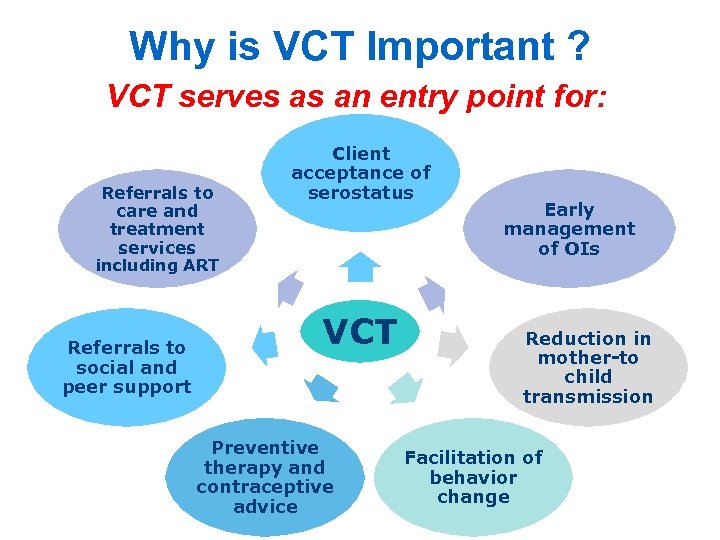 Why is VCT Important ? VCT serves as an entry point for: Referrals to care and treatment services Client acceptance of serostatus including ART Referrals to social and peer support VCT Preventive therapy and contraceptive advice Early management of OIs Reduction in mother-to child transmission Facilitation of behavior change
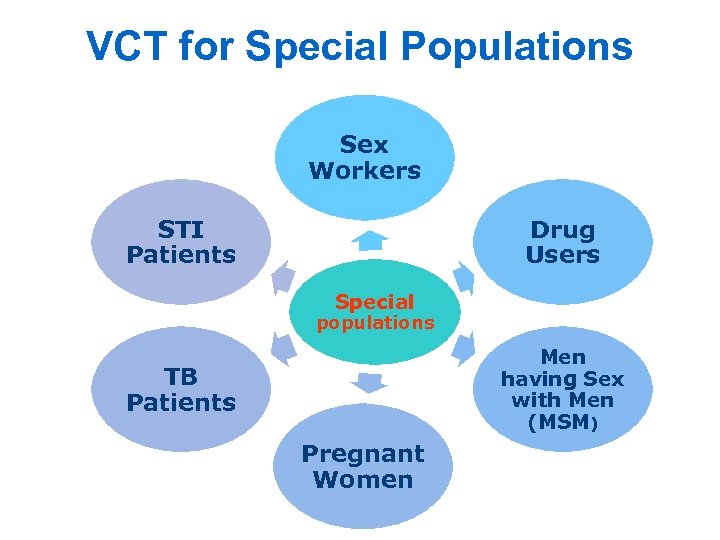 VCT for Special Populations Sex Workers Drug Users STI Patients Special populations Men having Sex with Men (MSM) TB Patients Pregnant Women
 What are the Barriers to VCT?
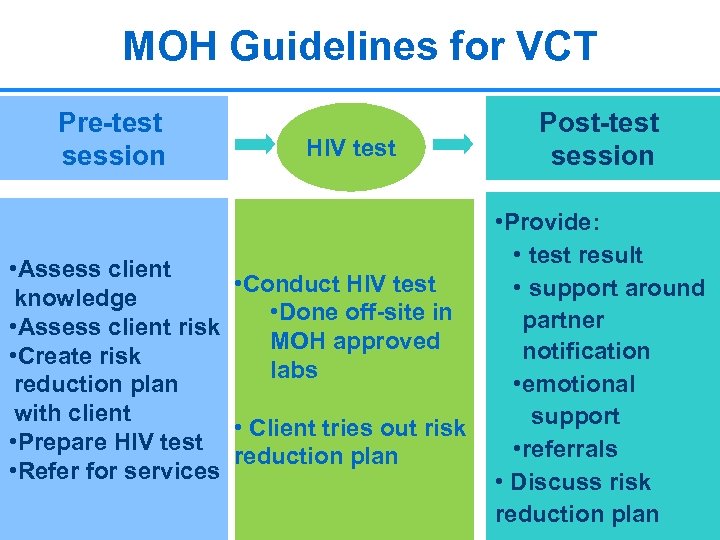 MOH Guidelines for VCT Pre-test session HIV test • Assess client • Conduct HIV test knowledge • Done off-site in • Assess client risk MOH approved • Create risk labs reduction plan with client • Client tries out risk • Prepare HIV test reduction plan • Refer for services Post-test session • Provide: • test result • support around partner notification • emotional support • referrals • Discuss risk reduction plan 7
 HIV Testing
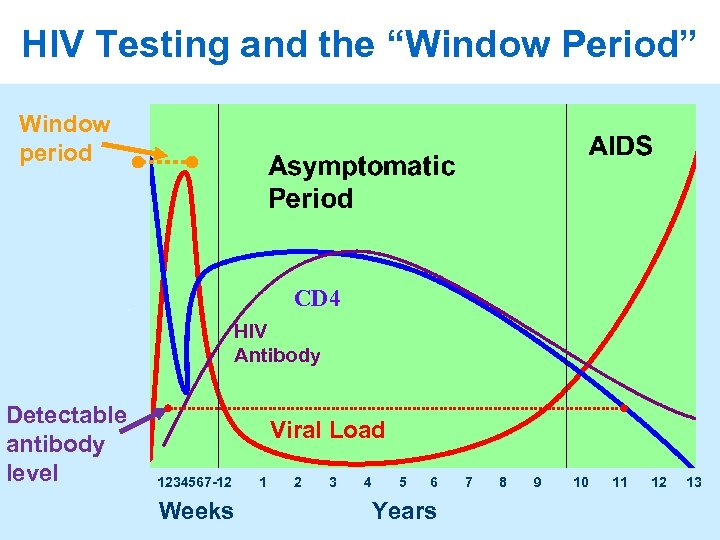 HIV Testing and the “Window Period” Window period CD 4 HIV Antibody Detectable antibody level Viral Load 1234567 -12 Weeks 1 2 3 4 5 6 Years 7 8 9 10 11 12 9 13
 Serologic Tests to Diagnose HIV Infection
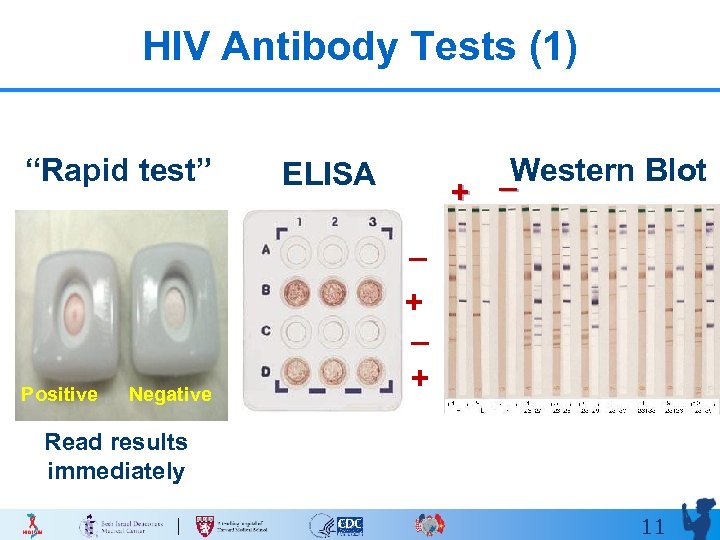 HIV Antibody Tests (1) “Rapid test” ELISA + Western Blot _ _ + _ Positive Negative + Read results immediately 11
 HIV Antibody Tests (2) Rapid ELISA/Rapid EIA (“Rapid Tests”) n n n Results in 10 minutes to 2 hours using blood, urine or saliva Extremely useful for immediate results Many different tests are available with excellent sensitivity and specificity • Negative test can be reported as negative • Positive results must be confirmed with additional testing 12
 HIV Antibody Tests (3) Western Blot Test (WB) n n n Used as a confirmatory test Very specific for HIV Samples that give a negative result are reported as negative 13
 Direct HIV Tests (1) Polymerase Chain Reaction (PCR) n n Detects HIV genetic material in blood Positive within 1 -2 weeks after infection Babies born to HIV positive mothers may be tested by looking for HIV DNA Can be used to diagnose acute HIV infection in adults during window period 14
 Direct HIV Tests (2) n n Demonstration of viral antigen (p 24 antigen) Sometimes used to screen donated blood Can also be used to test for HIV in individuals, mostly children Detectable within 2 -3 weeks after infection Becomes negative after seroconversion and development of anti-p 24 antibodies 15
 Dry Blood Spot (DBS) Test (1) n n DBS is used to facilitate testing of HIV DNA for the purposes of early infant HIV diagnosis A DBS is a sample of whole blood collected on filter paper and dried DBS can be stored and shipped to testing facilities Using DBS, infants can be tested using PCR as early as 4 -6 weeks of age. 16
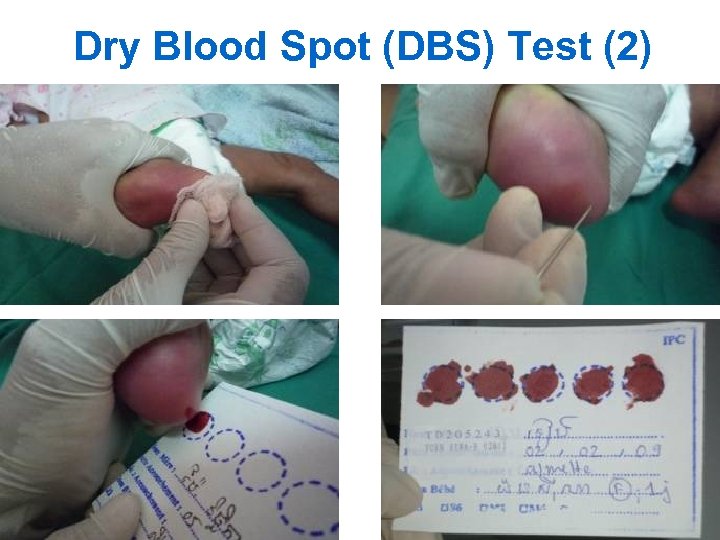 Dry Blood Spot (DBS) Test (2) 17
 Testing Strategies
 MOH Testing Strategies(1) Strategy I: At blood banks n Positive test with one of these tests: ELISA, SERODIA, RAPID TEST. n If one simple positive screening test: reject for blood transfusion 19
 MOH Testing Strategies (2) Strategy II: Routine screening in high prevalence areas n Two tests with different ELISA “format” n Positive result confirmed if both ELISAs tests positive. 20
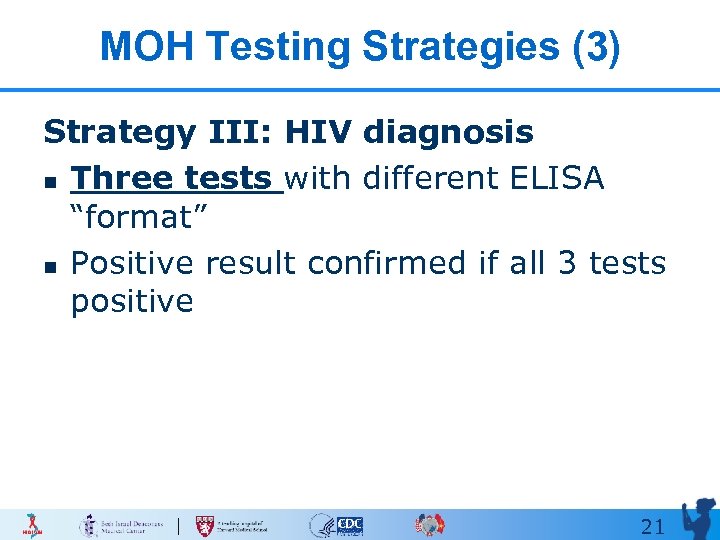 MOH Testing Strategies (3) Strategy III: HIV diagnosis n Three tests with different ELISA “format” n Positive result confirmed if all 3 tests positive 21
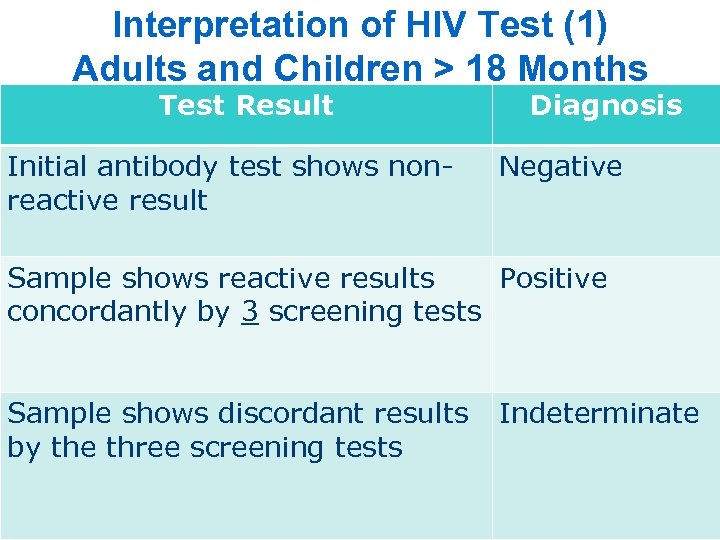 Interpretation of HIV Test (1) Adults and Children > 18 Months Test Result Initial antibody test shows nonreactive result Diagnosis Negative Sample shows reactive results Positive concordantly by 3 screening tests Sample shows discordant results by the three screening tests Indeterminate 22
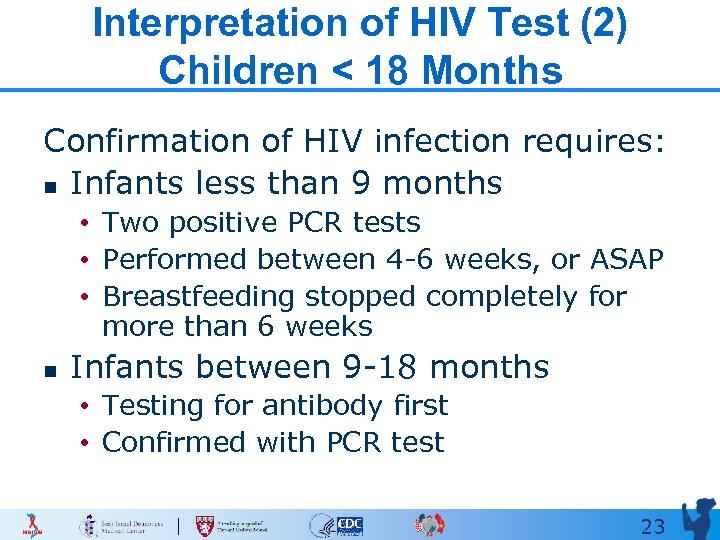 Interpretation of HIV Test (2) Children < 18 Months Confirmation of HIV infection requires: n Infants less than 9 months • Two positive PCR tests • Performed between 4 -6 weeks, or ASAP • Breastfeeding stopped completely for more than 6 weeks n Infants between 9 -18 months • Testing for antibody first • Confirmed with PCR test 23
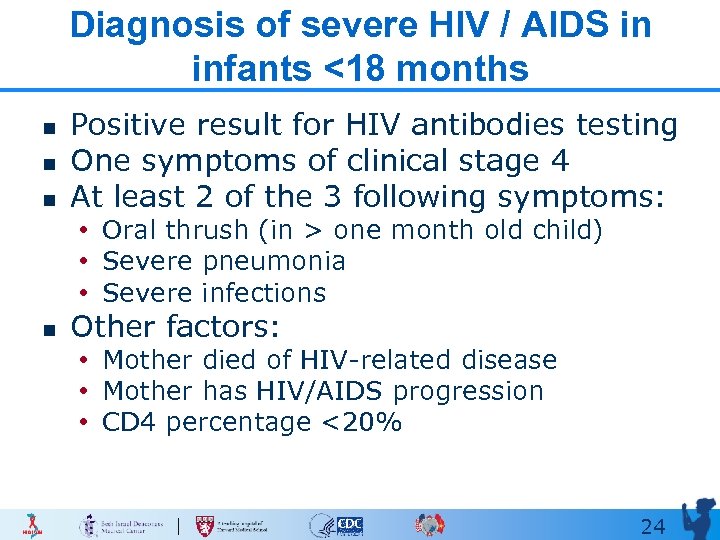 Diagnosis of severe HIV / AIDS in infants <18 months n n n Positive result for HIV antibodies testing One symptoms of clinical stage 4 At least 2 of the 3 following symptoms: • Oral thrush (in > one month old child) • Severe pneumonia • Severe infections n Other factors: • Mother died of HIV-related disease • Mother has HIV/AIDS progression • CD 4 percentage <20% 24
 Key Points n HIV testing perform in any medical facility must be: • Voluntary and confidential • Including counseling before and after testing n n Diagnosis of HIV is detected indirectly through the demonstration of virusspecific antibody: ELISA, rapid test, Western blot. 3 positive tests needed to confirm HIV(Strategy III) 25
 Thank you! Question?