 Скачать презентацию Costs and Benefits of High Skilled Immigration March
b059226c3fc79255f1e96403a58cf707.ppt
- Количество слайдов: 78




Costs and Benefits of High Skilled Immigration March 31, 2009 copies of this presentation can be found at www. antolin-davies. com 1
How significant is immigration? • All production has its roots in technology, capital, materials, and labor. • Technology, capital, and materials are created by labor. Labor is the root of all production. 2
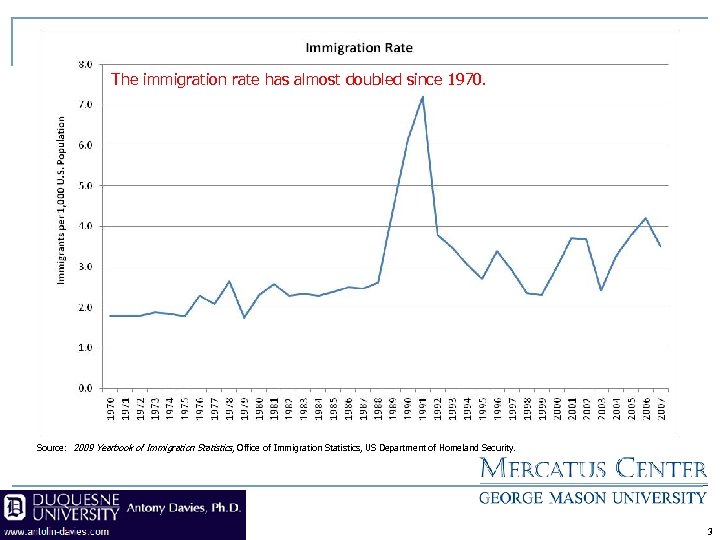
The immigration rate has almost doubled since 1970. Source: 2009 Yearbook of Immigration Statistics, Office of Immigration Statistics, US Department of Homeland Security. 3
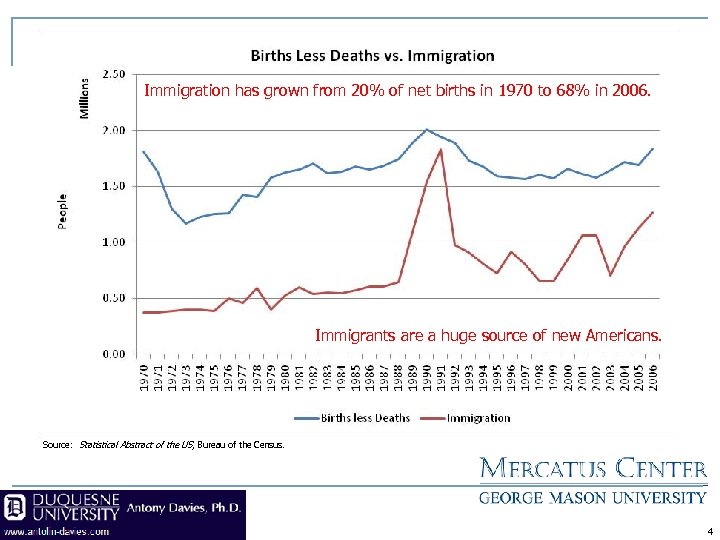
Immigration has grown from 20% of net births in 1970 to 68% in 2006. Immigrants are a huge source of new Americans. Source: Statistical Abstract of the US, Bureau of the Census. 4

Whence do immigrants come and where do they go? • Mexico • California 5
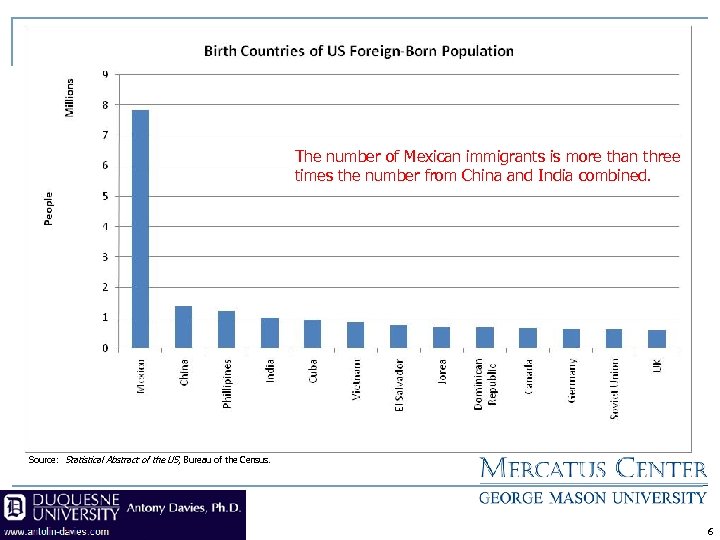
The number of Mexican immigrants is more than three times the number from China and India combined. Source: Statistical Abstract of the US, Bureau of the Census. 6
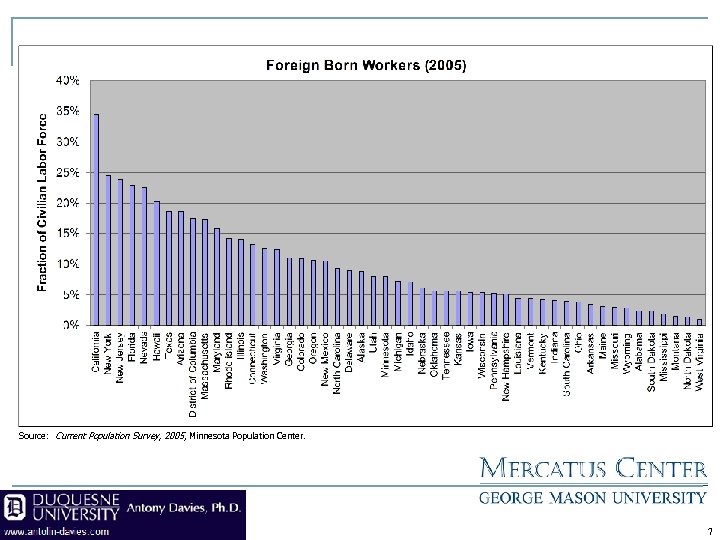
Source: Current Population Survey, 2005, Minnesota Population Center. 7
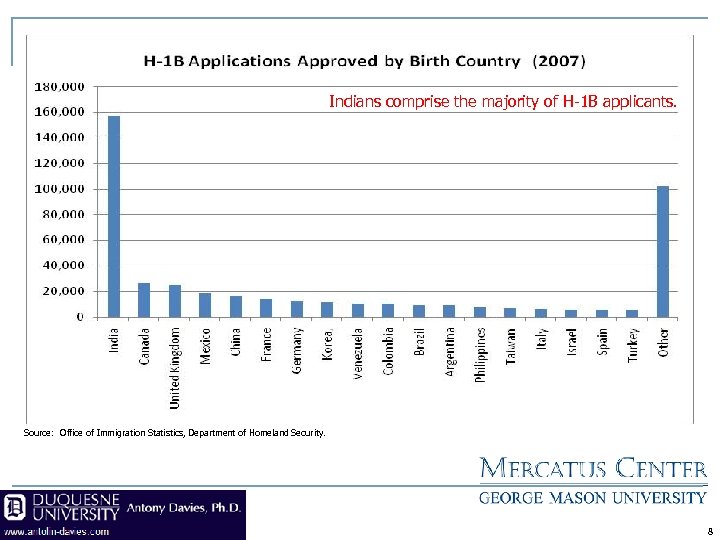
Indians comprise the majority of H-1 B applicants. Source: Office of Immigration Statistics, Department of Homeland Security. 8
What is the impact of immigration on jobs and incomes? • Unemployment rate? Conventional wisdom: Immigrants take jobs away from Americans thereby increasing the unemployment rate. • Income distribution? Conventional wisdom: Immigrants represent an influx of lower income people thereby worsening the distribution of income. 9
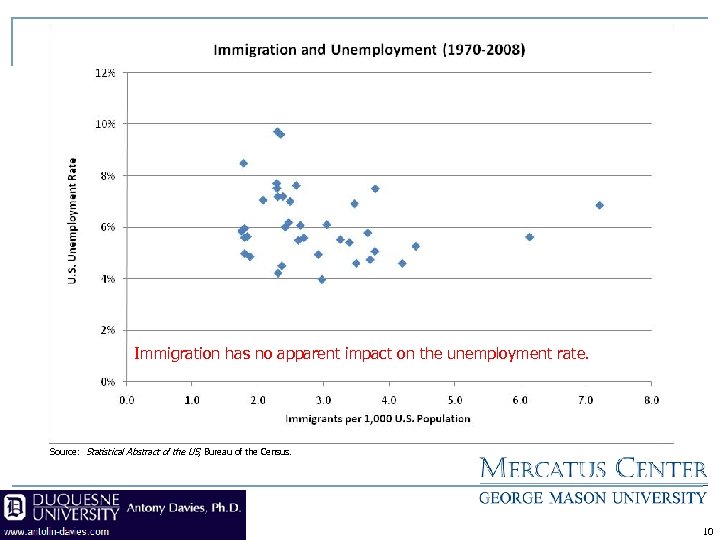
Immigration has no apparent impact on the unemployment rate. Source: Statistical Abstract of the US, Bureau of the Census. 10
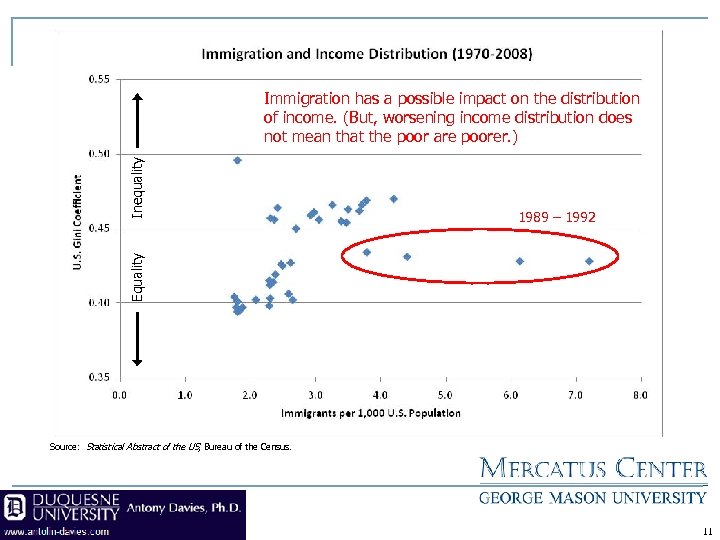
1989 – 1992 Equality Inequality Immigration has a possible impact on the distribution of income. (But, worsening income distribution does not mean that the poor are poorer. ) Source: Statistical Abstract of the US, Bureau of the Census. 11
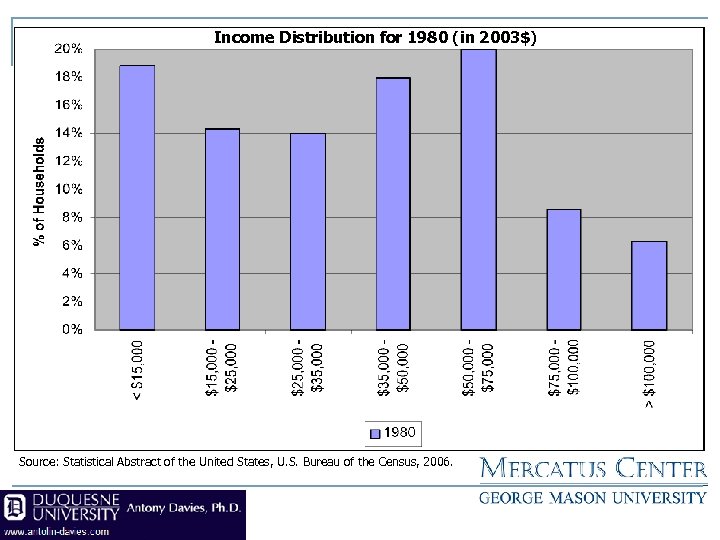
Income Distribution for 1980 (in 2003$) Source: Statistical Abstract of the United States, U. S. Bureau of the Census, 2006.

Income Distribution for 2003 (in 2003$) Source: Statistical Abstract of the United States, U. S. Bureau of the Census, 2006.
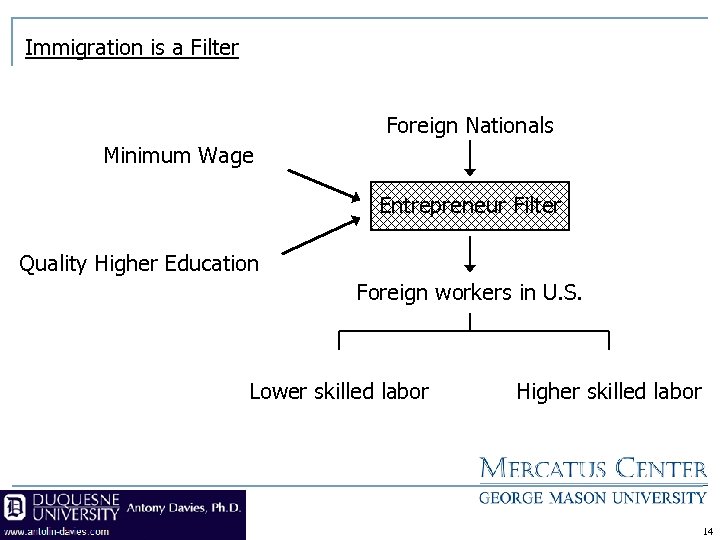
Immigration is a Filter Foreign Nationals Minimum Wage Entrepreneur Filter Quality Higher Education Foreign workers in U. S. Lower skilled labor Higher skilled labor 14
Factors influencing influx of foreign unskilled labor • Supply effect: Increase in the minimum wage increases the attractiveness of U. S. jobs to potential immigrants. Difficult to measure because legal immigration is capped. Look at supply of illegal immigrants as a proxy for the supply of unskilled immigrants. 15
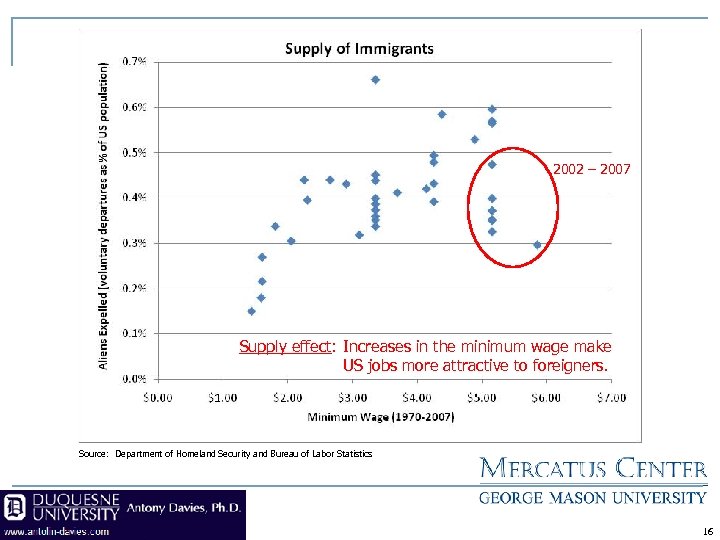
2002 – 2007 Supply effect: Increases in the minimum wage make US jobs more attractive to foreigners. Source: Department of Homeland Security and Bureau of Labor Statistics 16
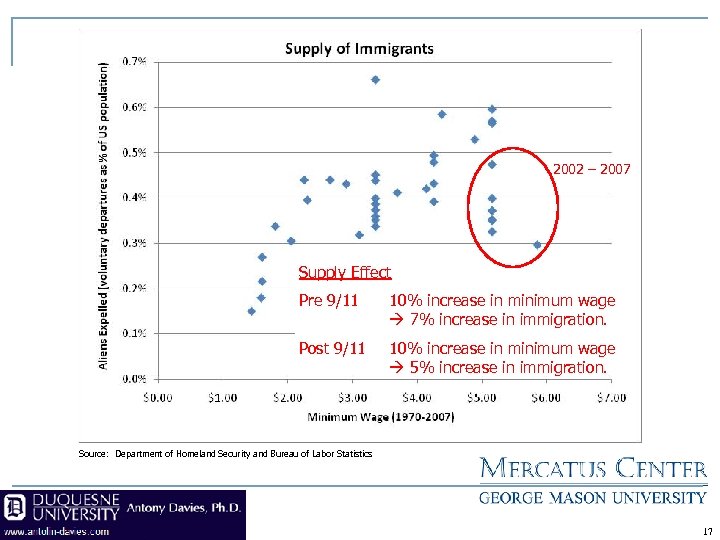
2002 – 2007 Supply Effect Pre 9/11 10% increase in minimum wage 7% increase in immigration. Post 9/11 10% increase in minimum wage 5% increase in immigration. Source: Department of Homeland Security and Bureau of Labor Statistics 17
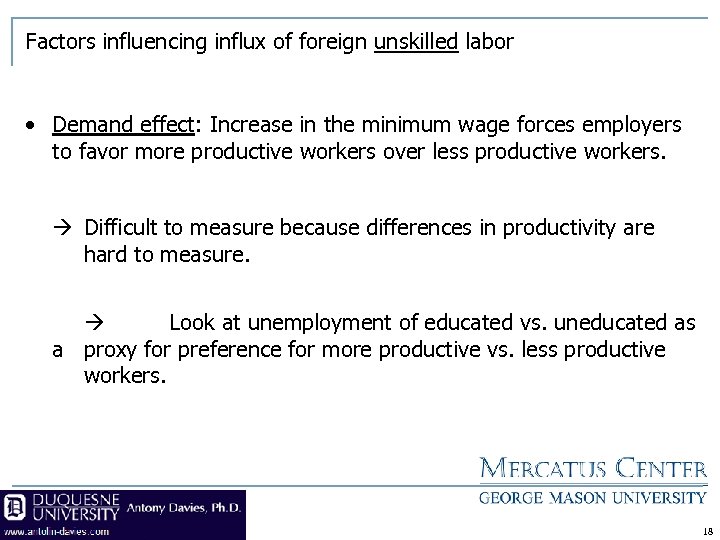
Factors influencing influx of foreign unskilled labor • Demand effect: Increase in the minimum wage forces employers to favor more productive workers over less productive workers. Difficult to measure because differences in productivity are hard to measure. Look at unemployment of educated vs. uneducated as a proxy for preference for more productive vs. less productive workers. 18
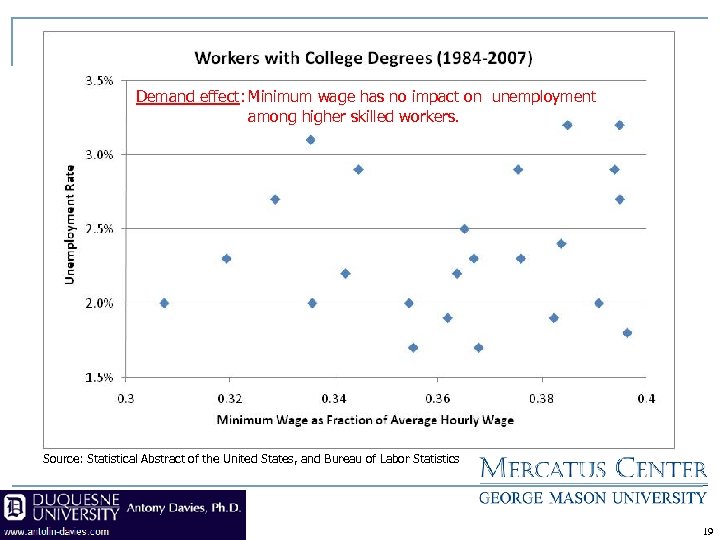
Demand effect: Minimum wage has no impact on unemployment among higher skilled workers. Source: Statistical Abstract of the United States, and Bureau of Labor Statistics 19
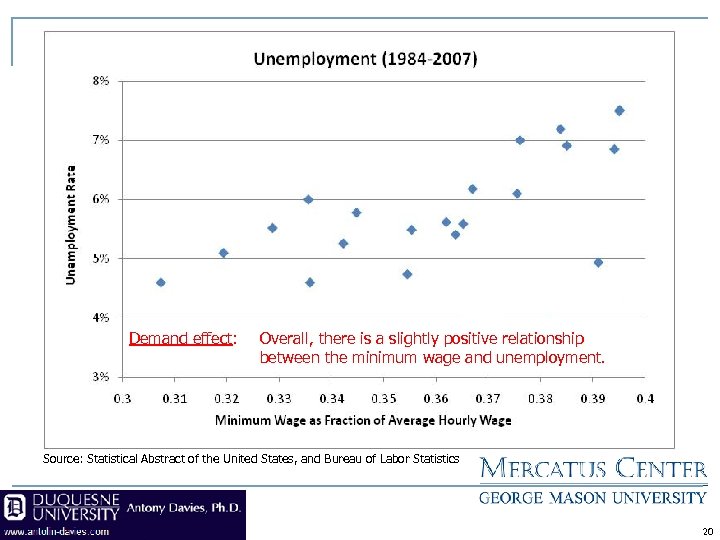
Demand effect: Overall, there is a slightly positive relationship between the minimum wage and unemployment. Source: Statistical Abstract of the United States, and Bureau of Labor Statistics 20
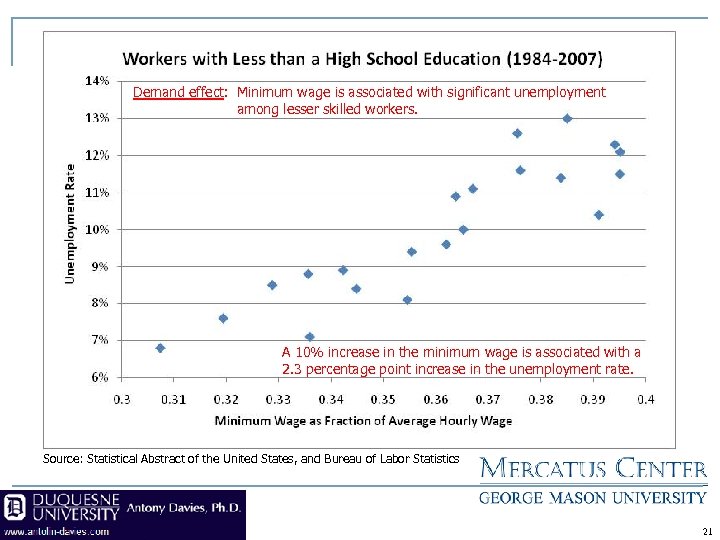
Demand effect: Minimum wage is associated with significant unemployment among lesser skilled workers. A 10% increase in the minimum wage is associated with a 2. 3 percentage point increase in the unemployment rate. Source: Statistical Abstract of the United States, and Bureau of Labor Statistics 21
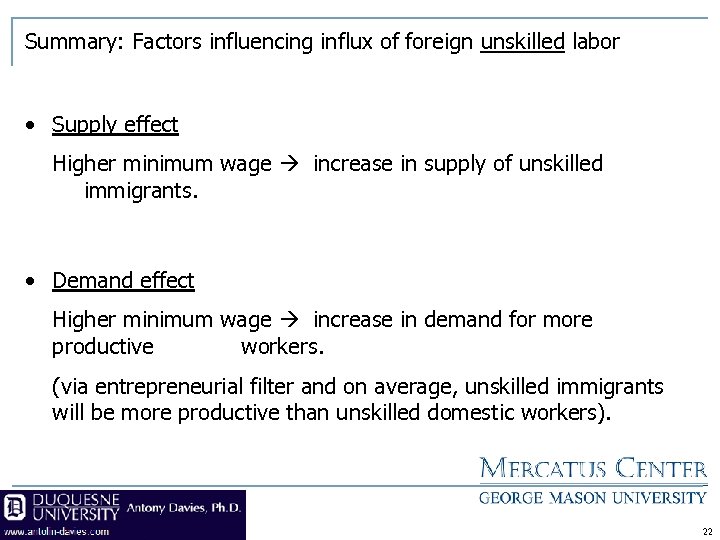
Summary: Factors influencing influx of foreign unskilled labor • Supply effect Higher minimum wage increase in supply of unskilled immigrants. • Demand effect Higher minimum wage increase in demand for more productive workers. (via entrepreneurial filter and on average, unskilled immigrants will be more productive than unskilled domestic workers). 22
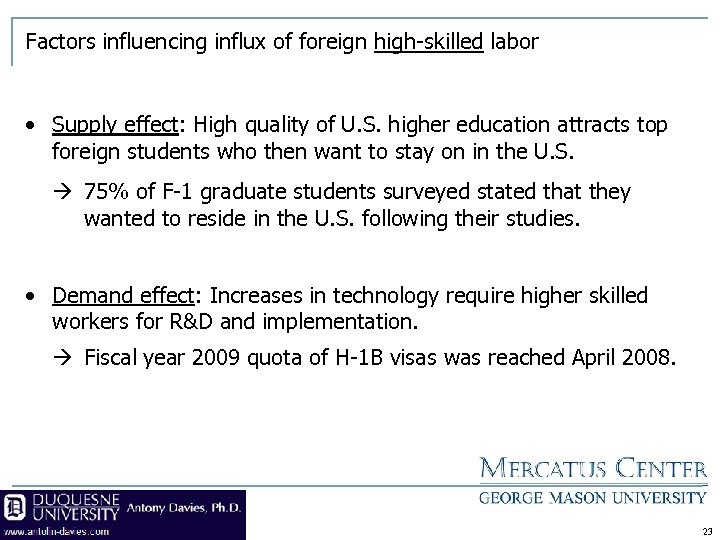
Factors influencing influx of foreign high-skilled labor • Supply effect: High quality of U. S. higher education attracts top foreign students who then want to stay on in the U. S. 75% of F-1 graduate students surveyed stated that they wanted to reside in the U. S. following their studies. • Demand effect: Increases in technology require higher skilled workers for R&D and implementation. Fiscal year 2009 quota of H-1 B visas was reached April 2008. 23
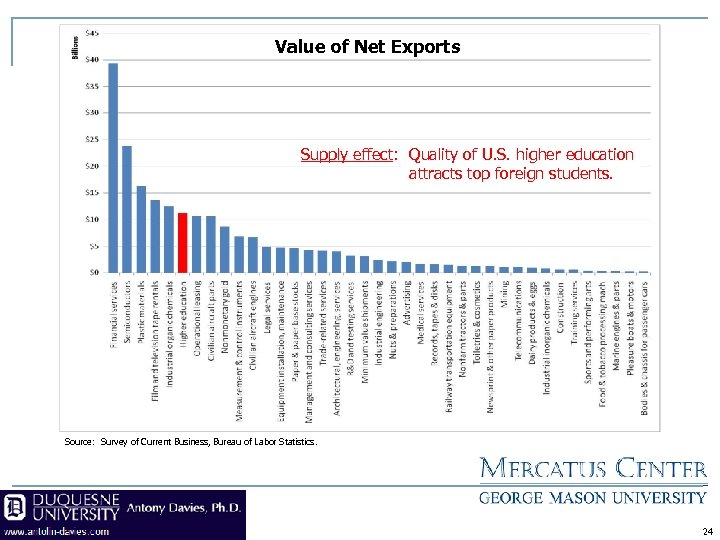
Value of Net Exports Supply effect: Quality of U. S. higher education attracts top foreign students. Source: Survey of Current Business, Bureau of Labor Statistics. 24
How do high-skilled H-1 B approvals alter U. S. demographics? 25
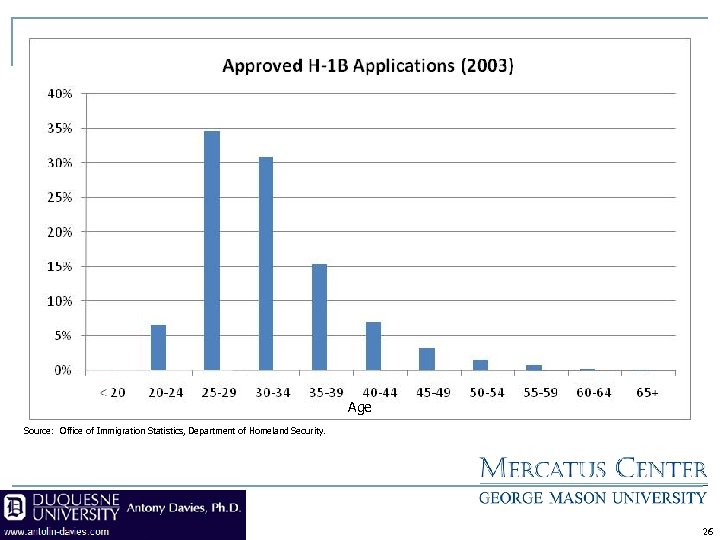
Age Source: Office of Immigration Statistics, Department of Homeland Security. 26
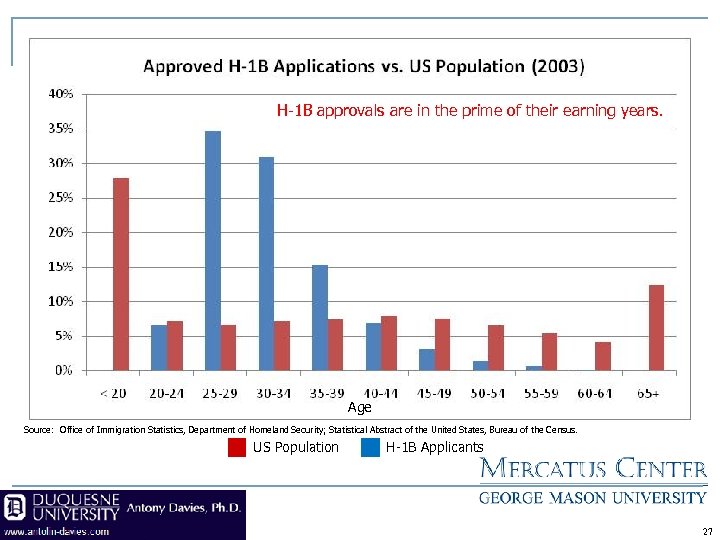
H-1 B approvals are in the prime of their earning years. Age Source: Office of Immigration Statistics, Department of Homeland Security; Statistical Abstract of the United States, Bureau of the Census. US Population H-1 B Applicants 27
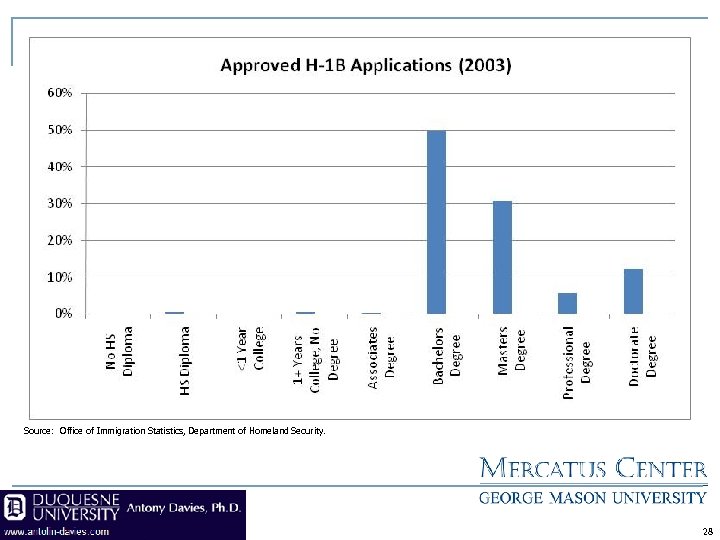
Source: Office of Immigration Statistics, Department of Homeland Security. 28
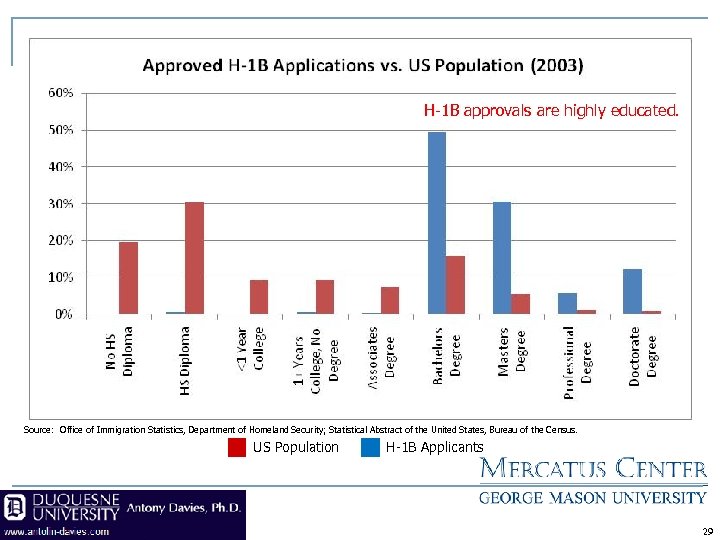
H-1 B approvals are highly educated. Source: Office of Immigration Statistics, Department of Homeland Security; Statistical Abstract of the United States, Bureau of the Census. US Population H-1 B Applicants 29
Are H-1 B approvals a drain on Social Security? 30
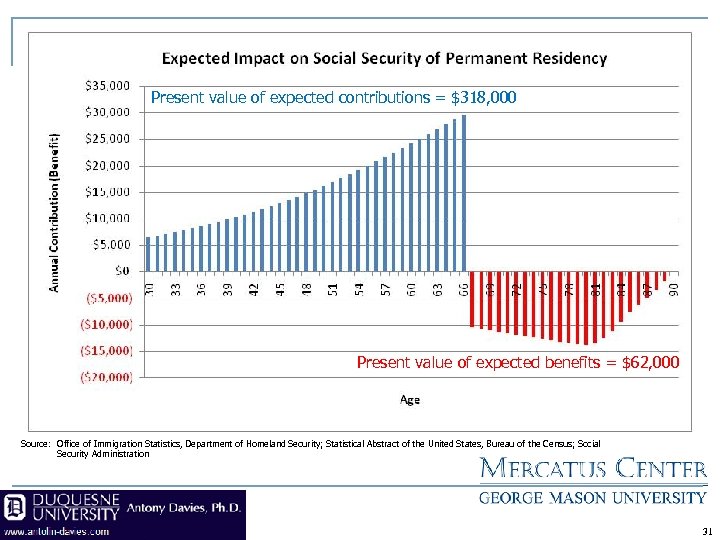
Present value of expected contributions = $318, 000 Present value of expected benefits = $62, 000 Source: Office of Immigration Statistics, Department of Homeland Security; Statistical Abstract of the United States, Bureau of the Census; Social Security Administration 31
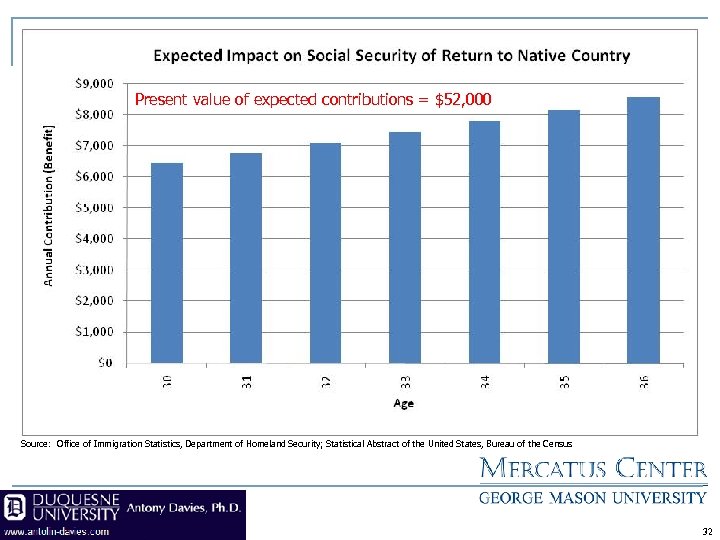
Present value of expected contributions = $52, 000 Source: Office of Immigration Statistics, Department of Homeland Security; Statistical Abstract of the United States, Bureau of the Census 32
Are H-1 B approvals a drain on Social Security? The median H-1 B who remains in the country contributes a net positive of more than $250, 000 to Social Security. The median H-1 B who leaves the country when the visa expires contributes a net positive of more than $50, 000 to Social Security. 33
What do H-1 B’s contribute in income taxes? 34
According to a recent study by the Technology Policy Institute: Relaxation of H-1 B and Green Card restrictions over the period 2003 – 2007 would have resulted in $8 billion in additional Federal income tax revenues. Source: The Budgetary Effects of High-Skilled Immigration Reform, Arlene Holen, March 2009. 35
Are U. S. employers taking advantage of H-1 B’s by paying them a lower wage? Look at wages paid at colleges and universities because higher education is exempt from many of the H-1 B hiring restrictions. 36
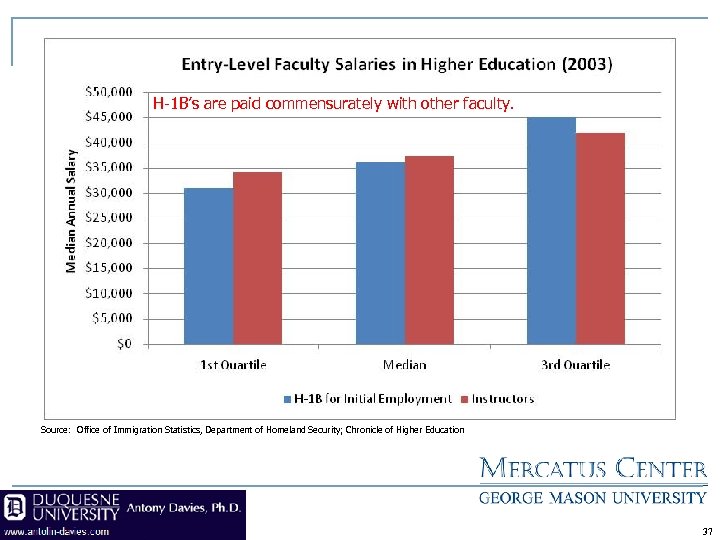
H-1 B’s are paid commensurately with other faculty. Source: Office of Immigration Statistics, Department of Homeland Security; Chronicle of Higher Education 37
What do high-skilled H-1 B workers do besides work? 38
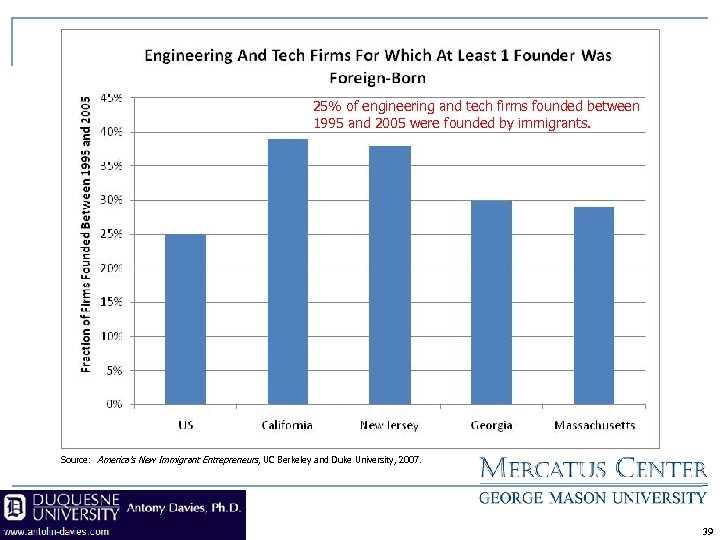
25% of engineering and tech firms founded between 1995 and 2005 were founded by immigrants. Source: America’s New Immigrant Entrepreneurs, UC Berkeley and Duke University, 2007. 39

How many jobs do they occupy? How many jobs do they create? 40
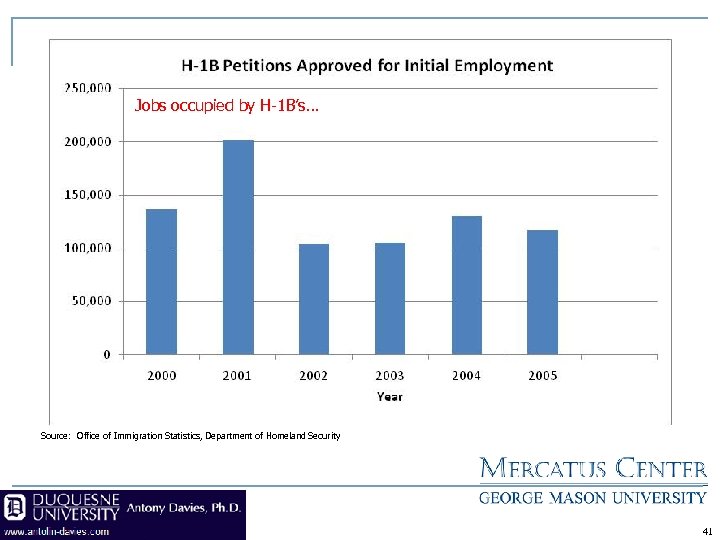
Jobs occupied by H-1 B’s… Source: Office of Immigration Statistics, Department of Homeland Security 41
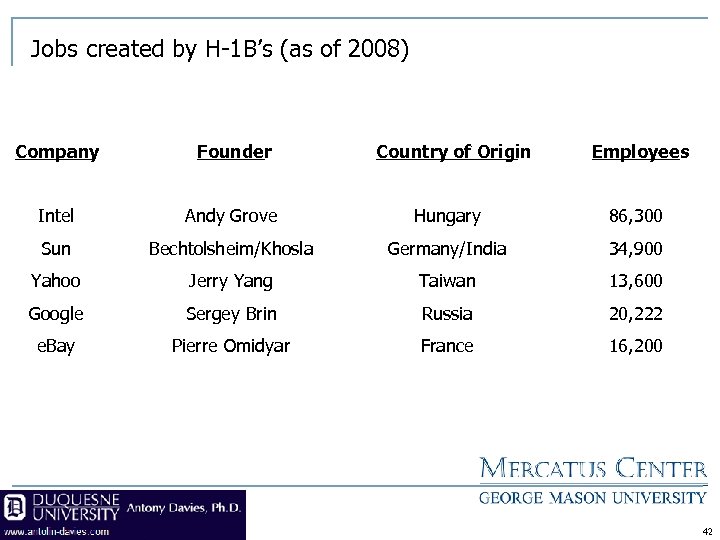
Jobs created by H-1 B’s (as of 2008) Company Founder Country of Origin Employees Intel Andy Grove Hungary 86, 300 Sun Bechtolsheim/Khosla Germany/India 34, 900 Yahoo Jerry Yang Taiwan 13, 600 Google Sergey Brin Russia 20, 222 e. Bay Pierre Omidyar France 16, 200 42
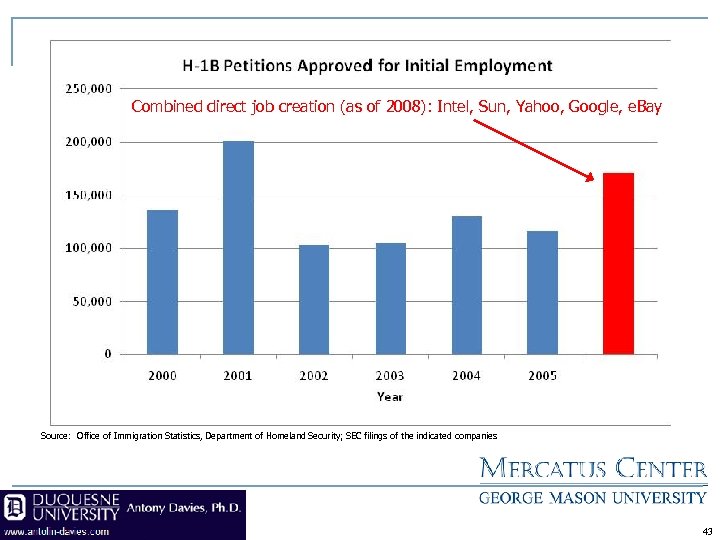
Combined direct job creation (as of 2008): Intel, Sun, Yahoo, Google, e. Bay Source: Office of Immigration Statistics, Department of Homeland Security; SEC filings of the indicated companies 43
How much do we pay them? How much wealth do they create? 44
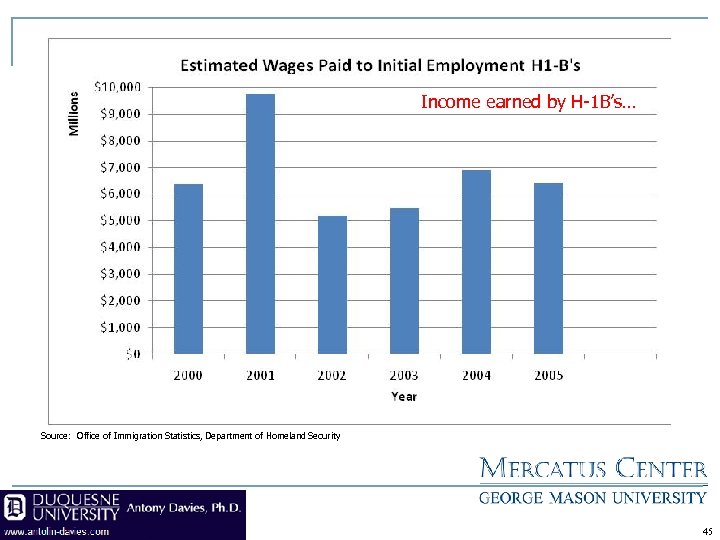
Income earned by H-1 B’s… Source: Office of Immigration Statistics, Department of Homeland Security 45
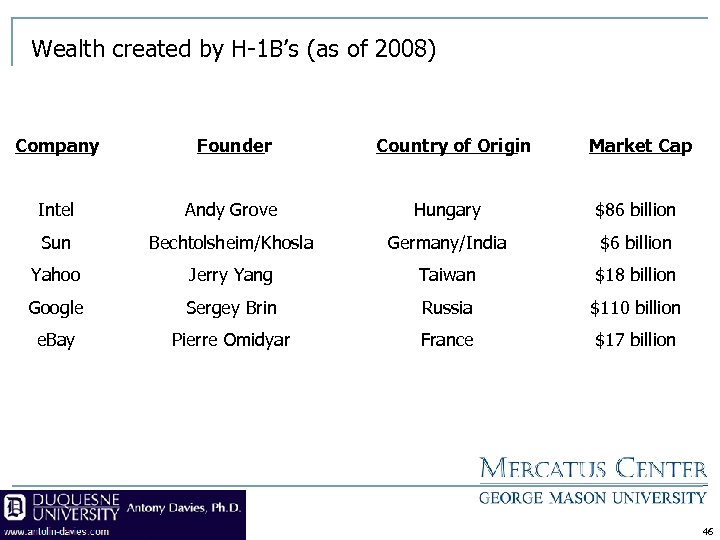
Wealth created by H-1 B’s (as of 2008) Company Founder Country of Origin Market Cap Intel Andy Grove Hungary $86 billion Sun Bechtolsheim/Khosla Germany/India $6 billion Yahoo Jerry Yang Taiwan $18 billion Google Sergey Brin Russia $110 billion e. Bay Pierre Omidyar France $17 billion 46
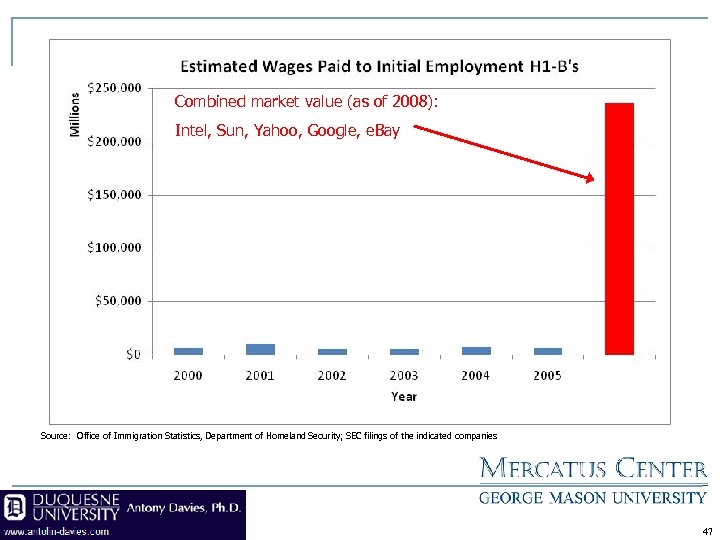
Combined market value (as of 2008): Intel, Sun, Yahoo, Google, e. Bay Source: Office of Immigration Statistics, Department of Homeland Security; SEC filings of the indicated companies 47
Increasing H-1 B labor reduces outsourcing. 48
H 1 -B labor is similar to outsourcing with the exceptions: • Workers spend money directly in the US rather than importing from the US. More consumption and improved tax base. • There are “spillover” effects in the form of community involvement and enrichment. Diversity. • The children of educated immigrant labor will tend to become educated themselves and to remain in the U. S. More educated populace. 49
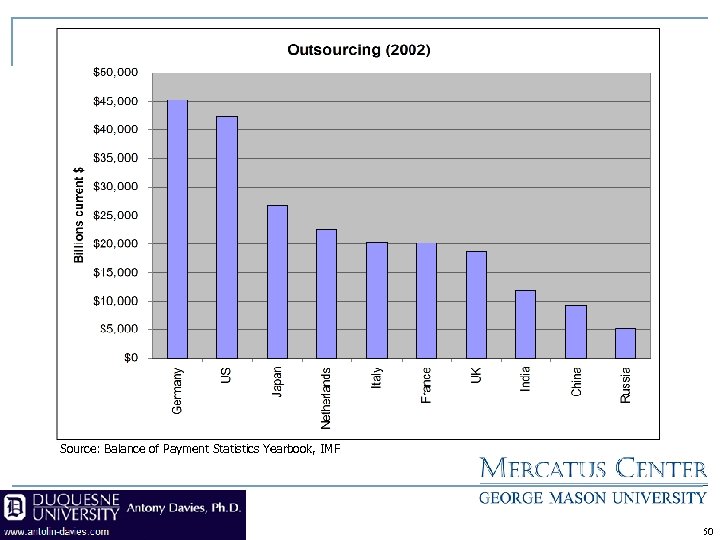
Source: Balance of Payment Statistics Yearbook, IMF 50
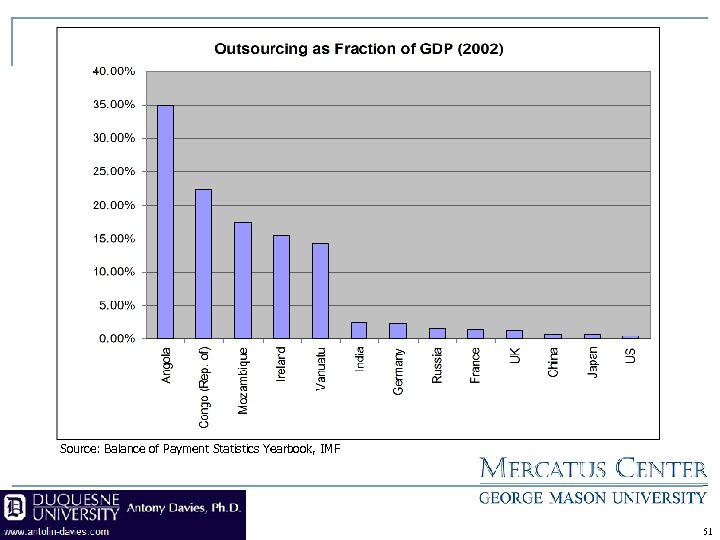
Source: Balance of Payment Statistics Yearbook, IMF 51
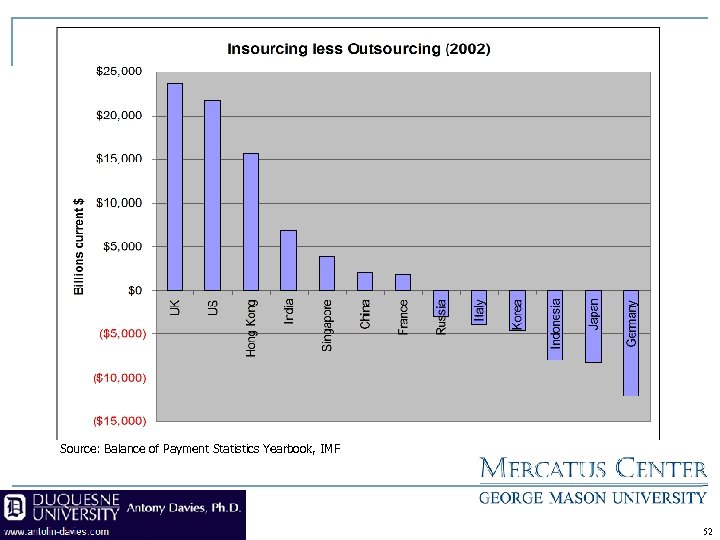
Source: Balance of Payment Statistics Yearbook, IMF 52
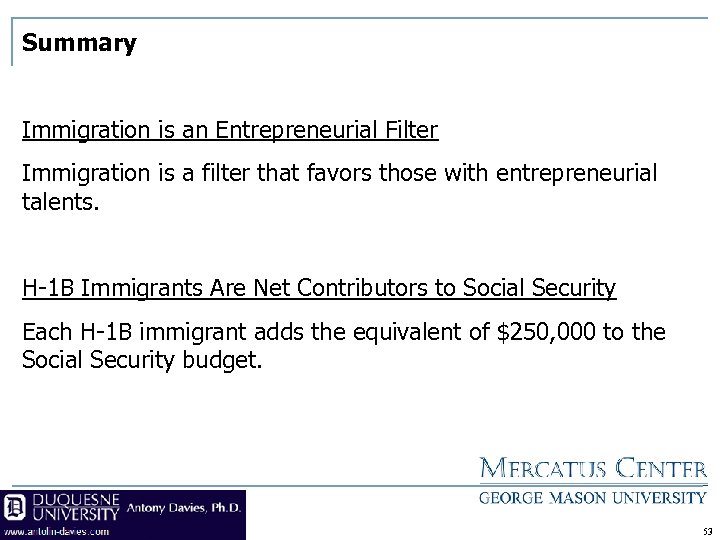
Summary Immigration is an Entrepreneurial Filter Immigration is a filter that favors those with entrepreneurial talents. H-1 B Immigrants Are Net Contributors to Social Security Each H-1 B immigrant adds the equivalent of $250, 000 to the Social Security budget. 53
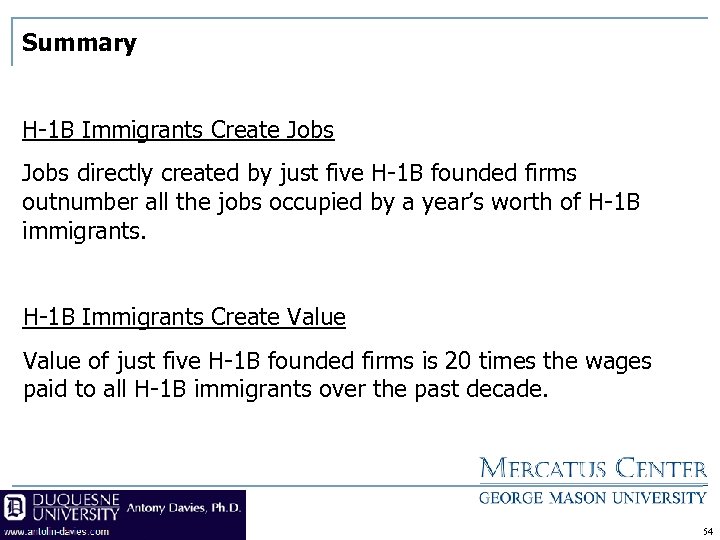
Summary H-1 B Immigrants Create Jobs directly created by just five H-1 B founded firms outnumber all the jobs occupied by a year’s worth of H-1 B immigrants. H-1 B Immigrants Create Value of just five H-1 B founded firms is 20 times the wages paid to all H-1 B immigrants over the past decade. 54

Summary Immigrants Are Future Americans The more H-1 B immigrants we have, the more Americans we will have who are highly skilled in science, technology, engineering, and mathematics. 55
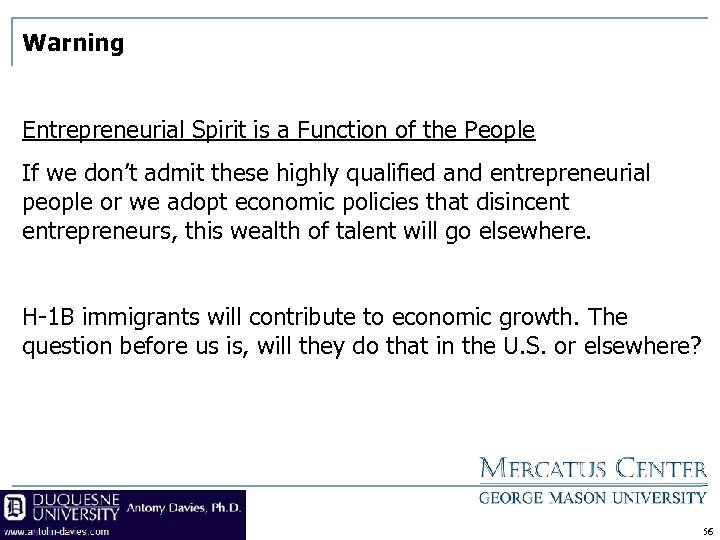
Warning Entrepreneurial Spirit is a Function of the People If we don’t admit these highly qualified and entrepreneurial people or we adopt economic policies that disincent entrepreneurs, this wealth of talent will go elsewhere. H-1 B immigrants will contribute to economic growth. The question before us is, will they do that in the U. S. or elsewhere? 56

Costs and Benefits of High Skilled Immigration March 31, 2009 copies of this presentation can be found at www. antolin-davies. com 57
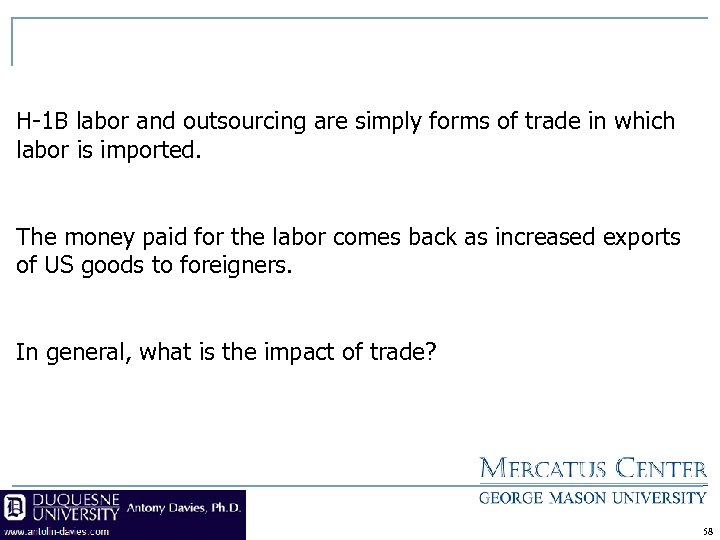
H-1 B labor and outsourcing are simply forms of trade in which labor is imported. The money paid for the labor comes back as increased exports of US goods to foreigners. In general, what is the impact of trade? 58
Ignoring the specifics of what is traded, what is the impact of trade on national incomes? 59
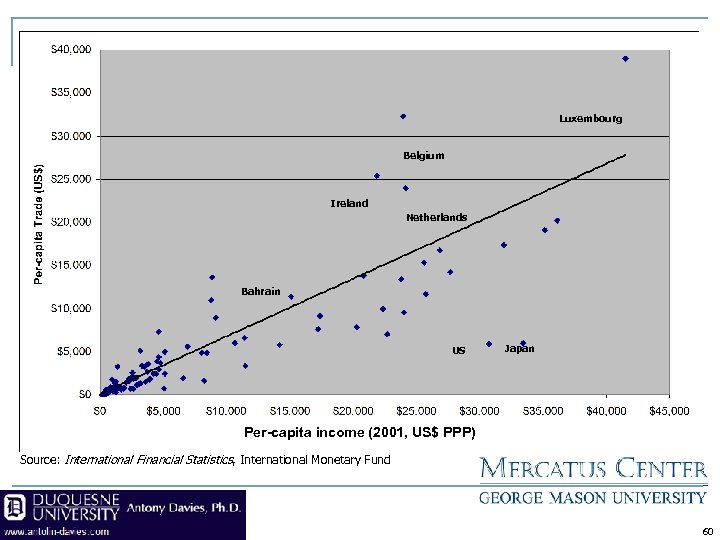
Luxembourg Belgium Ireland Netherlands Bahrain US Japan Per-capita income (2001, US$ PPP) Source: International Financial Statistics, International Monetary Fund 60
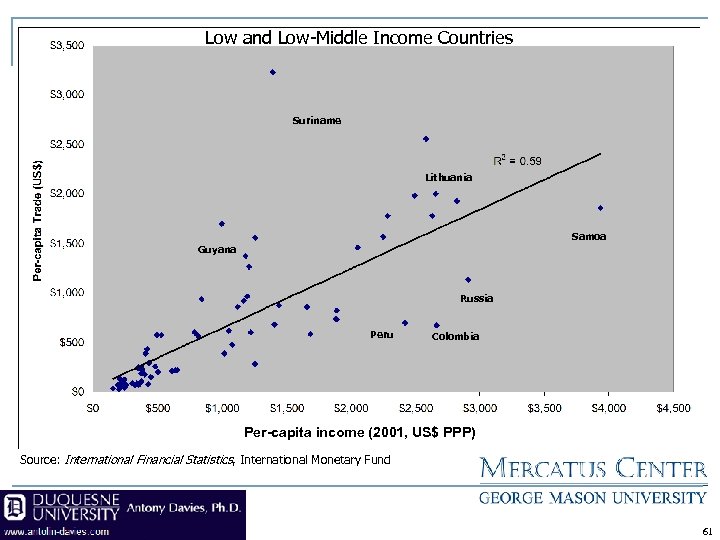
Low and Low-Middle Income Countries Suriname Lithuania Samoa Guyana Russia Peru Colombia Per-capita income (2001, US$ PPP) Source: International Financial Statistics, International Monetary Fund 61
Ignoring the specifics of what is traded, what is the impact of trade on income distributions? 62
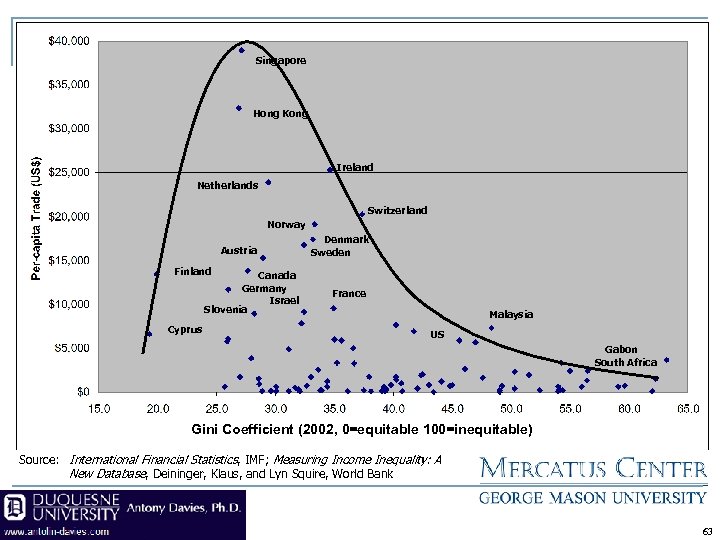
Singapore Hong Kong Ireland Netherlands Switzerland Norway Austria Denmark Sweden Finland Canada Germany Israel Slovenia Cyprus France Malaysia US Gabon South Africa Gini Coefficient (2002, 0=equitable 100=inequitable) Source: International Financial Statistics, IMF; Measuring Income Inequality: A New Database, Deininger, Klaus, and Lyn Squire, World Bank 63
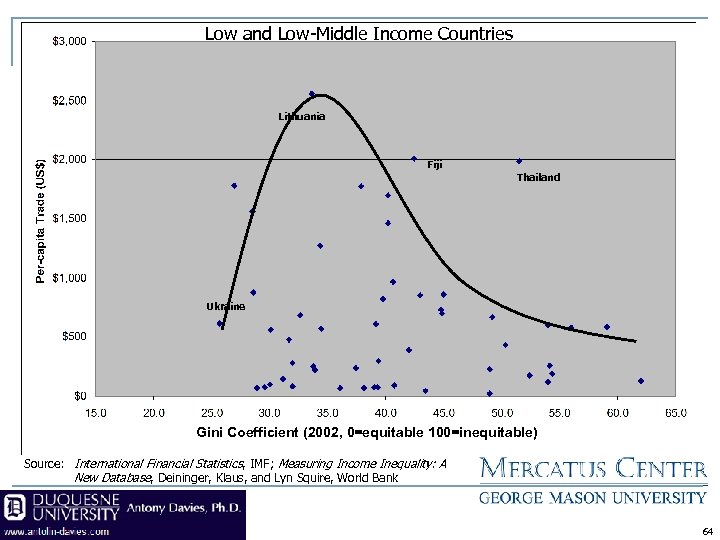
Low and Low-Middle Income Countries Lithuania Fiji Thailand Ukraine Gini Coefficient (2002, 0=equitable 100=inequitable) Source: International Financial Statistics, IMF; Measuring Income Inequality: A New Database, Deininger, Klaus, and Lyn Squire, World Bank 64
Ignoring the specifics of what is traded, what is the impact of trade on health measures? 65
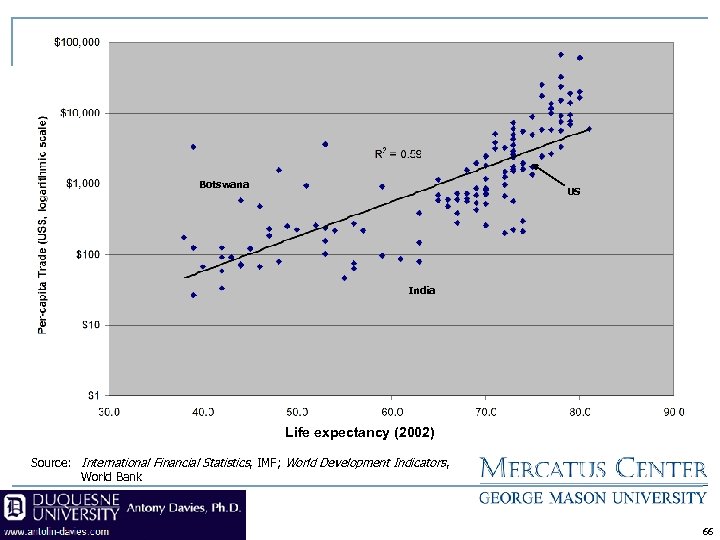
Botswana US India Life expectancy (2002) Source: International Financial Statistics, IMF; World Development Indicators , World Bank 66
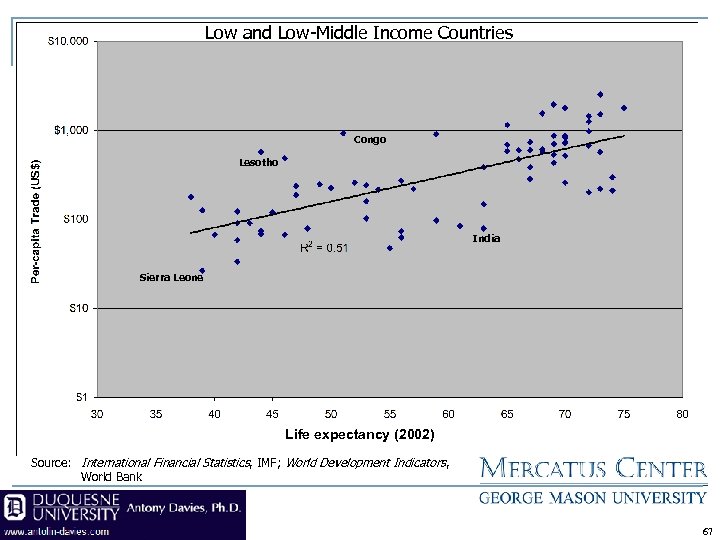
Low and Low-Middle Income Countries Congo Lesotho India Sierra Leone Life expectancy (2002) Source: International Financial Statistics, IMF; World Development Indicators , World Bank 67
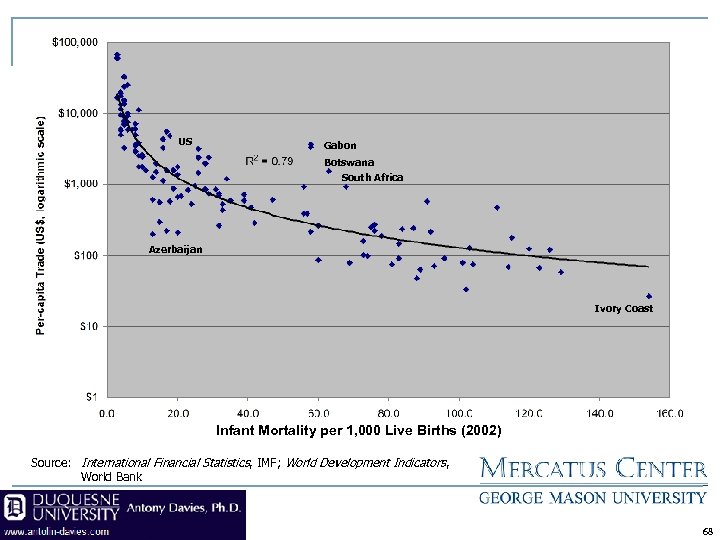
US Gabon Botswana South Africa Azerbaijan Ivory Coast Infant Mortality per 1, 000 Live Births (2002) Source: International Financial Statistics, IMF; World Development Indicators , World Bank 68
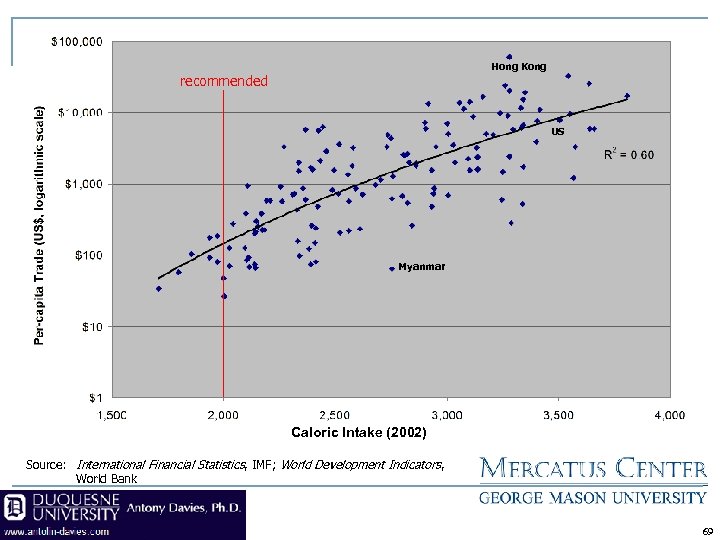
Hong Kong recommended US Myanmar Caloric Intake (2002) Source: International Financial Statistics, IMF; World Development Indicators , World Bank 69

Ignoring the specifics of what is traded, what is the impact of trade on social equality? 70
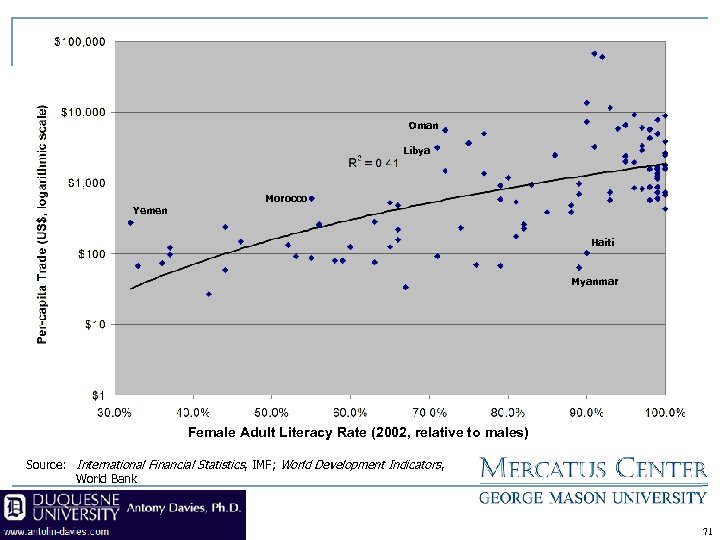
Oman Libya Yemen Morocco Haiti Myanmar Female Adult Literacy Rate (2002, relative to males) Source: International Financial Statistics, IMF; World Development Indicators , World Bank 71
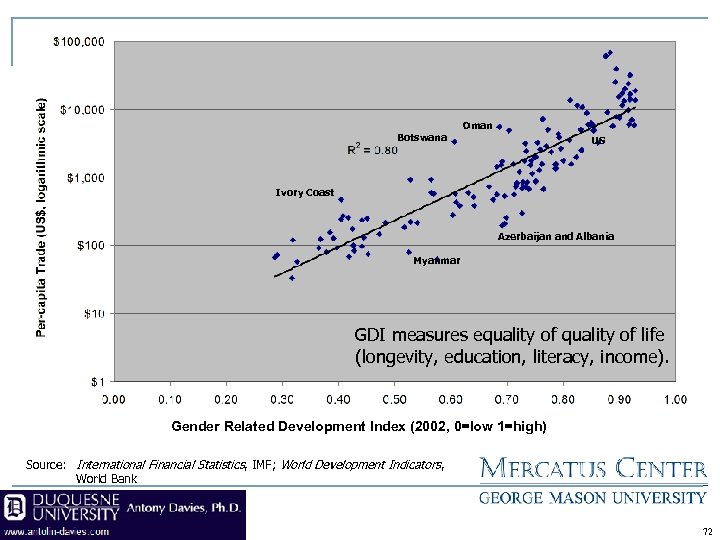
Botswana Oman US Ivory Coast Azerbaijan and Albania Myanmar GDI measures equality of life (longevity, education, literacy, income). Gender Related Development Index (2002, 0=low 1=high) Source: International Financial Statistics, IMF; World Development Indicators , World Bank 72
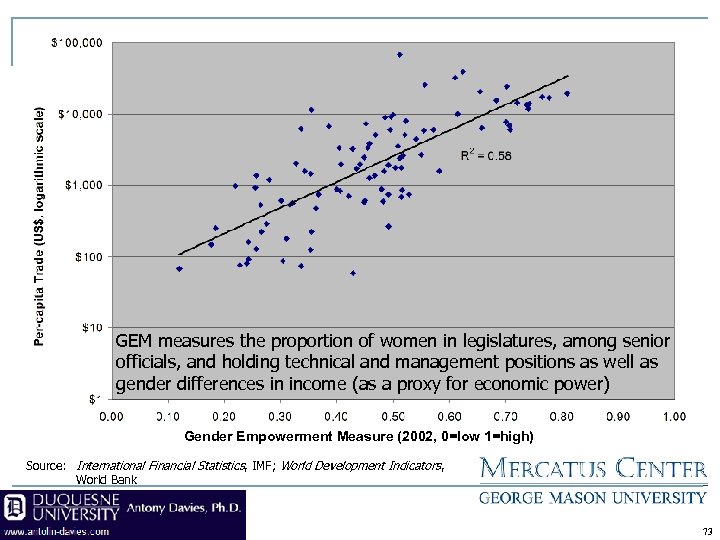
GEM measures the proportion of women in legislatures, among senior officials, and holding technical and management positions as well as gender differences in income (as a proxy for economic power) Gender Empowerment Measure (2002, 0=low 1=high) Source: International Financial Statistics, IMF; World Development Indicators , World Bank 73
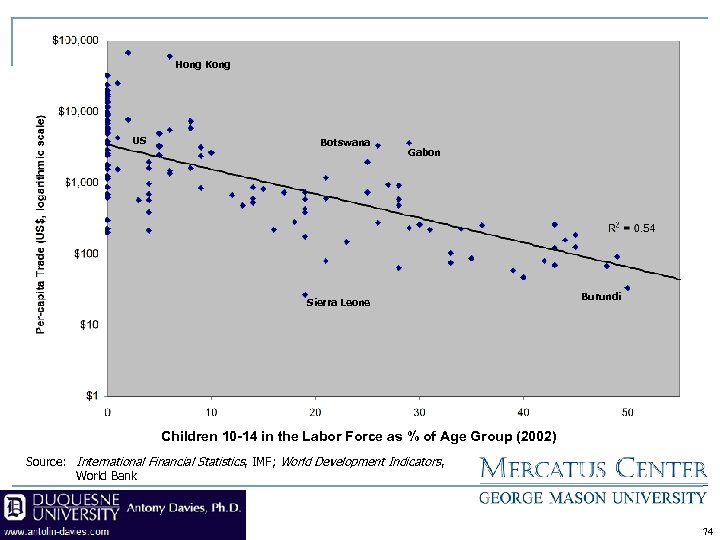
Hong Kong US Botswana Gabon Sierra Leone Burundi Children 10 -14 in the Labor Force as % of Age Group (2002) Source: International Financial Statistics, IMF; World Development Indicators , World Bank 74
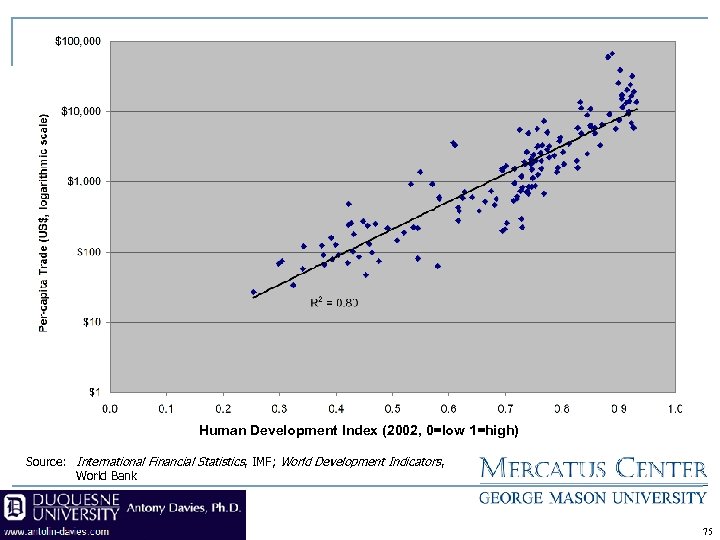
Human Development Index (2002, 0=low 1=high) Source: International Financial Statistics, IMF; World Development Indicators , World Bank 75
Ignoring the specifics of what is traded, what is the impact of trade on U. S. unemployment and earnings? 76
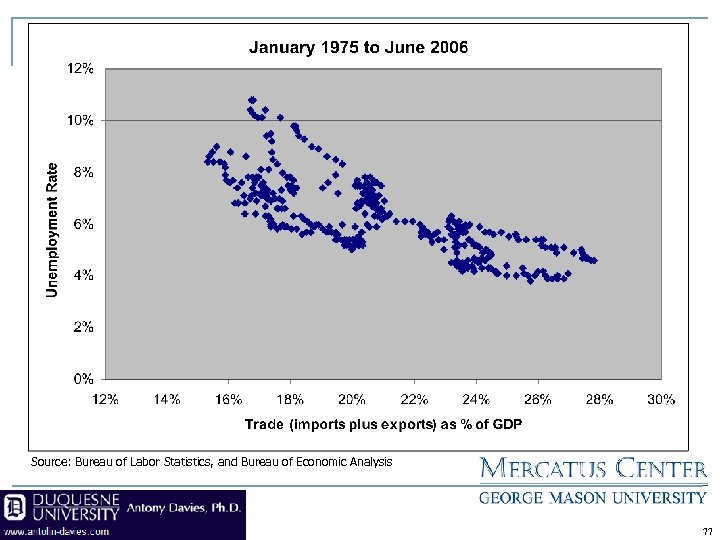
Source: Bureau of Labor Statistics, and Bureau of Economic Analysis 77
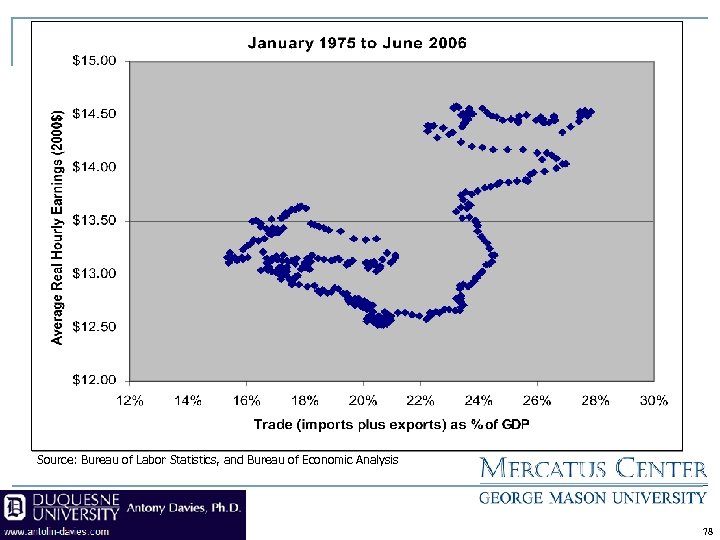
Source: Bureau of Labor Statistics, and Bureau of Economic Analysis 78
Скачать презентацию Costs and Benefits of High Skilled Immigration March
b059226c3fc79255f1e96403a58cf707.ppt