 Скачать презентацию COST European COoperation in Science and Technology Belspo
2e9f5270880a274e1a5495313be365f5.ppt
- Количество слайдов: 12



COST European COoperation in Science and Technology Belspo, 14 March 2014 Benjamin MONNOYE, Attaché benjamin. monnoye@cfwb. be Directorate of scientific research DG non-compulsory education and scientific research Ministry of the Federation Wallonia-Brussels
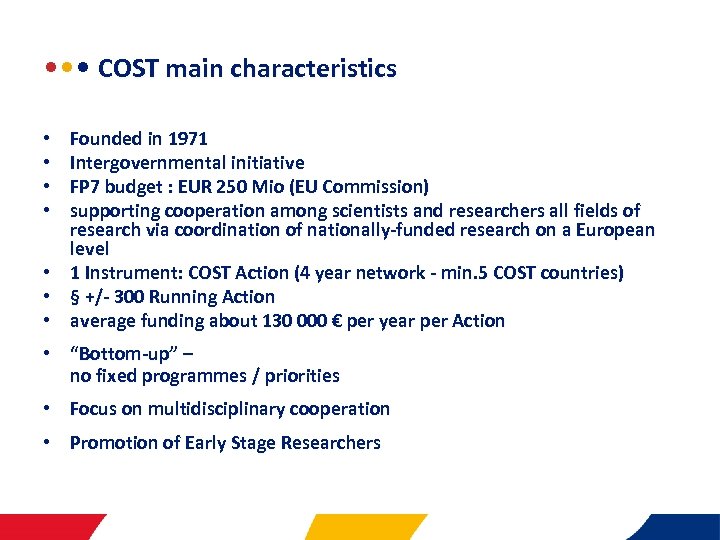
• • • COST main characteristics Founded in 1971 Intergovernmental initiative FP 7 budget : EUR 250 Mio (EU Commission) supporting cooperation among scientists and researchers all fields of research via coordination of nationally-funded research on a European level • 1 Instrument: COST Action (4 year network - min. 5 COST countries) • § +/- 300 Running Action • average funding about 130 000 € per year per Action • • • “Bottom-up” – no fixed programmes / priorities • Focus on multidisciplinary cooperation • Promotion of Early Stage Researchers
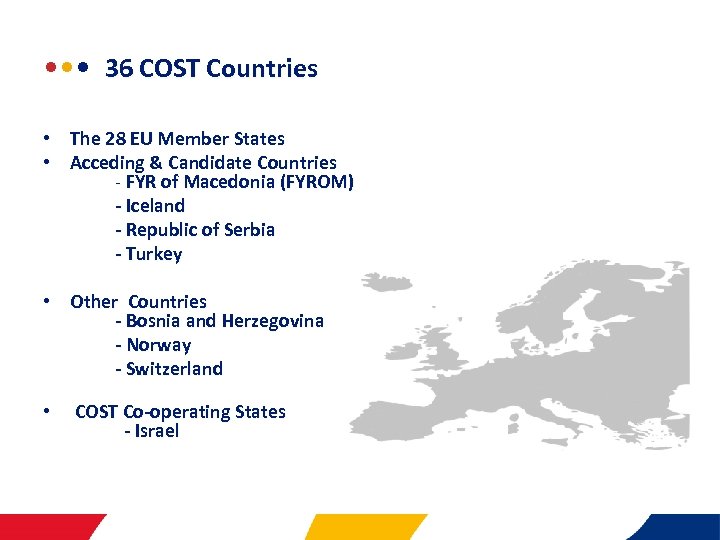
• • • 36 COST Countries • The 28 EU Member States • Acceding & Candidate Countries - FYR of Macedonia (FYROM) - Iceland - Republic of Serbia - Turkey • Other Countries - Bosnia and Herzegovina - Norway - Switzerland • COST Co-operating States - Israel
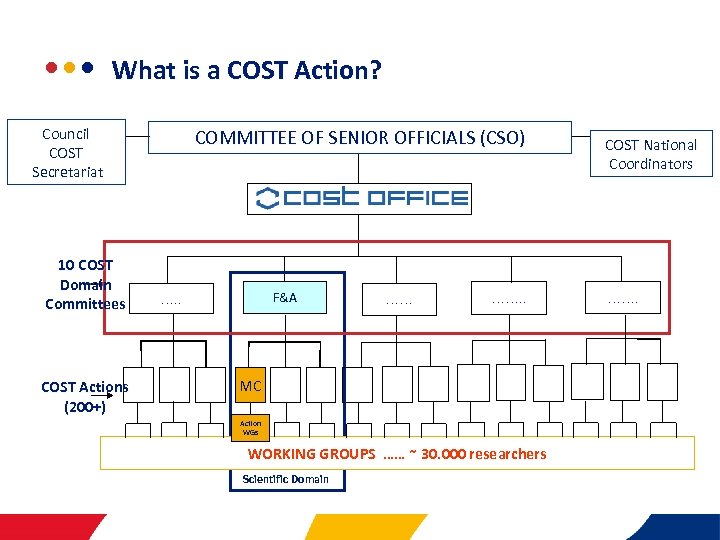
• • • What is a COST Action? Council COST Secretariat 10 COST Domain Committees COST Actions (200+) COMMITTEE OF SENIOR OFFICIALS (CSO) F&A …. . …… ……. . MC Action WGs WORKING GROUPS …… ~ 30. 000 researchers Scientific Domain COST National Coordinators …….
• • • What is funded by COST? • COST Actions: A network of (nationally) funded Actions projects (min. 5 participating countries) receive a financial contribution based on a joint work programme (4 years) for: – – – Science management / working group meetings Scientific workshops and seminars Short Term Scientific Missions (STSMs) Training Schools and Research Conferences Dissemination
• • • How COST works ? • How to introduce a COST Action • Assessment of Action proposals • How to join an Action
• • • How to Introduce a COST Action proposal • Open call, 2 collection dates/year (next march 2014) • Network ≥ 5 member countries • Consult the COST website • Take notice of the assessment criteria • Contact your CNC(s)
• • • Assessment of Action proposals • Over a period of 9 months (collection date -> start) • Preproposals: DC members + Experts • Full proposals: EEP + hearings DC
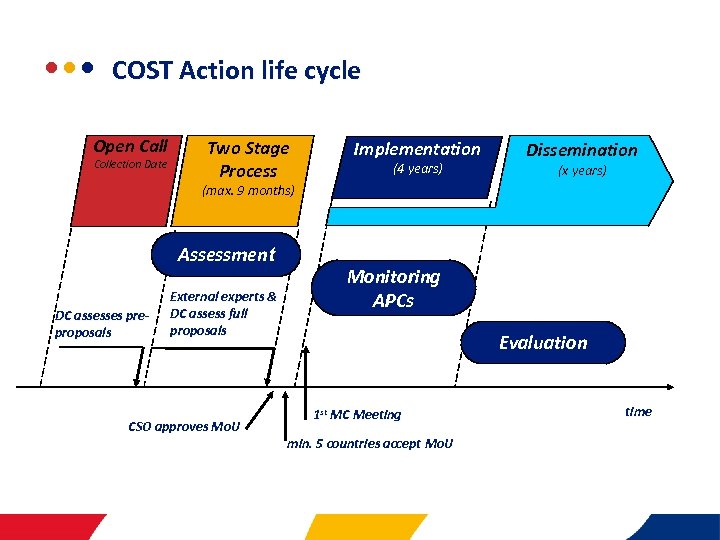
• • • COST Action life cycle Open Call Collection Date Two Stage Process Implementation (4 years) Dissemination (x years) (max. 9 months) Assessment DC assesses preproposals External experts & DC assess full proposals CSO approves Mo. U Monitoring APCs Evaluation 1 st MC Meeting min. 5 countries accept Mo. U time
• • • How to join an Action • Help writing the (pre)proposal • Respond positively during the elaboration of a full proposal • Join a starting/running Action via your CNC, preferably during the first year
• • • Some websites of interest § § § www. cost. eu www. belspo. be www. fwo. be/ www. fnrs. be/ www. recherchescientifique. cfwb. be/
Thank you for your attention ! Benjamin Monnoye, Wallonia-Brussels Federation, 14 march 2014
Скачать презентацию COST European COoperation in Science and Technology Belspo
2e9f5270880a274e1a5495313be365f5.ppt