 Скачать презентацию Cost-benefit analysis of energy efficient interventions in low-cost
9fff73594714e12e04b34af2c28aa62b.ppt
- Количество слайдов: 9



Cost-benefit analysis of energy efficient interventions in low-cost housing HARALD WINKLER Lwazikazi Tyani, Randall Spalding-Fecher, Khorommbi Matibe ENERGY & DEVELOPMENT RESEARCH CENTRE University of Cape Town May 2001 EDRC
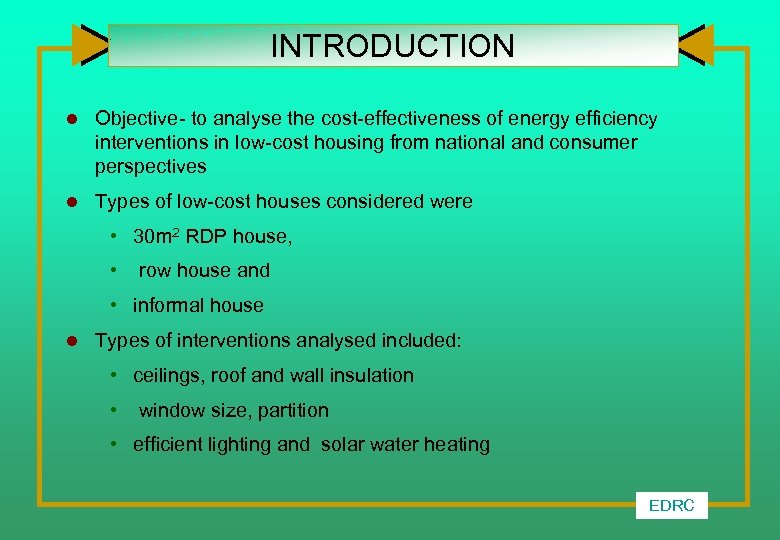
INTRODUCTION l Objective- to analyse the cost-effectiveness of energy efficiency interventions in low-cost housing from national and consumer perspectives l Types of low-cost houses considered were • 30 m 2 RDP house, • row house and • informal house l Types of interventions analysed included: • ceilings, roof and wall insulation • window size, partition • efficient lighting and solar water heating EDRC
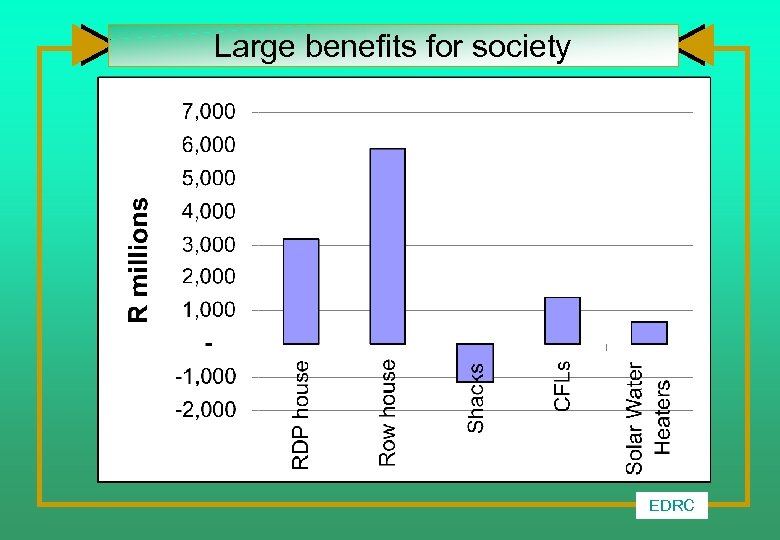
Large benefits for society EDRC
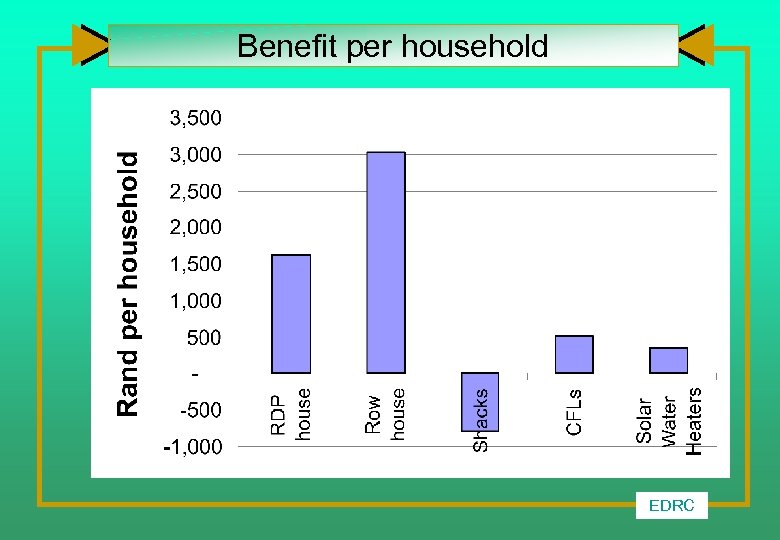
Benefit per household EDRC
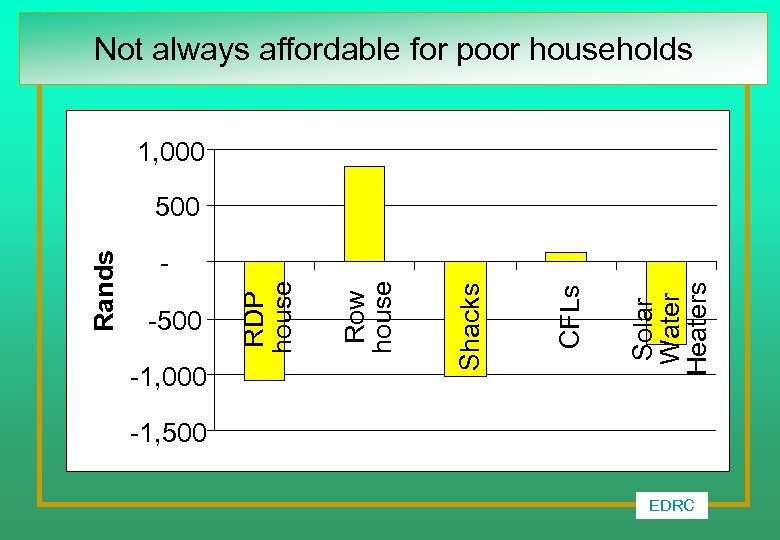
Not always affordable for poor households 1, 000 CFLs Solar Water Heaters -1, 000 Shacks -500 Row house RDP house Rands 500 -1, 500 EDRC
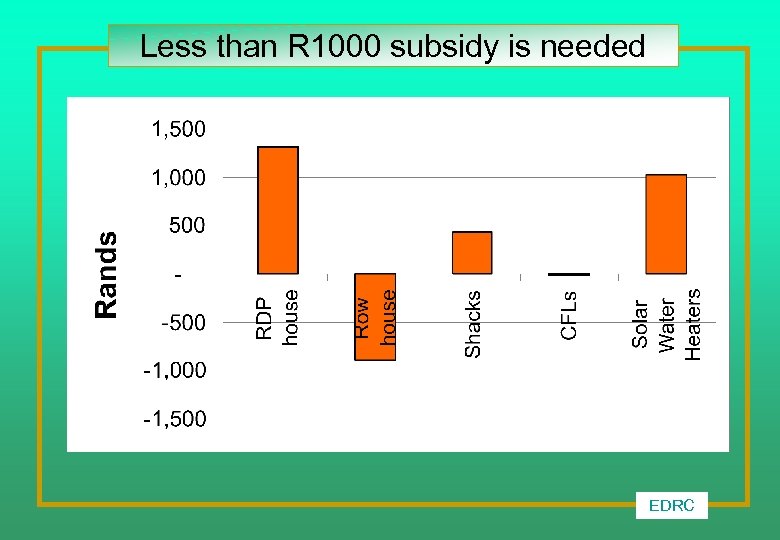
Less than R 1000 subsidy is needed EDRC
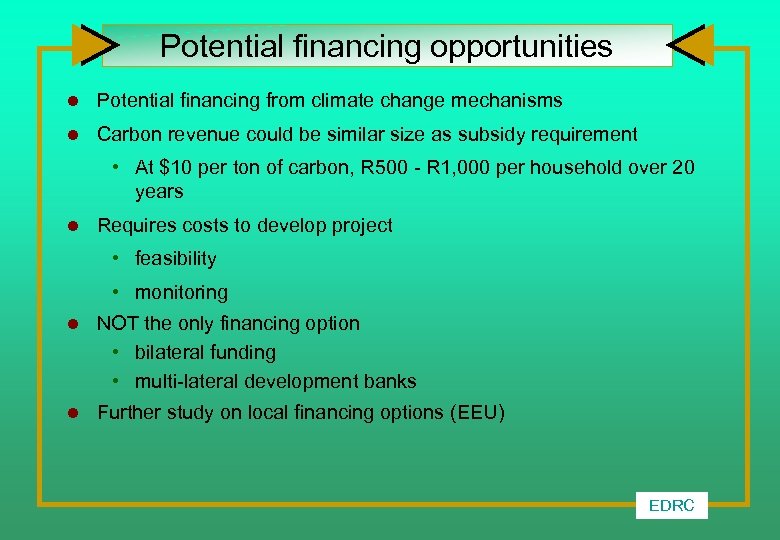
Potential financing opportunities l Potential financing from climate change mechanisms l Carbon revenue could be similar size as subsidy requirement • At $10 per ton of carbon, R 500 - R 1, 000 per household over 20 years l Requires costs to develop project • feasibility • monitoring l NOT the only financing option • bilateral funding • multi-lateral development banks l Further study on local financing options (EEU) EDRC
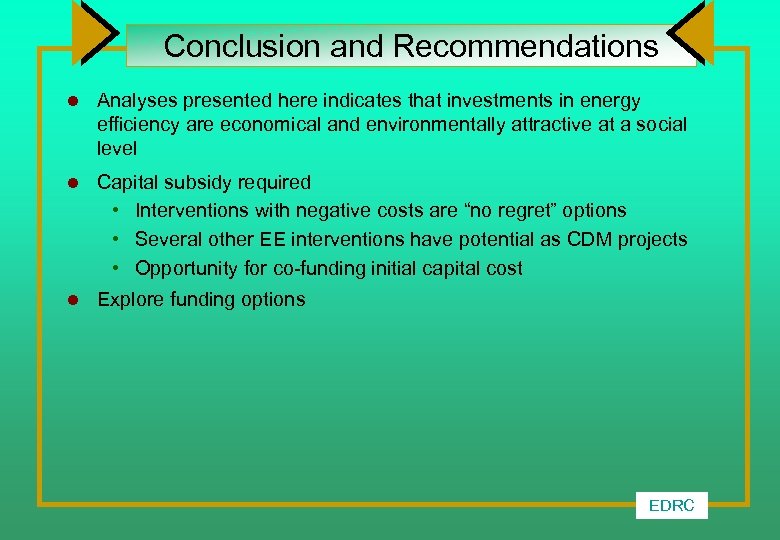
Conclusion and Recommendations l Analyses presented here indicates that investments in energy efficiency are economical and environmentally attractive at a social level l Capital subsidy required • Interventions with negative costs are “no regret” options • Several other EE interventions have potential as CDM projects • Opportunity for co-funding initial capital cost l Explore funding options EDRC
EDRC
Скачать презентацию Cost-benefit analysis of energy efficient interventions in low-cost
9fff73594714e12e04b34af2c28aa62b.ppt