 Скачать презентацию Corruption as practice Fact based indicators for policy
39f32faff45843e64f4eadf8d6a1b821.ppt
- Количество слайдов: 24



Corruption as practice. Fact based indicators for policy diagnosis and evaluation. Prof. Dr. Alina Mungiu-Pippidi (Hertie School of Governance) This project is co-funded by the Seventh Framework Programme for Research and againstcorruption. eu anticorrp. eu digiwhist. eu Technological Development of the European Union Contacts: pippidi@hertie-school. org
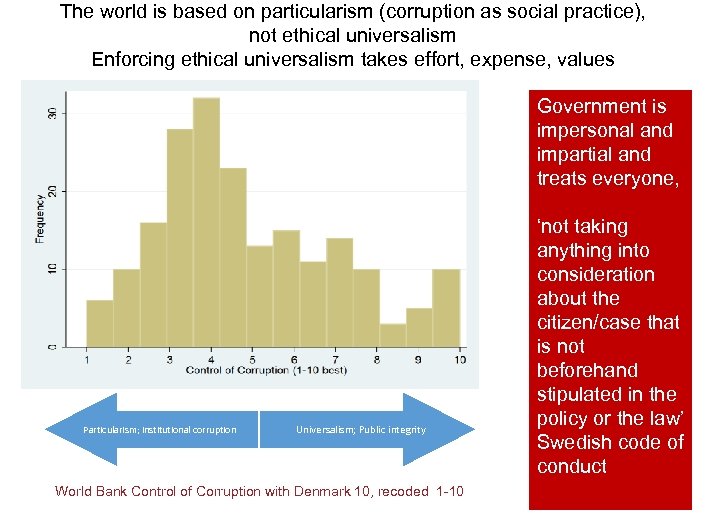
The world is based on particularism (corruption as social practice), not ethical universalism Enforcing ethical universalism takes effort, expense, values Government is impersonal and impartial and treats everyone, Particularism; Institutional corruption Universalism; Public integrity World Bank Control of Corruption with Denmark 10, recoded 1 -10 ‘not taking anything into consideration about the citizen/case that is not beforehand stipulated in the policy or the law’ Swedish code of conduct
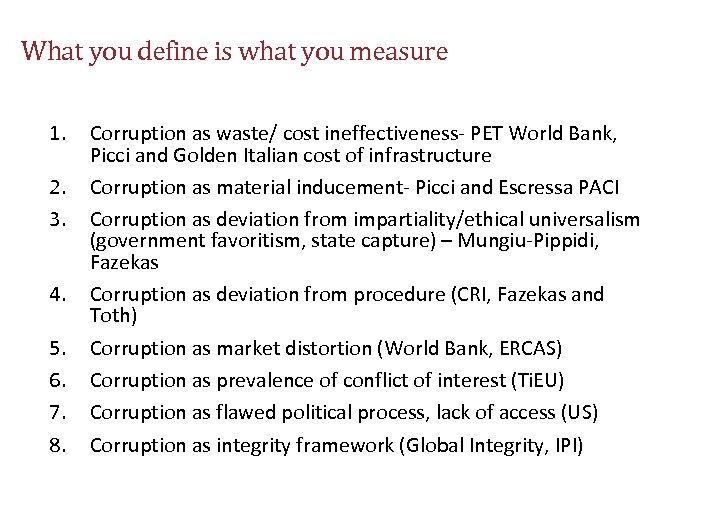
What you define is what you measure 1. 2. 3. 4. 5. 6. 7. 8. Corruption as waste/ cost ineffectiveness- PET World Bank, Picci and Golden Italian cost of infrastructure Corruption as material inducement- Picci and Escressa PACI Corruption as deviation from impartiality/ethical universalism (government favoritism, state capture) – Mungiu-Pippidi, Fazekas Corruption as deviation from procedure (CRI, Fazekas and Toth) Corruption as market distortion (World Bank, ERCAS) Corruption as prevalence of conflict of interest (Ti. EU) Corruption as flawed political process, lack of access (US) Corruption as integrity framework (Global Integrity, IPI)
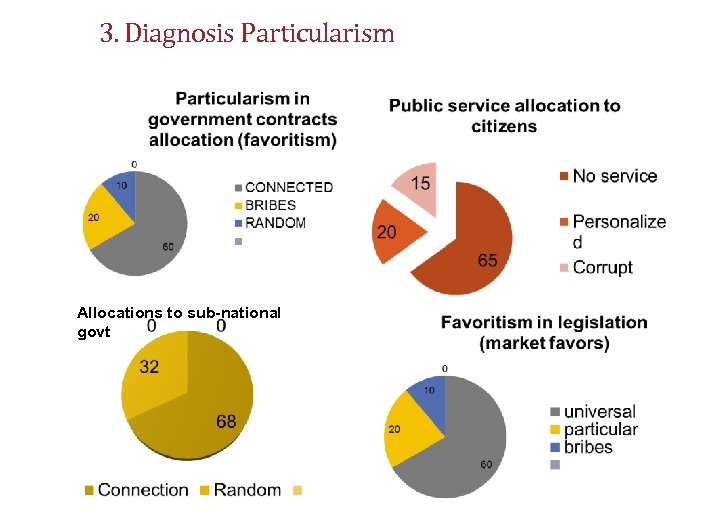
3. Diagnosis Particularism Allocations to sub-national govt
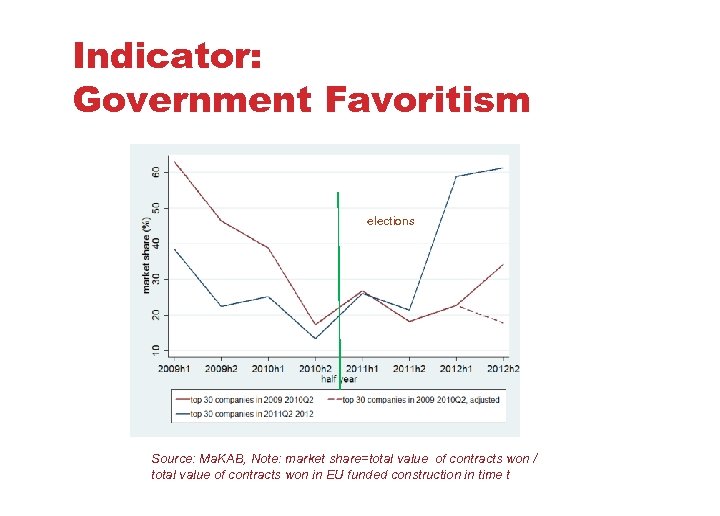
Indicator: Government Favoritism elections Source: Ma. KAB, Note: market share=total value of contracts won / total value of contracts won in EU funded construction in time t
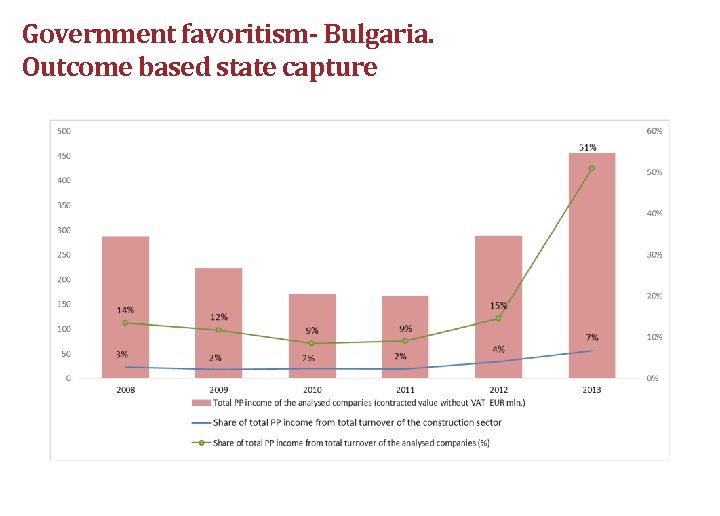
Government favoritism- Bulgaria. Outcome based state capture
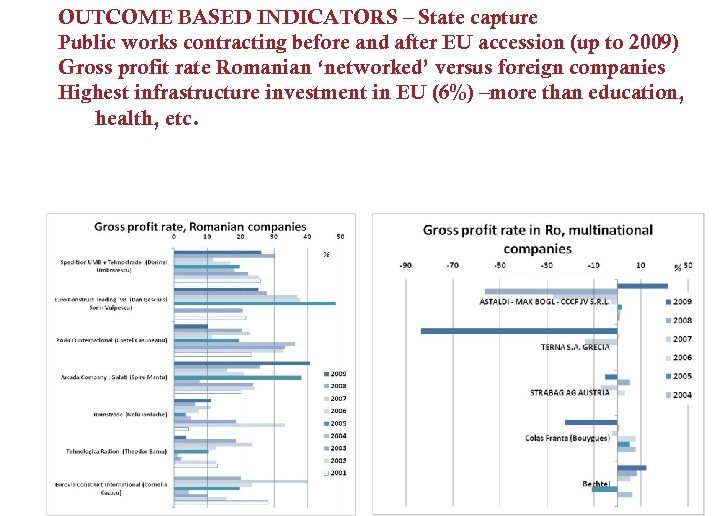
OUTCOME BASED INDICATORS – State capture Public works contracting before and after EU accession (up to 2009) Gross profit rate Romanian ‘networked’ versus foreign companies Highest infrastructure investment in EU (6%) –more than education, health, etc.
Procedural based approach– procurement risk measures Red flags are: warning signals, hints, indicators of possible fraud! The existence of a red flag does not mean that fraud exists but that a certain area of activity needs extra attention to exclude or confirm potential fraud.
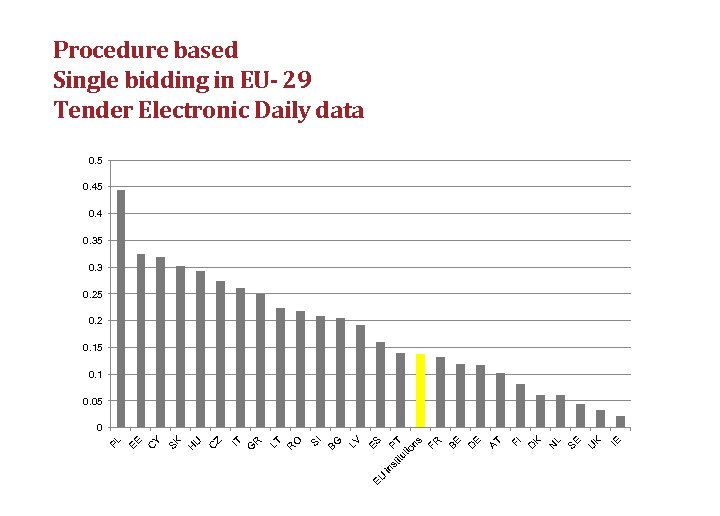
Procedure based Single bidding in EU- 29 Tender Electronic Daily data 0. 5 0. 4 0. 35 0. 3 0. 25 0. 2 0. 15 0. 1 0. 05 IE K U SE L N K D FI AT E D BE FR PT tio ns in st itu ES EU LV BG SI O R LT R G IT Z C U H SK Y C EE PL 0
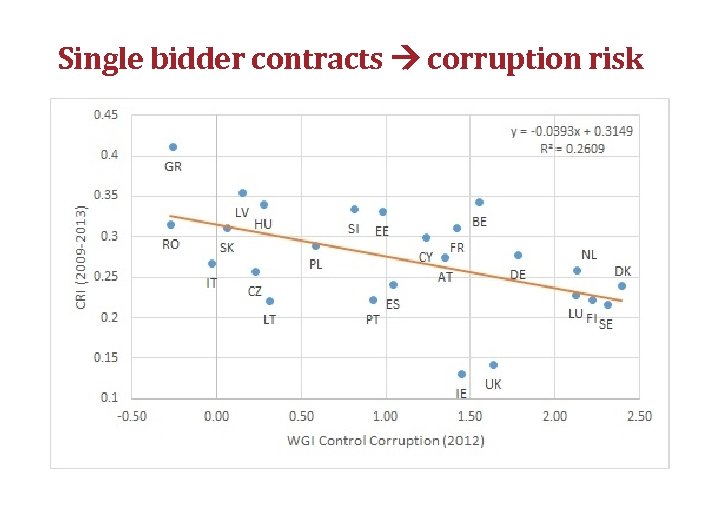
Single bidder contracts corruption risk
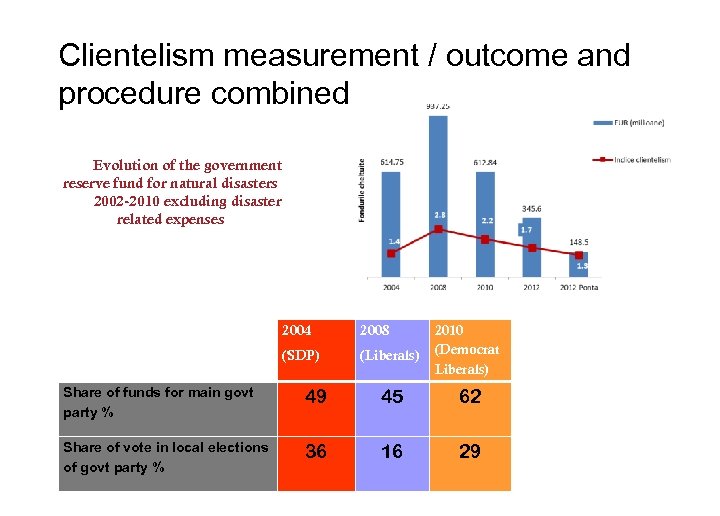
Clientelism measurement / outcome and procedure combined Evolution of the government reserve fund for natural disasters 2002 -2010 excluding disaster related expenses 2004 2008 (SDP) (Liberals) 2010 (Democrat Liberals) Share of funds for main govt party % 49 45 62 Share of vote in local elections of govt party % 36 16 29
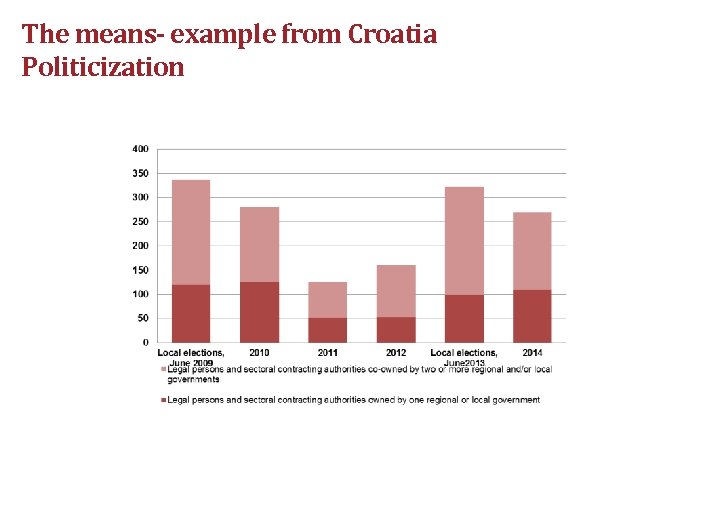
The means- example from Croatia Politicization
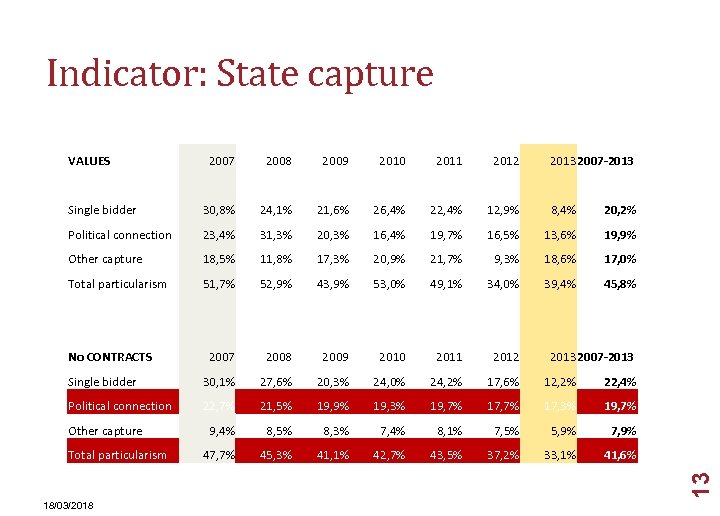
Indicator: State capture VALUES 2007 2008 2009 2010 2011 2012 Single bidder 30, 8% 24, 1% 21, 6% 26, 4% 22, 4% 12, 9% 8, 4% 20, 2% Political connection 23, 4% 31, 3% 20, 3% 16, 4% 19, 7% 16, 5% 13, 6% 19, 9% Other capture 18, 5% 11, 8% 17, 3% 20, 9% 21, 7% 9, 3% 18, 6% 17, 0% Total particularism 51, 7% 52, 9% 43, 9% 53, 0% 49, 1% 34, 0% 39, 4% 45, 8% 2007 2008 2009 2010 2011 2012 Single bidder 30, 1% 27, 6% 20, 3% 24, 0% 24, 2% 17, 6% 12, 2% 22, 4% Political connection 22, 7% 21, 5% 19, 9% 19, 3% 19, 7% 17, 3% 19, 7% 9, 4% 8, 5% 8, 3% 7, 4% 8, 1% 7, 5% 5, 9% 7, 9% 47, 7% 45, 3% 41, 1% 42, 7% 43, 5% 37, 2% 33, 1% 41, 6% No CONTRACTS Other capture 20132007 -2013 13 Total particularism 20132007 -2013 18/03/2018
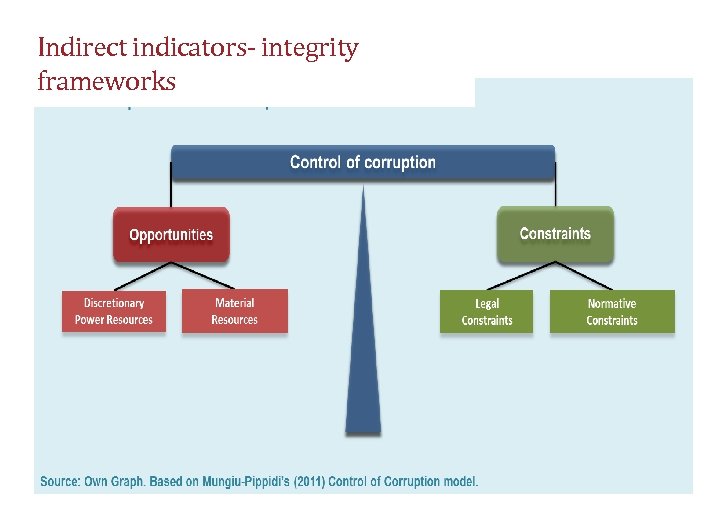
Indirect indicators- integrity frameworks
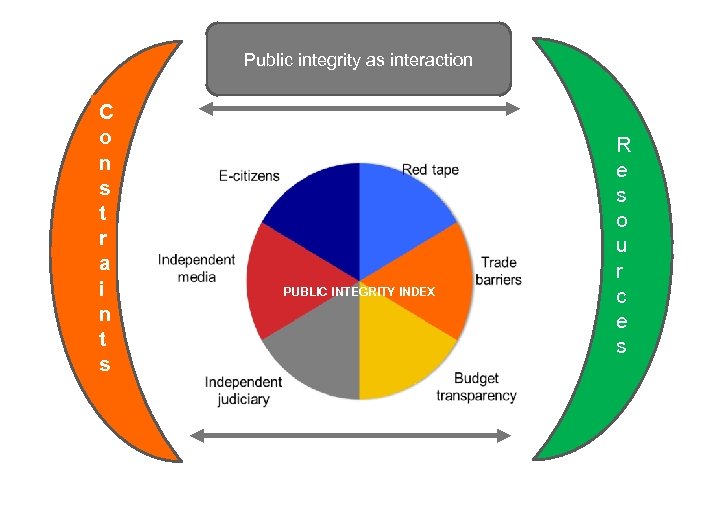
Public integrity as interaction C o n s t r a i n t s PUBLIC INTEGRITY INDEX R e s o u r c e s
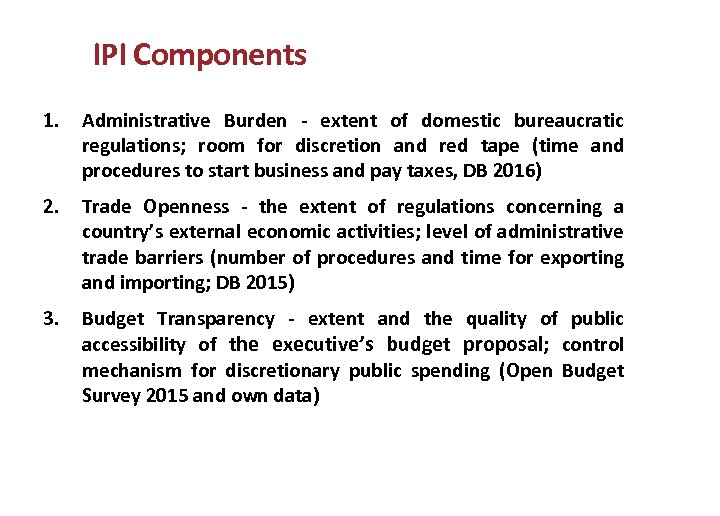
IPI Components 1. Administrative Burden - extent of domestic bureaucratic regulations; room for discretion and red tape (time and procedures to start business and pay taxes, DB 2016) 2. Trade Openness - the extent of regulations concerning a country’s external economic activities; level of administrative trade barriers (number of procedures and time for exporting and importing; DB 2015) 3. Budget Transparency - extent and the quality of public accessibility of the executive’s budget proposal; control mechanism for discretionary public spending (Open Budget Survey 2015 and own data)
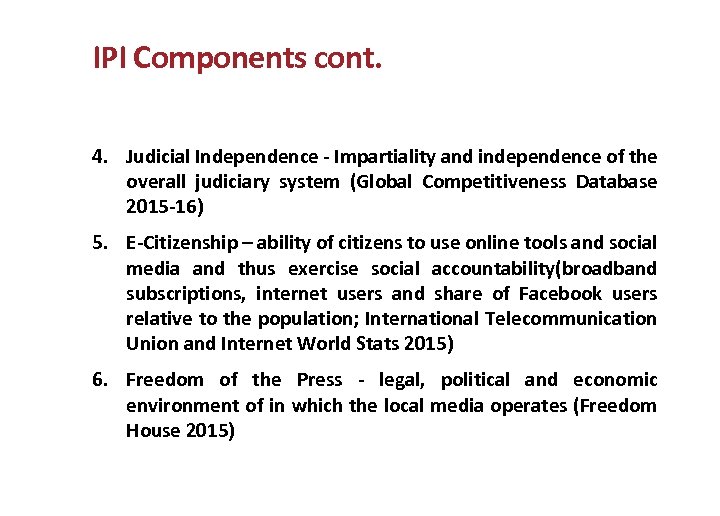
IPI Components cont. 4. Judicial Independence - Impartiality and independence of the overall judiciary system (Global Competitiveness Database 2015 -16) 5. E-Citizenship – ability of citizens to use online tools and social media and thus exercise social accountability(broadband subscriptions, internet users and share of Facebook users relative to the population; International Telecommunication Union and Internet World Stats 2015) 6. Freedom of the Press - legal, political and economic environment of in which the local media operates (Freedom House 2015)
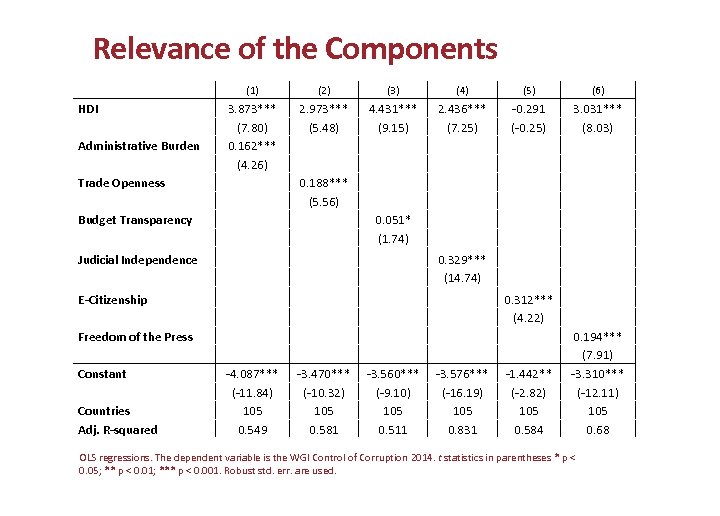
Relevance of the Components HDI Administrative Burden (1) (2) (3) (4) (5) 3. 873*** (7. 80) 0. 162*** (4. 26) 2. 973*** (5. 48) 4. 431*** (9. 15) 2. 436*** (7. 25) -0. 291 (-0. 25) Trade Openness 0. 188*** (5. 56) Budget Transparency 0. 051* (1. 74) Judicial Independence 3. 031*** (8. 03) 0. 329*** (14. 74) E-Citizenship 0. 312*** (4. 22) Freedom of the Press Constant Countries Adj. R-squared (6) -4. 087*** (-11. 84) 105 0. 549 -3. 470*** (-10. 32) 105 0. 581 -3. 560*** (-9. 10) 105 0. 511 -3. 576*** (-16. 19) 105 0. 831 -1. 442** (-2. 82) 105 0. 584 0. 194*** (7. 91) -3. 310*** (-12. 11) 105 0. 68 OLS regressions. The dependent variable is the WGI Control of Corruption 2014. t statistics in parentheses * p < 0. 05; ** p < 0. 01; *** p < 0. 001. Robust std. err. are used.
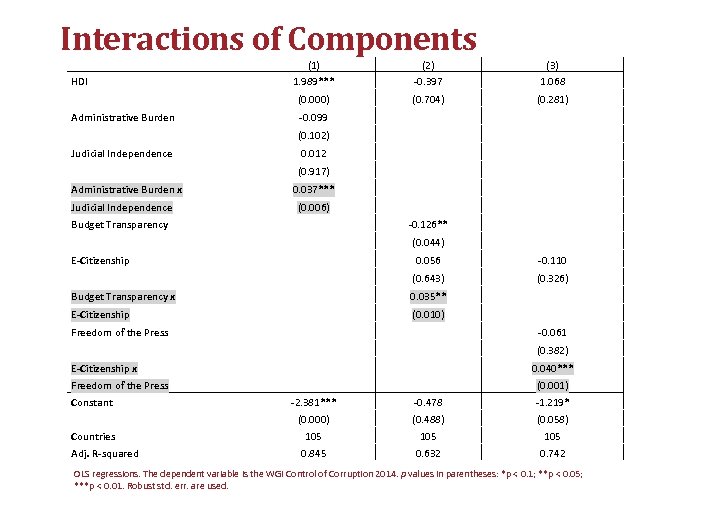
Interactions of Components (1) Administrative Burden (3) 1. 989*** -0. 397 1. 068 (0. 000) HDI (2) (0. 704) (0. 281) -0. 099 (0. 102) Judicial Independence 0. 012 (0. 917) Administrative Burden x Judicial Independence 0. 037*** (0. 006) Budget Transparency -0. 126** (0. 044) E-Citizenship 0. 056 -0. 110 (0. 643) (0. 326) Budget Transparency x 0. 035** E-Citizenship (0. 010) Freedom of the Press -0. 061 (0. 382) E-Citizenship x 0. 040*** Freedom of the Press Constant (0. 001) Countries Adj. R-squared -0. 478 -1. 219* (0. 000) -2. 381*** (0. 488) (0. 058) 105 105 0. 845 0. 632 0. 742 OLS regressions. The dependent variable is the WGI Control of Corruption 2014. p values in parentheses: *p < 0. 1; **p < 0. 05; ***p < 0. 01. Robust std. err. are used.
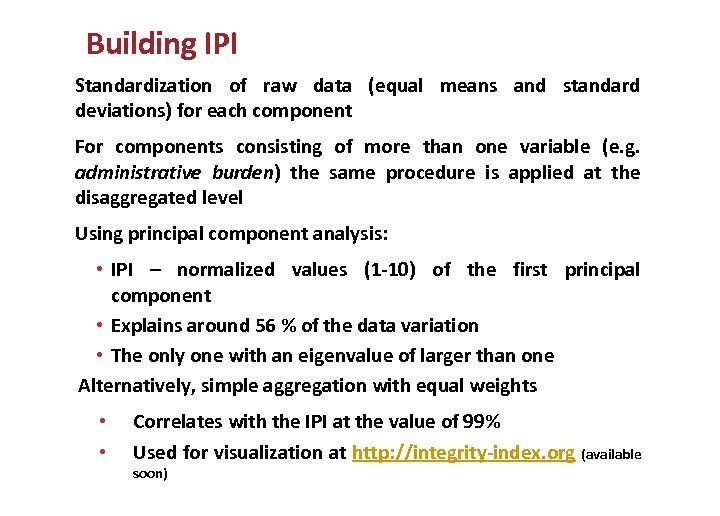
Building IPI Standardization of raw data (equal means and standard deviations) for each component For components consisting of more than one variable (e. g. administrative burden) the same procedure is applied at the disaggregated level Using principal component analysis: • IPI – normalized values (1 -10) of the first principal component • Explains around 56 % of the data variation • The only one with an eigenvalue of larger than one Alternatively, simple aggregation with equal weights • • Correlates with the IPI at the value of 99% Used for visualization at http: //integrity-index. org (available soon)
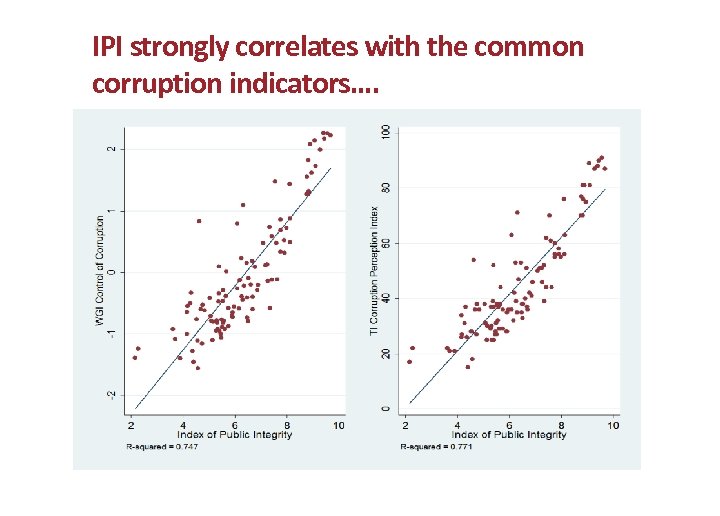
IPI strongly correlates with the common corruption indicators….
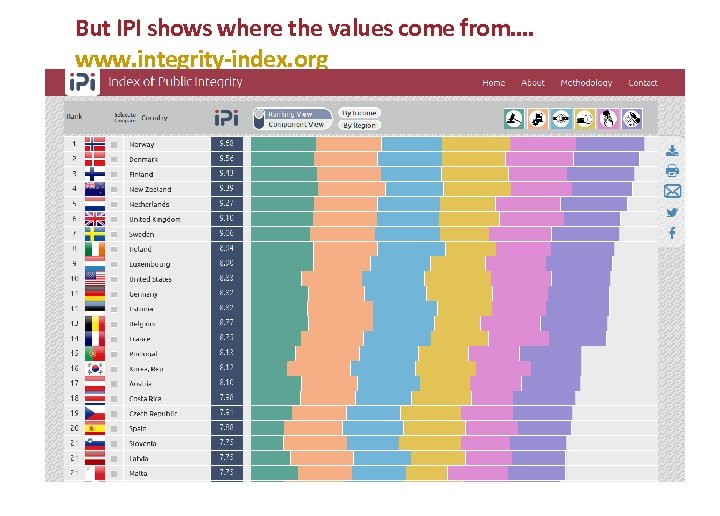
But IPI shows where the values come from…. www. integrity-index. org
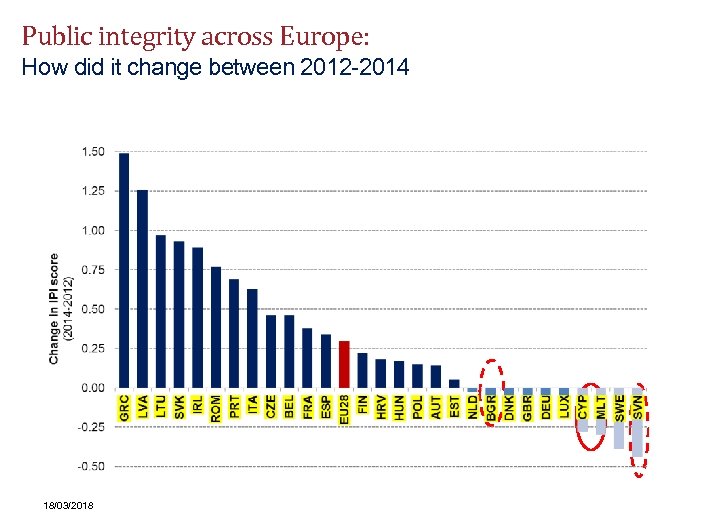
Public integrity across Europe: How did it change between 2012 -2014 18/03/2018
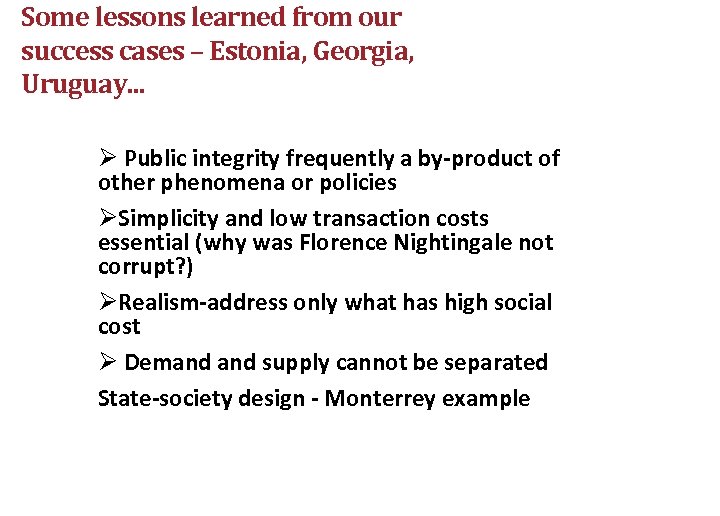
Some lessons learned from our success cases – Estonia, Georgia, Uruguay. . . Ø Public integrity frequently a by-product of other phenomena or policies ØSimplicity and low transaction costs essential (why was Florence Nightingale not corrupt? ) ØRealism-address only what has high social cost Ø Demand supply cannot be separated State-society design - Monterrey example
Скачать презентацию Corruption as practice Fact based indicators for policy
39f32faff45843e64f4eadf8d6a1b821.ppt