


 Скачать презентацию Corporate Product Regulations CISPR 22 Amendment 1 Ferrite
0d0fc704479c58055085e49ce542f038.ppt
- Количество слайдов: 28
 Corporate Product Regulations CISPR 22, Amendment 1 Ferrite Clamps Ghery S. Pettit, NCE Intel Corporation ® 04/29/2002
 Topics • OATS Qualification • Amendment 1, CISPR 22: 1997 • Problems ® 04/29/2002 2
 Typical OATS Facility ® 04/29/2002 3
 OATS Qualification • Normalized Site Attenuation – Transmit antenna on turntable center – Receiver antenna on tower – +/- 4 d. B and you pass • Nothing said about – Power distribution to EUT – Cables to remotely located peripheral devices ® 04/29/2002 4
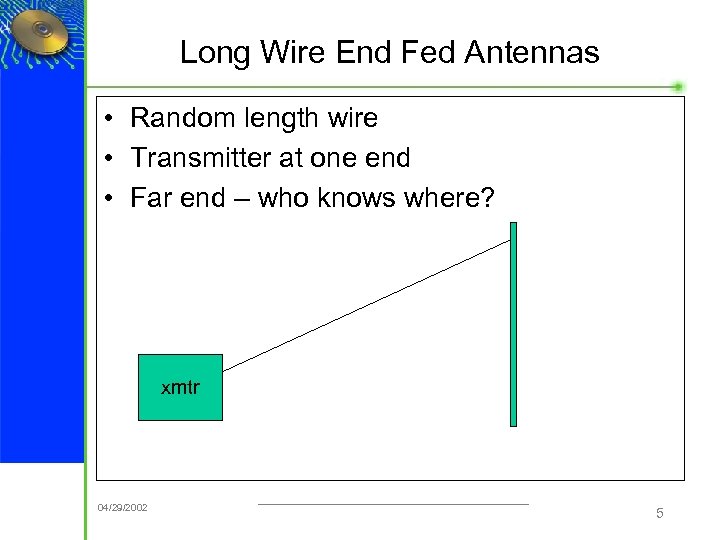 Long Wire End Fed Antennas • Random length wire • Transmitter at one end • Far end – who knows where? xmtr ® 04/29/2002 5
 Look Familiar? • EUT = Transmitter • Power cord = Antenna • Power feed (from who knows where? ) = End support and termination ® 04/29/2002 6
 Common Unknowns • Wire length (resonant frequencies) • Wire termination (load) • Wire orientation (once it leaves the turntable) ® 04/29/2002 7
 How To Standardize? • Standard wire length and layout – Redesign labs? • Major world-wide expense • Not likely to be accepted – LISNs at power plugs? • What about labs where power is under the table? • What about labs where there isn’t room? • Solution is to decouple all but the cable in the test area. ® 04/29/2002 8
 CISPR 22, 3 rd Edition, Amendment 1 (EN 55022: 1998, Amendment 1) • Adds ferrite clamps – all cables leaving the measurement area for table top EUTs – at the surface of the turntable – 1 cable per clamp • Published in August 2000. • Has been adopted by Israel and the EU. • Required in EU by 1 August 2003. – Israel now, others later ® 04/29/2002 9
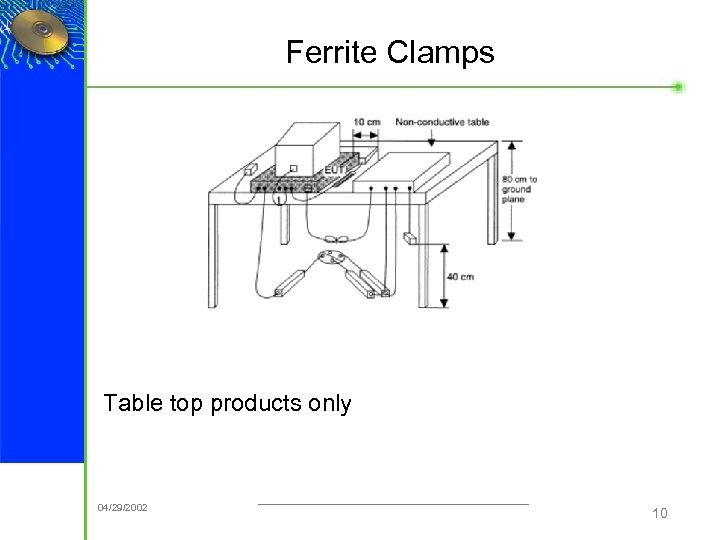 Ferrite Clamps Table top products only ® 04/29/2002 10
 Ferrite Clamp Definition • The clamp shall – Provide at least 15 d. B of loss in a 50 ohm system – 30 MHz to 1000 MHz ® 04/29/2002 11
 Does It Work? • Tests performed by Intel and Hewlett Packard in early 2000 to aid in the US vote on the amendment • Comb generator to power cord via a CDN • Radiated emissions measured every 5 MHz from 30 MHz to 200 MHz • 4 lab configurations with a single clamp – Schaffner INA 726 Isolation Clamp • 2 lab configurations with 3 different clamps – Schaffner INA 726 Isolation Clamp – MDS 21 Absorbing Clamp – Fischer Custom Communications F-203 I-23 mm EM Clamp ® 04/29/2002 12
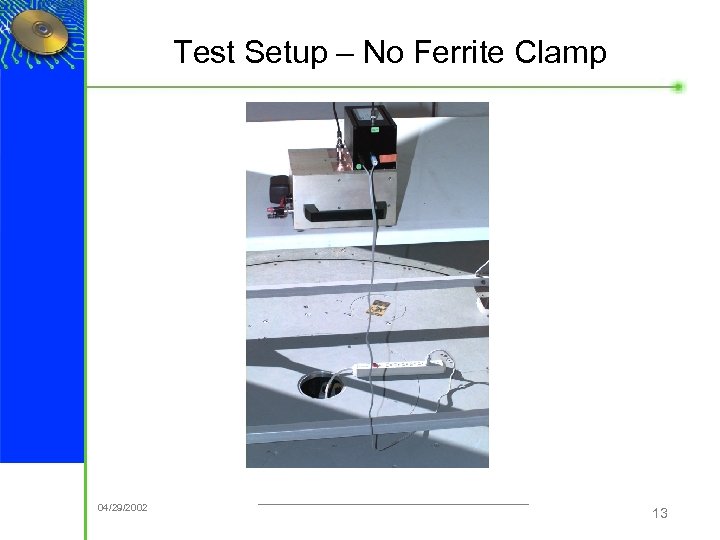 Test Setup – No Ferrite Clamp ® 04/29/2002 13
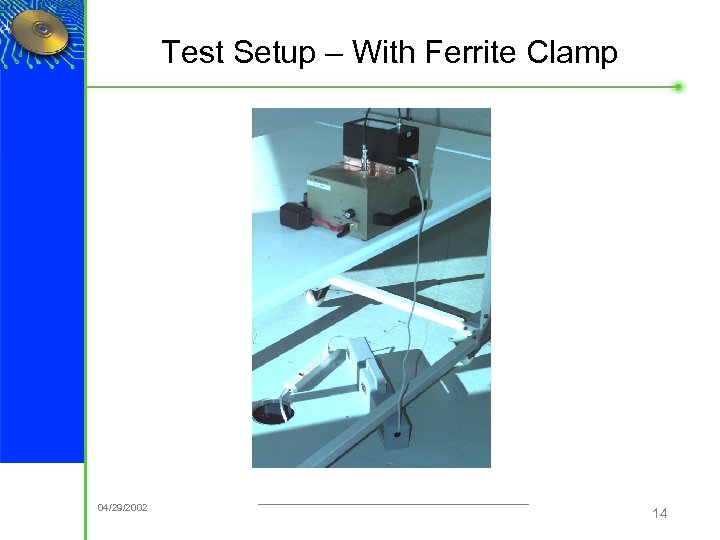 Test Setup – With Ferrite Clamp ® 04/29/2002 14
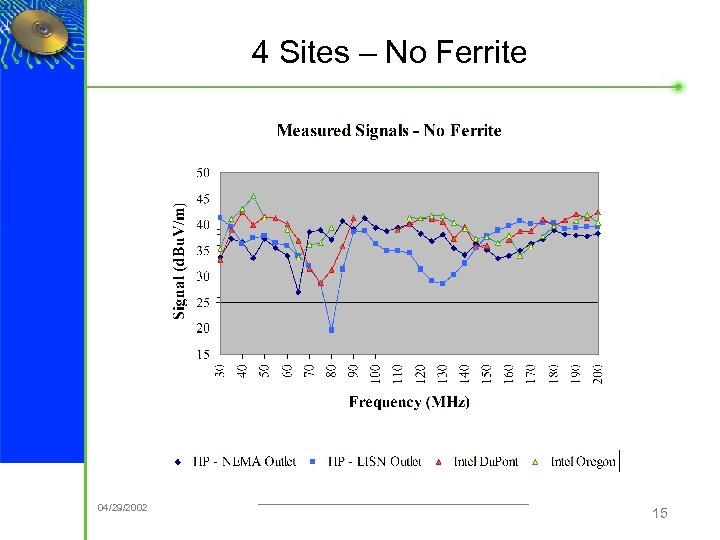 4 Sites – No Ferrite ® 04/29/2002 15
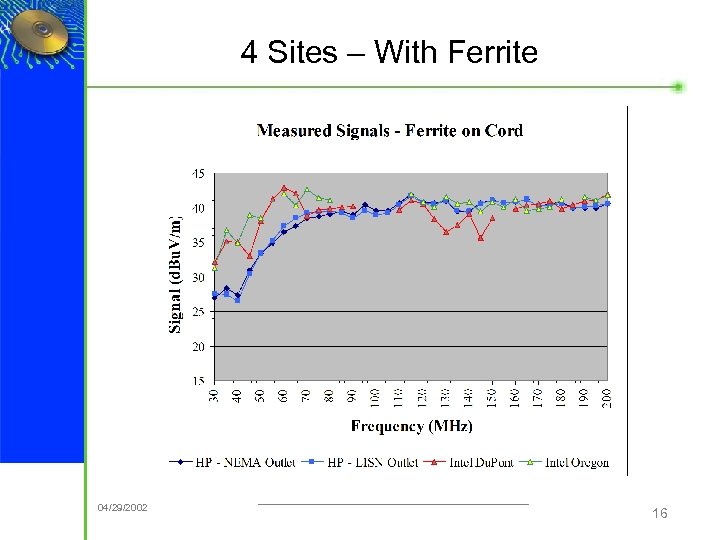 4 Sites – With Ferrite ® 04/29/2002 16
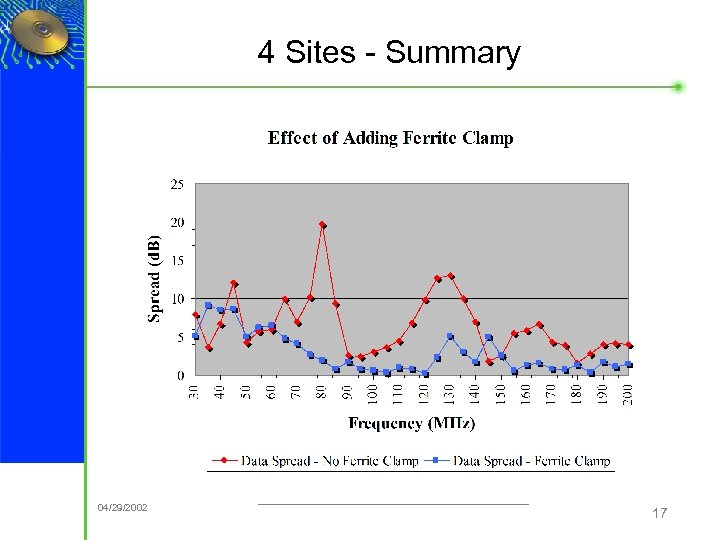 4 Sites - Summary ® 04/29/2002 17
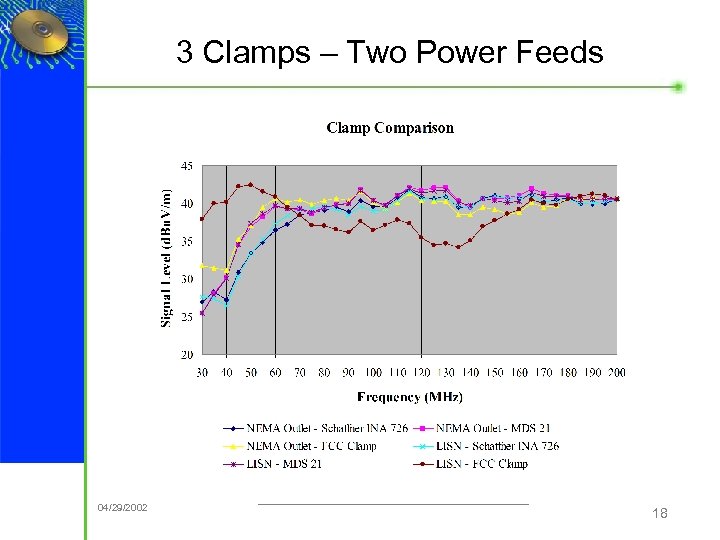 3 Clamps – Two Power Feeds ® 04/29/2002 18
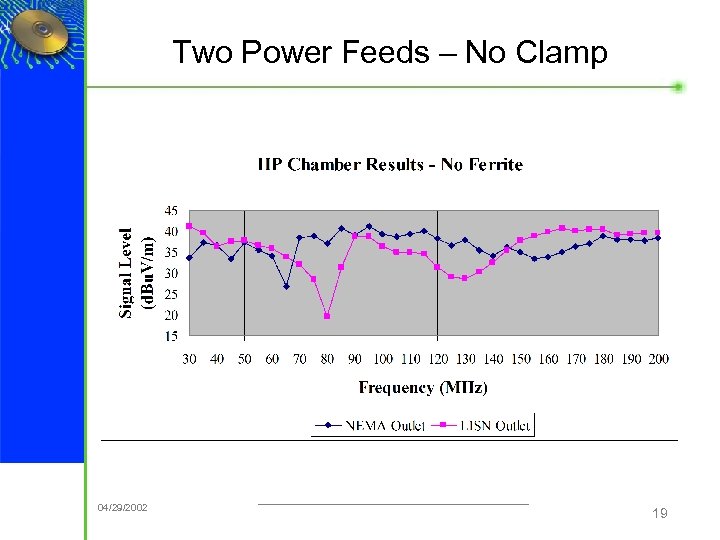 Two Power Feeds – No Clamp ® 04/29/2002 19
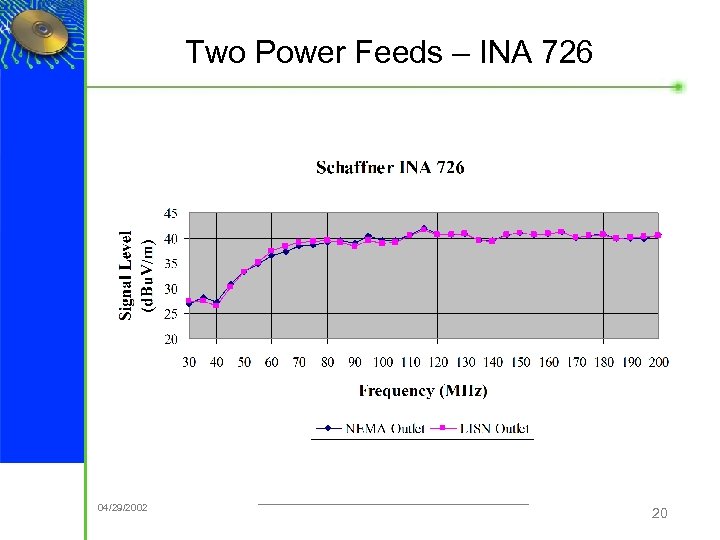 Two Power Feeds – INA 726 ® 04/29/2002 20
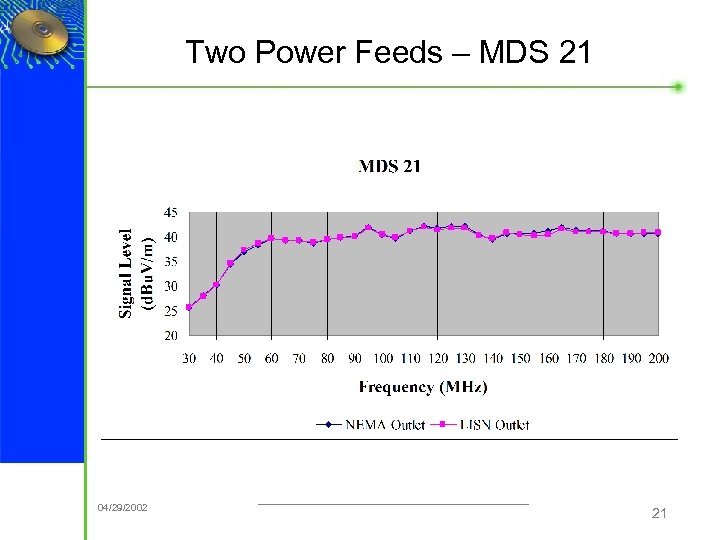 Two Power Feeds – MDS 21 ® 04/29/2002 21
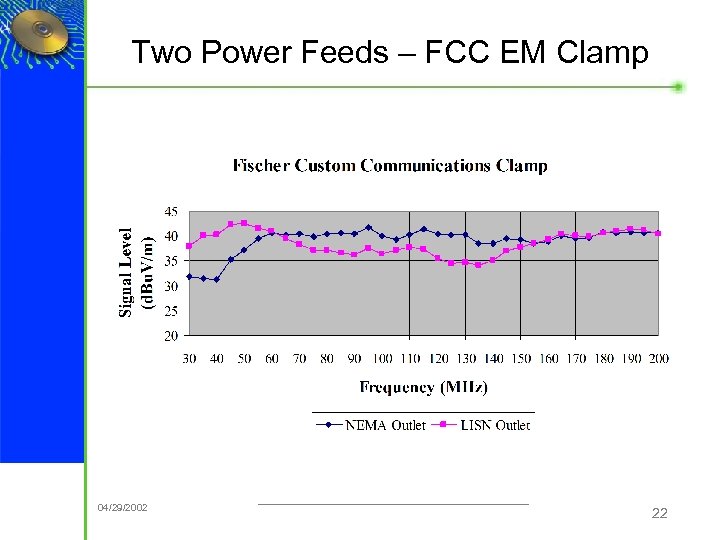 Two Power Feeds – FCC EM Clamp ® 04/29/2002 22
 Initial Conclusion • Clamps improve repeatability between labs • Clamps improve repeatability between different types of power feeds in the same lab • Different clamps converge to different solutions – Why? ® 04/29/2002 23
 One More Clamp Characteristic • Need to specify the input impedance for a wire passing through the clamp • Measurements show each clamp utilized – Meets the 15 d. B loss requirement from 30 MHz to 1000 MHz – Has a different impedance characteristic ® 04/29/2002 24
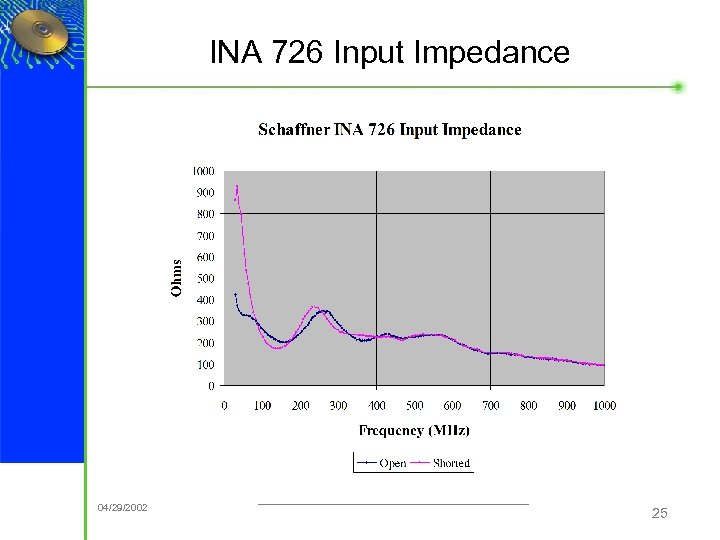 INA 726 Input Impedance ® 04/29/2002 25
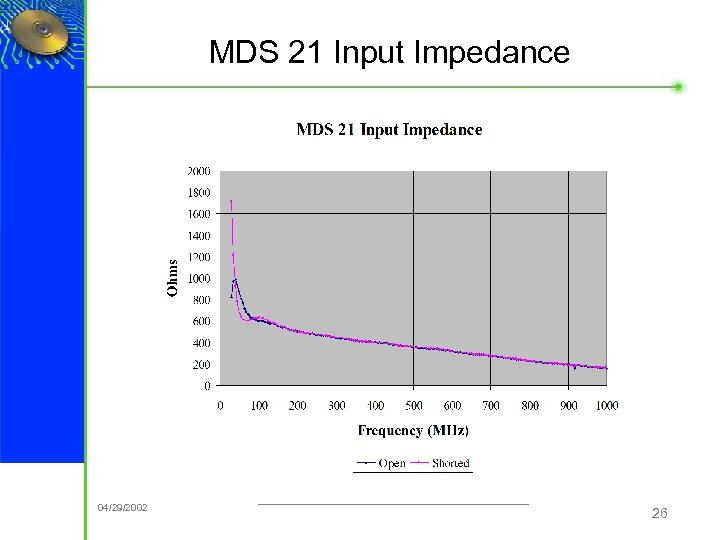 MDS 21 Input Impedance ® 04/29/2002 26
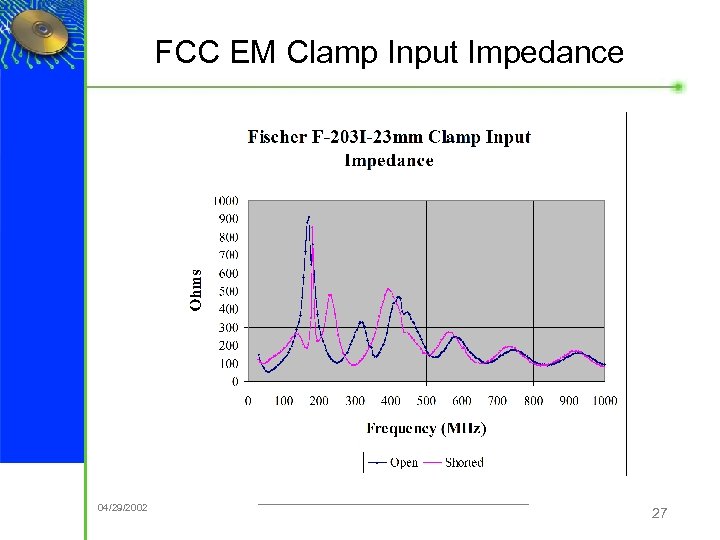 FCC EM Clamp Input Impedance ® 04/29/2002 27
 Where Do We Go From Here? • Problem #1 – CISPR 22 uses ferrite clamps on cables – ANSI C 63. 4 does not • Problem #2 – CISPR 22 does not adequately define the clamps – What should the input impedance to the wire through the clamp be? ® 04/29/2002 28