


 Скачать презентацию Corporate Finance Share holder value creation
88839242a8d41182079c4eeb27119cb7.ppt
- Количество слайдов: 42
 Corporate Finance • Share holder value creation • Credit Rating • Equity Valuation & buy back • Treasury management • Term Debt management • Corporate Liabilities and Hedging risks 1
 Shareholder value creation The objective of any Company is to maximise it’s shareholders value. “SVC” may be defined as the excess of market value over it’s book value. SVC could be analysed as follows : Market-to-book value per share approach (MV/ BV) Economic value added approach (EVA) DCF approach 2
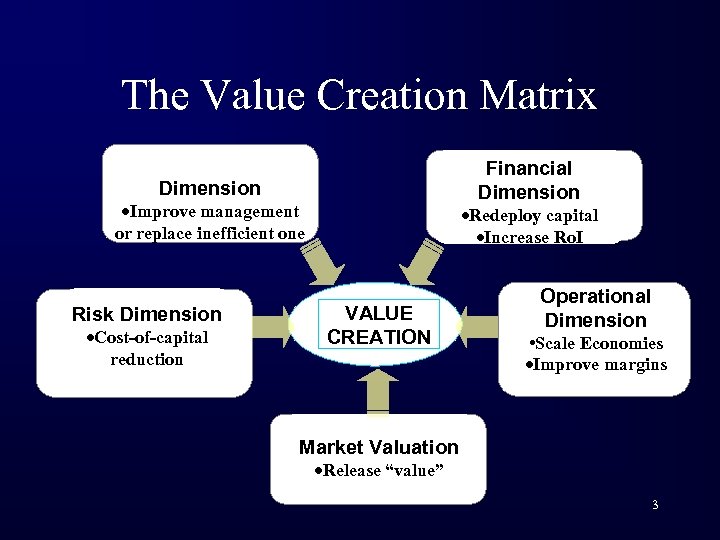 The Value Creation Matrix Managerial Dimension Financial Dimension ·Improve management or replace inefficient one Risk Dimension ·Cost-of-capital reduction ·Redeploy capital ·Increase Ro. I VALUE CREATION Operational Dimension • Scale Economies ·Improve margins Market Valuation ·Release “value” 3
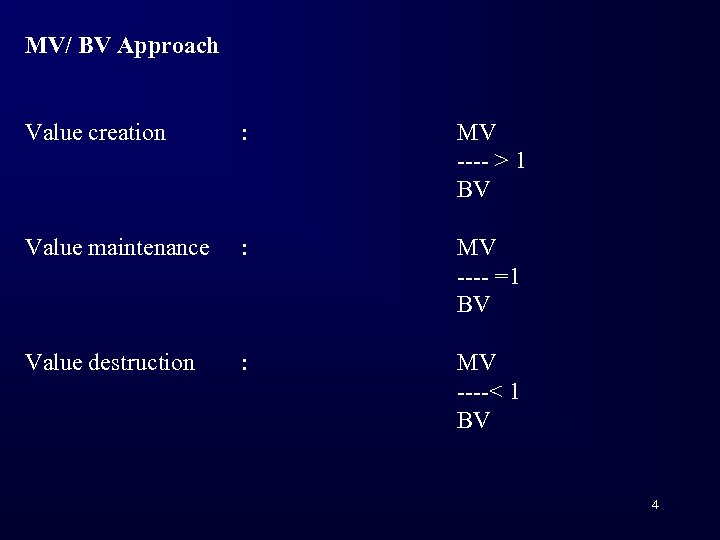 MV/ BV Approach Value creation : MV ---- > 1 BV Value maintenance : MV ---- =1 BV Value destruction : MV ----< 1 BV 4
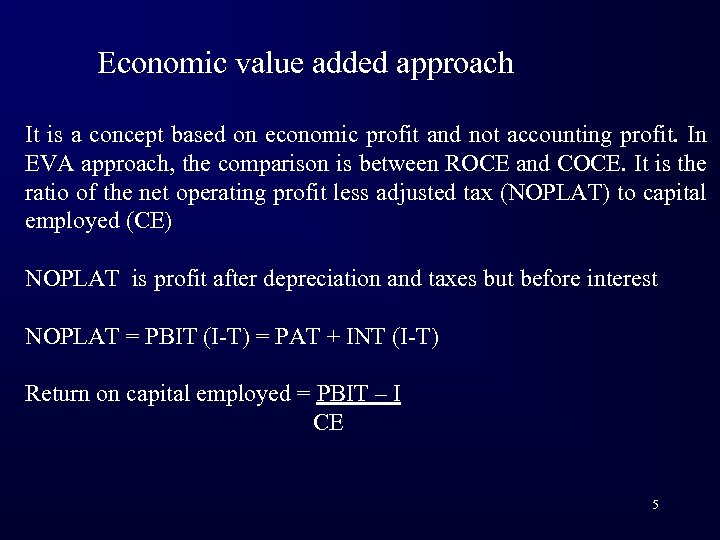 Economic value added approach It is a concept based on economic profit and not accounting profit. In EVA approach, the comparison is between ROCE and COCE. It is the ratio of the net operating profit less adjusted tax (NOPLAT) to capital employed (CE) NOPLAT is profit after depreciation and taxes but before interest NOPLAT = PBIT (I-T) = PAT + INT (I-T) Return on capital employed = PBIT – I CE 5
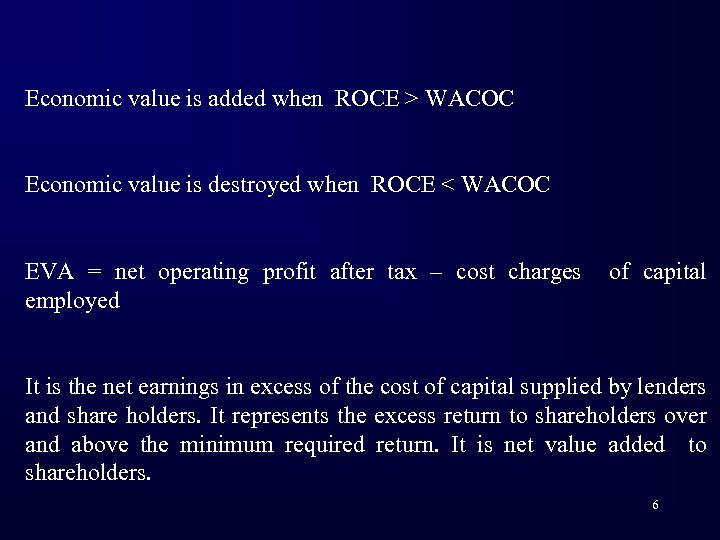 Economic value is added when ROCE > WACOC Economic value is destroyed when ROCE < WACOC EVA = net operating profit after tax – cost charges employed of capital It is the net earnings in excess of the cost of capital supplied by lenders and share holders. It represents the excess return to shareholders over and above the minimum required return. It is net value added to shareholders. 6
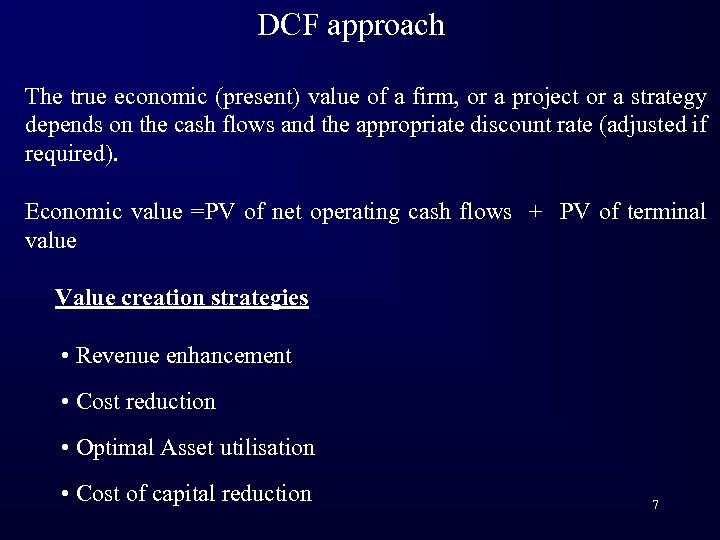 DCF approach The true economic (present) value of a firm, or a project or a strategy depends on the cash flows and the appropriate discount rate (adjusted if required). Economic value =PV of net operating cash flows + PV of terminal value Value creation strategies • Revenue enhancement • Cost reduction • Optimal Asset utilisation • Cost of capital reduction 7
 Relevance of Shareholder value creation • Private sector / Funds allowed in banking and mutual funds in addition to FII’s are allowed to invest in Indian debt and equity. • Indian corporates allowed to raise funds offshore • Greater freedom to financial intermediatries. • Capital issue controls abolished. 8
 Credit Rating • Bond rating • Equity rating • Commercial paper rating • Sovereign rating • Project/ company rating 9
 Credit Rating agencies - CRISIL - CARE - ICRA - STANDARD AND POOR - MOODY’S 10
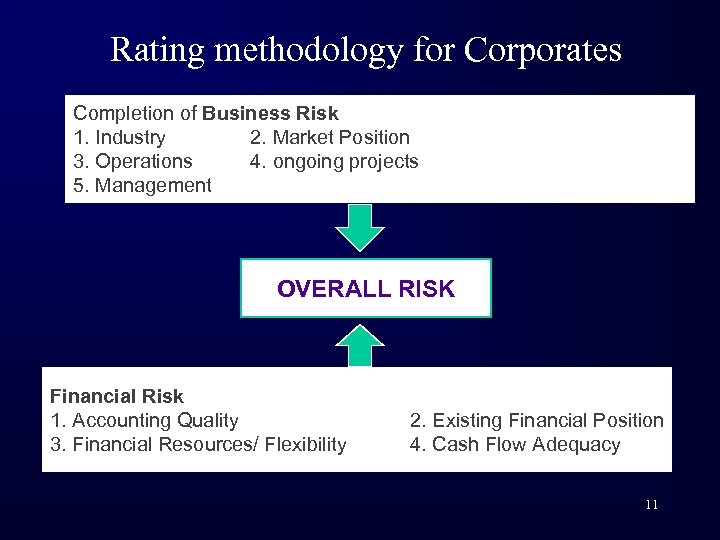 Rating methodology for Corporates Completion of Business Risk 1. Industry 2. Market Position 3. Operations 4. ongoing projects 5. Management OVERALL RISK Financial Risk 1. Accounting Quality 3. Financial Resources/ Flexibility 2. Existing Financial Position 4. Cash Flow Adequacy 11
 Industry Risk • Industry Characteristics - Importance to the economy Stage of Business cycle Industry size Government policies Cyclical/seasonal factors Entry Barriers 12
 Industry Risk. . . • Extent of Competition - Nature and basis of competition Threat from imports Unorganised players Substitutes • Technological risk 13
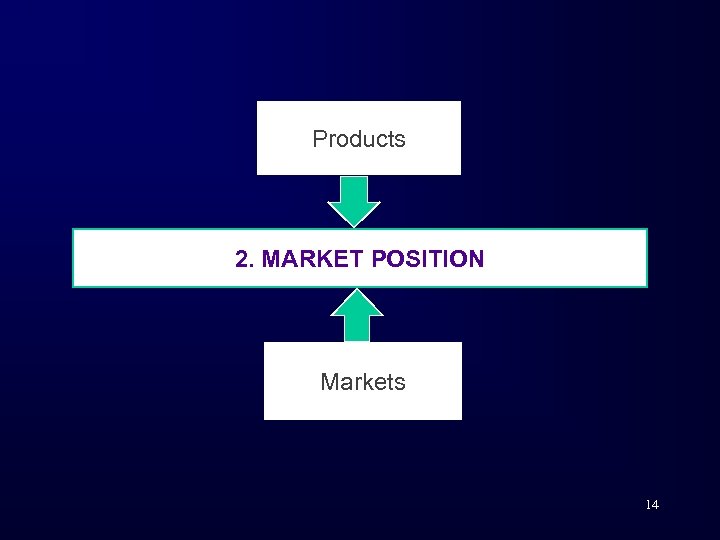 Products 2. MARKET POSITION Markets 14
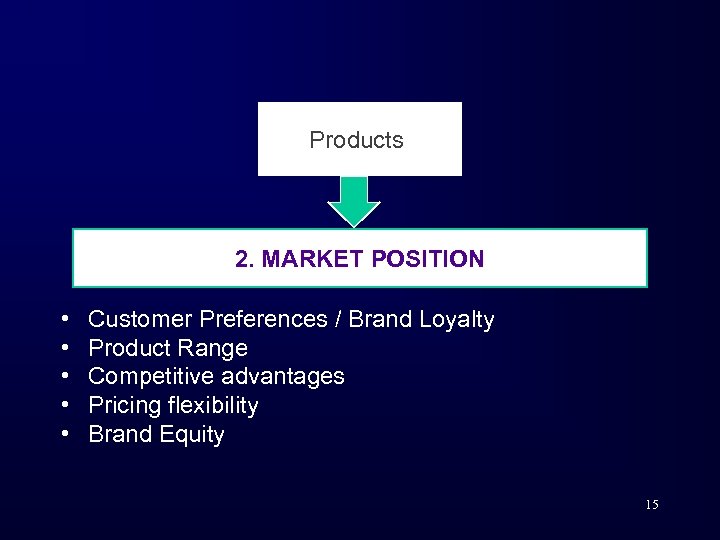 Products 2. MARKET POSITION • • • Customer Preferences / Brand Loyalty Product Range Competitive advantages Pricing flexibility Brand Equity 15
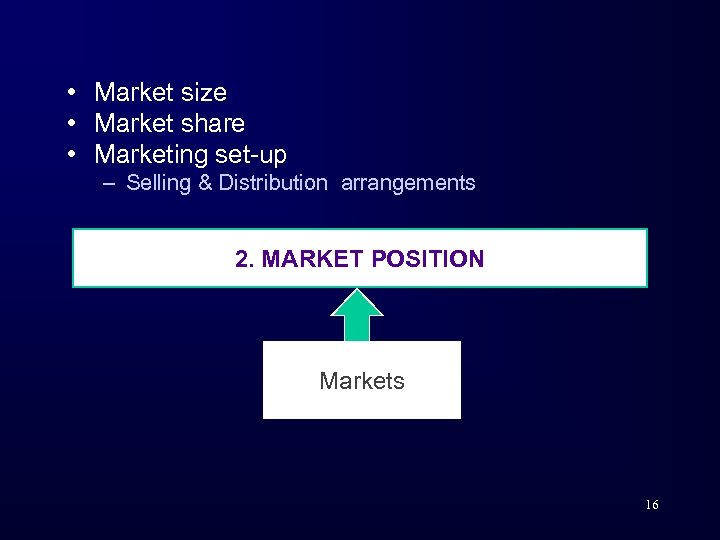 • Market size • Market share • Marketing set-up – Selling & Distribution arrangements 2. MARKET POSITION Markets 16
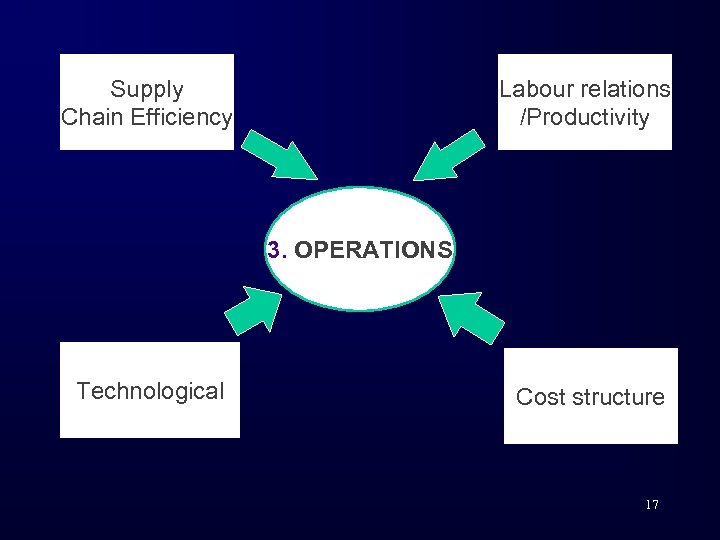 Supply Chain Efficiency Labour relations /Productivity 3. OPERATIONS Environmental Technological Location Factors Cost structure 17
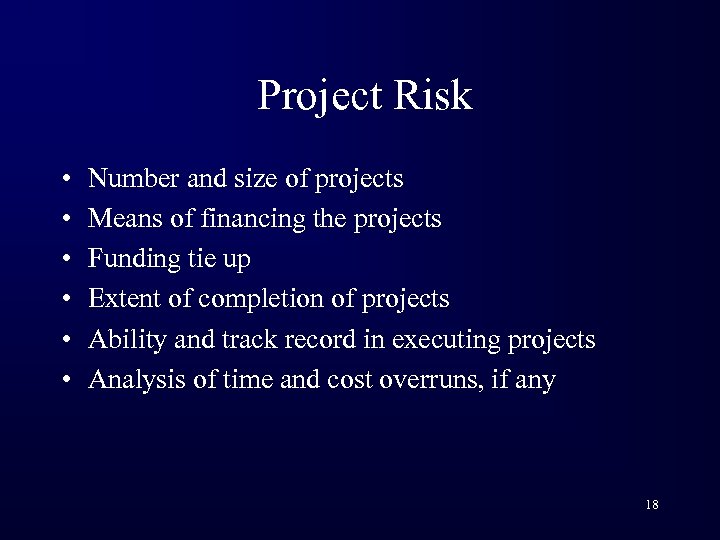 Project Risk • • • Number and size of projects Means of financing the projects Funding tie up Extent of completion of projects Ability and track record in executing projects Analysis of time and cost overruns, if any 18
 FINANCIAL RISK EVALUATION 19
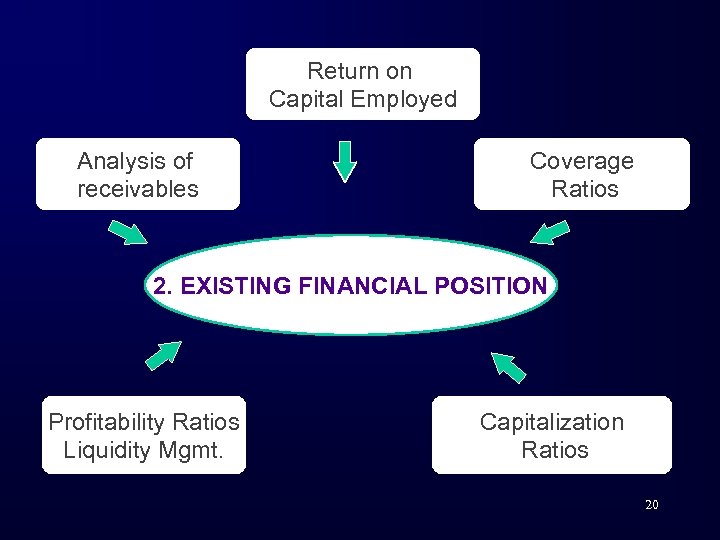 Return on Capital Employed Analysis of receivables Coverage Ratios 2. EXISTING FINANCIAL POSITION Profitability Ratios Liquidity Mgmt. Capitalization Ratios 20
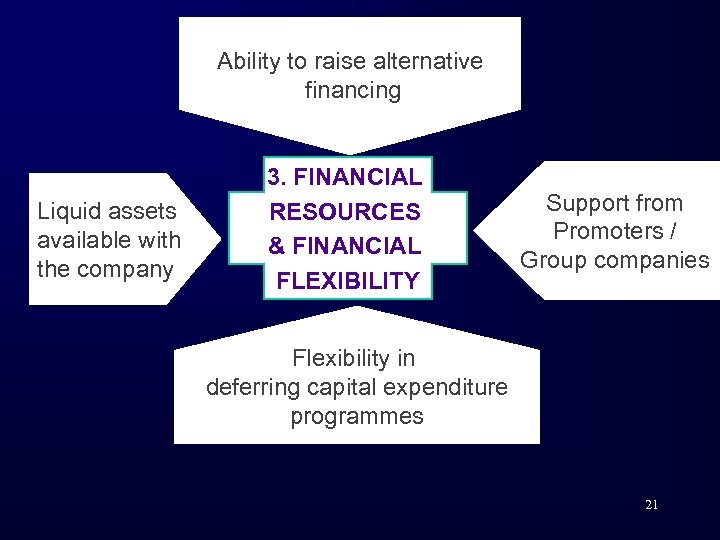 Ability to raise alternative financing Liquid assets available with the company 3. FINANCIAL RESOURCES & FINANCIAL FLEXIBILITY Support from Promoters / Group companies Flexibility in deferring capital expenditure programmes 21
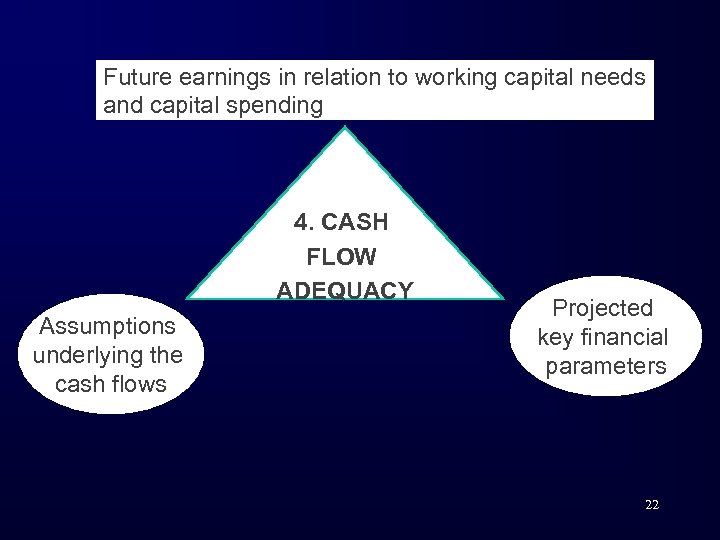 Future earnings in relation to working capital needs and capital spending 4. CASH FLOW ADEQUACY Assumptions underlying the cash flows Projected key financial parameters 22
 Crisil Rating Symbols • Easily comprehensible to lay investors • Distinctive symbols for different debt securities differentiated on the degree of safety, viz. investment and non-investment grades. • Securities with the same rating are of similar but NOT identical investment quality. 23
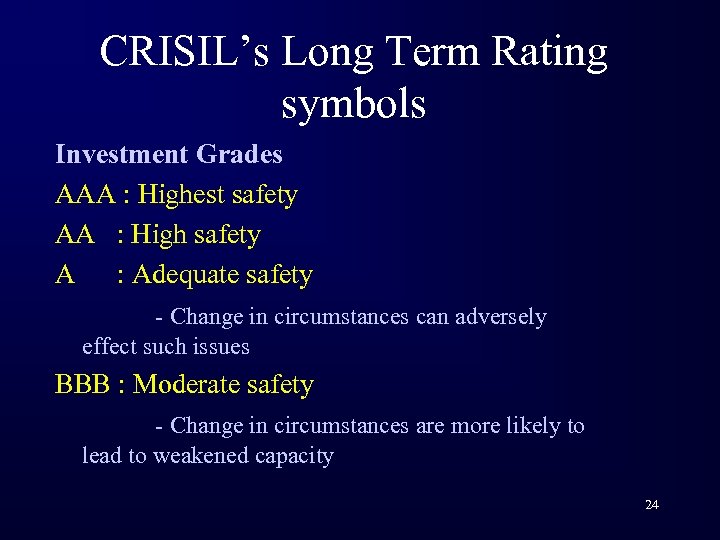 CRISIL’s Long Term Rating symbols Investment Grades AAA : Highest safety AA : High safety A : Adequate safety - Change in circumstances can adversely effect such issues BBB : Moderate safety - Change in circumstances are more likely to lead to weakened capacity 24
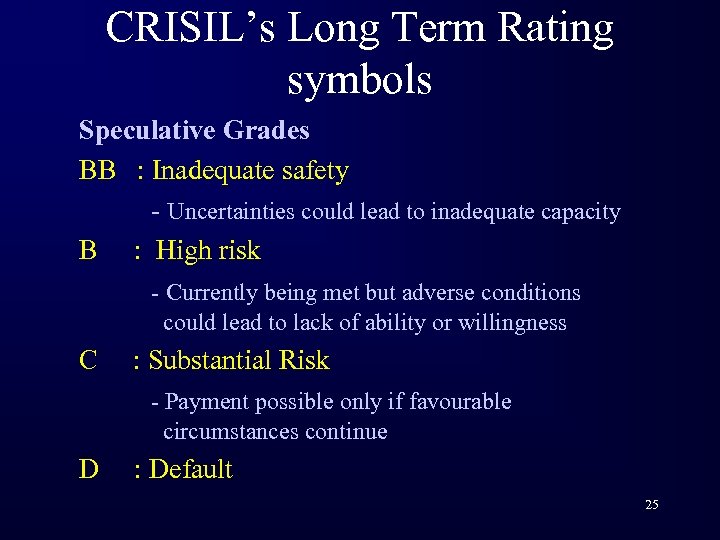 CRISIL’s Long Term Rating symbols Speculative Grades BB : Inadequate safety - Uncertainties could lead to inadequate capacity B : High risk - Currently being met but adverse conditions could lead to lack of ability or willingness C : Substantial Risk - Payment possible only if favourable circumstances continue D : Default 25
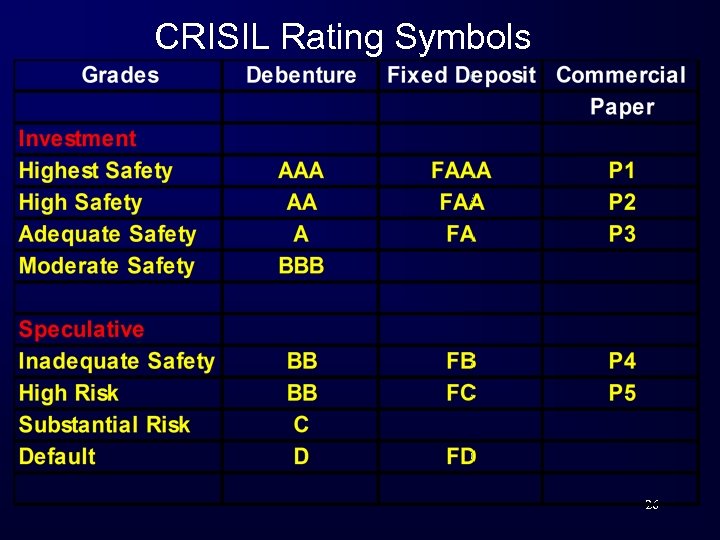 CRISIL Rating Symbols 26
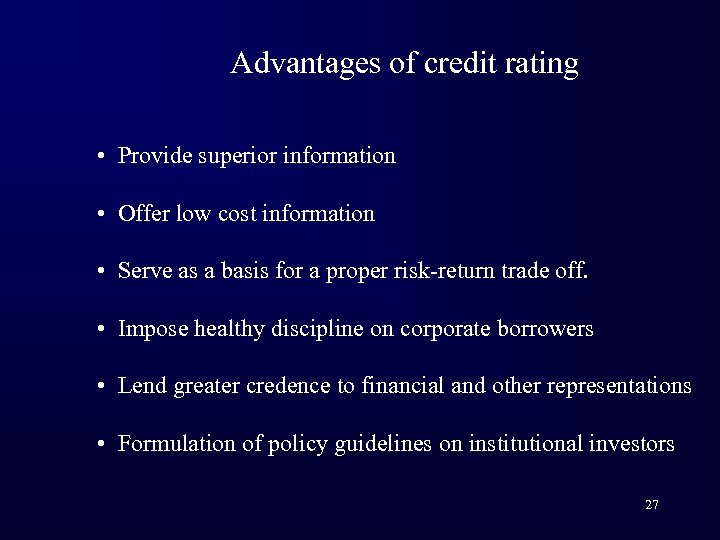 Advantages of credit rating • Provide superior information • Offer low cost information • Serve as a basis for a proper risk-return trade off. • Impose healthy discipline on corporate borrowers • Lend greater credence to financial and other representations • Formulation of policy guidelines on institutional investors 27
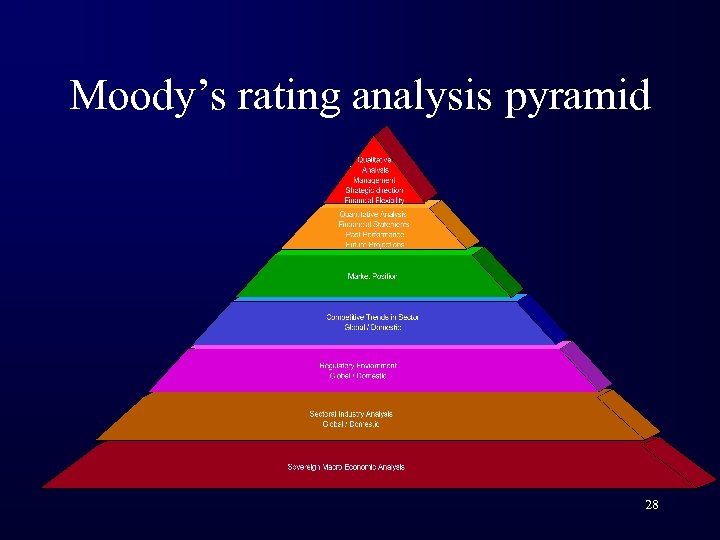 Moody’s rating analysis pyramid 28
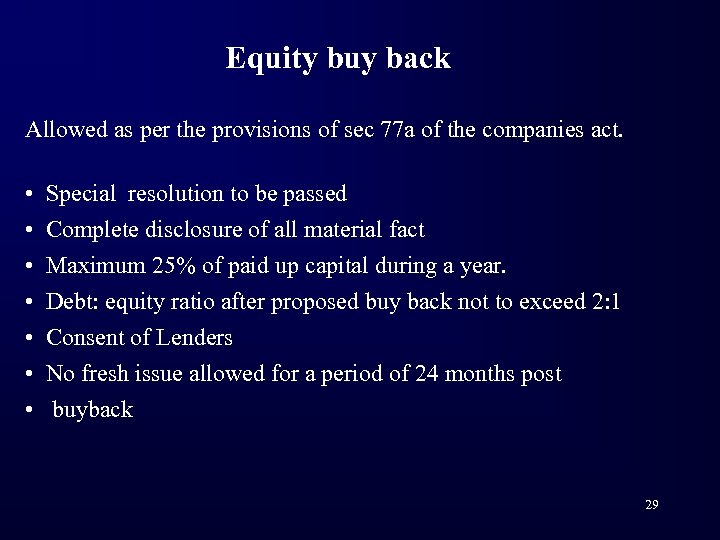 Equity buy back Allowed as per the provisions of sec 77 a of the companies act. • • Special resolution to be passed Complete disclosure of all material fact Maximum 25% of paid up capital during a year. Debt: equity ratio after proposed buy back not to exceed 2: 1 Consent of Lenders No fresh issue allowed for a period of 24 months post buyback 29
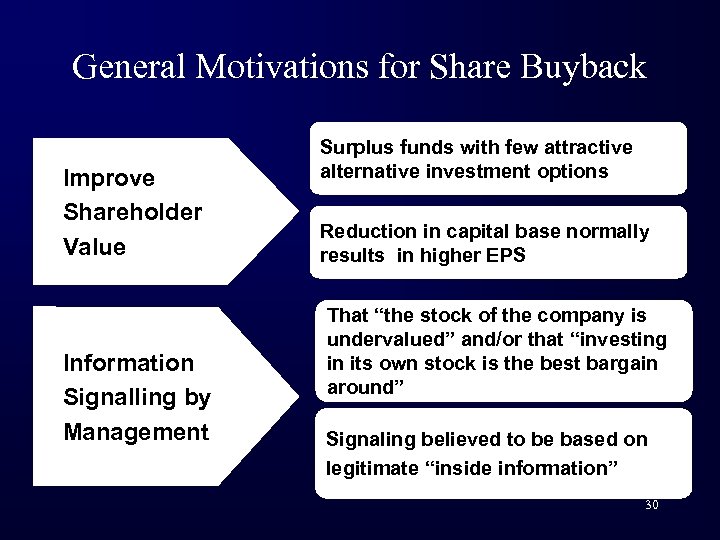 General Motivations for Share Buyback Improve Shareholder Value Information Signalling by Management Surplus funds with few attractive alternative investment options Reduction in capital base normally results in higher EPS That “the stock of the company is undervalued” and/or that “investing in its own stock is the best bargain around” Signaling believed to be based on legitimate “inside information” 30
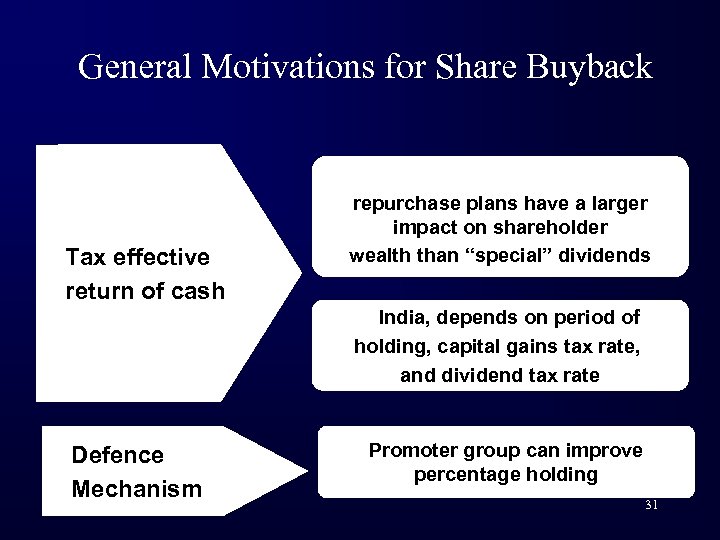 General Motivations for Share Buyback Tax effective return of cash A US research study reveals that repurchase plans have a larger impact on shareholder wealth than “special” dividends In India, depends on period of holding, capital gains tax rate, and dividend tax rate Defence Mechanism Promoter group can improve percentage holding 31
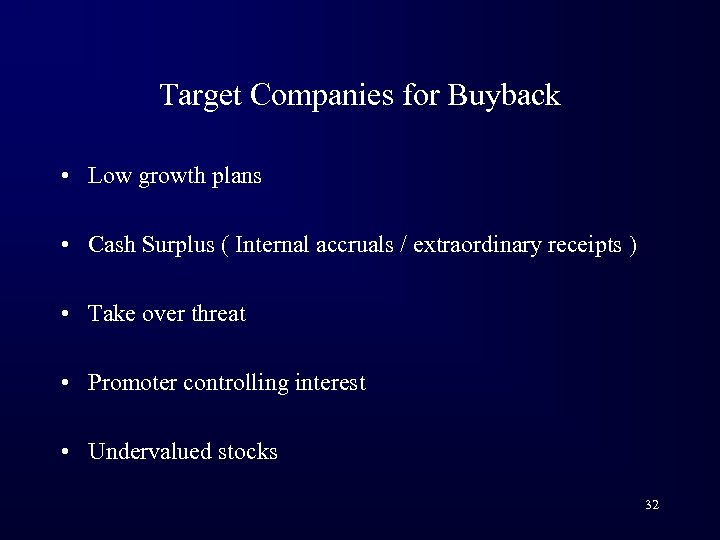 Target Companies for Buyback • Low growth plans • Cash Surplus ( Internal accruals / extraordinary receipts ) • Take over threat • Promoter controlling interest • Undervalued stocks 32
 Success of a Buyback Pricing : • Premium / discount to market price Timing : • Economic and political conditions • Market phases ( Bearish / Bullish ) Funding : • Debt • Preference shares • Cash reserves 33
 Modes of Buy back • Open market operations by way of book building / stock exchange • Odd lot Tender offer with or without negative mandate • If buyback results in public holding falling before 10% resulting in de listing open offer for the balance through book building will have to be done. 34
 Benefits of allowing buy back. Enhanced liquidity for small investor. Enhancing shareholders wealth. Increase in EPS. Better servicing of equity. Signal of under valuation of stock Drawbacks of buy back. Insider trading. Increase in promoter stake. Affecting company’s fund-flow/ financial positions 35
 Treasury management - Resource mobilisation - Resource deployment - Risk management 36
 - Risk management helps in minimising cost fluctuations for the funds mobilised and in case of forex borrowings helps in minimising losses possible due to any exchange rates fluctuations. -Treasury management will become more complex as constant monitoring of interest rates will be essential due to severe volatility and falling of interest rates. - Risk profiles change over the life of a company thereby necessitating a continous correction of interest rates on borrowings. ( Infra Projects ) - Corelation between forex market and the domestic money market and Integration of domestic and international markets. - Parking of mobilised funds till deployment 37
 Investment Objectives • Time Horizon • Income Head : Income head under which returns to be realised to have efficient tax management • Risk Profile : Acceptable level of risk or volatility • Liquidity • Geographic and performance benchmark : Is asset / liability matching an important consideration and against which benchmark index should the portfolio performance be evaluated 38
 Creating Portfolios • Short term / money market index : Call ( Overnight ) money rates, short term treasury bills and commercial paper, basket of money market mutual funds as an index • Government Securities : Short term interest rates Co relation to bond prices basket of G-sec mutual funds as an index. • Corporate Bonds : Co-relation to G-secs, Low liquidity and basket of fixed income mutual funds as index 39
 Investing Procedure • Need Analysis : Cash flow analysis and Bucketing • Recommendation : Investment policy creation , Different portfolios for different buckets, Product selection • Execution • Predefined methods of tracking portfolio • Support • Reporting 40
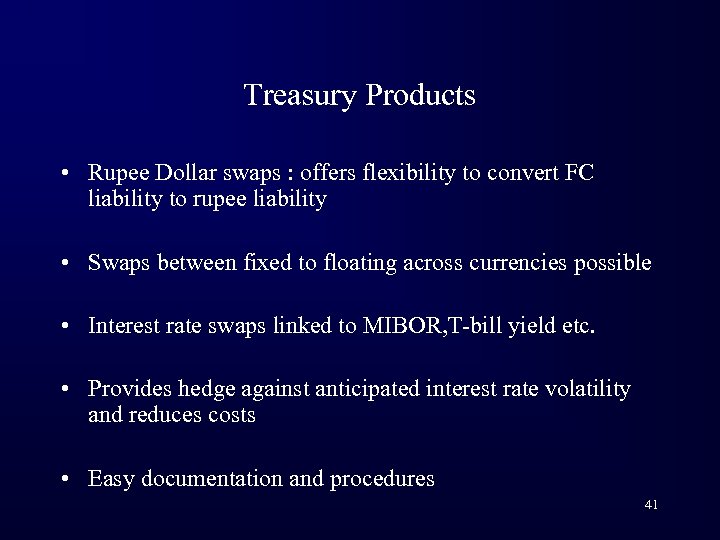 Treasury Products • Rupee Dollar swaps : offers flexibility to convert FC liability to rupee liability • Swaps between fixed to floating across currencies possible • Interest rate swaps linked to MIBOR, T-bill yield etc. • Provides hedge against anticipated interest rate volatility and reduces costs • Easy documentation and procedures 41
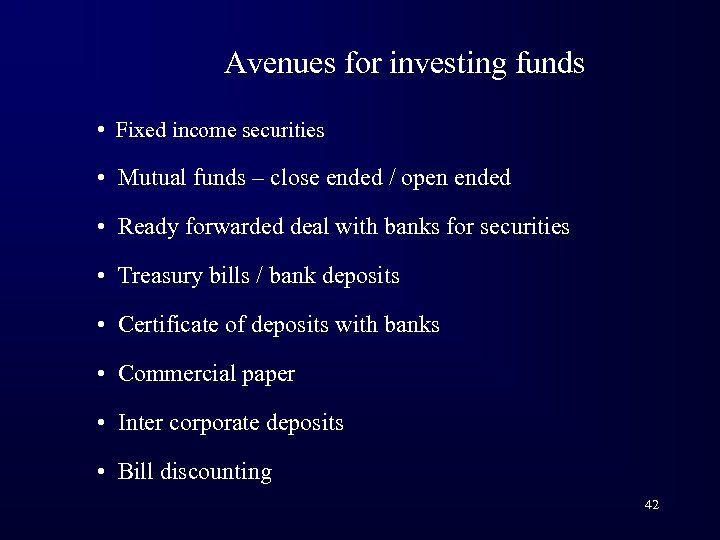 Avenues for investing funds • Fixed income securities • Mutual funds – close ended / open ended • Ready forwarded deal with banks for securities • Treasury bills / bank deposits • Certificate of deposits with banks • Commercial paper • Inter corporate deposits • Bill discounting 42