 Скачать презентацию Corporate Entrepreneurship ss 5 -8 Mikkel Draebye
61c132325f57d26f541e065c8d55e502.ppt
- Количество слайдов: 35



Corporate Entrepreneurship ss 5 -8 Mikkel Draebye
Agenda Session 5 -8 • Where are we, What are we doing • Flashback: What’s so interesting about Rob? • Recall: Definitions of entrepreneurship • Entrepreneurial Attitude : October Sky • Relevance of e-ship
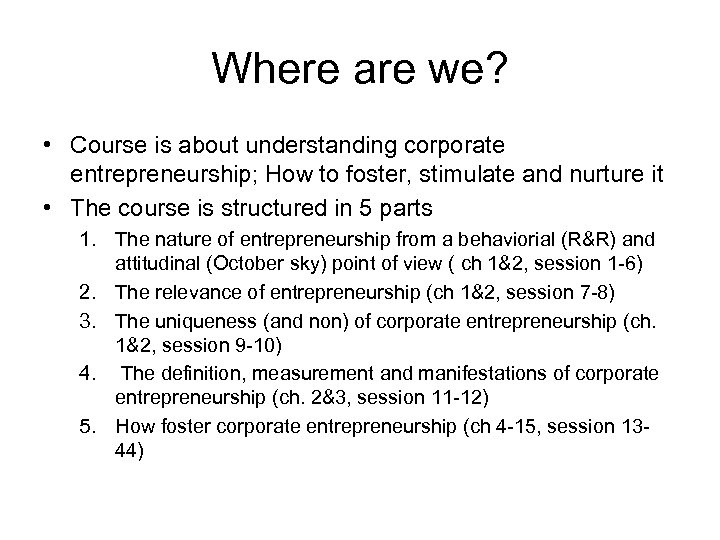
Where are we? • Course is about understanding corporate entrepreneurship; How to foster, stimulate and nurture it • The course is structured in 5 parts 1. The nature of entrepreneurship from a behaviorial (R&R) and attitudinal (October sky) point of view ( ch 1&2, session 1 -6) 2. The relevance of entrepreneurship (ch 1&2, session 7 -8) 3. The uniqueness (and non) of corporate entrepreneurship (ch. 1&2, session 9 -10) 4. The definition, measurement and manifestations of corporate entrepreneurship (ch. 2&3, session 11 -12) 5. How foster corporate entrepreneurship (ch 4 -15, session 1344)
R&R Case • So, remind me what Rob did that was “entrepreneurial” ?
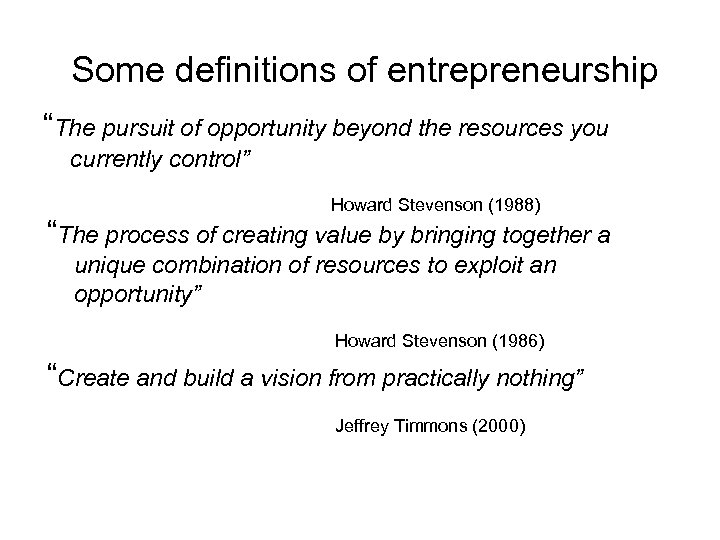
Some definitions of entrepreneurship “The pursuit of opportunity beyond the resources you currently control” Howard Stevenson (1988) “The process of creating value by bringing together a unique combination of resources to exploit an opportunity” Howard Stevenson (1986) “Create and build a vision from practically nothing” Jeffrey Timmons (2000)
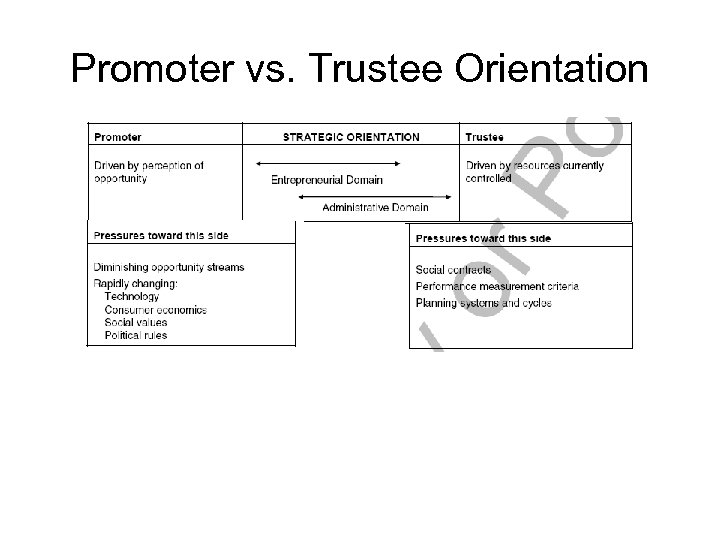
Promoter vs. Trustee Orientation
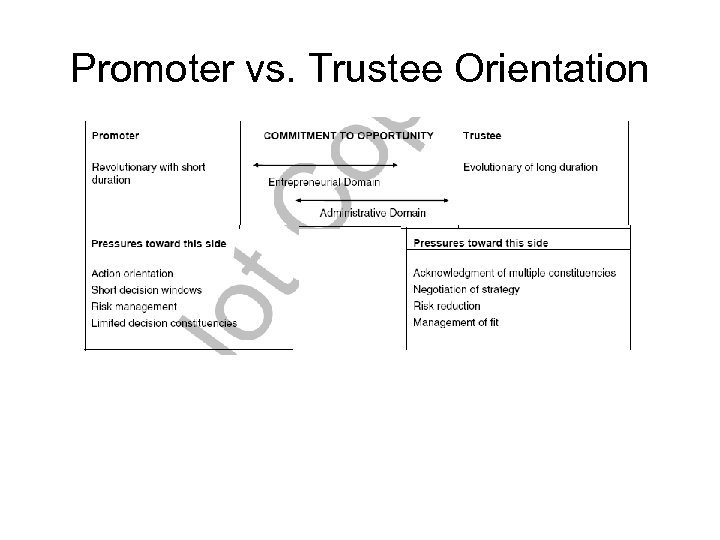
Promoter vs. Trustee Orientation
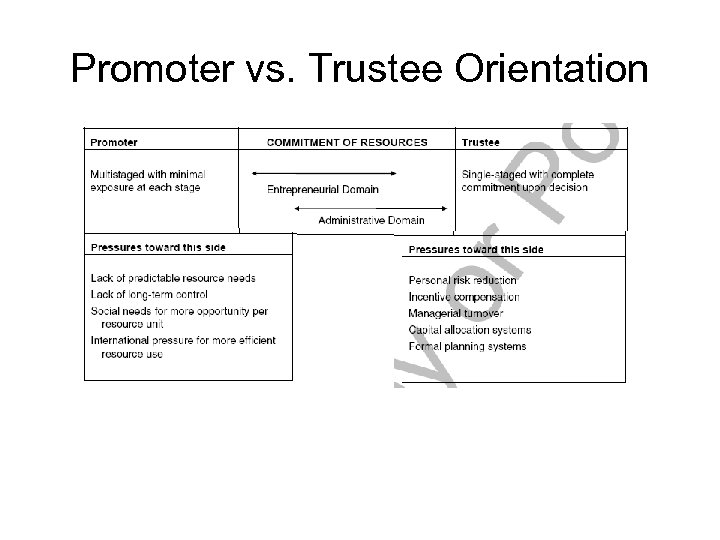
Promoter vs. Trustee Orientation
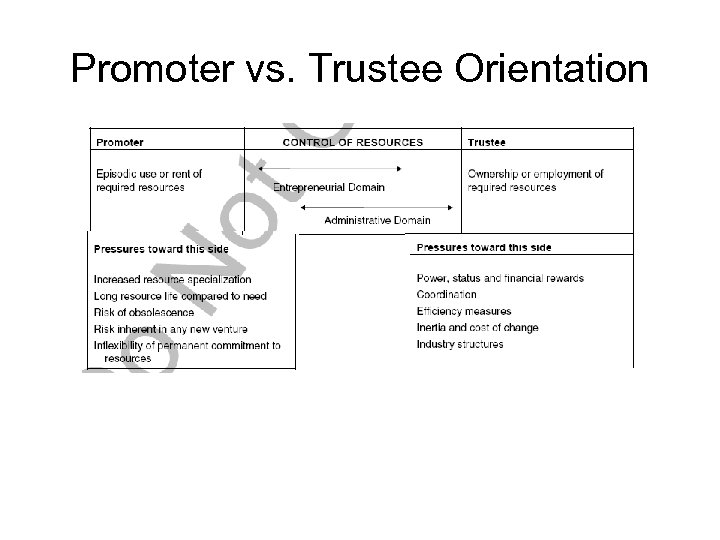
Promoter vs. Trustee Orientation
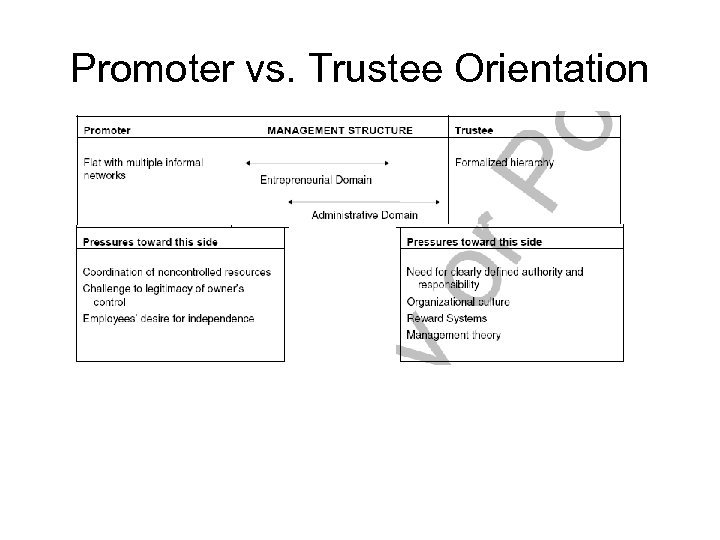
Promoter vs. Trustee Orientation
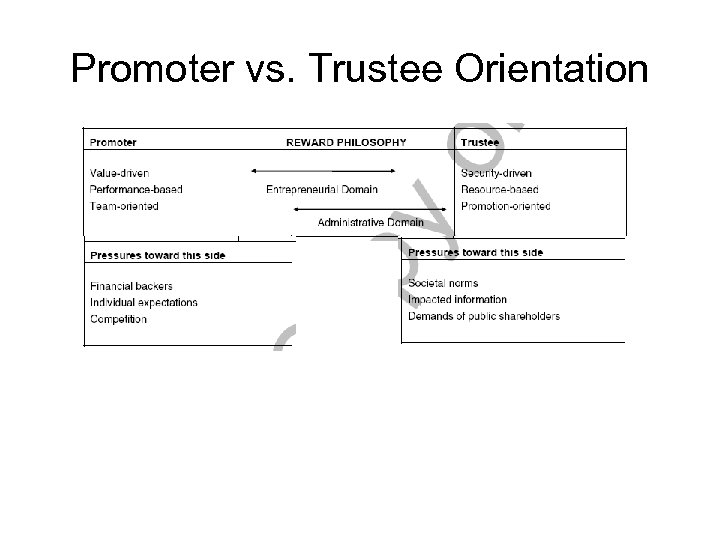
Promoter vs. Trustee Orientation
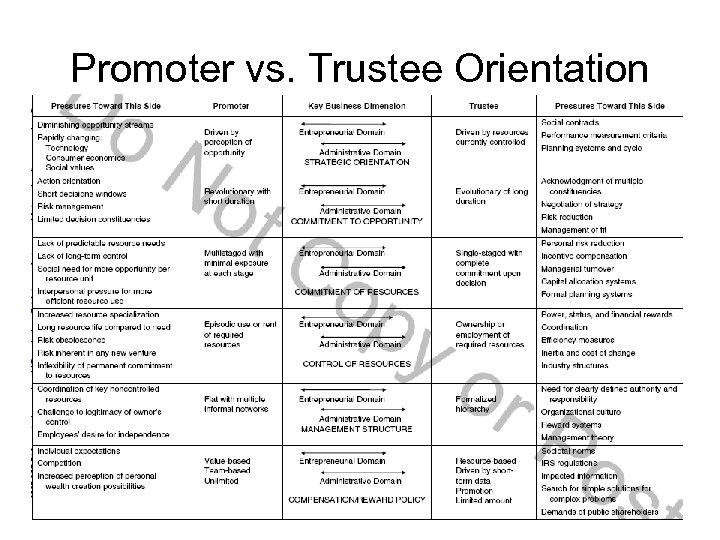
Promoter vs. Trustee Orientation
It makes good sense to look as entrepreneurship as an attitude or orientation. As such it must be observed as it is interpreted by the entrepreneur. “The Entrepreneurial Mindset” A collective investigation into the nature of entrepreneurship and some context conditions • What is that entrepreneurs do that makes them entrepreneurial? • What is that entrepreneurs do that make them succeed? • What is it that facilitates entrepreneurial success?

Part 1: Intro and Context
Part 2: Idea & Vision

Part 3: Starting up
Part 4: Team and resources
Part 5: Resource acquisition
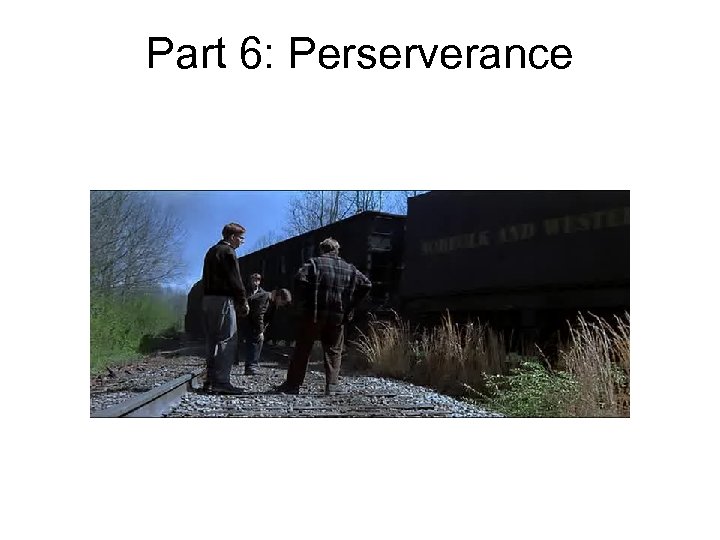
Part 6: Perserverance

Part 7: Happy ending
Conclusions from video clips • • • • • It’s always possible You are not born an entrepreneur, you become one Have a clear vision and goal Put a team together Don’t be put off by resource and competence constraints: Beg, Borrow and Steal Share vision and show leadership Find sponsors and mentors Tolerate failure Tolerate risk Try, try and try again Learn from mistakes Look for opportunities where other see landfills Defy social pressure Believe that you have the ability to change things Don’t underestimate yourself Be open to outside ideas Share success
This corresponds very well to what we in academia normally highlight as themes of desirable and acquirable attitudes and behaviors • • • Commitment and determination Leadership Opportunity obsession Tolerance of risk, ambuiguity and uncertainty Creativity, self-reliance and adaptability Motivation to excel
1. The Entrepreneurial Imperative
What arguments has been put forward to claim that this “entrepreneurship thing” is actually useful ? • The turbulent environment argument • The organizational lifecycle argument • The “Blue Ocean” argument (or the fallacy of Porter’s generic strategies) • The national competitiveness argument
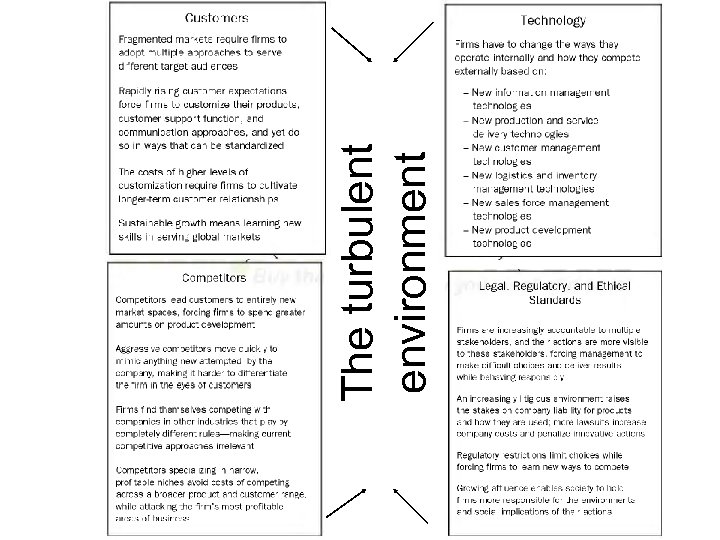
The turbulent environment
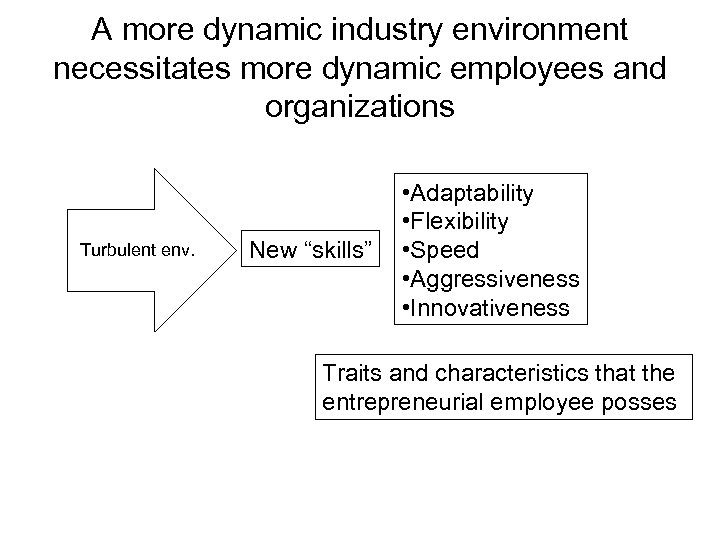
A more dynamic industry environment necessitates more dynamic employees and organizations Turbulent env. New “skills” • Adaptability • Flexibility • Speed • Aggressiveness • Innovativeness Traits and characteristics that the entrepreneurial employee posses
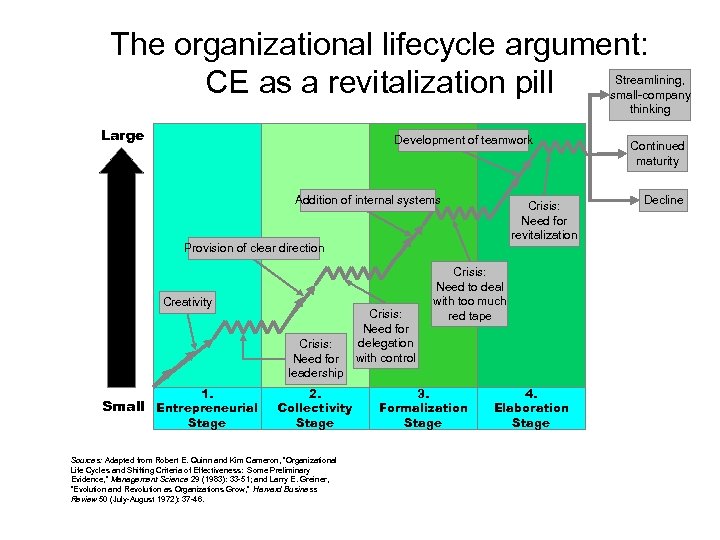
The organizational lifecycle argument: CE as a revitalization pill Streamlining, small-company thinking Large Development of teamwork Addition of internal systems S I Z E Crisis: Need for revitalization Provision of clear direction Creativity Crisis: Need for leadership 1. Small Entrepreneurial Stage 2. Collectivity Stage Sources: Adapted from Robert E. Quinn and Kim Cameron, “Organizational Life Cycles and Shifting Criteria of Effectiveness: Some Preliminary Evidence, ” Management Science 29 (1983): 33 -51; and Larry E. Greiner, “Evolution and Revolution as Organizations Grow, ” Harvard Business Review 50 (July-August 1972): 37 -46. Crisis: Need for delegation with control Crisis: Need to deal with too much red tape 3. Formalization Stage 4. Elaboration Stage Continued maturity Decline
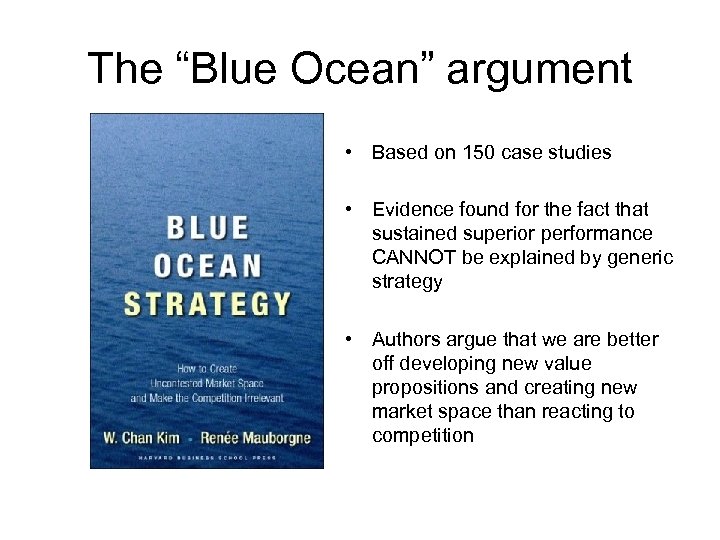
The “Blue Ocean” argument • Based on 150 case studies • Evidence found for the fact that sustained superior performance CANNOT be explained by generic strategy • Authors argue that we are better off developing new value propositions and creating new market space than reacting to competition
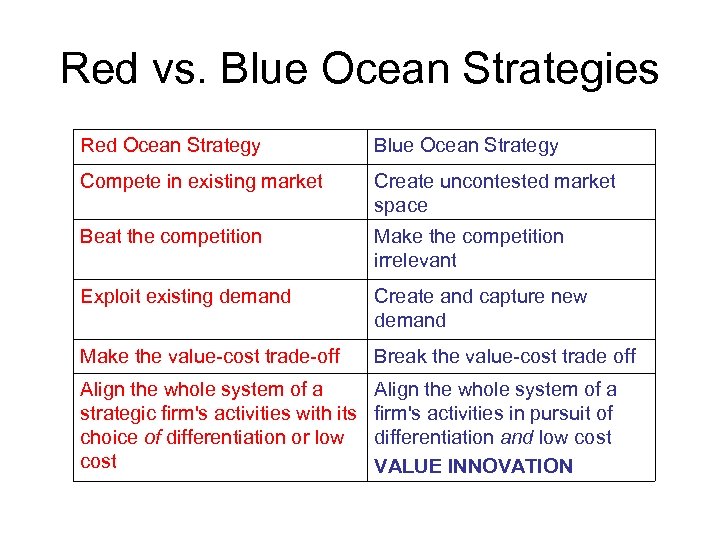
Red vs. Blue Ocean Strategies Red Ocean Strategy Blue Ocean Strategy Compete in existing market Create uncontested market space Beat the competition Make the competition irrelevant Exploit existing demand Create and capture new demand Make the value-cost trade-off Break the value-cost trade off Align the whole system of a strategic firm's activities with its choice of differentiation or low cost Align the whole system of a firm's activities in pursuit of differentiation and low cost VALUE INNOVATION

“Blue Ocean” is becoming an umbrella notion including also the “older” ideas of “New Game” and “time-based” competition • Wal-Mart • Nokia • Dell • Zara SPEED New Game • Amazon • Ryanair • Swatch • Nike • Cirque du Soleil Low Cost • i. Pod • Ferrari • Harley Davidson • BIC • Husky Focus Diff.
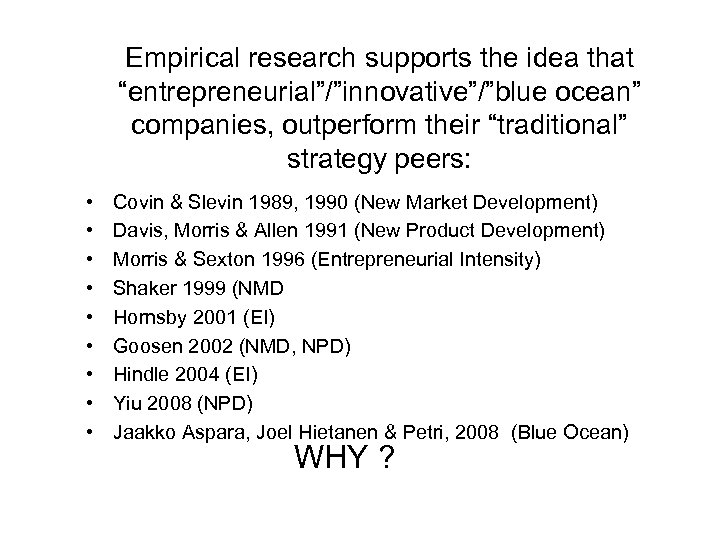
Empirical research supports the idea that “entrepreneurial”/”innovative”/”blue ocean” companies, outperform their “traditional” strategy peers: • • • Covin & Slevin 1989, 1990 (New Market Development) Davis, Morris & Allen 1991 (New Product Development) Morris & Sexton 1996 (Entrepreneurial Intensity) Shaker 1999 (NMD Hornsby 2001 (EI) Goosen 2002 (NMD, NPD) Hindle 2004 (EI) Yiu 2008 (NPD) Jaakko Aspara, Joel Hietanen & Petri, 2008 (Blue Ocean) WHY ?
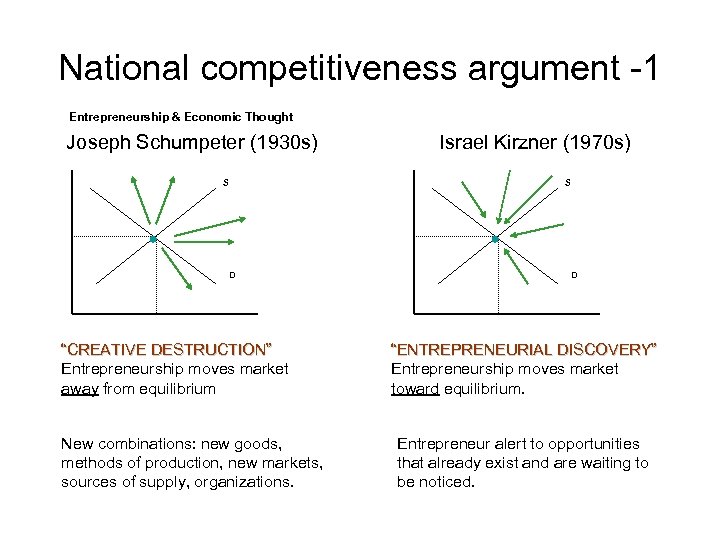
National competitiveness argument -1 Entrepreneurship & Economic Thought Joseph Schumpeter (1930 s) S Israel Kirzner (1970 s) S D “CREATIVE DESTRUCTION” Entrepreneurship moves market away from equilibrium New combinations: new goods, methods of production, new markets, sources of supply, organizations. D “ENTREPRENEURIAL DISCOVERY” Entrepreneurship moves market toward equilibrium. Entrepreneur alert to opportunities that already exist and are waiting to be noticed.
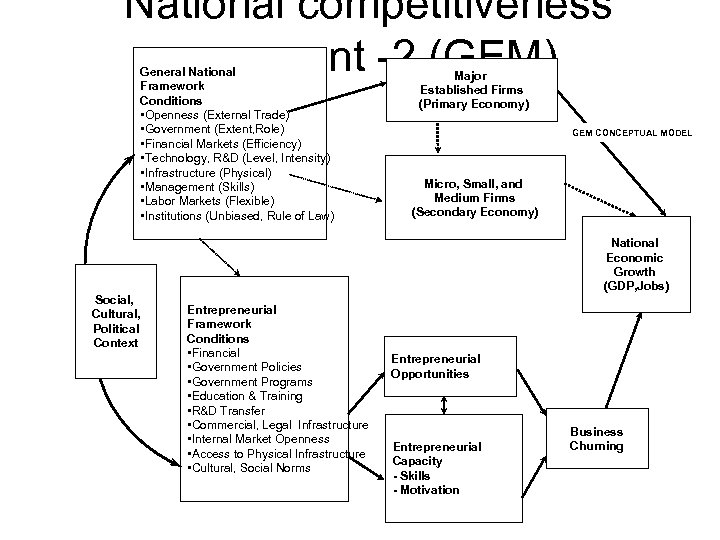
National competitiveness argument -2 (GEM) General National Framework Conditions • Openness (External Trade) • Government (Extent, Role) • Financial Markets (Efficiency) • Technology, R&D (Level, Intensity) • Infrastructure (Physical) • Management (Skills) • Labor Markets (Flexible) • Institutions (Unbiased, Rule of Law) Major Established Firms (Primary Economy) GEM CONCEPTUAL MODEL Micro, Small, and Medium Firms (Secondary Economy) National Economic Growth (GDP, Jobs) Social, Cultural, Political Context Entrepreneurial Framework Conditions • Financial • Government Policies • Government Programs • Education & Training • R&D Transfer • Commercial, Legal Infrastructure • Internal Market Openness • Access to Physical Infrastructure • Cultural, Social Norms Entrepreneurial Opportunities Entrepreneurial Capacity - Skills - Motivation Business Churning
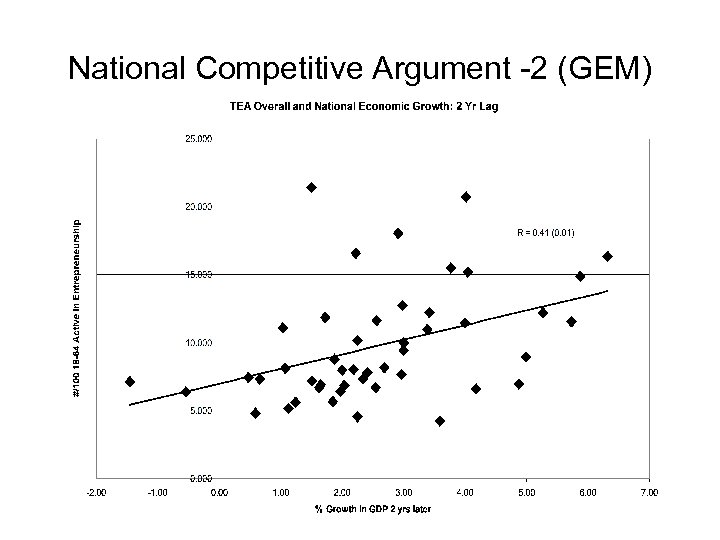
National Competitive Argument -2 (GEM)
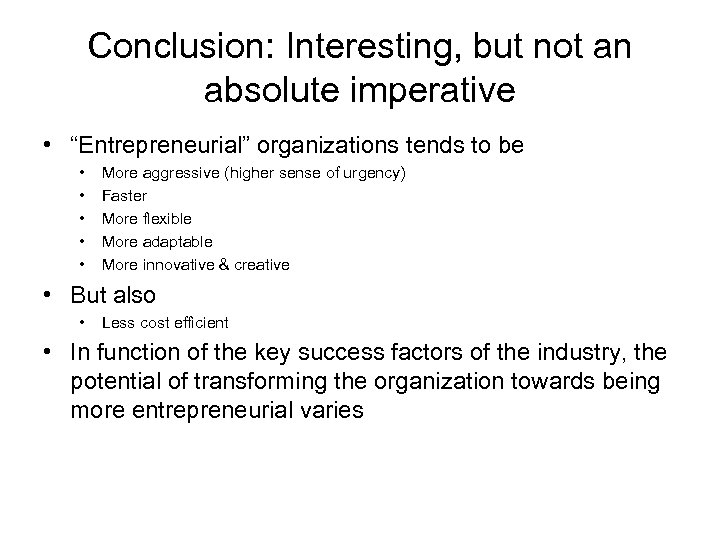
Conclusion: Interesting, but not an absolute imperative • “Entrepreneurial” organizations tends to be • • • More aggressive (higher sense of urgency) Faster More flexible More adaptable More innovative & creative • But also • Less cost efficient • In function of the key success factors of the industry, the potential of transforming the organization towards being more entrepreneurial varies
Скачать презентацию Corporate Entrepreneurship ss 5 -8 Mikkel Draebye
61c132325f57d26f541e065c8d55e502.ppt