 Скачать презентацию Corn Processing Biorefineries-Present and future outlook Charles Abbas
33c19bbb52ae841a667c5f947a921455.ppt
- Количество слайдов: 50



Corn Processing Biorefineries-Present and future outlook Charles Abbas 1, 2, 3 Director of Yeast and Renewables Research 1 Archer Daniels Midland Company 2 Department of Food Science and Human Nutrition 3 Institute for Genomics Biology University of Illinois at Urbana-Champaign CREL Meeting Presentation Oct. 6, 2005
“Those who live in the present Cannot define the future” Charles Abbas
Vision 2020 Objective Achieve at least 10% of basic chemical building blocks arising from plant-derived renewables by 2020, with development concepts in place by then to achieve a further increase to 50% by 2050 (OIT-DOE).

Biorefinery Concept Current Definition Processing of renewable agricultural feedstocks to higher value added products for use as food, feed, fuel, or fiber.
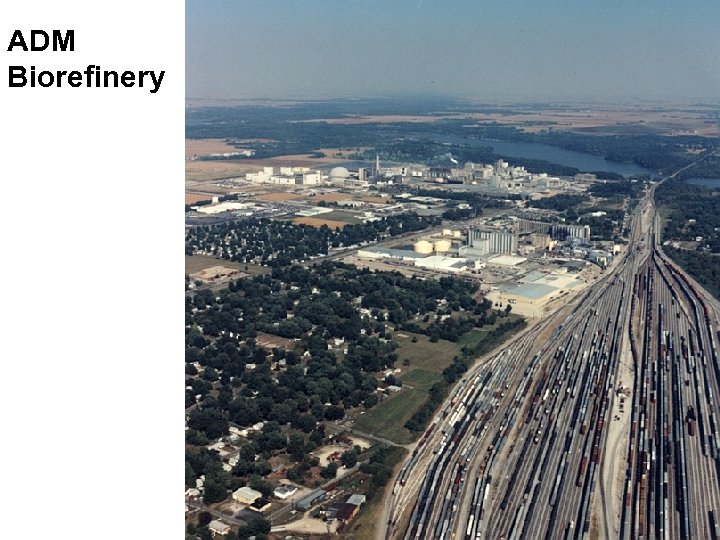
ADM Biorefinery
Biorefinery Concept Advanced Definition Processing of renewable agricultural crops, their fiber residues, high yielding energy crops, other plant fiber streams from municipal wastes and paper mills to higher value added biodegradable products such as polymers, industrial solvents, agrichemicals, fertilizers, dyes, adhesives, detergents, lubricants, inks, fuels, food, feed and other products.
Why Corn?
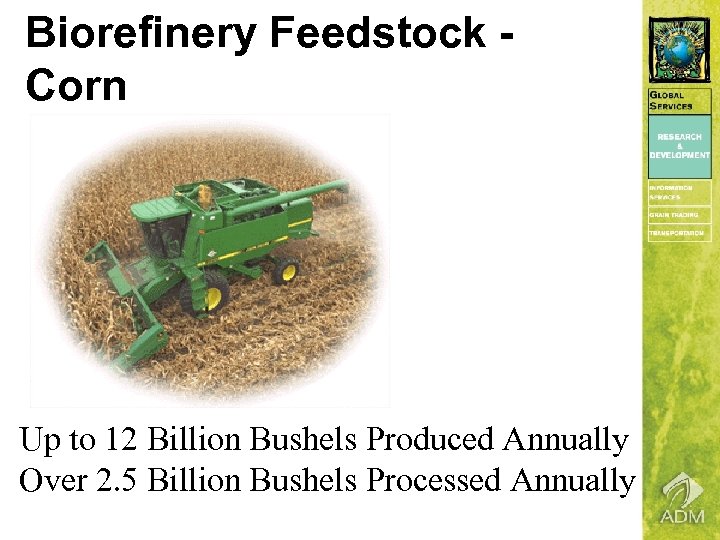
Biorefinery Feedstock Corn Up to 12 Billion Bushels Produced Annually Over 2. 5 Billion Bushels Processed Annually
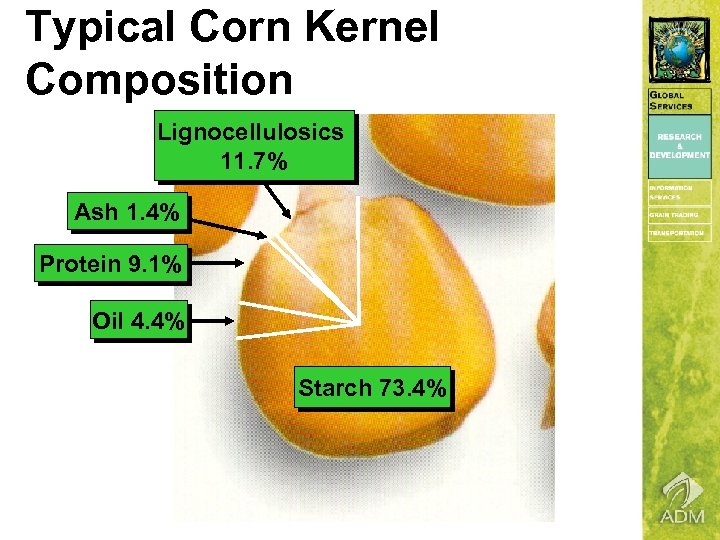
Typical Corn Kernel Composition Lignocellulosics 11. 7% Ash 1. 4% Protein 9. 1% Oil 4. 4% Starch 73. 4%
Ethanol Production from Corn 3. 5 billion gallons of ethanol produced from 1. 2 billion bushels of corn in 2004 (RFA) Project the use of 1. 5 billion bushels to produce about 4. 0 billion gallons of ethanol by the end of 2005
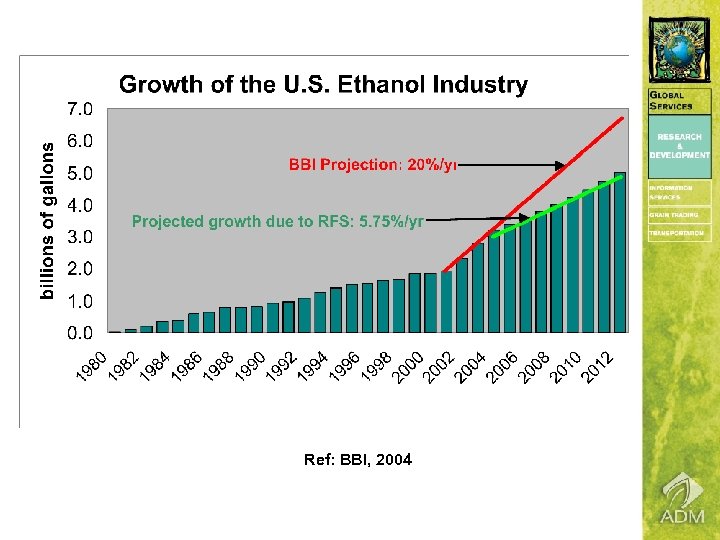
Ref: BBI, 2004
Market Drivers Phase out of MTBE (alternative is E 10)* Ethanol price relative to gasoline price Clean octane Oxygenate for RFG program Gasoline extender (refinery capacity) Local economic development Renewable Fuels Standard Balance of trade *E 10 = fuel contains 10% ethanol
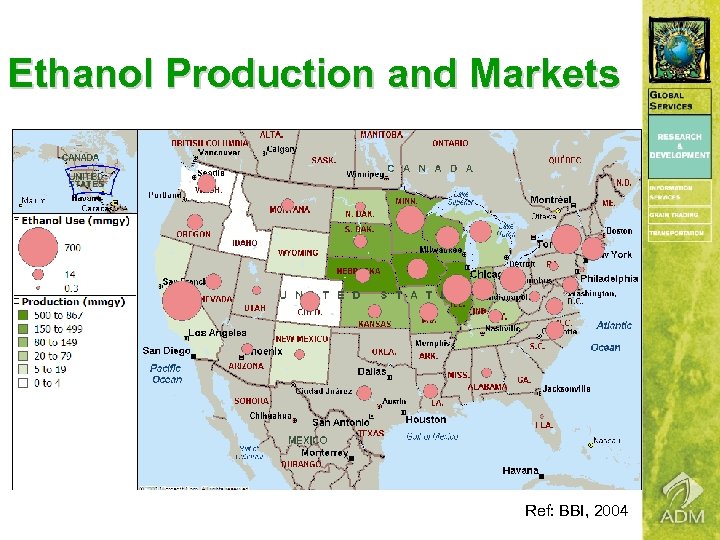
Ethanol Production and Markets Ref: BBI, 2004
Historical Background -The production of ethanol from starch-containing grains and other starch containing fibrous feedstocks was well developed before the role of enzymes was fully delineated. -These early or traditional processes relied on fungal, plant, or animal starch digestive preparations that in many cases did not require cooking of the starch till gelatinization. -Most of these processes were used to produce low alcohol beverage drinks like beer or higher alcohol products such as whisky, bourbon, sake, etc.
Composition of Starch -Starch is a heterogeneous polysaccharide that consists of two high molecular weight components, amylose and amylopectin. -Amylose is a linear polymer of α-1, 4 -linked glucose units that consist of chains of an average length of 500 -2000 units. Upon cooling following gelatinization, amylose chains tend to retrograde. -Amylopectin is a highly branched polymer consisting of α-1, 4 -glucan backbone with α-1, 6 linked side chains that occur approximately every 25 glucose units. It has a considerably higher number of glucose units than amylose (> 10, 000 residues) and is stable in aqueous solution following gelatinization and cooling.
Role of Enzymes -In 1811 the first starch degrading enzyme was discovered by Kirchhoff. This was followed by several reports of other digestive and malt amylases. -In 1930 and on the basis of the type of anomeric sugar produced Ohlsson suggested the classification of starch digesting enzymes into αand β-amylases. -Since then many amylases from animal, plant, and microbial sources have been isolated, characterized, classified, and commercially exploited in industrial applications
Classification of Commercial Microbial Amylolytic Enzymes -Exo-Acting Amylases (amyloglucosidases or glucoamylases, β-amylases, other–exo-enzymes, products are: glucose; maltose; β-limit dextrins; isomaltose, etc. ). -Endo-Acting Amylases (α-amylasesproducts are: α-1, 4 dextrins with α-1, 6 branches; oligosaccharides). -Debranching Amylases (pullulanases products are: long chain α-1, 4 -linked dextrins). -Cyclodextrin-producing amylases (hydrolyze starch to produce non-cyclic D-glucosyl dextrins also referred to as cyclodextrins).
Application of Enzymes in Dry vs. Wet Corn Milling to Ethanol Production -Wet-milled corn ethanol plants: primarily use bacterial α-amylases to liquefy starch as a pretreatment step followed by fungal glucoamylases for saccharification of some of the liquefied starch to dextrose prior to further saccharification and fermentation using a process known as simultaneous saccharification and fermentation or SSF. -Dry-mill corn ethanol plants use a similar process to hydrolyze starch but may use other fiber and protein digesting enzymes such as cellulases, hemicellulases, and proteases in the corn cooking step or during fermentation or following distillation of ethanol to improve drying of DDGS.
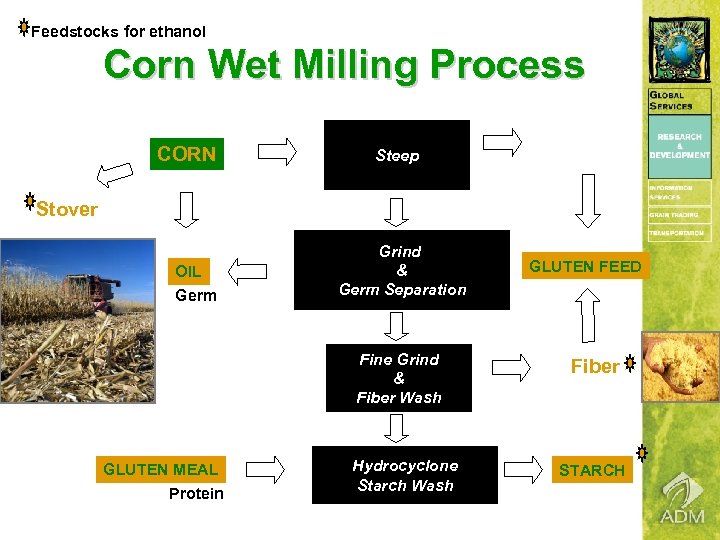
Feedstocks for ethanol Corn Wet Milling Process CORN Steep Water Protein Stover OIL Germ Grind & Germ Separation Fine Grind & Fiber Wash GLUTEN MEAL Protein Hydrocyclone Starch Wash GLUTEN FEED Fiber STARCH
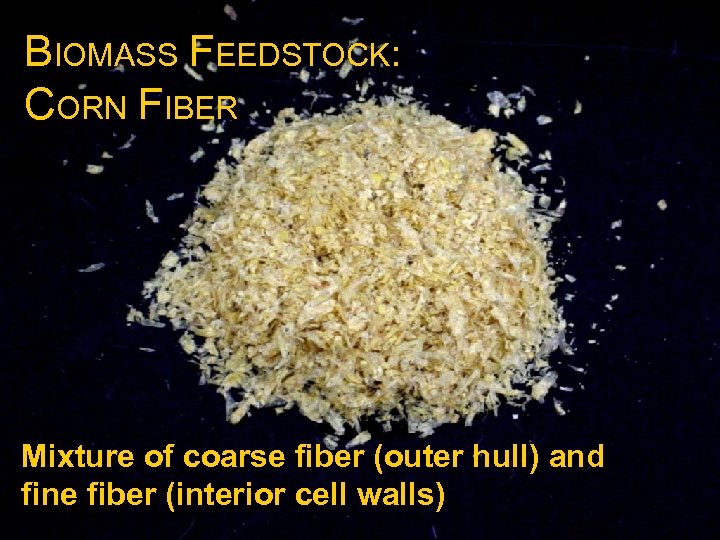
BIOMASS FEEDSTOCK: CORN FIBER Mixture of coarse fiber (outer hull) and fine fiber (interior cell walls)
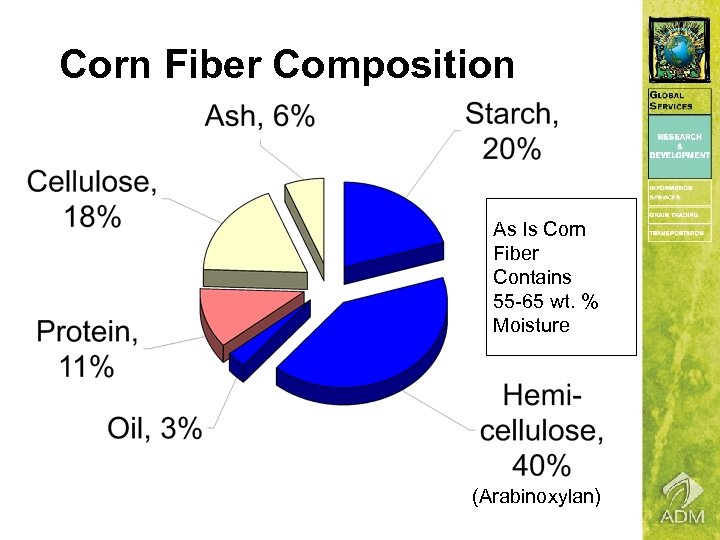
Corn Fiber Composition As Is Corn Fiber Contains 55 -65 wt. % Moisture (Arabinoxylan)
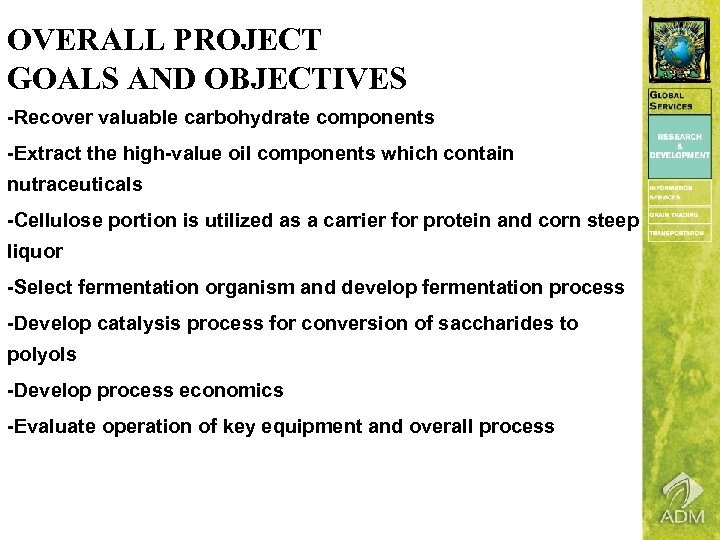
OVERALL PROJECT GOALS AND OBJECTIVES -Recover valuable carbohydrate components -Extract the high-value oil components which contain nutraceuticals -Cellulose portion is utilized as a carrier for protein and corn steep liquor -Select fermentation organism and develop fermentation process -Develop catalysis process for conversion of saccharides to polyols -Develop process economics -Evaluate operation of key equipment and overall process
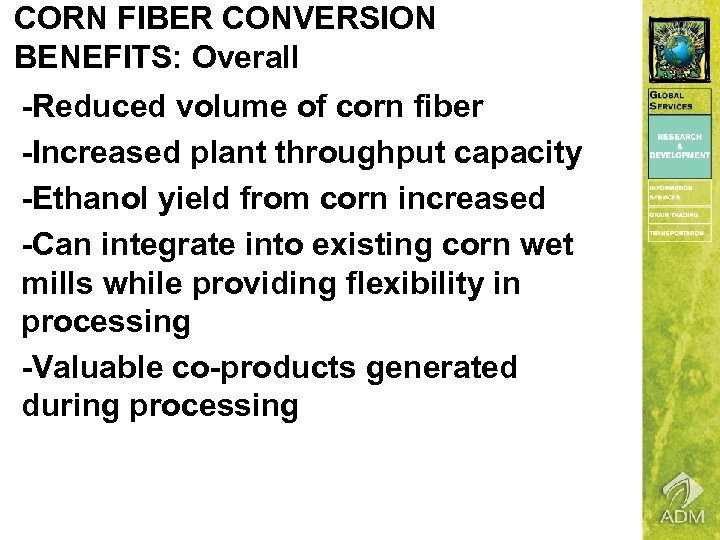
CORN FIBER CONVERSION BENEFITS: Overall -Reduced volume of corn fiber -Increased plant throughput capacity -Ethanol yield from corn increased -Can integrate into existing corn wet mills while providing flexibility in processing -Valuable co-products generated during processing
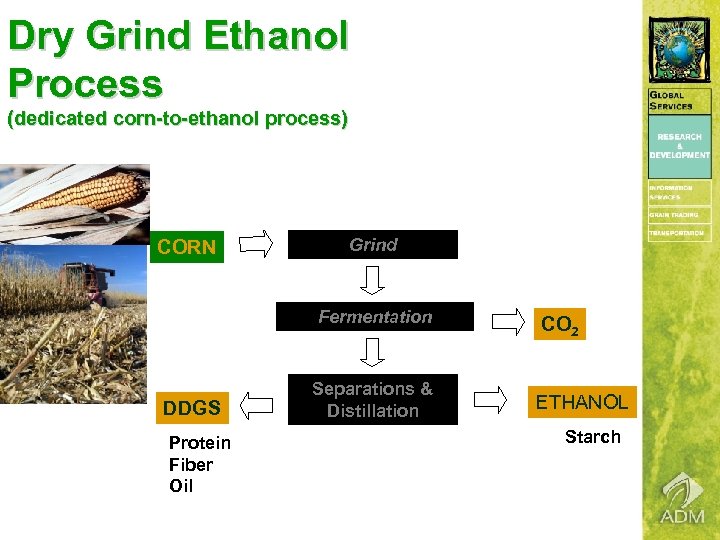
Dry Grind Ethanol Process (dedicated corn-to-ethanol process) CORN Grind Fermentation DDGS Protein Fiber Oil Separations & Distillation CO 2 ETHANOL Starch
New Application of Enzymes -High gravity fermentation processes require modified grain cooking systems that rely in addition to proper grinding of the grain on the use of higher doses of bacterial α-amylases in the cooking step in combination with the use of fungal α-amylases, βamylases and glucoamylases prior and during fermentation. As in other dry mills other enzymes such as proteases, cellulases, hemicellulases may be employed to improve fermentation mash handling and drying of DDGS. -Dry-mill corn plants that do not utilize a cooking step, rely on the use of raw starch digesting enzymes from fungal sources that have been further improved through protein engineering.
New Enzyme Targets for Corn Processing -Enzyme milling enzymes: target use of proteases/other fiber digesting enzymes to pretreat whole corn kernels or milled corn fractions to achieve better separation of corn starch granules, germ separation, protein solubilization, removal of cellulose or hemicellulose fractions. -Enzymes that degrade hemicellulose and cellulose in corn fiber hulls and other corn plant residues such as stalks, stover, and husk to produce a fermentable sugar slurry for ethanol production. -Enzymes that improve CGF and DDGS/DDS digestibility and handling.
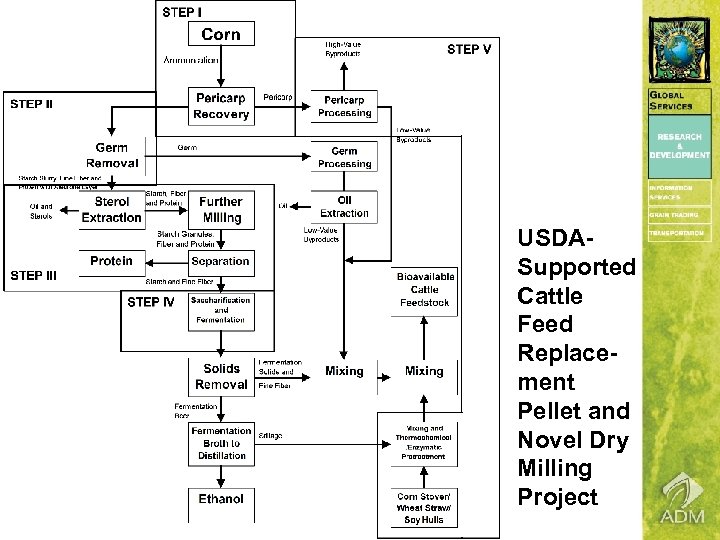
USDASupported Cattle Feed Replacement Pellet and Novel Dry Milling Project
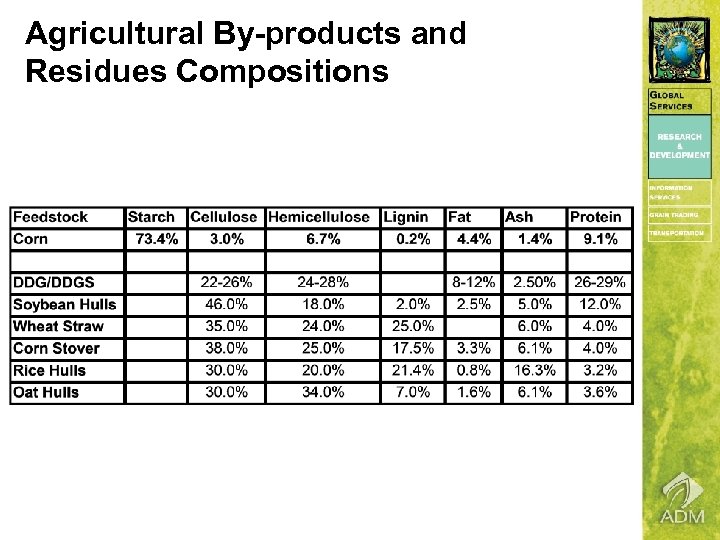
Agricultural By-products and Residues Compositions
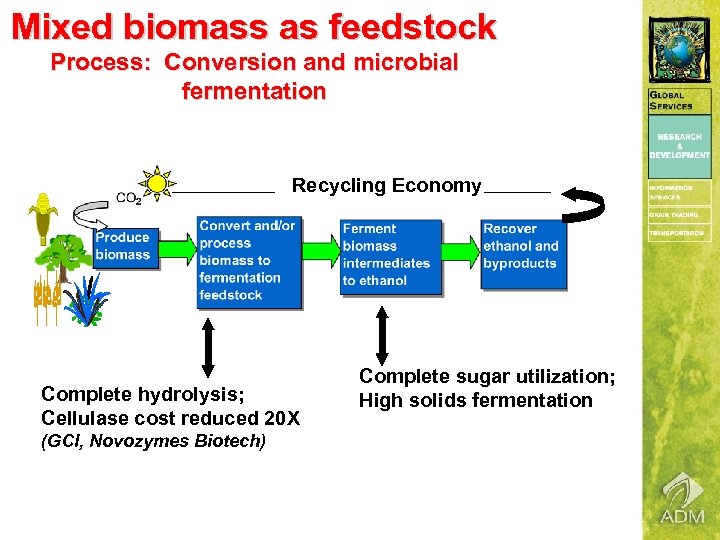
Mixed biomass as feedstock Process: Conversion and microbial fermentation Recycling Economy Complete hydrolysis; Cellulase cost reduced 20 X (GCI, Novozymes Biotech) Complete sugar utilization; High solids fermentation
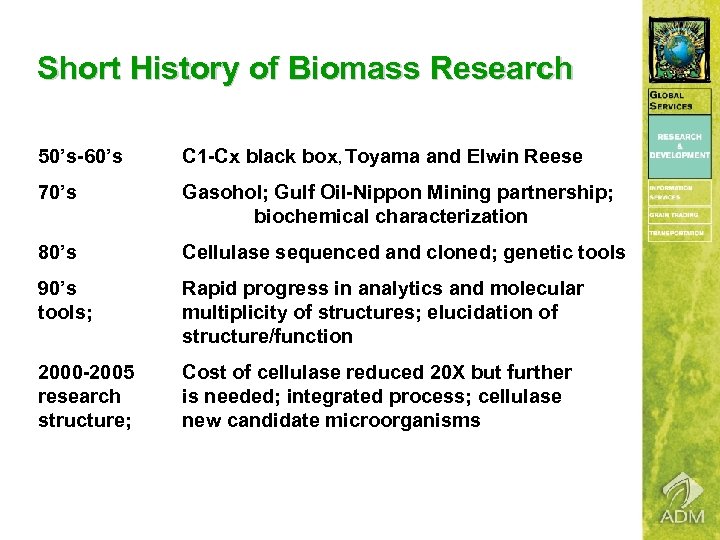
Short History of Biomass Research 50’s-60’s C 1 -Cx black box, Toyama and Elwin Reese 70’s Gasohol; Gulf Oil-Nippon Mining partnership; biochemical characterization 80’s Cellulase sequenced and cloned; genetic tools 90’s tools; Rapid progress in analytics and molecular multiplicity of structures; elucidation of structure/function 2000 -2005 research structure; Cost of cellulase reduced 20 X but further is needed; integrated process; cellulase new candidate microorganisms
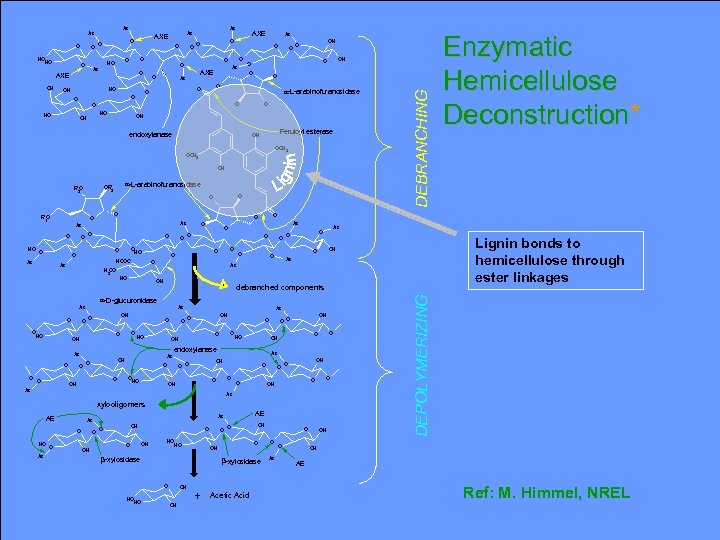
O HO HO O O OH O O O O a-L-arabinofuranosidase O HO OH O O O HO Ac AXE Ac O O AXE O OH O O O HO Ac AXE OH O OH endoxylanase Feruloyl esterase OH OCH 3 3 OH OR RO 3 a-L-arabinofuranosidase 2 O O RO O O 1 O HO O O Ac HOOC Ac O O Ac Ac O O O HO O Ac OH debranched components a-D-glucuronidase Ac O O HO Ac O OH O O OH HO O Ac O O OH O O HO O O OH OH O O O Ac OH O O OH endoxylanase Ac OH Ac O O OH Ac xylooligomers AE O HO Ac O O OH AE Ac Ac OH O OH HO HO O O OH b-xylosidase O HO HO Lignin bonds to hemicellulose through ester linkages OH O O Ac H CO 3 Ac O OH OH + Acetic Acid Enzymatic Hemicellulose Deconstruction* O O Ac O OH DEPOLYMERIZING O Ac Ac AXE O DEBRANCHING Ac Ac OH AE Ref: M. Himmel, NREL
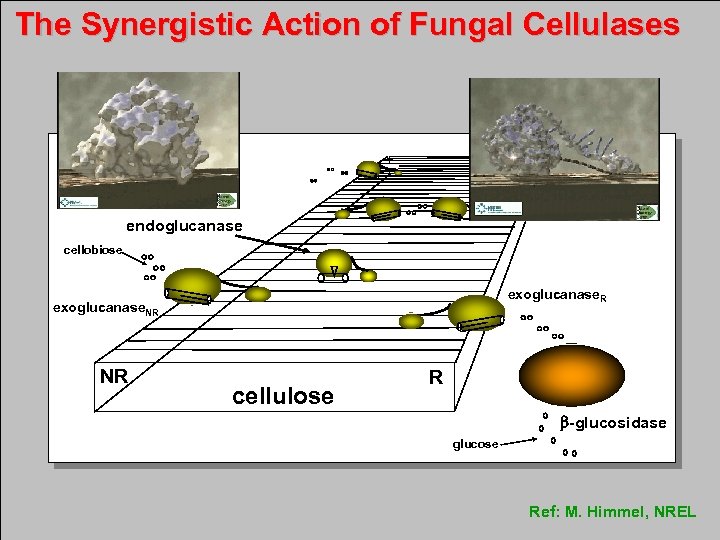
The Synergistic Action of Fungal Cellulases endoglucanase cellobiose exoglucanase. R exoglucanase. NR NR cellulose R -glucosidase glucose Ref: M. Himmel, NREL
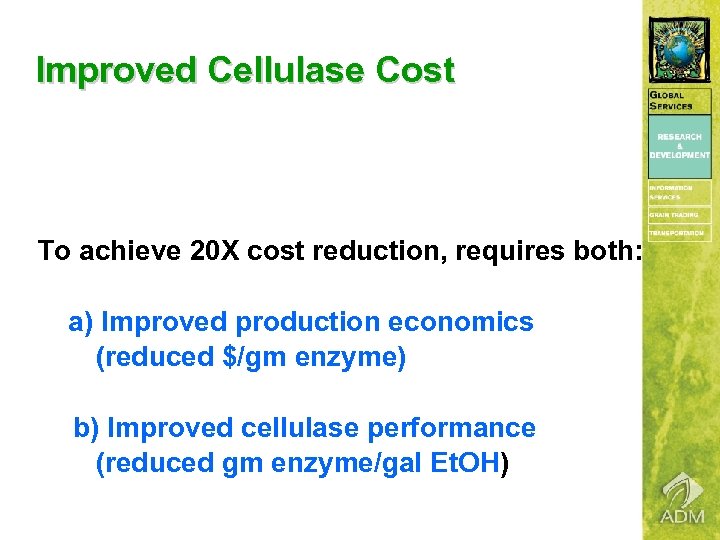
Improved Cellulase Cost To achieve 20 X cost reduction, requires both: a) Improved production economics (reduced $/gm enzyme) b) Improved cellulase performance (reduced gm enzyme/gal Et. OH)
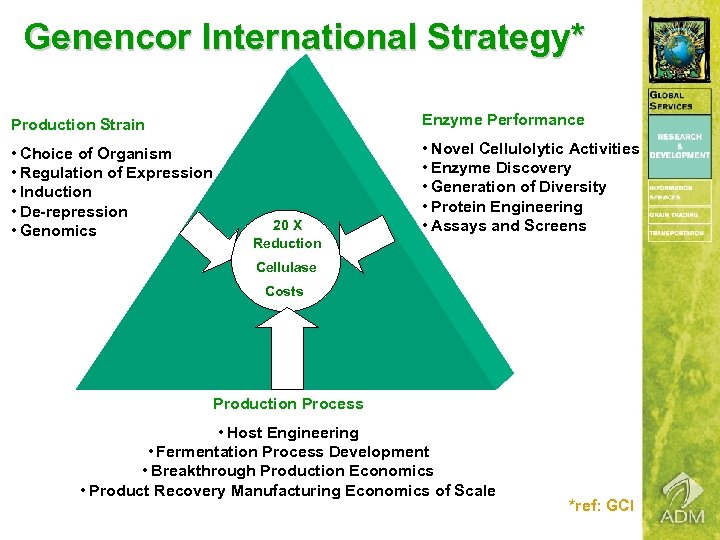
Genencor International Strategy* Production Strain Enzyme Performance • Choice of Organism • Regulation of Expression • Induction • De-repression • Genomics • Novel Cellulolytic Activities • Enzyme Discovery • Generation of Diversity • Protein Engineering • Assays and Screens 20 X Reduction Cellulase Costs Production Process • Host Engineering • Fermentation Process Development • Breakthrough Production Economics • Product Recovery Manufacturing Economics of Scale *ref: GCI
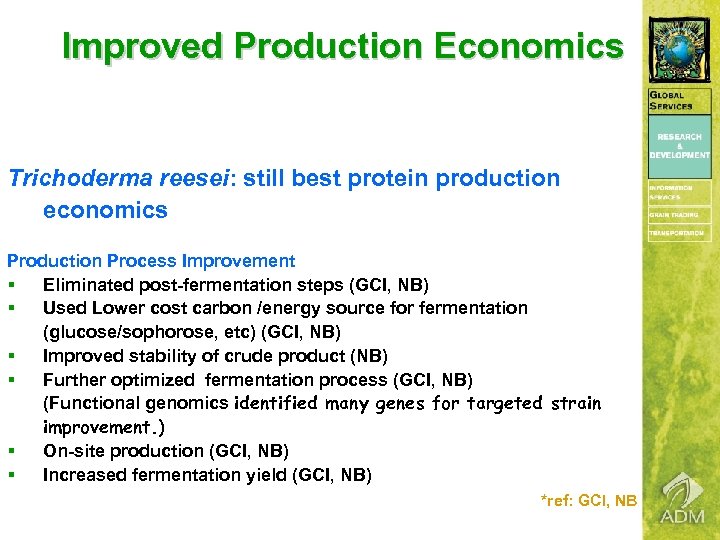
Improved Production Economics Trichoderma reesei: still best protein production economics Production Process Improvement § Eliminated post-fermentation steps (GCI, NB) § Used Lower cost carbon /energy source for fermentation (glucose/sophorose, etc) (GCI, NB) § Improved stability of crude product (NB) § Further optimized fermentation process (GCI, NB) (Functional genomics identified many genes for targeted strain improvement. ) § On-site production (GCI, NB) § Increased fermentation yield (GCI, NB) *ref: GCI, NB
Improved Production Economics (cont. ) Production Strain Improvement § Applied random mutagenesis (GCI, NB) § Applied targeted mutagenesis (GCI, NB) § Fully characterized T. reesei cellulase system (GCI, NB) § Identified, cloned and expressed new cellulases (over 70 -NB) § Created new cellulase producing fungal strains (over 400 -NB) § Tested new strains for cellulose degrading activity (over 200 -NB) - “new” tools for cellulase expression - “new” methods of growing strains for production
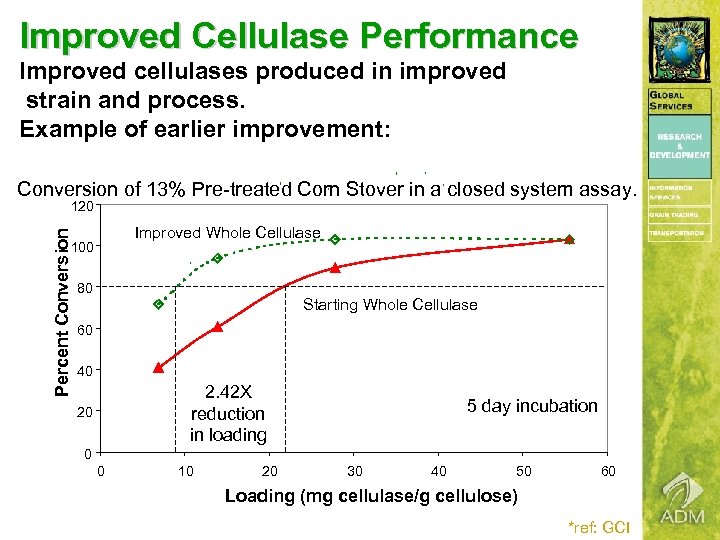
Improved Cellulase Performance Improved cellulases produced in improved strain and process. Example of earlier improvement: Conversion of 13% Pre-treated Corn Stover in a closed system assay. Percent Conversion 120 Improved Whole Cellulase 100 80 Starting Whole Cellulase 60 40 2. 42 X reduction in loading 20 5 day incubation 0 0 10 20 30 40 50 60 Loading (mg cellulase/g cellulose) *ref: GCI
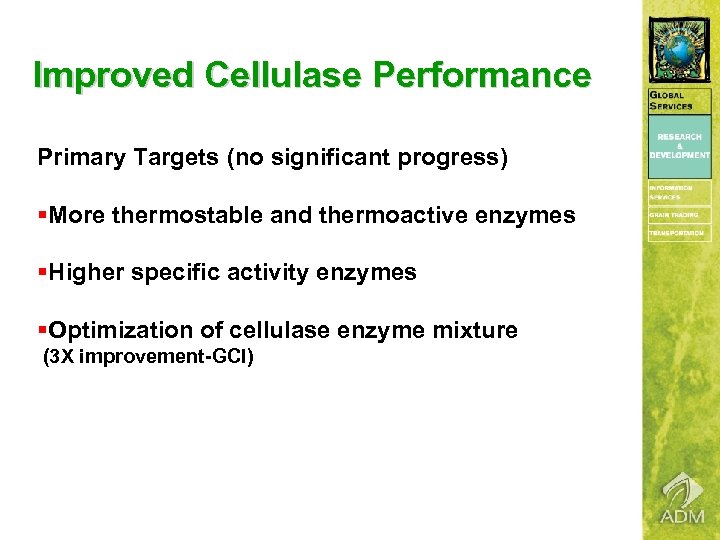
Improved Cellulase Performance Primary Targets (no significant progress) §More thermostable and thermoactive enzymes §Higher specific activity enzymes §Optimization of cellulase enzyme mixture (3 X improvement-GCI)
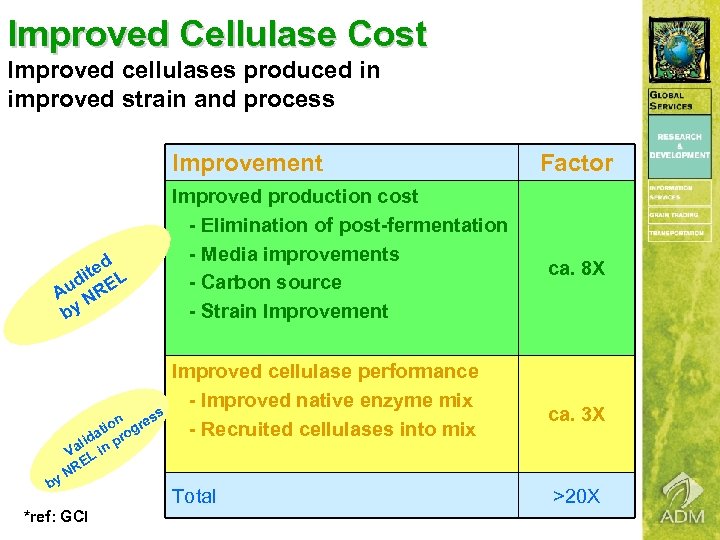
Improved Cellulase Cost Improved cellulases produced in improved strain and process Improvement d ite L d Au NRE by ss ion gre at o lid n pr Va L i E NR y b *ref: GCI Improved production cost - Elimination of post-fermentation - Media improvements - Carbon source - Strain Improvement Improved cellulase performance - Improved native enzyme mix - Recruited cellulases into mix Total Factor ca. 8 X ca. 3 X *ref: GCI >20 X
Microorganism Development for Bioethanol Targets / Requirements Robust strain, compatible with biomass and enzymes Utilization of both C-5 and C-6 sugars High ethanol productivity and yield Validated in a industrial fermentation system with specified feedstock (high solids, large scale) Developments and Considerations S. cerevisae strains that use both C-5 and C-6 sugars Special features (cellulolytic, ethanol producing strains) Not inhibited by process Good redox balance characteristics New strains (including Pichia stipitus, E. coli, Klebsiella oxytoca, L. pentosis)
Process Design “Putting it All Together” – Integrating all step in process with specified feedstock and at industrial scale Fed batch or continuous process required to keep solids and product concentration high enough More work required!
Future Considerations Sugar production from biomass is projected to be: • Near Term 6. 4¢ to 5. 7¢ per lb • 2005 4. 4¢ per lb • 2010 3. 9¢ to 3. 0¢ per lb This compares favorably with current costs of glucose: –~6¢ per lb (estimated from corn wet mill)
What is Needed for Commercialization to Occur? Reasonable policies must be in place Must be profitable - “Show me the money? ” Feedstock supplies and the infrastructure for harvest and collection must be in place Process design(s) must be fully evaluated and proven out, including utilities, wastewater treatment, etc. , to demonstrate attractive process economics Integrated performance must be demonstrated for all previously unproven conversion steps Multiyear feedstock supply/delivery contracts How to make this happen? Timing and Leverage!
Future Trends in the Path to Commercialization -Some examples based on corn -Future: lignocellulose (e. g. Iogen Corp. , Canada) -Financing -Politics and regulatory policies are impacting development “Need incentives to jump-start industry” -Single company versus industry consortium Federal (DOE and USDA) efforts -Vital role for universities and Federal labs in research “Success will drive the business”
What Are Life Cycle (LCA) Models? -Full system studies of material/energy inputs & outputs of both products & processes -Inventory environmental impacts of products & processes (many possible impacts, select “key” ones) -Methods for doing LCA studies are not universally agreed upon —allocation issues in particular are both important and somewhat controversial Objectives: -Benchmark, evaluate & improve environmental footprint. Compare with competition -Comply with regulations or consumer expectations? In short: assist corporate & government decisions & identify tradeoffs
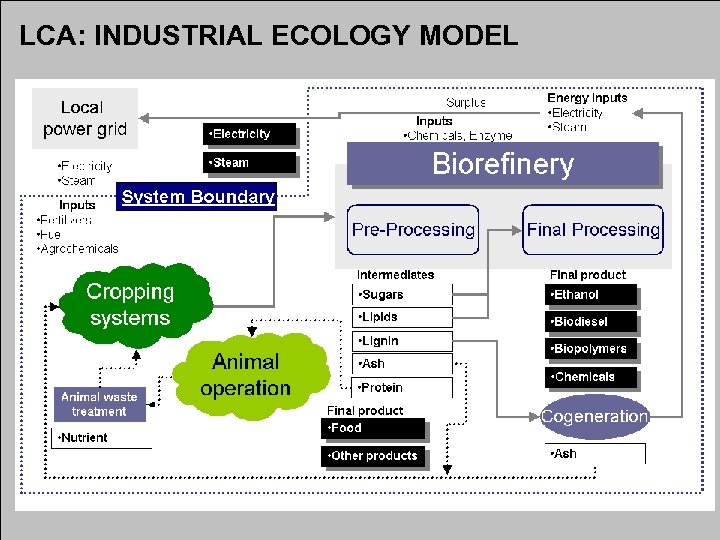
LCA: INDUSTRIAL ECOLOGY MODEL
Future Predictions -Technological advances in bioprocessing of agricultural & biomass fibrous feedstocks will fuel rapid expansion in advanced biorefinery construction. -Greater reliance on process integration and the use of LCA type models. -The fields of dreams of the midwest will be the future fields of opportunities.
Acknowledgements Sharon Shoemaker CIFAR Bruce Dale Mich State Cindy Riley DOE NREL Mike Himmel DOE NREL Dan Schell DOE NREL Genencor International and Novozyme Kyle Beery ADM Tom Binder ADM
Скачать презентацию Corn Processing Biorefineries-Present and future outlook Charles Abbas
33c19bbb52ae841a667c5f947a921455.ppt