


 Скачать презентацию CORMAS COMMON-POOL RESOURCES MANAGMENT AND MULTI-AGENTS SYSTEMS CORMAS
8de695ef88119dc03f62a1d621fb5083.ppt
- Количество слайдов: 39
 CORMAS COMMON-POOL RESOURCES MANAGMENT AND MULTI-AGENTS SYSTEMS CORMAS - P. Bommel
 What are we doing ? è Development of an agent-based simulation platform (CORMAS) dedicated to the field of natural resources management è Test of a companion modelling approach about how to use these types of models è Training courses, knowledge transfers CORMAS - P. Bommel
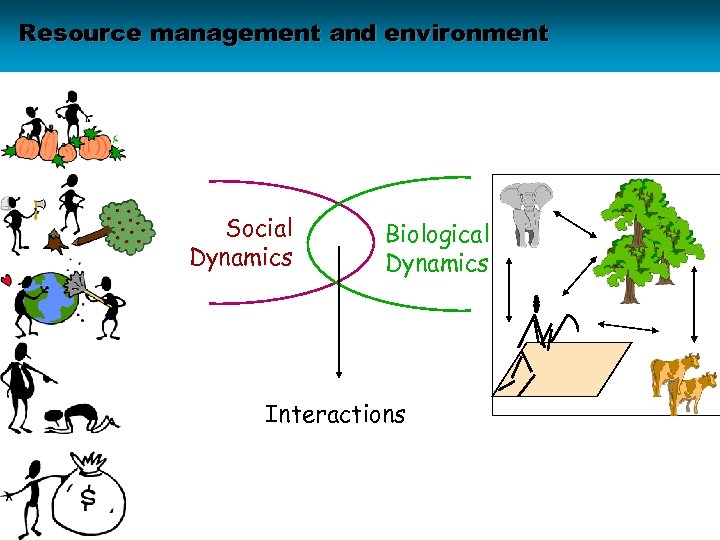 Resource management and environment Social Dynamics Biological Dynamics Interactions CORMAS - P. Bommel
 A definition of complex systems èDefinition: Ø Complex system : a set of elements interacting among them and with the outside : • Distinction between the whole (the system) and the remainder (environment/outer): reliance to the question • Predominance of interactions : more than the sum of the parts. èOther characteristics: Ø Descriptions at multiple levels (a minima: elements / system) Ø Emergence Ø Structures making CORMAS - P. Bommel
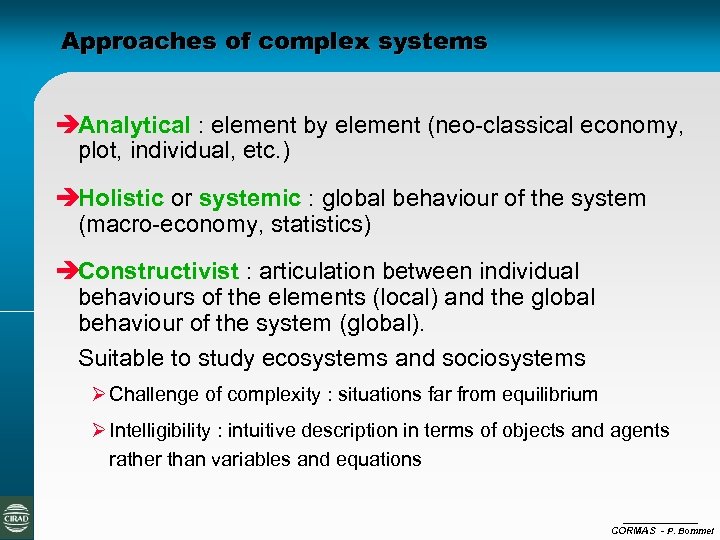 Approaches of complex systems èAnalytical : element by element (neo-classical economy, plot, individual, etc. ) èHolistic or systemic : global behaviour of the system (macro-economy, statistics) èConstructivist : articulation between individual behaviours of the elements (local) and the global behaviour of the system (global). Suitable to study ecosystems and sociosystems Ø Challenge of complexity : situations far from equilibrium Ø Intelligibility : intuitive description in terms of objects and agents rather than variables and equations CORMAS - P. Bommel
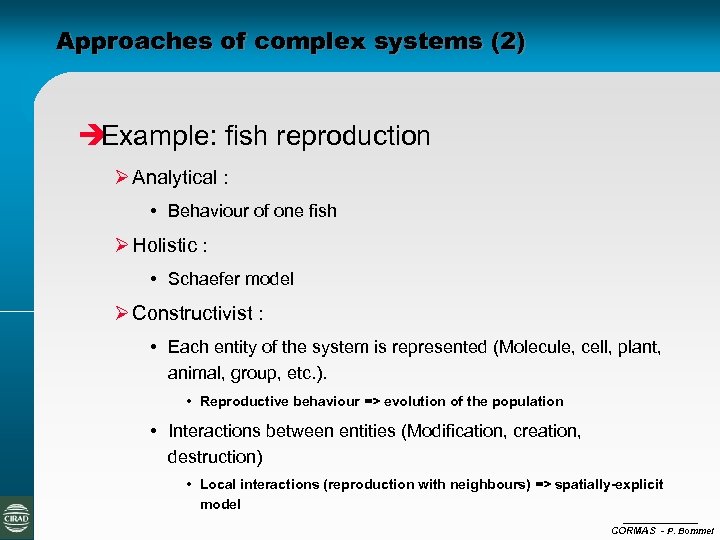 Approaches of complex systems (2) è Example: fish reproduction Ø Analytical : • Behaviour of one fish Ø Holistic : • Schaefer model Ø Constructivist : • Each entity of the system is represented (Molecule, cell, plant, animal, group, etc. ). • Reproductive behaviour => evolution of the population • Interactions between entities (Modification, creation, destruction) • Local interactions (reproduction with neighbours) => spatially-explicit model CORMAS - P. Bommel
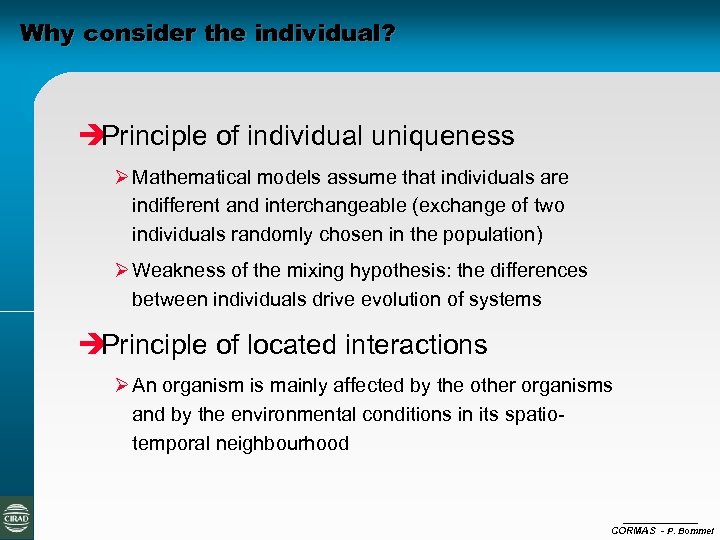 Why consider the individual? è Principle of individual uniqueness Ø Mathematical models assume that individuals are indifferent and interchangeable (exchange of two individuals randomly chosen in the population) Ø Weakness of the mixing hypothesis: the differences between individuals drive evolution of systems è Principle of located interactions Ø An organism is mainly affected by the other organisms and by the environmental conditions in its spatiotemporal neighbourhood CORMAS - P. Bommel
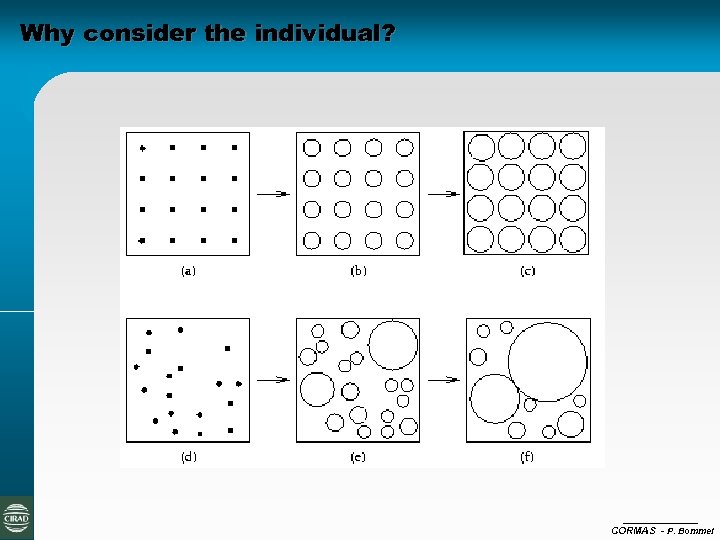 Why consider the individual? CORMAS - P. Bommel
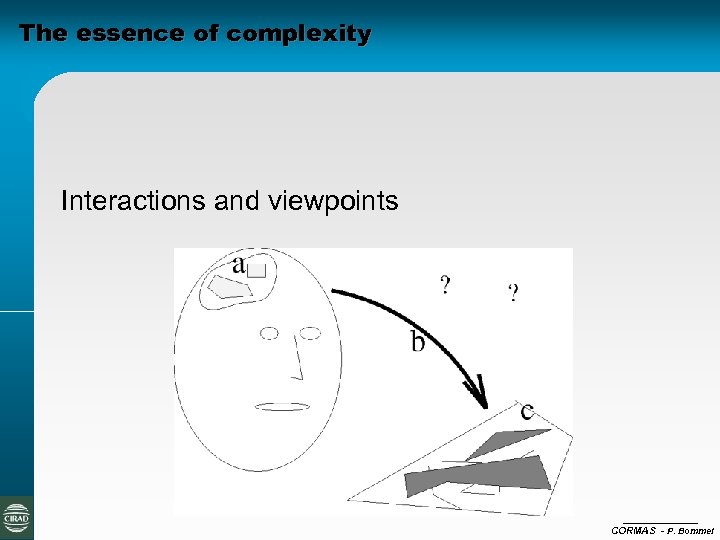 The essence of complexity Interactions and viewpoints CORMAS - P. Bommel
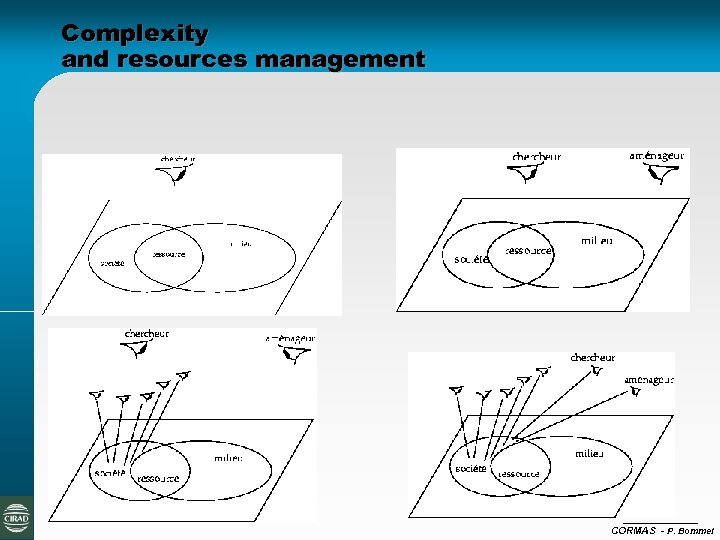 Complexity and resources management CORMAS - P. Bommel
 Postulates è Individual and collective processes dealing with natural resources management are based on: Ø Shared representations of interactions between stakeholders and the ecosystem. è Towards modelling to : Ø Articulate multiple viewpoints ; Ø Articulate multiple levels (from local to global) ; Ø Allow retrospective and prospective analyses ; Ø Be understandable by the stakeholders. CORMAS - P. Bommel
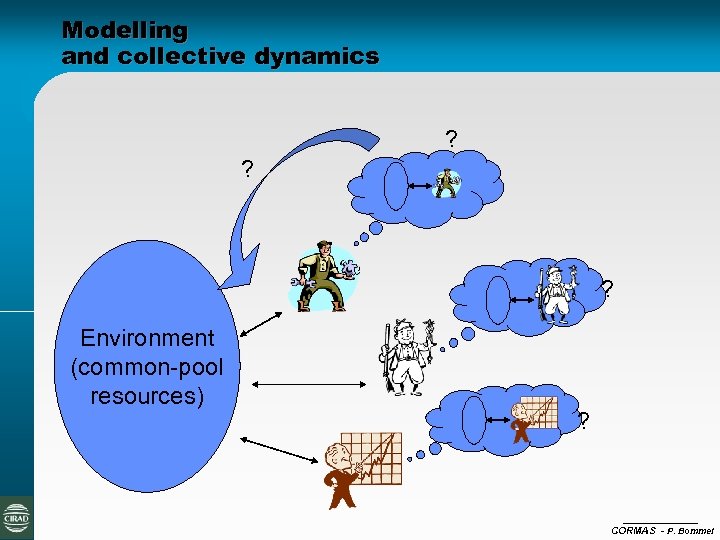 Modelling and collective dynamics ? ? ? Environment (common-pool resources) ? CORMAS - P. Bommel
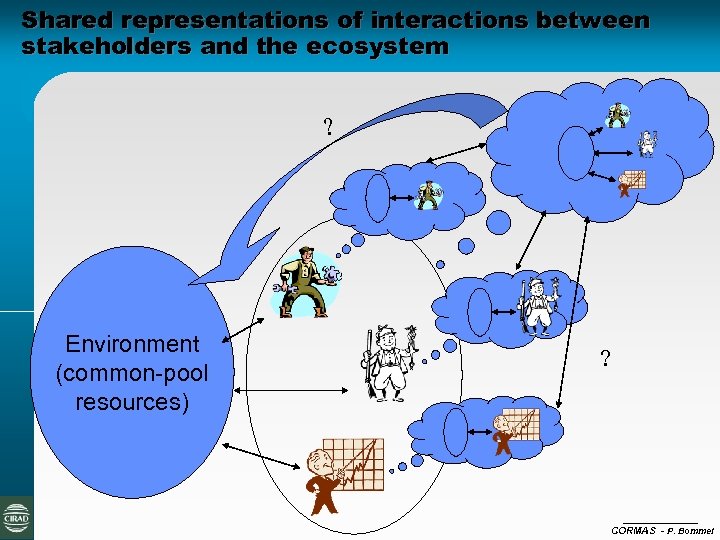 Shared representations of interactions between stakeholders and the ecosystem ? Environment (common-pool resources) ? CORMAS - P. Bommel
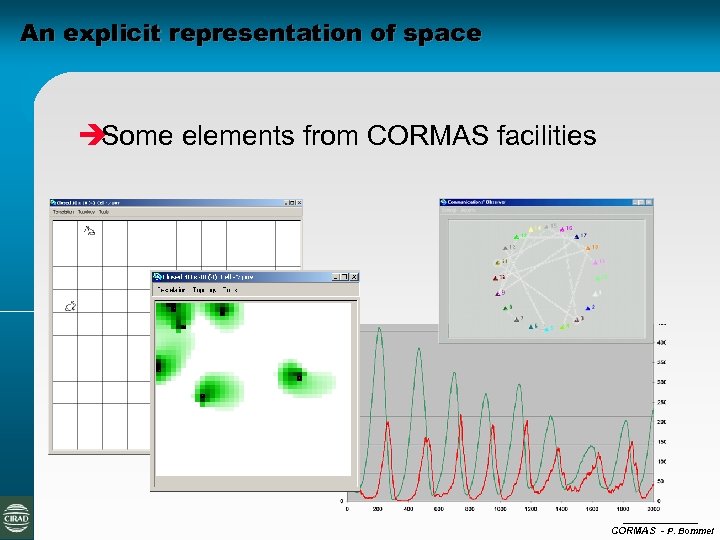 An explicit representation of space è Some elements from CORMAS facilities CORMAS - P. Bommel
 CORMAS: an agent-based simulation framework è Origin: the aggregation of MA models experiments dedicated to the domain of natural-resources management è Cormas is an agent-based simulation framework è is oriented towards the building of It simulation models Ø a programming environment. Ø It provides a framework for developing simulation models of coordination modes between individuals and groups that jointly exploit common resources. CORMAS - P. Bommel
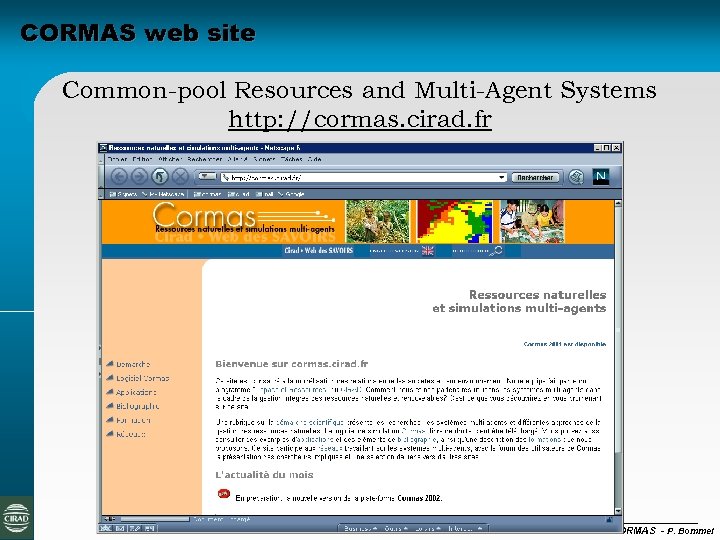 CORMAS web site Common-pool Resources and Multi-Agent Systems http: //cormas. cirad. fr CORMAS - P. Bommel
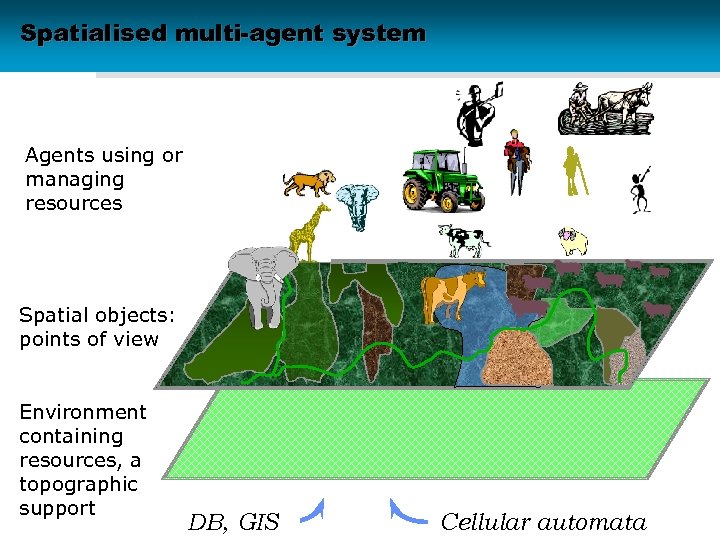 Spatialised multi-agent system Agents using or managing resources Spatial objects: points of view Environment containing resources, a topographic support DB, GIS Cellular automata CORMAS - P. Bommel
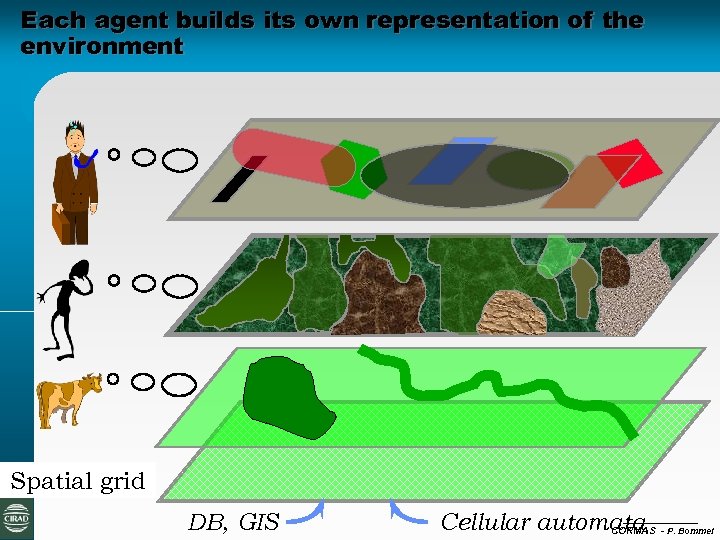 Each agent builds its own representation of the environment Spatial grid DB, GIS Cellular automata CORMAS - P. Bommel
 Spatial hierarchy levels è Various ways of segmenting the space è Relations of composition between spatial entities can define several hierarchical levels è which entity to associate the On processes of the dynamics of the landscape ? CORMAS - P. Bommel
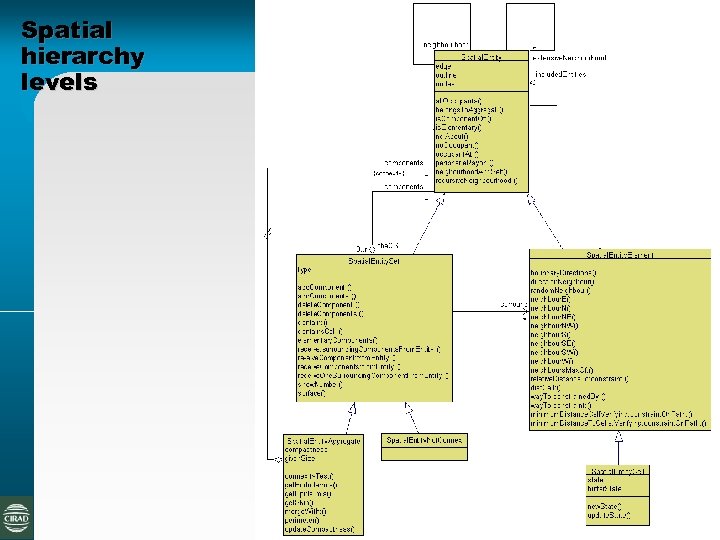 Spatial hierarchy levels CORMAS - P. Bommel
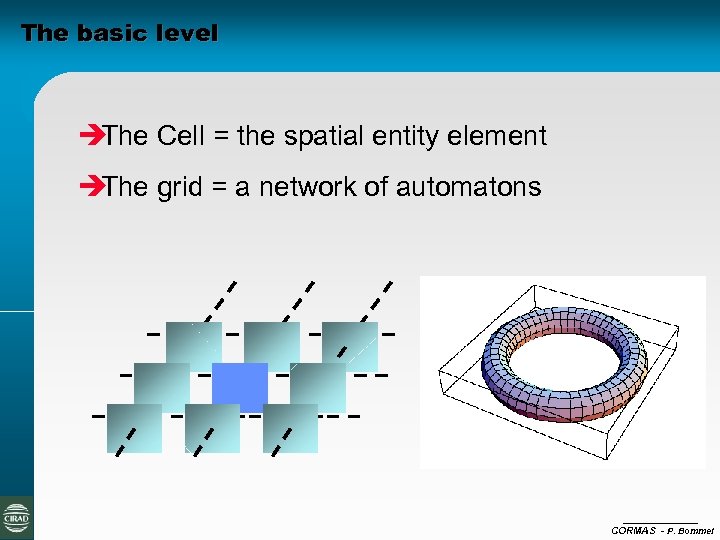 The basic level è The Cell = the spatial entity element è The grid = a network of automatons CORMAS - P. Bommel
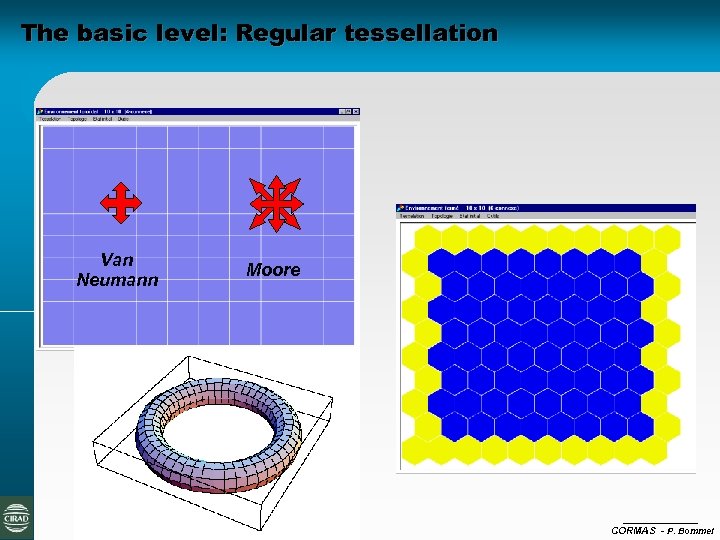 The basic level: Regular tessellation Van Neumann Moore CORMAS - P. Bommel
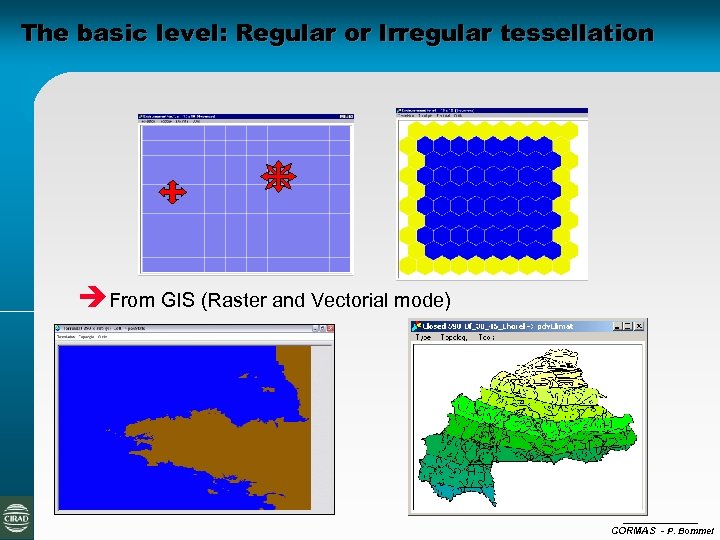 The basic level: Regular or Irregular tessellation èFrom GIS (Raster and Vectorial mode) CORMAS - P. Bommel
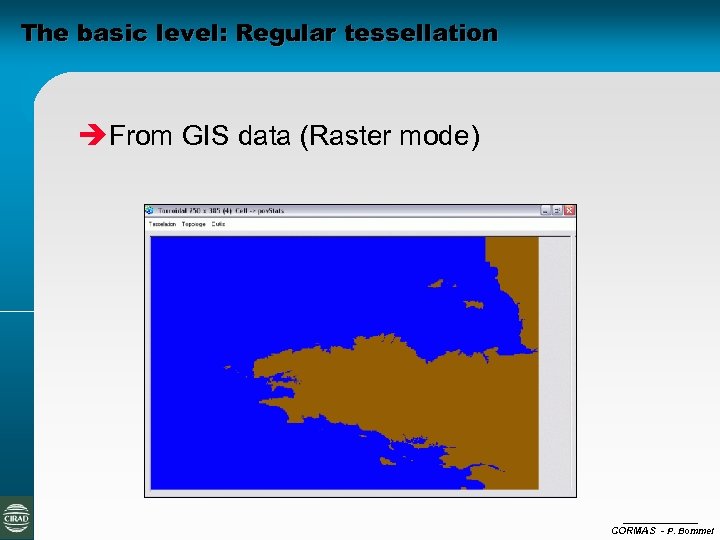 The basic level: Regular tessellation èFrom GIS data (Raster mode) CORMAS - P. Bommel
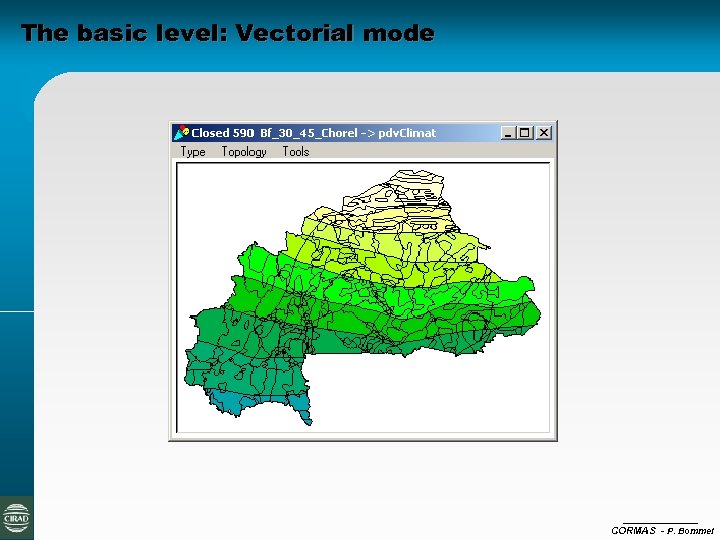 The basic level: Vectorial mode CORMAS - P. Bommel
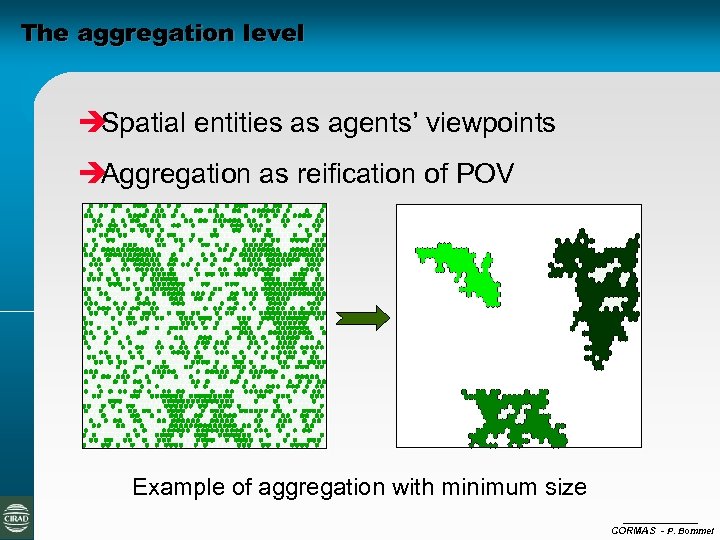 The aggregation level è Spatial entities as agents’ viewpoints è Aggregation as reification of POV Example of aggregation with minimum size CORMAS - P. Bommel
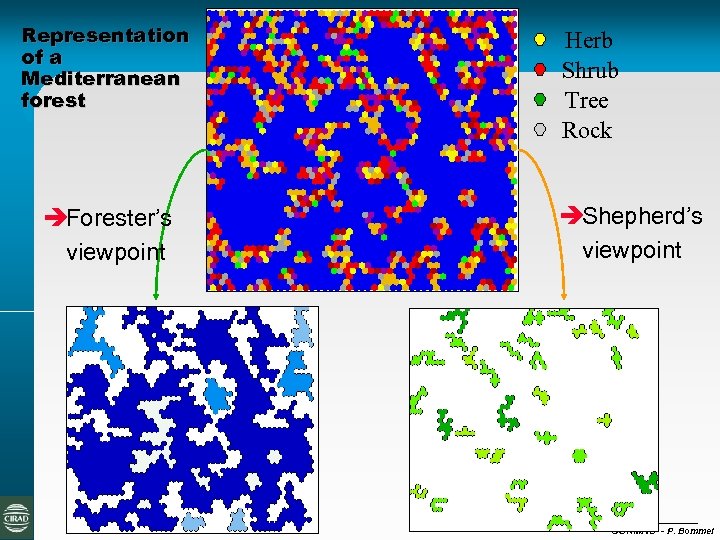 Representation of a Mediterranean forest èForester’s viewpoint Herb Shrub Tree Rock èShepherd’s viewpoint CORMAS - P. Bommel
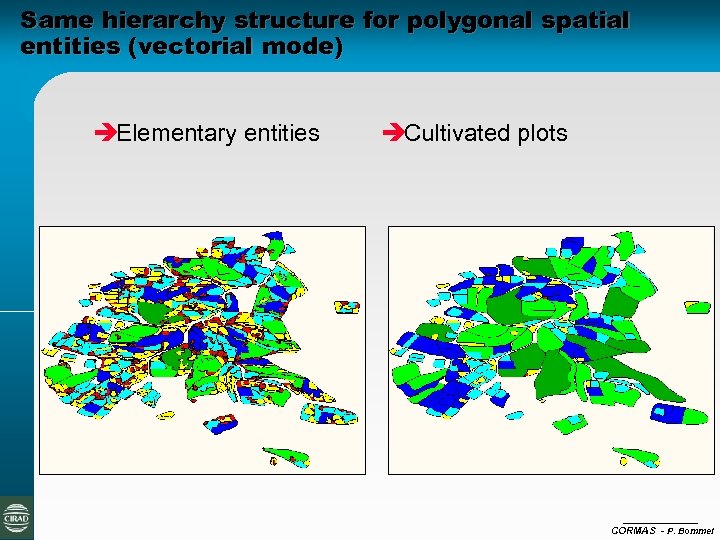 Same hierarchy structure for polygonal spatial entities (vectorial mode) èElementary entities èCultivated plots CORMAS - P. Bommel
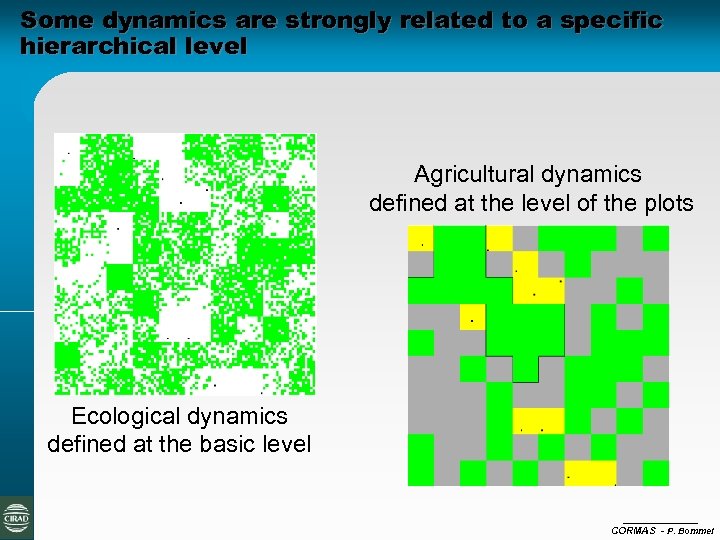 Some dynamics are strongly related to a specific hierarchical level Agricultural dynamics defined at the level of the plots Ecological dynamics defined at the basic level CORMAS - P. Bommel
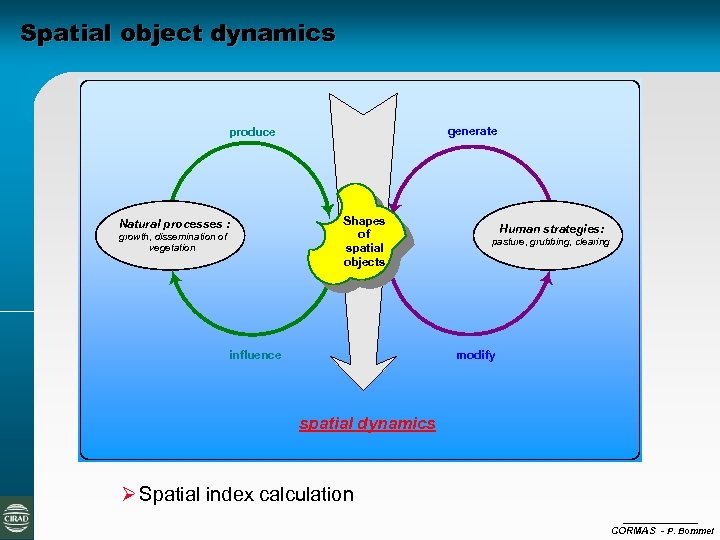 Spatial object dynamics generate produce Natural processes : growth, dissemination of vegetation Shapes of spatial objects influence Human strategies: pasture, grubbing, clearing modify spatial dynamics Ø Spatial index calculation CORMAS - P. Bommel
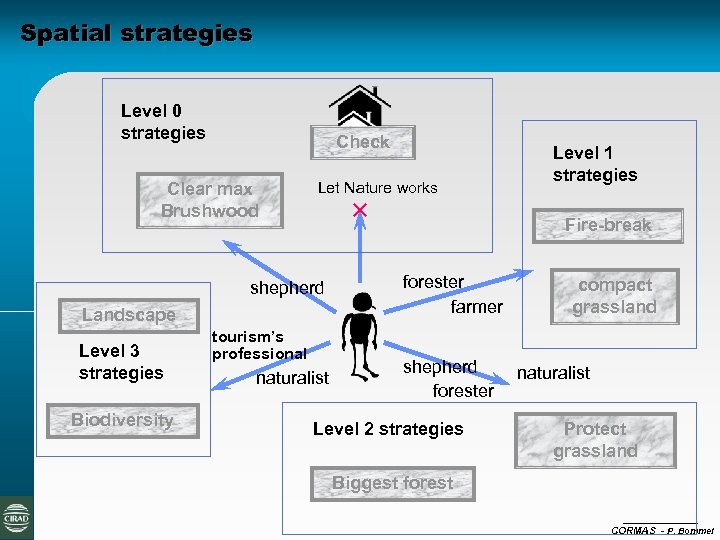 Spatial strategies Level 0 strategies Check Clear max Brushwood Let Nature works Fire-break shepherd Landscape Level 3 strategies Biodiversity Level 1 strategies tourism’s professional naturalist forester farmer shepherd forester Level 2 strategies compact grassland naturalist Protect grassland Biggest forest CORMAS - P. Bommel
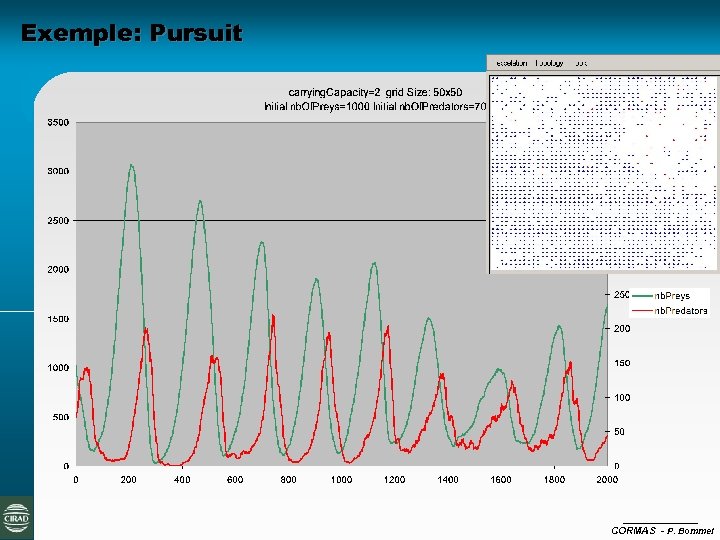 Exemple: Pursuit CORMAS - P. Bommel
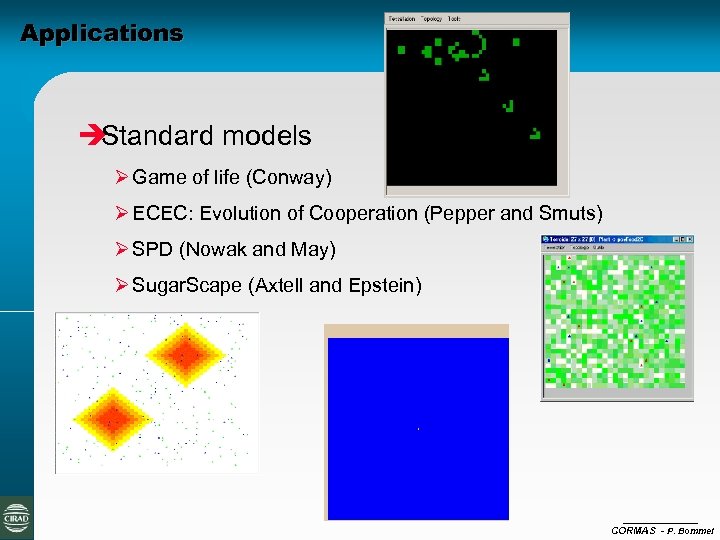 Applications è Standard models Ø Game of life (Conway) Ø ECEC: Evolution of Cooperation (Pepper and Smuts) Ø SPD (Nowak and May) Ø Sugar. Scape (Axtell and Epstein) CORMAS - P. Bommel
![Applications èApplied models Ø [AWARE] : Agent-based Watershed Analyses for Resource and Economic Sustainability](https://present5.com/presentation/8de695ef88119dc03f62a1d621fb5083/image-34.jpg "Applications èApplied models Ø [AWARE] : Agent-based Watershed Analyses for Resource and Economic Sustainability") Applications èApplied models Ø [AWARE] : Agent-based Watershed Analyses for Resource and Economic Sustainability in South Africa (Farolfi). Ø [Automate. Vote] : electoral ballot Ø [Bohol] : Natural Resource Management of the Municipality of Loon in Bohol, Philippines (Campo). Ø [Broute. La. Forêt] : spatial representations and interactions between individuals, space and society (Bonnefoy). Ø [Burkina] : soil quality indicators in Burkina Faso (Guillobez). Ø [Catch. Scape] : River bassins management in north Thaïland (Becu, Perez, Walker) Ø [Didy] : multiple uses of a forest ecosystem in Madagascar (Abrami). Ø [Djemiong] : hunting of wild meat in Cameroun (Le Page, Bousquet and Bakam). Ø [Dricol] : emergence of resource-sharing conventions (Thébaud and Locatelli). Ø [Echos] : Economic behaviour analysis of the "Stockbreeding wastewater system" actors at the Reunion Island (Farolfi, Bommel). CORMAS - P. Bommel
Applications èApplied models Ø [AWARE] : Agent-based Watershed Analyses for Resource and Economic Sustainability in South Africa (Farolfi). Ø [Automate. Vote] : electoral ballot Ø [Bohol] : Natural Resource Management of the Municipality of Loon in Bohol, Philippines (Campo). Ø [Broute. La. Forêt] : spatial representations and interactions between individuals, space and society (Bonnefoy). Ø [Burkina] : soil quality indicators in Burkina Faso (Guillobez). Ø [Catch. Scape] : River bassins management in north Thaïland (Becu, Perez, Walker) Ø [Didy] : multiple uses of a forest ecosystem in Madagascar (Abrami). Ø [Djemiong] : hunting of wild meat in Cameroun (Le Page, Bousquet and Bakam). Ø [Dricol] : emergence of resource-sharing conventions (Thébaud and Locatelli). Ø [Echos] : Economic behaviour analysis of the "Stockbreeding wastewater system" actors at the Reunion Island (Farolfi, Bommel). CORMAS - P. Bommel
![Applications èApplied models Ø [Faucon. Colombe] : game theory and prey-predator model (Valeix). Ø](https://present5.com/presentation/8de695ef88119dc03f62a1d621fb5083/image-35.jpg "Applications èApplied models Ø [Faucon. Colombe] : game theory and prey-predator model (Valeix). Ø") Applications èApplied models Ø [Faucon. Colombe] : game theory and prey-predator model (Valeix). Ø [Filiere. Raphia] : raphia marketing system in Madagascar (Herimandimby, Randriarijaona, Bousquet and Antona). Ø [For. Past] : spatial transformations dynamics of sylvopastoral systems (Lardon and Bommel). Ø [Gemace] : multiple uses of wetlands in Camargue, France (Mathevet). Ø [JLB] : spatial transformations dynamics of forest systems (Bonnefoy). Ø [Ju. Mel] : economic exchanges and emerging organizations (Rouchier). Ø [Kayanza] : firewood in Burundi (Guizol, Ndikumadengue, Bousquet and Antona). Ø [Magma. S] : exchange of stock-farm effluents in Reunion island (Martin, Piquet, Le Page and Guerrin). Ø [Markets] : Assessing the performance of different market institutions in West Africa according to communication systems (Galtier). Ø [Mejan] : pine encroachment of natural ecosystems in Lozère, South of France (Etienne and Le Page). Ø [Mobe] : regulation of firewood marketing systems in Niger (Martine Antona). CORMAS - P. Bommel
Applications èApplied models Ø [Faucon. Colombe] : game theory and prey-predator model (Valeix). Ø [Filiere. Raphia] : raphia marketing system in Madagascar (Herimandimby, Randriarijaona, Bousquet and Antona). Ø [For. Past] : spatial transformations dynamics of sylvopastoral systems (Lardon and Bommel). Ø [Gemace] : multiple uses of wetlands in Camargue, France (Mathevet). Ø [JLB] : spatial transformations dynamics of forest systems (Bonnefoy). Ø [Ju. Mel] : economic exchanges and emerging organizations (Rouchier). Ø [Kayanza] : firewood in Burundi (Guizol, Ndikumadengue, Bousquet and Antona). Ø [Magma. S] : exchange of stock-farm effluents in Reunion island (Martin, Piquet, Le Page and Guerrin). Ø [Markets] : Assessing the performance of different market institutions in West Africa according to communication systems (Galtier). Ø [Mejan] : pine encroachment of natural ecosystems in Lozère, South of France (Etienne and Le Page). Ø [Mobe] : regulation of firewood marketing systems in Niger (Martine Antona). CORMAS - P. Bommel
![Applications èApplied models Ø [Nong Chok] : Land use change in a peri-urban area,](https://present5.com/presentation/8de695ef88119dc03f62a1d621fb5083/image-36.jpg "Applications èApplied models Ø [Nong Chok] : Land use change in a peri-urban area,") Applications èApplied models Ø [Nong Chok] : Land use change in a peri-urban area, Bangkok Thailand (Anwar and Borne). Ø [Orizi] : Small irrigation systems under free management (Perez and Becu). Ø [Pasteur] : sparse resource sharing by herds in sahelian area (Bah and d'Aquino). Ø [Plots. Rental] : plot renting by individual contracts or by centralized auction system (Bousquet and Le Page). Ø [Potlatch] : economic exchanges and emerging organizations (Rouchier). Ø [Sabah] : plantation development among small farmers in Malaysia (Guizol). Ø [Saint. Georges] : pasture and overgrowing brushwood in a village of Lozère, France (Lieurain). Ø [Samba] : land use in North Viet. Nam (Boissau, Jean-Castella). Ø [Savane. Agents] : landscape dynamics, agent-based version (Gautier and Bousquet). Ø [Sea. Lab] : homing-like reproductive strategies (Le Page). Ø [Sinuse] : distributed interactions between an underwater table and its users (Feuillette). CORMAS - P. Bommel
Applications èApplied models Ø [Nong Chok] : Land use change in a peri-urban area, Bangkok Thailand (Anwar and Borne). Ø [Orizi] : Small irrigation systems under free management (Perez and Becu). Ø [Pasteur] : sparse resource sharing by herds in sahelian area (Bah and d'Aquino). Ø [Plots. Rental] : plot renting by individual contracts or by centralized auction system (Bousquet and Le Page). Ø [Potlatch] : economic exchanges and emerging organizations (Rouchier). Ø [Sabah] : plantation development among small farmers in Malaysia (Guizol). Ø [Saint. Georges] : pasture and overgrowing brushwood in a village of Lozère, France (Lieurain). Ø [Samba] : land use in North Viet. Nam (Boissau, Jean-Castella). Ø [Savane. Agents] : landscape dynamics, agent-based version (Gautier and Bousquet). Ø [Sea. Lab] : homing-like reproductive strategies (Le Page). Ø [Sinuse] : distributed interactions between an underwater table and its users (Feuillette). CORMAS - P. Bommel
![Applications èApplied models Ø [Spatio. Dyn] : spatial dynamics modelling with GIS and MAS](https://present5.com/presentation/8de695ef88119dc03f62a1d621fb5083/image-37.jpg "Applications èApplied models Ø [Spatio. Dyn] : spatial dynamics modelling with GIS and MAS") Applications èApplied models Ø [Spatio. Dyn] : spatial dynamics modelling with GIS and MAS (Bonin and Le Page). Ø [Spiders] : net building by social spiders, a model from Bourjot and Chevrier. Ø [Stratagènes] : negotiation for phytogenetic resource local management in Madagascar (Aubert and Le Page). Ø [Sylvo. Past] : Sylvopastoral management and wildfire prevention in Mediterranean forests (Etienne and Le. Page). Ø [Ws. Erosion] : soil erosion risk and agricultural diversification in a Northern. Thailand watershed Ø [Zambeze] : land-use dynamics in the Zambeze valley CORMAS - P. Bommel
Applications èApplied models Ø [Spatio. Dyn] : spatial dynamics modelling with GIS and MAS (Bonin and Le Page). Ø [Spiders] : net building by social spiders, a model from Bourjot and Chevrier. Ø [Stratagènes] : negotiation for phytogenetic resource local management in Madagascar (Aubert and Le Page). Ø [Sylvo. Past] : Sylvopastoral management and wildfire prevention in Mediterranean forests (Etienne and Le. Page). Ø [Ws. Erosion] : soil erosion risk and agricultural diversification in a Northern. Thailand watershed Ø [Zambeze] : land-use dynamics in the Zambeze valley CORMAS - P. Bommel
 Future … è community of 200 users A è Interactive simulation => RPG and Cormas è Distributed interactive simulation è Towards a “Companion” Modelling Approach CORMAS - P. Bommel
 Models and users èPassive way : Ø Simulation models are frequently used in a passive way, presenting only the results of experiments performed with the model. èSensitivity analysis: Ø People who experience the system dynamics will yield a better understanding of the model. èInteractive simulation : Ø In a simulation game like Fishbanks (Meadows, 1989) the players make decisions about fishing strategies and the computer computes the fish catches. The players have only limited control over the environment. èA “Companion” Modelling Approach : Ø Combining ABM and Rp. G CORMAS - P. Bommel