


 Скачать презентацию Core Valve US Pivotal Trial Extreme Risk Iliofemoral
3507da6b6fdf8f39815a2ff079d795e5.ppt
- Количество слайдов: 37
 Core. Valve US Pivotal Trial Extreme Risk Iliofemoral Study Results Jeffrey J. Popma, MD On Behalf of the Core. Valve US Clinical Investigators
 Conflict of Interest Within the past 12 months, I have had a financial interest/arrangement or affiliation with the organization(s) listed below. Physician Name Jeffrey J. Popma, MD Boston Company/Relationship Research Grants: Cordis, Boston Scientific, Medtronic, Abbott, Abiomed, Covidien, e. V 3, Medical Advisory Board: Cordis, Scientific, Covidien
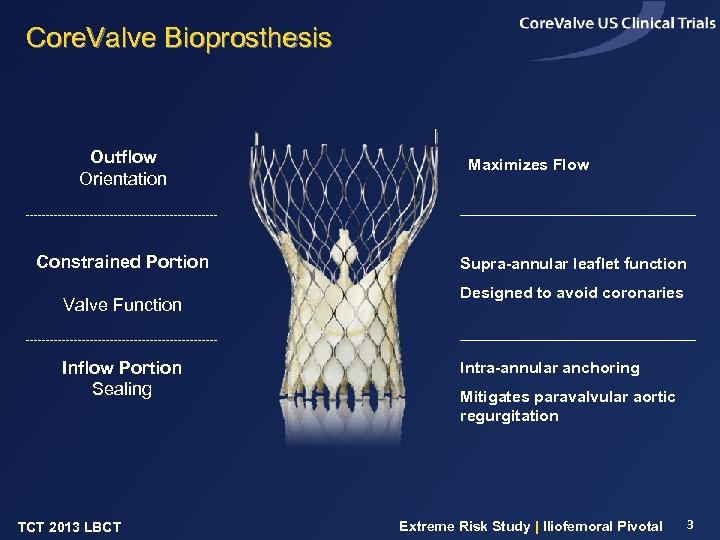 Core. Valve Bioprosthesis Outflow Orientation Constrained Portion Valve Function Inflow Portion Sealing TCT 2013 LBCT Maximizes Flow Supra-annular leaflet function Designed to avoid coronaries Intra-annular anchoring Mitigates paravalvular aortic regurgitation Extreme Risk Study | Iliofemoral Pivotal 3
 Pivotal Trial Design TCT 2013 LBCT Extreme Risk Study | Iliofemoral Pivotal 4
 Study Purpose: To evaluate the safety and efficacy of the Core. Valve THV for the treatment of patients with symptomatic severe aortic stenosis in whom the predicted risk of operative mortality or serious, irreversible morbidity was 50% or greater at 30 days Risk Determined by: Two Clinical Site Cardiac Surgeons and One Interventional Cardiologist Risk Confirmed by: Two Screening Committee Cardiac Surgeons and One Interventional Cardiologist Primary Endpoint: All Cause Mortality or Major Stroke at 12 Months TCT 2013 LBCT Extreme Risk Study | Iliofemoral Pivotal 5
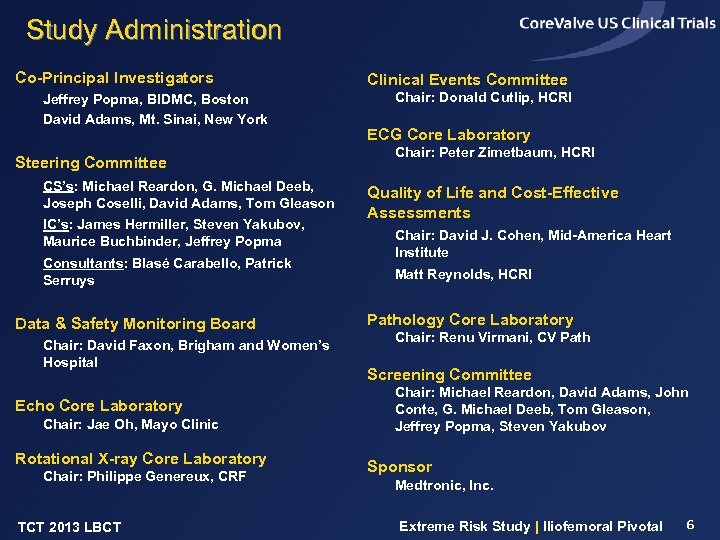 Study Administration Co-Principal Investigators Jeffrey Popma, BIDMC, Boston David Adams, Mt. Sinai, New York Steering Committee CS’s: Michael Reardon, G. Michael Deeb, Joseph Coselli, David Adams, Tom Gleason IC’s: James Hermiller, Steven Yakubov, Maurice Buchbinder, Jeffrey Popma Consultants: Blasé Carabello, Patrick Serruys Data & Safety Monitoring Board Chair: David Faxon, Brigham and Women’s Hospital Echo Core Laboratory Chair: Jae Oh, Mayo Clinic Rotational X-ray Core Laboratory Chair: Philippe Genereux, CRF TCT 2013 LBCT Clinical Events Committee Chair: Donald Cutlip, HCRI ECG Core Laboratory Chair: Peter Zimetbaum, HCRI Quality of Life and Cost-Effective Assessments Chair: David J. Cohen, Mid-America Heart Institute Matt Reynolds, HCRI Pathology Core Laboratory Chair: Renu Virmani, CV Path Screening Committee Chair: Michael Reardon, David Adams, John Conte, G. Michael Deeb, Tom Gleason, Jeffrey Popma, Steven Yakubov Sponsor Medtronic, Inc. Extreme Risk Study | Iliofemoral Pivotal 6
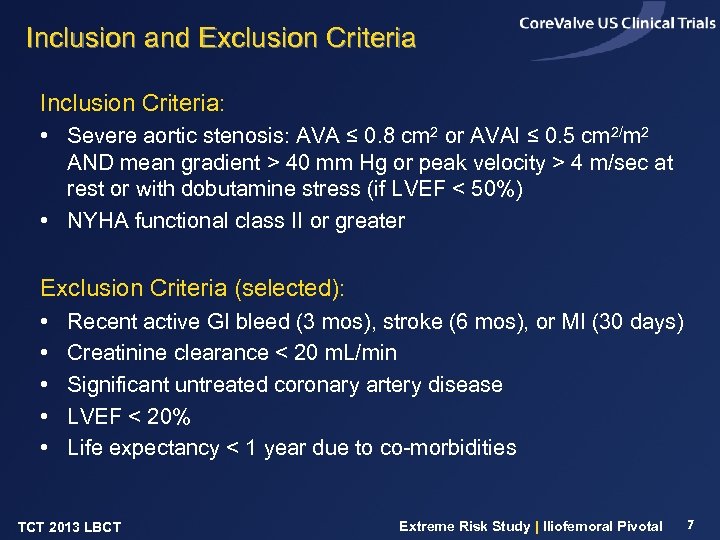 Inclusion and Exclusion Criteria Inclusion Criteria: • Severe aortic stenosis: AVA ≤ 0. 8 cm 2 or AVAI ≤ 0. 5 cm 2/m 2 AND mean gradient > 40 mm Hg or peak velocity > 4 m/sec at rest or with dobutamine stress (if LVEF < 50%) • NYHA functional class II or greater Exclusion Criteria (selected): • • • Recent active GI bleed (3 mos), stroke (6 mos), or MI (30 days) Creatinine clearance < 20 m. L/min Significant untreated coronary artery disease LVEF < 20% Life expectancy < 1 year due to co-morbidities TCT 2013 LBCT Extreme Risk Study | Iliofemoral Pivotal 7
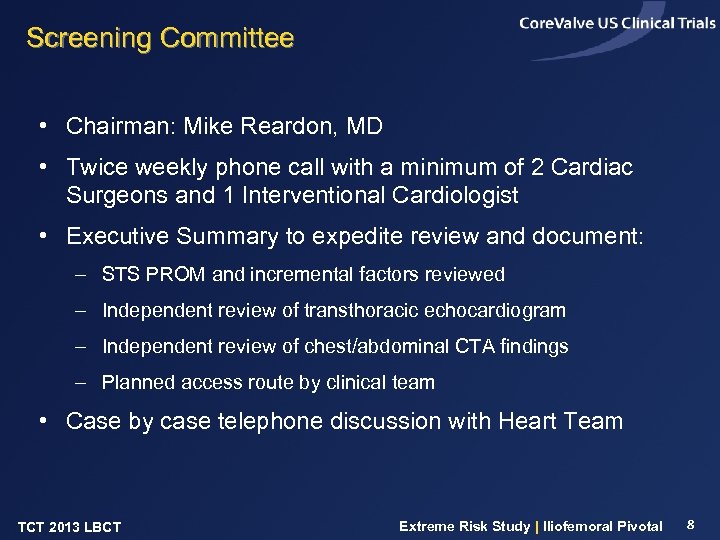 Screening Committee • Chairman: Mike Reardon, MD • Twice weekly phone call with a minimum of 2 Cardiac Surgeons and 1 Interventional Cardiologist • Executive Summary to expedite review and document: – STS PROM and incremental factors reviewed – Independent review of transthoracic echocardiogram – Independent review of chest/abdominal CTA findings – Planned access route by clinical team • Case by case telephone discussion with Heart Team TCT 2013 LBCT Extreme Risk Study | Iliofemoral Pivotal 8
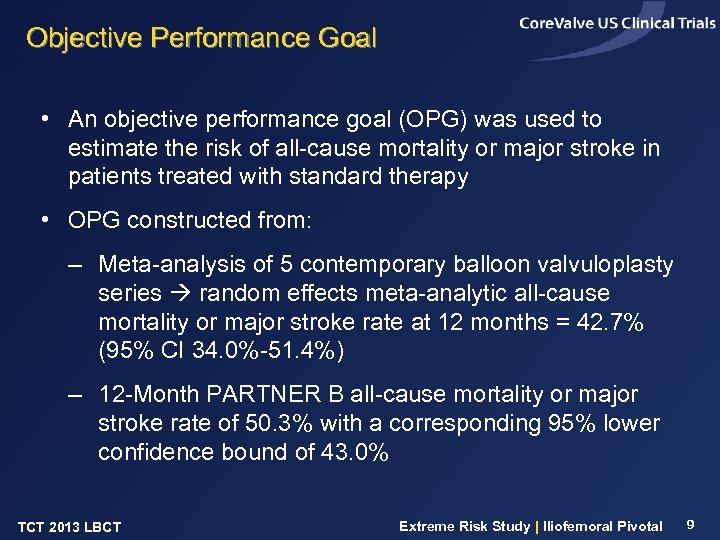 Objective Performance Goal • An objective performance goal (OPG) was used to estimate the risk of all-cause mortality or major stroke in patients treated with standard therapy • OPG constructed from: – Meta-analysis of 5 contemporary balloon valvuloplasty series random effects meta-analytic all-cause mortality or major stroke rate at 12 months = 42. 7% (95% CI 34. 0%-51. 4%) – 12 -Month PARTNER B all-cause mortality or major stroke rate of 50. 3% with a corresponding 95% lower confidence bound of 43. 0% TCT 2013 LBCT Extreme Risk Study | Iliofemoral Pivotal 9
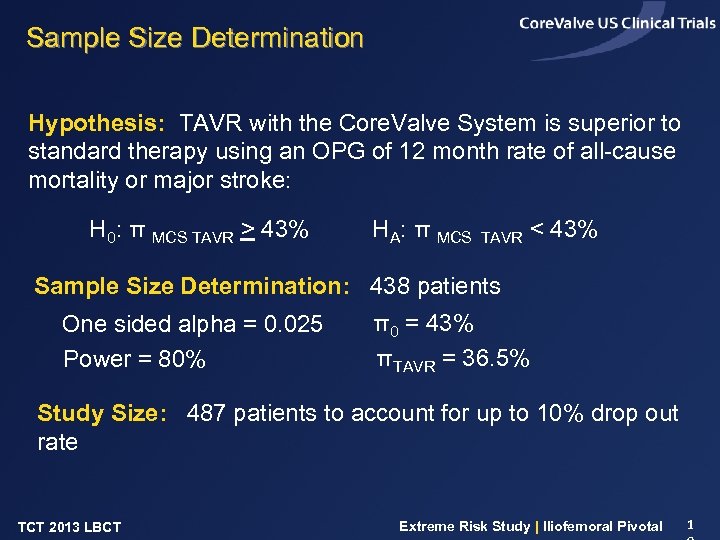 Sample Size Determination Hypothesis: TAVR with the Core. Valve System is superior to standard therapy using an OPG of 12 month rate of all-cause mortality or major stroke: H 0: π MCS TAVR > 43% HA: π MCS TAVR < 43% Sample Size Determination: 438 patients One sided alpha = 0. 025 Power = 80% π0 = 43% πTAVR = 36. 5% Study Size: 487 patients to account for up to 10% drop out rate TCT 2013 LBCT Extreme Risk Study | Iliofemoral Pivotal 1
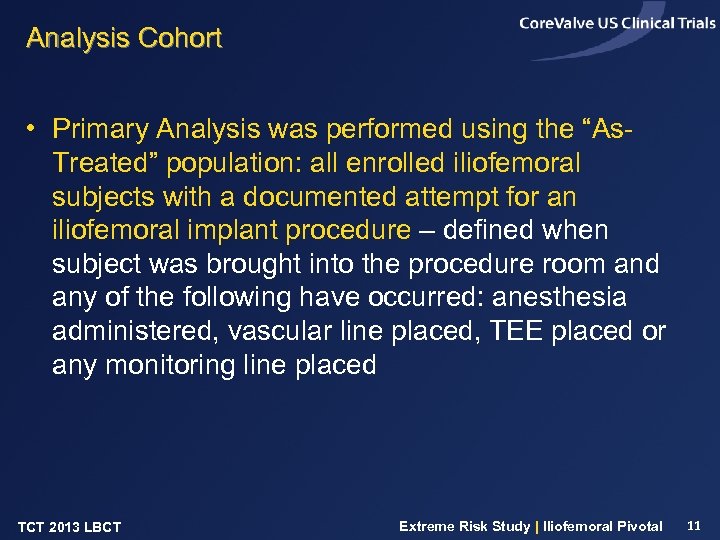 Analysis Cohort • Primary Analysis was performed using the “As. Treated” population: all enrolled iliofemoral subjects with a documented attempt for an iliofemoral implant procedure – defined when subject was brought into the procedure room and any of the following have occurred: anesthesia administered, vascular line placed, TEE placed or any monitoring line placed TCT 2013 LBCT Extreme Risk Study | Iliofemoral Pivotal 11
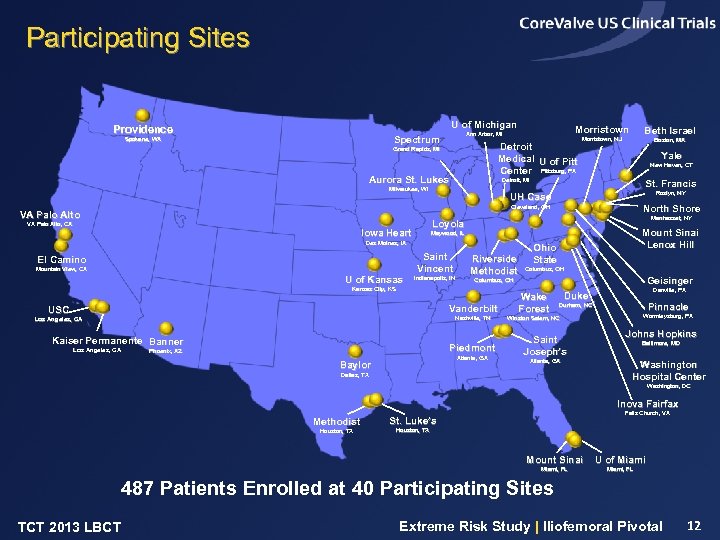 Participating Sites U of Michigan Providence Morristown Ann Arbor, MI Spectrum Spokane, WA Detroit Medical U of Pitt Center Pittsburg, PA Grand Rapids, MI Aurora St. Lukes Beth Israel Morristown, NJ Boston, MA Yale New Haven, CT Detroit, MI Milwaukee, WI St. Francis Roslyn, NY UH Case North Shore Cleveland, OH VA Palo Alto, CA Manhasset, NY Loyola Iowa Heart El Camino Mountain View, CA U of Kansas Saint Vincent Indianapolis, IN Riverside Methodist Vanderbilt USC Nashville, TN Los Angeles, CA Kaiser Permanente Banner Piedmont Phoenix, AZ Atlanta, GA Baylor Ohio State Columbus, OH Geisinger Columbus, OH Kansas City, KS Los Angeles, CA Mount Sinai Lenox Hill Maywood, IL Des Moines, IA Wake Forest Danville, PA Duke Pinnacle Durham, NC Wormleysburg, PA Winston Salem, NC Saint Joseph’s Atlanta, GA Dallas, TX Johns Hopkins Baltimore, MD Washington Hospital Center Washington, DC Inova Fairfax Methodist Houston, TX Falls Church, VA St. Luke’s Houston, TX Mount Sinai U of Miami, FL 487 Patients Enrolled at 40 Participating Sites TCT 2013 LBCT Extreme Risk Study | Iliofemoral Pivotal 12
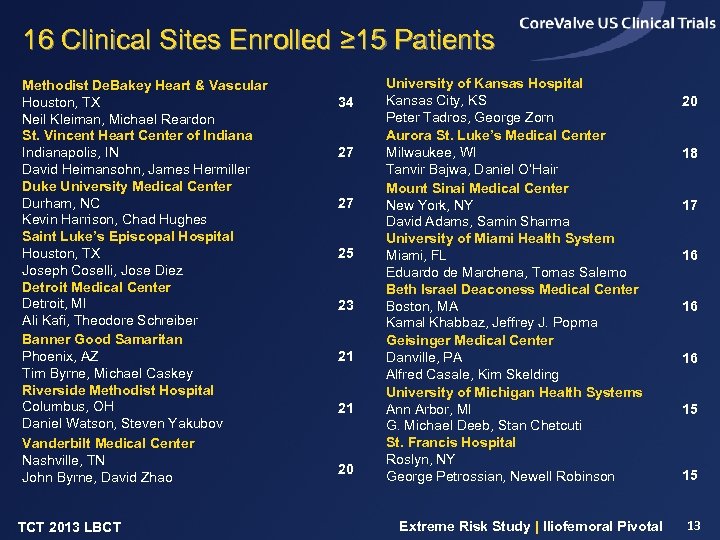 16 Clinical Sites Enrolled ≥ 15 Patients Methodist De. Bakey Heart & Vascular Houston, TX Neil Kleiman, Michael Reardon St. Vincent Heart Center of Indianapolis, IN David Heimansohn, James Hermiller Duke University Medical Center Durham, NC Kevin Harrison, Chad Hughes Saint Luke’s Episcopal Hospital Houston, TX Joseph Coselli, Jose Diez Detroit Medical Center Detroit, MI Ali Kafi, Theodore Schreiber Banner Good Samaritan Phoenix, AZ Tim Byrne, Michael Caskey Riverside Methodist Hospital Columbus, OH Daniel Watson, Steven Yakubov Vanderbilt Medical Center Nashville, TN John Byrne, David Zhao TCT 2013 LBCT 34 27 27 25 23 21 21 20 University of Kansas Hospital Kansas City, KS Peter Tadros, George Zorn Aurora St. Luke’s Medical Center Milwaukee, WI Tanvir Bajwa, Daniel O’Hair Mount Sinai Medical Center New York, NY David Adams, Samin Sharma University of Miami Health System Miami, FL Eduardo de Marchena, Tomas Salerno Beth Israel Deaconess Medical Center Boston, MA Kamal Khabbaz, Jeffrey J. Popma Geisinger Medical Center Danville, PA Alfred Casale, Kim Skelding University of Michigan Health Systems Ann Arbor, MI G. Michael Deeb, Stan Chetcuti St. Francis Hospital Roslyn, NY George Petrossian, Newell Robinson Extreme Risk Study | Iliofemoral Pivotal 20 18 17 16 16 16 15 15 13
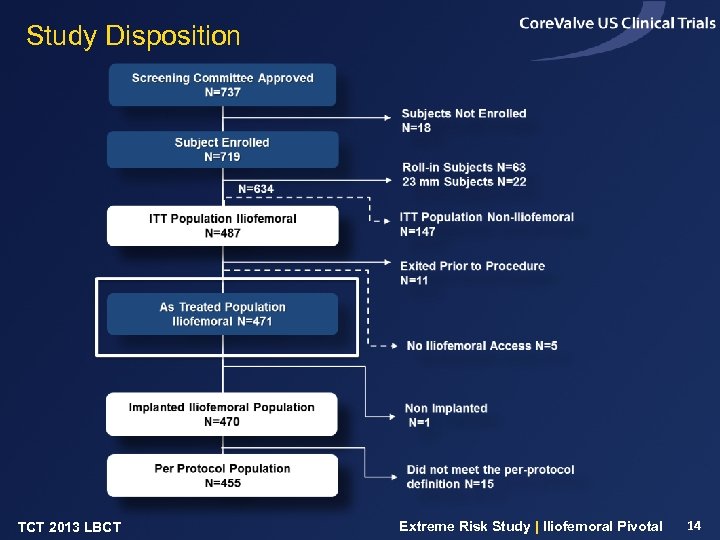 Study Disposition TCT 2013 LBCT Extreme Risk Study | Iliofemoral Pivotal 14
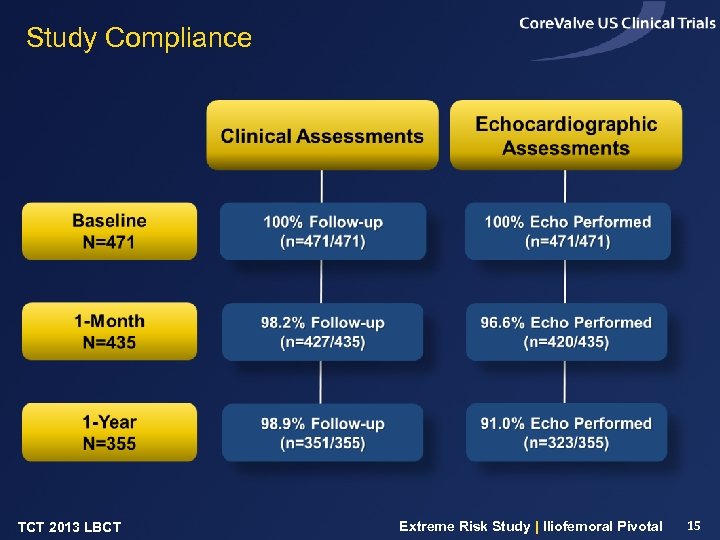 Study Compliance TCT 2013 LBCT Extreme Risk Study | Iliofemoral Pivotal 15
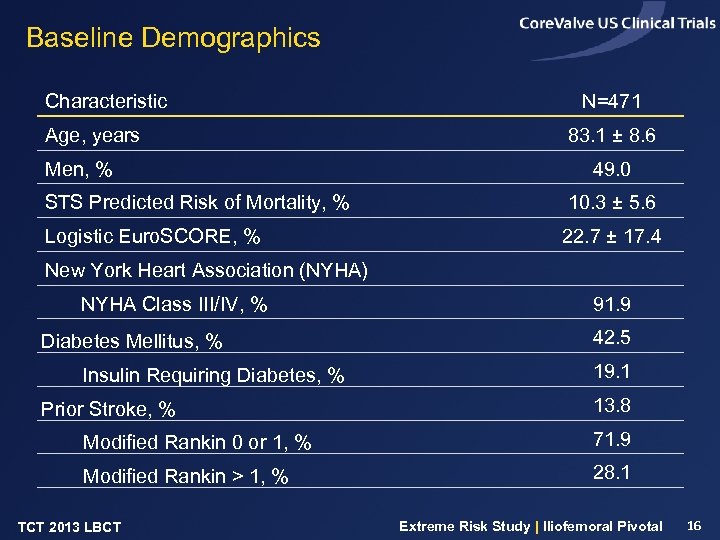 Baseline Demographics Characteristic Age, years Men, % N=471 83. 1 ± 8. 6 49. 0 STS Predicted Risk of Mortality, % 10. 3 ± 5. 6 Logistic Euro. SCORE, % 22. 7 ± 17. 4 New York Heart Association (NYHA) NYHA Class III/IV, % Diabetes Mellitus, % Insulin Requiring Diabetes, % Prior Stroke, % 91. 9 42. 5 19. 1 13. 8 Modified Rankin 0 or 1, % 71. 9 Modified Rankin > 1, % 28. 1 TCT 2013 LBCT Extreme Risk Study | Iliofemoral Pivotal 16
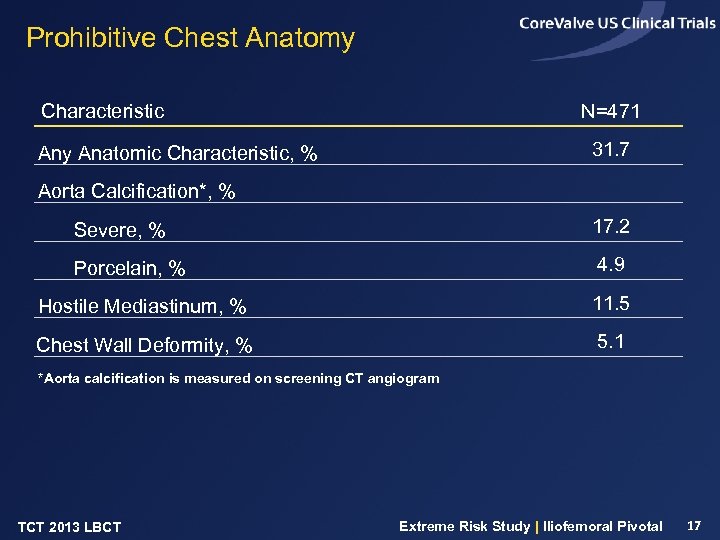 Prohibitive Chest Anatomy Characteristic N=471 31. 7 Any Anatomic Characteristic, % Aorta Calcification*, % Severe, % 17. 2 Porcelain, % 4. 9 Hostile Mediastinum, % 11. 5 Chest Wall Deformity, % 5. 1 *Aorta calcification is measured on screening CT angiogram TCT 2013 LBCT Extreme Risk Study | Iliofemoral Pivotal 17
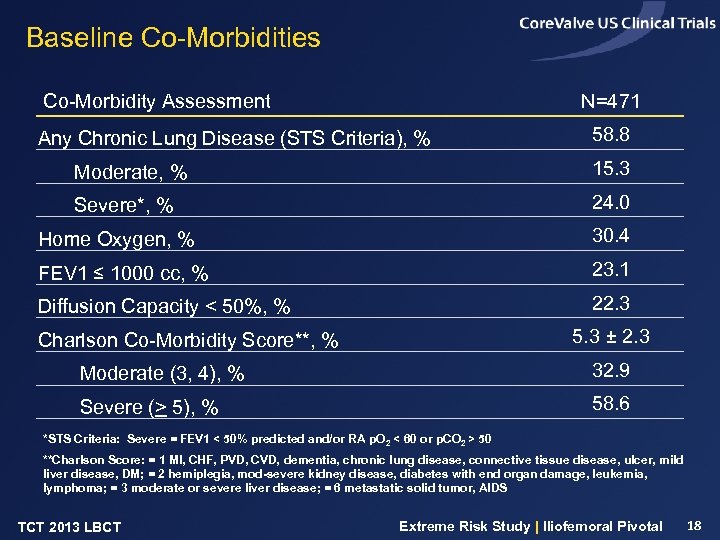 Baseline Co-Morbidities Co-Morbidity Assessment N=471 Any Chronic Lung Disease (STS Criteria), % 58. 8 Moderate, % 15. 3 Severe*, % 24. 0 Home Oxygen, % 30. 4 FEV 1 ≤ 1000 cc, % 23. 1 Diffusion Capacity < 50%, % 22. 3 5. 3 ± 2. 3 Charlson Co-Morbidity Score**, % Moderate (3, 4), % 32. 9 Severe (> 5), % 58. 6 *STS Criteria: Severe = FEV 1 < 50% predicted and/or RA p. O 2 < 60 or p. CO 2 > 50 **Charlson Score: = 1 MI, CHF, PVD, CVD, dementia, chronic lung disease, connective tissue disease, ulcer, mild liver disease, DM; = 2 hemiplegia, mod-severe kidney disease, diabetes with end organ damage, leukemia, lymphoma; = 3 moderate or severe liver disease; = 6 metastatic solid tumor, AIDS TCT 2013 LBCT Extreme Risk Study | Iliofemoral Pivotal 18
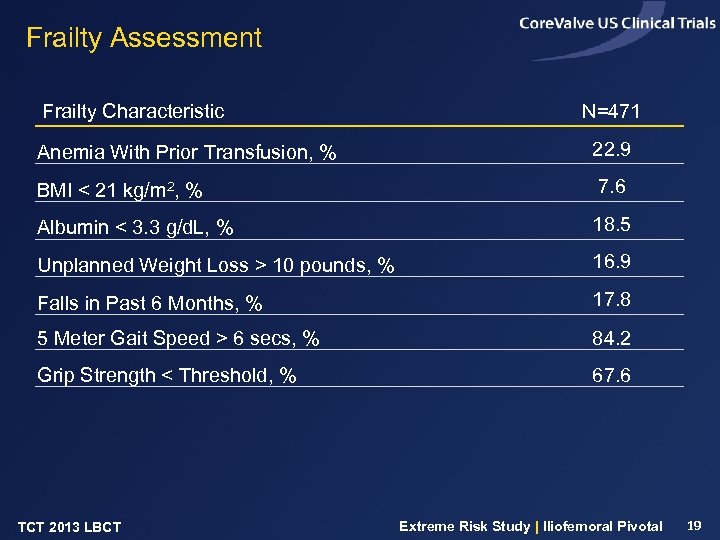 Frailty Assessment Frailty Characteristic N=471 Anemia With Prior Transfusion, % 22. 9 BMI < 21 kg/m 2, % 7. 6 Albumin < 3. 3 g/d. L, % 18. 5 Unplanned Weight Loss > 10 pounds, % 16. 9 Falls in Past 6 Months, % 17. 8 5 Meter Gait Speed > 6 secs, % 84. 2 Grip Strength < Threshold, % 67. 6 TCT 2013 LBCT Extreme Risk Study | Iliofemoral Pivotal 19
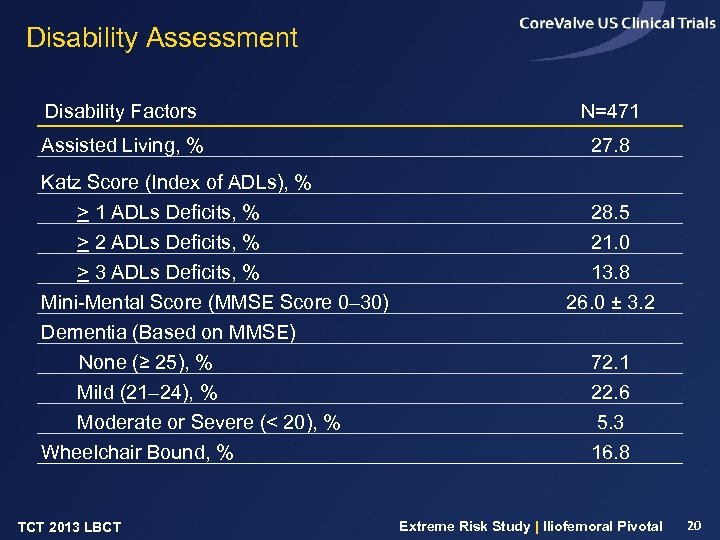 Disability Assessment Disability Factors N=471 Assisted Living, % 27. 8 Katz Score (Index of ADLs), % > 1 ADLs Deficits, % > 2 ADLs Deficits, % > 3 ADLs Deficits, % Mini-Mental Score (MMSE Score 0– 30) Dementia (Based on MMSE) None (≥ 25), % Mild (21– 24), % Moderate or Severe (< 20), % Wheelchair Bound, % TCT 2013 LBCT 28. 5 21. 0 13. 8 26. 0 ± 3. 2 72. 1 22. 6 5. 3 16. 8 Extreme Risk Study | Iliofemoral Pivotal 20
 Core. Valve Extreme Risk Iliofemoral Results
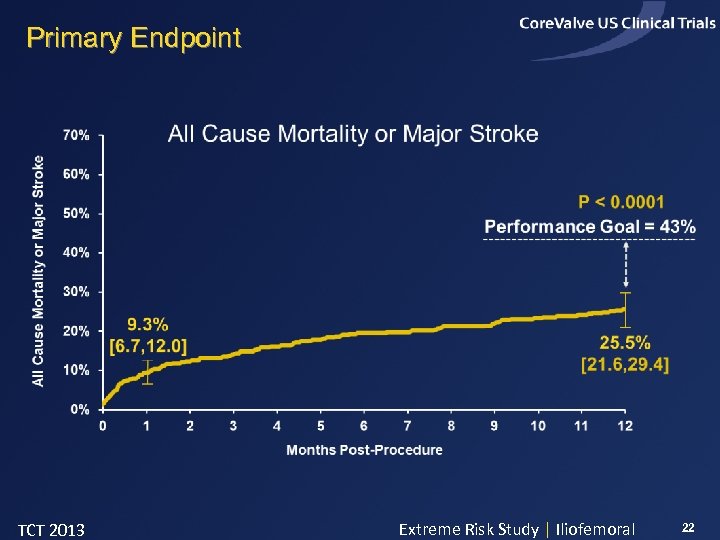 Primary Endpoint TCT 2013 Extreme Risk Study | Iliofemoral 22
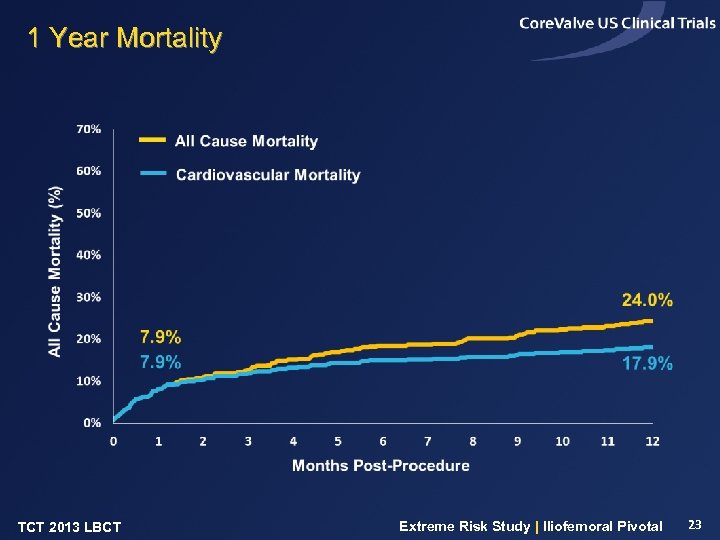 1 Year Mortality TCT 2013 LBCT Extreme Risk Study | Iliofemoral Pivotal 23
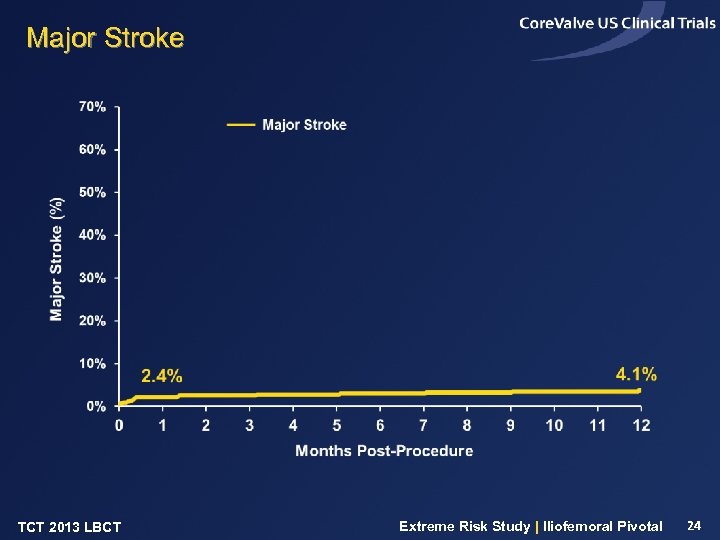 Major Stroke TCT 2013 LBCT Extreme Risk Study | Iliofemoral Pivotal 24
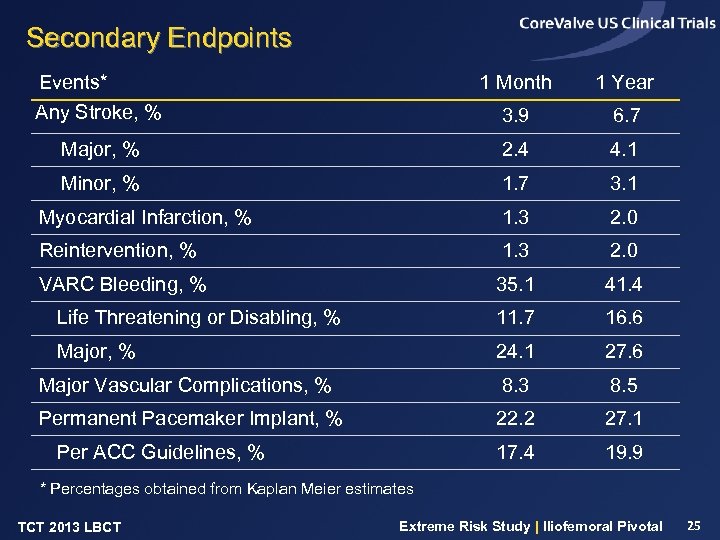 Secondary Endpoints Events* 1 Month 1 Year Any Stroke, % 3. 9 6. 7 Major, % 2. 4 4. 1 Minor, % 1. 7 3. 1 Myocardial Infarction, % 1. 3 2. 0 Reintervention, % 1. 3 2. 0 VARC Bleeding, % 35. 1 41. 4 Life Threatening or Disabling, % 11. 7 16. 6 Major, % 24. 1 27. 6 Major Vascular Complications, % 8. 3 8. 5 Permanent Pacemaker Implant, % 22. 2 27. 1 17. 4 19. 9 Per ACC Guidelines, % * Percentages obtained from Kaplan Meier estimates TCT 2013 LBCT Extreme Risk Study | Iliofemoral Pivotal 25
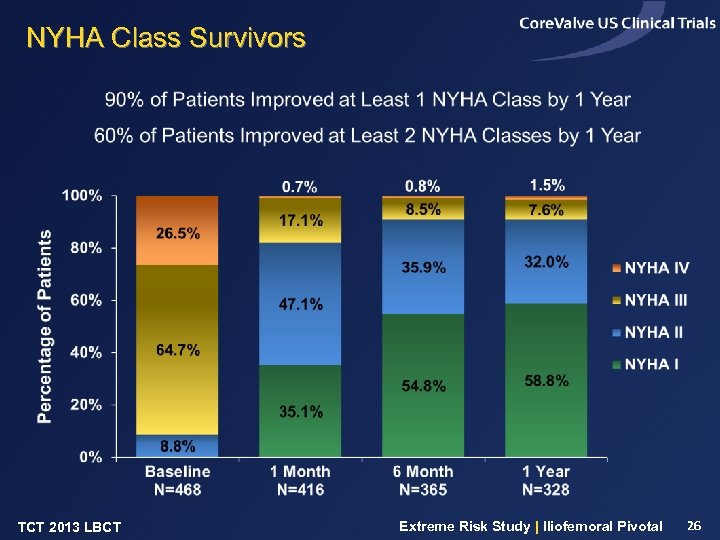 NYHA Class Survivors TCT 2013 LBCT Extreme Risk Study | Iliofemoral Pivotal 26
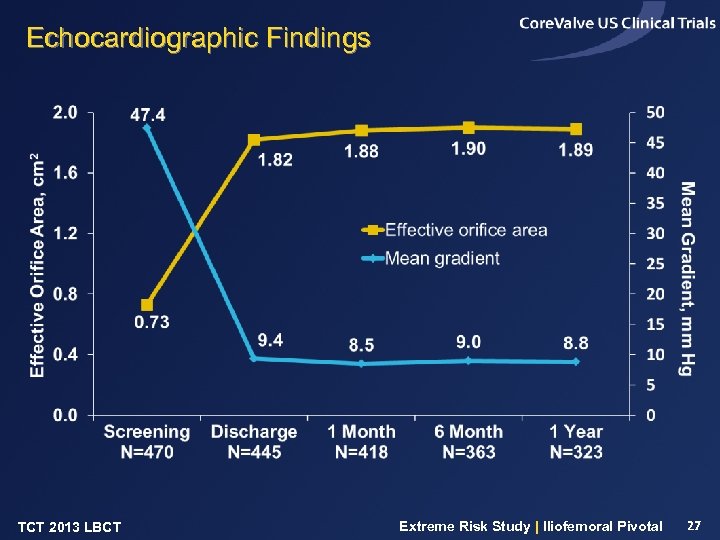 Echocardiographic Findings TCT 2013 LBCT Extreme Risk Study | Iliofemoral Pivotal 27
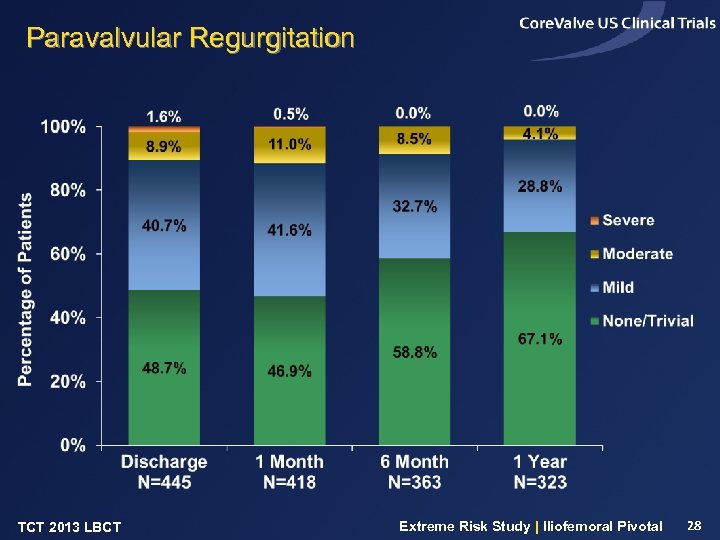 Paravalvular Regurgitation TCT 2013 LBCT Extreme Risk Study | Iliofemoral Pivotal 28
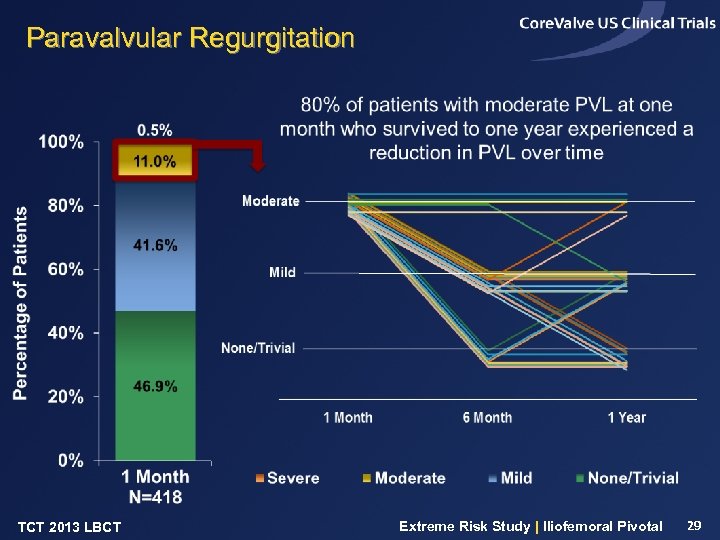 Paravalvular Regurgitation TCT 2013 LBCT Extreme Risk Study | Iliofemoral Pivotal 29
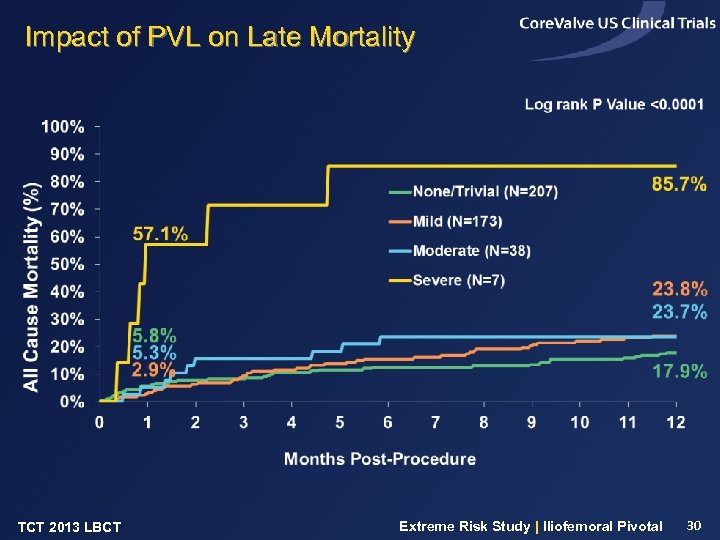 Impact of PVL on Late Mortality TCT 2013 LBCT Extreme Risk Study | Iliofemoral Pivotal 30
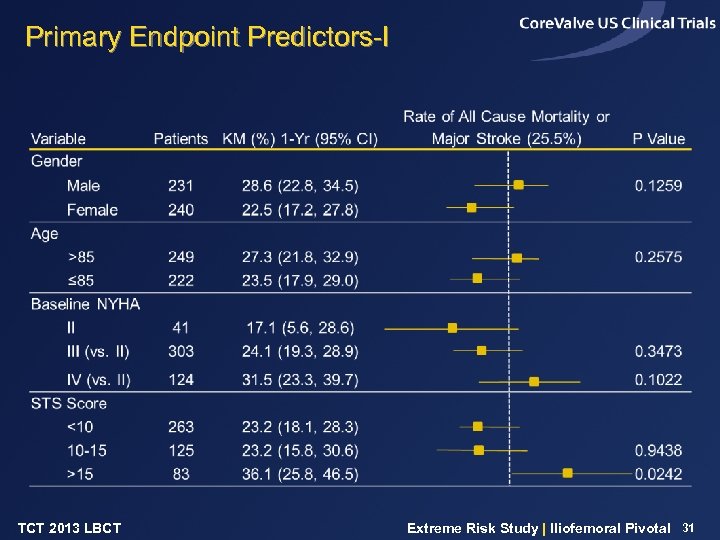 Primary Endpoint Predictors-I TCT 2013 LBCT Extreme Risk Study | Iliofemoral Pivotal 31
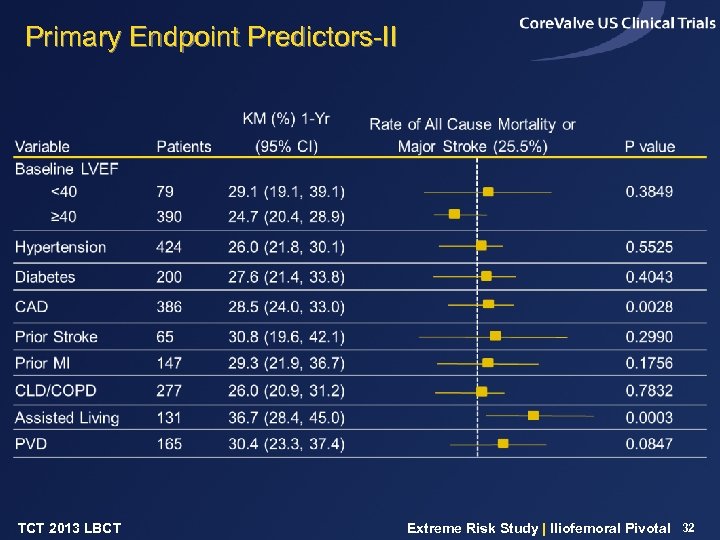 Primary Endpoint Predictors-II TCT 2013 LBCT Extreme Risk Study | Iliofemoral Pivotal 32
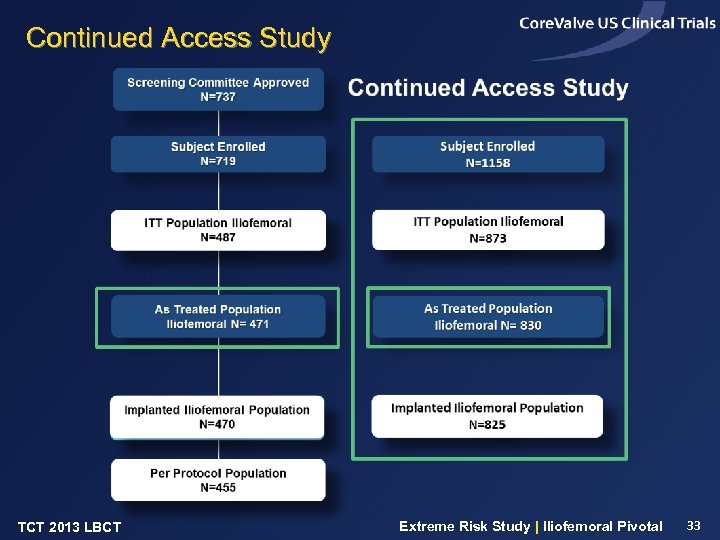 Continued Access Study TCT 2013 LBCT Extreme Risk Study | Iliofemoral Pivotal 33
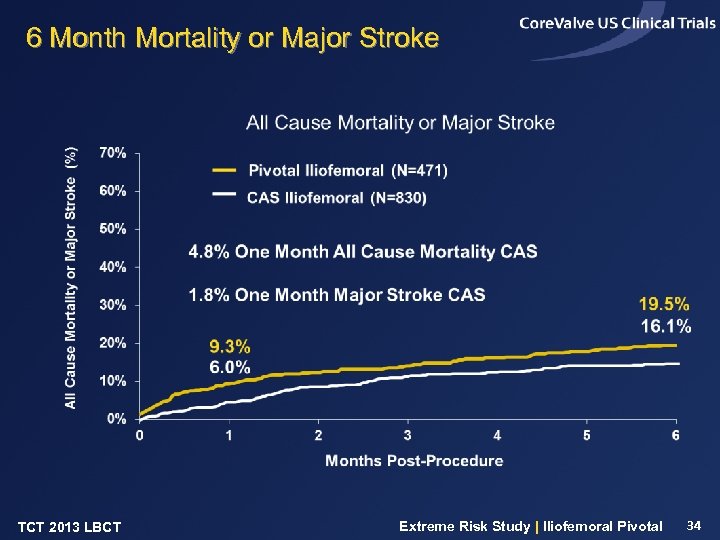 6 Month Mortality or Major Stroke TCT 2013 LBCT Extreme Risk Study | Iliofemoral Pivotal 34
 Conclusions - I • 471 patients deemed extreme risk for surgical aortic valve replacement by two cardiac surgeons confirmed by external surgical review • Detailed analysis of co-morbidity, frailty, and disability confirmed unsuitability for surgical AVR • The Core. Valve Extreme Risk Study achieved its primary endpoint of a reduction in all cause mortality or major stroke at one year compared to a rigorously defined OPG TCT 2013 LBCT Extreme Risk Study | Iliofemoral Pivotal 35
 Conclusions - II • Low rates of major stroke at 1 month and one year • Low rate of moderate/severe aortic regurgitation that improved over time • No association of mild/moderate PVL on late mortality • Improved outcomes in Continued Access Study TCT 2013 LBCT Extreme Risk Study | Iliofemoral Pivotal 36
 Summary • The results from the US Core. Valve Extreme Risk Iliofemoral Study support the safety and efficacy of this therapy who are deemed unsuitable for surgical aortic valve replacement TCT 2013 LBCT Extreme Risk Study | Iliofemoral Pivotal 37