


 Скачать презентацию Coral Reef Products to Support Management of Marine
273ba7eb9c47ab33122743074e9cab5b.ppt
- Количество слайдов: 27
 Coral Reef Products to Support Management of Marine Resources Globally Presented by C. Mark Eakin Center for Satellite Applications and Research (STAR) Review 09 – 11 March 2010 Image: MODIS Land Group, NASA GSFC March 2000
 Requirement, Science, and Benefit • Requirement/Objective (Ecosystems, Climate) – Develop tools for ecosystem forecasting to improve decision making – Improve understanding of response to climate change • Science – How can we improve the application of satellite data and models to serve the need for climate information by coral reef resource managers? • Benefit – Provide remotely-sensed information useful in the responses and planning by coral reef marine resource managers / policy makers, scientists, and the public Center for Satellite Applications and Research (STAR) Review 09 – 11 March 2010 2
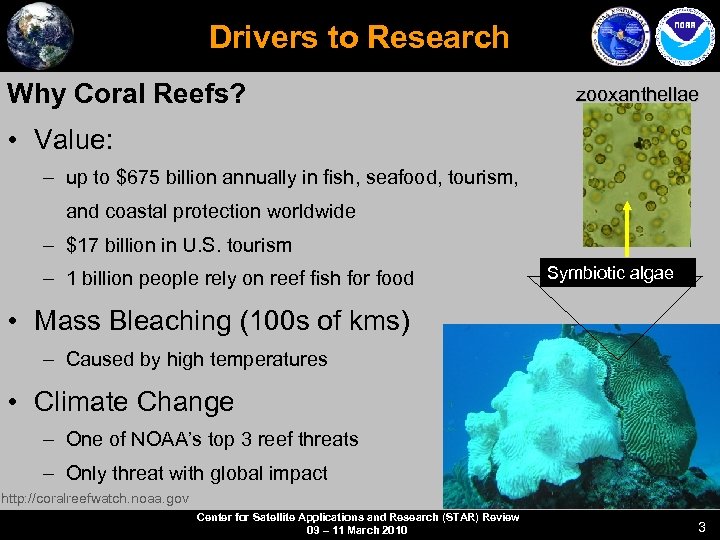 Drivers to Research Why Coral Reefs? zooxanthellae • Value: – up to $675 billion annually in fish, seafood, tourism, and coastal protection worldwide – $17 billion in U. S. tourism – 1 billion people rely on reef fish for food Symbiotic algae • Mass Bleaching (100 s of kms) – Caused by high temperatures • Climate Change – One of NOAA’s top 3 reef threats – Only threat with global impact http: //coralreefwatch. noaa. gov Center for Satellite Applications and Research (STAR) Review 09 – 11 March 2010 3
 Scientific Approach End-to-End Research to Applications – Apply accurate remotely-sensed physical variables in marine and coastal systems from STAR Science Teams • • Temperature Winds Irradiance Ocean Color – Develop coral-specific products – Tailor products to management and science needs through ongoing interactions with end-users – Train users in data access and application of products Center for Satellite Applications and Research (STAR) Review 09 – 11 March 2010 4
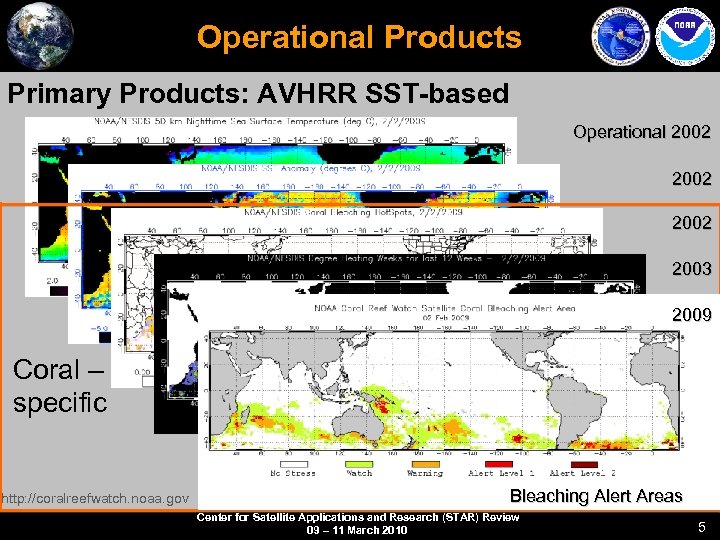 Operational Products Primary Products: AVHRR SST-based Operational 2002 2003 50 km Nighttime Sea Surface Temperature (SST) Coral – specific 2009 SST Anomaly Hot. Spot Degree Heating Week http: //coralreefwatch. noaa. gov Bleaching Alert Areas Center for Satellite Applications and Research (STAR) Review 09 – 11 March 2010 5
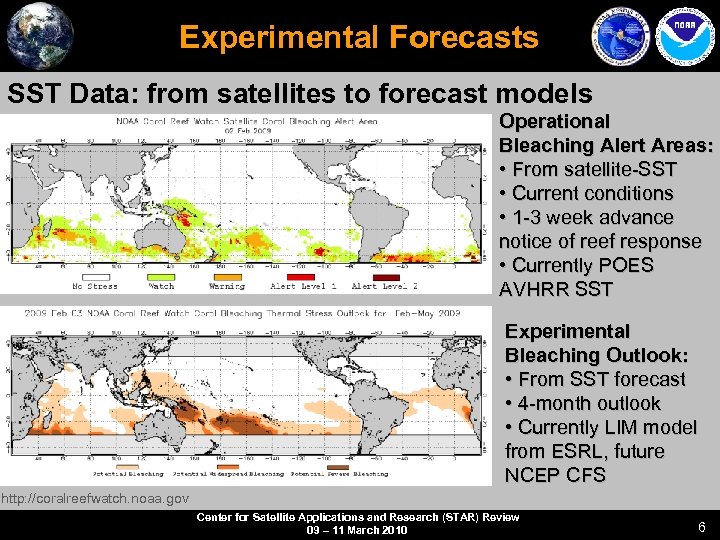 Experimental Forecasts SST Data: from satellites to forecast models Operational Bleaching Alert Areas: • From satellite-SST • Current conditions • 1 -3 week advance notice of reef response • Currently POES AVHRR SST Experimental Bleaching Outlook: • From SST forecast • 4 -month outlook • Currently LIM model from ESRL, future NCEP CFS http: //coralreefwatch. noaa. gov Center for Satellite Applications and Research (STAR) Review 09 – 11 March 2010 6
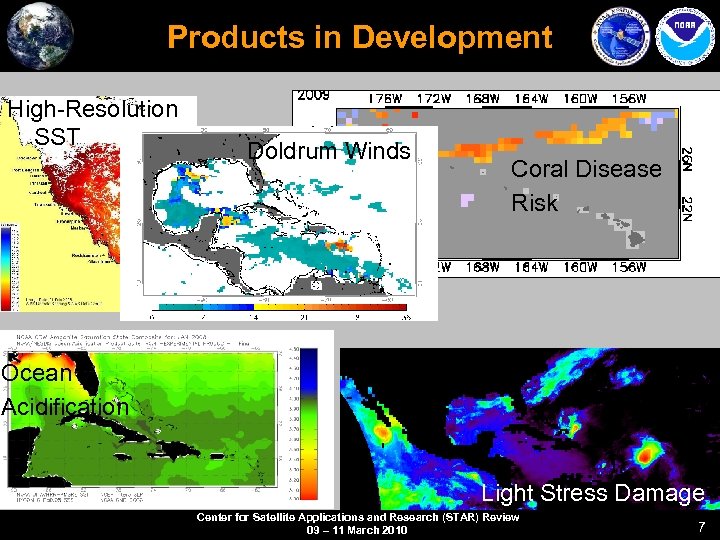 Products in Development High-Resolution SST Doldrum Winds Coral Disease Risk Ocean Acidification http: //coralreefwatch. noaa. gov Light Stress Damage Center for Satellite Applications and Research (STAR) Review 09 – 11 March 2010 7
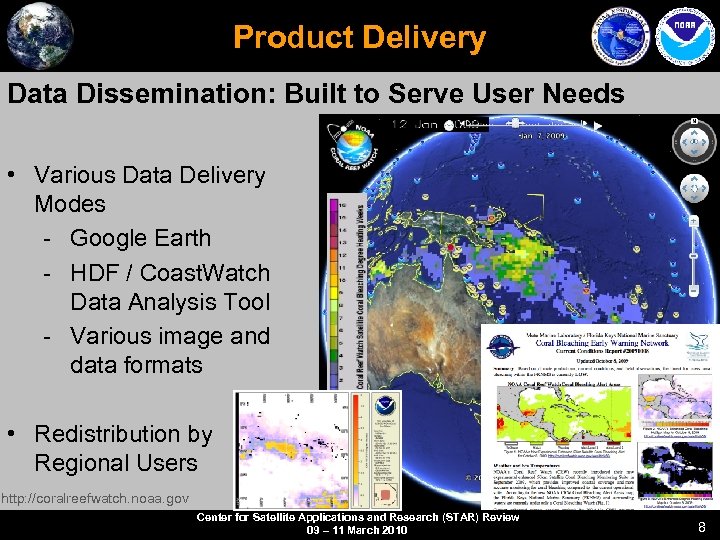 Product Delivery Data Dissemination: Built to Serve User Needs • Various Data Delivery Modes - Google Earth - HDF / Coast. Watch Data Analysis Tool - Various image and data formats • Redistribution by Regional Users http: //coralreefwatch. noaa. gov Center for Satellite Applications and Research (STAR) Review 09 – 11 March 2010 88
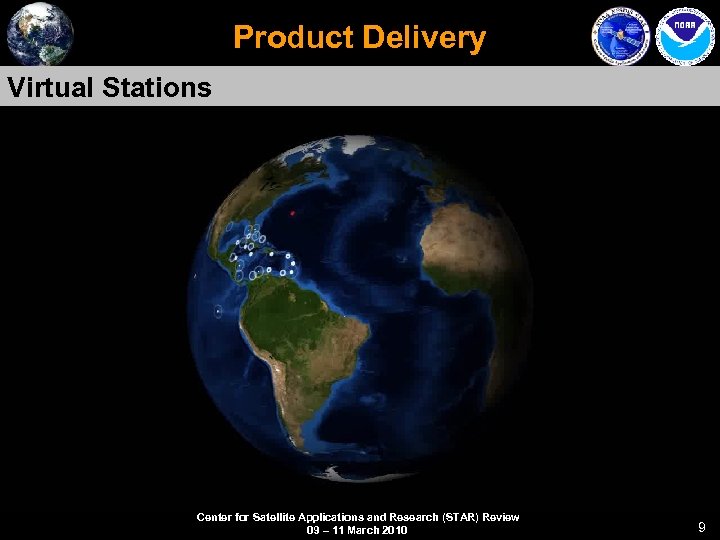 Product Delivery Virtual Stations http: //coralreefwatch. noaa. gov Center for Satellite Applications and Research (STAR) Review 09 – 11 March 2010 99
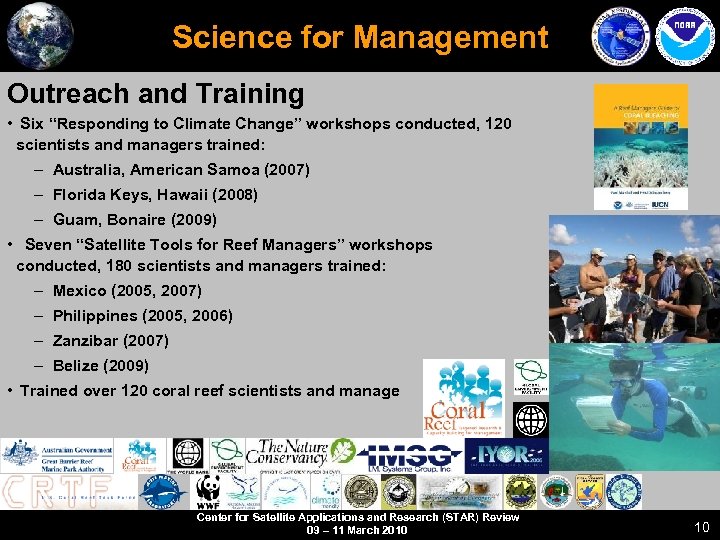 Science for Management Outreach and Training • Six “Responding to Climate Change” workshops conducted, 120 scientists and managers trained: – Australia, American Samoa (2007) – Florida Keys, Hawaii (2008) – Guam, Bonaire (2009) • Seven “Satellite Tools for Reef Managers” workshops conducted, 180 scientists and managers trained: – Mexico (2005, 2007) – Philippines (2005, 2006) – Zanzibar (2007) – Belize (2009) • Trained over 120 coral reef scientists and manage Center for Satellite Applications and Research (STAR) Review 09 – 11 March 2010 10
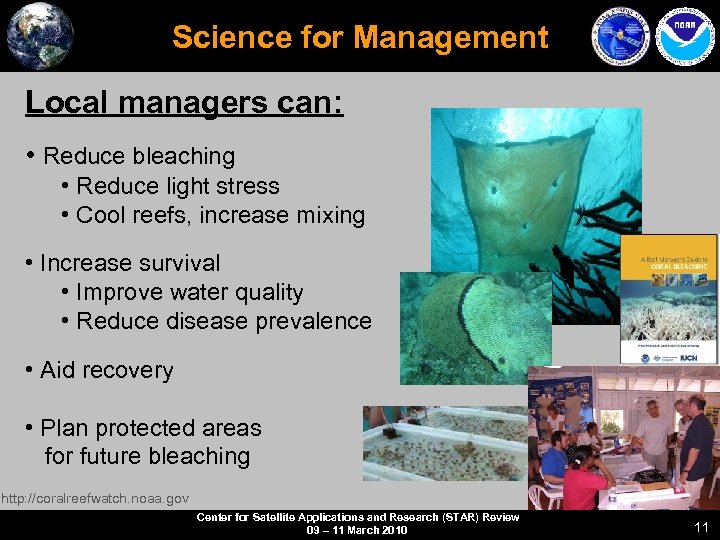 Science for Management Local managers can: • Reduce bleaching • Reduce light stress • Cool reefs, increase mixing • Increase survival • Improve water quality • Reduce disease prevalence • Aid recovery • Plan protected areas for future bleaching http: //coralreefwatch. noaa. gov Center for Satellite Applications and Research (STAR) Review 09 – 11 March 2010 11
 Coral Reef Watch Partnerships • World Bank/Global Environment Facility (WB/GEF) • Australia: Australian Research Council (ARC), Australian Inst. of Marine Science (AIMS), Australian Bureau of Meteorology, Great Barrier Reef Marine Park Authority • NGOs: The Nature Conservancy (TNC), World Wildlife Fund (WWF), Project Aware • Federal Agencies: NASA, USGS • US Universities: U South Florida, Texas A&M, U Puerto Rico, Cornell, U Guam, U Hawaii • Foreign Universities: U Queensland, James Cook U, U Tasmania, U Exeter, UNAM (Mexico), U Waterloo, U Philippines http: //coralreefwatch. noaa. gov Center for Satellite Applications and Research (STAR) Review 09 – 11 March 2010 12
 Challenges and Path Forward • Science challenges – Addressing new environmental parameters influencing coral reef management decisions – Providing higher-resolution products • Next steps – Working with STAR Science Teams to transition new data to address coral reef management needs • Transition Path – End-to-end approach from science teams to resource managers, path, extent of transition is product dependent Center for Satellite Applications and Research (STAR) Review 09 – 11 March 2010 13
 Coral Reef Watch Backup Slides http: //coralreefwatch. noaa. gov Center for Satellite Applications and Research (STAR) Review 09 – 11 March 2010 14
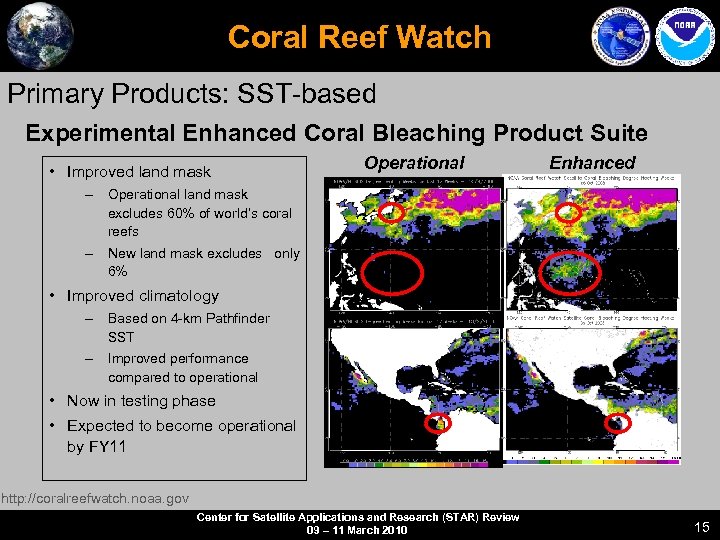 Coral Reef Watch Primary Products: SST-based Experimental Enhanced Coral Bleaching Product Suite • Improved land mask Operational Enhanced – Operational land mask excludes 60% of world’s coral reefs – New land mask excludes only 6% • Improved climatology – Based on 4 -km Pathfinder SST – Improved performance compared to operational • Now in testing phase • Expected to become operational by FY 11 http: //coralreefwatch. noaa. gov Center for Satellite Applications and Research (STAR) Review 09 – 11 March 2010 15
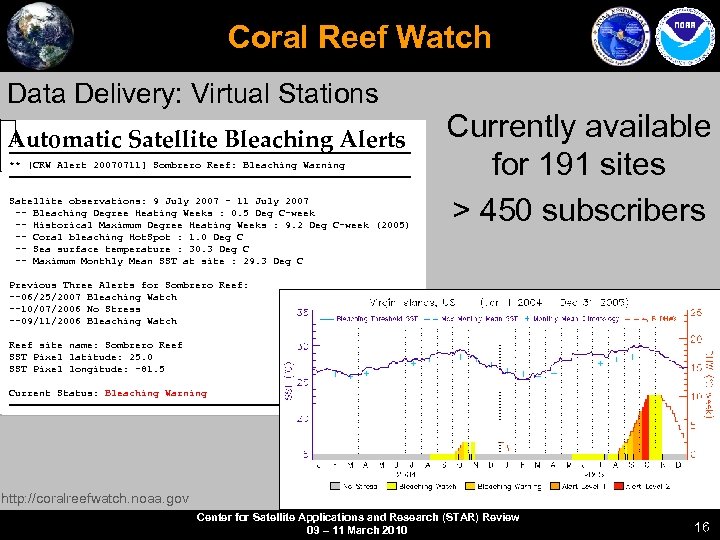 Coral Reef Watch Data Delivery: Virtual Stations Automatic Satellite Bleaching Alerts ================================== ** [CRW Alert 20070711] Sombrero Reef: Bleaching Warning ================================== Satellite observations: 9 July 2007 - 11 July 2007 -- Bleaching Degree Heating Weeks : 0. 5 Deg C-week -- Historical Maximum Degree Heating Weeks : 9. 2 Deg C-week (2005) -- Coral bleaching Hot. Spot : 1. 0 Deg C -- Sea surface temperature : 30. 3 Deg C -- Maximum Monthly Mean SST at site : 29. 3 Deg C Currently available for 191 sites > 450 subscribers Previous Three Alerts for Sombrero Reef: --06/25/2007 Bleaching Watch --10/07/2006 No Stress --09/11/2006 Bleaching Watch Reef site name: Sombrero Reef SST Pixel latitude: 25. 0 SST Pixel longitude: -81. 5 Current Status: Bleaching Warning ================================== http: //coralreefwatch. noaa. gov Center for Satellite Applications and Research (STAR) Review 09 – 11 March 2010 16 16
 Coral Reef Watch Partnerships Australian Research Council (ARC) Linkage Project Grant • “New Tools for Managing Ecosystem Responses to Climate Change on the Southern Great Barrier Reef” (5 years, $1. 2 M) • MOA between NOAA and University of Queensland • NOAA is industry partner (contributes $140 K/yr) • Multiple Objectives – Investigating interactions of temperature, light, and hydrodynamics – High-resolution, three-dimensional model of coral bleaching – Great Barrier Reef high-resolution SST – Coral disease algorithm based on SST • Partners: – Australian Institute of Marine Science – University of Queensland (Australia) – Great Barrier Reef Marine Park Authority http: //coralreefwatch. noaa. gov Center for Satellite Applications and Research (STAR) Review 09 – 11 March 2010 17
 Coral Reef Watch Partnerships World Bank/GEF Coral Reef Targeted Research Program • MOA between NOAA and Univ. of Queensland enabling five-year grant bringing funds into Coral Reef Watch to fund a contractor and international travel. • Member of the remote sensing working group (Pete Mumby, Exeter, Chair) • Many partners: – University of the Philippines – University of Queensland (Australia) – UNAM (Puerto Morelos, Mexico) – University of Waterloo (Canada) – University of Exeter (UK) • Improving product delivery, new product development, and international capacity building for coral reef managers http: //coralreefwatch. noaa. gov Center for Satellite Applications and Research (STAR) Review 09 – 11 March 2010 18
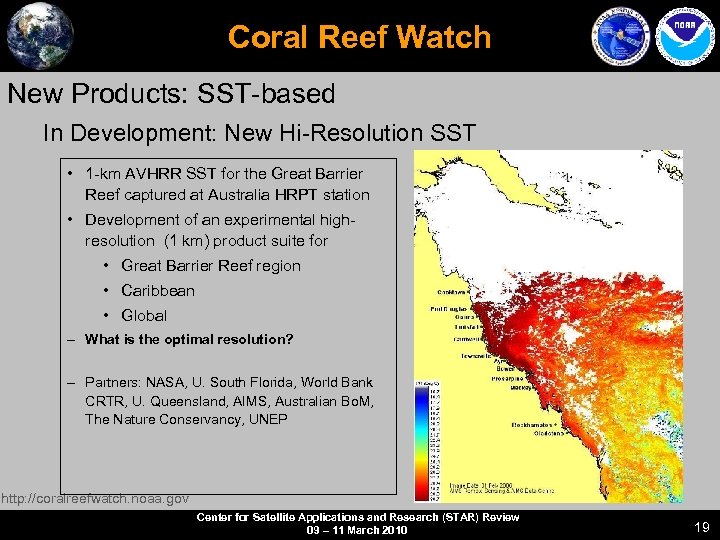 Coral Reef Watch New Products: SST-based In Development: New Hi-Resolution SST • 1 -km AVHRR SST for the Great Barrier Reef captured at Australia HRPT station • Development of an experimental highresolution (1 km) product suite for • Great Barrier Reef region • Caribbean • Global – What is the optimal resolution? – Partners: NASA, U. South Florida, World Bank CRTR, U. Queensland, AIMS, Australian Bo. M, The Nature Conservancy, UNEP http: //coralreefwatch. noaa. gov Center for Satellite Applications and Research (STAR) Review 09 – 11 March 2010 19
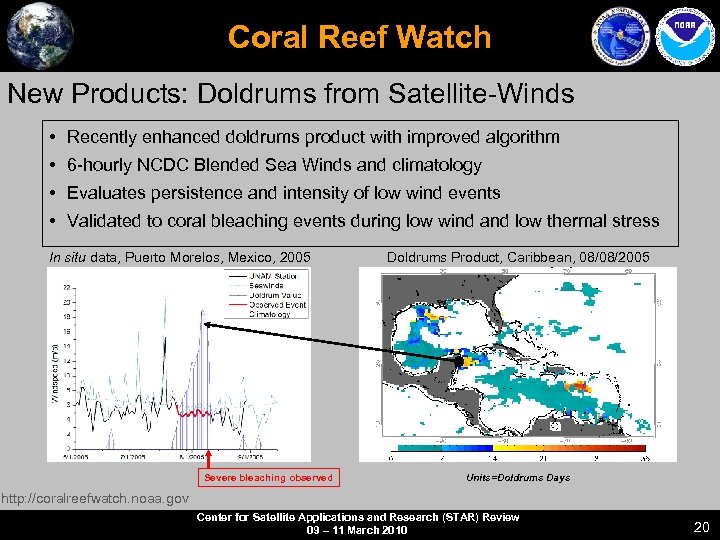 Coral Reef Watch New Products: Doldrums from Satellite-Winds • Recently enhanced doldrums product with improved algorithm • 6 -hourly NCDC Blended Sea Winds and climatology • Evaluates persistence and intensity of low wind events • Validated to coral bleaching events during low wind and low thermal stress In situ data, Puerto Morelos, Mexico, 2005 Severe bleaching observed Doldrums Product, Caribbean, 08/08/2005 Units=Doldrums Days http: //coralreefwatch. noaa. gov Center for Satellite Applications and Research (STAR) Review 09 – 11 March 2010 20
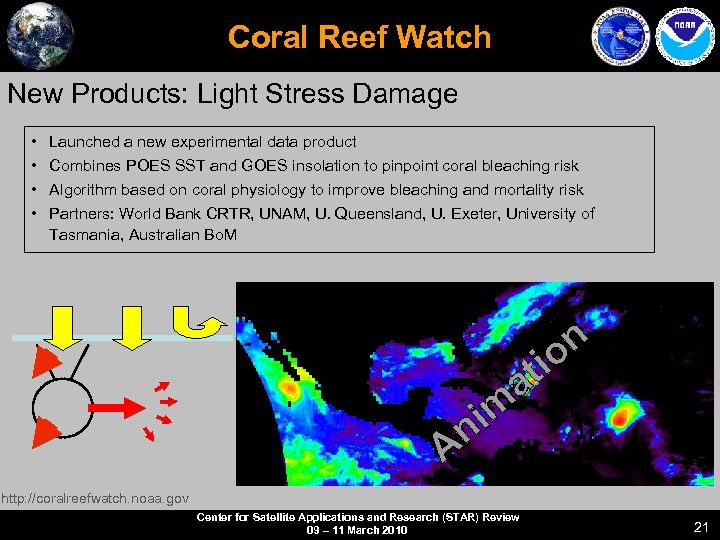 Coral Reef Watch New Products: Light Stress Damage • • Launched a new experimental data product Combines POES SST and GOES insolation to pinpoint coral bleaching risk Algorithm based on coral physiology to improve bleaching and mortality risk Partners: World Bank CRTR, UNAM, U. Queensland, U. Exeter, University of Tasmania, Australian Bo. M n io at im n A http: //coralreefwatch. noaa. gov Center for Satellite Applications and Research (STAR) Review 09 – 11 March 2010 21
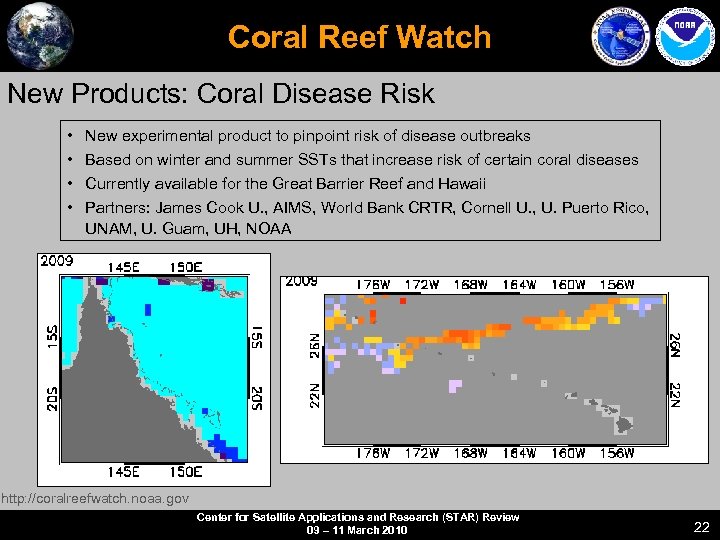 Coral Reef Watch New Products: Coral Disease Risk • • New experimental product to pinpoint risk of disease outbreaks Based on winter and summer SSTs that increase risk of certain coral diseases Currently available for the Great Barrier Reef and Hawaii Partners: James Cook U. , AIMS, World Bank CRTR, Cornell U. , U. Puerto Rico, UNAM, U. Guam, UH, NOAA http: //coralreefwatch. noaa. gov Center for Satellite Applications and Research (STAR) Review 09 – 11 March 2010 22
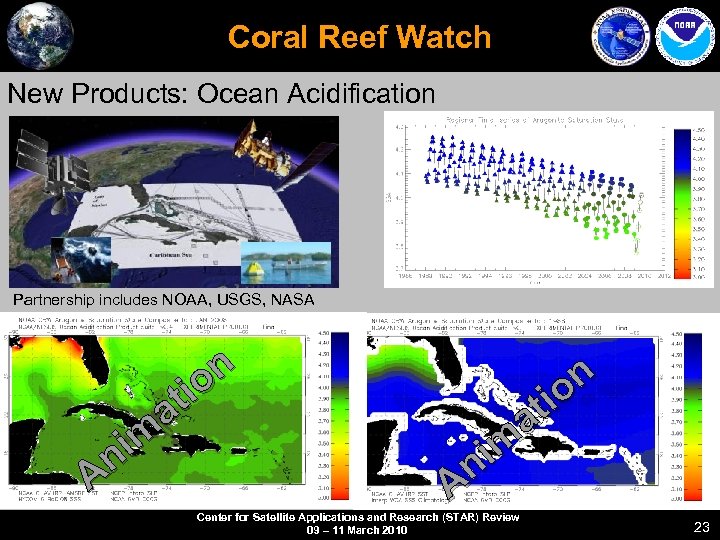 Coral Reef Watch New Products: Ocean Acidification Partnership includes NOAA, USGS, NASA n io at im n A http: //coralreefwatch. noaa. gov n io at im n A Center for Satellite Applications and Research (STAR) Review 09 – 11 March 2010 23
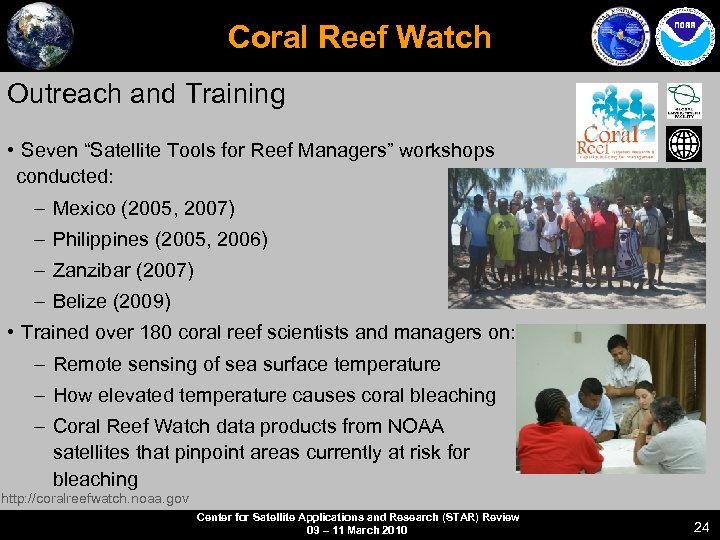 Coral Reef Watch Outreach and Training • Seven “Satellite Tools for Reef Managers” workshops conducted: – Mexico (2005, 2007) – Philippines (2005, 2006) – Zanzibar (2007) – Belize (2009) • Trained over 180 coral reef scientists and managers on: – Remote sensing of sea surface temperature – How elevated temperature causes coral bleaching – Coral Reef Watch data products from NOAA satellites that pinpoint areas currently at risk for bleaching http: //coralreefwatch. noaa. gov Center for Satellite Applications and Research (STAR) Review 09 – 11 March 2010 24
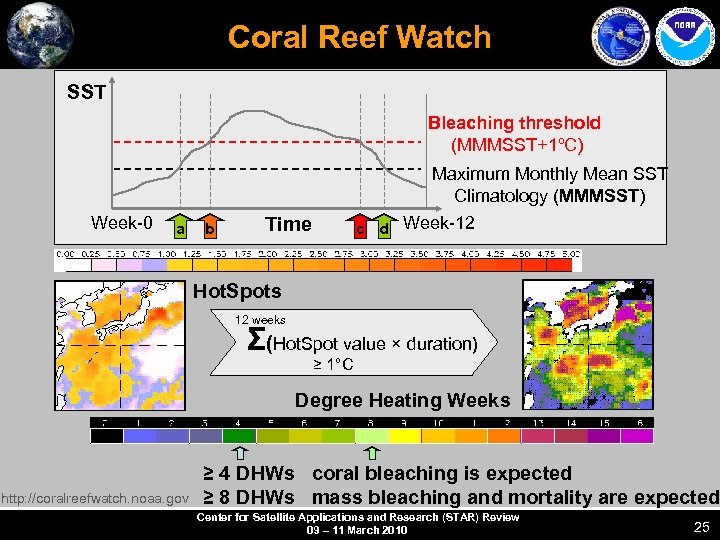 Coral Reef Watch SST Bleaching threshold (MMMSST+1ºC) Maximum Monthly Mean SST Climatology (MMMSST) Week-0 a b c d Week-12 Time Hot. Spots 12 weeks Σ(Hot. Spot value × duration) ≥ 1°C Degree Heating Weeks http: //coralreefwatch. noaa. gov ≥ 4 DHWs coral bleaching is expected ≥ 8 DHWs mass bleaching and mortality are expected Center for Satellite Applications and Research (STAR) Review 09 – 11 March 2010 25
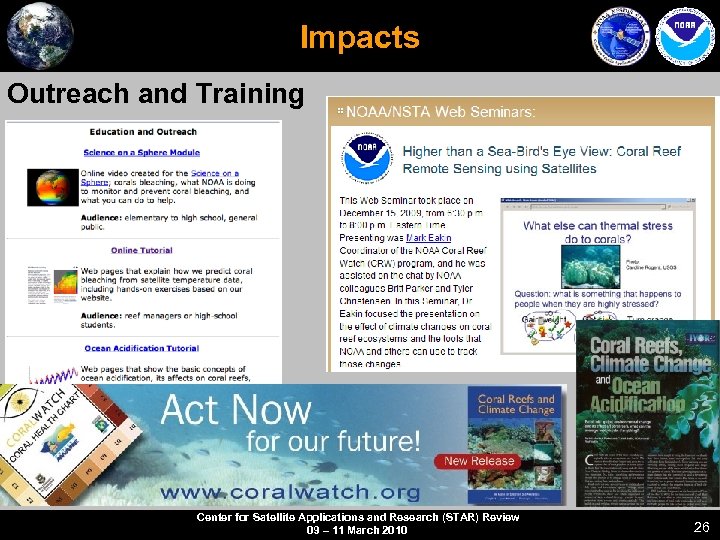 Impacts Outreach and Training http: //coralreefwatch. noaa. gov Center for Satellite Applications and Research (STAR) Review 09 – 11 March 2010 26
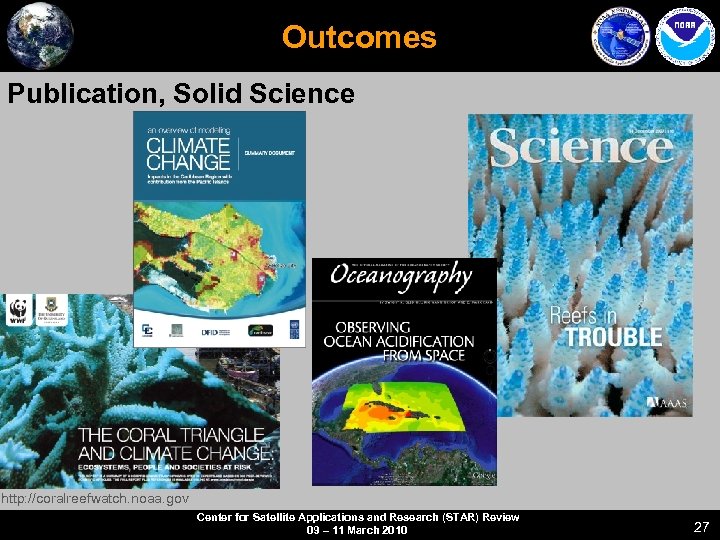 Outcomes Publication, Solid Science http: //coralreefwatch. noaa. gov Center for Satellite Applications and Research (STAR) Review 09 – 11 March 2010 27