

Copyright © 2011 by the McGraw-Hill Companies, Inc.

Copyright © 2011 by the McGraw-Hill Companies, Inc. All rights reserved. McGraw-Hill/Irwin
Environment and Theoretical Structure of Financial Accounting 1
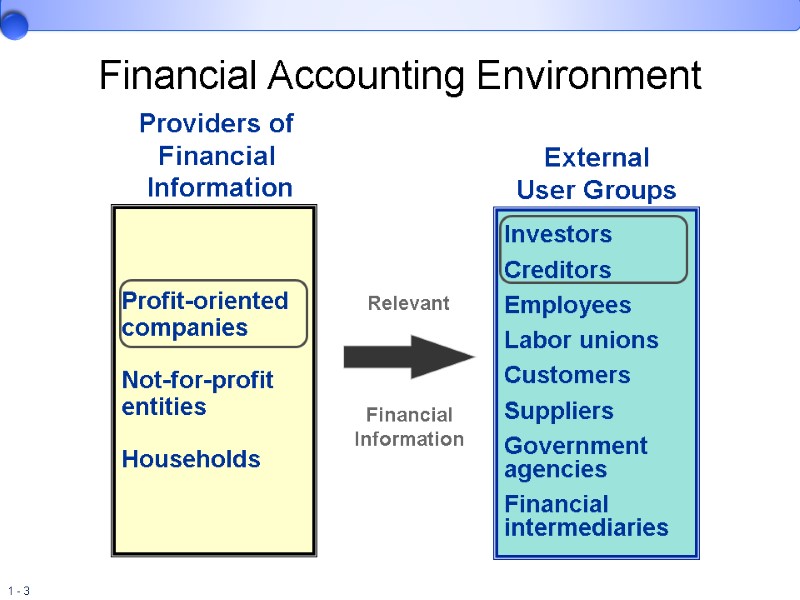
Financial Accounting Environment Profit-oriented companies Not-for-profit entities Households Providers of Financial Information External User Groups Investors Creditors Employees Labor unions Customers Suppliers Government agencies Financial intermediaries
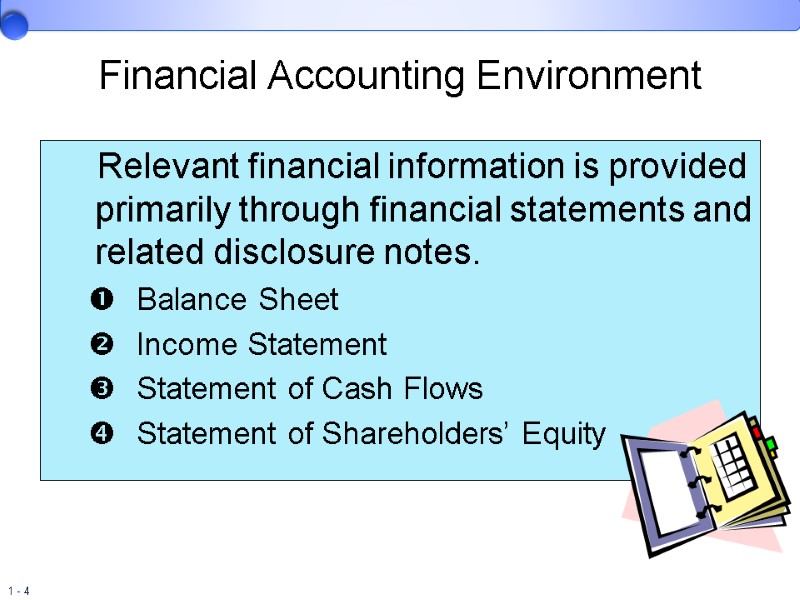
Financial Accounting Environment Relevant financial information is provided primarily through financial statements and related disclosure notes. Balance Sheet Income Statement Statement of Cash Flows Statement of Shareholders’ Equity
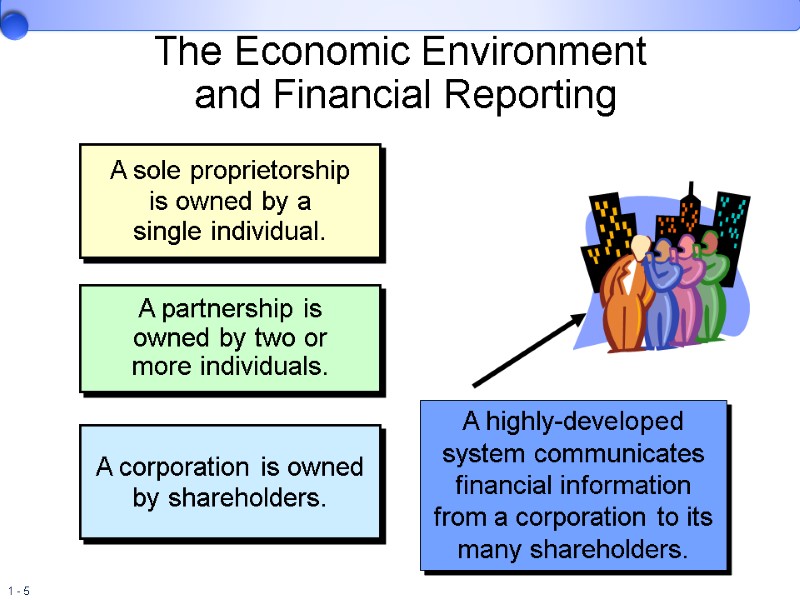
The Economic Environment and Financial Reporting A sole proprietorship is owned by a single individual. A partnership is owned by two or more individuals. A corporation is owned by shareholders.
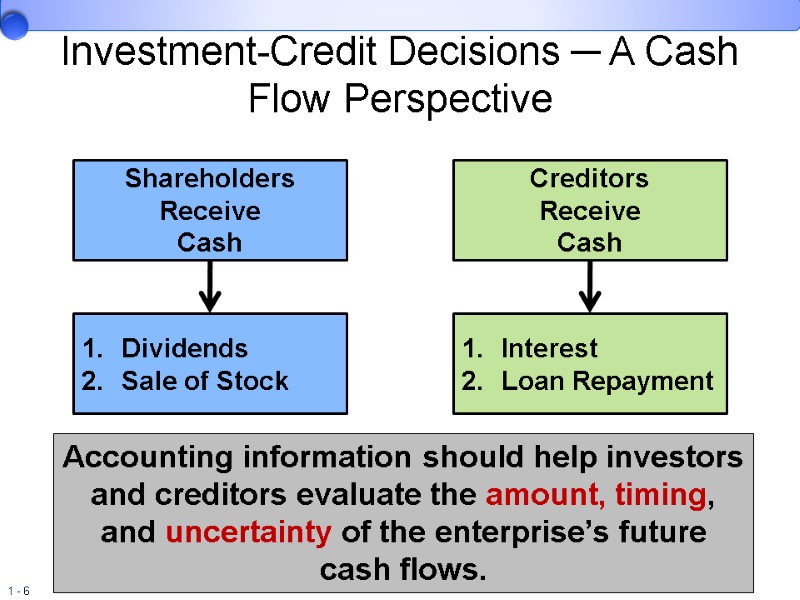
Investment-Credit Decisions ─ A Cash Flow Perspective Shareholders Receive Cash Dividends Sale of Stock Creditors Receive Cash Interest Loan Repayment Accounting information should help investors and creditors evaluate the amount, timing, and uncertainty of the enterprise’s future cash flows.
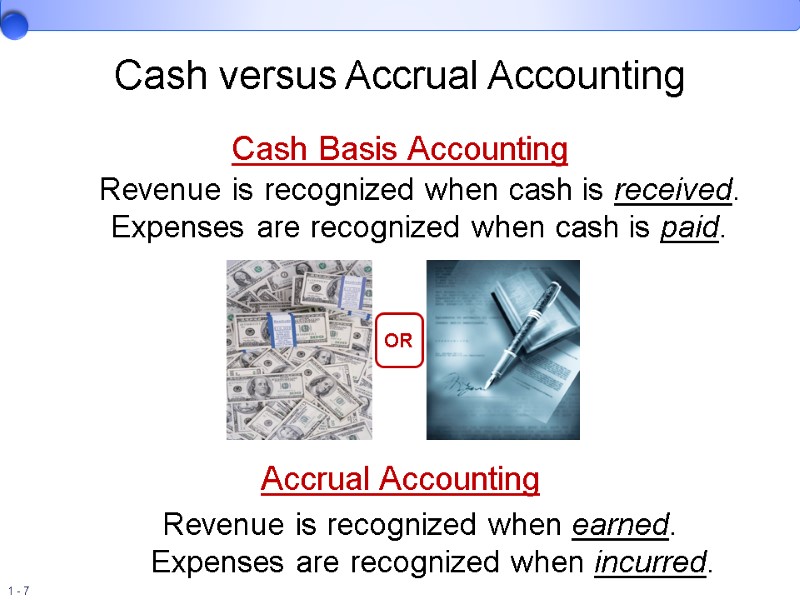
Cash versus Accrual Accounting Cash Basis Accounting Revenue is recognized when cash is received. Expenses are recognized when cash is paid. OROROR OR Accrual Accounting Revenue is recognized when earned. Expenses are recognized when incurred.
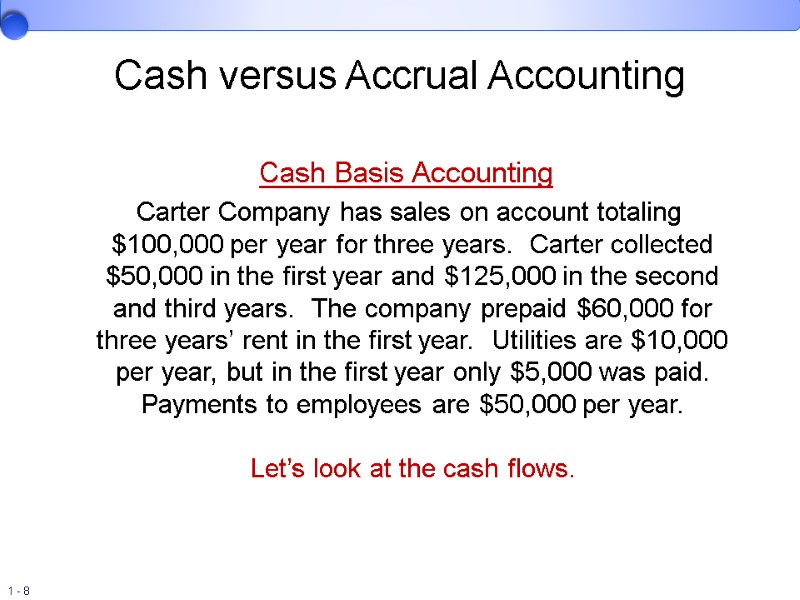
Cash versus Accrual Accounting Cash Basis Accounting Carter Company has sales on account totaling $100,000 per year for three years. Carter collected $50,000 in the first year and $125,000 in the second and third years. The company prepaid $60,000 for three years’ rent in the first year. Utilities are $10,000 per year, but in the first year only $5,000 was paid. Payments to employees are $50,000 per year. Let’s look at the cash flows.
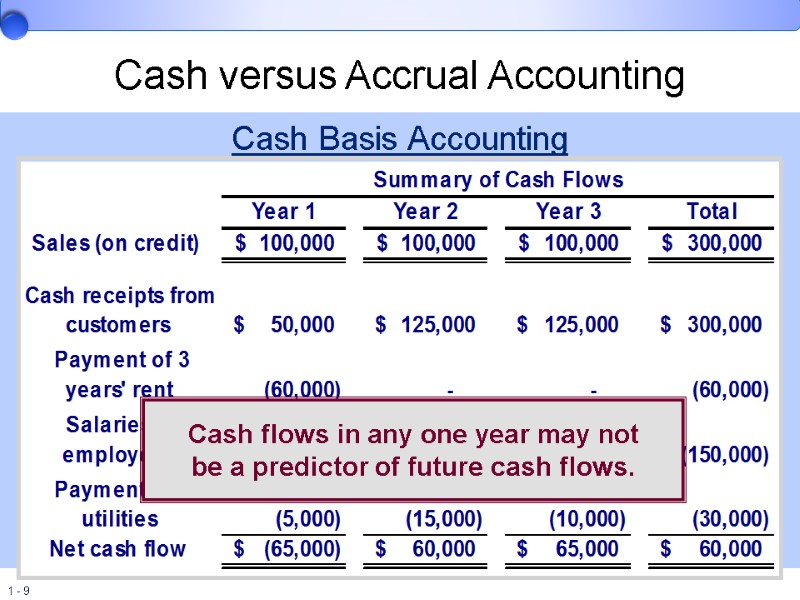
Cash versus Accrual Accounting Cash Basis Accounting Cash flows in any one year may not be a predictor of future cash flows.
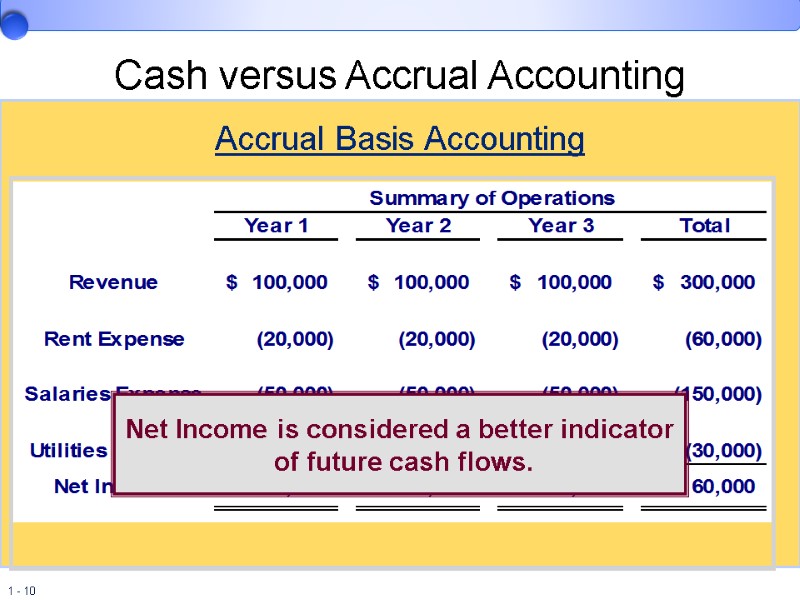
Cash versus Accrual Accounting Accrual Basis Accounting Net Income is considered a better indicator of future cash flows.
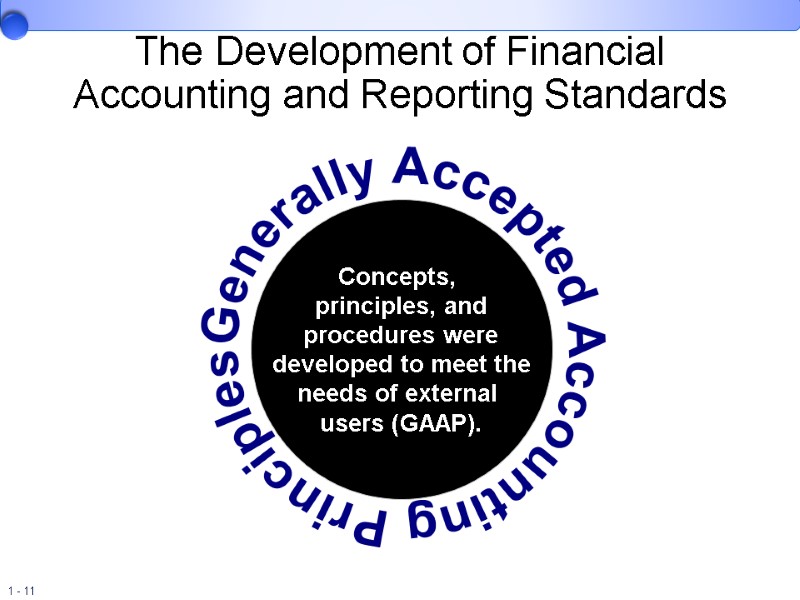
The Development of Financial Accounting and Reporting Standards Concepts, principles, and procedures were developed to meet the needs of external users (GAAP).
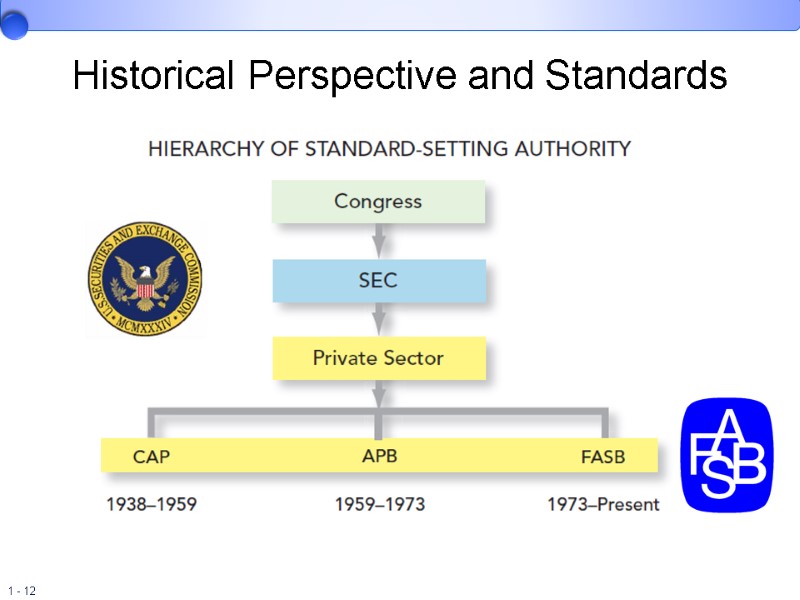
Historical Perspective and Standards
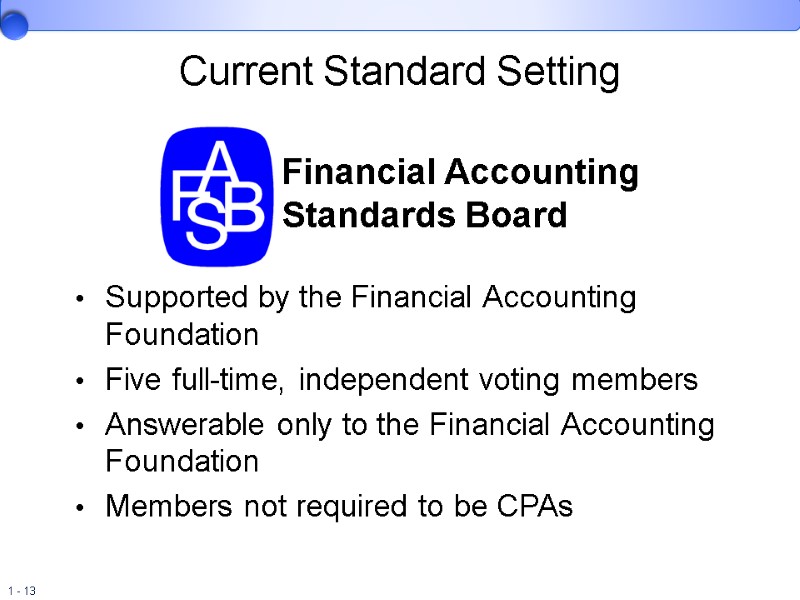
Current Standard Setting Supported by the Financial Accounting Foundation Five full-time, independent voting members Answerable only to the Financial Accounting Foundation Members not required to be CPAs Financial Accounting Standards Board
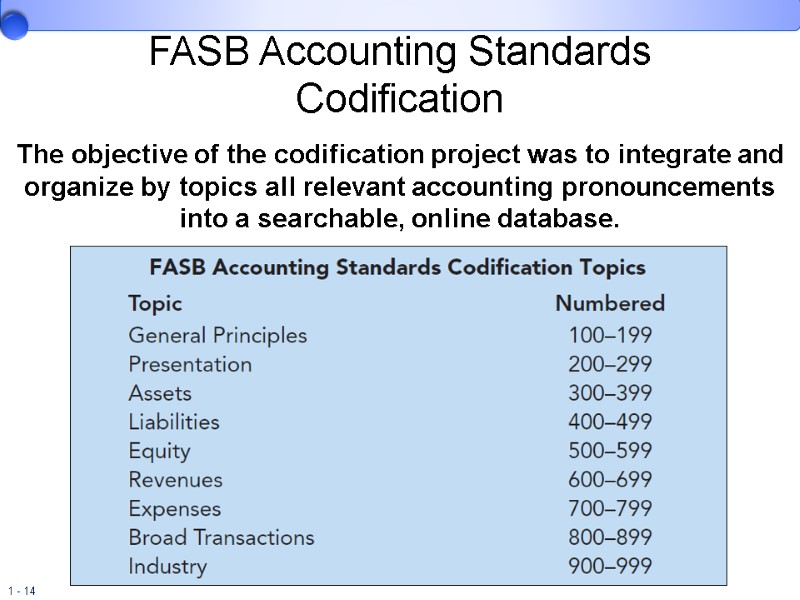
FASB Accounting Standards Codification The objective of the codification project was to integrate and organize by topics all relevant accounting pronouncements into a searchable, online database.
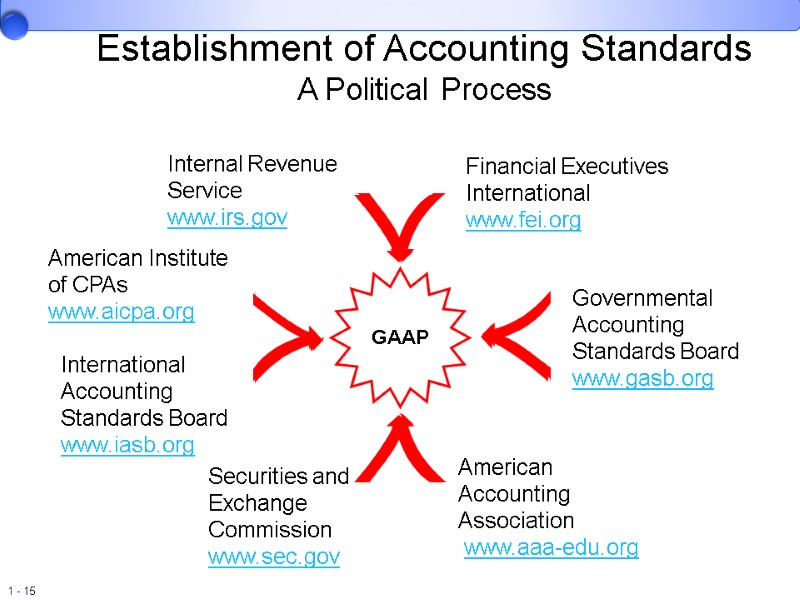
Establishment of Accounting Standards A Political Process GAAP Internal Revenue Service www.irs.gov American Institute of CPAs www.aicpa.org Securities and Exchange Commission www.sec.gov American Accounting Association www.aaa-edu.org Governmental Accounting Standards Board www.gasb.org Financial Executives International www.fei.org International Accounting Standards Board www.iasb.org
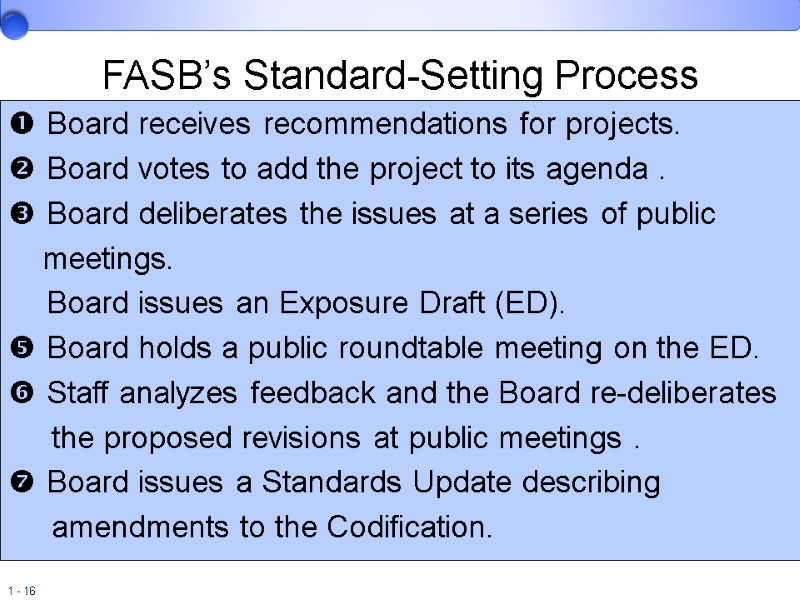
FASB’s Standard-Setting Process Board receives recommendations for projects. Board votes to add the project to its agenda . Board deliberates the issues at a series of public meetings. Board issues an Exposure Draft (ED). Board holds a public roundtable meeting on the ED. Staff analyzes feedback and the Board re-deliberates the proposed revisions at public meetings . Board issues a Standards Update describing amendments to the Codification.
Toward Global Accounting Standards The main objective of the International Accounting Standards Board (IASB) is to develop a single set of high quality, understandable and enforceable global accounting standards to help participants in the world’s capital markets and other users make economic decisions.
Role of the Auditor Auditors serve as independent intermediaries to help insure that management has appropriately applied GAAP in preparing the company’s financial statements.
Financial Reporting Reform As a result of numerous financial scandals, Congress passed the Public Company Accounting Reform and Investor Protection Act of 2002, (Sarbanes-Oxley Act). The goal was to restore credibility and investor confidence in the financial reporting process.
A Move Away from Rules-Based Standards? Rules based accounting standards vs. objectives-oriented approach Objectives oriented (principles-based) approach stressed professional judgment
Ethics in Accounting For financial information to be useful, it should possess the fundamental decision-specific qualities of relevance and faithful representation. Management may be under pressure to report desired results and ignore or bend existing rules.
Analytical Model for Ethical Decisions Determine the facts of the situation. Identify the ethical issue and the stakeholders. Identify the values related to the situation. Specify the alternative courses of action. Evaluate the courses of action. Identify the consequences of each course of action. Make your decision and take any indicated action.
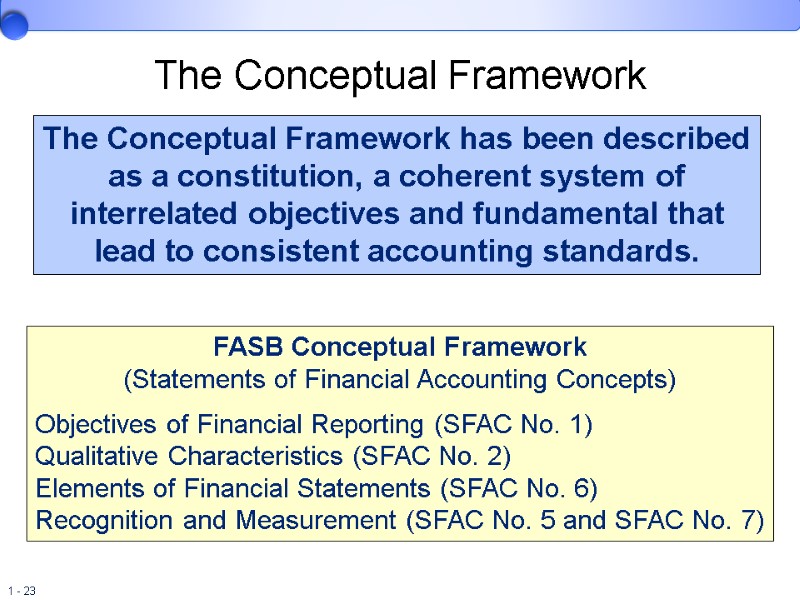
The Conceptual Framework The Conceptual Framework has been described as a constitution, a coherent system of interrelated objectives and fundamental that lead to consistent accounting standards. FASB Conceptual Framework (Statements of Financial Accounting Concepts) Objectives of Financial Reporting (SFAC No. 1) Qualitative Characteristics (SFAC No. 2) Elements of Financial Statements (SFAC No. 6) Recognition and Measurement (SFAC No. 5 and SFAC No. 7)
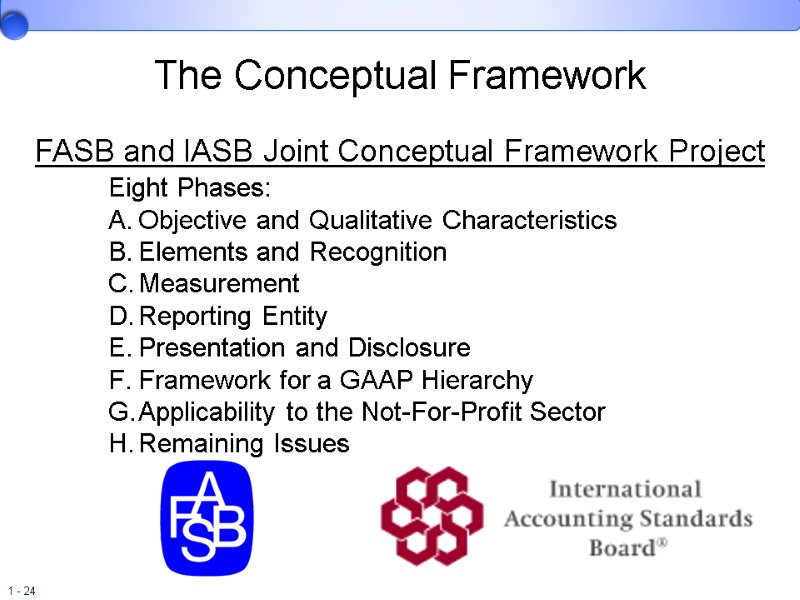
The Conceptual Framework FASB and IASB Joint Conceptual Framework Project Eight Phases: Objective and Qualitative Characteristics Elements and Recognition Measurement Reporting Entity Presentation and Disclosure Framework for a GAAP Hierarchy Applicability to the Not-For-Profit Sector Remaining Issues
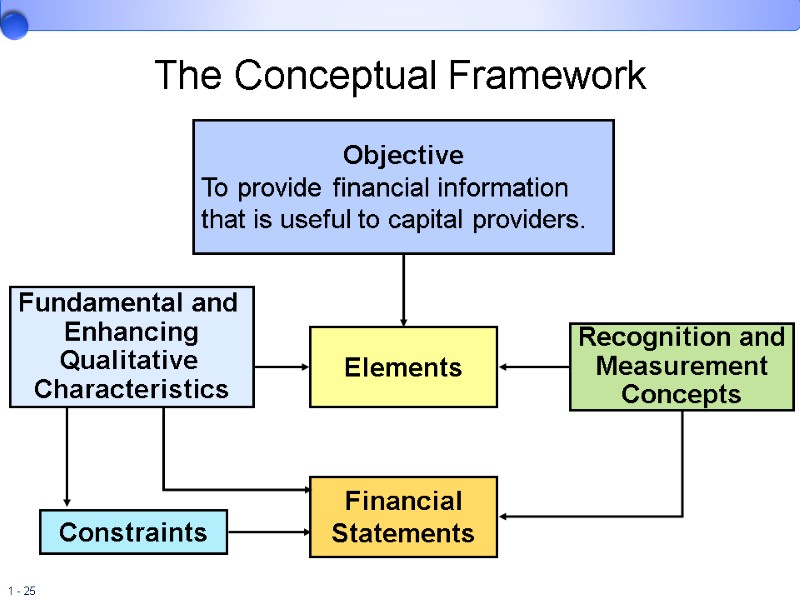
Objective To provide financial information that is useful to capital providers. Elements Recognition and Measurement Concepts Constraints Financial Statements The Conceptual Framework Fundamental and Enhancing Qualitative Characteristics
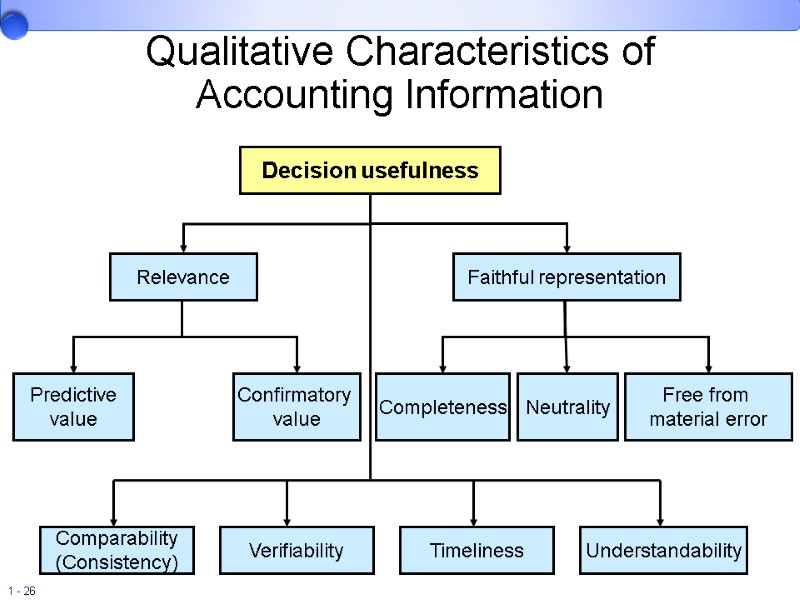
Relevance Faithful representation Qualitative Characteristics of Accounting Information Decision usefulness
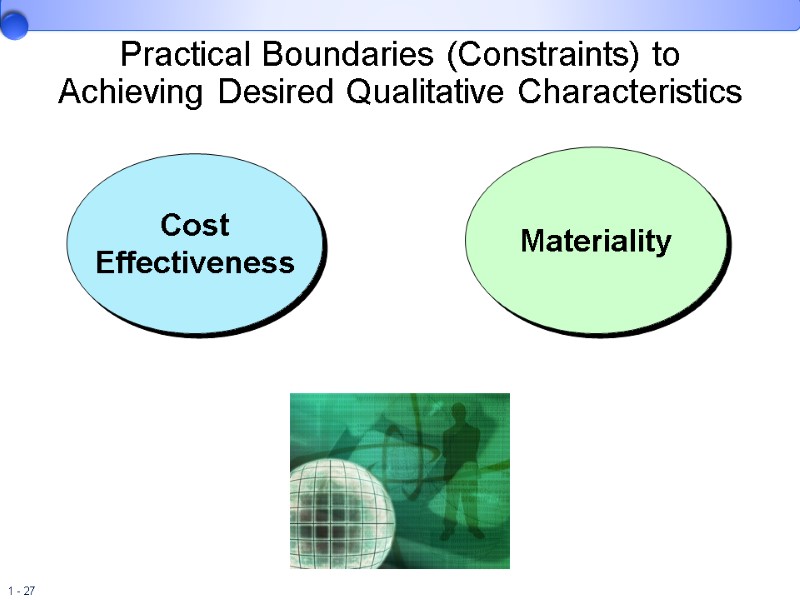
Practical Boundaries (Constraints) to Achieving Desired Qualitative Characteristics Cost Effectiveness Materiality
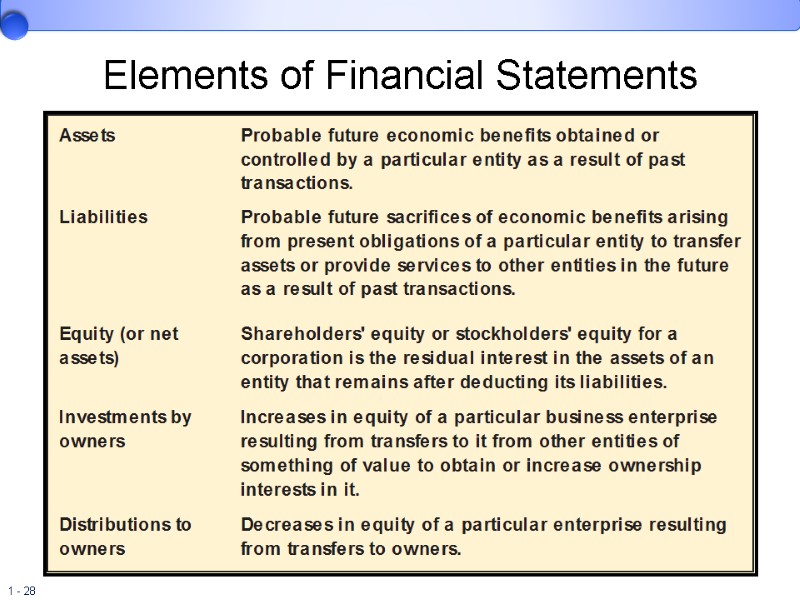
Elements of Financial Statements
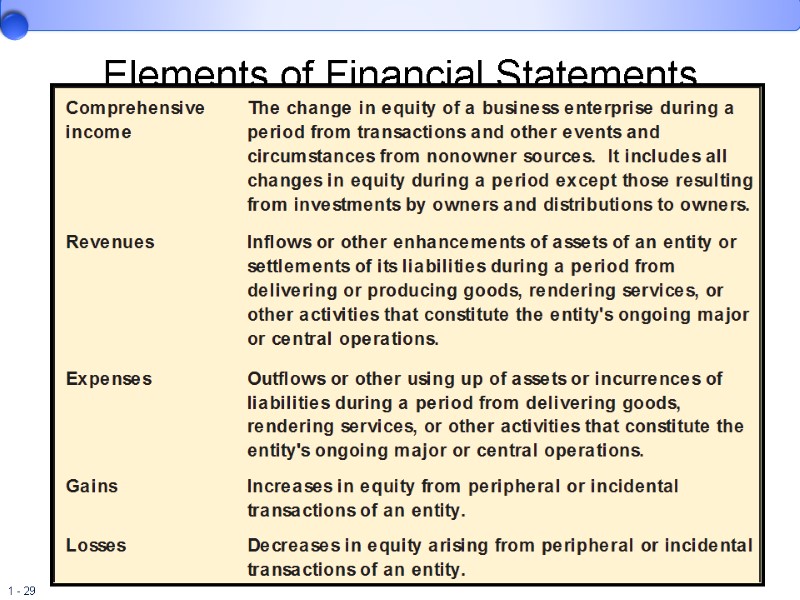
Elements of Financial Statements
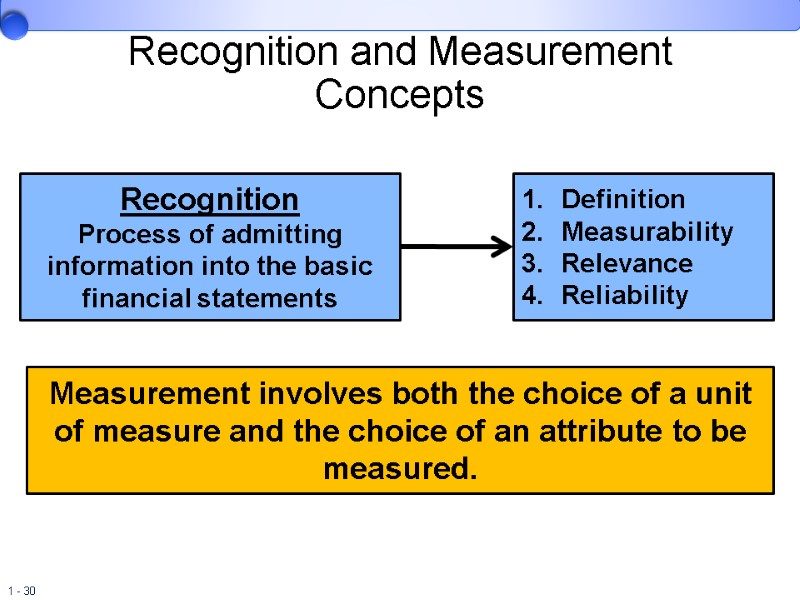
Recognition and Measurement Concepts Recognition Process of admitting information into the basic financial statements Definition Measurability Relevance Reliability Measurement involves both the choice of a unit of measure and the choice of an attribute to be measured.
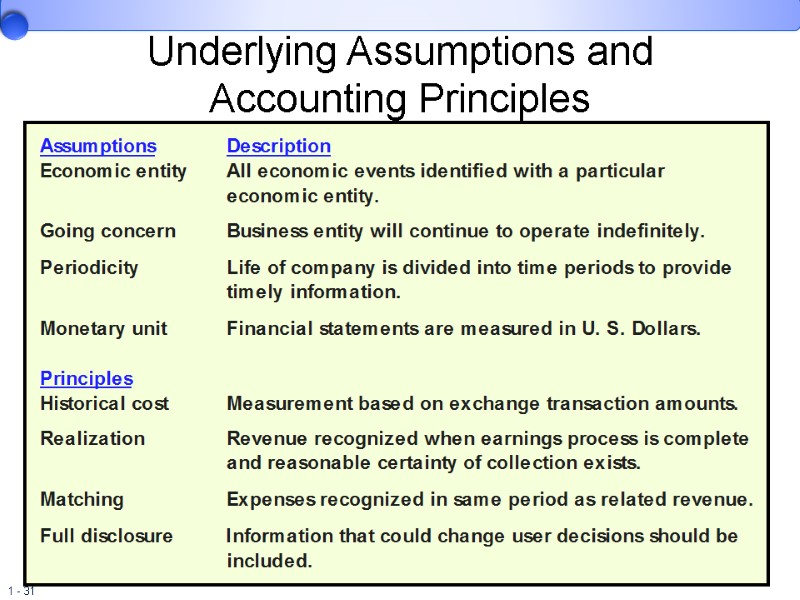
Underlying Assumptions and Accounting Principles
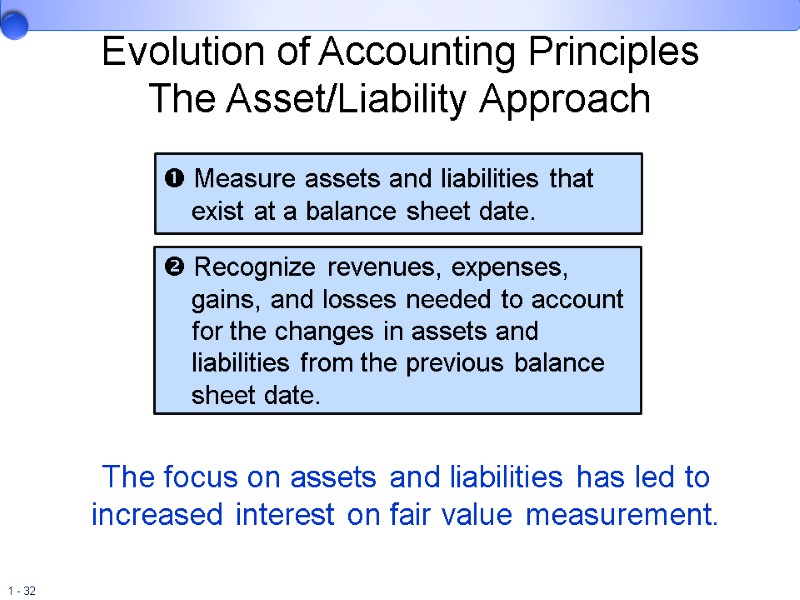
Evolution of Accounting Principles The Asset/Liability Approach The focus on assets and liabilities has led to increased interest on fair value measurement. Measure assets and liabilities that exist at a balance sheet date. Recognize revenues, expenses, gains, and losses needed to account for the changes in assets and liabilities from the previous balance sheet date.
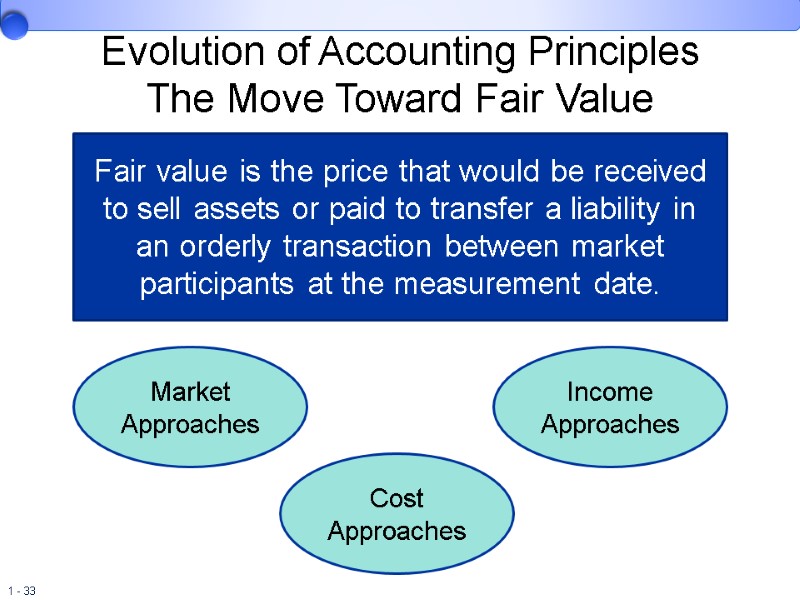
Evolution of Accounting Principles The Move Toward Fair Value Fair value is the price that would be received to sell assets or paid to transfer a liability in an orderly transaction between market participants at the measurement date. Market Approaches Income Approaches Cost Approaches
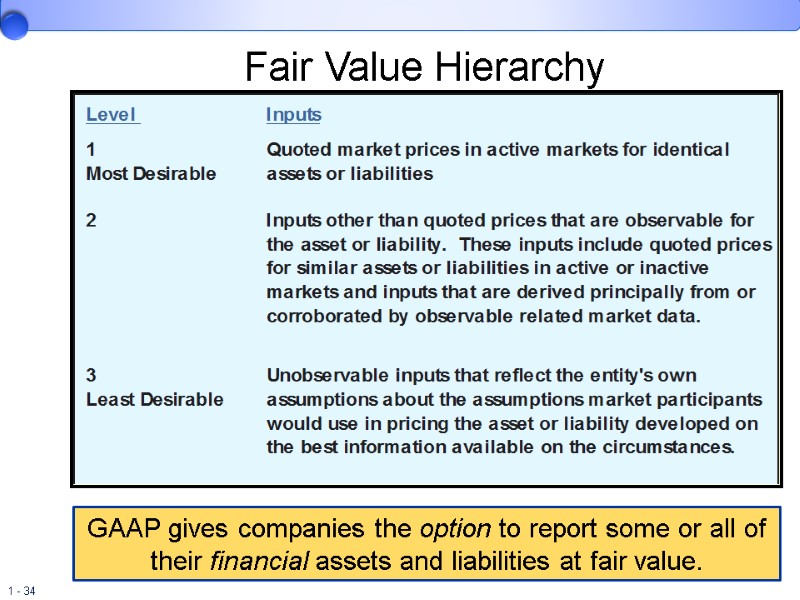
Fair Value Hierarchy GAAP gives companies the option to report some or all of their financial assets and liabilities at fair value.

End of Chapter 1
 Скачать презентацию Copyright © 2011 by the McGraw-Hill Companies, Inc.
16840-adv_acc_chap001.ppt
- Количество слайдов: 35