


 Скачать презентацию Cooperation and solutions in agriculture 2009 The Hungarian
4ac4655ea3974559ede97c8f318ce1f7.ppt
- Количество слайдов: 29
 Cooperation and solutions in agriculture 2009 The Hungarian milk market and the Global economic crises
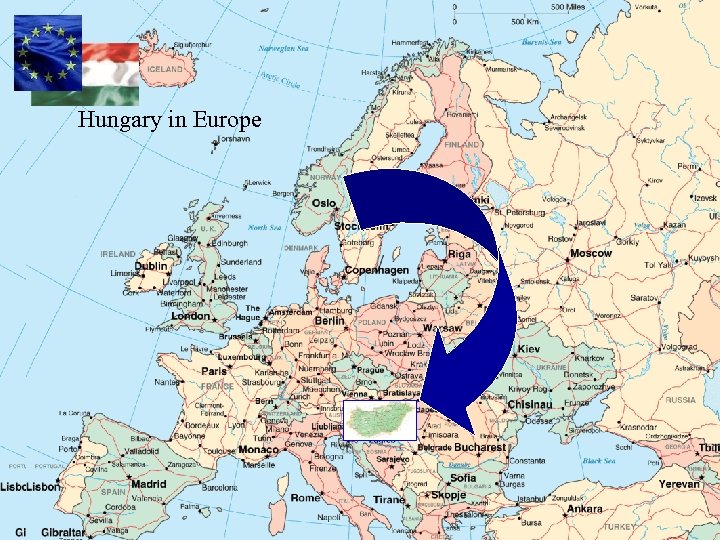 Hungary in Europe
 General Introduction to the Hungarian milk market Animal Stock
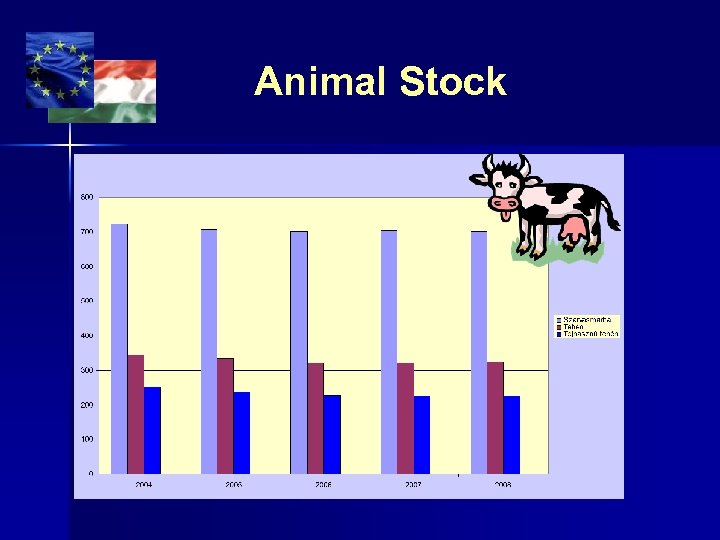 Animal Stock
 General Introduction to the Hungarian milk market Animal Stock Number of Sites
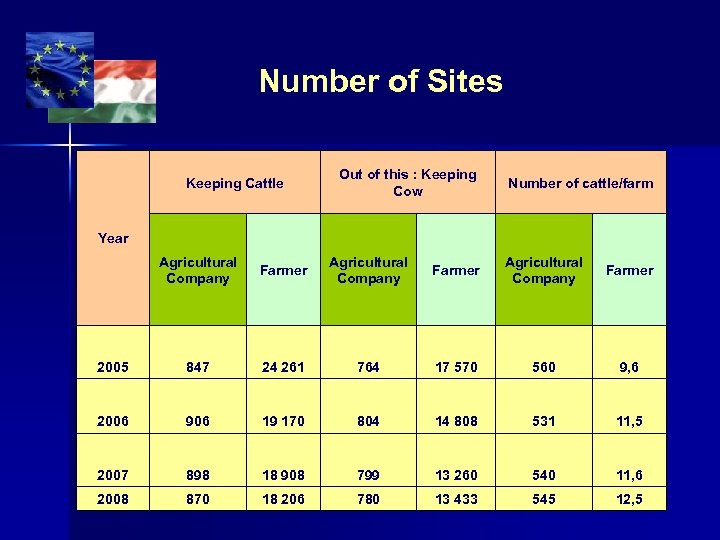 Number of Sites Keeping Cattle Out of this : Keeping Cow Number of cattle/farm Year Agricultural Company Farmer 2005 847 24 261 764 17 570 560 9, 6 2006 906 19 170 804 14 808 531 11, 5 2007 898 18 908 799 13 260 540 11, 6 2008 870 18 206 780 13 433 545 12, 5
 General Introduction to the Hungarian milk market Animal Stock Number of Sites Milk quotes
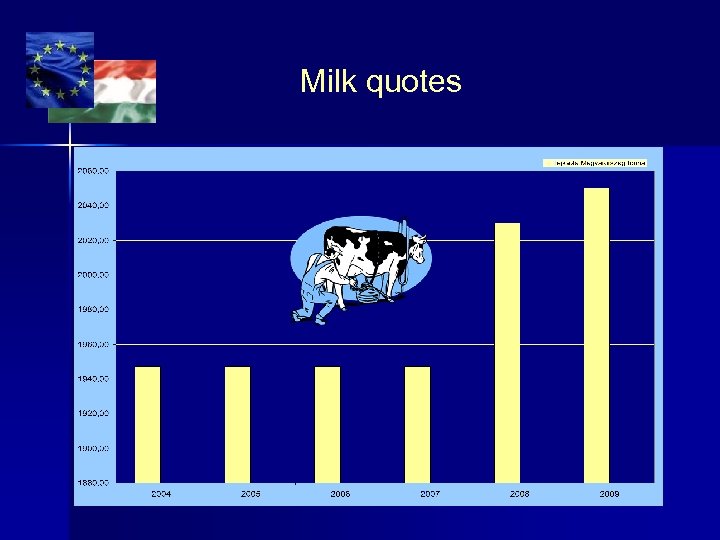 Milk quotes
 General Introduction to the Hungarian milk market Animal Stock Number of Sites Milk quota Milk production
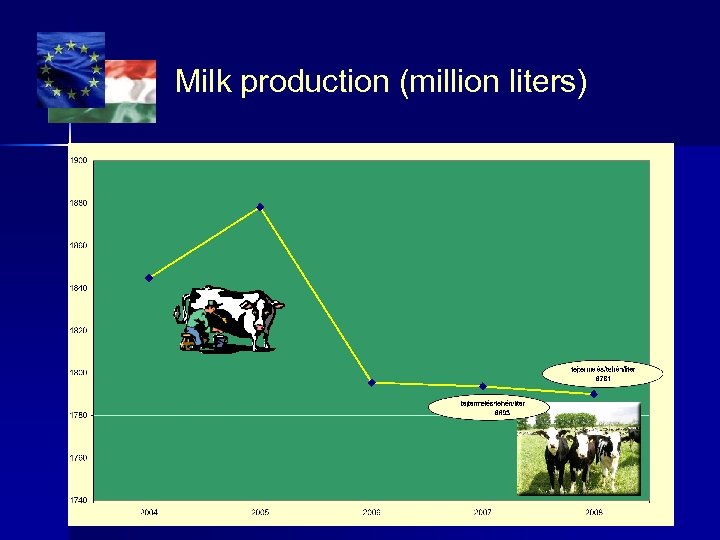 Milk production (million liters)
 General Introduction to the Hungarian milk market Animal Stock Number of Sites Milk quota Milk production Raw milk buy-out
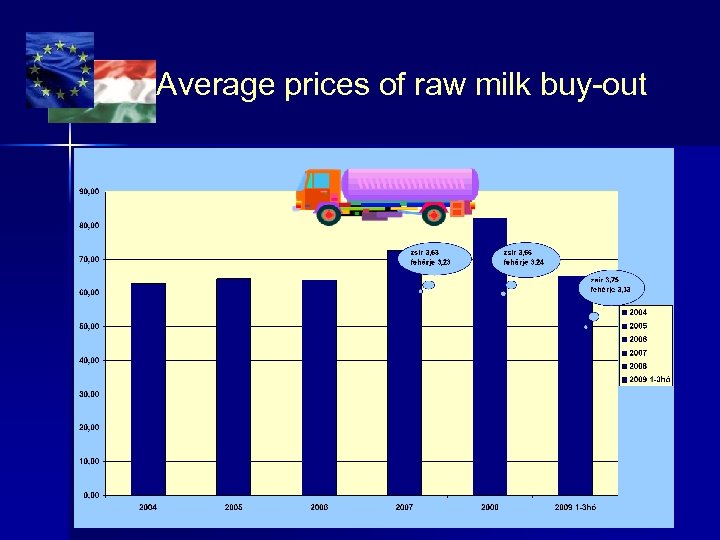 Average prices of raw milk buy-out
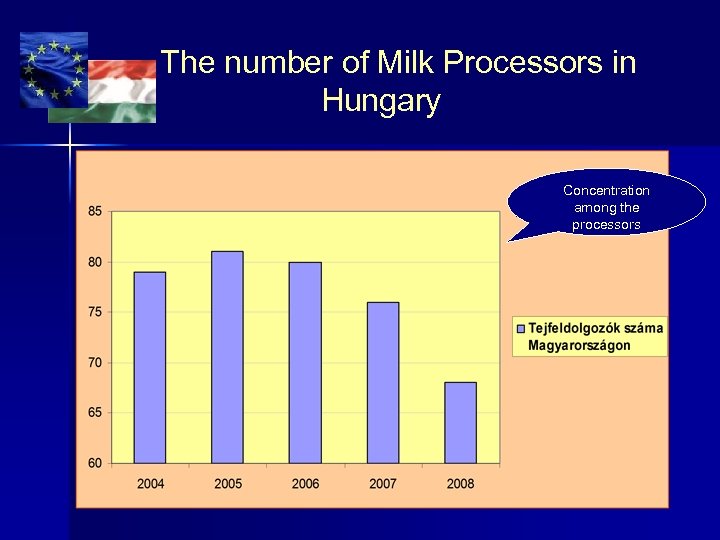 The number of Milk Processors in Hungary Concentration among the processors
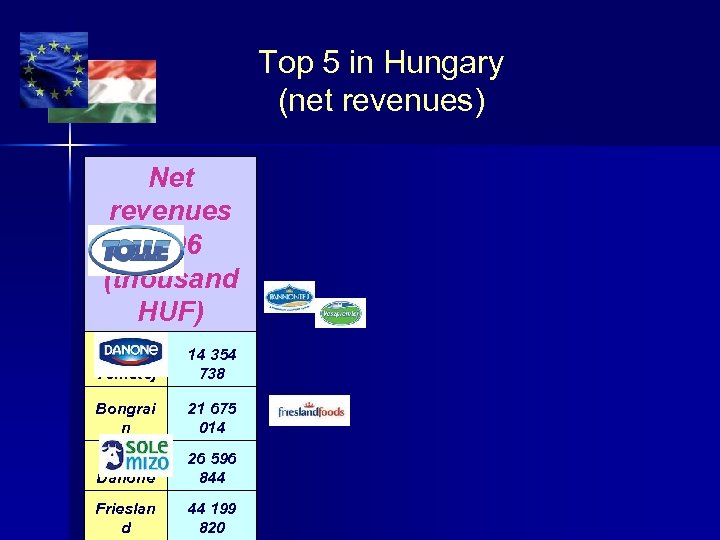 Top 5 in Hungary (net revenues) Net revenues 2006 (thousand HUF) Tolnatej 14 354 738 Bongrai n 21 675 014 Danone 26 596 844 Frieslan d 44 199 820
 New participants –new roles Alföldi Tej enters the market International Companies are overshadowed
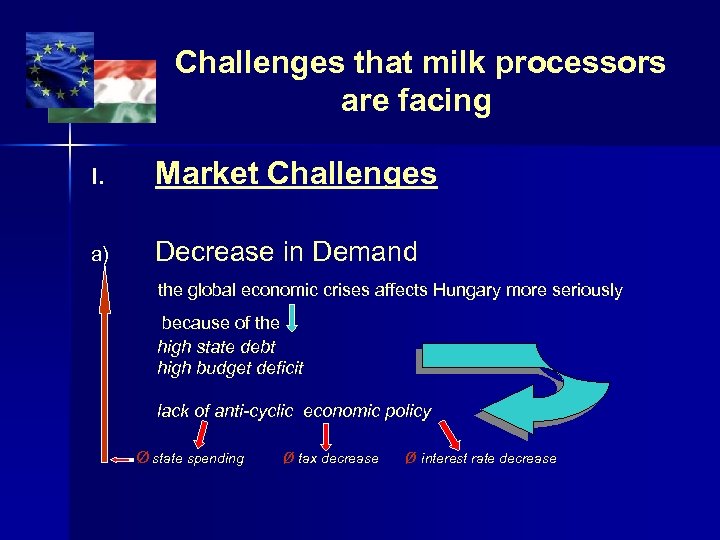 Challenges that milk processors are facing I. Market Challenges a) Decrease in Demand the global economic crises affects Hungary more seriously because of the high state debt high budget deficit lack of anti-cyclic economic policy Ø state spending ø tax decrease ø interest rate decrease
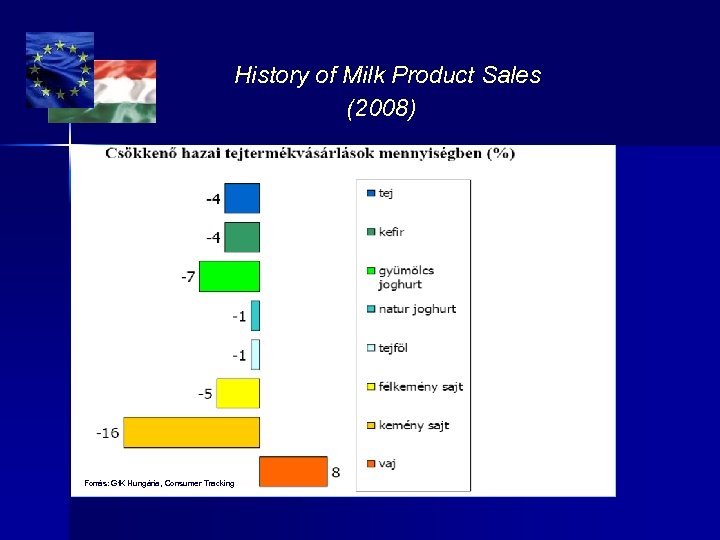 History of Milk Product Sales (2008) Forrás: Gf. K Hungária, Consumer Tracking
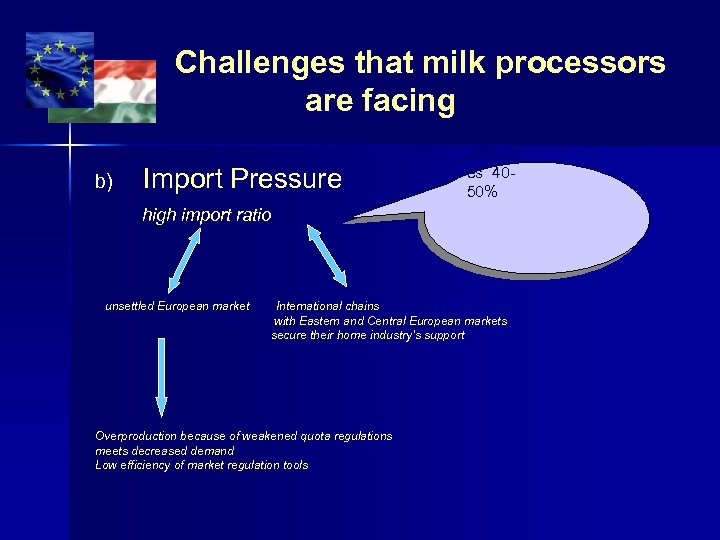 Challenges that milk processors are facing In some b) Import Pressure product categori es 4050% high import ratio unsettled European market International chains with Eastern and Central European markets secure their home industry’s support Overproduction because of weakened quota regulations meets decreased demand Low efficiency of market regulation tools
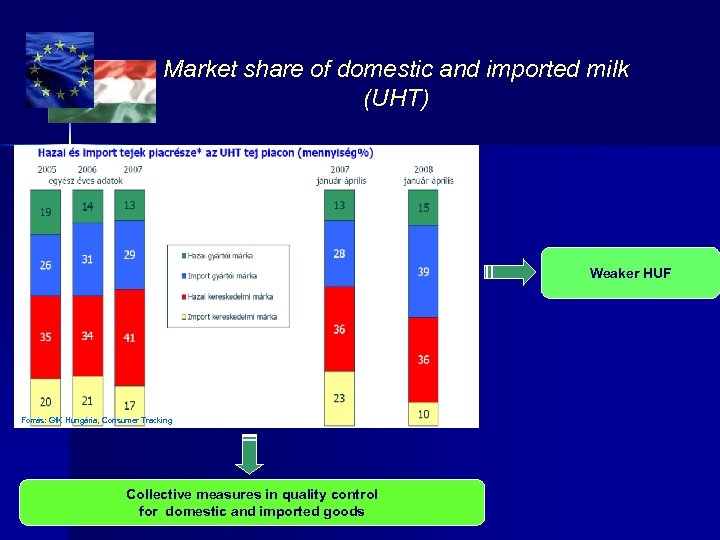 Market share of domestic and imported milk (UHT) Weaker HUF Forrás: Gf. K Hungária, Consumer Tracking Collective measures in quality control for domestic and imported goods
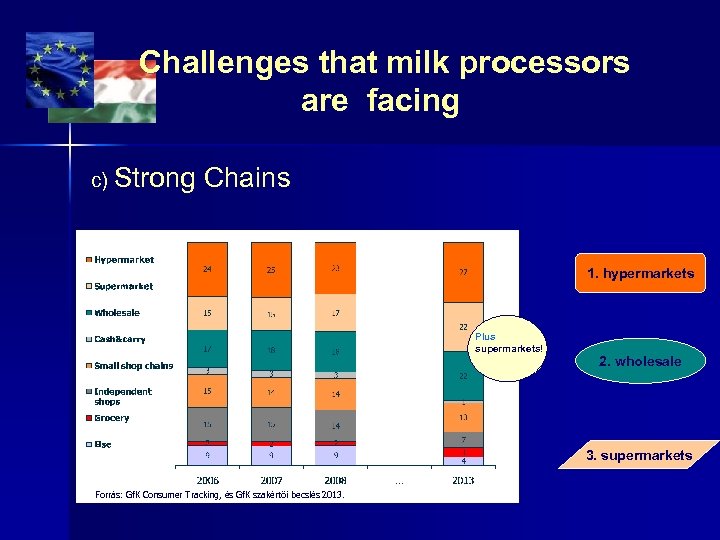 Challenges that milk processors are facing c) Strong Chains 1. hypermarkets Plus supermarkets! 2. wholesale 3. supermarkets Forrás: Gf. K Consumer Tracking, és Gf. K szakértői becslés 2013.
 Ethical Codex Adaptation - price - flexibility - supply Concentration
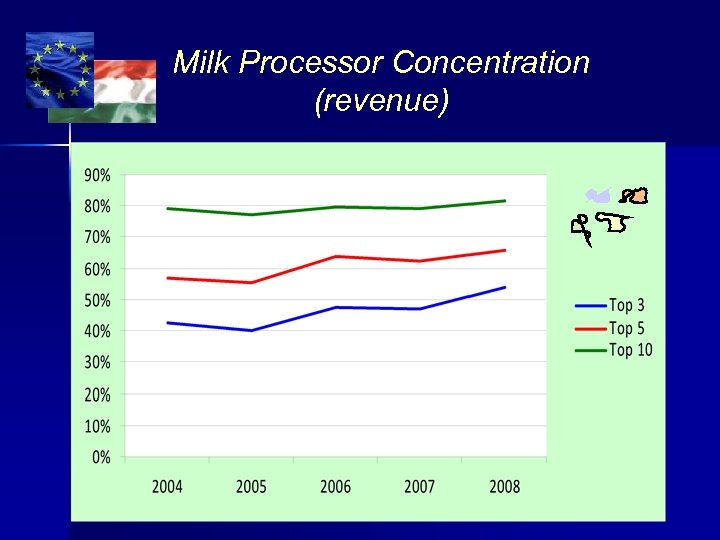 Milk Processor Concentration (revenue)
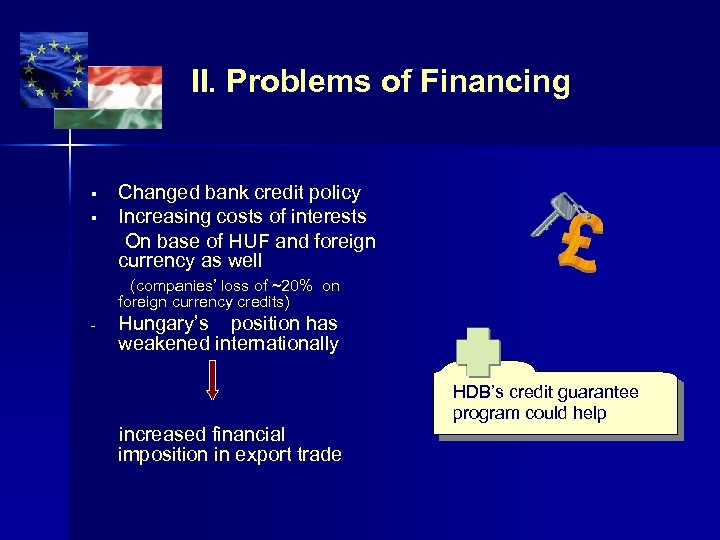 II. Problems of Financing § § Changed bank credit policy Increasing costs of interests On base of HUF and foreign currency as well (companies’ loss of ~20% on foreign currency credits) - Hungary’s position has weakened internationally HDB’s credit guarantee program could help increased financial imposition in export trade
 III. Problems of Tendering Slow, prefers producers to processors Without competitive FOOD INDUSTRY there is no competitive AGRICULTURE
 IV. Possible damage of the producers’ base due to low price High raw milk export ratio The landownership is not solved Investment has stopped because of lack of financing This years dry weather is making producers situation even worse
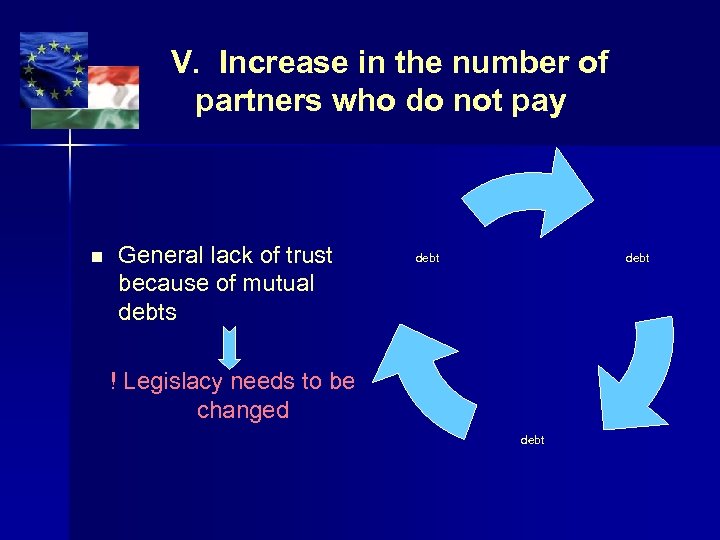 V. Increase in the number of partners who do not pay n General lack of trust because of mutual debts debt ! Legislacy needs to be changed debt
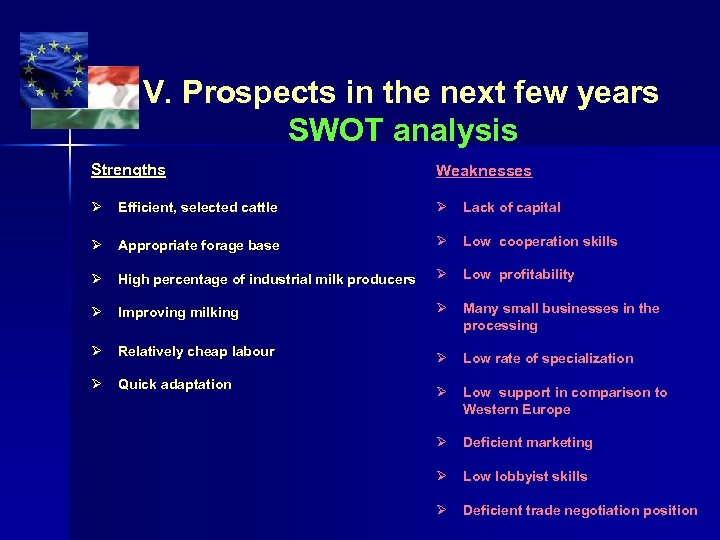 V. Prospects in the next few years SWOT analysis Strengths Weaknesses Efficient, selected cattle Lack of capital Appropriate forage base Low cooperation skills High percentage of industrial milk producers Low profitability Improving milking Many small businesses in the processing Relatively cheap labour Low rate of specialization Quick adaptation Low support in comparison to Western Europe Deficient marketing Low lobbyist skills Deficient trade negotiation position
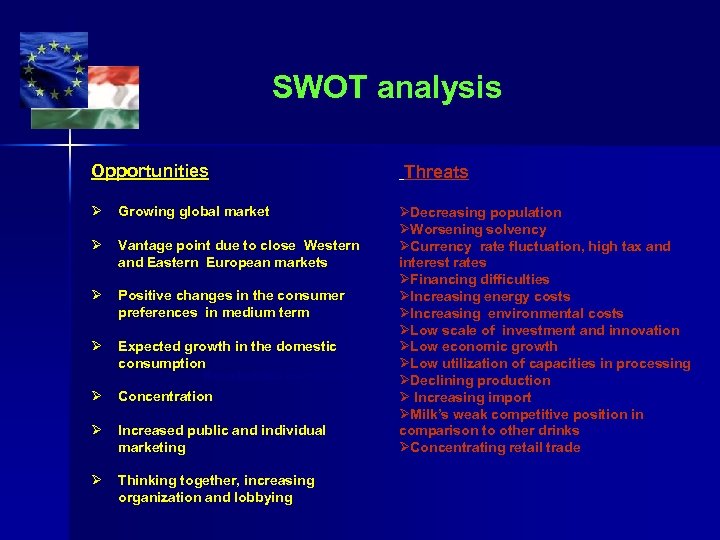 SWOT analysis Opportunities Growing global market Threats Decreasing population Worsening solvency Vantage point due to close Western Currency rate fluctuation, high tax and Eastern European markets interest rates Financing difficulties Positive changes in the consumer Increasing energy costs preferences in medium term Increasing environmental costs Low scale of investment and innovation Expected growth in the domestic Low economic growth consumption Low utilization of capacities in processing Kereskedelmi márkák térhódítása Declining production Concentration Increasing import Milk’s weak competitive position in Increased public and individual comparison to other drinks marketing Concentrating retail trade Thinking together, increasing organization and lobbying
 Thank You for Your Attention! Koller Attila Chief Executive Tolnatej Zrt.