 Скачать презентацию Cooperation among public parties Maarten Groothuis Review
60cb7a32d449a495bd2904ed89316b3a.ppt
- Количество слайдов: 16



Cooperation among public parties Maarten Groothuis
Review of the context for Change Enablement “The only person who likes change. . . “…is a wet baby” “There is nothing more difficult to carry out, nor more doubtful of success, nor more dangerous to manage, than to initiate a new order of things. For the initiator has the enmity of all who would profit by the preservation of the old system, and merely lukewarm defenders in those who would gain by the new one. ” Niccolo Machiavelli
Warm welcome? • PPP doesn’t always receive a warm welcome: – – – Accounting people Procurement departments Maintenance services End users Permit granting authorities • Certain stakeholders tend to have mixed feelings - or even severe problems - giving away what they were used to Resistance to PPP…
Why cooperation among public parties? • Principle of subsidiarity – a central authority should have a subsidiary function, performing only those tasks which cannot be performed effectively at a more immediate or local level • As a result, different levels of public authorities have responsibilities in the realization of infrastructure-, building-, and area development projects • NL example: – State = contracting authority – Province = regional planning and environment – Municipality = urban planning and design
Stakeholder management • Stakeholder management is critical to the • • success of every project By engaging the right people in the right way in your project, you can make a big difference to its success Being right ≠ getting things done! Stakeholder management is the process by which you identify your key stakeholders and win their support
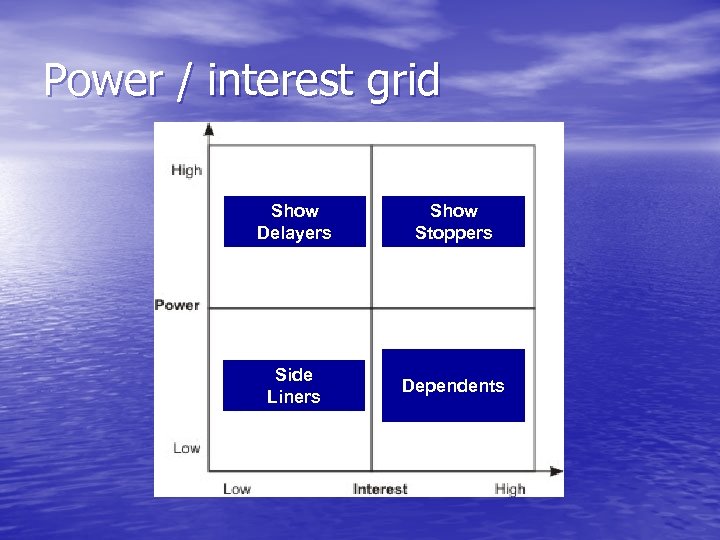
Power / interest grid Show Delayers Show Stoppers Side Liners Dependents
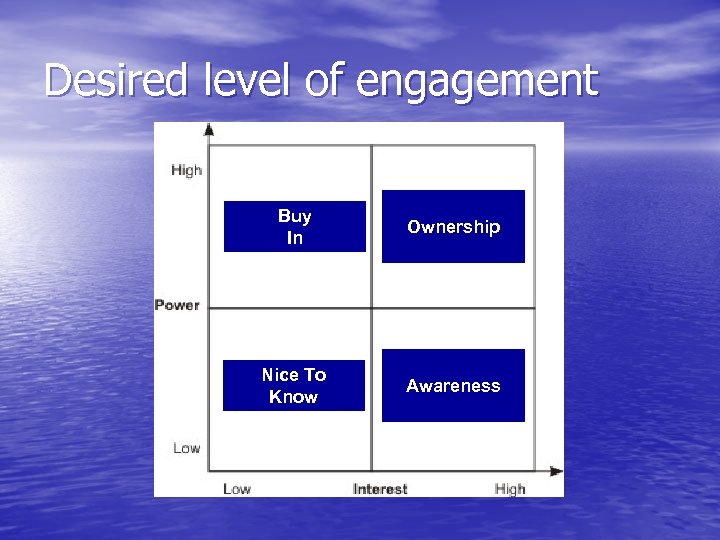
Desired level of engagement Buy In Ownership Nice To Know Awareness
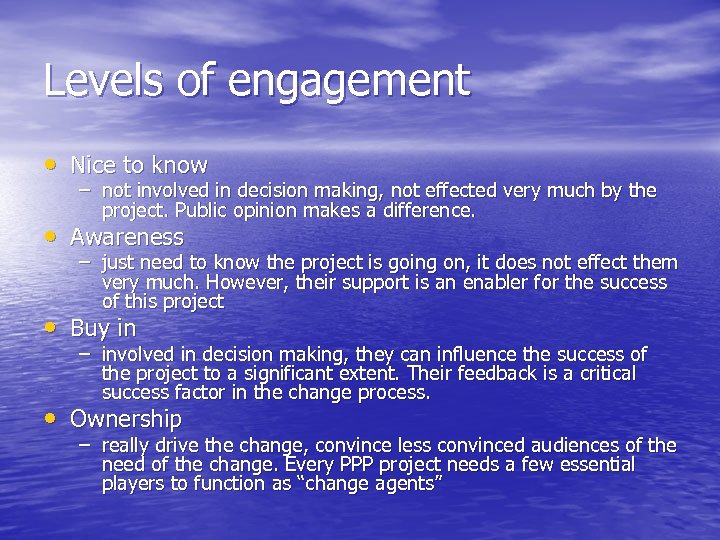
Levels of engagement • Nice to know – not involved in decision making, not effected very much by the project. Public opinion makes a difference. • Awareness – just need to know the project is going on, it does not effect them very much. However, their support is an enabler for the success of this project • Buy in – involved in decision making, they can influence the success of the project to a significant extent. Their feedback is a critical success factor in the change process. • Ownership – really drive the change, convince less convinced audiences of the need of the change. Every PPP project needs a few essential players to function as “change agents”
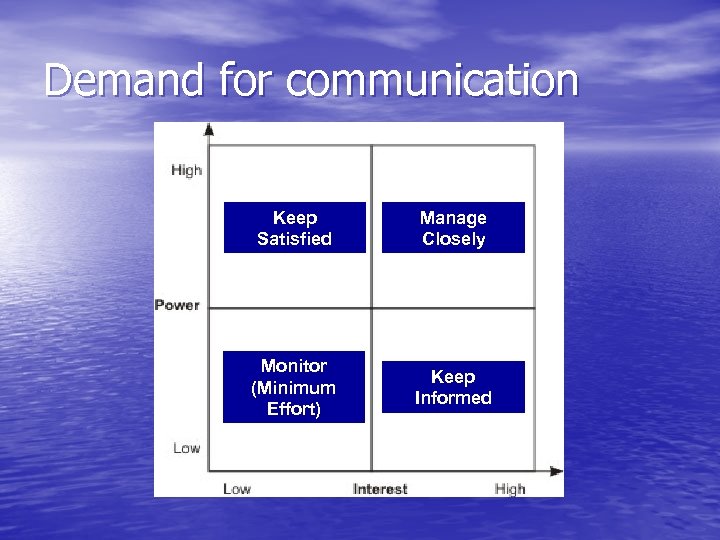
Demand for communication Keep Satisfied Manage Closely Monitor (Minimum Effort) Keep Informed
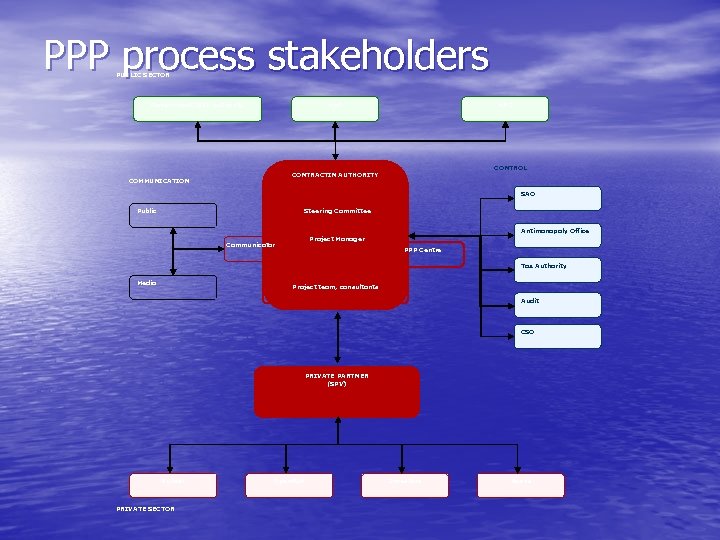
PPP process stakeholders PUBLIC SECTOR Government/SGU authority Mo. F MRD CONTROL CONTRACTIN AUTHORITY COMMUNICATION SAO Steering Committee Public Antimonopoly Office Project Manager Communicator PPP Centre Tax Authority Media Project team, consultants Audit CSO PRIVATE PARTNER (SPV) Builder PRIVATE SECTOR Operator Investors Banks
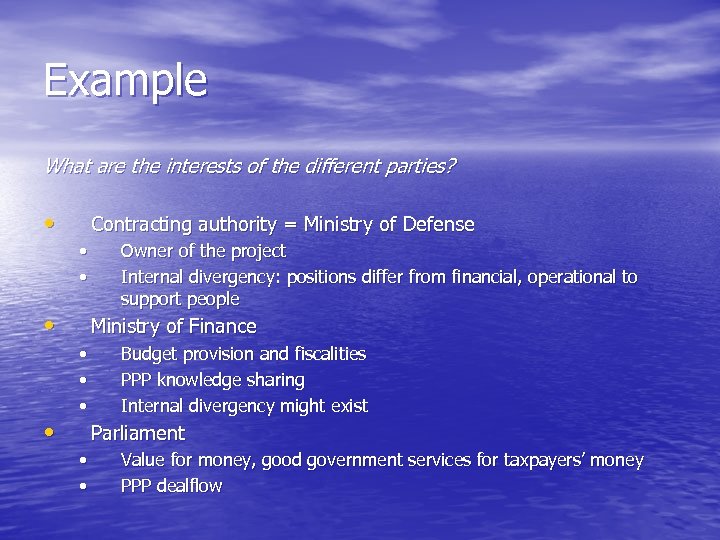
Example What are the interests of the different parties? • Contracting authority = Ministry of Defense • • Owner of the project Internal divergency: positions differ from financial, operational to support people Ministry of Finance • • • Budget provision and fiscalities PPP knowledge sharing Internal divergency might exist Parliament • • Value for money, good government services for taxpayers’ money PPP dealflow
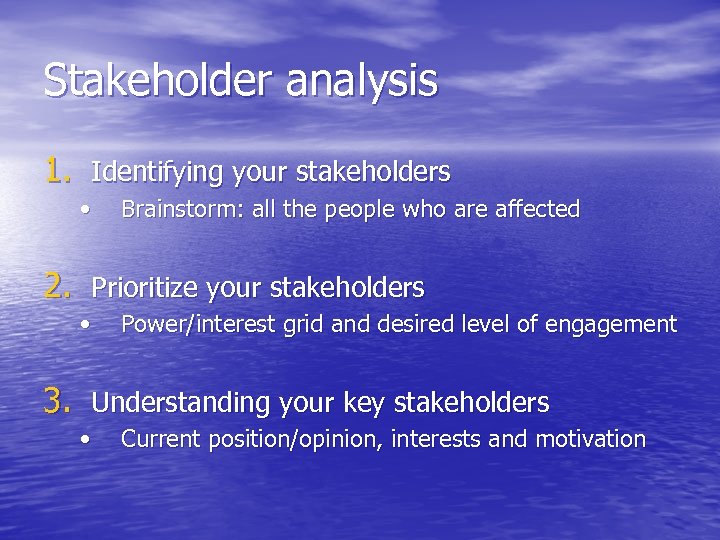
Stakeholder analysis 1. Identifying your stakeholders • Brainstorm: all the people who are affected 2. Prioritize your stakeholders • Power/interest grid and desired level of engagement 3. Understanding your key stakeholders • Current position/opinion, interests and motivation
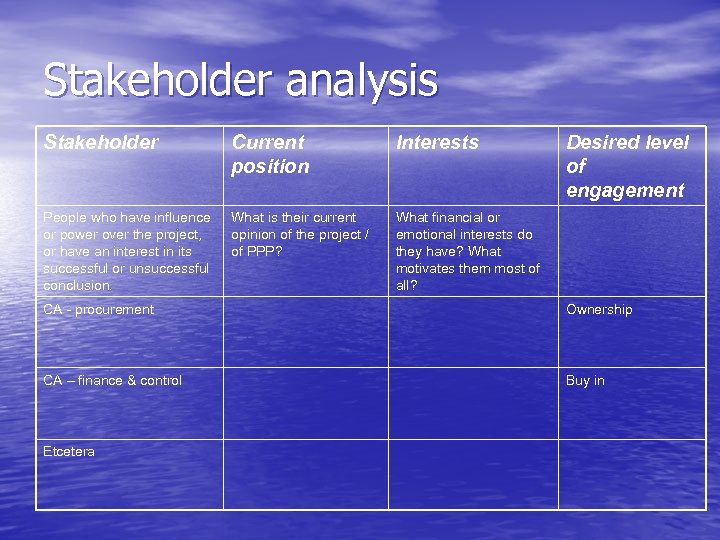
Stakeholder analysis Stakeholder Current position Interests People who have influence or power over the project, or have an interest in its successful or unsuccessful conclusion. What is their current opinion of the project / of PPP? Desired level of engagement What financial or emotional interests do they have? What motivates them most of all? CA - procurement Ownership CA – finance & control Buy in Etcetera
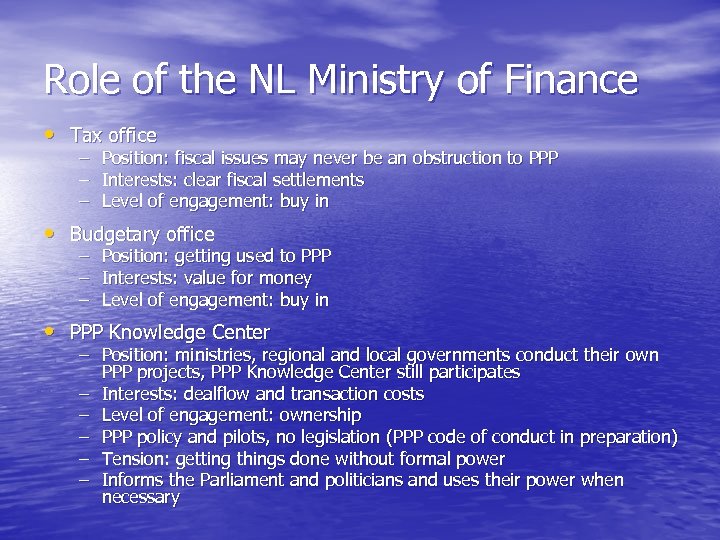
Role of the NL Ministry of Finance • Tax office – – – Position: fiscal issues may never be an obstruction to PPP Interests: clear fiscal settlements Level of engagement: buy in • Budgetary office – Position: getting used to PPP – Interests: value for money – Level of engagement: buy in • PPP Knowledge Center – Position: ministries, regional and local governments conduct their own PPP projects, PPP Knowledge Center still participates – Interests: dealflow and transaction costs – Level of engagement: ownership – PPP policy and pilots, no legislation (PPP code of conduct in preparation) – Tension: getting things done without formal power – Informs the Parliament and politicians and uses their power when necessary
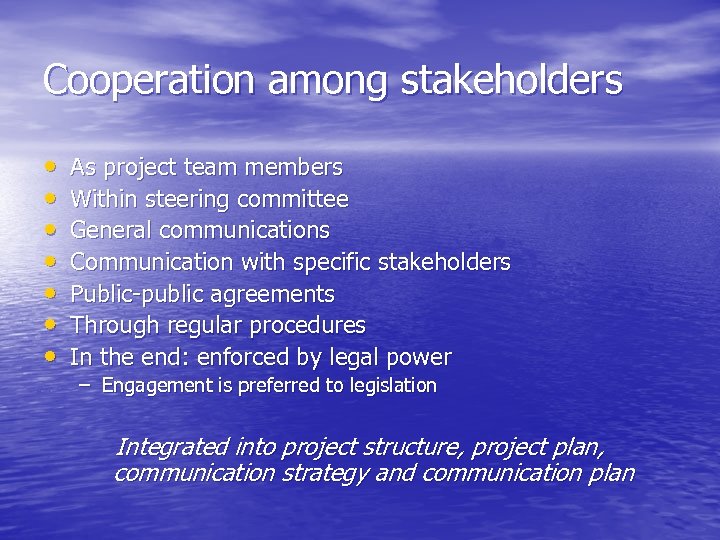
Cooperation among stakeholders • • As project team members Within steering committee General communications Communication with specific stakeholders Public-public agreements Through regular procedures In the end: enforced by legal power – Engagement is preferred to legislation Integrated into project structure, project plan, communication strategy and communication plan

Questions?
Скачать презентацию Cooperation among public parties Maarten Groothuis Review
60cb7a32d449a495bd2904ed89316b3a.ppt