


 Скачать презентацию Converging HIPAA Transaction Requirements Lowering the Cost of
d13bb22550afa0a3add95f9cd9303742.ppt
- Количество слайдов: 68
 Converging HIPAA Transaction Requirements Lowering the Cost of Implementation by Reducing Variability Kepa Zubeldia, M. D. Claredi
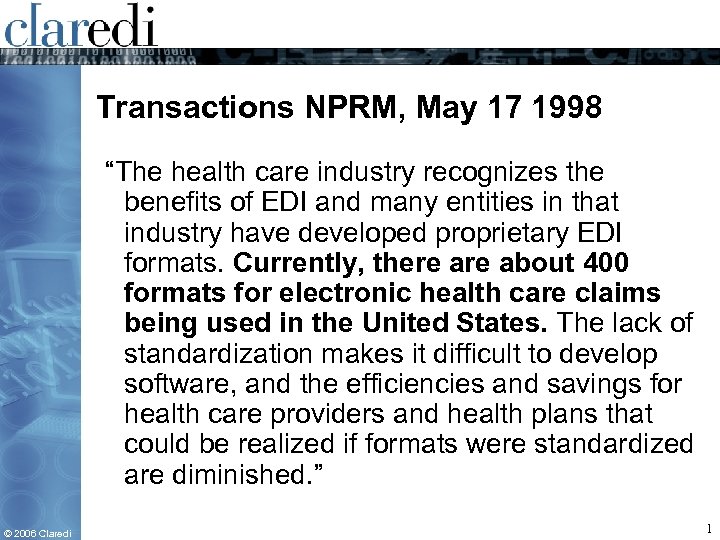 Transactions NPRM, May 17 1998 “The health care industry recognizes the benefits of EDI and many entities in that industry have developed proprietary EDI formats. Currently, there about 400 formats for electronic health care claims being used in the United States. The lack of standardization makes it difficult to develop software, and the efficiencies and savings for health care providers and health plans that could be realized if formats were standardized are diminished. ” © 2006 Claredi 1
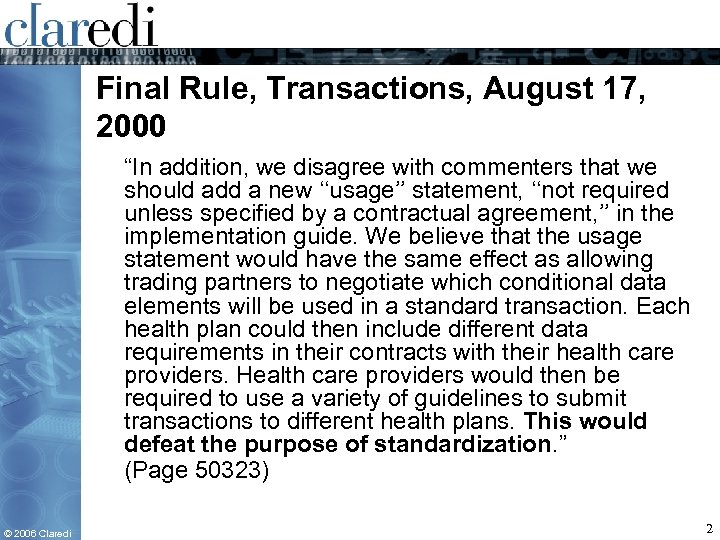 Final Rule, Transactions, August 17, 2000 “In addition, we disagree with commenters that we should add a new ‘‘usage’’ statement, ‘‘not required unless specified by a contractual agreement, ’’ in the implementation guide. We believe that the usage statement would have the same effect as allowing trading partners to negotiate which conditional data elements will be used in a standard transaction. Each health plan could then include different data requirements in their contracts with their health care providers. Health care providers would then be required to use a variety of guidelines to submit transactions to different health plans. This would defeat the purpose of standardization. ” (Page 50323) © 2006 Claredi 2
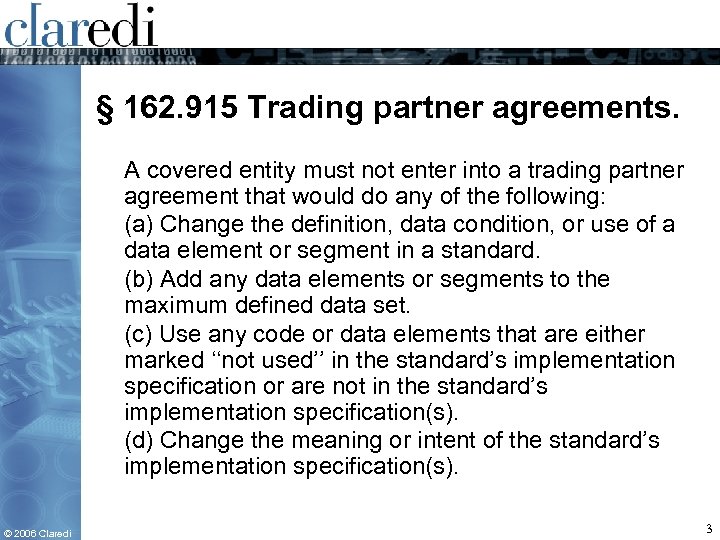 § 162. 915 Trading partner agreements. A covered entity must not enter into a trading partner agreement that would do any of the following: (a) Change the definition, data condition, or use of a data element or segment in a standard. (b) Add any data elements or segments to the maximum defined data set. (c) Use any code or data elements that are either marked ‘‘not used’’ in the standard’s implementation specification or are not in the standard’s implementation specification(s). (d) Change the meaning or intent of the standard’s implementation specification(s). © 2006 Claredi 3
 High expectations from HIPAA The HIPAA standard transactions will be acceptable to all covered entities (payers and clearinghouses) ◦ If a provider or clearinghouse sends a claim that meets the HIPAA Standard (IG) then the payer is required to accept it without imposing additional requirements. © 2006 Claredi 4
 The Reality Today There are many additional requirements imposed by the payers ◦ ◦ ◦ Contractual Other laws and regulations Telecommunications Implementation restrictions Data formatting requirements Data content requirements ◦ Most additional requirements are reasonable © 2006 Claredi 5
 Examples of Requirements • Used / not used segments and elements ◦ Functionality not yet implemented • Data formatting requirements ◦ No punctuation in names and addresses ◦ Maximum of xx bytes in provider names ◦ Dollar amounts must have trailing “. 00” • Data content requirements ◦ Anesthesia units or minutes ◦ Unique code set restrictions, payer-specific procedure modifiers, etc. ◦ Provider identifiers (may go away with NPI) ◦ Specific provider name spelling ☺ © 2006 Claredi 6
 Where are these requirements? • HIPAA “Companion Guides” and “Payer Sheets” • Provider Bulletins and Newsletters • Instructions for filing different types of claims ◦ DME, Anesthesia, Home Health, Ambulance, etc. • Joe’s head • Codified in legacy computer system • Does anybody know why we require this? © 2006 Claredi 7
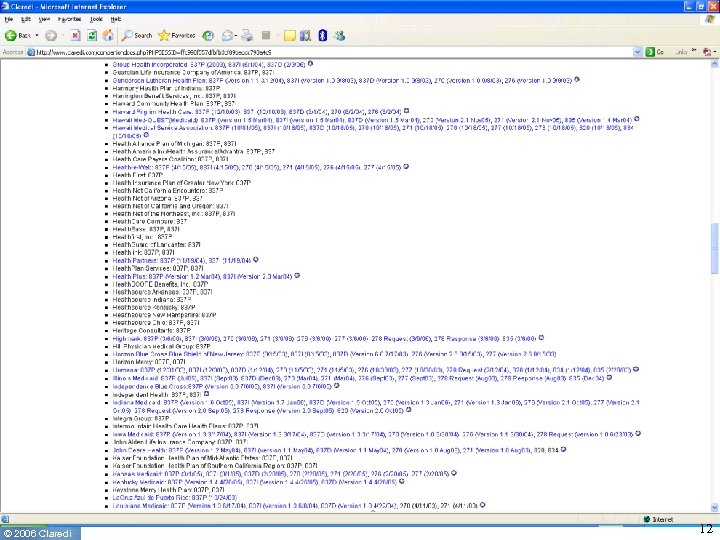
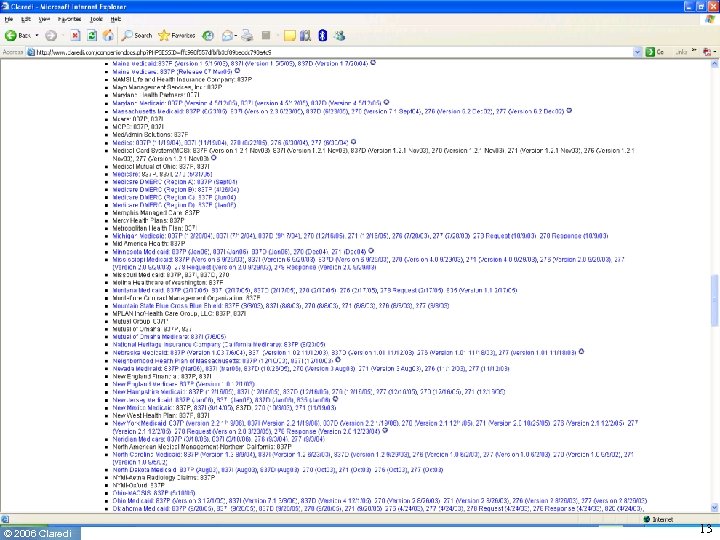
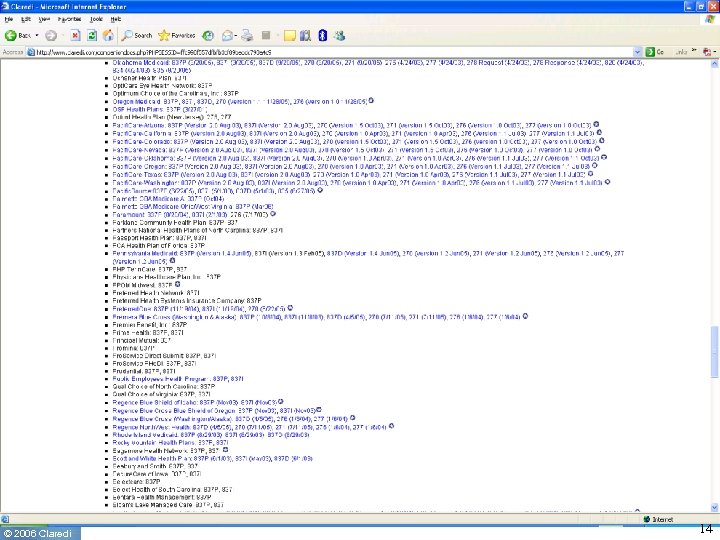
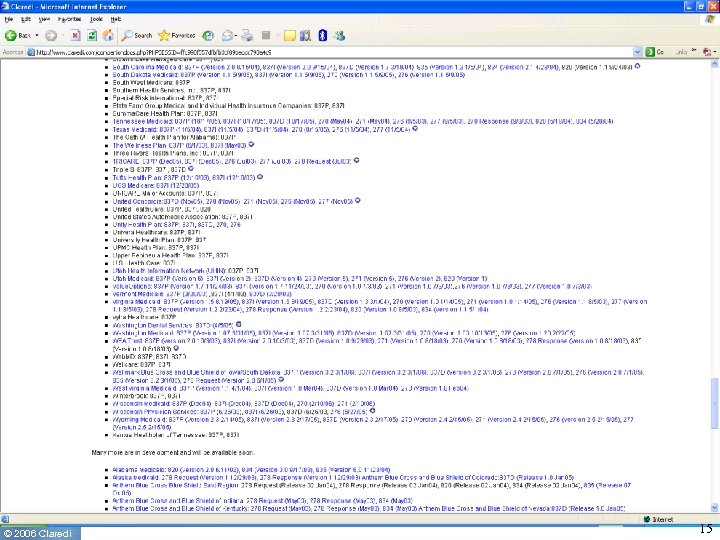
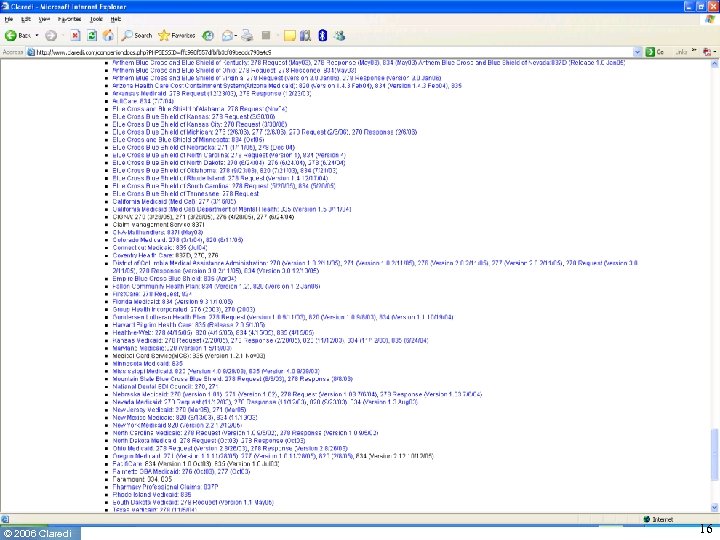
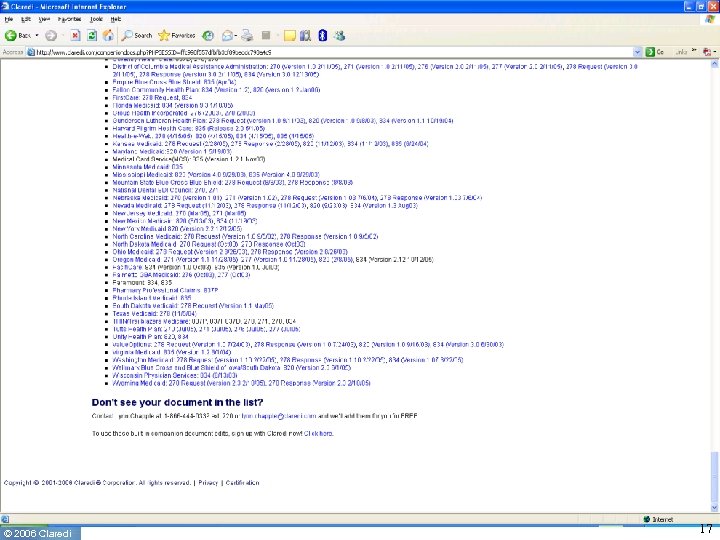
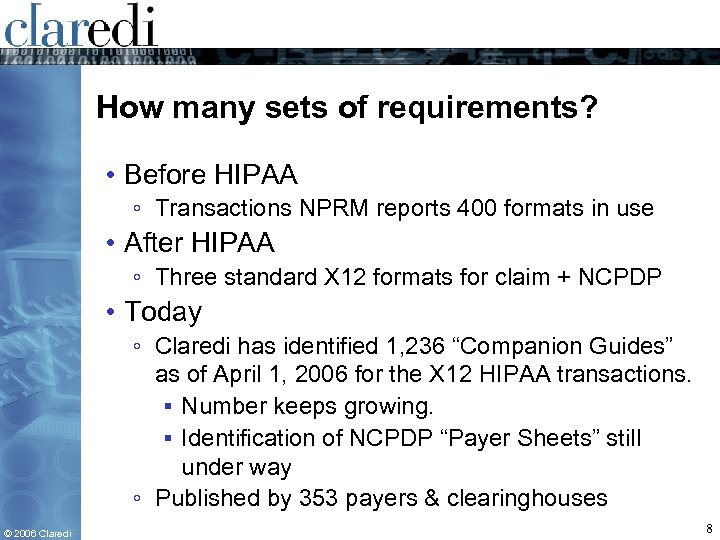 How many sets of requirements? • Before HIPAA ◦ Transactions NPRM reports 400 formats in use • After HIPAA ◦ Three standard X 12 formats for claim + NCPDP • Today ◦ Claredi has identified 1, 236 “Companion Guides” as of April 1, 2006 for the X 12 HIPAA transactions. ▪ Number keeps growing. ▪ Identification of NCPDP “Payer Sheets” still under way ◦ Published by 353 payers & clearinghouses © 2006 Claredi 8
 © 2006 Claredi 9
 © 2006 Claredi 10
 © 2006 Claredi 11
 © 2006 Claredi 12
 © 2006 Claredi 13
 © 2006 Claredi 14
 © 2006 Claredi 15
 © 2006 Claredi 16
 © 2006 Claredi 17
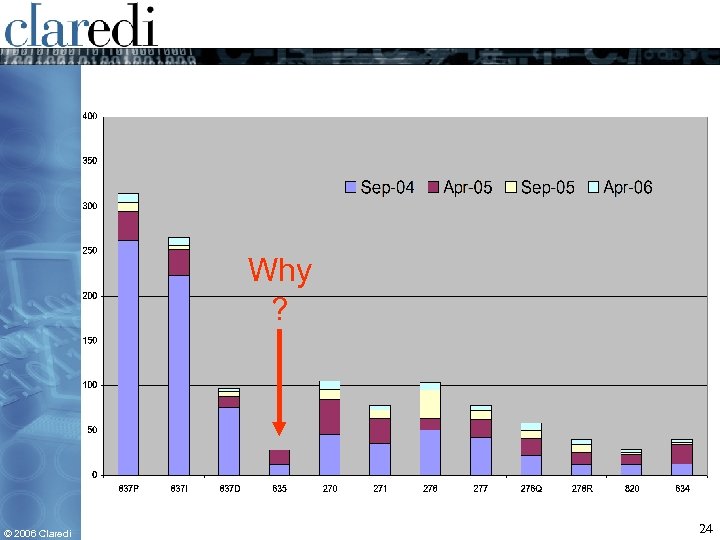
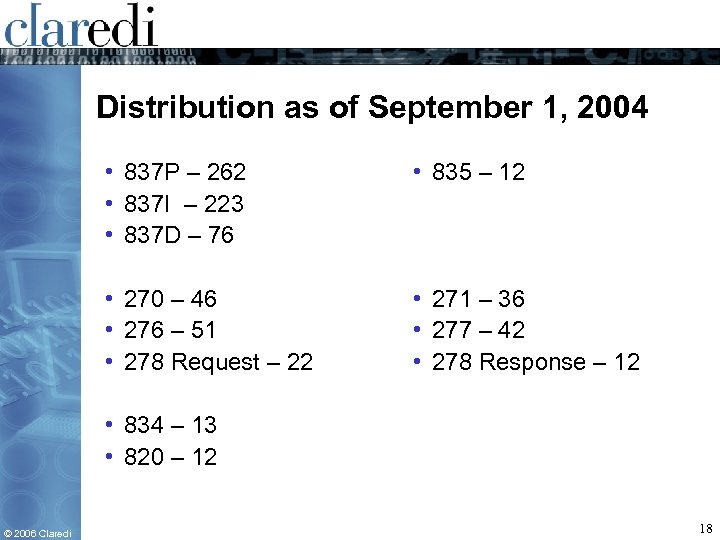 Distribution as of September 1, 2004 • 837 P – 262 • 837 I – 223 • 837 D – 76 • 835 – 12 • 270 – 46 • 276 – 51 • 278 Request – 22 • 271 – 36 • 277 – 42 • 278 Response – 12 • 834 – 13 • 820 – 12 © 2006 Claredi 18
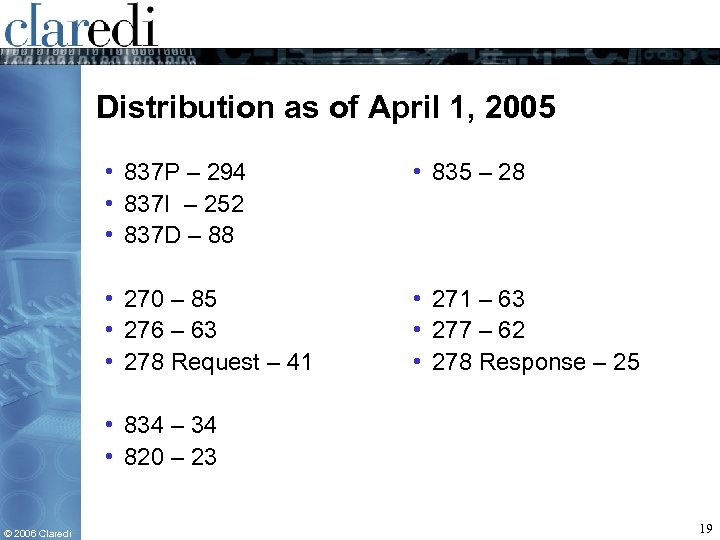 Distribution as of April 1, 2005 • 837 P – 294 • 837 I – 252 • 837 D – 88 • 835 – 28 • 270 – 85 • 276 – 63 • 278 Request – 41 • 271 – 63 • 277 – 62 • 278 Response – 25 • 834 – 34 • 820 – 23 © 2006 Claredi 19
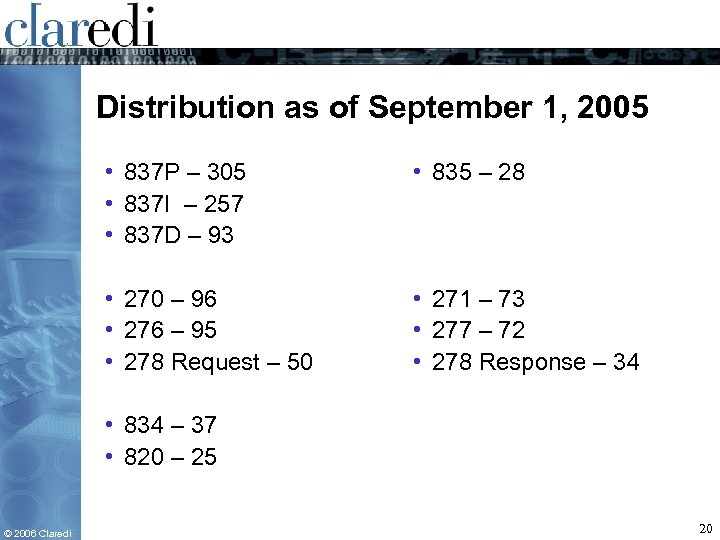 Distribution as of September 1, 2005 • 837 P – 305 • 837 I – 257 • 837 D – 93 • 835 – 28 • 270 – 96 • 276 – 95 • 278 Request – 50 • 271 – 73 • 277 – 72 • 278 Response – 34 • 834 – 37 • 820 – 25 © 2006 Claredi 20
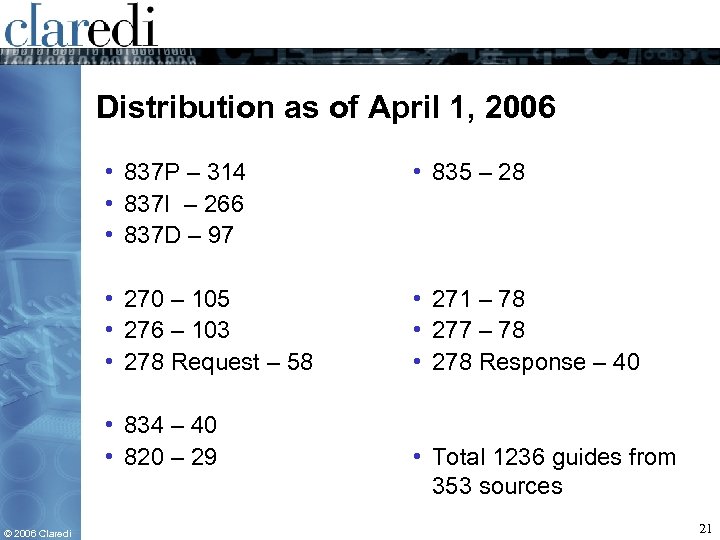 Distribution as of April 1, 2006 • 837 P – 314 • 837 I – 266 • 837 D – 97 • 835 – 28 • 270 – 105 • 276 – 103 • 278 Request – 58 • 271 – 78 • 277 – 78 • 278 Response – 40 • 834 – 40 • 820 – 29 © 2006 Claredi • Total 1236 guides from 353 sources 21
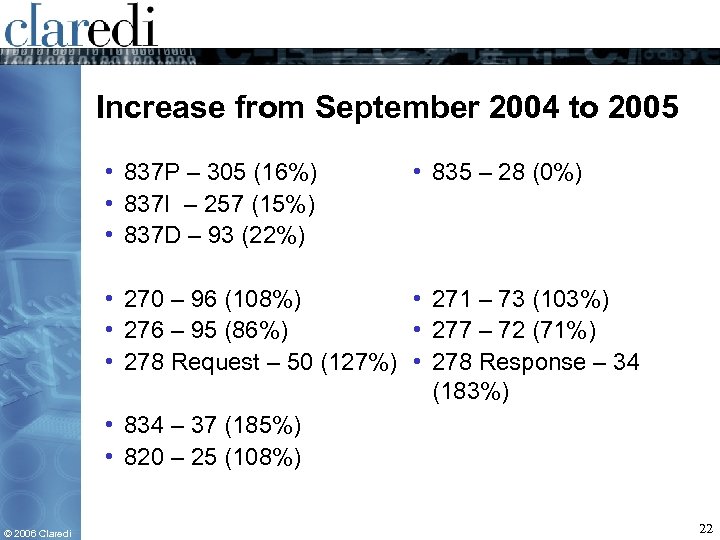 Increase from September 2004 to 2005 • 837 P – 305 (16%) • 837 I – 257 (15%) • 837 D – 93 (22%) • 835 – 28 (0%) • 270 – 96 (108%) • 271 – 73 (103%) • 276 – 95 (86%) • 277 – 72 (71%) • 278 Request – 50 (127%) • 278 Response – 34 (183%) • 834 – 37 (185%) • 820 – 25 (108%) © 2006 Claredi 22
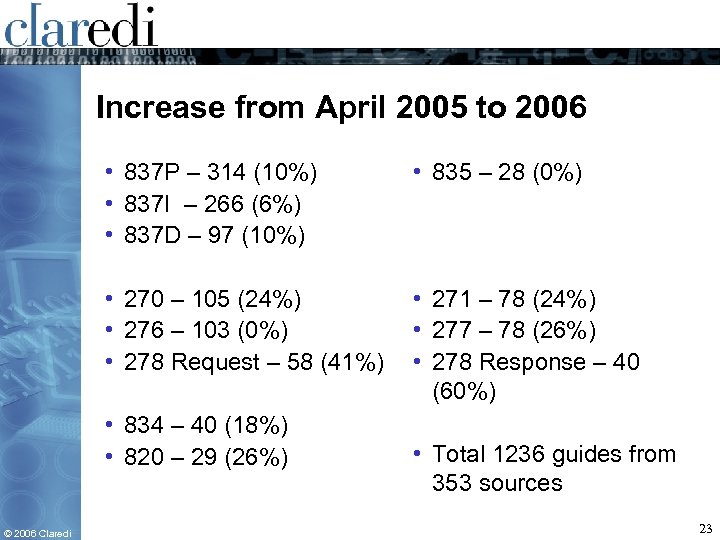 Increase from April 2005 to 2006 • 837 P – 314 (10%) • 837 I – 266 (6%) • 837 D – 97 (10%) • 835 – 28 (0%) • 270 – 105 (24%) • 276 – 103 (0%) • 278 Request – 58 (41%) • 271 – 78 (24%) • 277 – 78 (26%) • 278 Response – 40 (60%) • 834 – 40 (18%) • 820 – 29 (26%) © 2006 Claredi • Total 1236 guides from 353 sources 23
 Why ? © 2006 Claredi 24
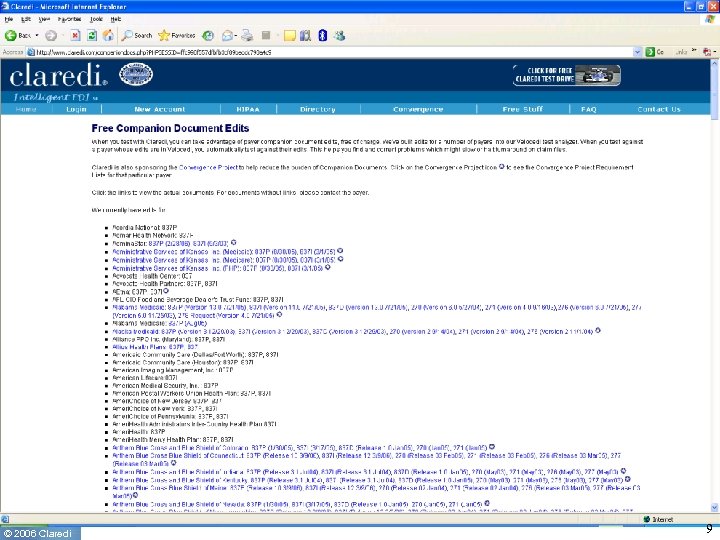
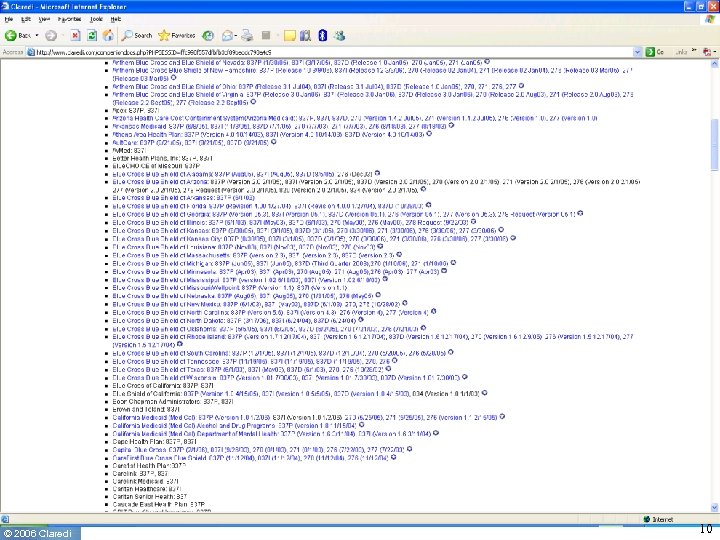
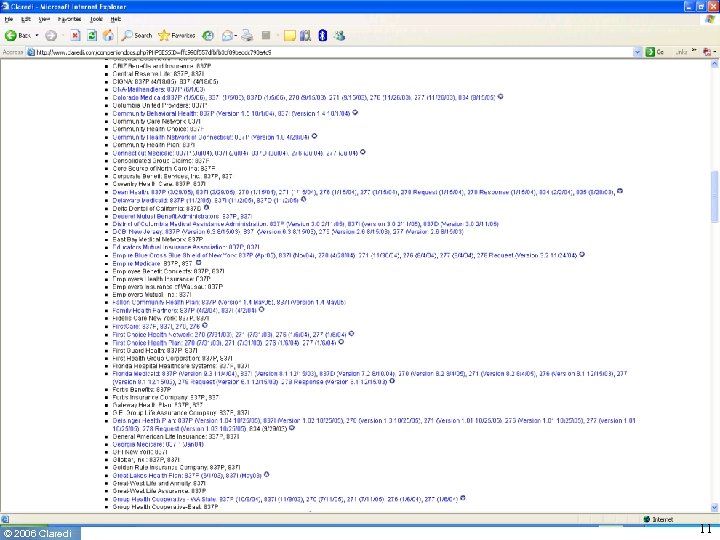
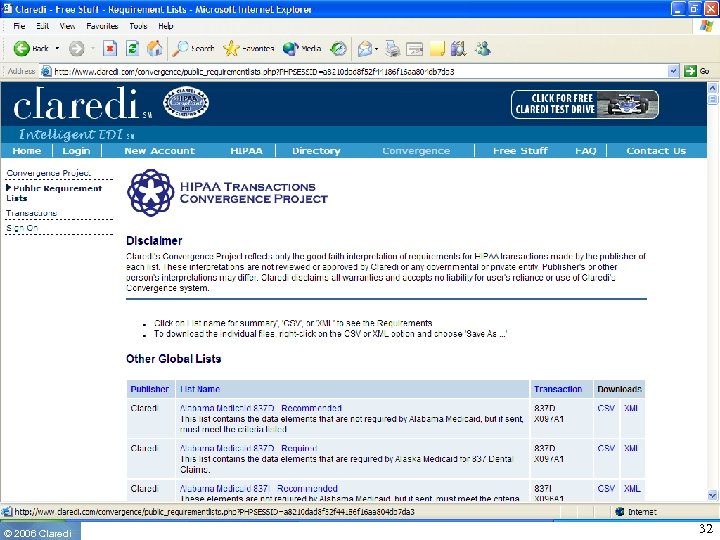
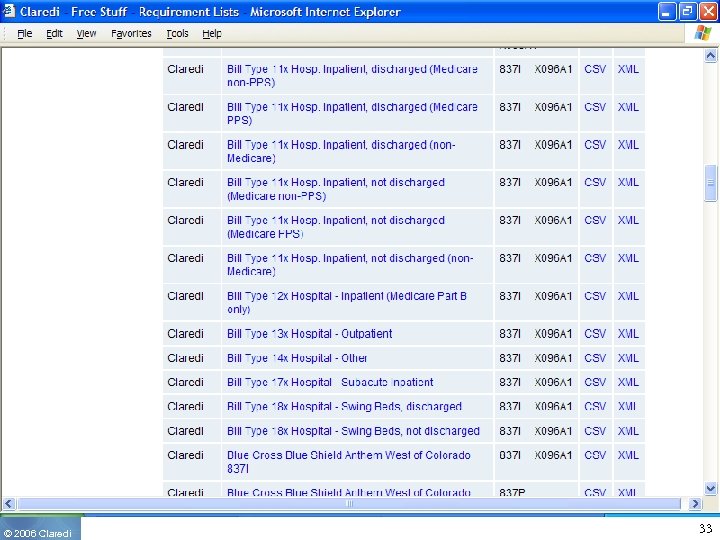
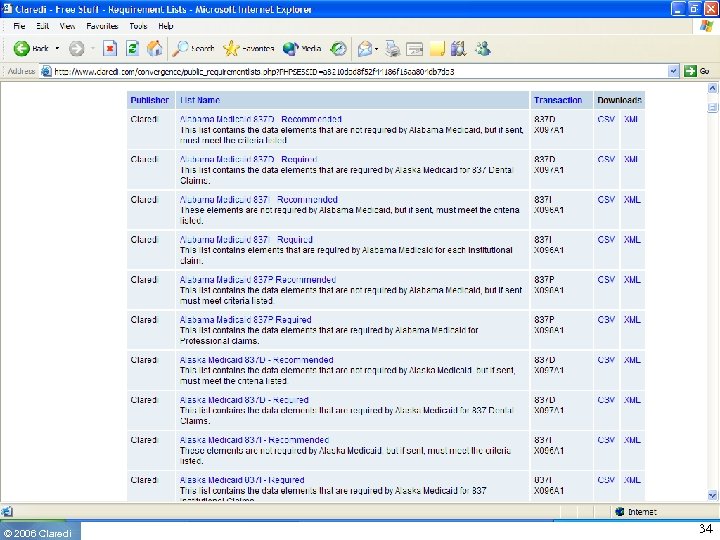
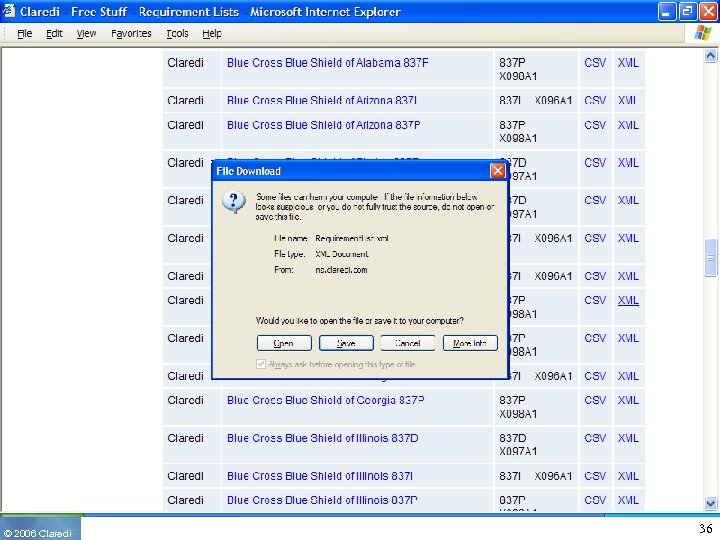
 Claredi’s Companion Guide Portal • Free resource on the Internet • Lists all the companion guides we have identified, with version number and date • Links to the guides themselves ◦ Only for guides available through the Internet (65%) ◦ Some guides are restricted distribution • Next tasks: ◦ NCPDP “Payer Sheets” ▪ NCPDP + ASAP + NACDS ◦ Claim Attachments “templates” ◦ CCR templates? © 2006 Claredi 25
 So… • How do we help in converging these requirements into common requirements? ◦ HIPAA Transactions Convergence Project ◦ CAQH Committee on Operating Rules for Information Exchange (CORE) ◦ The 835 Coalition © 2006 Claredi 26
 © 2006 Claredi 27
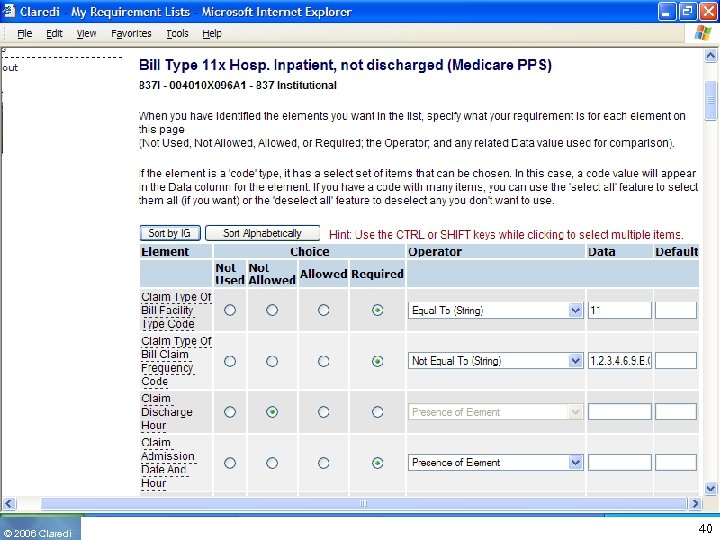
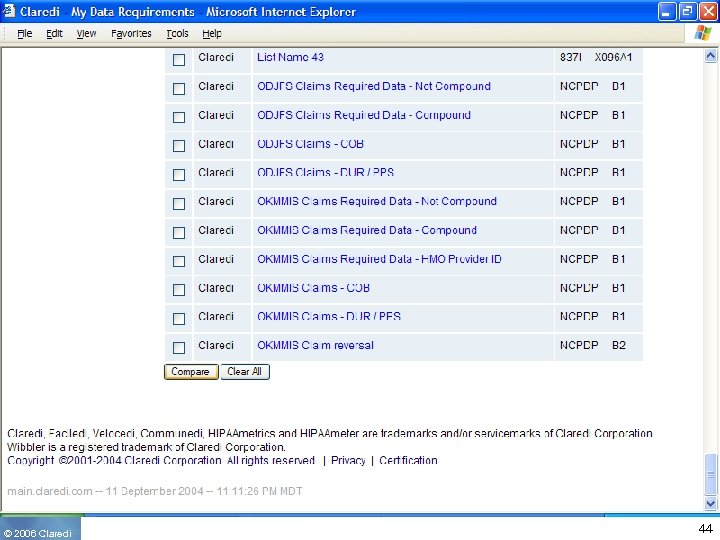
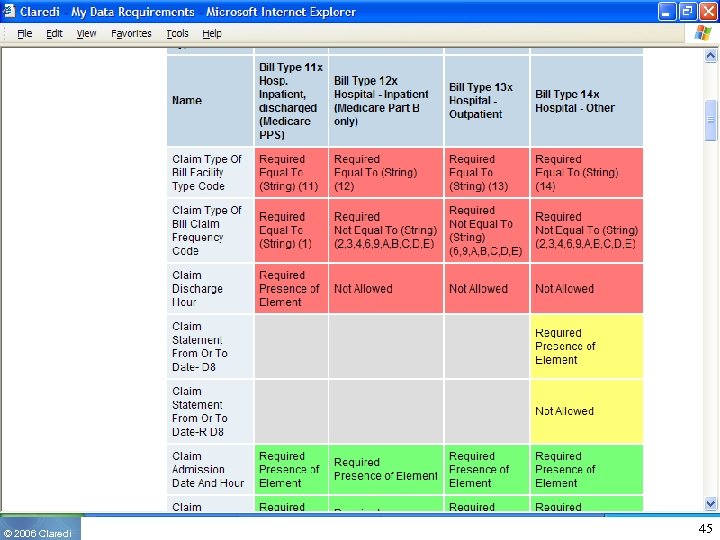
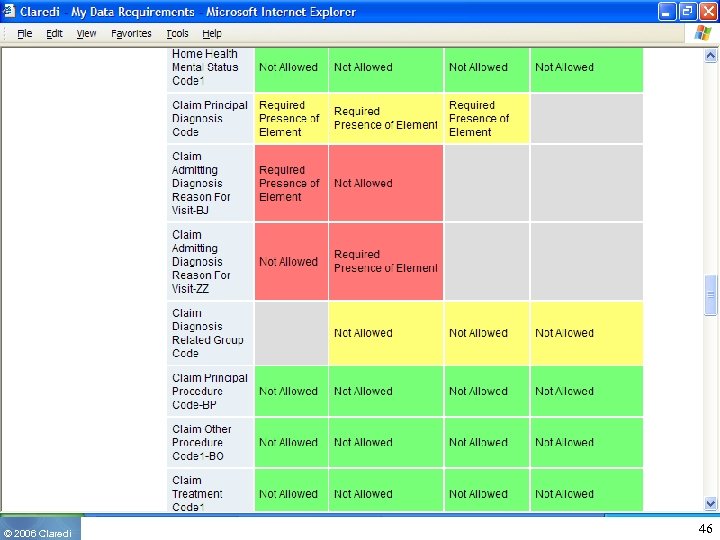
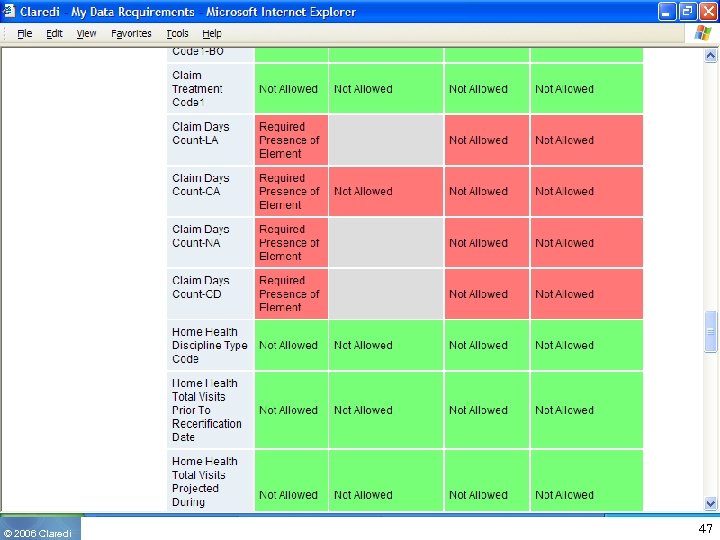
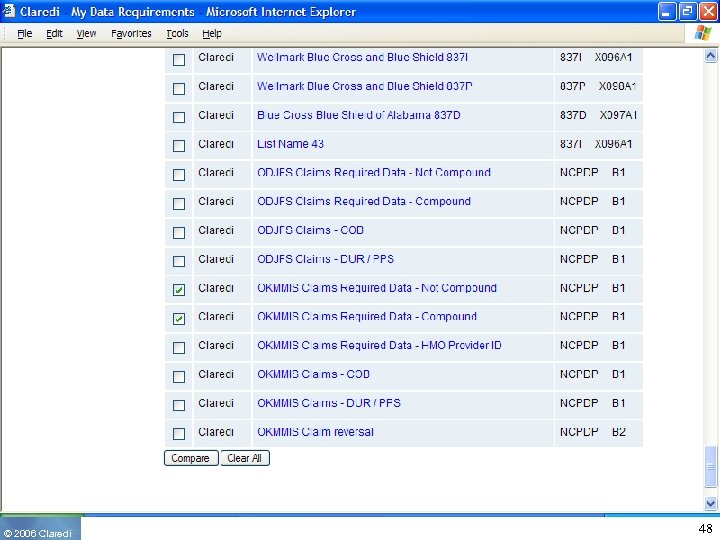
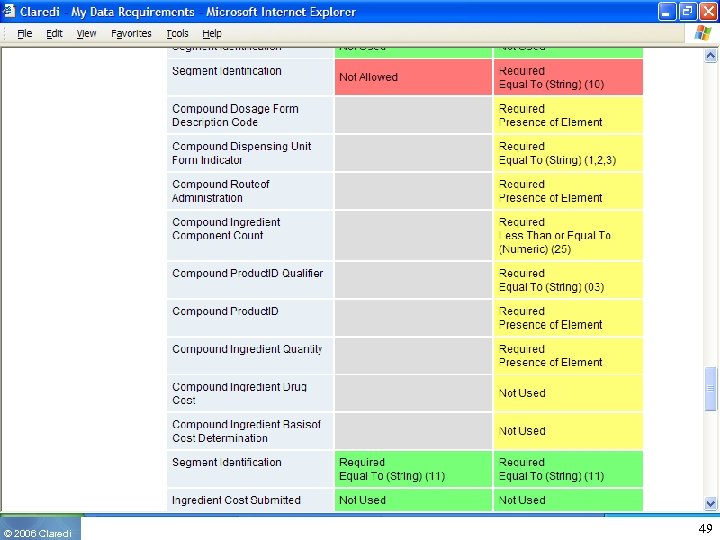
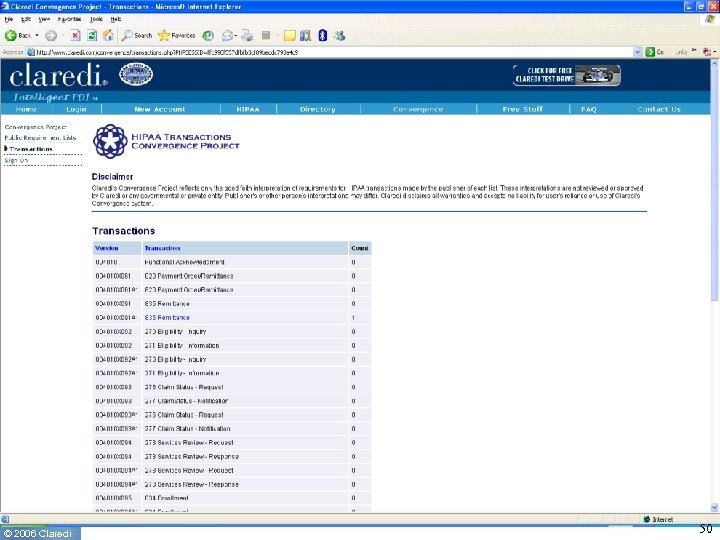
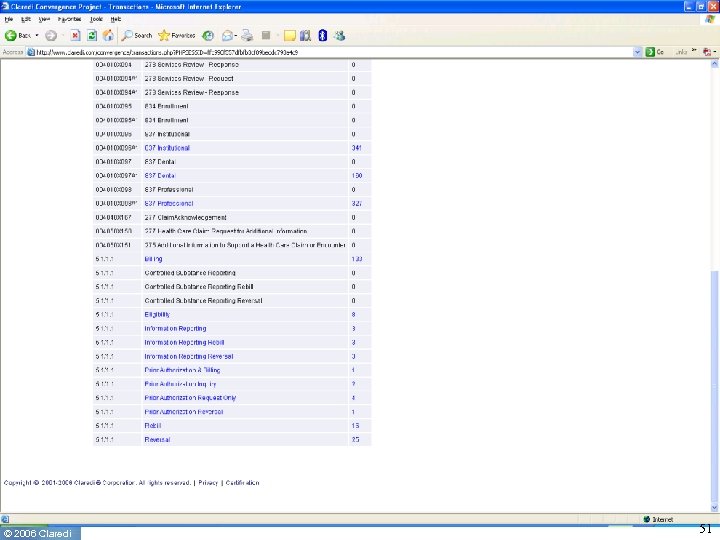
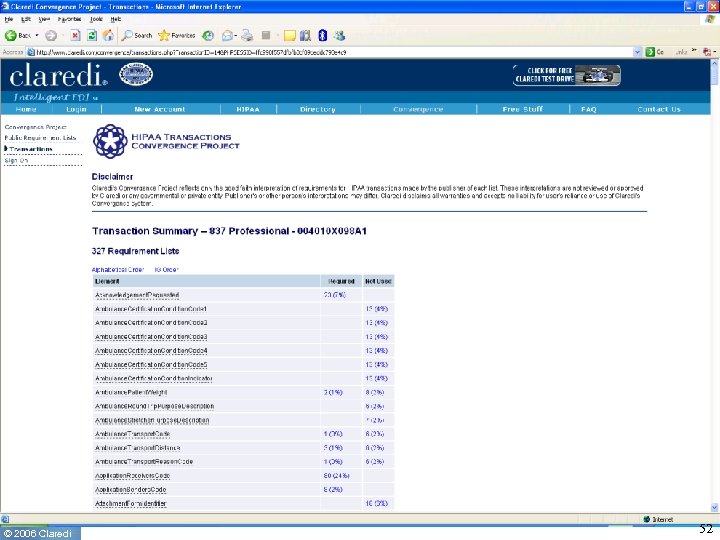
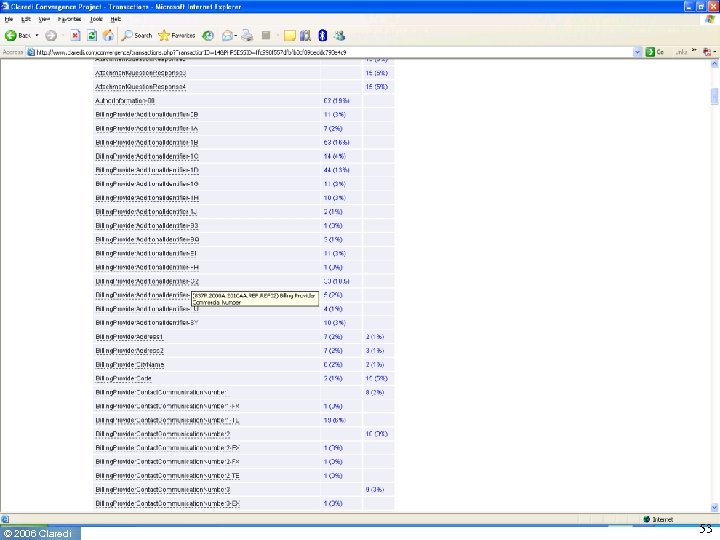
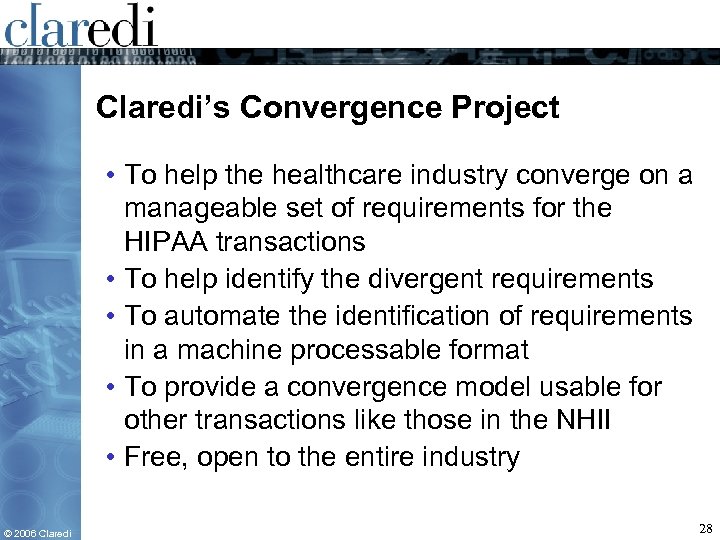 Claredi’s Convergence Project • To help the healthcare industry converge on a manageable set of requirements for the HIPAA transactions • To help identify the divergent requirements • To automate the identification of requirements in a machine processable format • To provide a convergence model usable for other transactions like those in the NHII • Free, open to the entire industry © 2006 Claredi 28
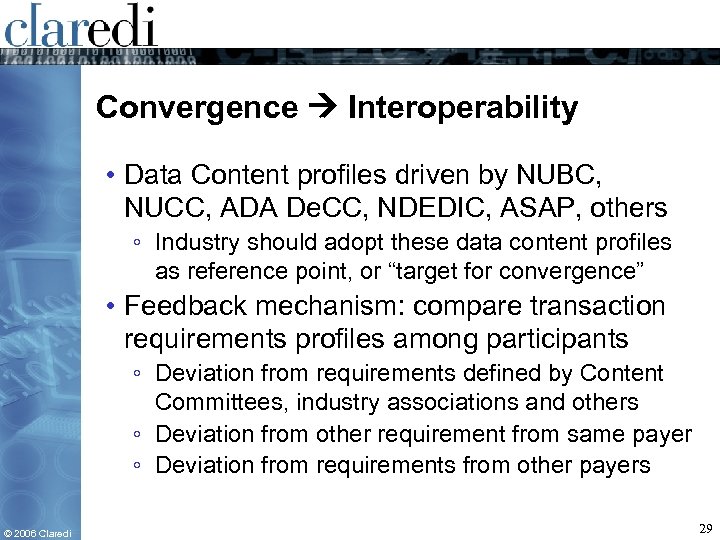 Convergence Interoperability • Data Content profiles driven by NUBC, NUCC, ADA De. CC, NDEDIC, ASAP, others ◦ Industry should adopt these data content profiles as reference point, or “target for convergence” • Feedback mechanism: compare transaction requirements profiles among participants ◦ Deviation from requirements defined by Content Committees, industry associations and others ◦ Deviation from other requirement from same payer ◦ Deviation from requirements from other payers © 2006 Claredi 29
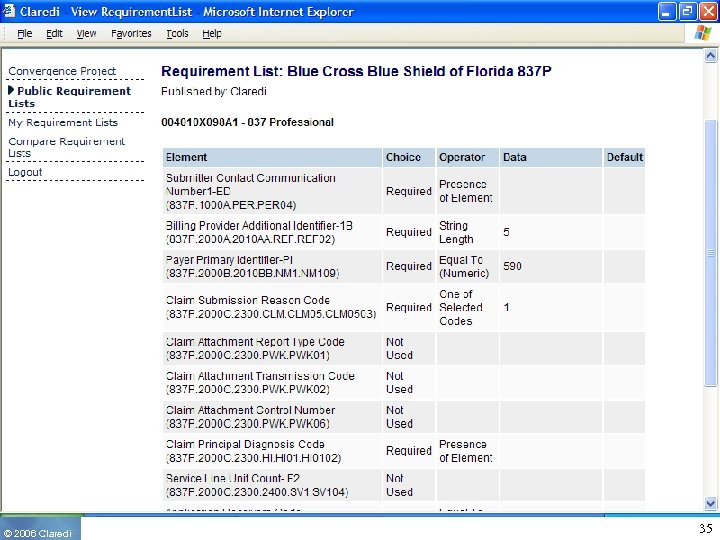
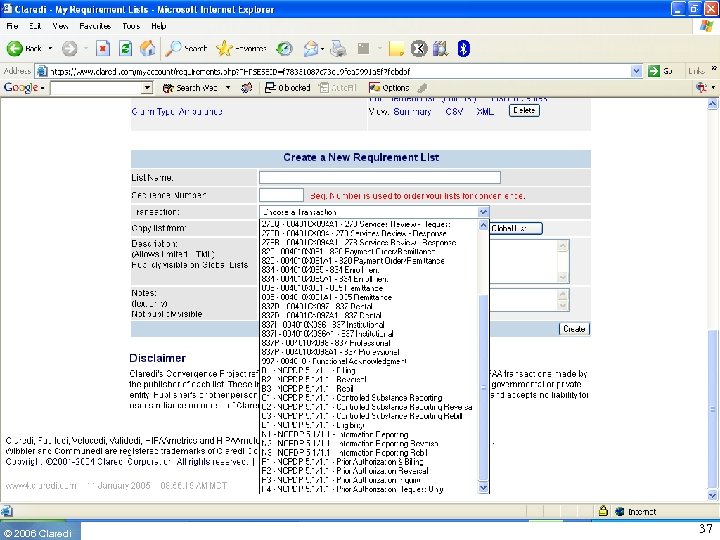
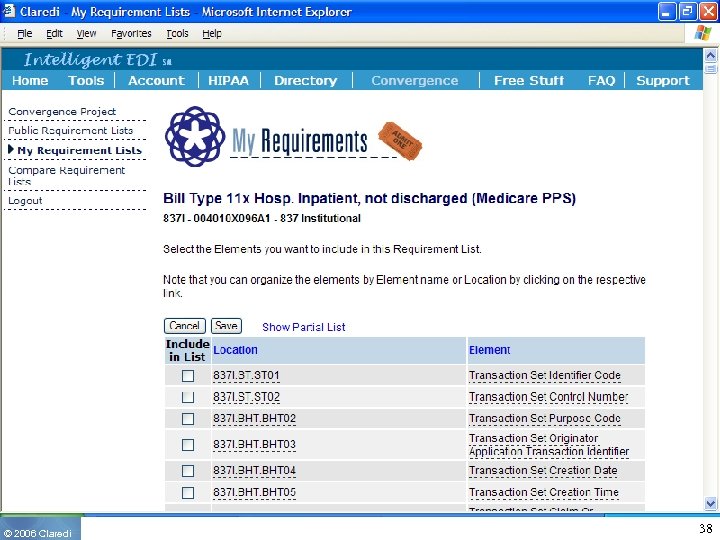
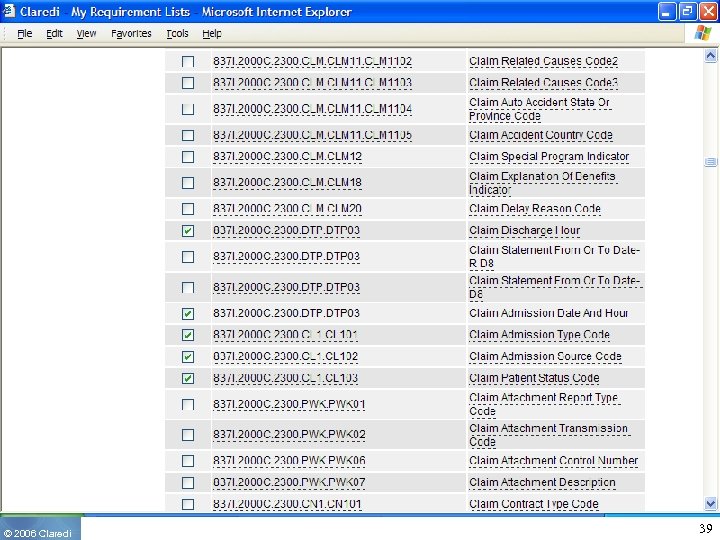
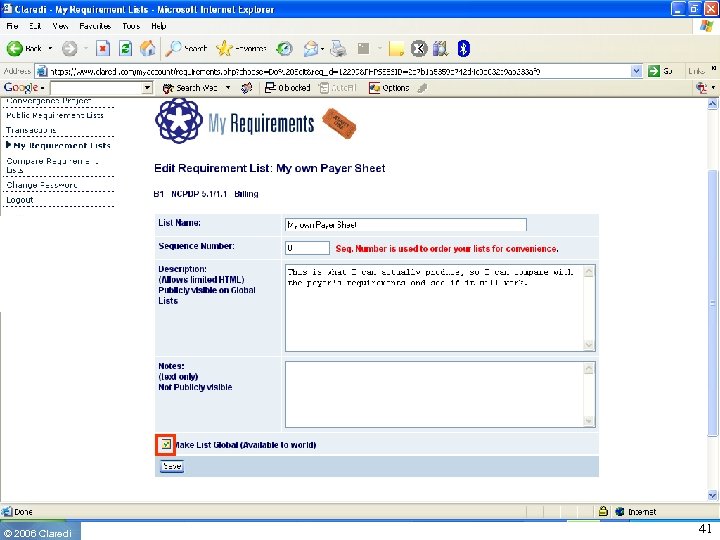
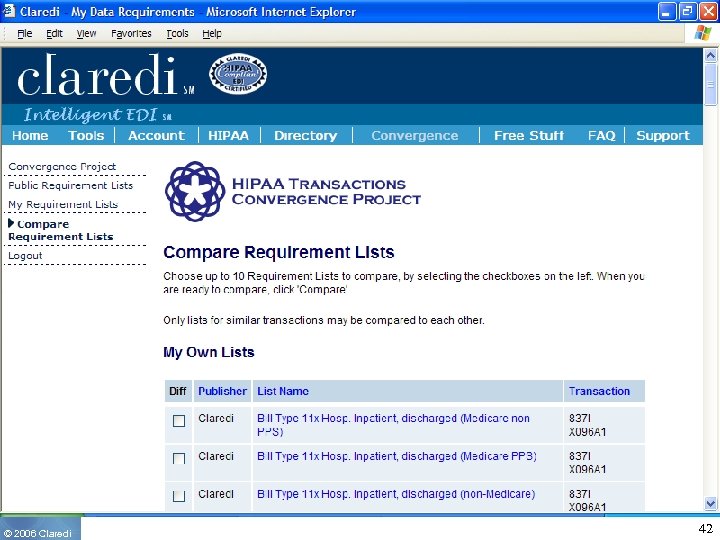
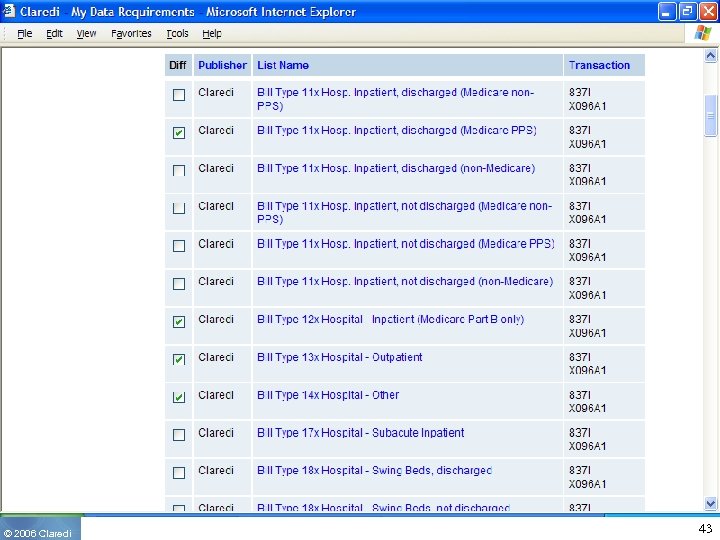
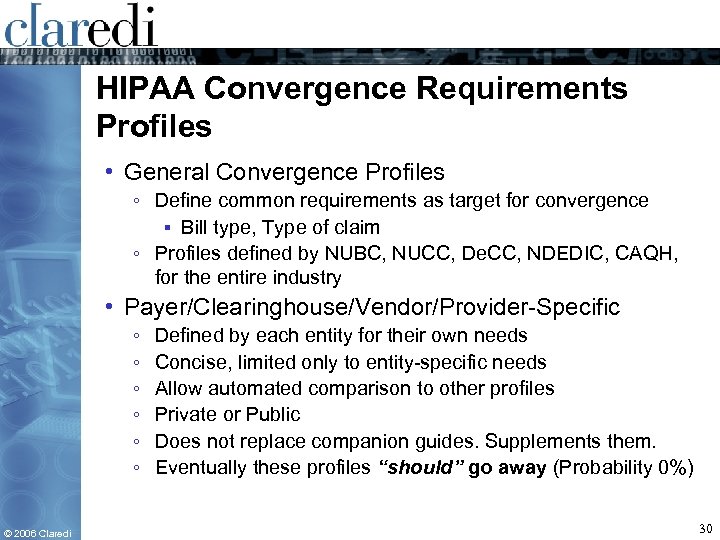 HIPAA Convergence Requirements Profiles • General Convergence Profiles ◦ Define common requirements as target for convergence ▪ Bill type, Type of claim ◦ Profiles defined by NUBC, NUCC, De. CC, NDEDIC, CAQH, for the entire industry • Payer/Clearinghouse/Vendor/Provider-Specific ◦ ◦ ◦ © 2006 Claredi Defined by each entity for their own needs Concise, limited only to entity-specific needs Allow automated comparison to other profiles Private or Public Does not replace companion guides. Supplements them. Eventually these profiles “should” go away (Probability 0%) 30
 © 2006 Claredi 31
 © 2006 Claredi 32
 © 2006 Claredi 33
 © 2006 Claredi 34
 © 2006 Claredi 35
 © 2006 Claredi 36
 © 2006 Claredi 37
 © 2006 Claredi 38
 © 2006 Claredi 39
 © 2006 Claredi 40
 © 2006 Claredi 41
 © 2006 Claredi 42
 © 2006 Claredi 43
 © 2006 Claredi 44
 © 2006 Claredi 45
 © 2006 Claredi 46
 © 2006 Claredi 47
 © 2006 Claredi 48
 © 2006 Claredi 49
 © 2006 Claredi 50
 © 2006 Claredi 51
 © 2006 Claredi 52
 © 2006 Claredi 53
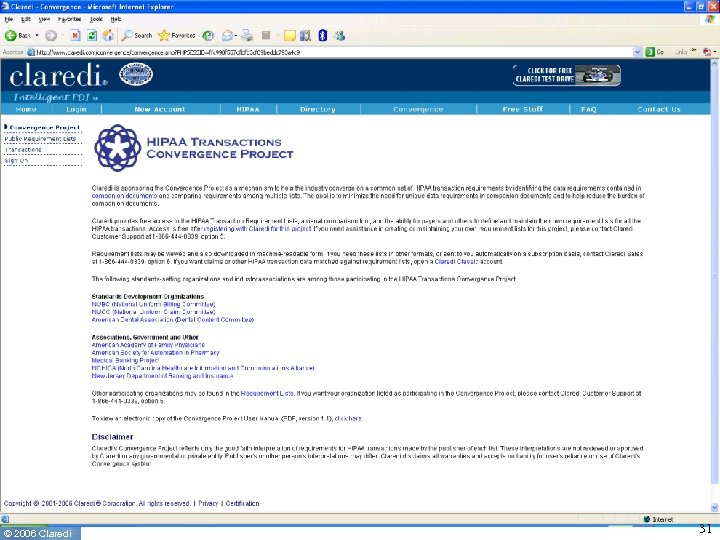
 Convergence Project Profiles • Will be published by NUBC, NUCC, ADA De. CC, NDEDIC and CAQH • HIPAA covered entities should publish their own specific data requirement profiles • Claredi provides the infrastructure ◦ Free ◦ Each publisher maintains its own profiles ◦ Claredi is entering an initial set of payer-specific profiles as part of our Companion Guide implementations, to seed the directory ▪ Over 1, 000 entered to date © 2006 Claredi 54
 The goal: Convergence • A single web portal where the companion guides can be referenced and the requirements can be published • Easy to read and understand data requirements profiles • Downloadable in machine readable format (XML, CSV) • Easy to compare data requirements among profiles • Does not replace Companion Guides • Ultimate goal is convergence of requirements ◦ Only lists that “should” remain are the NCPDP, CAQH, ADA De. CC, NUBC and NUCC-defined profiles (Probability 0%) • Free to the industry • Open invitation to participate to all interested parties ◦ 490 users as of April 1 st, 2006 © 2006 Claredi 55
 Other convergence related projects Why can’t verifying patient eligibility and benefits and other administrative data in provider offices be as easy as making an ATM withdrawal? • CAQH Committee on Operating Rules for Information Exchange (CORE) • More than 80 stakeholders ◦ Health plans, providers, vendors, CMS and others • Multi-phase initiative ◦ Gradually “raising the bar” to improve interoperability • Rachel Foerster & Gwen Lohse Presentation ◦ 5. 02 Yellowstone/Everglades Tuesday 2: 45 PM • http: //www. caqh. org/benefits. html © 2006 Claredi 56
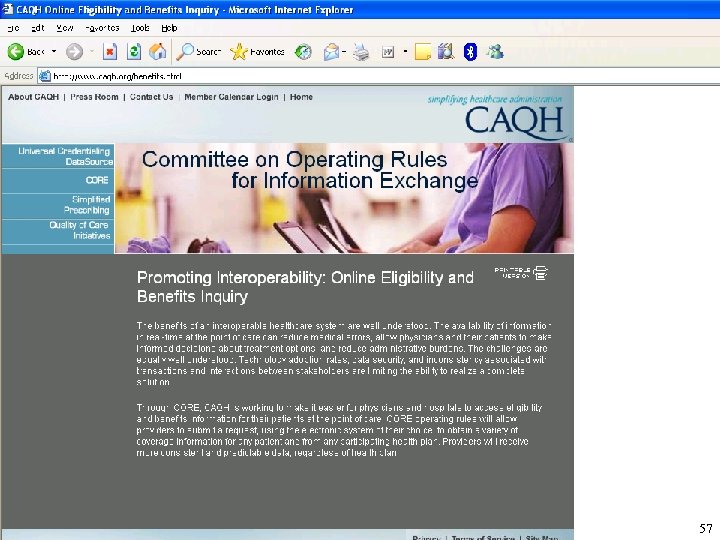 © 2006 Claredi 57
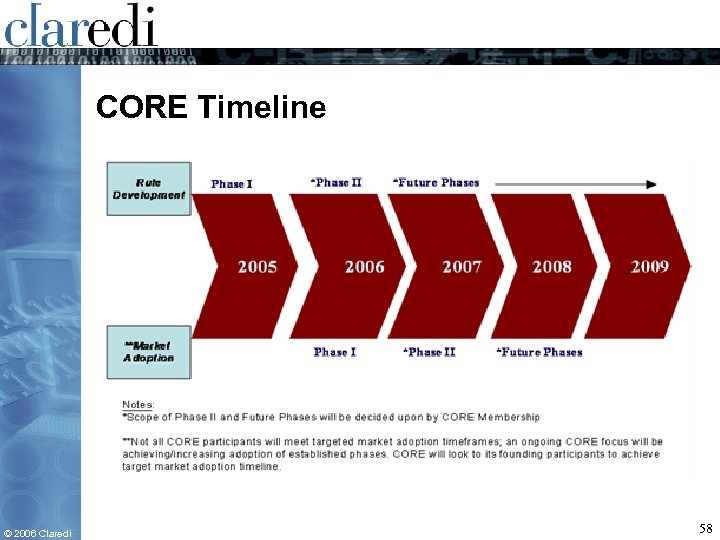 CORE Timeline © 2006 Claredi 58
 Phase One Operating Rules • Phase One will help providers: ◦ Determine which health plan covers the patient ◦ Determine patient benefit coverage ◦ Confirm coverage of certain service types and the patient’s co-pay amount, coinsurance level and base deductible levels (as defined in the member contract) for each of those types © 2006 Claredi 59
 Phase One Includes • System connectivity standards (HTTP/S) • Standardized inquiry acknowledgements • Maximum response times to inquiries (realtime and batch) • Minimum number of hours a system must be available to receive/respond to inquiries • A testing certification and enforcement process to ensure CORE compliance • Standardization of companion guide flow and formatting © 2006 Claredi 60
 CORE Certification • Use of the CORE rules/policies is voluntary and open to all organizations with an interest in administrative data exchange. • Organizations must sign a binding pledge to adopt, implement and comply with CORE Phase I rules. A CORE-authorized testing vendor must certify that their systems are CORE compliant within 180 days of signing the pledge. • CORE certification is tailored for providers, health plans, vendors and clearinghouses. Organizations that do not create, send or transmit data can sign the pledge and receive a CORE Endorser seal. © 2006 Claredi 61
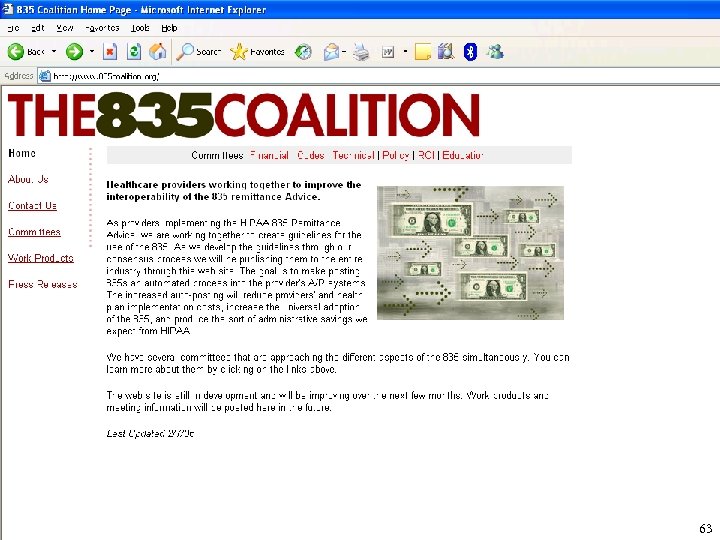
 Other convergence related projects • The 835 Coalition ◦ ◦ Provider Remittance Advice Initiative Launched in February of 2006 Providers, provider associations, vendors, banks Committees: ▪ Financial Issues ▪ Codes ▪ Technical ▪ Policy ▪ ROI ▪ Education ◦ Issues currently being addressed: Data content, balancing, adjustment reasons, payment remarks, corrections, reversals, etc. ◦ Web site: http: //www. 835 coalition. org/ © 2006 Claredi 62
 © 2006 Claredi 63
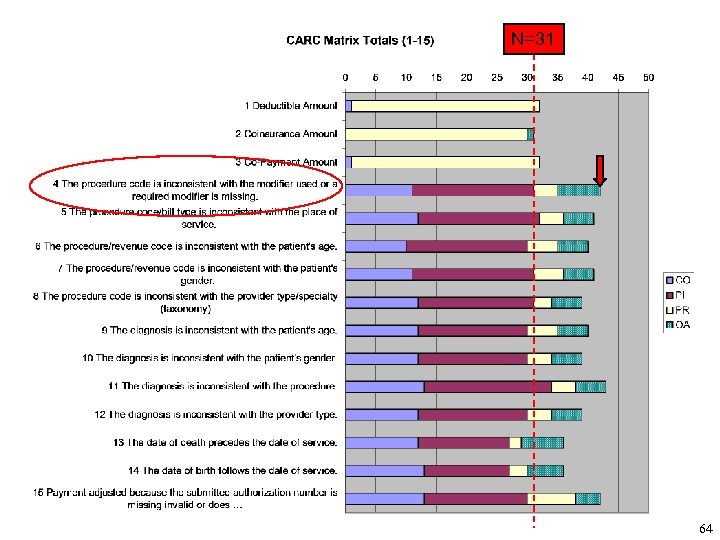 N=31 64
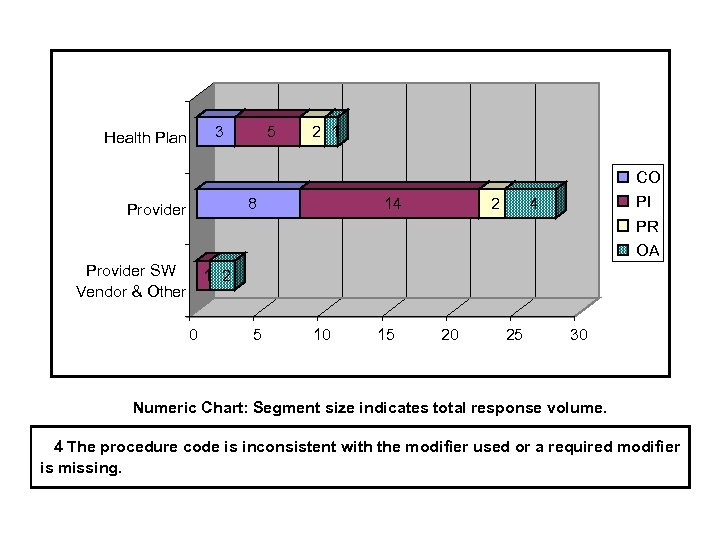 3 Health Plan 5 2 1 CO 8 Provider 14 2 PI 4 PR OA Provider SW 1 2 Vendor & Other 0 5 10 15 20 25 30 Numeric Chart: Segment size indicates total response volume. 4 The procedure code is inconsistent with the modifier used or a required modifier is missing.
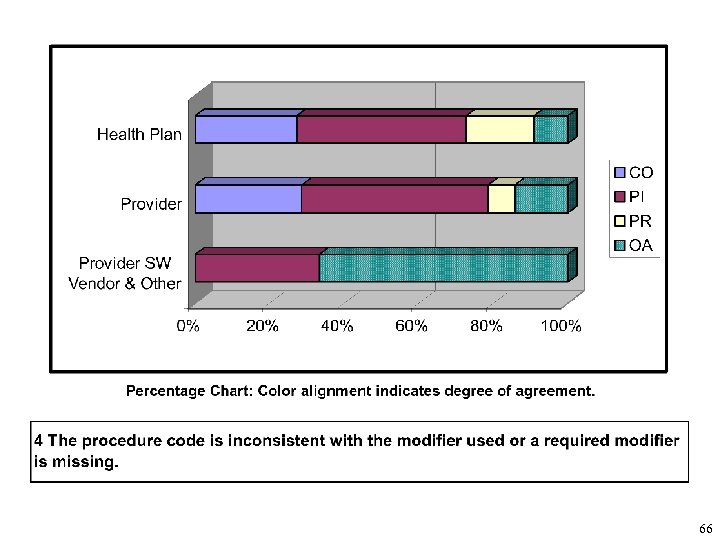 66
66
 Questions? • HIPAA Transactions Convergence Project ◦ http: //www. claredi. com/convergence • CAQH CORE ◦ http: //www. caqh. org/benefits. html • The 835 Coalition ◦ http: //www. 835 coalition. org/ © 2006 Claredi 67