


 Скачать презентацию Controlling chemical chaos Vilmos Gáspár Institute of Physical
539664ccc2a0c11613d737c195044df8.ppt
- Количество слайдов: 72
 Controlling chemical chaos Vilmos Gáspár Institute of Physical Chemistry University of Debrecen, Hungary Tutorial lecture at the ESF REACTOR workshop „Nonlinear phenomena in chemistry” Budapest, 24 -27 January, 2003
 This lecture is dedicated to the memory of Professor Endre Kőrös
 Chaos* “Chaos A rough, unordered mass of things” Ovid, “Metamorphoses” “What’s in a name? ” Shakespeare, “Romeo and Juliet” The answer is nothing and everything. Nothing because “A rose by any other name would smell as sweet. ” And yet, without a name Shakespeare would not have been able to write about that rose or distinguish it from other flowers that smell less pleasant. So also with chaos. *Ditto, W. L. ; Spano, M. L. Lindner, J. F. : Physica D, 1995, 86, 198.
 Chaos The dynamical phenomenon we call chaos has always existed, but until its naming we had no way to distinguishing it from other aspects of nature such as randomness, noise and order. chaos Math Stochastic behaviour occurring in a deterministic system. Royal Society, London, 1986 From this identification then came the recognition that chaos is pervasive in our word. Orbiting planets, weather patterns, mechanical systems (pendula), electronic circuits, laser emission, chemical reactions, human heart, brain, etc. all have been shown to exhibit chaos. Of these diverse systems, we have learned to control all of those that are on the smaller scale. Systems on a more universal scale (weather and planets) remain beyond our control.
 A simulation of the Milky Way/Andromeda Collision showing complex (chaotic) motion of heavenly bodies can be seen on the web page of John Dubinski Dept. of Astronomy and Astrophysics University of Toronto, CANADA http: //www. cita. utoronto. ca/~dubinski/movies/mwa 2001. mpg
 Outline • • • Chaotic dynamics of discrete systems the Henon map The idea of controlling chaos Fundamental equations for chaos control (ABC) OGY and SPF methods for chaos control Application of SPF method to chemical systems Other methods and perspectives - come to my poster
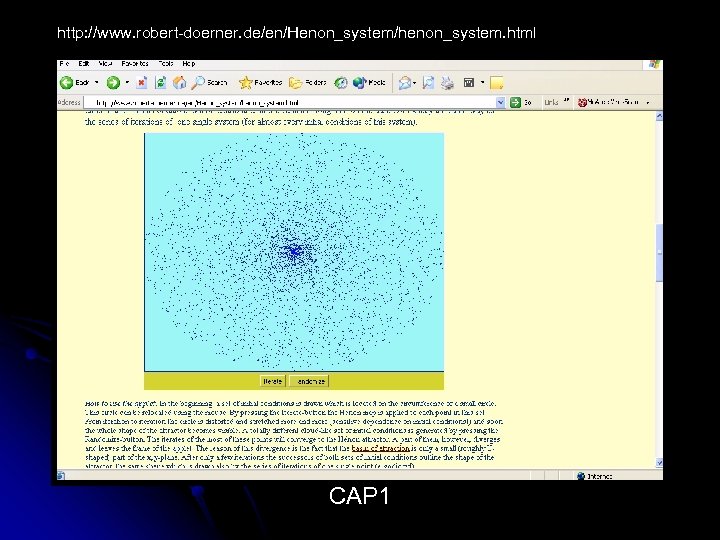
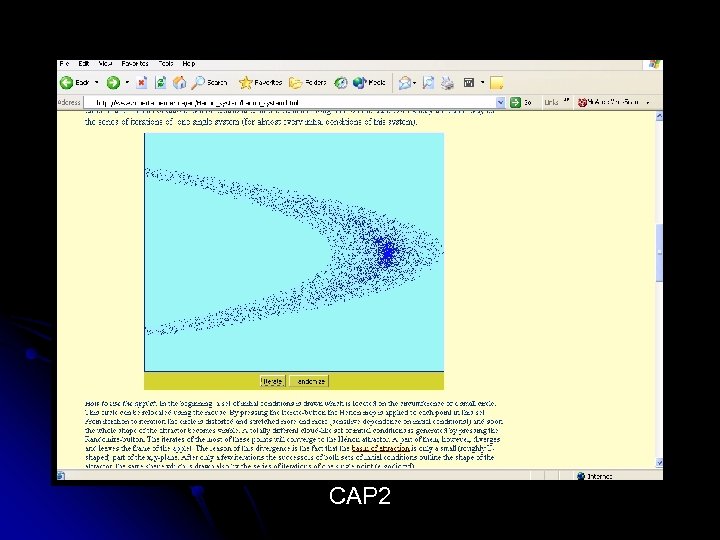
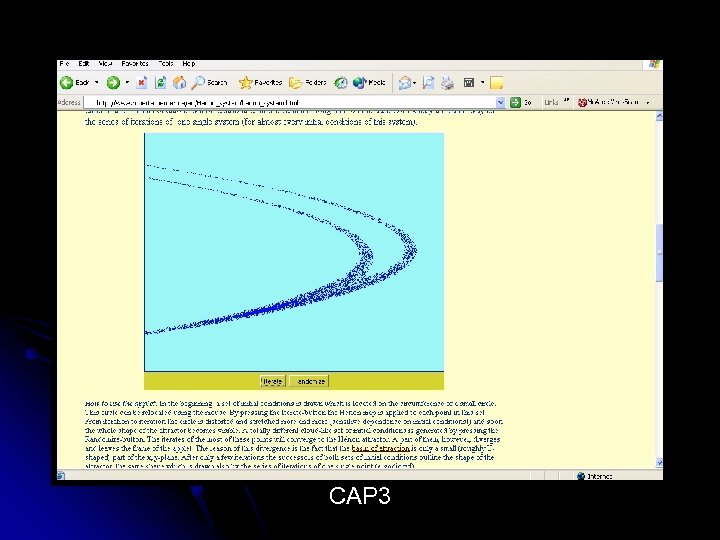
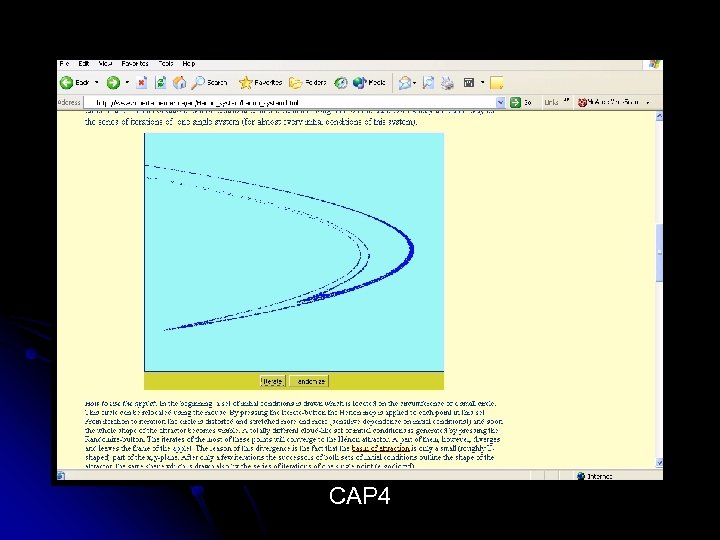
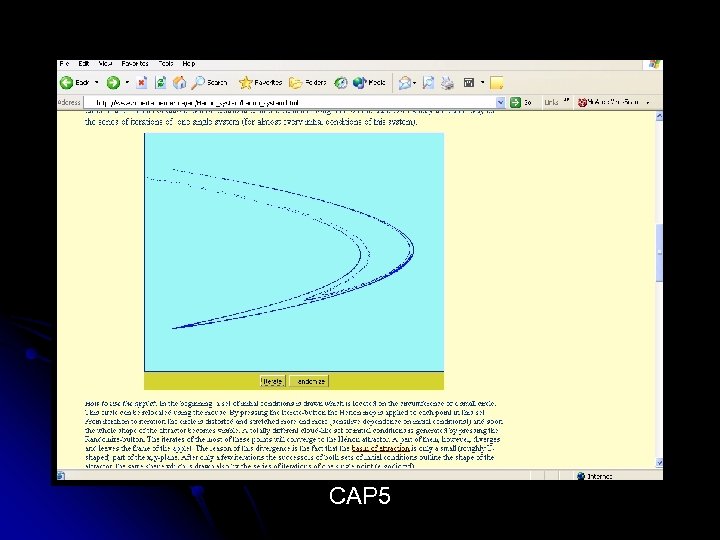
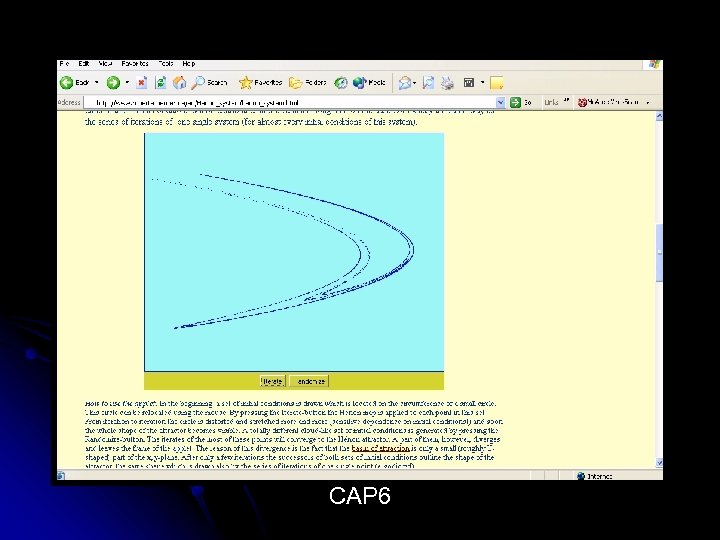
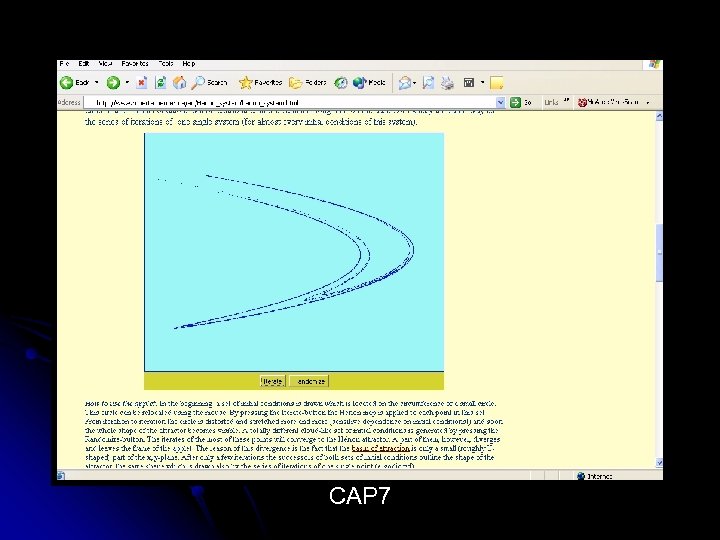
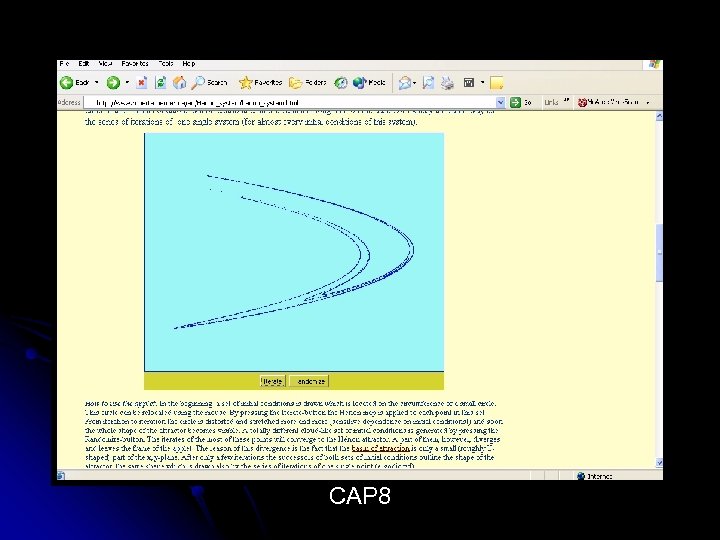
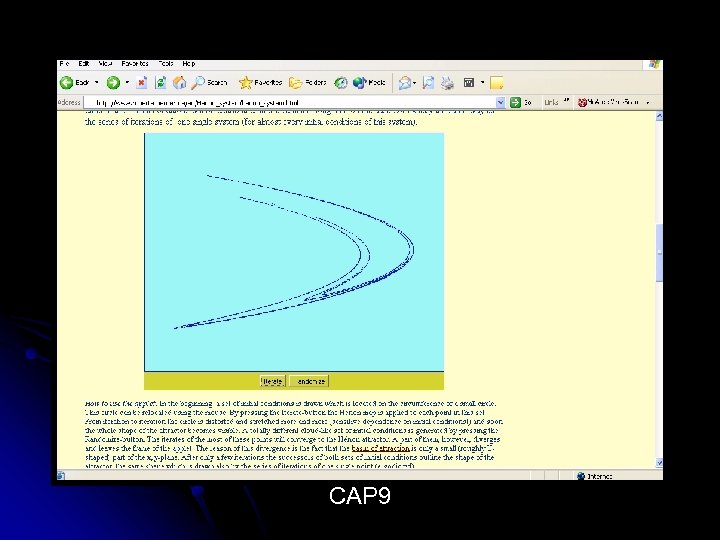
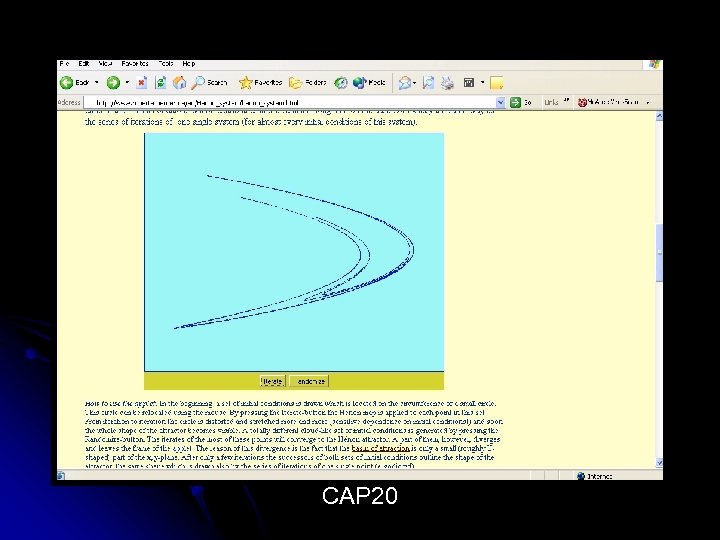
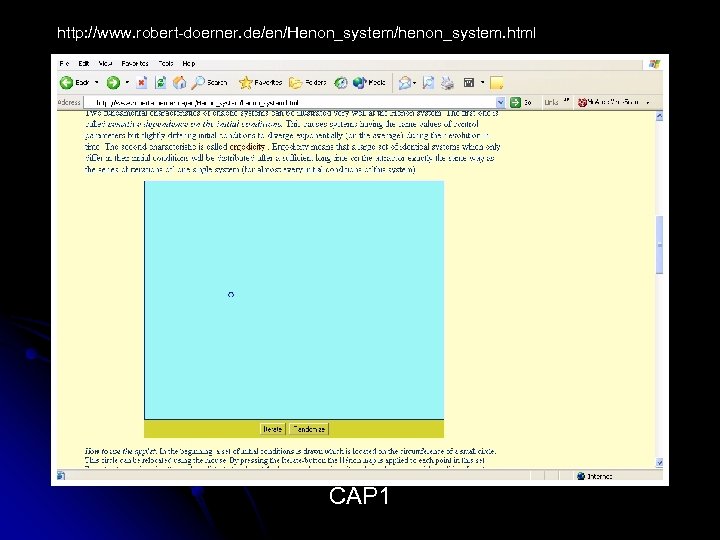
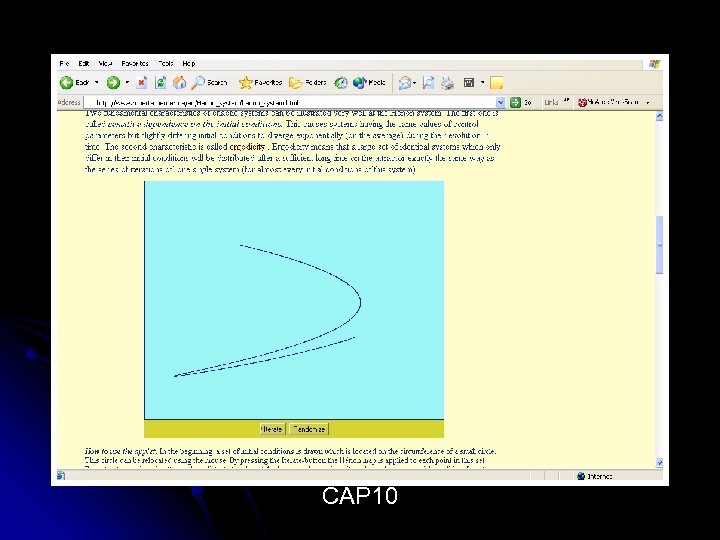
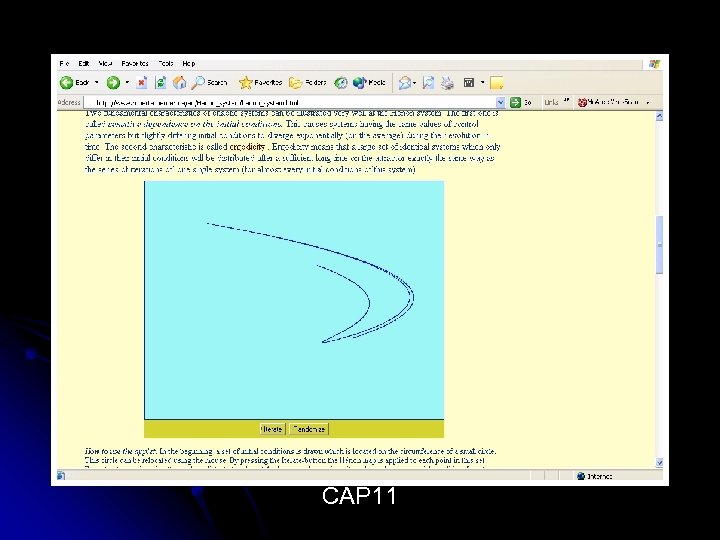
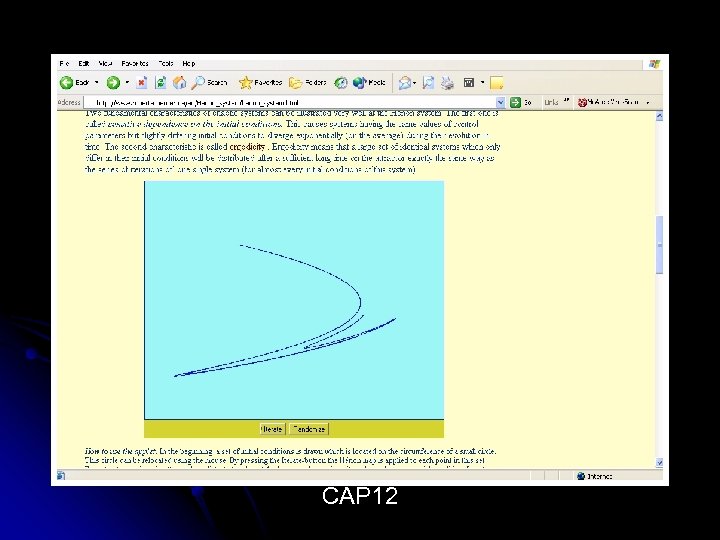
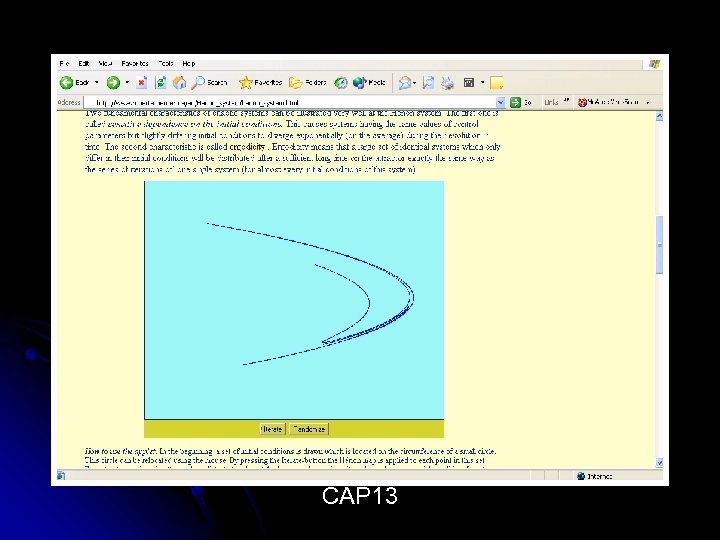
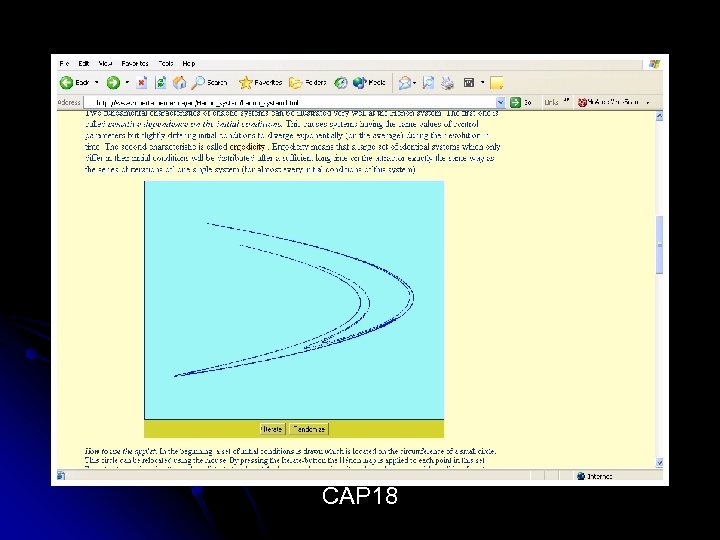
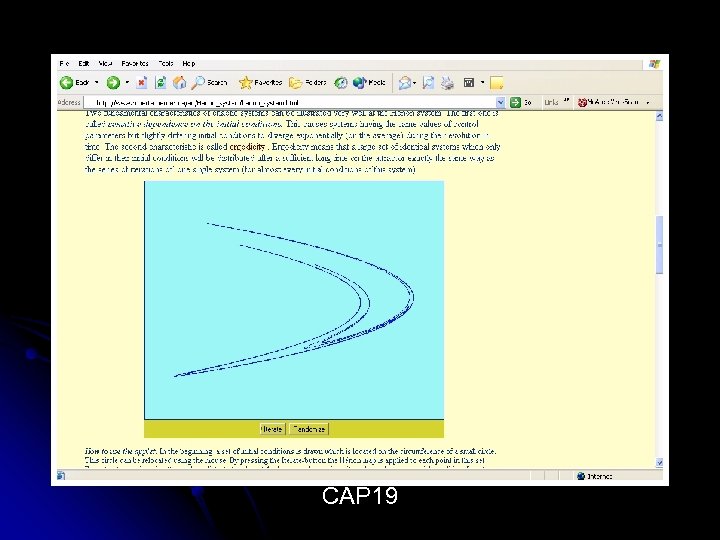
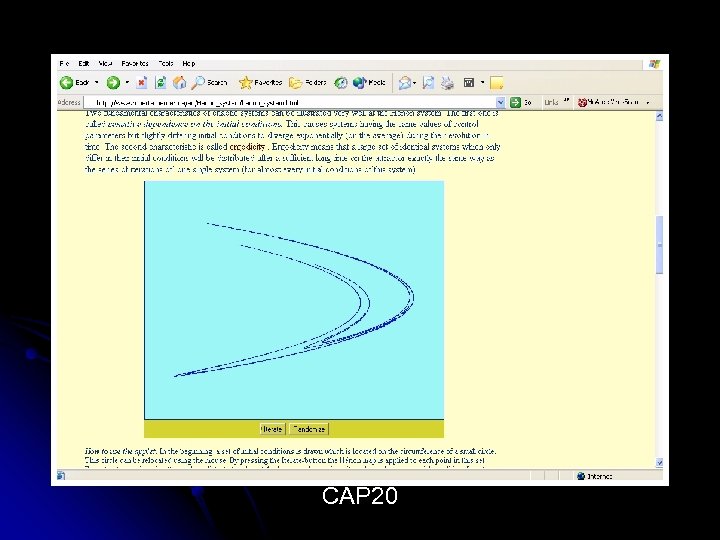
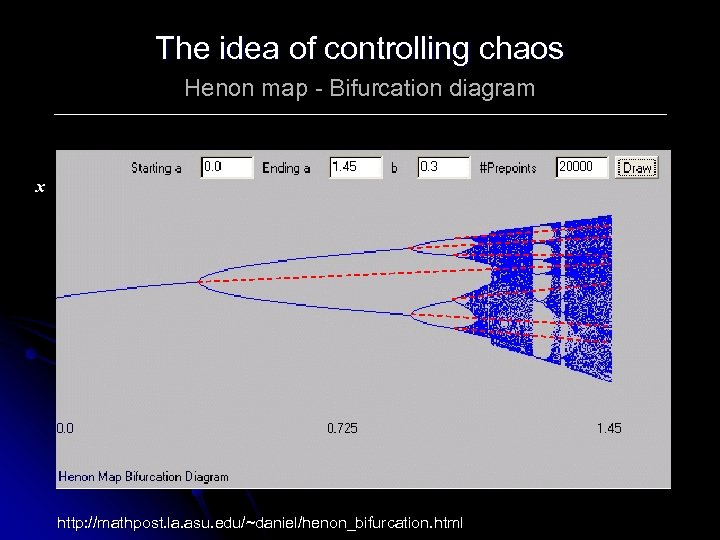
 Henon map Michele Henon, astronomer, Nice Observatory, France. During the 1960's, he studied the dynamics of stars moving within galaxies. His work was in the spirit of Poincare’s approach to the classisical three-body problem: What important geometric structures govern their behaviour? The main property of these systems is their unpredictable, chaotic dynamics that are difficult to analyze and visualize. During the 1970's he discovered a very simple iterated mapping that shows a chaotic attractor, now called Henon's attractor, which allowed him to make a direct connection between deterministic chaos and fractals.
 Henon map l Dissipative system - the contraction of volume in the state space - • The asymptotic motion will occur on sets that have zero volumes • A set showing stability against small random perturbations: attractor • Chaotic attractor - locally exponential expansion of nearby points on the attractor
 http: //www. robert-doerner. de/en/Henon_system/henon_system. html CAP 1
 CAP 2
CAP 2
 CAP 3
CAP 3
 CAP 4
CAP 4
 CAP 5
CAP 5
 CAP 6
CAP 6
 CAP 7
CAP 7
 CAP 8
CAP 8
 CAP 9
CAP 9
 CAP 20
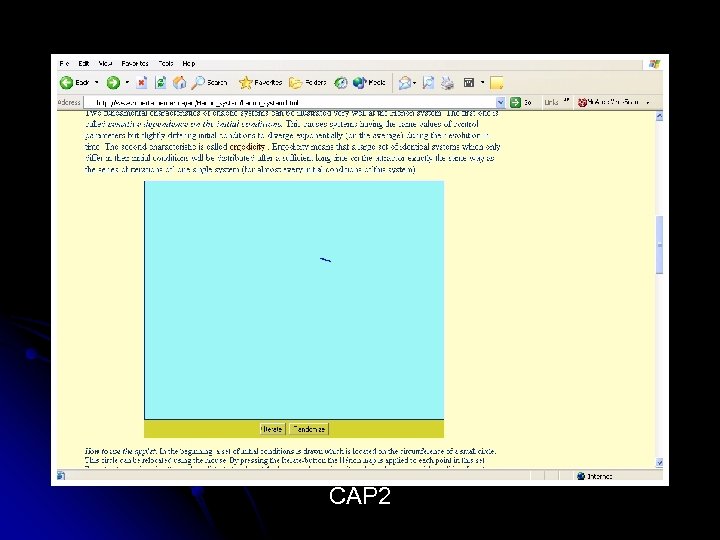
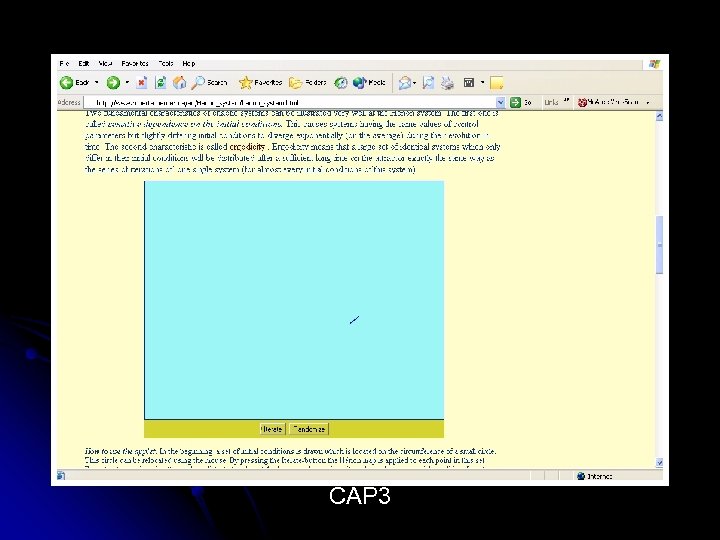
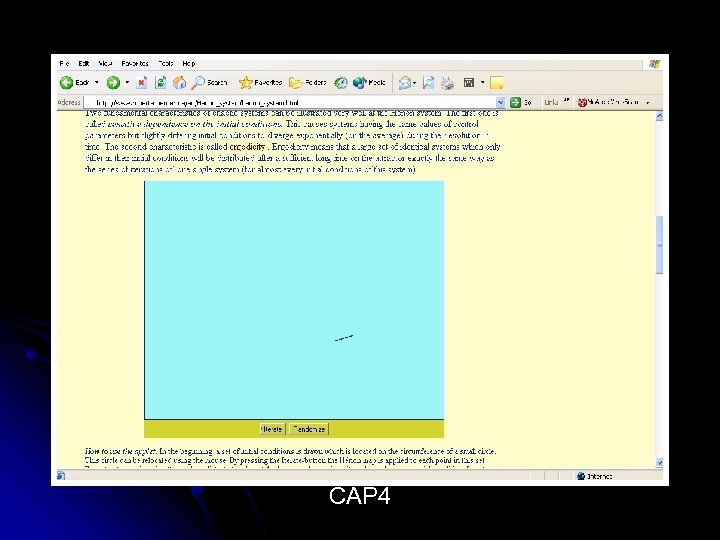
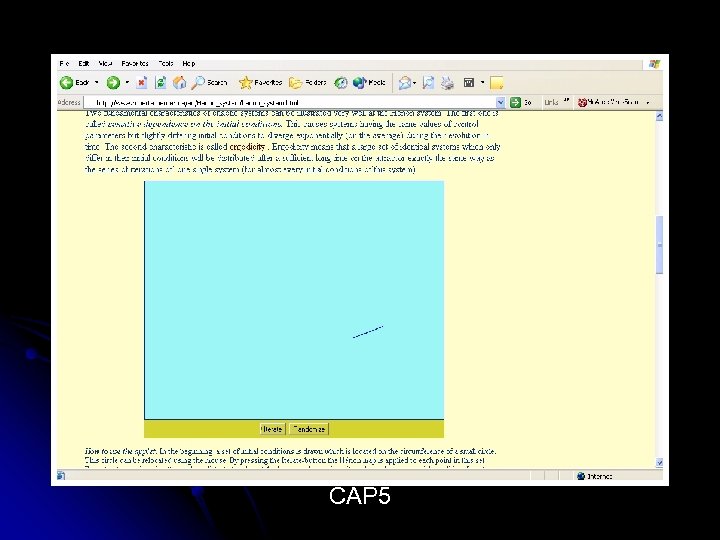
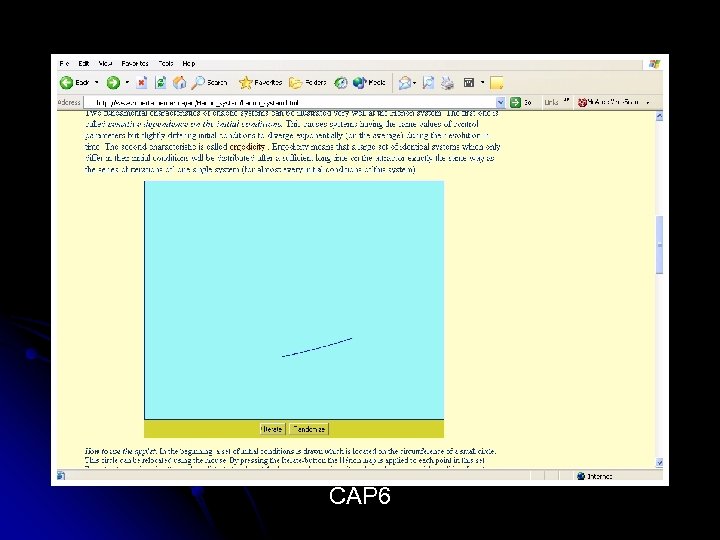
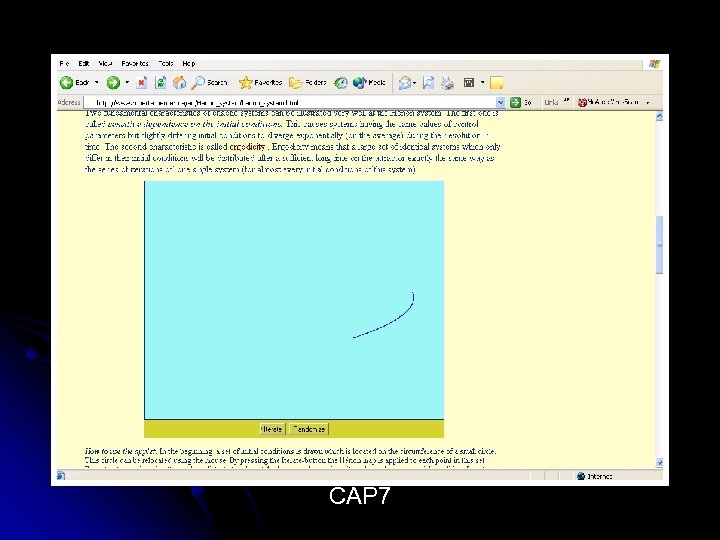
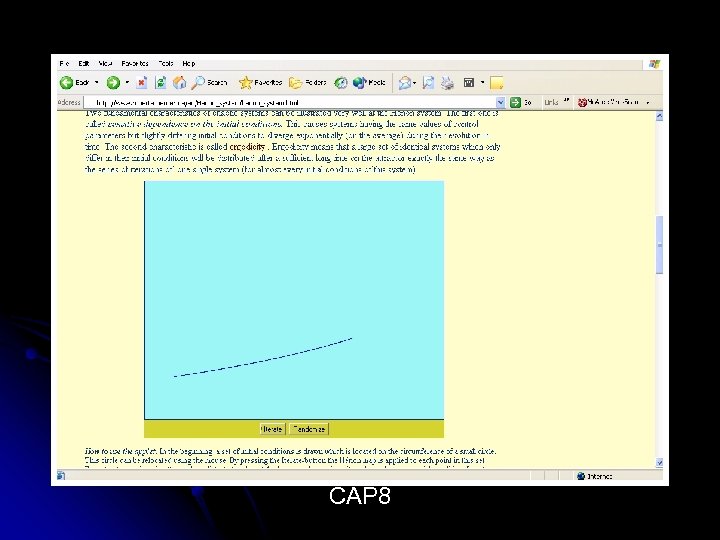
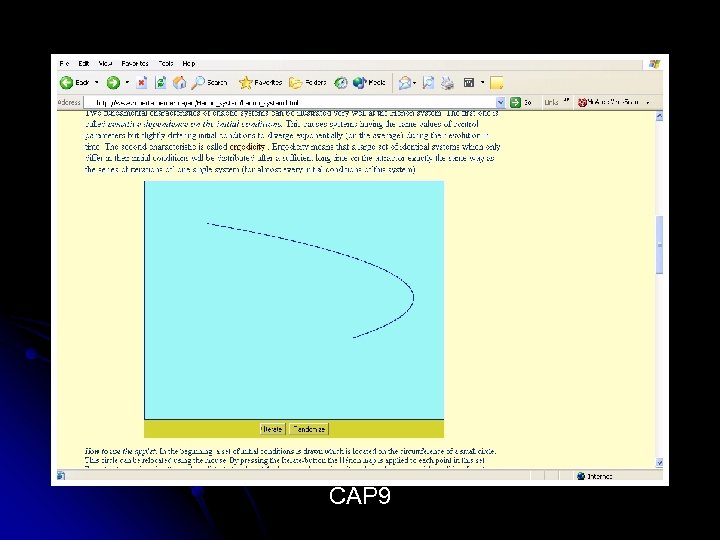
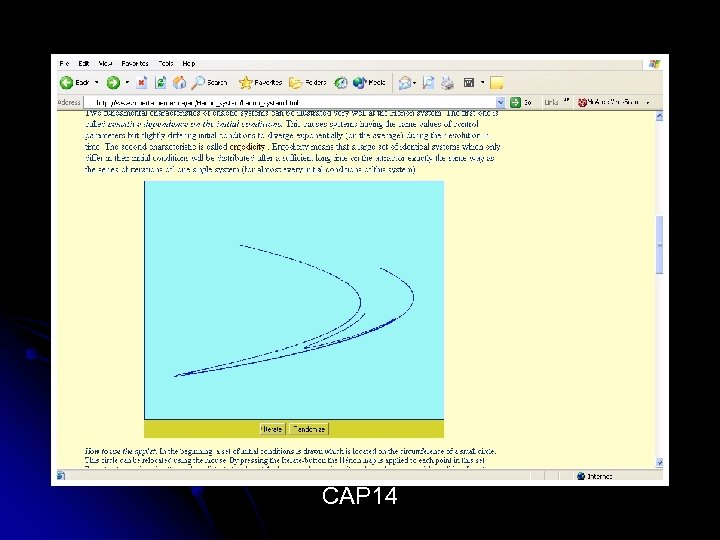
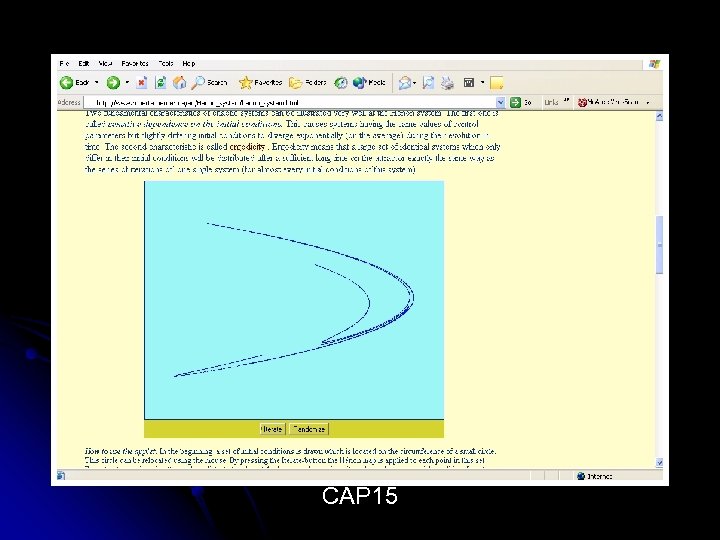
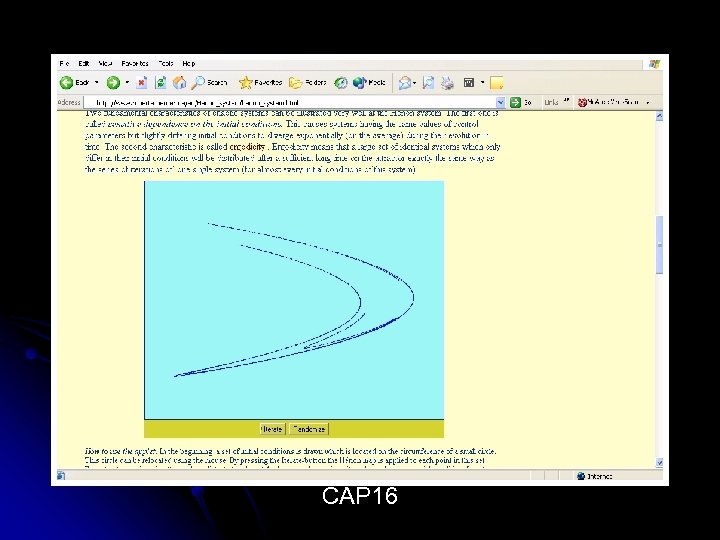
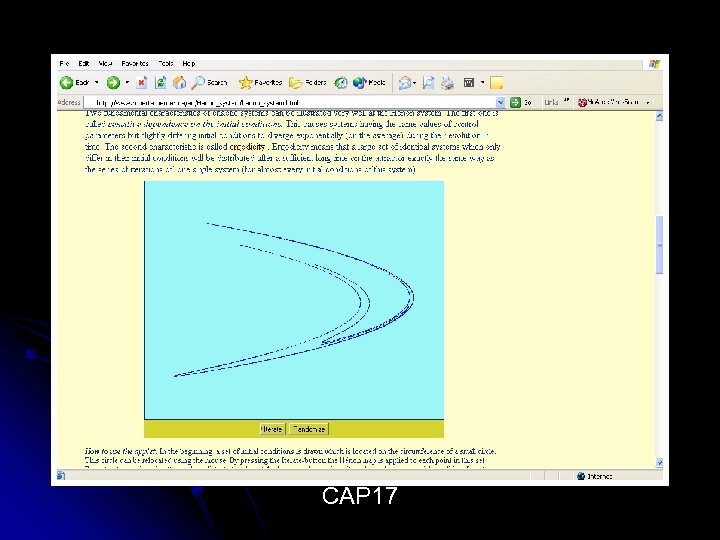
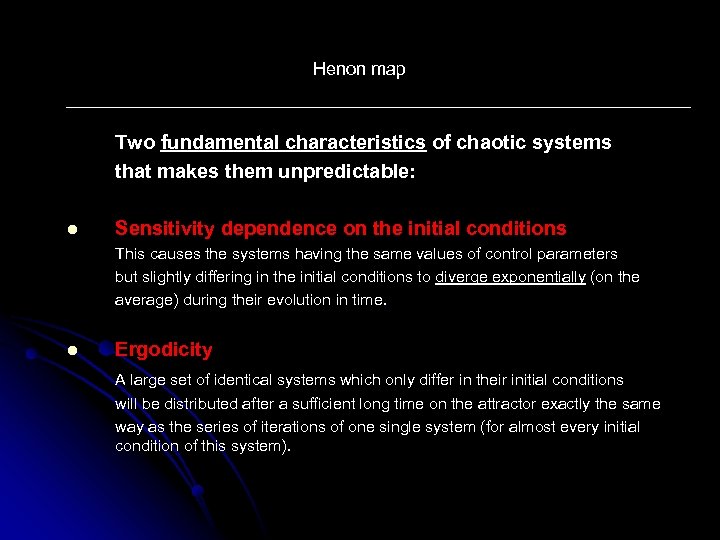 Henon map Two fundamental characteristics of chaotic systems that makes them unpredictable: l Sensitivity dependence on the initial conditions This causes the systems having the same values of control parameters but slightly differing in the initial conditions to diverge exponentially (on the average) during their evolution in time. l Ergodicity A large set of identical systems which only differ in their initial conditions will be distributed after a sufficient long time on the attractor exactly the same way as the series of iterations of one single system (for almost every initial condition of this system).
 http: //www. robert-doerner. de/en/Henon_system/henon_system. html CAP 1
 CAP 2
CAP 2
 CAP 3
CAP 3
 CAP 4
CAP 4
 CAP 5
CAP 5
 CAP 6
CAP 6
 CAP 7
CAP 7
 CAP 8
CAP 8
 CAP 9
CAP 9
 CAP 10
 CAP 11
 CAP 12
 CAP 13
 CAP 14
 CAP 15
 CAP 16
 CAP 17
 CAP 18
 CAP 19
 CAP 20
 The idea of controlling chaos “All stable processes, we shall predict. All unstable processes, we shall control. ” John von Neumann, circa 1950. Freeman Dyson: Infinite in All Directions, Chapter „Engineers Dreams”, Harper: N. Y. , 1988: “A chaotic motion is generally neither predictable nor controllable. It is unpredictable because a small disturbance will produce exponentially growing perturbation of the motion. It is uncontrollable because small disturbances lead only to other chaotic motions and not to any stable and predictable alternative. Von Neumann’s mistake was to imagine that every unstable motion could be nudged into a stable motion by small pushes and pulls applied at the right places. ” So it happened.
 The idea of controlling chaos Henon map - Bifurcation diagram x http: //mathpost. la. asu. edu/~daniel/henon_bifurcation. html
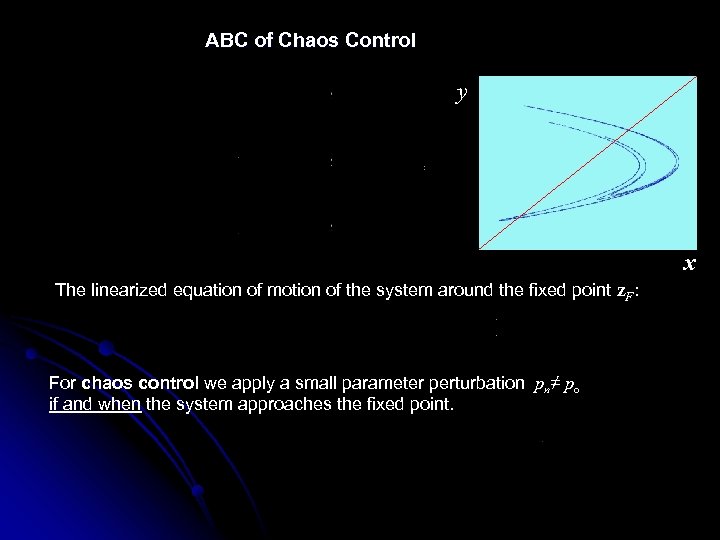 ABC of Chaos Control y x The linearized equation of motion of the system around the fixed point z. F: For chaos control we apply a small parameter perturbation pn≠ po if and when the system approaches the fixed point.
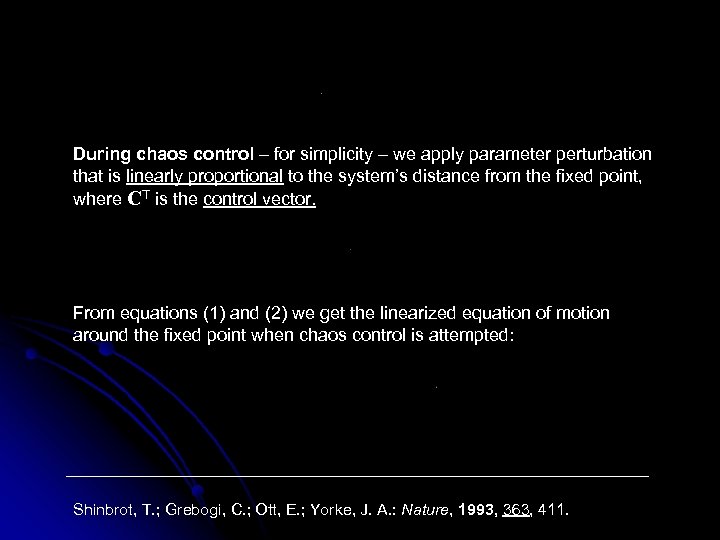 During chaos control – for simplicity – we apply parameter perturbation that is linearly proportional to the system’s distance from the fixed point, where CT is the control vector. From equations (1) and (2) we get the linearized equation of motion around the fixed point when chaos control is attempted: Shinbrot, T. ; Grebogi, C. ; Ott, E. ; Yorke, J. A. : Nature, 1993, 363, 411.
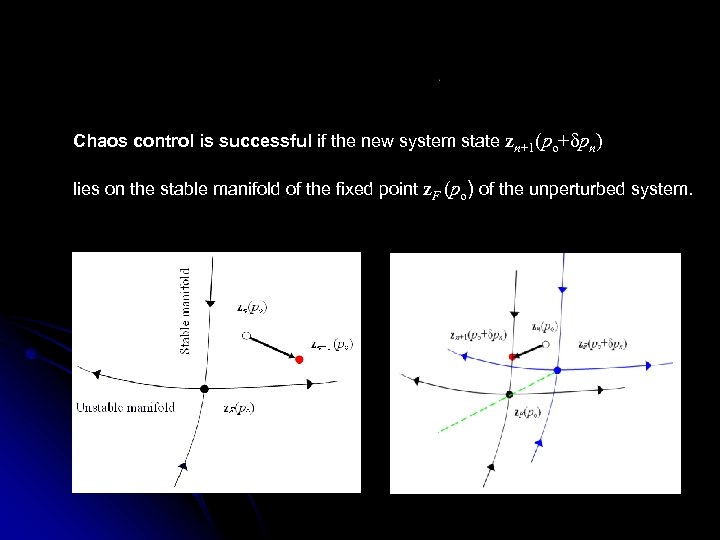 Chaos control is successful if the new system state zn+1(po+δpn) lies on the stable manifold of the fixed point z. F (po) of the unperturbed system.
 The just described strategy for chaos control implies the followings: For a successful chaos control, therefore, one has to know: • the dynamics of the system around the fixed point • the system’s distance from the fixed point • the right value of control vector CT • the eigenvalue of the fixed point in the stable direction
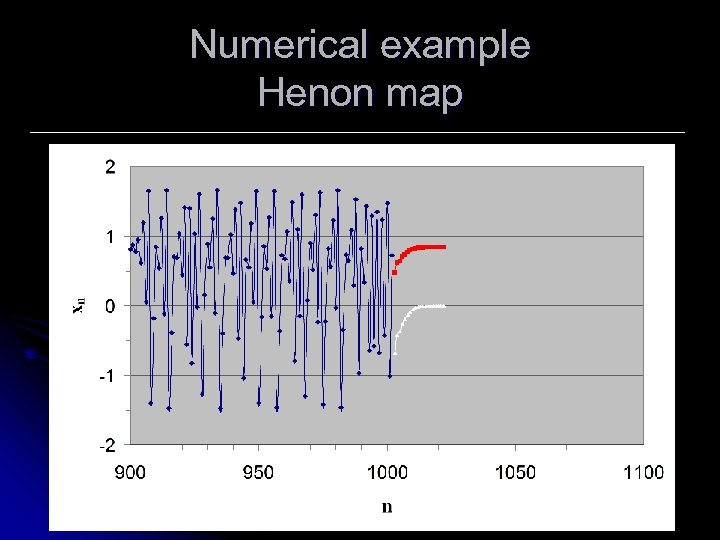
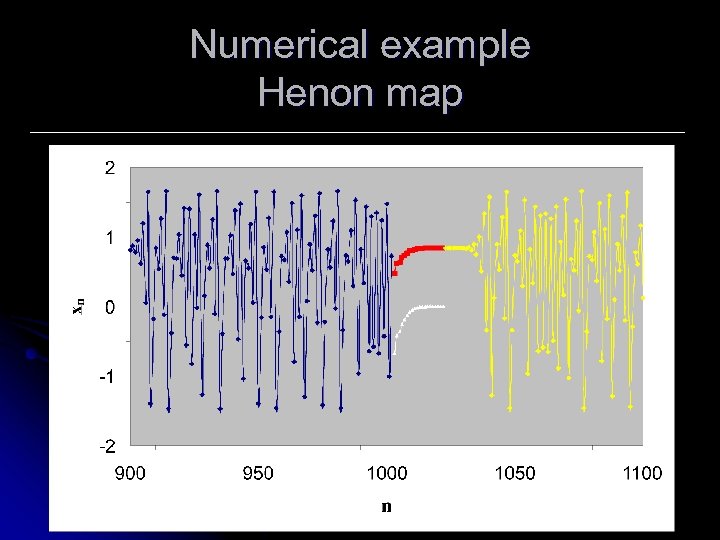
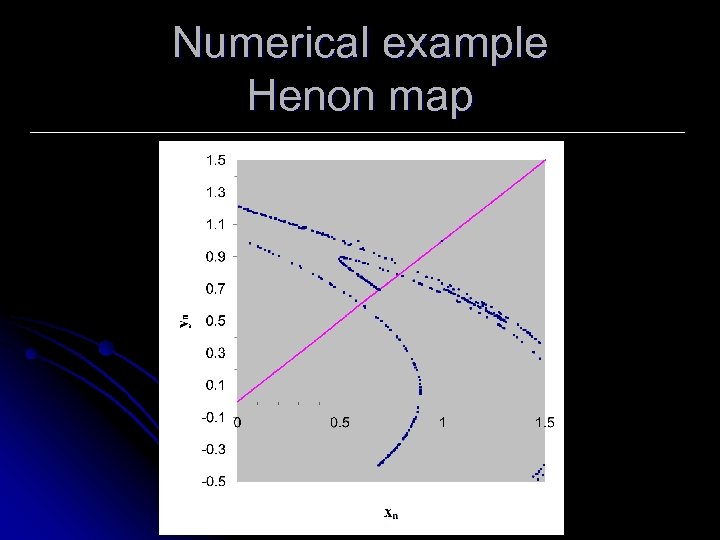
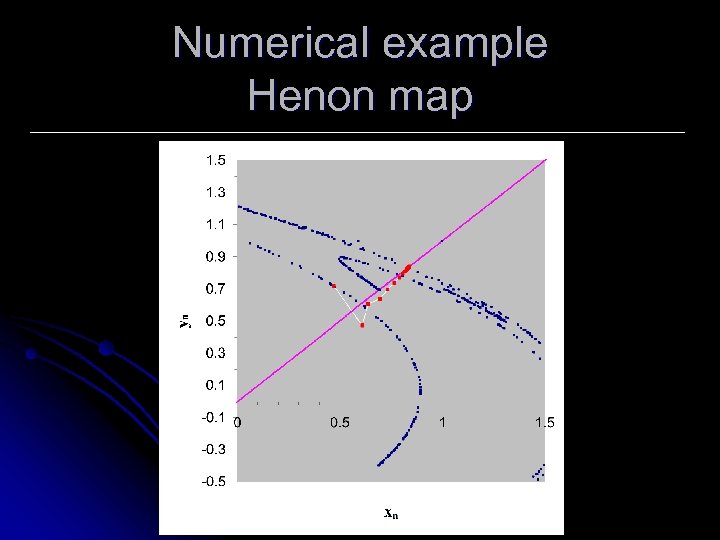
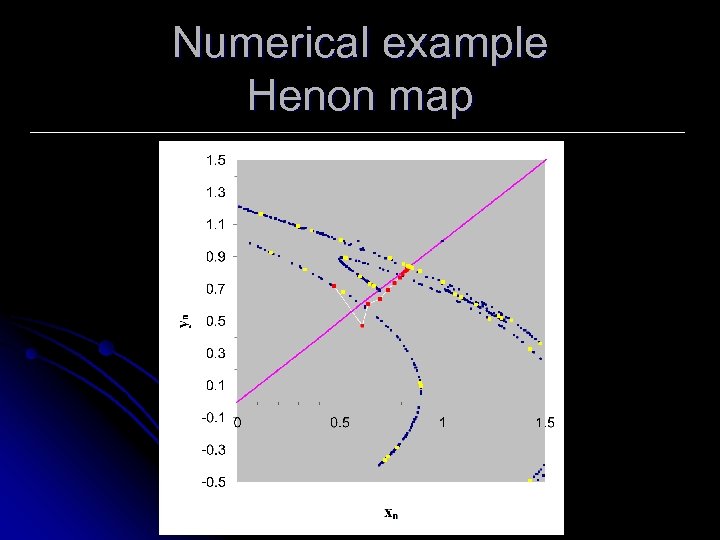
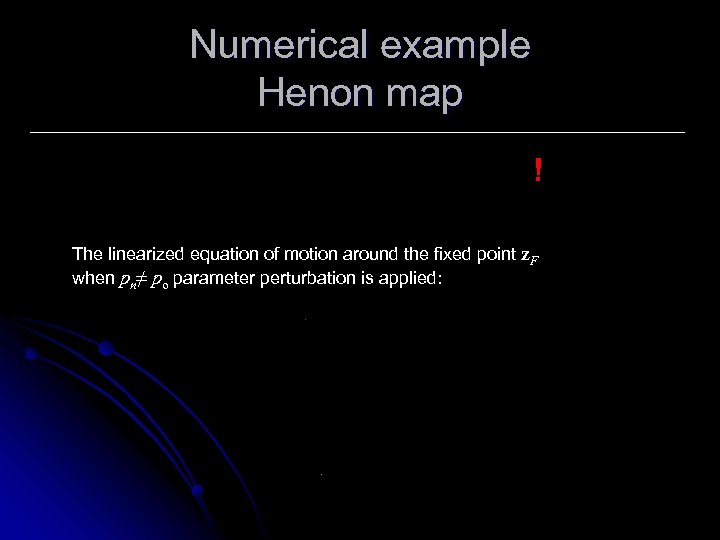 Numerical example Henon map ! The linearized equation of motion around the fixed point z. F when pn≠ po parameter perturbation is applied:
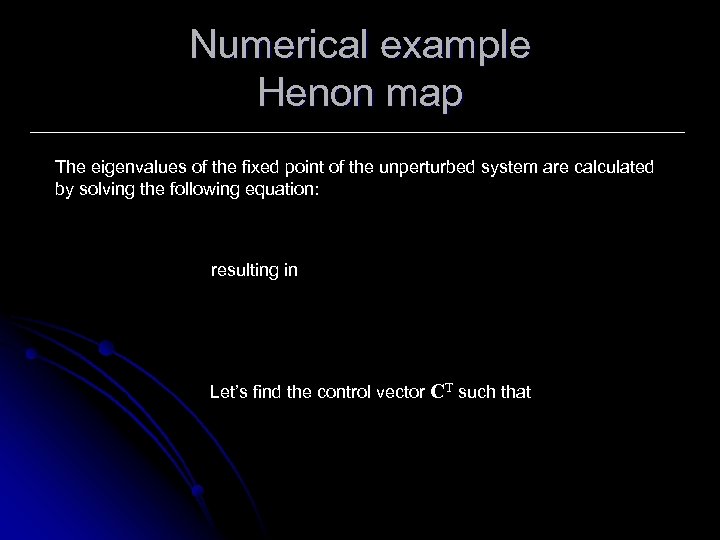 Numerical example Henon map The eigenvalues of the fixed point of the unperturbed system are calculated by solving the following equation: resulting in Let’s find the control vector CT such that
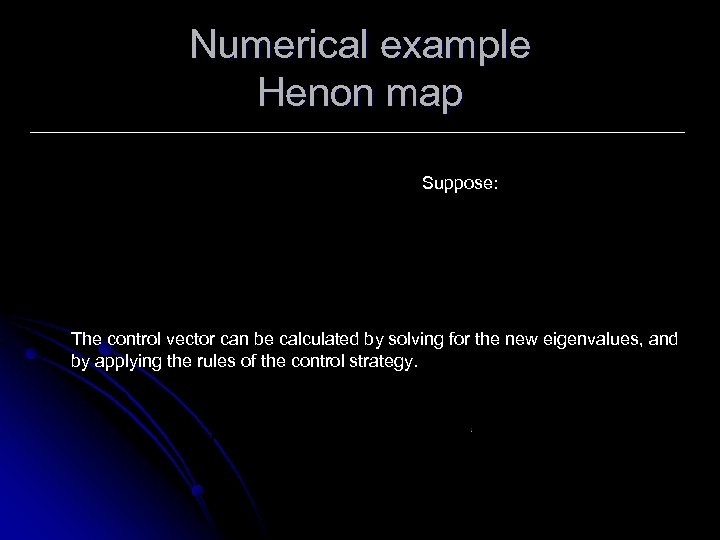 Numerical example Henon map Suppose: The control vector can be calculated by solving for the new eigenvalues, and by applying the rules of the control strategy.
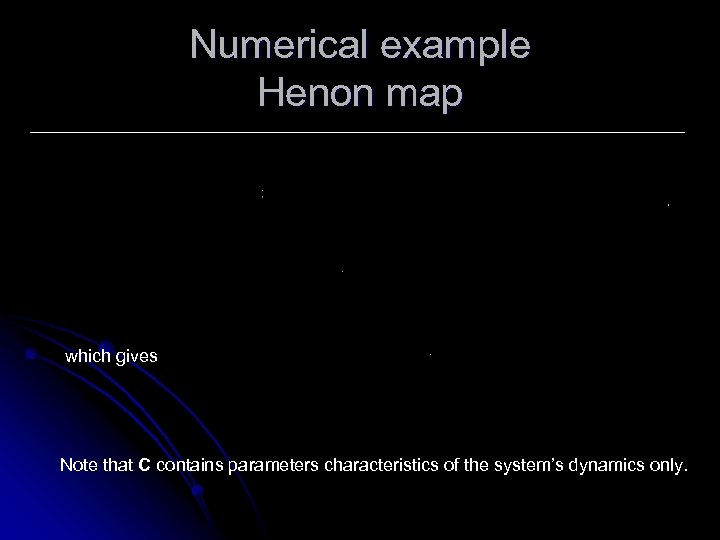 Numerical example Henon map which gives Note that C contains parameters characteristics of the system’s dynamics only.
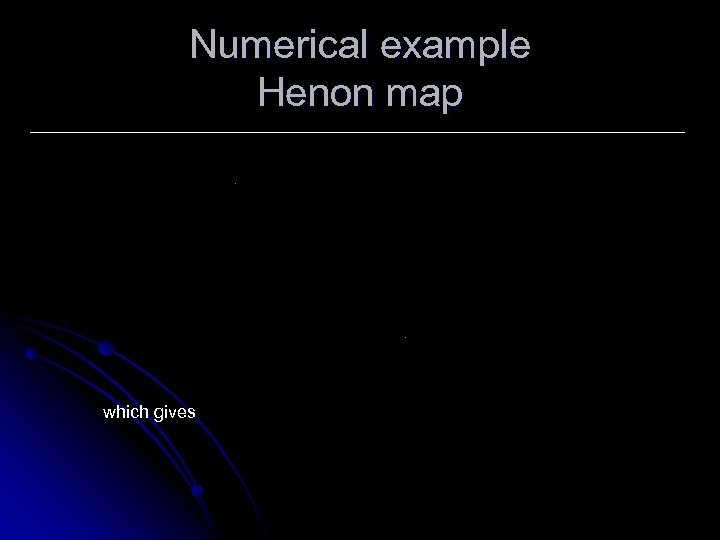 Numerical example Henon map which gives
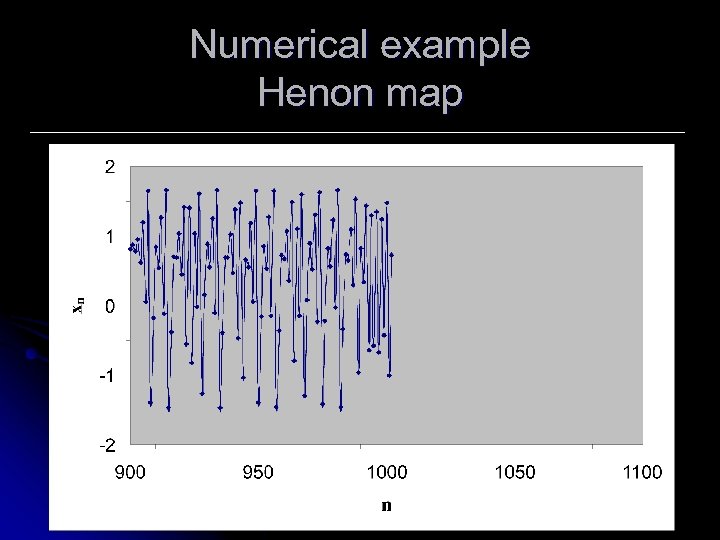
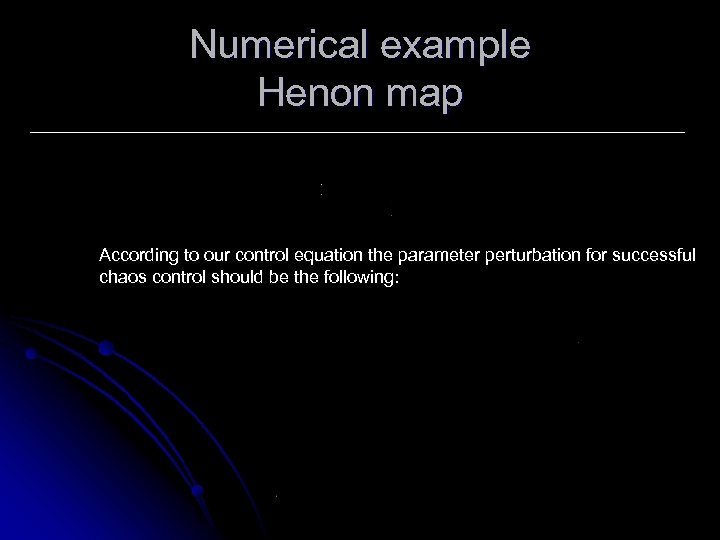 Numerical example Henon map According to our control equation the parameter perturbation for successful chaos control should be the following:
 Numerical example Henon map
 Numerical example Henon map
 Numerical example Henon map
 Numerical example Henon map
 Numerical example Henon map
 Numerical example Henon map
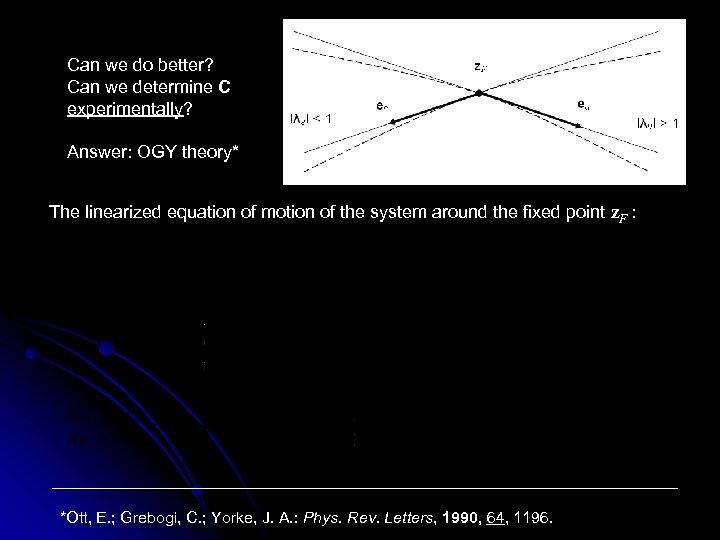 Can we do better? Can we determine C experimentally? Answer: OGY theory* The linearized equation of motion of the system around the fixed point z. F : *Ott, E. ; Grebogi, C. ; Yorke, J. A. : Phys. Rev. Letters, 1990, 64, 1196.
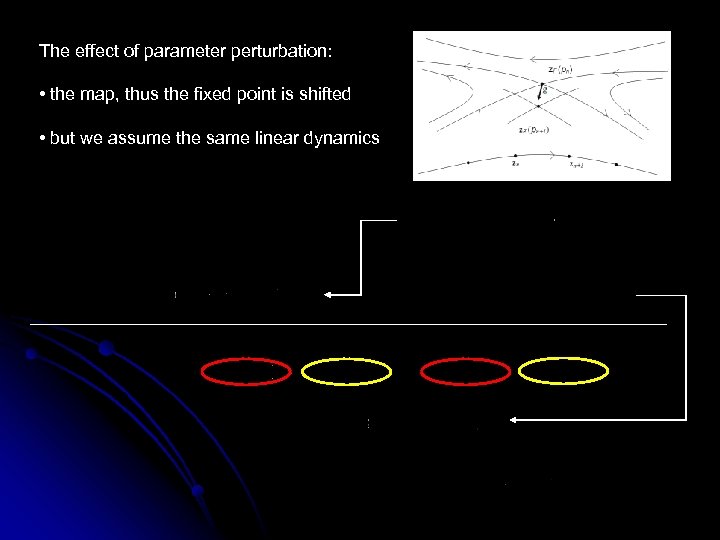 The effect of parameter perturbation: • the map, thus the fixed point is shifted • but we assume the same linear dynamics
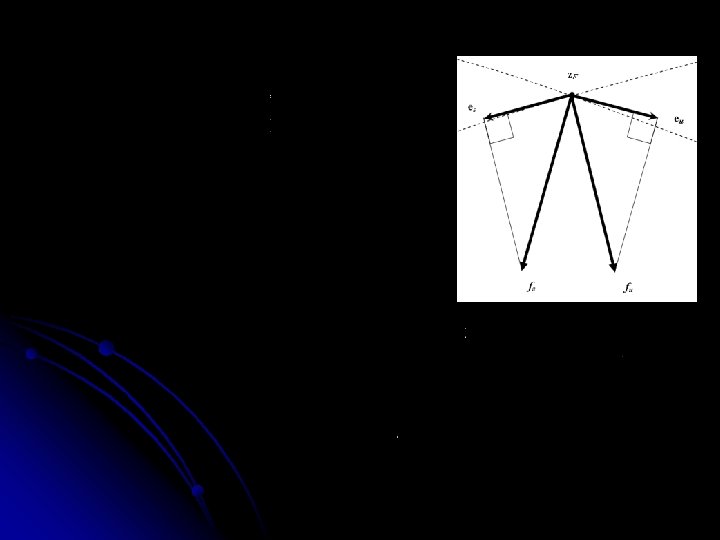
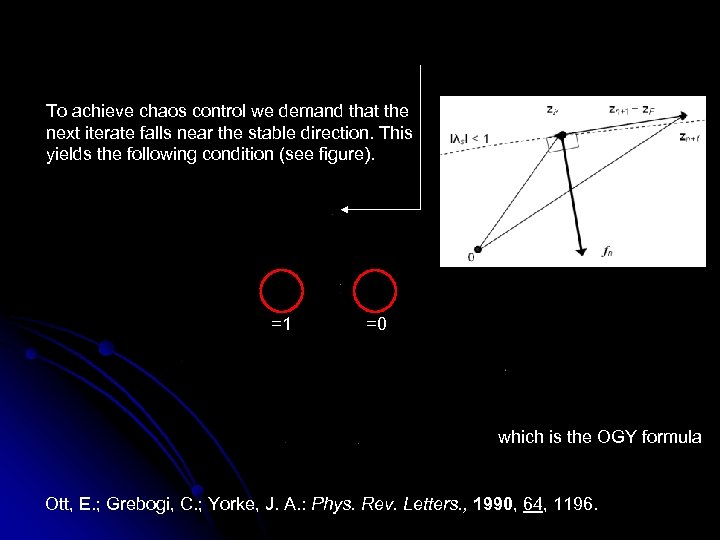 To achieve chaos control we demand that the next iterate falls near the stable direction. This yields the following condition (see figure). =1 =0 which is the OGY formula Ott, E. ; Grebogi, C. ; Yorke, J. A. : Phys. Rev. Letters. , 1990, 64, 1196.
 Henon map
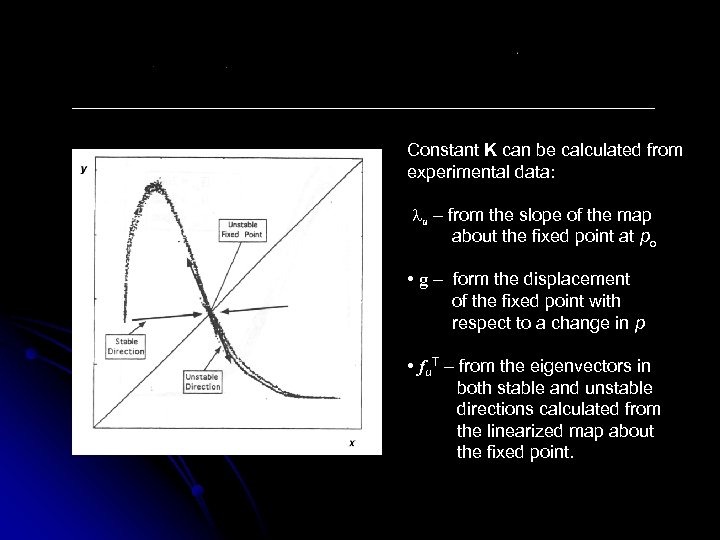 Constant K can be calculated from experimental data: u from the slope of the map about the fixed point at po • g form the displacement of the fixed point with respect to a change in p • fu. T from the eigenvectors in both stable and unstable directions calculated from the linearized map about the fixed point.
 Limits of the OGY method: • When the fixed point is such that fu and g are nearly orthogonal to each other, the control constant increases to infinity. Such fixed points are uncontrollable. • The method works only for hyperbolic fixed points with a stable eigenvector. • Determination of fu requires measurement of two (three) system variables, and also a good numerical approximation to the system’s dynamics around the fixed point. However, collecting data along the stable manifold may be experimentally inaccessible. • In real systems there is often noise present preventing the determination of the system’s state and of the control constant with the required accuracy. Surprisingly, a simplification of the OGY formula provided the right algorithm for successfully controlling chaos in chemical systems.
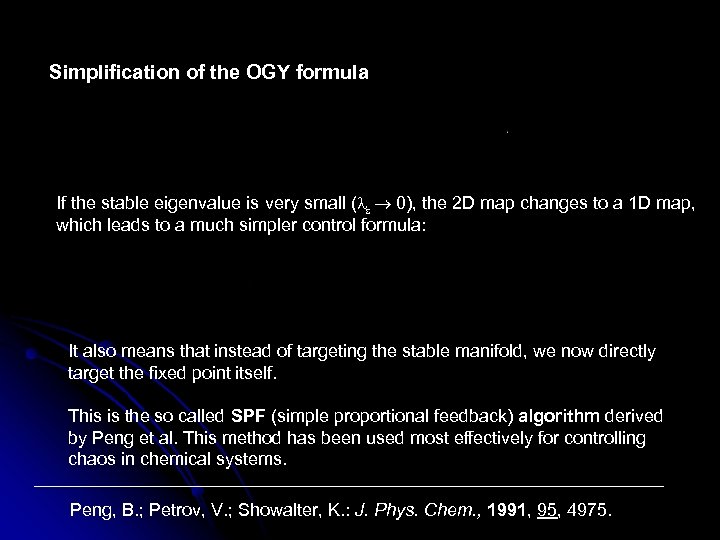 Simplification of the OGY formula If the stable eigenvalue is very small ( s 0), the 2 D map changes to a 1 D map, which leads to a much simpler control formula: It also means that instead of targeting the stable manifold, we now directly target the fixed point itself. This is the so called SPF (simple proportional feedback) algorithm derived by Peng et al. This method has been used most effectively for controlling chaos in chemical systems. Peng, B. ; Petrov, V. ; Showalter, K. : J. Phys. Chem. , 1991, 95, 4975.
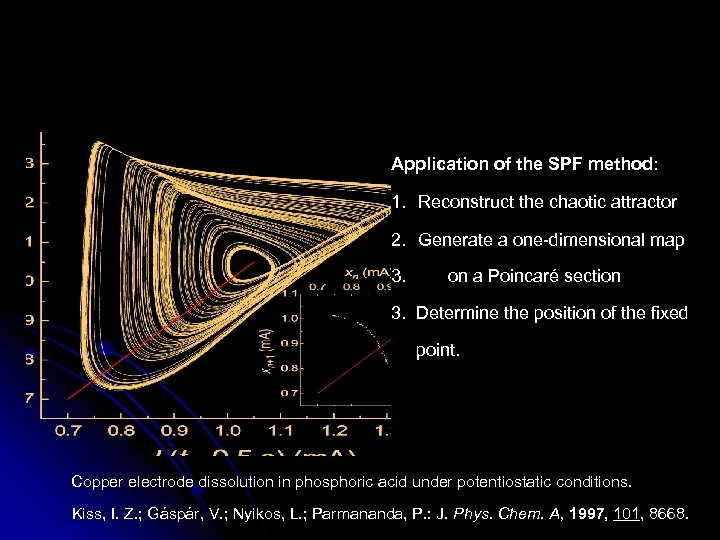 Application of the SPF method: 1. Reconstruct the chaotic attractor 2. Generate a one-dimensional map 3. on a Poincaré section 3. Determine the position of the fixed point. Copper electrode dissolution in phosphoric acid under potentiostatic conditions. Kiss, I. Z. ; Gáspár, V. ; Nyikos, L. ; Parmananda, P. : J. Phys. Chem. A, 1997, 101, 8668.
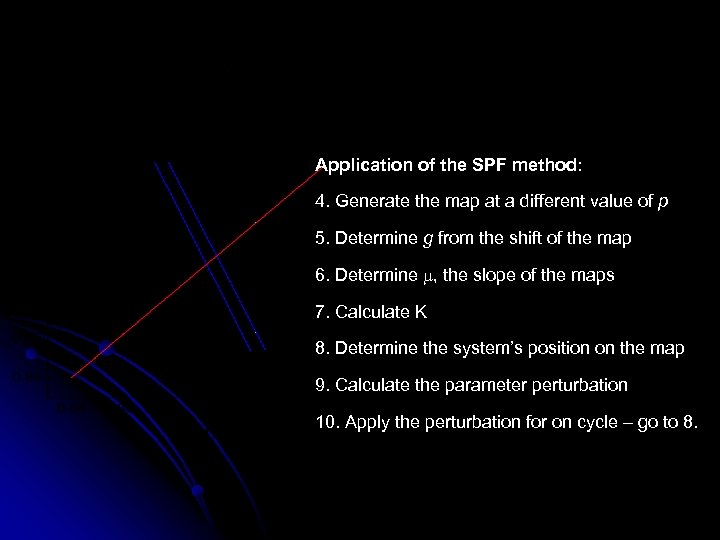 Application of the SPF method: 4. Generate the map at a different value of p 5. Determine g from the shift of the map 6. Determine , the slope of the maps 7. Calculate K 8. Determine the system’s position on the map 9. Calculate the parameter perturbation 10. Apply the perturbation for on cycle – go to 8.
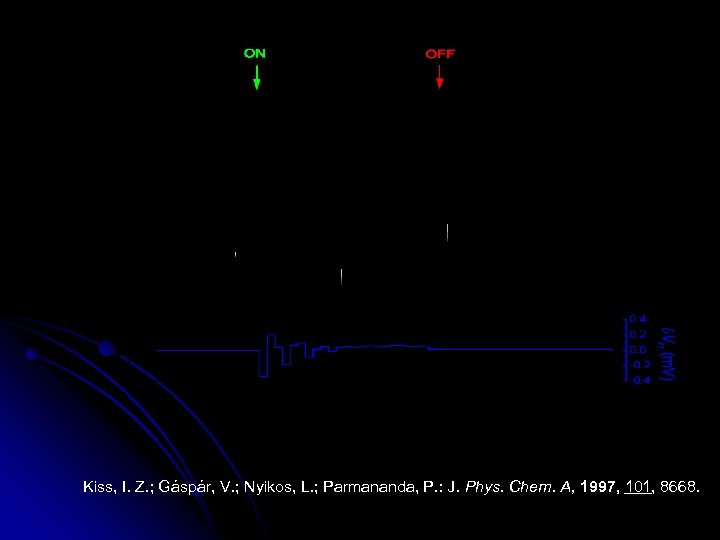 Kiss, I. Z. ; Gáspár, V. ; Nyikos, L. ; Parmananda, P. : J. Phys. Chem. A, 1997, 101, 8668.
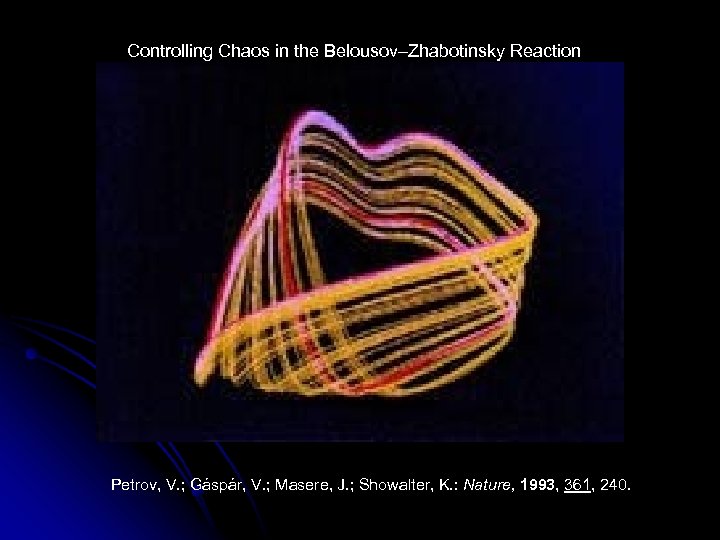 Controlling Chaos in the Belousov–Zhabotinsky Reaction Petrov, V. ; Gáspár, V. ; Masere, J. ; Showalter, K. : Nature, 1993, 361, 240.
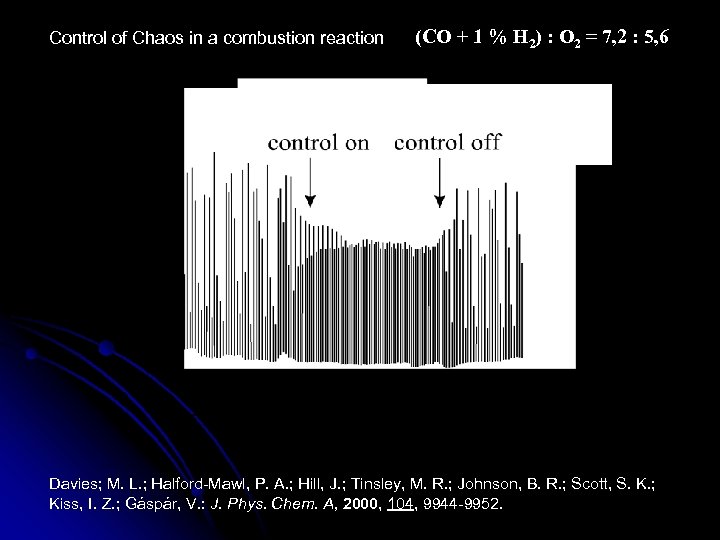 Control of Chaos in a combustion reaction (CO + 1 % H 2) : O 2 = 7, 2 : 5, 6 Davies; M. L. ; Halford-Mawl, P. A. ; Hill, J. ; Tinsley, M. R. ; Johnson, B. R. ; Scott, S. K. ; Kiss, I. Z. ; Gáspár, V. : J. Phys. Chem. A, 2000, 104, 9944 -9952.
 Other (continuous) methods for chaos control: • Resonant control algorithm: • Delayed-feedback algorithm: • Artificial neural networks Come to see my poster Kazsu, Z. ; Kiss, I. Z. ; Gáspár, V. : Experiments on tracking unstable steady states and periodic orbits using delayed feedback
 Henri Poincaré (1854 -1912) “The scientist does not study nature because it is useful; he studies it because he delights in it, and he delights in it because it is beautiful. If nature were not beautiful, it would not be worth knowing, and if nature were not worth knowing, life would not be worth living. ”