


 Скачать презентацию CONTRÔLE PERIOPERATOIRE DE LA GLYCEMIE Jean-Charles Preiser Philippe
f9a94f971d15c94f931227a3e87a6b25.ppt
- Количество слайдов: 72
 CONTRÔLE PERIOPERATOIRE DE LA GLYCEMIE Jean-Charles Preiser Philippe Devos Soins Intensifs Généraux C. H. U. Sart Tilman – Liège SAC Charleroi 7 novembre 2006
 AU PROGRAMME… § INSULINO-RESISTANCE POST- OPERATOIRE § PROGRAMME ERAS § EFFETS CLINIQUES § CONTRÔLE DE LA GLYCEMIE AUX SOINS INTENSIFS
 LENGTH OF STAY
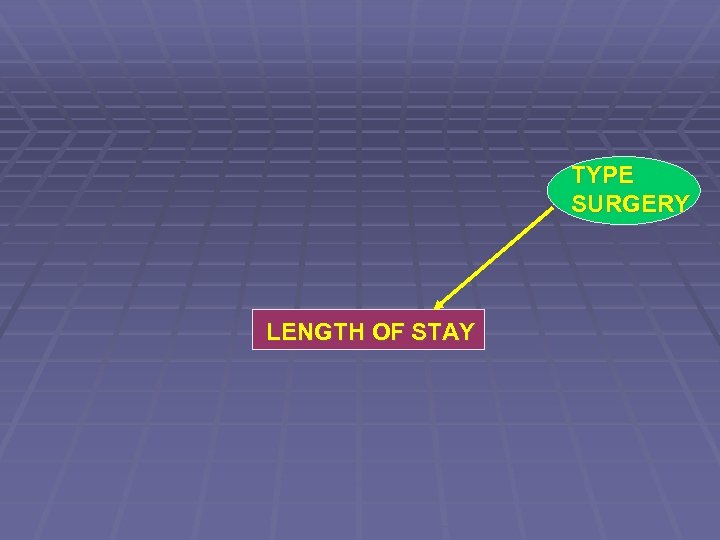 TYPE SURGERY LENGTH OF STAY
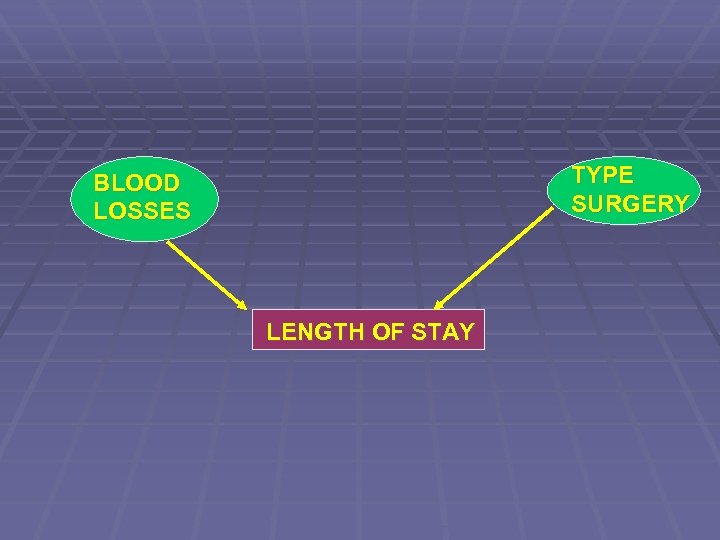 TYPE SURGERY BLOOD LOSSES LENGTH OF STAY
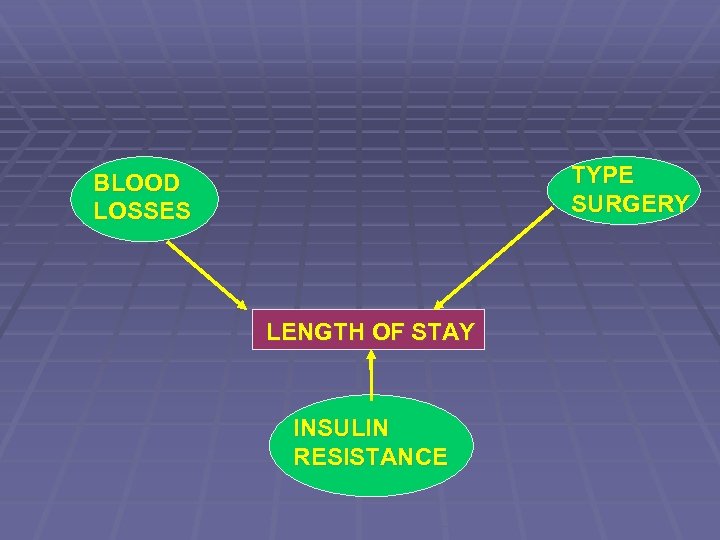 TYPE SURGERY BLOOD LOSSES LENGTH OF STAY INSULIN RESISTANCE
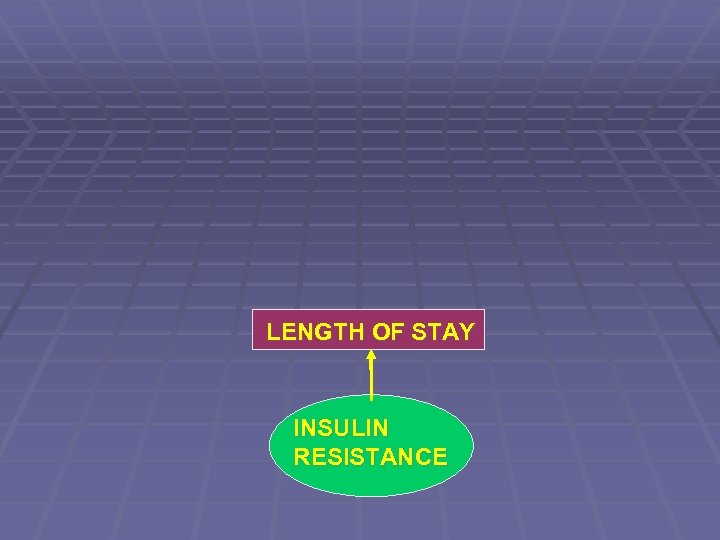 LENGTH OF STAY INSULIN RESISTANCE
 AU PROGRAMME… § INSULINO-RESISTANCE POSTOPERATOIRE § PROGRAMME ERAS § EFFETS CLINIQUES § CONTRÔLE DE LA GLYCEMIE AUX SOINS INTENSIFS
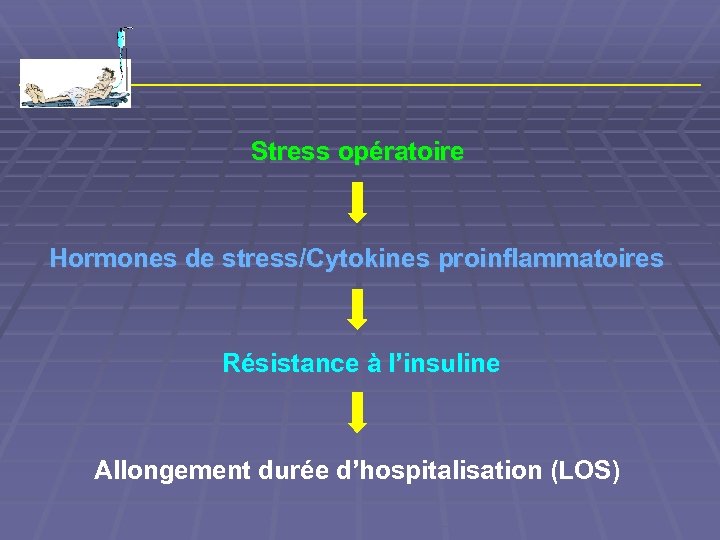 Stress opératoire Hormones de stress/Cytokines proinflammatoires Résistance à l’insuline Allongement durée d’hospitalisation (LOS)
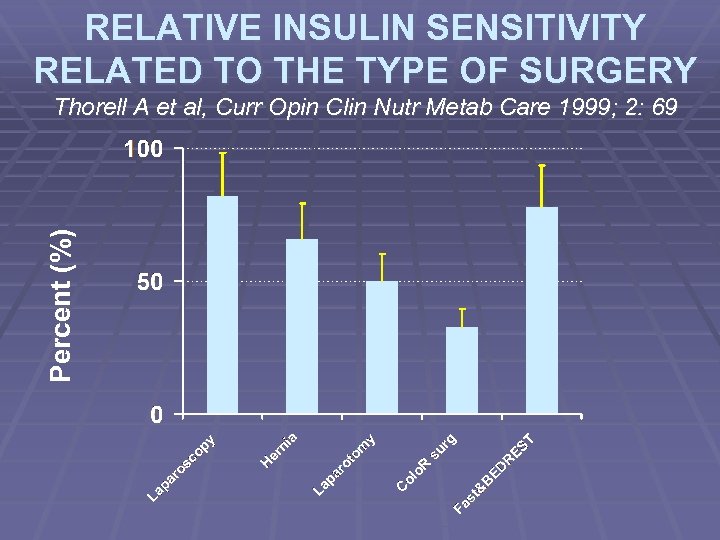 RELATIVE INSULIN SENSITIVITY RELATED TO THE TYPE OF SURGERY Percent (%) Thorell A et al, Curr Opin Clin Nutr Metab Care 1999; 2: 69
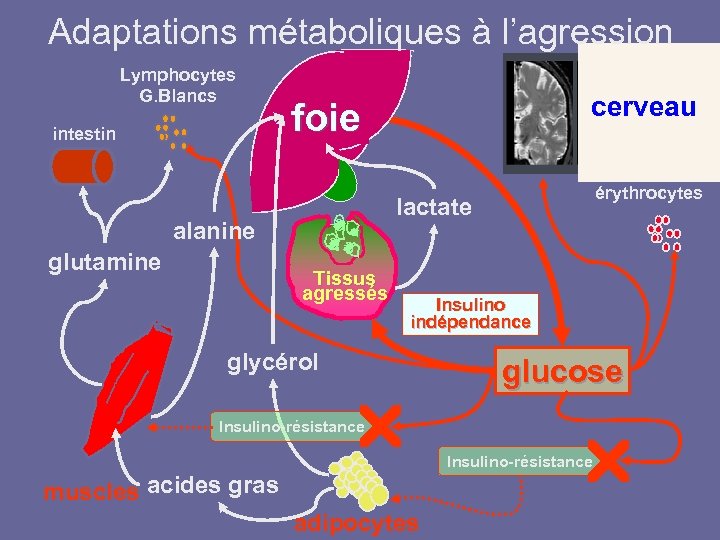 Adaptations métaboliques à l’agression Lymphocytes G. Blancs intestin érythrocytes lactate alanine glutamine cerveau foie Tissus agressés Insulino indépendance glycérol glucose Insulino-résistance muscles acides gras adipocytes Insulino-résistance
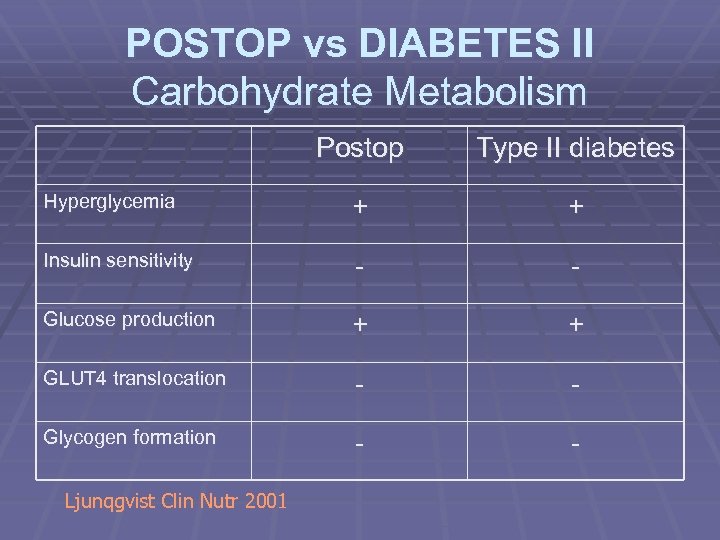 POSTOP vs DIABETES II Carbohydrate Metabolism Postop Type II diabetes Hyperglycemia + + Insulin sensitivity - - Glucose production + + GLUT 4 translocation - - Glycogen formation - - Ljunqgvist Clin Nutr 2001
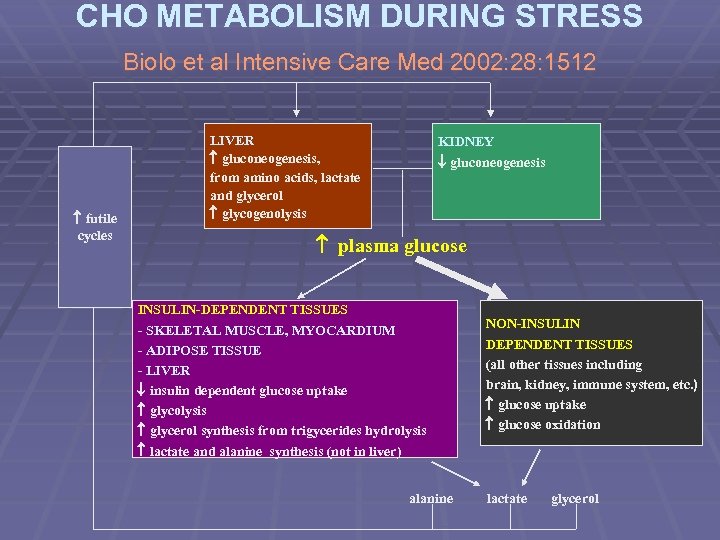 CHO METABOLISM DURING STRESS Biolo et al Intensive Care Med 2002: 28: 1512 futile cycles LIVER gluconeogenesis, from amino acids, lactate and glycerol glycogenolysis KIDNEY gluconeogenesis plasma glucose INSULIN-DEPENDENT TISSUES - SKELETAL MUSCLE, MYOCARDIUM - ADIPOSE TISSUE - LIVER insulin dependent glucose uptake glycolysis glycerol synthesis from trigycerides hydrolysis lactate and alanine synthesis (not in liver) alanine NON-INSULIN DEPENDENT TISSUES (all other tissues including brain, kidney, immune system, etc. ) glucose uptake glucose oxidation lactate glycerol
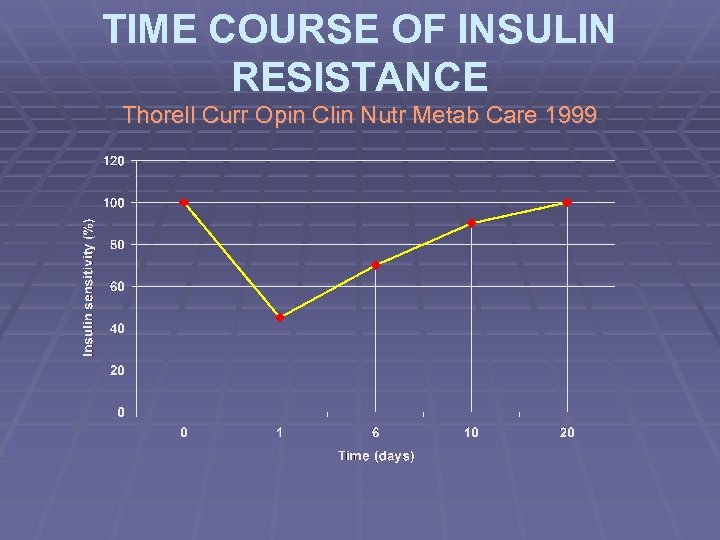 TIME COURSE OF INSULIN RESISTANCE Thorell Curr Opin Clin Nutr Metab Care 1999
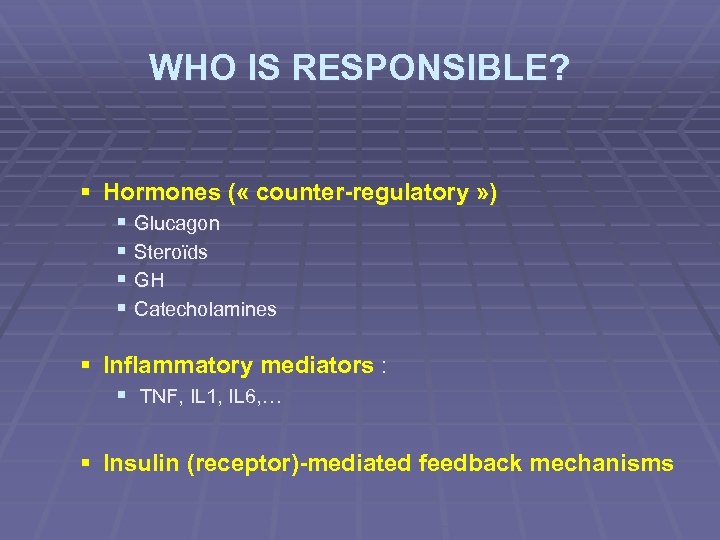 WHO IS RESPONSIBLE? § Hormones ( « counter-regulatory » ) § Glucagon § Steroïds § GH § Catecholamines § Inflammatory mediators : § TNF, IL 1, IL 6, … § Insulin (receptor)-mediated feedback mechanisms
 INSULIN RESISTANCE § Is not beneficial § Should be treated or avoided § Can be decreased by epidural analgesia and preoperative CHO § Allows normoglycemia during feeding § Decreases postoperative morbidity
 AU PROGRAMME… § INSULINO-RESISTANCE POST- OPERATOIRE § PROGRAMME ERAS § EFFETS CLINIQUES § CONTRÔLE DE LA GLYCEMIE AUX SOINS INTENSIFS
 ERAS Enhanced Recovery After colorectal Surgery apport oral glucides préop analgésie épidurale mobilisation préopératoire précoce => réduction durée d’hospitalisation (LOS)
 ERAS Glucides préop solution orale (12. 5%) 800 ml la veille à minuit et 400 ml 2 -3 h avant chirurgie Réduction résistance à l’insuline Amélioration de la balance azotée Réduction de l’anxiété préop Réduction nausée et vomissements postop Amélioration du bien-être postop Réduction durée hospitalisation Hausel J. et al.
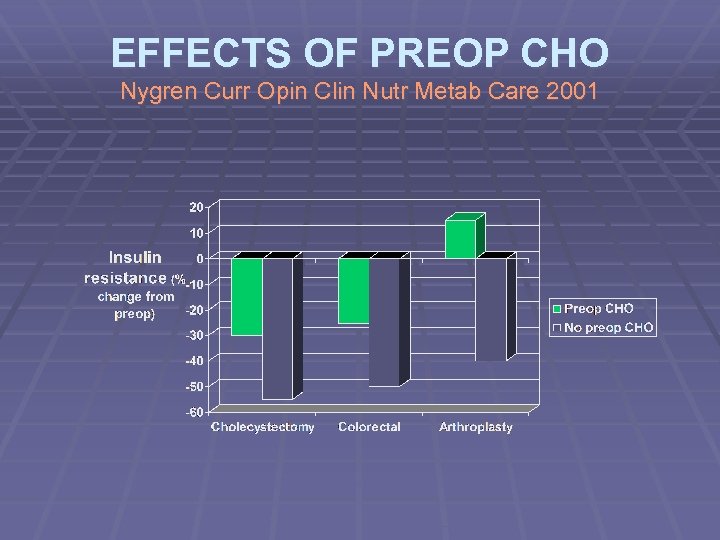 EFFECTS OF PREOP CHO Nygren Curr Opin Clin Nutr Metab Care 2001
 PREOPERATIVE CHO § 20% glucose IV § 12. 5 % CARBOHYDRATE DRINK § 800 at midnight + 400 ml 2 -3 hrs prior to surgery (295 m. Osm/l) § GASTRIC EMPTYING? ?
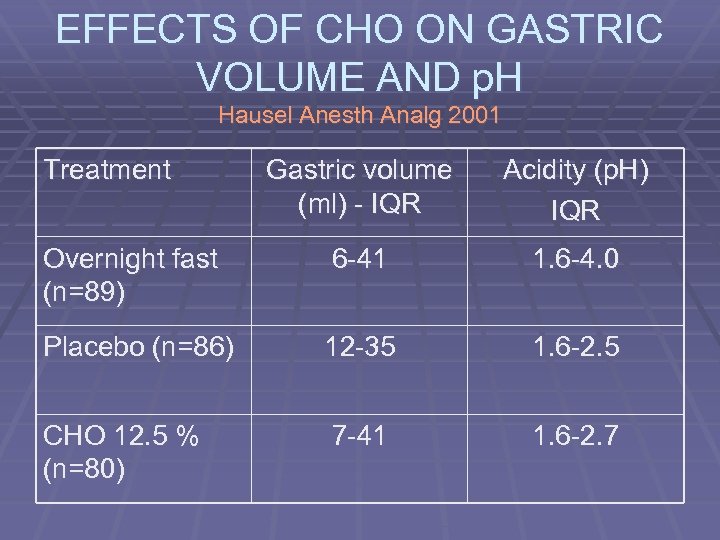 EFFECTS OF CHO ON GASTRIC VOLUME AND p. H Hausel Anesth Analg 2001 Treatment Gastric volume (ml) - IQR Acidity (p. H) IQR Overnight fast (n=89) 6 -41 1. 6 -4. 0 Placebo (n=86) 12 -35 1. 6 -2. 5 CHO 12. 5 % (n=80) 7 -41 1. 6 -2. 7
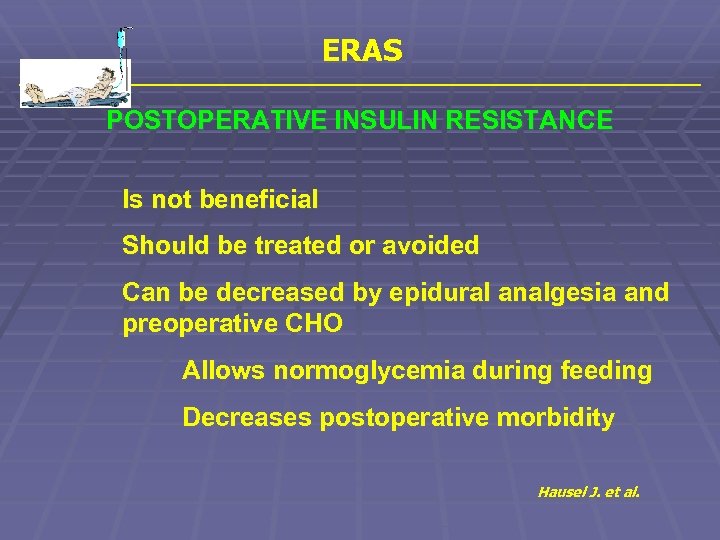 ERAS POSTOPERATIVE INSULIN RESISTANCE Is not beneficial Should be treated or avoided Can be decreased by epidural analgesia and preoperative CHO Allows normoglycemia during feeding Decreases postoperative morbidity Hausel J. et al.
 INSULIN RESISTANCE § Is not beneficial § Should be treated or avoided § Can be decreased by epidural analgesia and preoperative CHO § Allows normoglycemia during feeding § Decreases postoperative morbidity
 AU PROGRAMME… § INSULINO-RESISTANCE POST- OPERATOIRE § PROGRAMME ERAS § EFFETS CLINIQUES § CONTRÔLE DE LA GLYCEMIE AUX SOINS INTENSIFS

 AU PROGRAMME… § INSULINO-RESISTANCE POST- OPERATOIRE § PROGRAMME ERAS § EFFETS CLINIQUES § CONTRÔLE DE LA GLYCEMIE AUX SOINS INTENSIFS
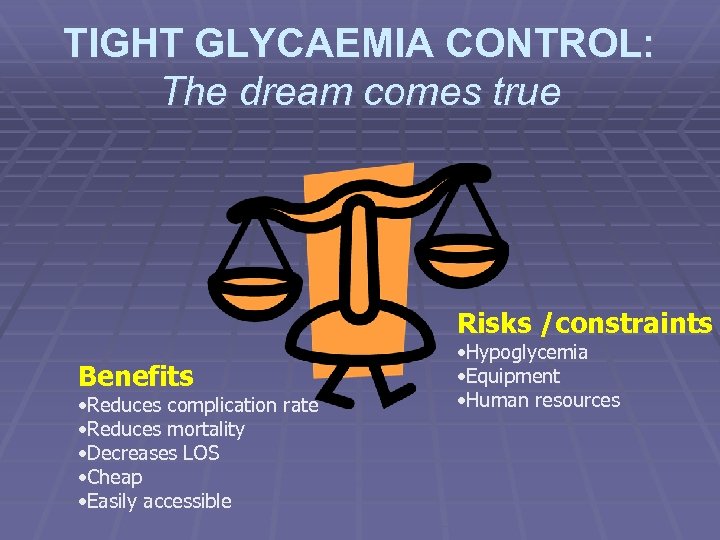 TIGHT GLYCAEMIA CONTROL: The dream comes true Risks /constraints Benefits • Reduces complication rate • Reduces mortality • Decreases LOS • Cheap • Easily accessible • Hypoglycemia • Equipment • Human resources
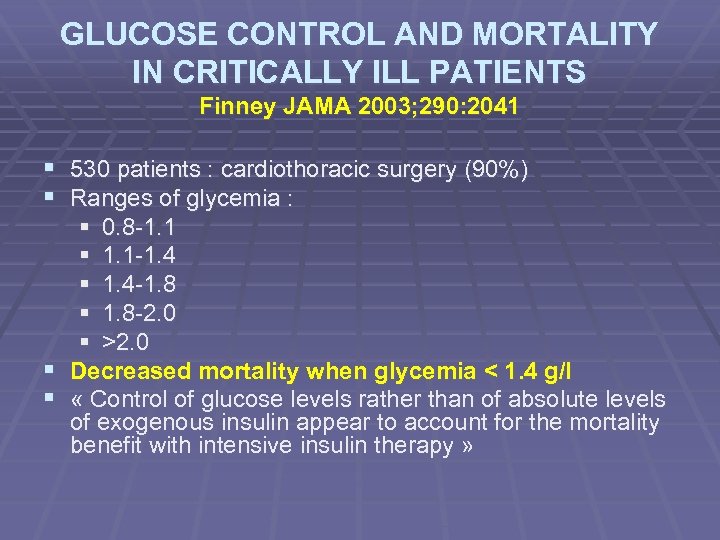 GLUCOSE CONTROL AND MORTALITY IN CRITICALLY ILL PATIENTS Finney JAMA 2003; 290: 2041 § 530 patients : cardiothoracic surgery (90%) § Ranges of glycemia : § 0. 8 -1. 1 § 1. 1 -1. 4 § 1. 4 -1. 8 § 1. 8 -2. 0 § >2. 0 § Decreased mortality when glycemia < 1. 4 g/l § « Control of glucose levels rather than of absolute levels of exogenous insulin appear to account for the mortality benefit with intensive insulin therapy »
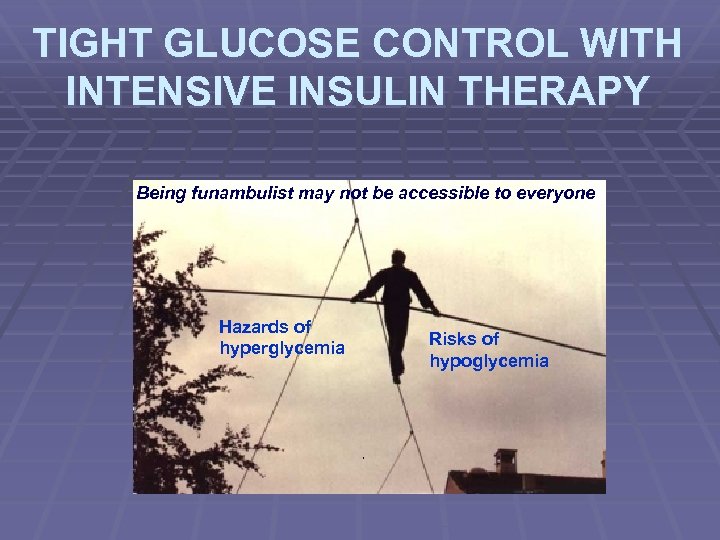
 CONSTRAINTS AND RISKS OF TIGHT GLUCOSE CONTROL § Constraints § Frequent checks § Cost § Time § Nurses § Exams § Equippment § Glucometers § Automated syringes § Risks § Hypoglycemia § Often asymptomatic (altered mental status) § Neurological symptoms § Adrenergic manifestations
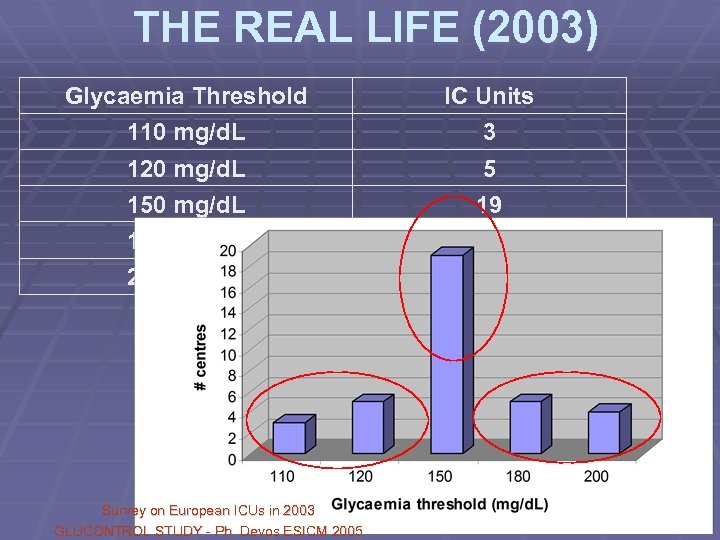 THE REAL LIFE (2003) Glycaemia Threshold IC Units 110 mg/d. L 3 120 mg/d. L 5 150 mg/d. L 19 180 mg/d. L 5 200 mg/d. L 4 Survey on European ICUs in 2003 GLUCONTROL STUDY - Ph. Devos ESICM 2005
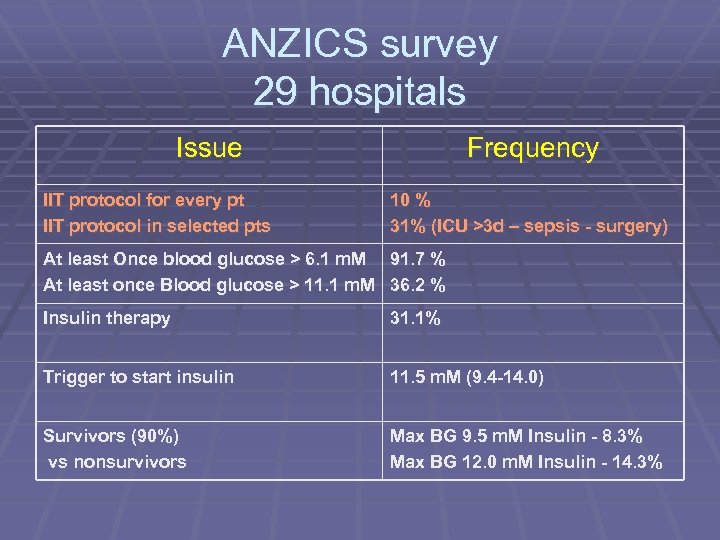 ANZICS survey 29 hospitals Issue IIT protocol for every pt IIT protocol in selected pts Frequency 10 % 31% (ICU >3 d – sepsis - surgery) At least Once blood glucose > 6. 1 m. M 91. 7 % At least once Blood glucose > 11. 1 m. M 36. 2 % Insulin therapy 31. 1% Trigger to start insulin 11. 5 m. M (9. 4 -14. 0) Survivors (90%) vs nonsurvivors Max BG 9. 5 m. M Insulin - 8. 3% Max BG 12. 0 m. M Insulin - 14. 3%
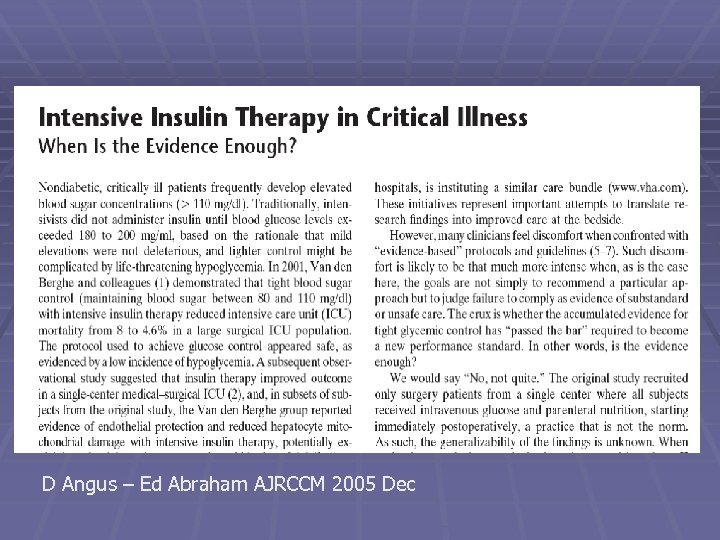 D Angus – Ed Abraham AJRCCM 2005 Dec
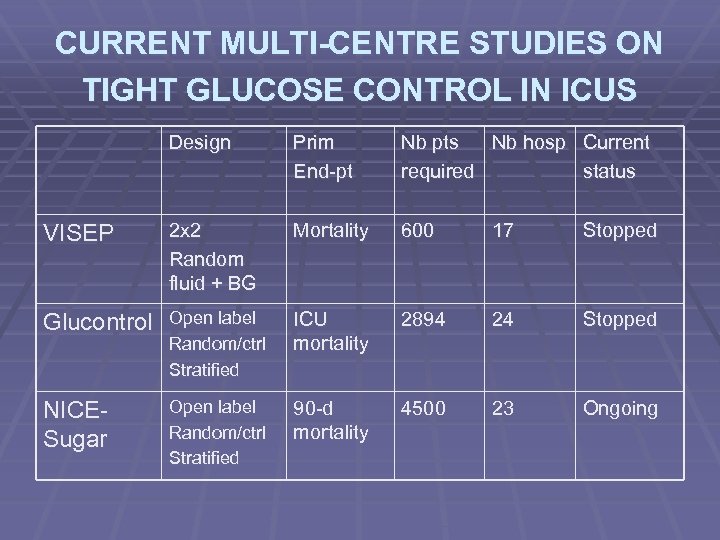 CURRENT MULTI-CENTRE STUDIES ON TIGHT GLUCOSE CONTROL IN ICUS Design Prim End-pt Nb pts Nb hosp Current required status VISEP 2 x 2 Random fluid + BG Mortality 600 17 Stopped Glucontrol Open label Random/ctrl Stratified ICU mortality 2894 24 Stopped NICESugar Open label Random/ctrl Stratified 90 -d mortality 4500 23 Ongoing
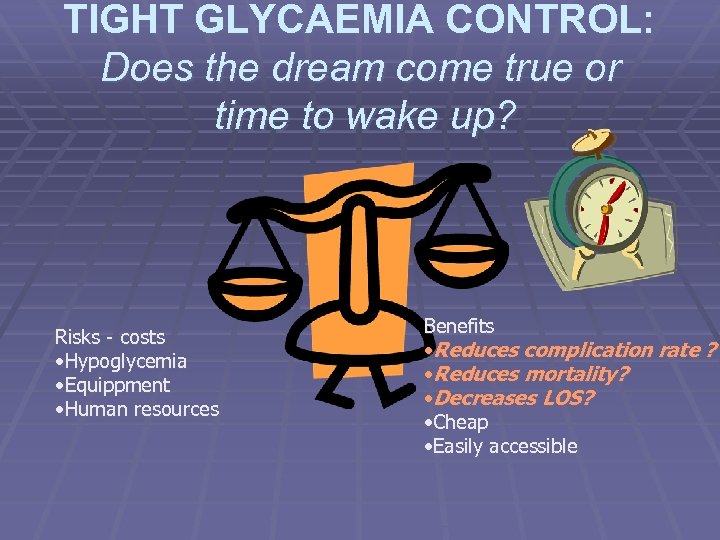 TIGHT GLYCAEMIA CONTROL: Does the dream come true or time to wake up? Risks - costs • Hypoglycemia • Equippment • Human resources Benefits • Reduces complication rate ? • Reduces mortality? • Decreases LOS? • Cheap • Easily accessible
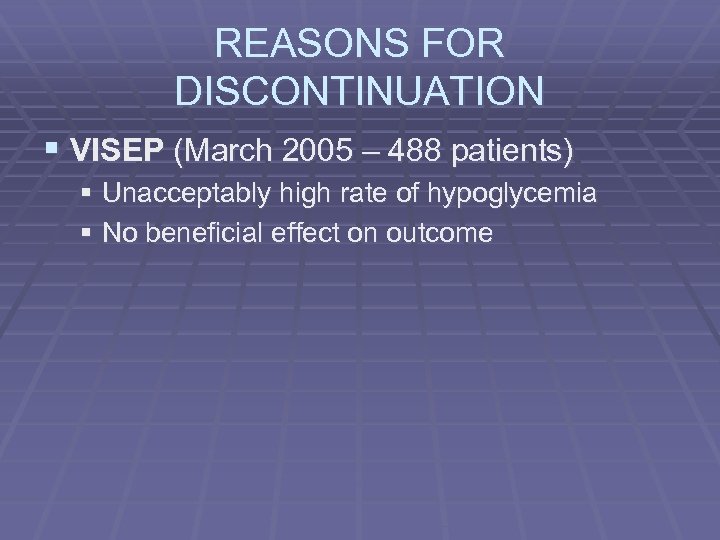 REASONS FOR DISCONTINUATION § VISEP (March 2005 – 488 patients) § Unacceptably high rate of hypoglycemia § No beneficial effect on outcome
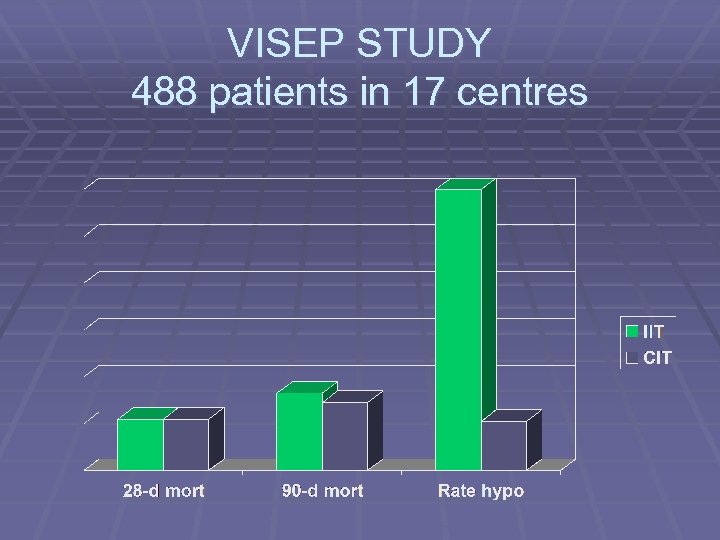 VISEP STUDY 488 patients in 17 centres
 GLUCONTROL A Multi-Centre Study Comparing the Effects of Two Glucose Control Regimens by Insulin in Intensive Care Unit Patients
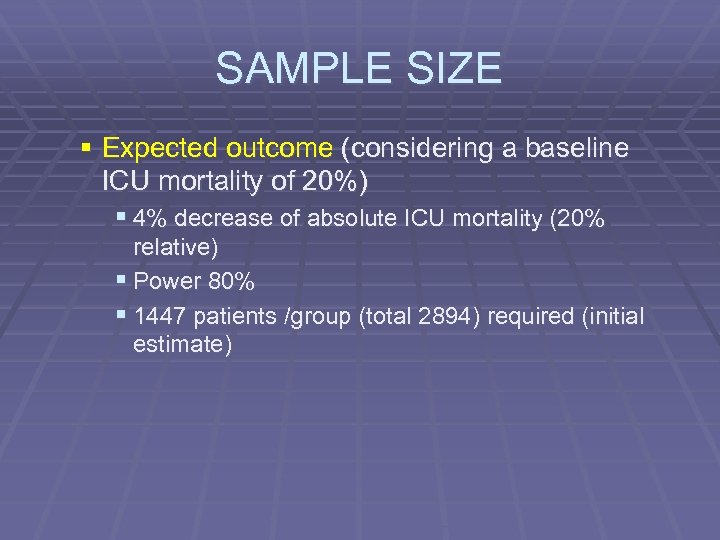 SAMPLE SIZE § Expected outcome (considering a baseline ICU mortality of 20%) § 4% decrease of absolute ICU mortality (20% relative) § Power 80% § 1447 patients /group (total 2894) required (initial estimate)
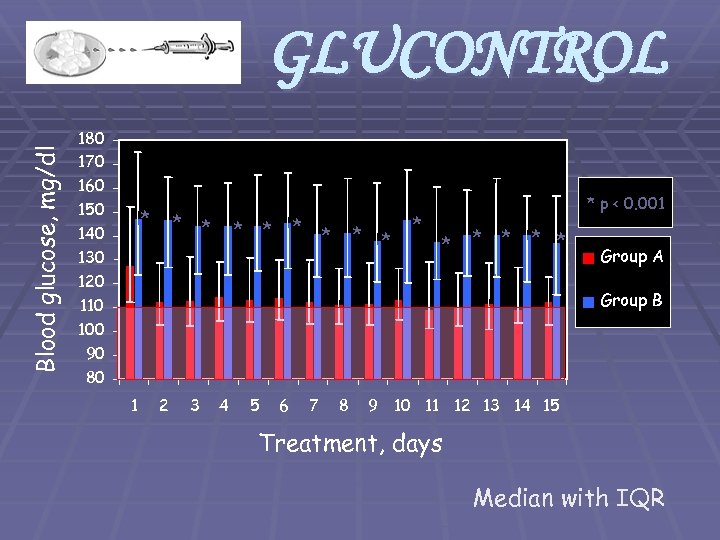
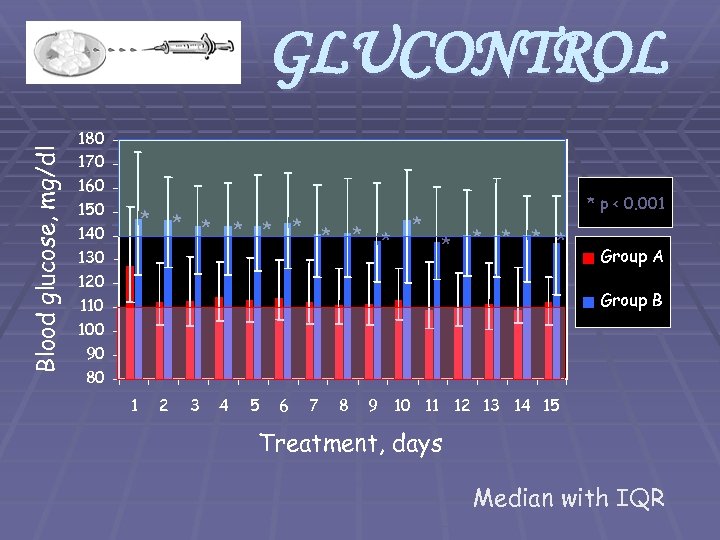
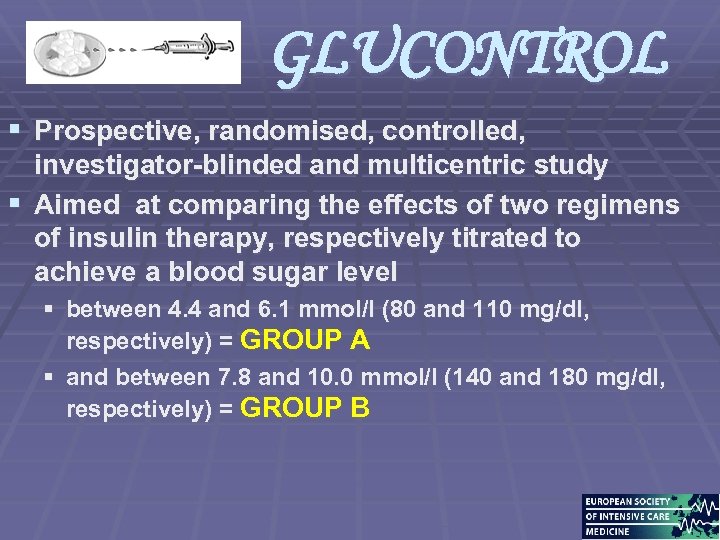 GLUCONTROL § Prospective, randomised, controlled, investigator-blinded and multicentric study § Aimed at comparing the effects of two regimens of insulin therapy, respectively titrated to achieve a blood sugar level § between 4. 4 and 6. 1 mmol/l (80 and 110 mg/dl, respectively) = GROUP A § and between 7. 8 and 10. 0 mmol/l (140 and 180 mg/dl, respectively) = GROUP B
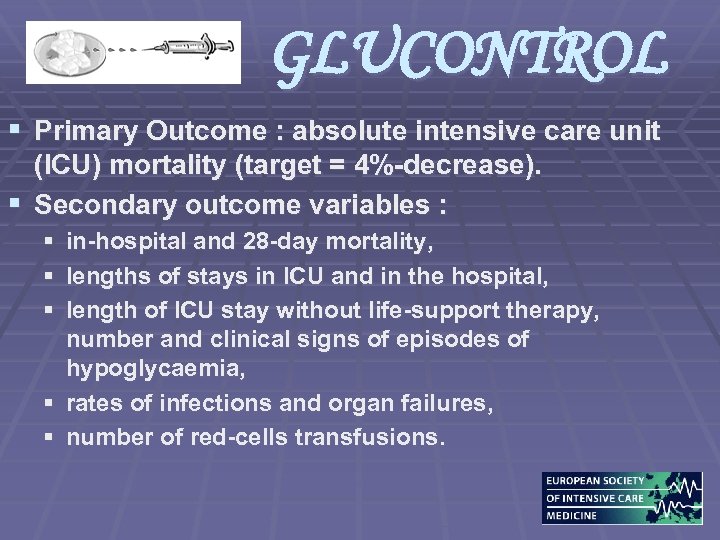 GLUCONTROL § Primary Outcome : absolute intensive care unit (ICU) mortality (target = 4%-decrease). § Secondary outcome variables : § § § in-hospital and 28 -day mortality, lengths of stays in ICU and in the hospital, length of ICU stay without life-support therapy, number and clinical signs of episodes of hypoglycaemia, § rates of infections and organ failures, § number of red-cells transfusions.
 GLUCONTROL § Inclusion criteria § 18 years or older § admitted in an ICU § Exclusion criterion § Absence of signed informed consent
 GLUCONTROL § Planning : § Interim analysis each 100 ICU deaths § In order to detect a 4% decrease of absolute mortality 3500 patients to be included
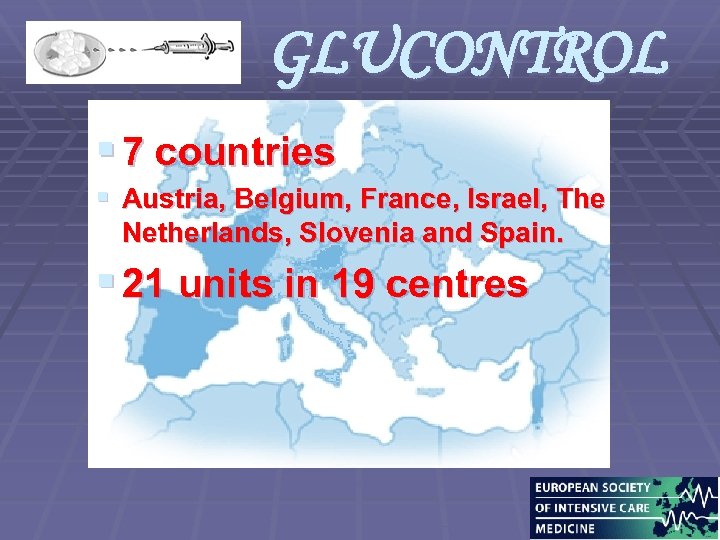 GLUCONTROL § 7 countries § Austria, Belgium, France, Israel, The Netherlands, Slovenia and Spain. § 21 units in 19 centres
 GLUCONTROL § Planning : § Interim analysis each 100 ICU deaths § In order to detect a 4% decrease of absolute mortality 3500 patients to be included § STUDY STOPPED ON MAY 29 th, 2006 § Safety concern § High rate of unintended protocol violations
 GLUCONTROL l 1108 recruited patients l 1099 randomized patients l Patients available for the analysis: n = 1091 ØGroup A: 538 patients ØGroup B: 553 patients l Length of observation: Ø from 1 to 56 days (median: 5; IQR: 3 – 10)
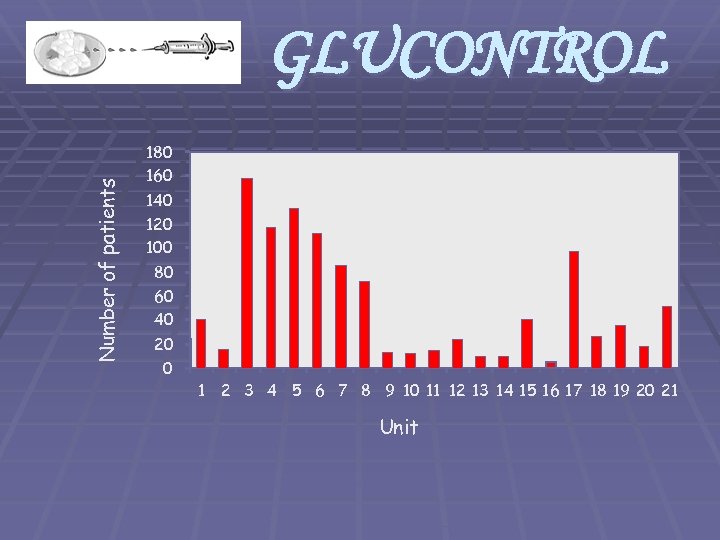 Number of patients GLUCONTROL 180 160 140 120 1091 patients 80 60 40 20 0 1 2 3 4 5 6 7 8 9 10 11 12 13 14 15 16 17 18 19 20 21 Unit
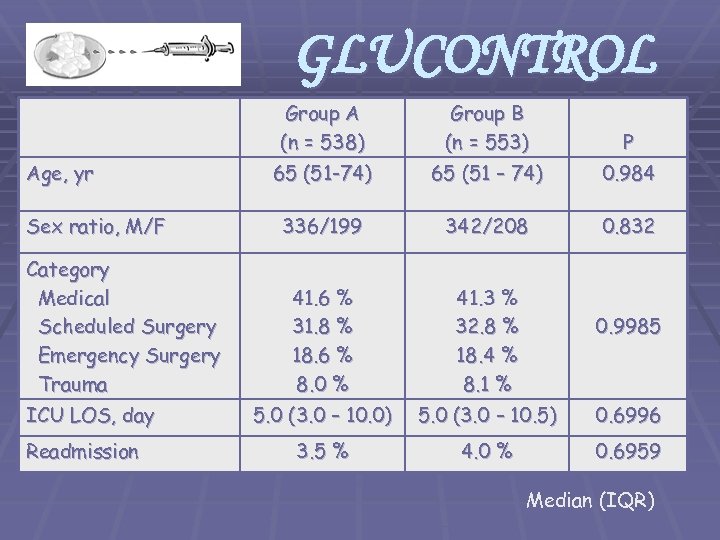 GLUCONTROL Group A (n = 538) Age, yr Sex ratio, M/F Category Medical Scheduled Surgery Emergency Surgery Trauma ICU LOS, day Readmission Group B (n = 553) P 65 (51 -74) 65 (51 – 74) 0. 984 336/199 342/208 0. 832 41. 6 % 31. 8 % 18. 6 % 8. 0 % 5. 0 (3. 0 – 10. 0) 41. 3 % 32. 8 % 18. 4 % 8. 1 % 5. 0 (3. 0 – 10. 5) 3. 5 % 4. 0 % 0. 9985 0. 6996 0. 6959 Median (IQR)
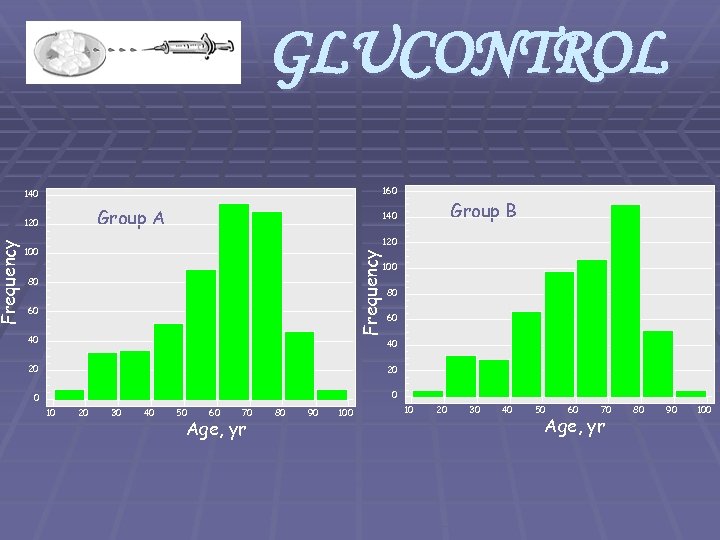 160 140 Group A 120 Group B 140 120 100 Frequency GLUCONTROL 80 60 40 100 80 60 40 20 20 0 0 10 20 30 40 50 60 70 Age, yr 80 90 100
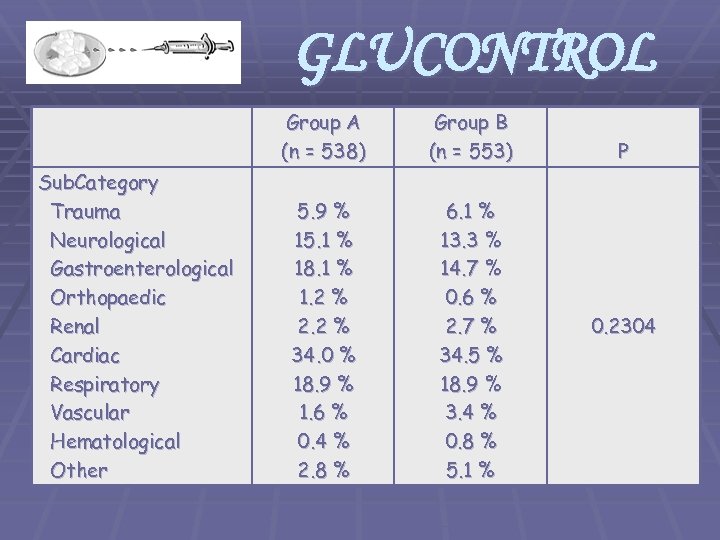 GLUCONTROL Group A (n = 538) Sub. Category Trauma Neurological Gastroenterological Orthopaedic Renal Cardiac Respiratory Vascular Hematological Other Group B (n = 553) 5. 9 % 15. 1 % 18. 1 % 1. 2 % 2. 2 % 34. 0 % 18. 9 % 1. 6 % 0. 4 % 2. 8 % 6. 1 % 13. 3 % 14. 7 % 0. 6 % 2. 7 % 34. 5 % 18. 9 % 3. 4 % 0. 8 % 5. 1 % P 0. 2304
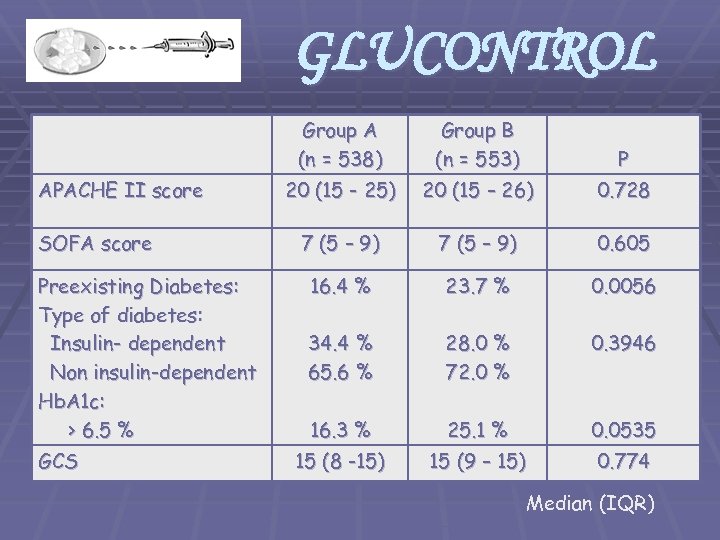 GLUCONTROL Group A (n = 538) APACHE II score SOFA score Preexisting Diabetes: Type of diabetes: Insulin- dependent Non insulin-dependent Hb. A 1 c: > 6. 5 % GCS Group B (n = 553) P 20 (15 - 25) 20 (15 – 26) 0. 728 7 (5 – 9) 0. 605 16. 4 % 23. 7 % 0. 0056 34. 4 % 65. 6 % 28. 0 % 72. 0 % 0. 3946 16. 3 % 25. 1 % 0. 0535 15 (8 -15) 15 (9 – 15) 0. 774 Median (IQR)
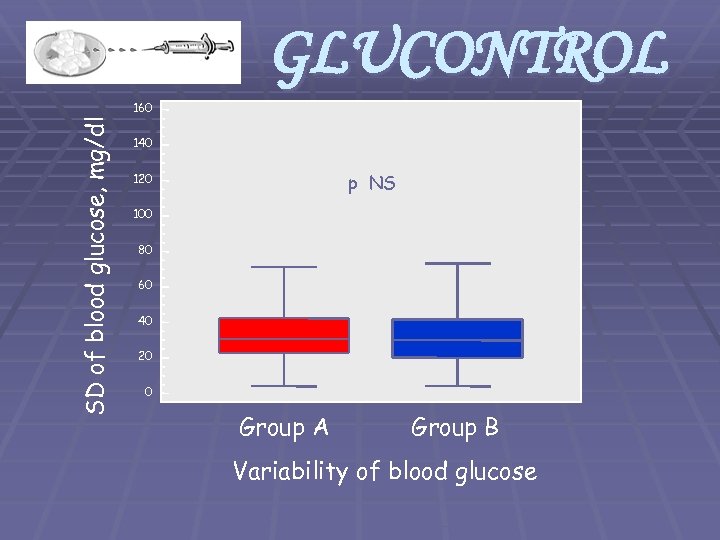
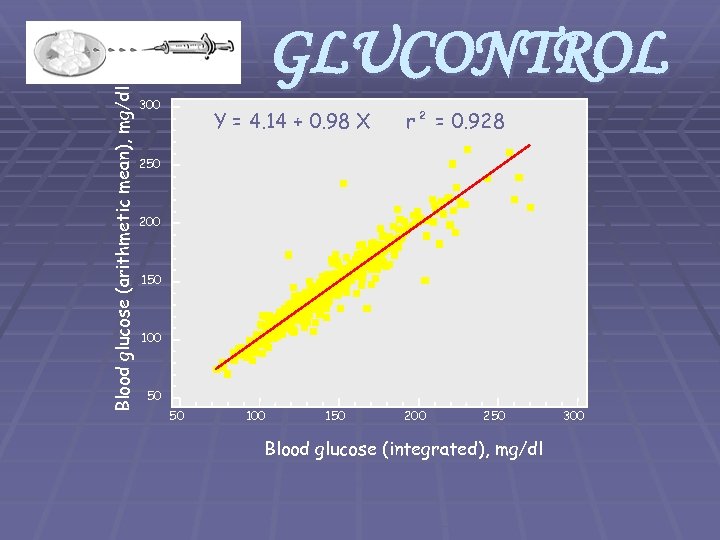
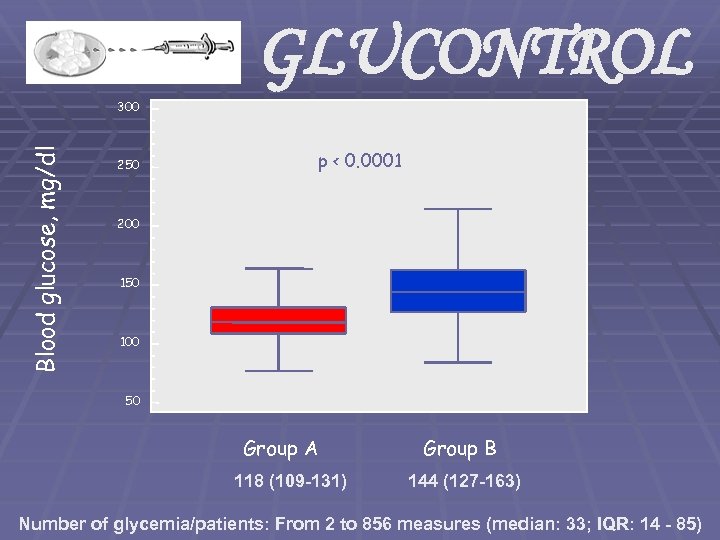 GLUCONTROL Blood glucose, mg/dl 300 250 p < 0. 0001 200 150 100 50 Group A 118 (109 -131) Group B 144 (127 -163) Number of glycemia/patients: From 2 to 856 measures (median: 33; IQR: 14 - 85)
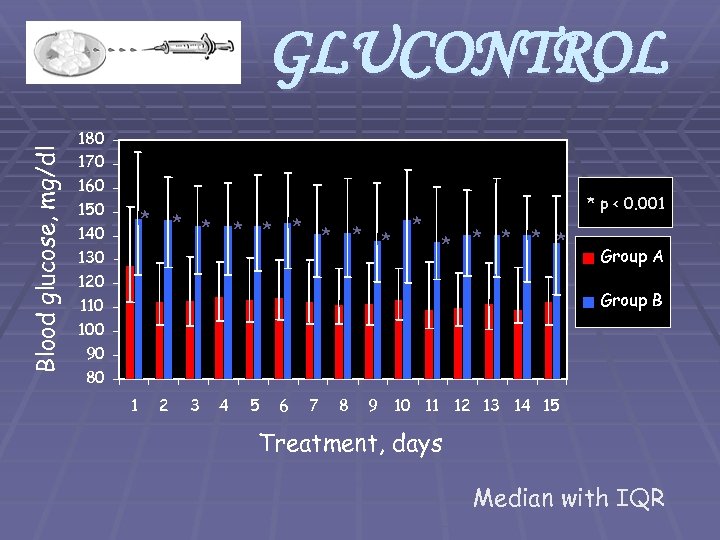 Blood glucose, mg/dl GLUCONTROL 180 170 160 150 140 130 120 110 100 90 80 * * * p < 0. 001 * * Group A Group B 1 2 3 4 5 6 7 8 9 10 11 12 13 14 15 Treatment, days Median with IQR
 Blood glucose, mg/dl GLUCONTROL 180 170 160 150 140 130 120 110 100 90 80 * * * p < 0. 001 * * Group A Group B 1 2 3 4 5 6 7 8 9 10 11 12 13 14 15 Treatment, days Median with IQR
 Blood glucose, mg/dl GLUCONTROL 180 170 160 150 140 130 120 110 100 90 80 * * * p < 0. 001 * * Group A Group B 1 2 3 4 5 6 7 8 9 10 11 12 13 14 15 Treatment, days Median with IQR
 GLUCONTROL SD of blood glucose, mg/dl 160 140 p NS 120 100 80 60 40 20 0 Group A Group B Variability of blood glucose
 Blood glucose (arithmetic mean), mg/dl GLUCONTROL 300 Y = 4. 14 + 0. 98 X r² = 0. 928 250 200 150 100 50 50 100 150 200 250 Blood glucose (integrated), mg/dl 300
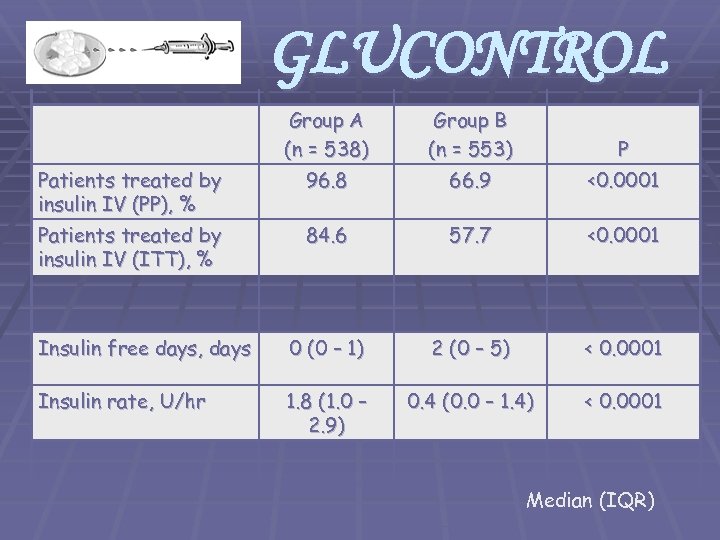 GLUCONTROL Group A (n = 538) Group B (n = 553) P Patients treated by insulin IV (PP), % 96. 8 66. 9 <0. 0001 Patients treated by insulin IV (ITT), % 84. 6 57. 7 <0. 0001 Insulin free days, days 0 (0 – 1) 2 (0 – 5) < 0. 0001 Insulin rate, U/hr 1. 8 (1. 0 – 2. 9) 0. 4 (0. 0 – 1. 4) < 0. 0001 Median (IQR)
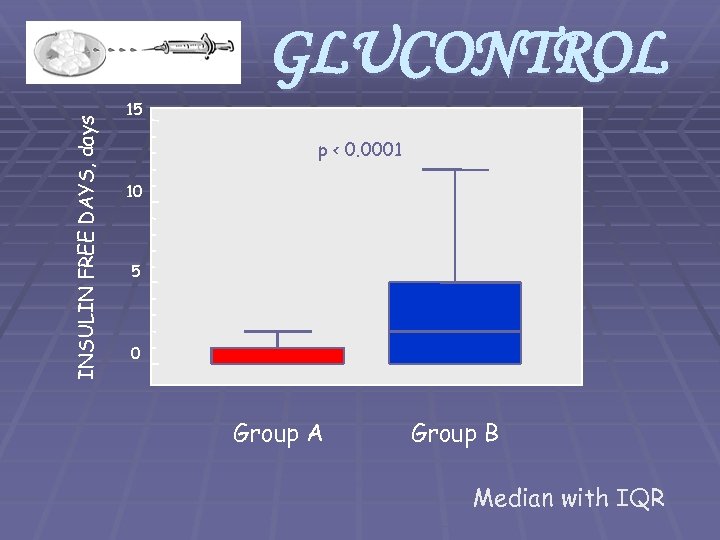 INSULIN FREE DAYS, days GLUCONTROL 15 p < 0. 0001 10 5 0 Group A Group B Median with IQR
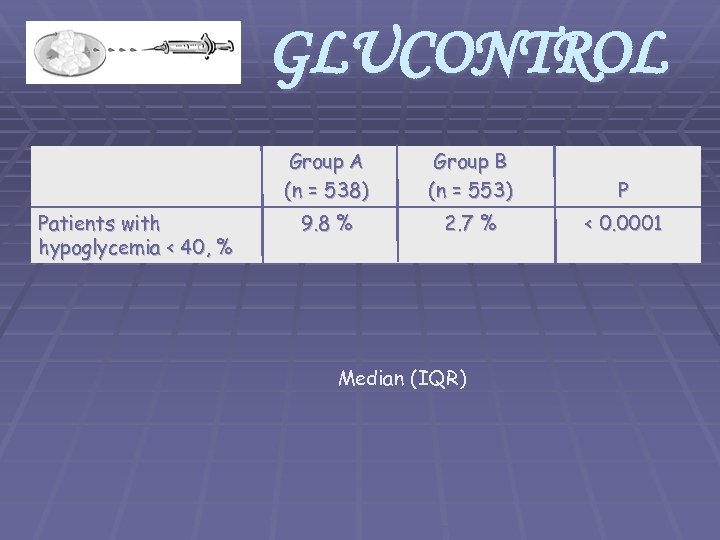 GLUCONTROL Group A (n = 538) Patients with hypoglycemia < 40, % Group B (n = 553) P 9. 8 % 2. 7 % < 0. 0001 Median (IQR)
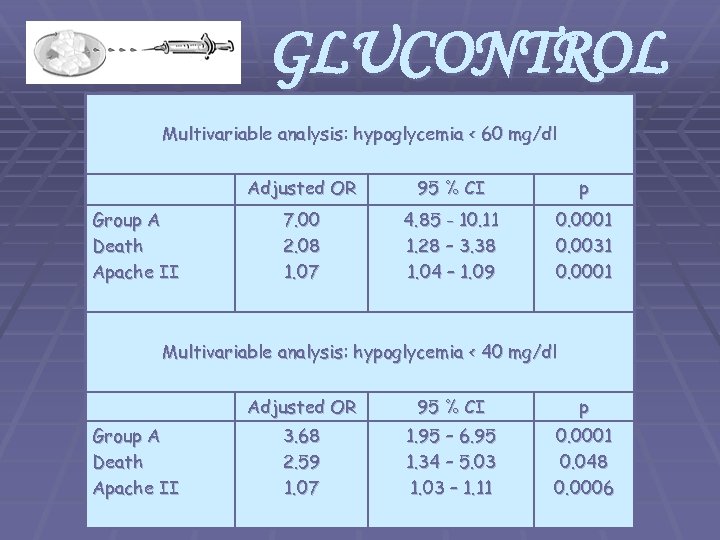 GLUCONTROL Multivariable analysis: hypoglycemia < 60 mg/dl Adjusted OR Group A Death Apache II 95 % CI p 7. 00 2. 08 1. 07 4. 85 - 10. 11 1. 28 – 3. 38 1. 04 – 1. 09 0. 0001 0. 0031 0. 0001 Multivariable analysis: hypoglycemia < 40 mg/dl Adjusted OR Group A Death Apache II 95 % CI p 3. 68 2. 59 1. 07 1. 95 – 6. 95 1. 34 – 5. 03 1. 03 – 1. 11 0. 0001 0. 048 0. 0006
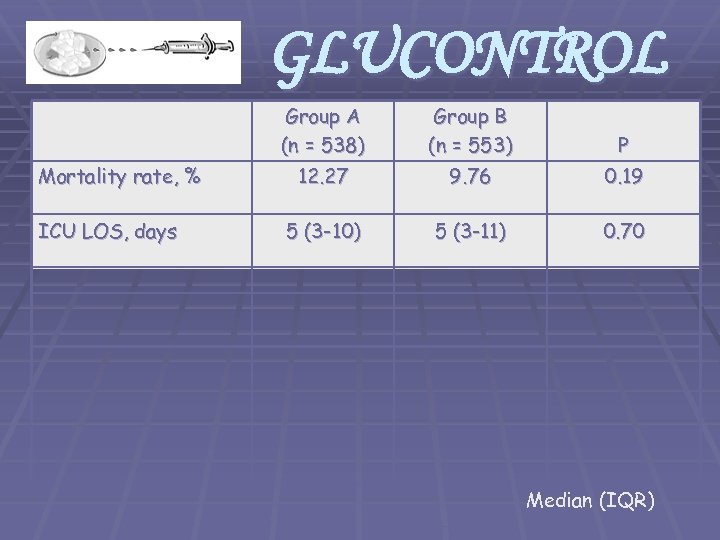 GLUCONTROL Group A (n = 538) Mortality rate, % ICU LOS, days Group B (n = 553) P 12. 27 9. 76 0. 19 5 (3 -10) 5 (3 -11) 0. 70 Median (IQR)
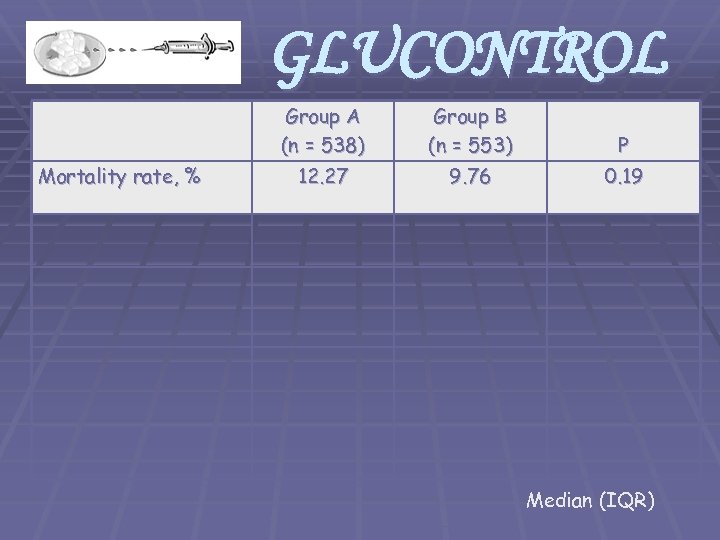 GLUCONTROL Group A (n = 538) Mortality rate, % Group B (n = 553) P 12. 27 9. 76 0. 19 Median (IQR)
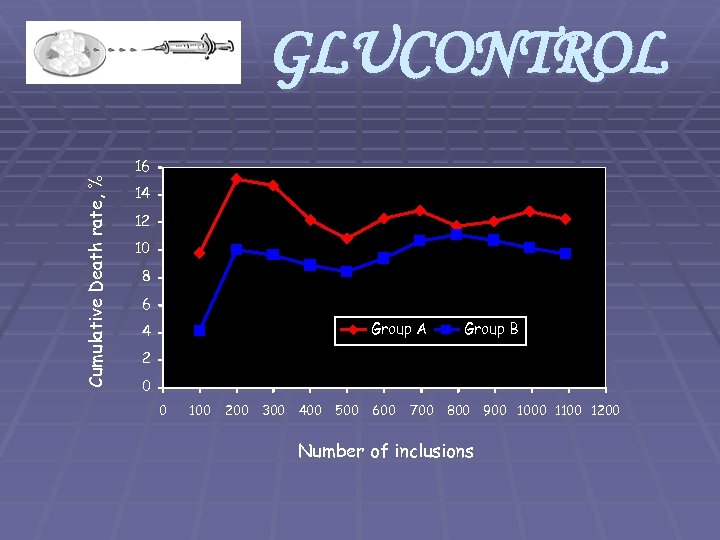 GLUCONTROL Cumulative Death rate, % 16 14 12 10 8 6 Group A 4 Group B 2 0 0 100 200 300 400 500 600 700 800 900 1000 1100 1200 Number of inclusions
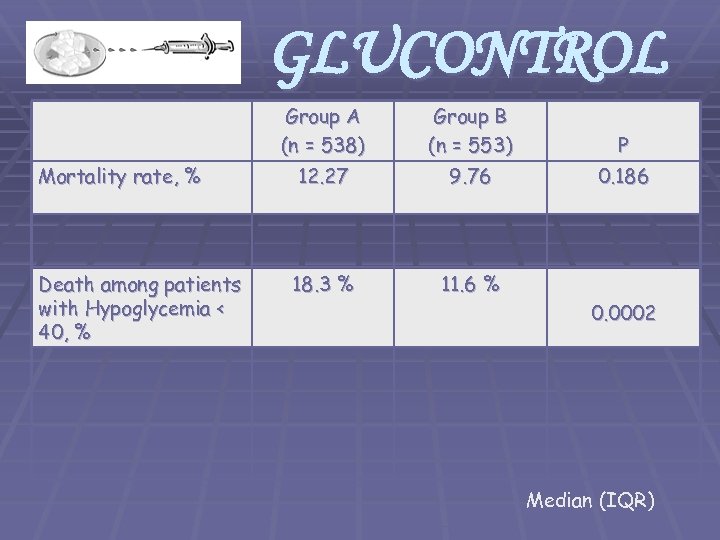 GLUCONTROL Group A (n = 538) Group B (n = 553) P Mortality rate, % 12. 27 9. 76 0. 186 Death among patients with Hypoglycemia < 40, % 18. 3 % 11. 6 % 0. 0002 Median (IQR)
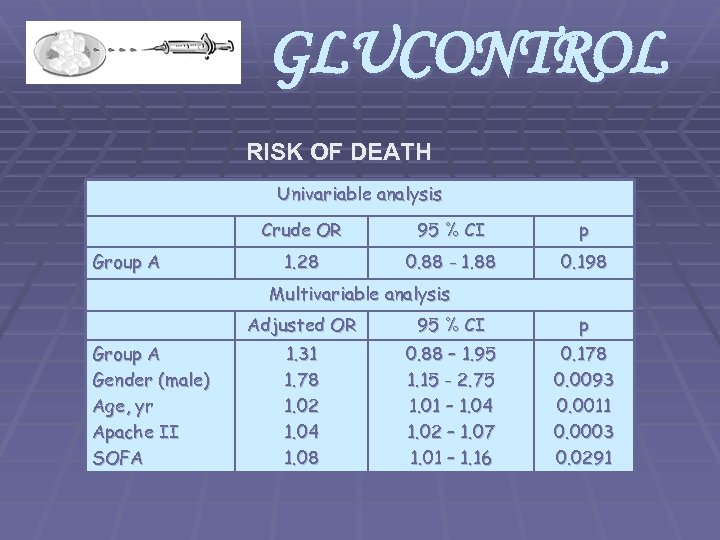 GLUCONTROL RISK OF DEATH Univariable analysis Crude OR Group A 95 % CI p 1. 28 0. 88 - 1. 88 0. 198 Multivariable analysis Adjusted OR Group A Gender (male) Age, yr Apache II SOFA 95 % CI p 1. 31 1. 78 1. 02 1. 04 1. 08 0. 88 – 1. 95 1. 15 - 2. 75 1. 01 – 1. 04 1. 02 – 1. 07 1. 01 – 1. 16 0. 178 0. 0093 0. 0011 0. 0003 0. 0291
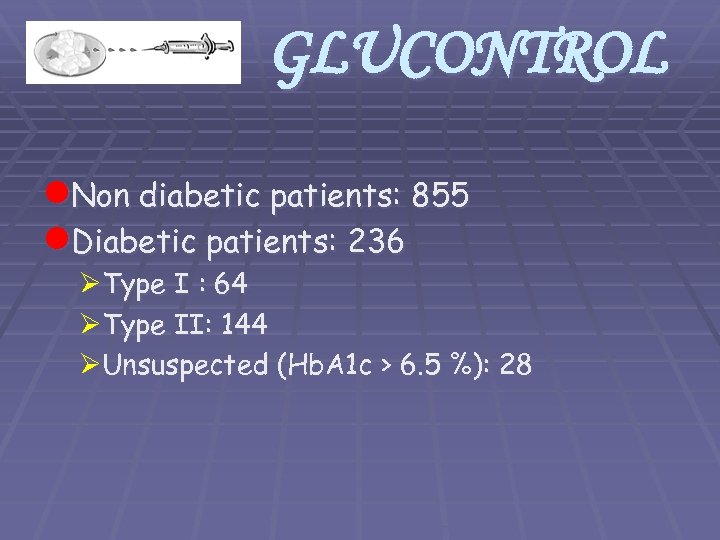 GLUCONTROL l. Non diabetic patients: 855 l. Diabetic patients: 236 ØType I : 64 ØType II: 144 ØUnsuspected (Hb. A 1 c > 6. 5 %): 28
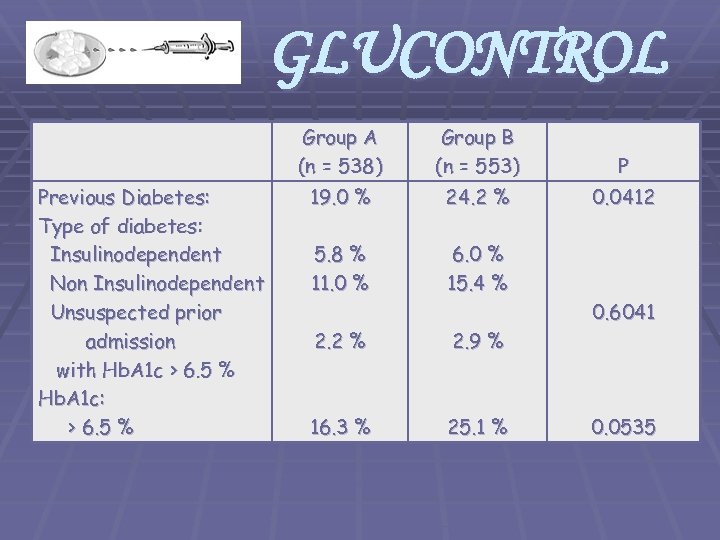 GLUCONTROL Group A (n = 538) Previous Diabetes: Type of diabetes: Insulinodependent Non Insulinodependent Unsuspected prior admission with Hb. A 1 c > 6. 5 % Hb. A 1 c: > 6. 5 % Group B (n = 553) P 19. 0 % 24. 2 % 0. 0412 5. 8 % 11. 0 % 6. 0 % 15. 4 % 2. 2 % 2. 9 % 16. 3 % 25. 1 % 0. 6041 0. 0535
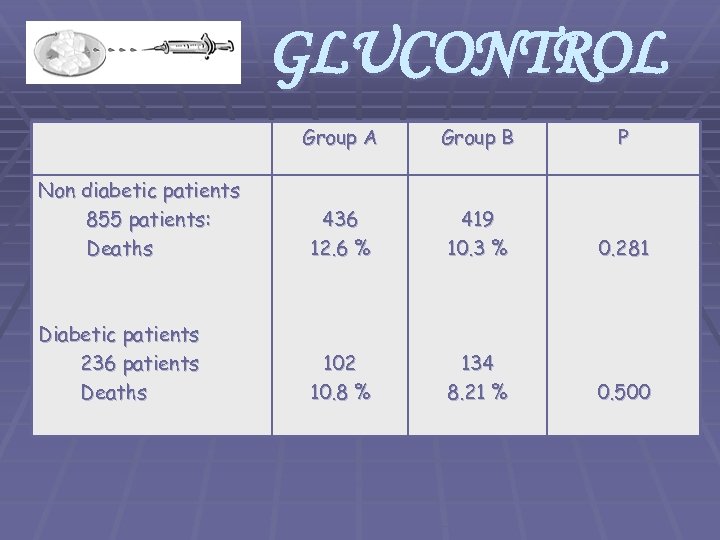 GLUCONTROL Group A Group B P Non diabetic patients 855 patients: Deaths 436 12. 6 % 419 10. 3 % 0. 281 Diabetic patients 236 patients Deaths 102 10. 8 % 134 8. 21 % 0. 500
 TIGHT GLYCAEMIA CONTROL: Benefits Risks
 TIGHT GLUCOSE CONTROL WITH INTENSIVE INSULIN THERAPY Being funambulist may not be accessible to everyone Hazards of hyperglycemia Risks of hypoglycemia