 Скачать презентацию Control of Eukaryotic Genes AP Biology The
a6b9279a965a7bf3f2655d9e8eb79c94.ppt
- Количество слайдов: 27



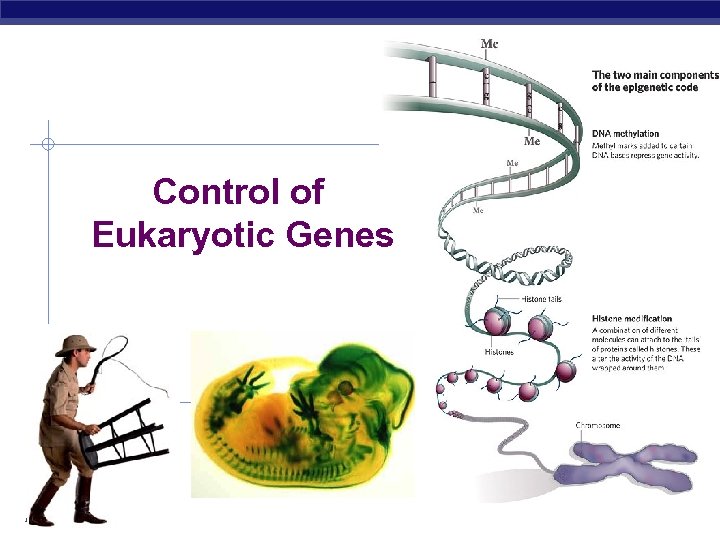
Control of Eukaryotic Genes AP Biology
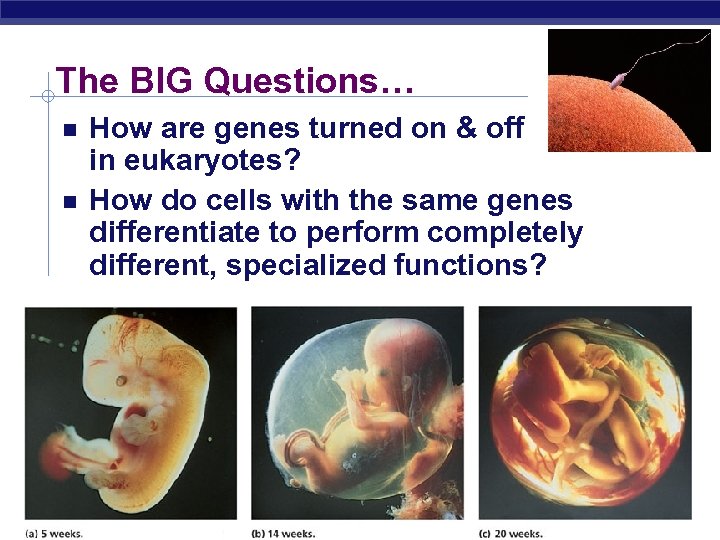
The BIG Questions… How are genes turned on & off in eukaryotes? How do cells with the same genes differentiate to perform completely different, specialized functions? AP Biology
Evolution of gene regulation Prokaryotes single-celled u evolved to grow & divide rapidly u must respond quickly to changes in external environment u exploit transient resources Gene regulation u turn genes on & off rapidly u AP Biology flexibility & reversibility adjust levels of enzymes for synthesis & digestion

Evolution of gene regulation Eukaryotes multicellular u evolved to maintain constant internal conditions while facing changing external conditions u u homeostasis regulate body as a whole growth & development w long term processes specialization w turn on & off large number of genes AP Biology must coordinate the body as a whole rather than serve the needs of individual cells
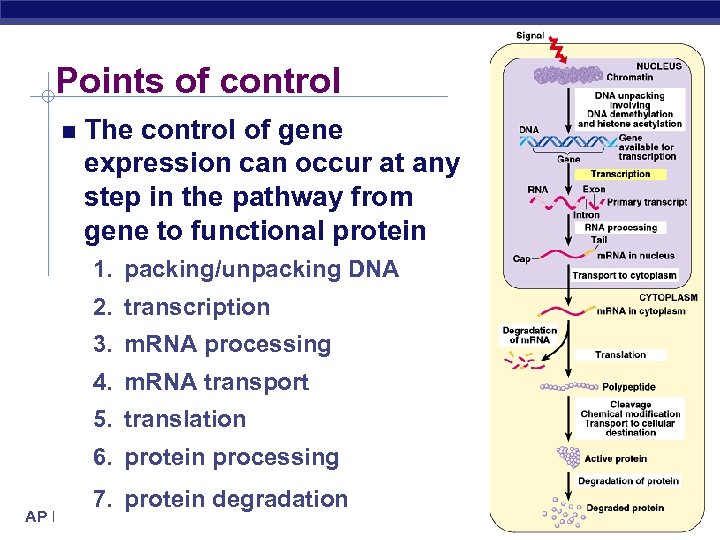
Points of control The control of gene expression can occur at any step in the pathway from gene to functional protein 1. packing/unpacking DNA 2. transcription 3. m. RNA processing 4. m. RNA transport 5. translation 6. protein processing 7. protein degradation AP Biology
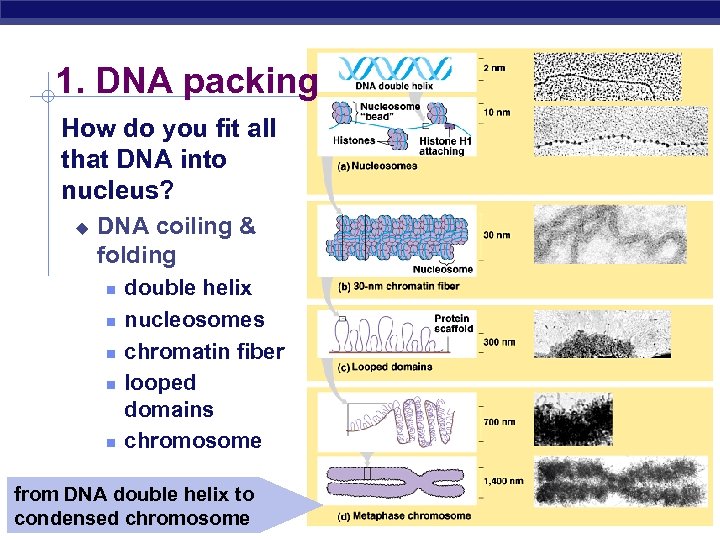
1. DNA packing How do you fit all that DNA into nucleus? u DNA coiling & folding double helix nucleosomes chromatin fiber looped domains chromosome from DNA double helix to AP Biology condensed chromosome
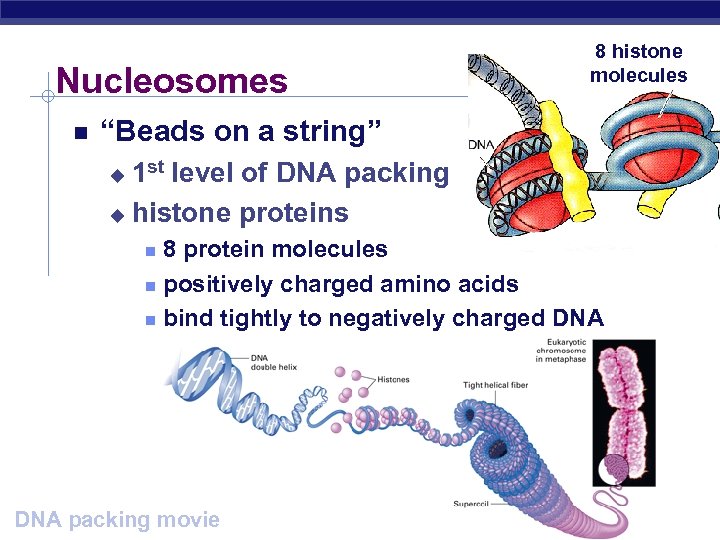
Nucleosomes 8 histone molecules “Beads on a string” 1 st level of DNA packing u histone proteins u 8 protein molecules positively charged amino acids bind tightly to negatively charged DNA AP Biology DNA packing movie
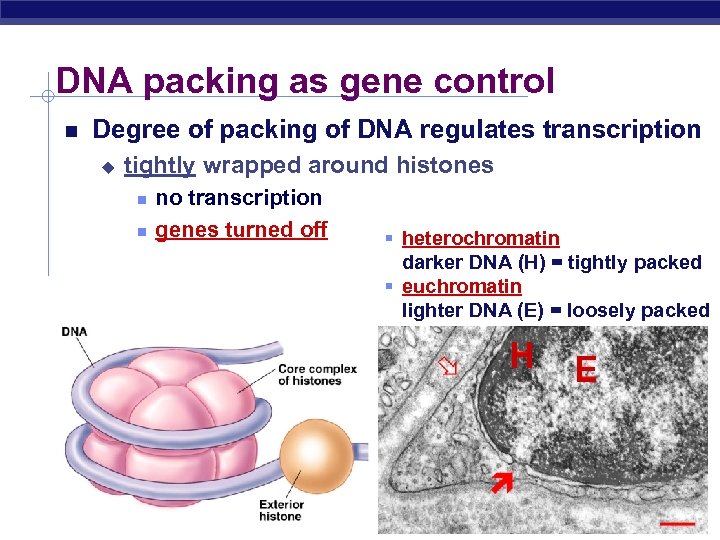
DNA packing as gene control Degree of packing of DNA regulates transcription u tightly wrapped around histones no transcription genes turned off § heterochromatin darker DNA (H) = tightly packed § euchromatin lighter DNA (E) = loosely packed H AP Biology E
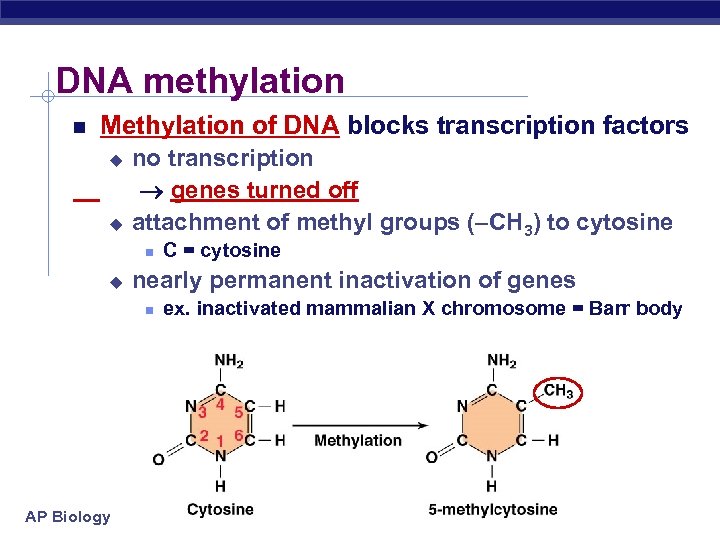
DNA methylation Methylation of DNA blocks transcription factors no transcription genes turned off u attachment of methyl groups (–CH 3) to cytosine u u nearly permanent inactivation of genes AP Biology C = cytosine ex. inactivated mammalian X chromosome = Barr body
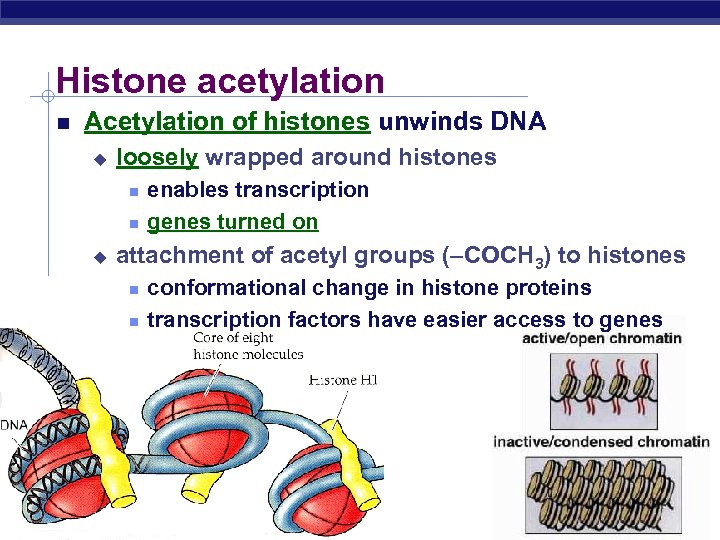
Histone acetylation Acetylation of histones unwinds DNA u loosely wrapped around histones u attachment of acetyl groups (–COCH 3) to histones AP Biology enables transcription genes turned on conformational change in histone proteins transcription factors have easier access to genes
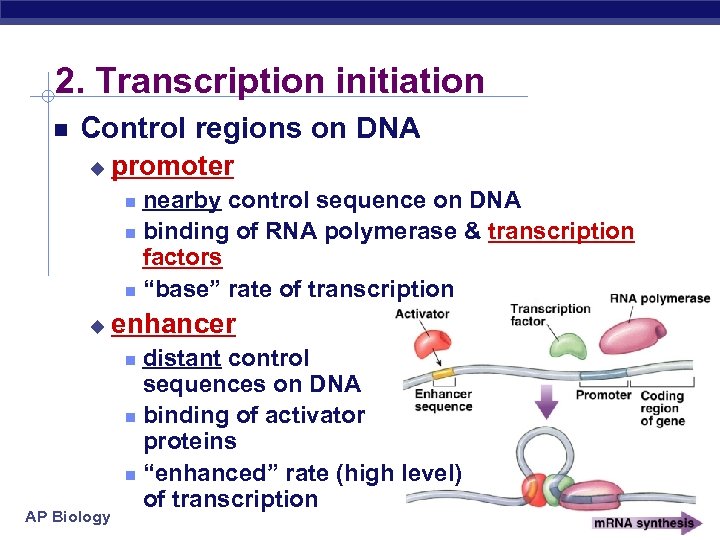
2. Transcription initiation Control regions on DNA u promoter nearby control sequence on DNA binding of RNA polymerase & transcription factors “base” rate of transcription u enhancer distant control sequences on DNA binding of activator proteins “enhanced” rate (high level) of transcription AP Biology
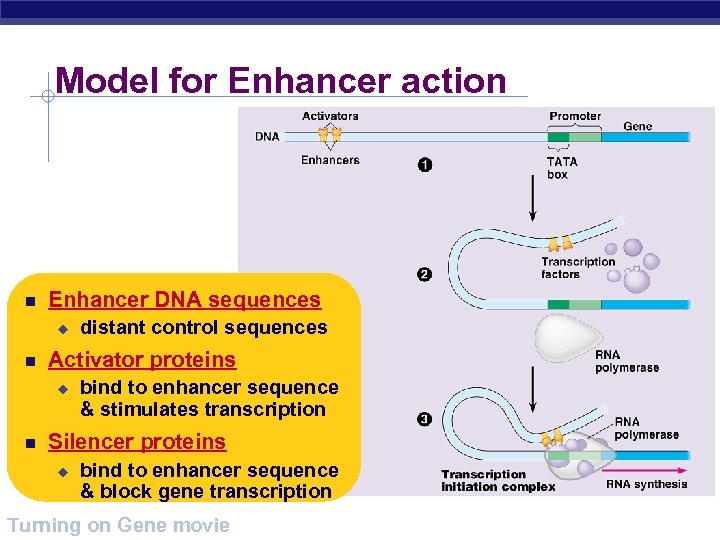
Model for Enhancer action Enhancer DNA sequences u Activator proteins u distant control sequences bind to enhancer sequence & stimulates transcription Silencer proteins u bind to enhancer sequence & block gene transcription AP Biology Turning on Gene movie
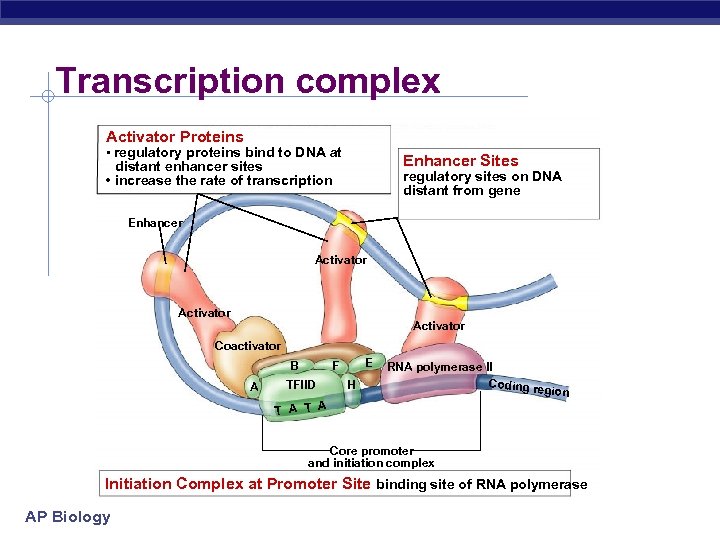
Transcription complex Activator Proteins • regulatory proteins bind to DNA at Enhancer Sites distant enhancer sites • increase the rate of transcription regulatory sites on DNA distant from gene Enhancer Activator Coactivator A E F B TFIID H RNA polymerase II Coding r egion T A Core promoter and initiation complex Initiation Complex at Promoter Site binding site of RNA polymerase AP Biology
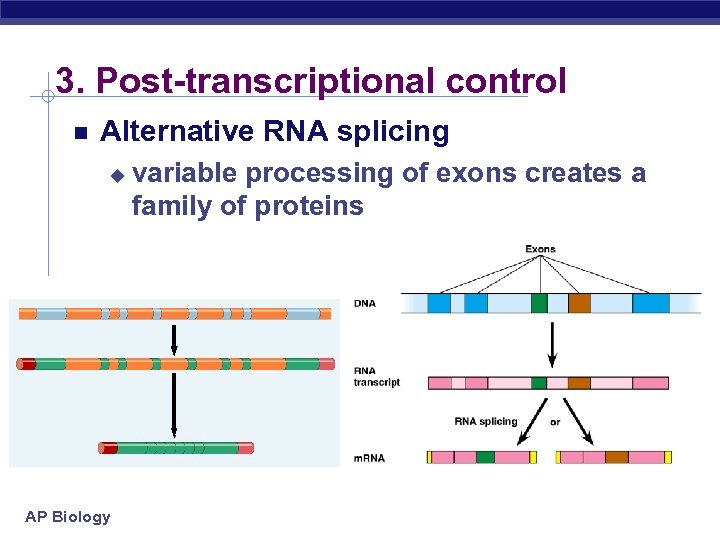
3. Post-transcriptional control Alternative RNA splicing u AP Biology variable processing of exons creates a family of proteins
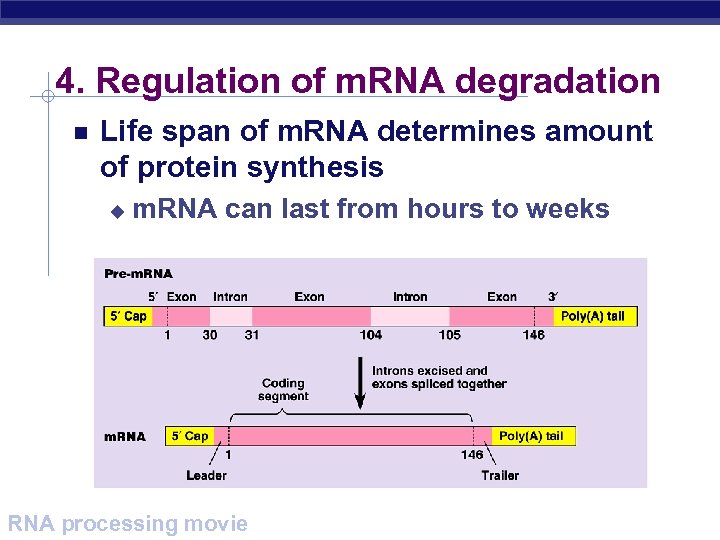
4. Regulation of m. RNA degradation Life span of m. RNA determines amount of protein synthesis u m. RNA can last from hours to weeks AP Biology RNA processing movie
***nc. RNA’s Non-coding RNA Around 1. 5% of DNA codes for proteins Rest of DNA codes for t. RNA u r. RNA u nc. RNA’s u Types of nc. RNA mi. RNA--micro. RNA u si. RNA—small interfering RNA u pi. RNA—piwi associated RNA—animals only u AP Biology
Evolutionary Significance of nc RNA Multiple levels of gene expression control pi. RNA & si. RNA can induce production of heterochromatin—no transcription u mi. RNA have multiple ways to stop translation u Allow evolution of higher degree of complexity of form Important roles in embryonic development AP Biology
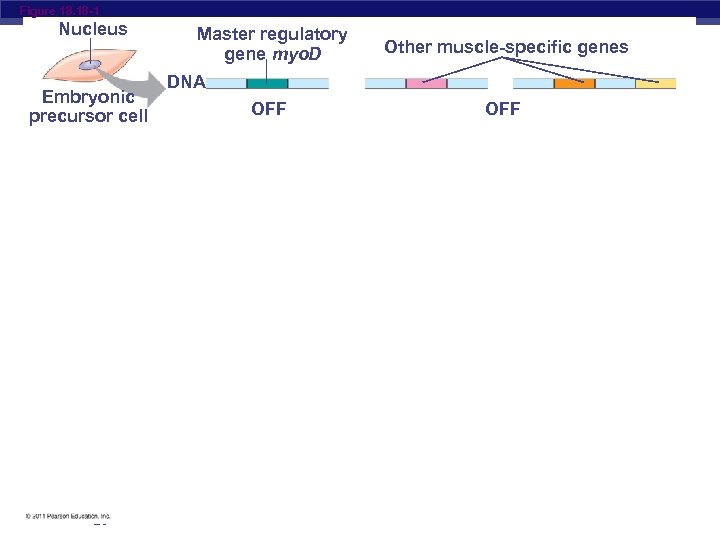
Figure 18. 18 -1 Nucleus Embryonic precursor cell AP Biology Master regulatory gene myo. D Other muscle-specific genes DNA OFF
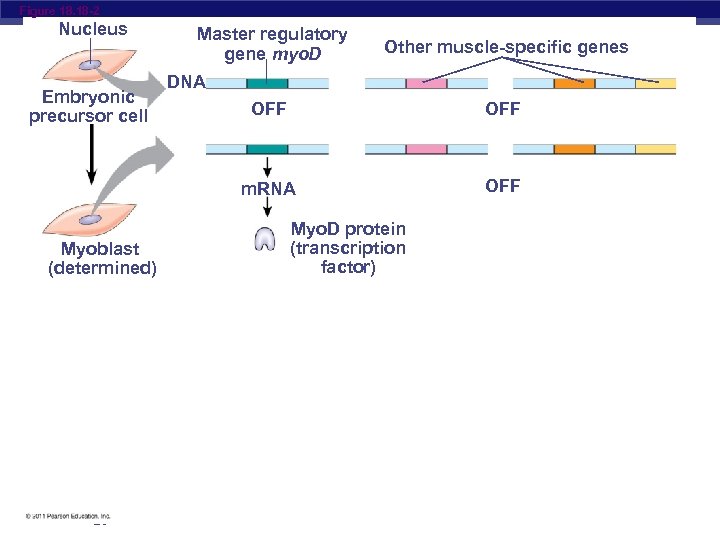
Figure 18. 18 -2 Nucleus Embryonic precursor cell Master regulatory gene myo. D Other muscle-specific genes DNA AP Biology OFF m. RNA Myoblast (determined) OFF Myo. D protein (transcription factor)
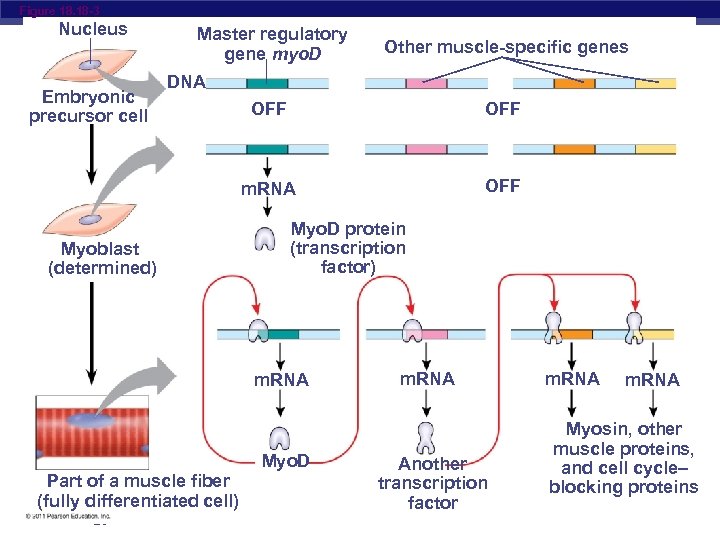
Figure 18. 18 -3 Nucleus Embryonic precursor cell Master regulatory gene myo. D Other muscle-specific genes DNA OFF m. RNA Myoblast (determined) OFF Myo. D protein (transcription factor) m. RNA Part of a muscle fiber (fully differentiated cell) AP Biology Myo. D m. RNA Another transcription factor m. RNA Myosin, other muscle proteins, and cell cycle– blocking proteins
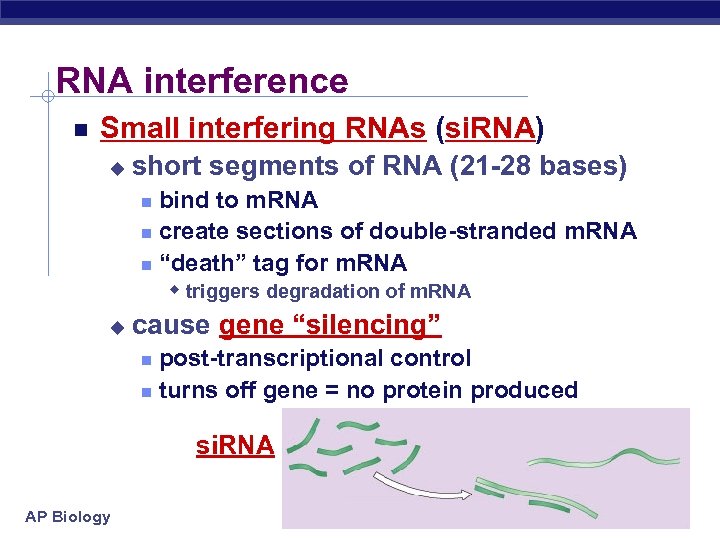
RNA interference Small interfering RNAs (si. RNA) u short segments of RNA (21 -28 bases) bind to m. RNA create sections of double-stranded m. RNA “death” tag for m. RNA w triggers degradation of m. RNA u cause gene “silencing” post-transcriptional control turns off gene = no protein produced si. RNA AP Biology
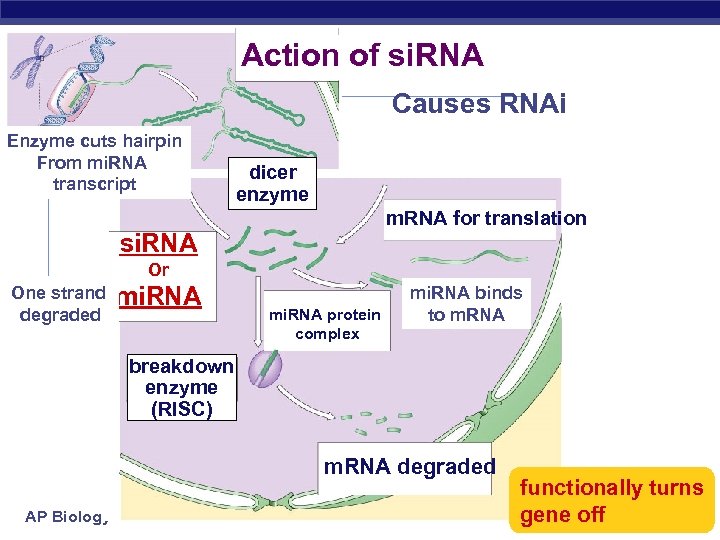
Action of si. RNA Causes RNAi Enzyme cuts hairpin From mi. RNA transcript dicer enzyme m. RNA for translation si. RNA Or One strand mi. RNA degraded mi. RNA protein complex mi. RNA binds to m. RNA breakdown enzyme (RISC) m. RNA degraded AP Biology functionally turns gene off
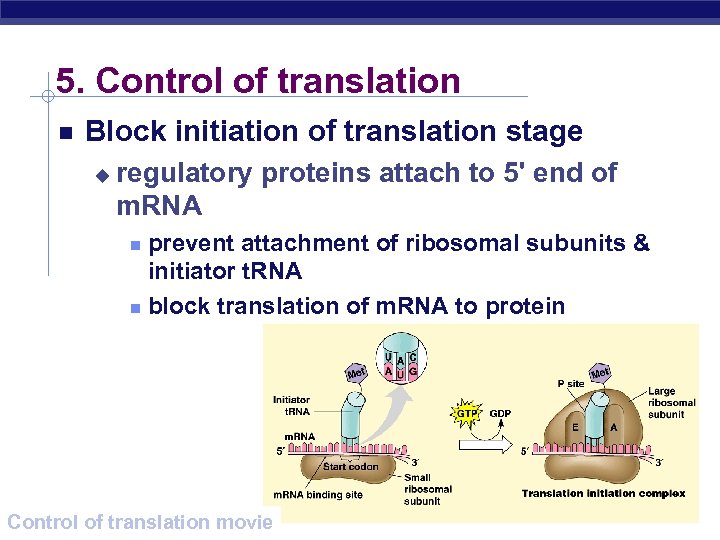
5. Control of translation Block initiation of translation stage u regulatory proteins attach to 5' end of m. RNA prevent attachment of ribosomal subunits & initiator t. RNA block translation of m. RNA to protein AP Biology Control of translation movie
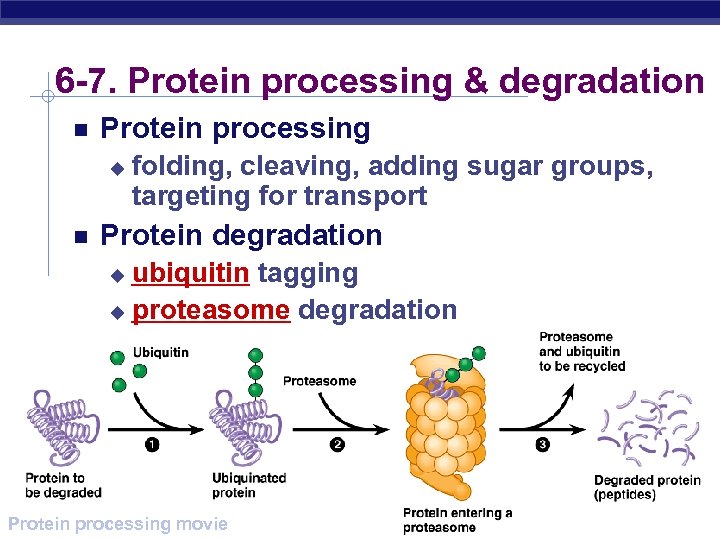
6 -7. Protein processing & degradation Protein processing u folding, cleaving, adding sugar groups, targeting for transport Protein degradation ubiquitin tagging u proteasome degradation u AP Biology Protein processing movie
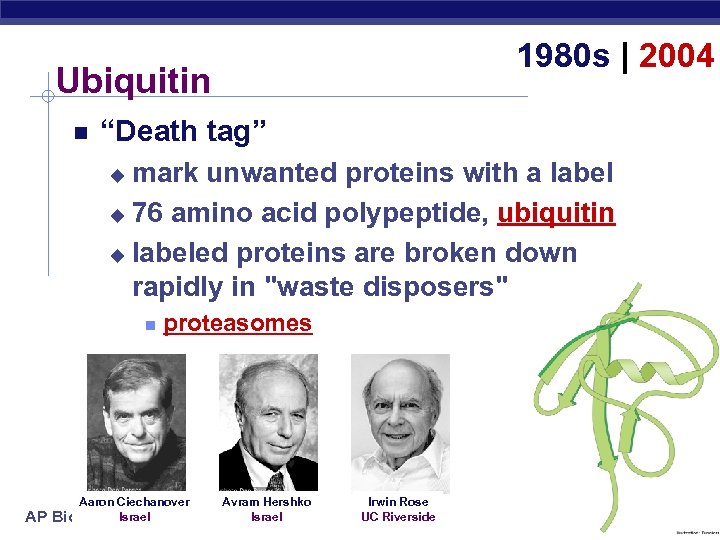
1980 s | 2004 Ubiquitin “Death tag” mark unwanted proteins with a label u 76 amino acid polypeptide, ubiquitin u labeled proteins are broken down rapidly in "waste disposers" u proteasomes Aaron Ciechanover AP Biology Israel Avram Hershko Israel Irwin Rose UC Riverside
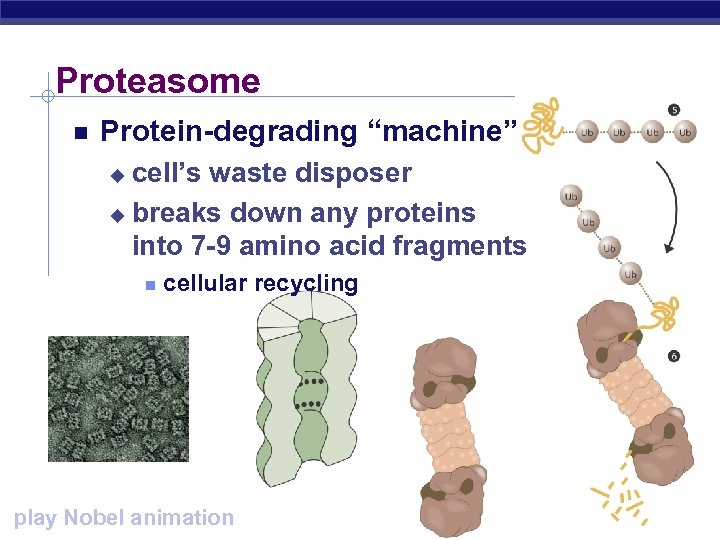
Proteasome Protein-degrading “machine” cell’s waste disposer u breaks down any proteins into 7 -9 amino acid fragments u cellular recycling AP Biology play Nobel animation
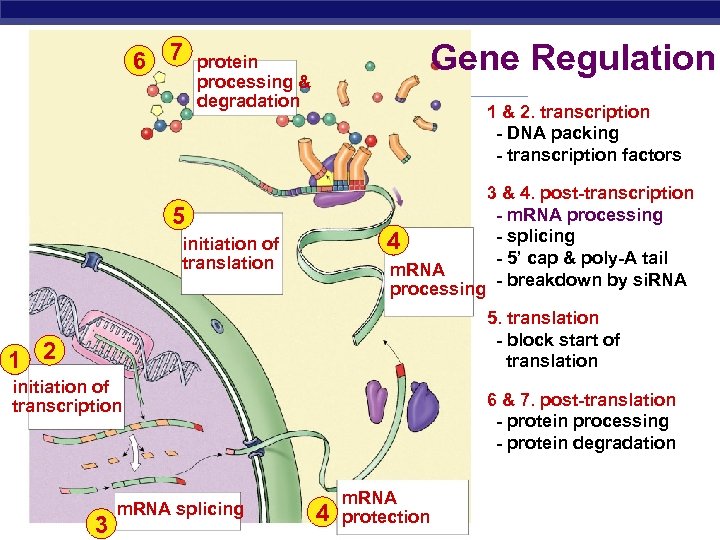
6 7 Gene Regulation protein processing & degradation 1 & 2. transcription - DNA packing - transcription factors 5 4 initiation of translation m. RNA processing 3 & 4. post-transcription - m. RNA processing - splicing - 5’ cap & poly-A tail - breakdown by si. RNA 5. translation - block start of translation 1 2 initiation of transcription AP Biology m. RNA splicing 3 6 & 7. post-translation - protein processing - protein degradation 4 m. RNA protection
Скачать презентацию Control of Eukaryotic Genes AP Biology The
a6b9279a965a7bf3f2655d9e8eb79c94.ppt