


 Скачать презентацию CONTAMINATED SITES MANAGEMENT IN LITHUANIA Rasa Radiene Lithuanian
212b782720bd0c5206ab3d67727cbb00.ppt
- Количество слайдов: 21
 CONTAMINATED SITES MANAGEMENT IN LITHUANIA Rasa Radiene, Lithuanian Geological Survey
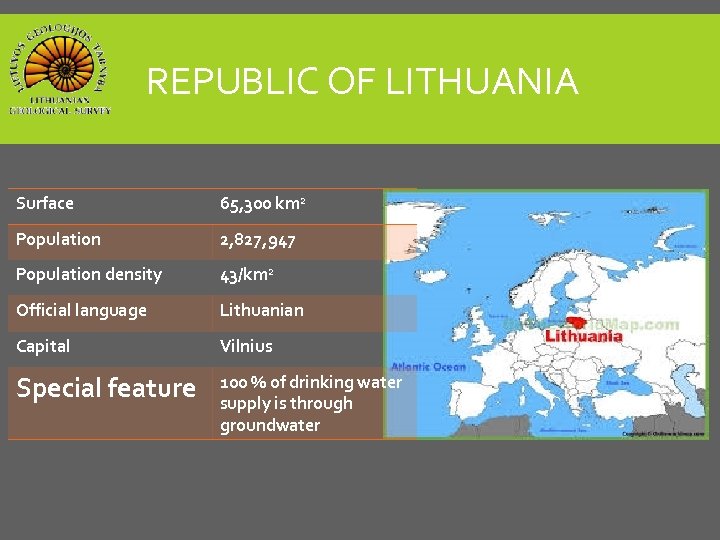 REPUBLIC OF LITHUANIA Surface 65, 300 km 2 Population 2, 827, 947 Population density 43/km 2 Official language Lithuanian Capital Vilnius Special feature 100 % of drinking water supply is through groundwater
 WHY DO WE NEED CONTAMINATED LAND MANAGEMENT? Protect human health and ecosystems, like groundwater and etc. Not to interfere with cities development Reuse brownfields for new uses To manage excavated material Urban planning – 63 % of investigations and remediations initiated by urban planning
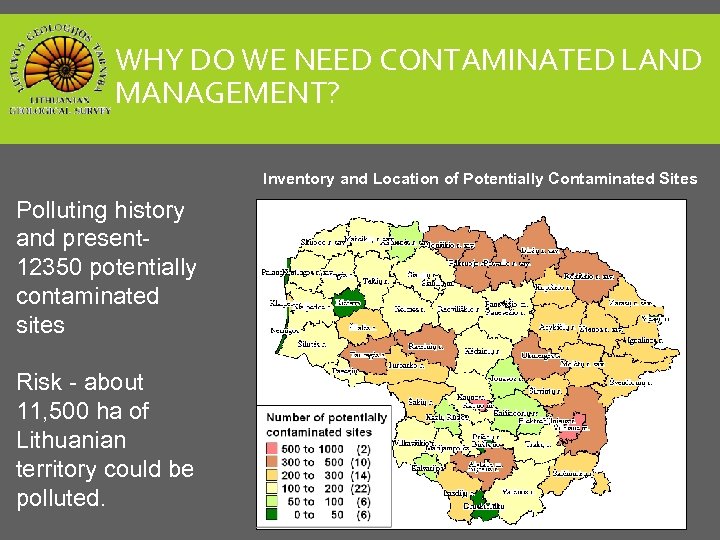 WHY DO WE NEED CONTAMINATED LAND MANAGEMENT? Inventory and Location of Potentially Contaminated Sites Polluting history and present 12350 potentially contaminated sites Risk - about 11, 500 ha of Lithuanian territory could be polluted.
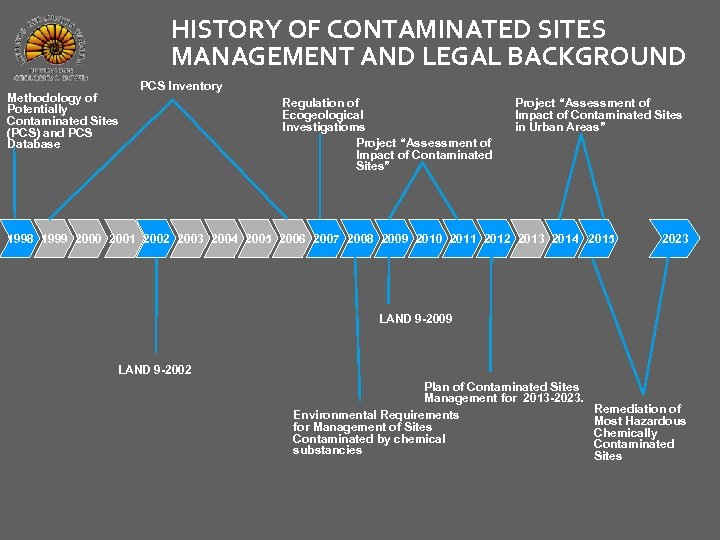 HISTORY OF CONTAMINATED SITES MANAGEMENT AND LEGAL BACKGROUND Methodology of Potentially Contaminated Sites (PCS) and PCS Database PCS Inventory Regulation of Ecogeological Investigatioms Project “Assessment of Impact of Contaminated Sites” Project “Assessment of Impact of Contaminated Sites in Urban Areas” 1998 1999 2000 2001 2002 2003 2004 2005 2006 2007 2008 2009 2010 2011 2012 2013 2014 2015 2023 LAND 9 -2009 LAND 9 -2002 Plan of Contaminated Sites Management for 2013 -2023. Environmental Requirements for Management of Sites Contaminated by chemical substancies Remediation of Most Hazardous Chemically Contaminated Sites
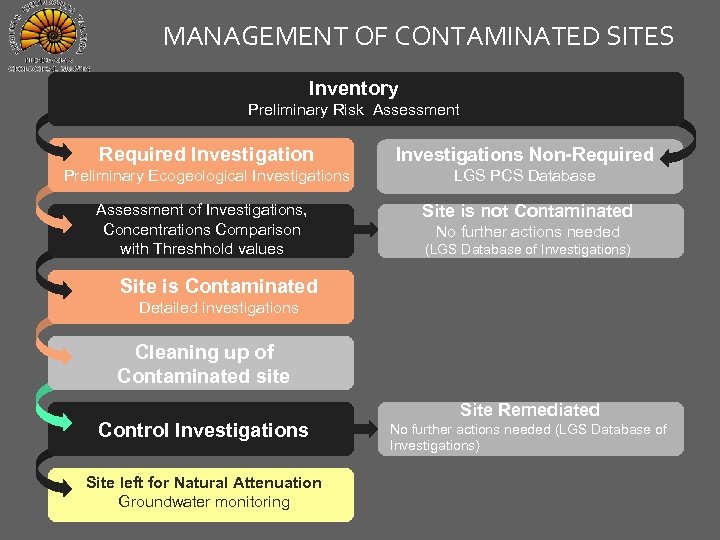 MANAGEMENT OF CONTAMINATED SITES Inventory Preliminary Risk Assessment Required Investigations Non-Required Preliminary Ecogeological Investigations LGS PCS Database Assessment of Investigations, Concentrations Comparison with Threshhold values Site is not Contaminated No further actions needed (LGS Database of Investigations) Site is Contaminated Detailed investigations Cleaning up of Contaminated site Control Investigations Site left for Natural Attenuation Groundwater monitoring Site Remediated No further actions needed (LGS Database of Investigations)
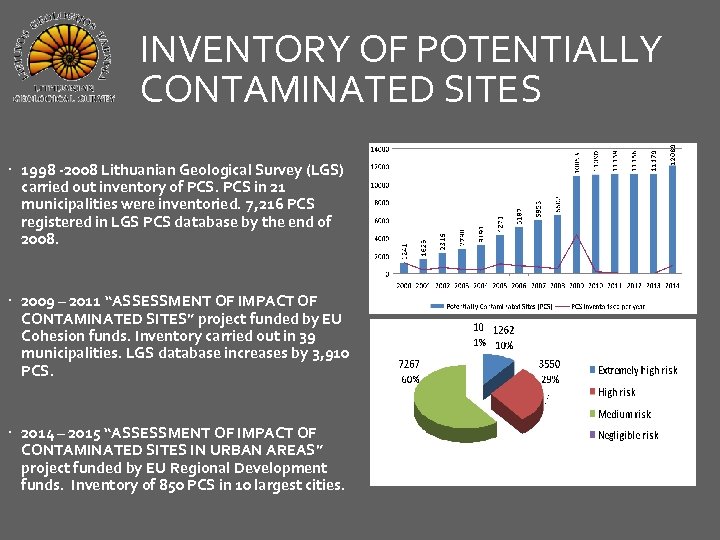 INVENTORY OF POTENTIALLY CONTAMINATED SITES 1998 -2008 Lithuanian Geological Survey (LGS) carried out inventory of PCS in 21 municipalities were inventoried. 7, 216 PCS registered in LGS PCS database by the end of 2008. 2009 – 2011 “ASSESSMENT OF IMPACT OF CONTAMINATED SITES” project funded by EU Cohesion funds. Inventory carried out in 39 municipalities. LGS database increases by 3, 910 PCS. 2014 – 2015 “ASSESSMENT OF IMPACT OF CONTAMINATED SITES IN URBAN AREAS” project funded by EU Regional Development funds. Inventory of 850 PCS in 10 largest cities.
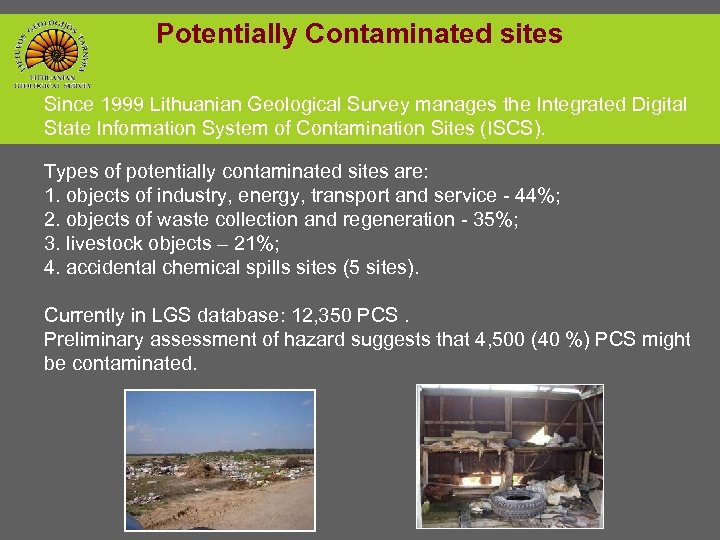 Potentially Contaminated sites Since 1999 Lithuanian Geological Survey manages the Integrated Digital State Information System of Contamination Sites (ISCS). Types of potentially contaminated sites are: 1. objects of industry, energy, transport and service - 44%; 2. objects of waste collection and regeneration - 35%; 3. livestock objects – 21%; 4. accidental chemical spills sites (5 sites). Currently in LGS database: 12, 350 PCS. Preliminary assessment of hazard suggests that 4, 500 (40 %) PCS might be contaminated.
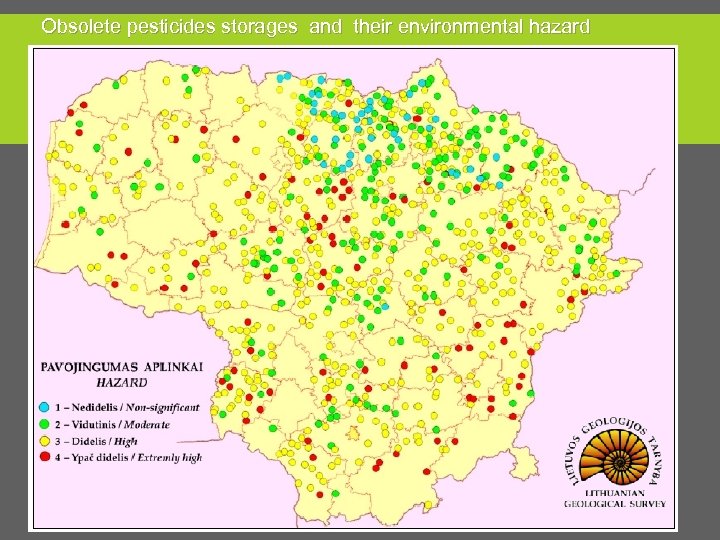 Obsolete pesticides storages and their environmental hazard
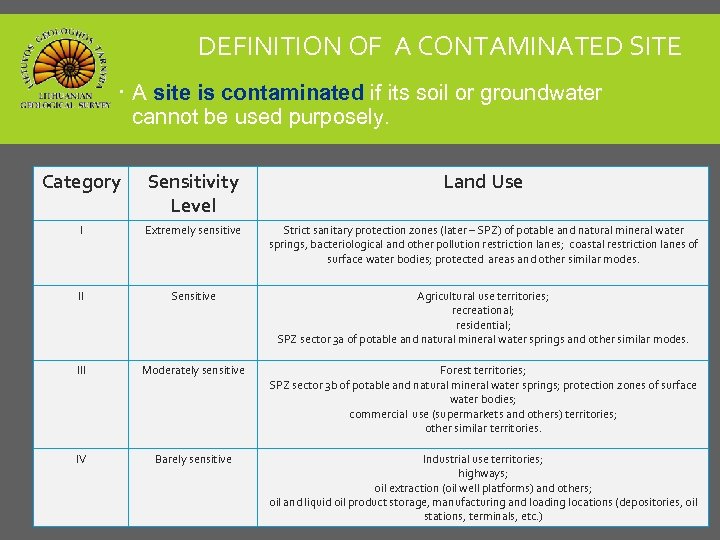 DEFINITION OF A CONTAMINATED SITE A site is contaminated if its soil or groundwater cannot be used purposely. Category Sensitivity Level Land Use I Extremely sensitive Strict sanitary protection zones (later – SPZ) of potable and natural mineral water springs, bacteriological and other pollution restriction lanes; coastal restriction lanes of surface water bodies; protected areas and other similar modes. II Sensitive Agricultural use territories; recreational; residential; SPZ sector 3 a of potable and natural mineral water springs and other similar modes. III Moderately sensitive Forest territories; SPZ sector 3 b of potable and natural mineral water springs; protection zones of surface water bodies; commercial use (supermarkets and others) territories; other similar territories. IV Barely sensitive Industrial use territories; highways; oil extraction (oil well platforms) and others; oil and liquid oil product storage, manufacturing and loading locations (depositories, oil stations, terminals, etc. )
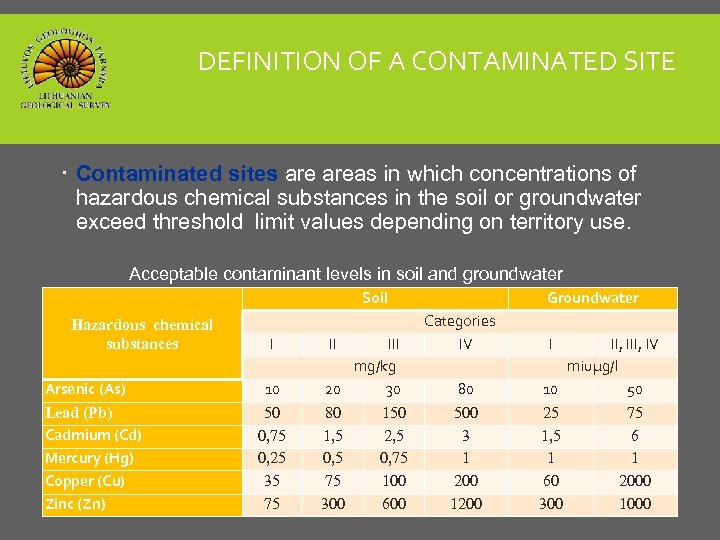 DEFINITION OF A CONTAMINATED SITE Contaminated sites areas in which concentrations of hazardous chemical substances in the soil or groundwater exceed threshold limit values depending on territory use. Acceptable contaminant levels in soil and groundwater Soil Hazardous chemical substances Arsenic (As) Lead (Pb) Cadmium (Cd) Mercury (Hg) Copper (Cu) Zinc (Zn) I II 10 50 0, 75 0, 25 35 75 20 80 1, 5 0, 5 75 300 III mg/kg 30 150 2, 5 0, 75 100 600 Groundwater Categories IV 80 500 3 1 200 1200 I II, IV miuμg/l 10 50 25 75 1, 5 6 1 1 60 2000 300 1000
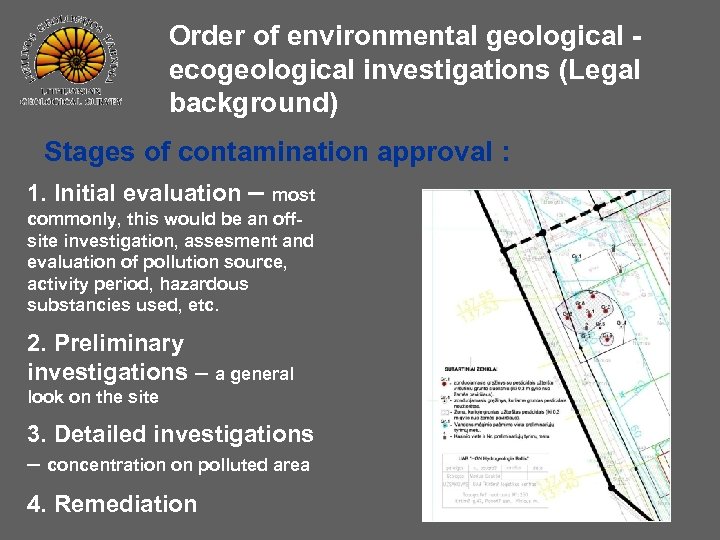 Order of environmental geological - ecogeological investigations (Legal background) Stages of contamination approval : 1. Initial evaluation – most commonly, this would be an offsite investigation, assesment and evaluation of pollution source, activity period, hazardous substancies used, etc. 2. Preliminary investigations – a general look on the site 3. Detailed investigations – concentration on polluted area 4. Remediation
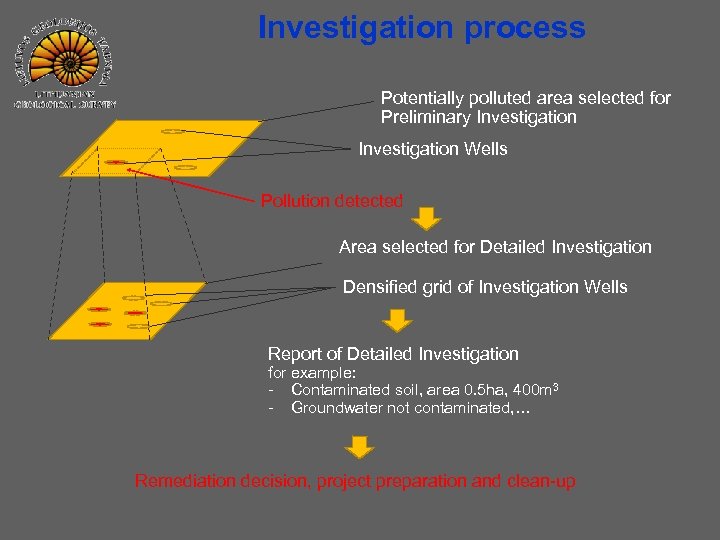 Investigation process Potentially polluted area selected for Preliminary Investigation Wells Pollution detected Area selected for Detailed Investigation Densified grid of Investigation Wells Report of Detailed Investigation for example: - Contaminated soil, area 0. 5 ha, 400 m 3 - Groundwater not contaminated, … Remediation decision, project preparation and clean-up
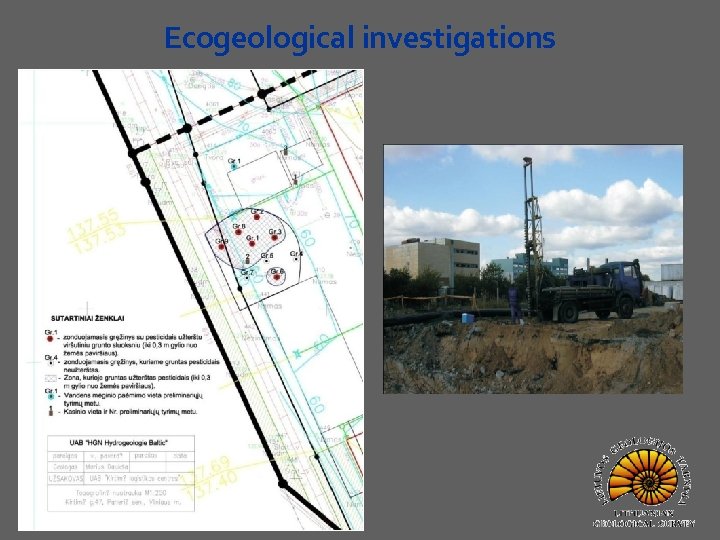 Ecogeological investigations
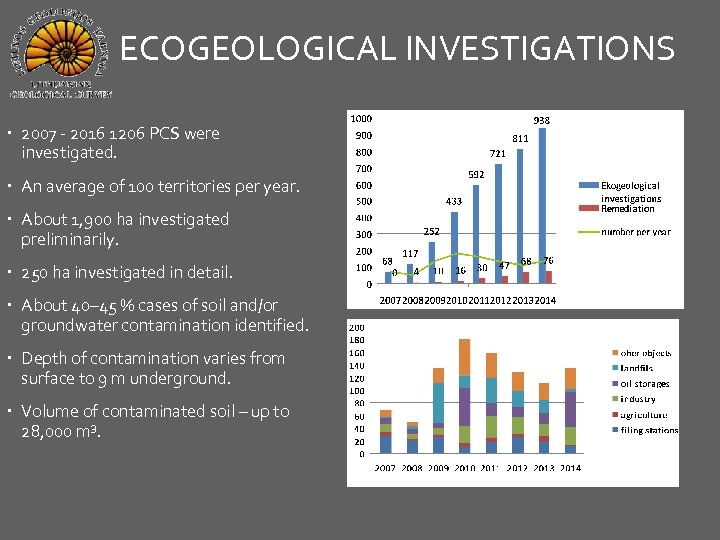 ECOGEOLOGICAL INVESTIGATIONS 2007 - 2016 1206 PCS were investigated. An average of 100 territories per year. About 1, 900 ha investigated preliminarily. 250 ha investigated in detail. About 40– 45 % cases of soil and/or groundwater contamination identified. Depth of contamination varies from surface to 9 m underground. Volume of contaminated soil – up to 28, 000 m 3.
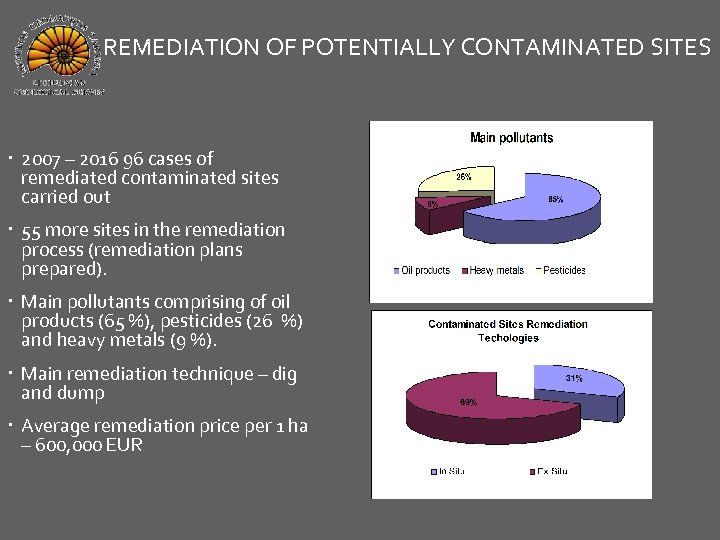 REMEDIATION OF POTENTIALLY CONTAMINATED SITES 2007 – 2016 96 cases of remediated contaminated sites carried out 55 more sites in the remediation process (remediation plans prepared). Main pollutants comprising of oil products (65 %), pesticides (26 %) and heavy metals (9 %). Main remediation technique – dig and dump Average remediation price per 1 ha – 600, 000 EUR
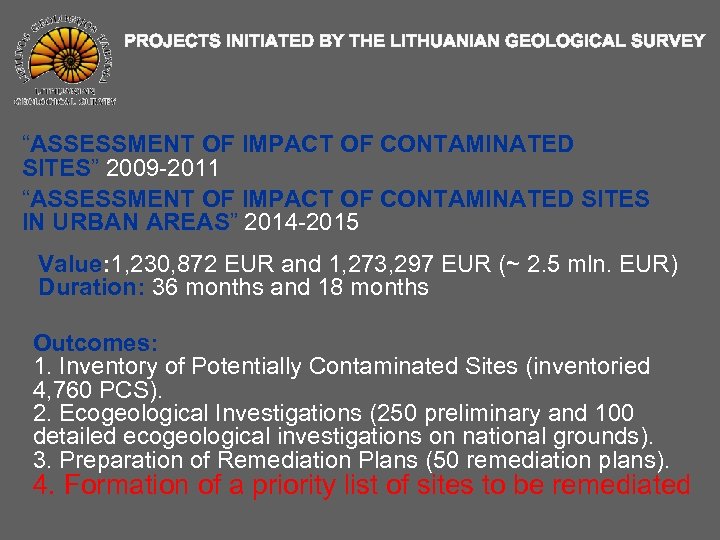 PROJECTS INITIATED BY THE LITHUANIAN GEOLOGICAL SURVEY “ASSESSMENT OF IMPACT OF CONTAMINATED SITES” 2009 -2011 “ASSESSMENT OF IMPACT OF CONTAMINATED SITES IN URBAN AREAS” 2014 -2015 Value: 1, 230, 872 EUR and 1, 273, 297 EUR (~ 2. 5 mln. EUR) Duration: 36 months and 18 months Outcomes: 1. Inventory of Potentially Contaminated Sites (inventoried 4, 760 PCS). 2. Ecogeological Investigations (250 preliminary and 100 detailed ecogeological investigations on national grounds). 3. Preparation of Remediation Plans (50 remediation plans). 4. Formation of a priority list of sites to be remediated
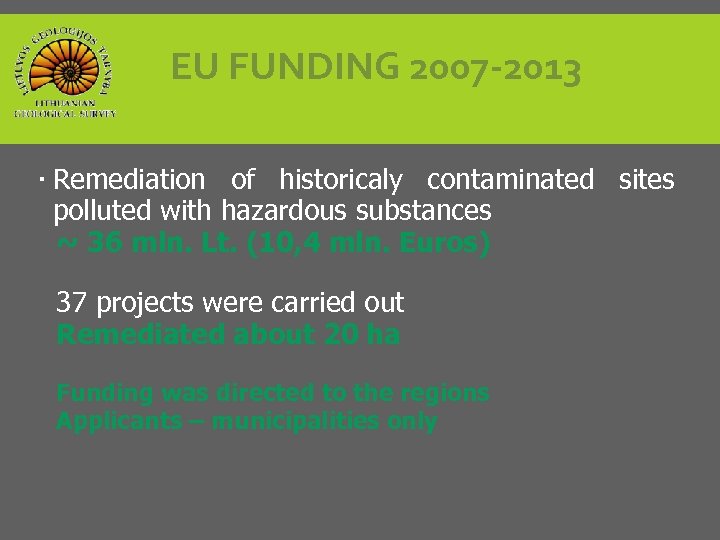 EU FUNDING 2007 -2013 Remediation of historicaly contaminated sites polluted with hazardous substances ~ 36 mln. Lt. (10, 4 mln. Euros) 37 projects were carried out Remediated about 20 ha Funding was directed to the regions Applicants – municipalities only
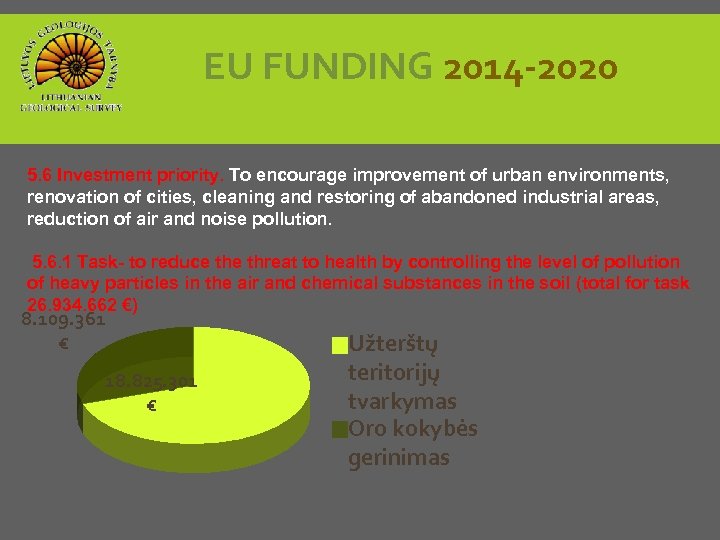 EU FUNDING 2014 -2020 5. 6 Investment priority. To encourage improvement of urban environments, renovation of cities, cleaning and restoring of abandoned industrial areas, reduction of air and noise pollution. 5. 6. 1 Task- to reduce threat to health by controlling the level of pollution of heavy particles in the air and chemical substances in the soil (total for task 26. 934. 662 €) 8. 109. 361 € 18. 825. 301 € Užterštų teritorijų tvarkymas Oro kokybės gerinimas
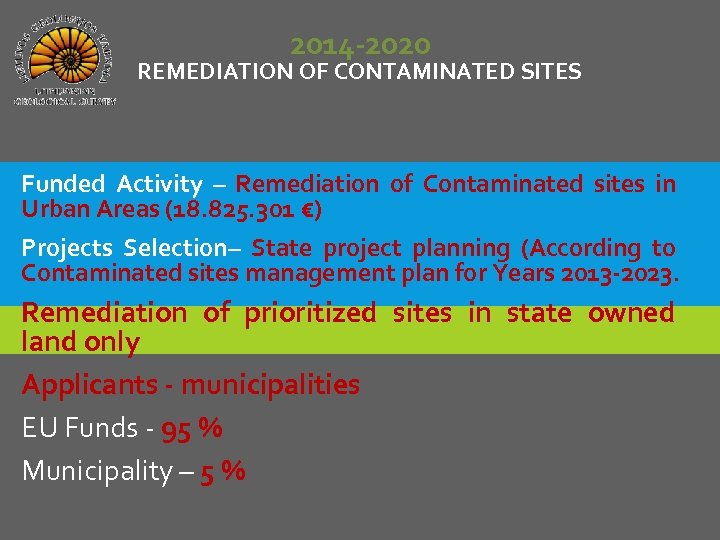 2014 -2020 REMEDIATION OF CONTAMINATED SITES Funded Activity – Remediation of Contaminated sites in Urban Areas (18. 825. 301 €) Projects Selection– State project planning (According to Contaminated sites management plan for Years 2013 -2023. Remediation of prioritized sites in state owned land only Applicants - municipalities EU Funds - 95 % Municipality – 5 %
 THANK YOU VERY MUCH !