


 Скачать презентацию Consumer Electronic Waste E-waste Community POWER Grantee Meeting
a575ae20f46af9e513b118c77b71959f.ppt
- Количество слайдов: 20
 Consumer Electronic Waste “E-waste” Community POWER Grantee Meeting October 15, 2008
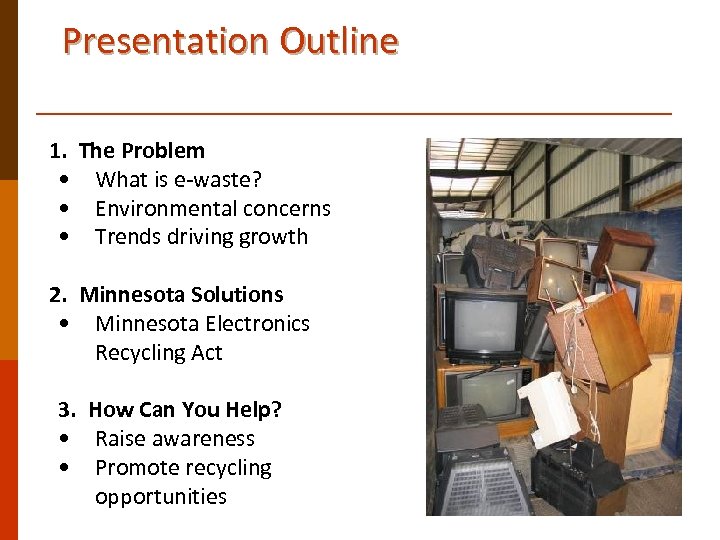 Presentation Outline 1. The Problem • What is e-waste? • Environmental concerns • Trends driving growth 2. Minnesota Solutions • Minnesota Electronics Recycling Act 3. How Can You Help? • Raise awareness • Promote recycling opportunities
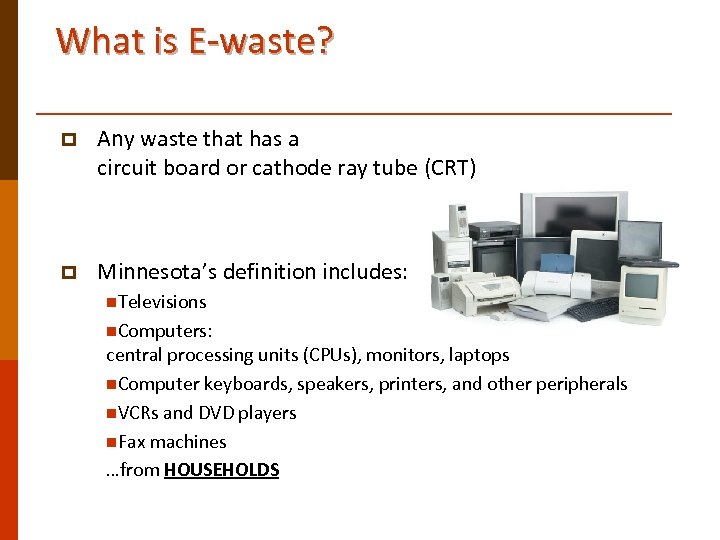 What is E-waste? p Any waste that has a circuit board or cathode ray tube (CRT) p Minnesota’s definition includes: n. Televisions n. Computers: central processing units (CPUs), monitors, laptops n. Computer keyboards, speakers, printers, and other peripherals n. VCRs and DVD players n. Fax machines …from HOUSEHOLDS
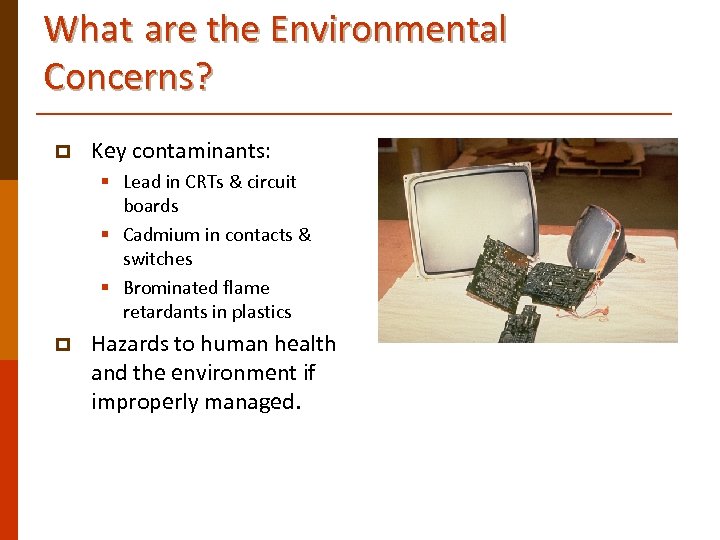 What are the Environmental Concerns? p Key contaminants: § Lead in CRTs & circuit boards § Cadmium in contacts & switches § Brominated flame retardants in plastics p Hazards to human health and the environment if improperly managed.
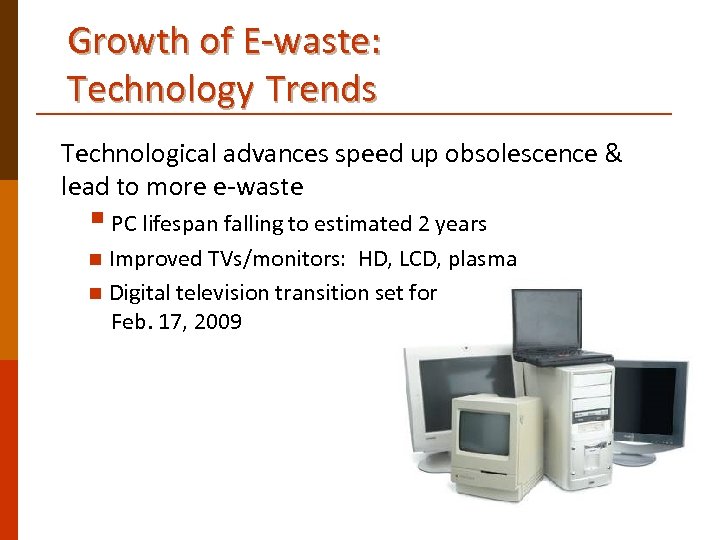 Growth of E-waste: Technology Trends Technological advances speed up obsolescence & lead to more e-waste § PC lifespan falling to estimated 2 years n Improved TVs/monitors: HD, LCD, plasma n Digital television transition set for Feb. 17, 2009
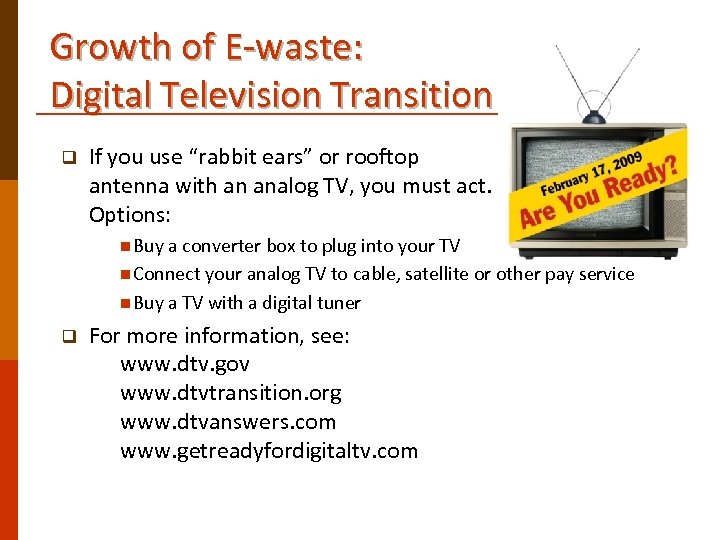 Growth of E-waste: Digital Television Transition q If you use “rabbit ears” or rooftop antenna with an analog TV, you must act. Options: n Buy a converter box to plug into your TV n Connect your analog TV to cable, satellite or other pay service n Buy a TV with a digital tuner q For more information, see: www. dtv. gov www. dtvtransition. org www. dtvanswers. com www. getreadyfordigitaltv. com
 Minnesota Solutions
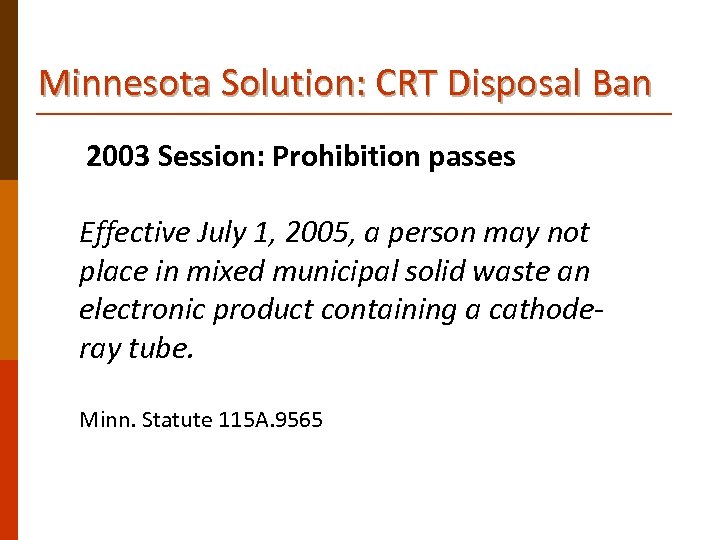 Minnesota Solution: CRT Disposal Ban 2003 Session: Prohibition passes Effective July 1, 2005, a person may not place in mixed municipal solid waste an electronic product containing a cathoderay tube. Minn. Statute 115 A. 9565
 Minnesota Solution: Electronics Recycling Act Passed in the 2007 Session q Began July 1, 2007 q Manufacturer Responsibility based on sales weight n q Not based on return share or consumer fees on products as in other states Requires registration and reporting by all parties involved n Manufacturers, Collectors, Recyclers and Retailers
 What Can You Do? Raise Awareness Promote Recycling Opportunities
 E-Waste Tool Kit SWMCB developed a tool kit to help municipalities, counties, and other entities promote e-waste recycling to residents. p Tool kit includes: n n n 8 images 3 advertisement templates 2 utility bill insert templates 4 articles Top 10 Facts and Top Questions from Residents
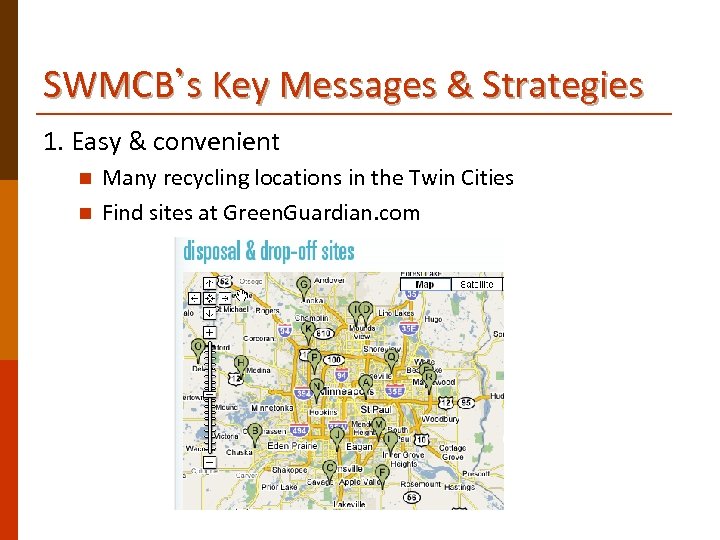 SWMCB’s Key Messages & Strategies 1. Easy & convenient n n Many recycling locations in the Twin Cities Find sites at Green. Guardian. com
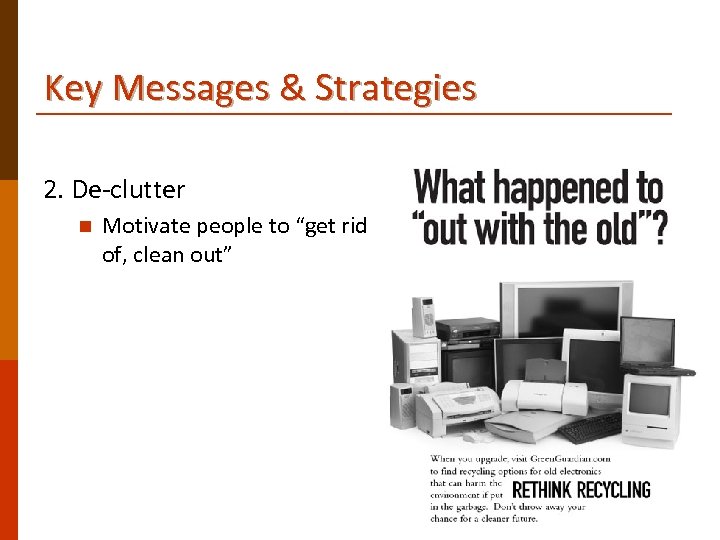 Key Messages & Strategies 2. De-clutter n Motivate people to “get rid of, clean out”
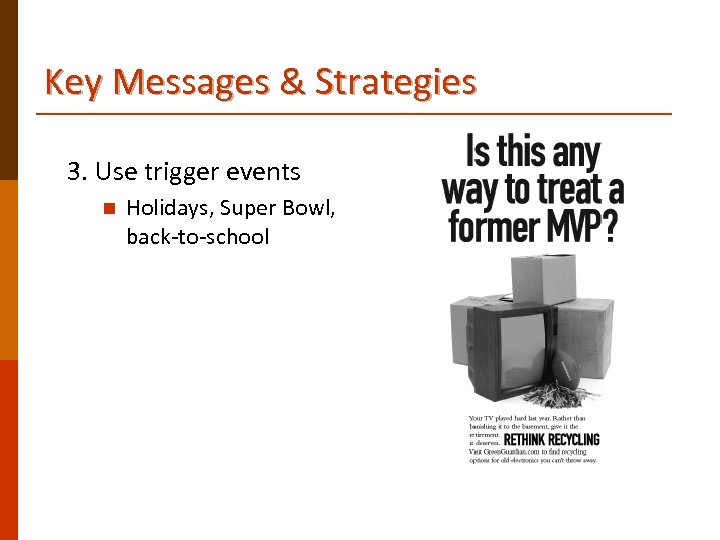 Key Messages & Strategies 3. Use trigger events n Holidays, Super Bowl, back-to-school
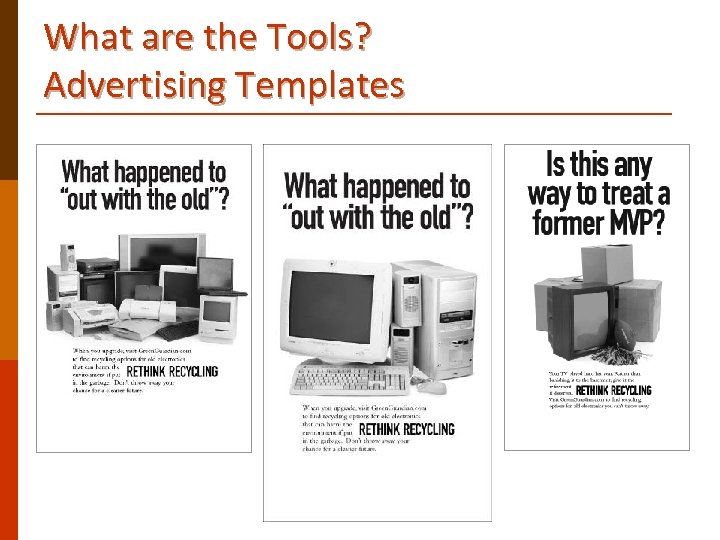 What are the Tools? Advertising Templates
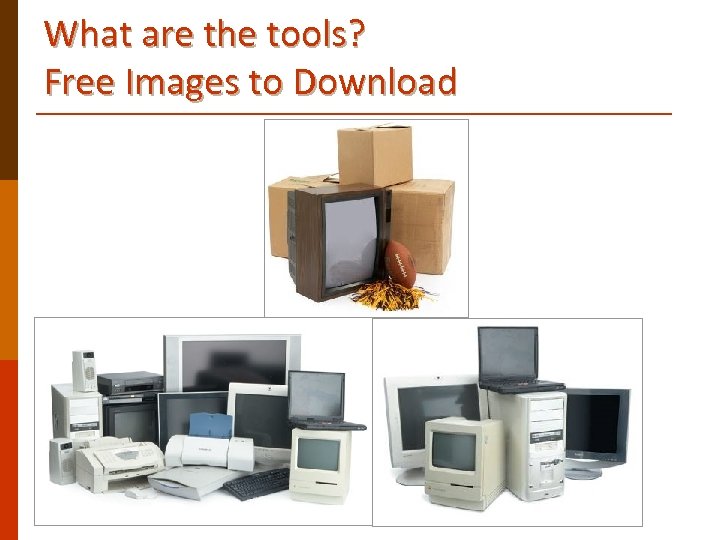 What are the tools? Free Images to Download
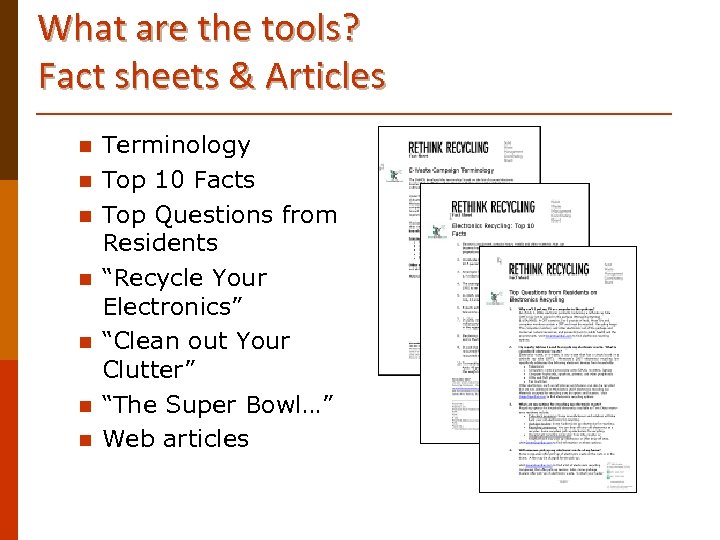 What are the tools? Fact sheets & Articles n n n n Terminology Top 10 Facts Top Questions from Residents “Recycle Your Electronics” “Clean out Your Clutter” “The Super Bowl…” Web articles
 Where can households recycle e-waste? Lists of collection sites are available at: q Minnesota Pollution Control Agency www. pca. state. mn. us/electronics q Solid Waste Management Coordinating Board www. greenguardian. com q Hennepin County Environmental Services www. hennepin. us keyword search: a to z. Click on “electronics. ”
 What to do before you recycle… q Identity and other personal information can be stolen from a computer, cell phone, or other data storage devices. q Before recycling your electronics, protect yourself from identity theft by removing personal data and your files. q For information on how to remove data, check with the manufacturer, the recycler, or search the Internet.
 Comments & Questions? Amy Roering Hennepin County (612) 348 -8992 amy. roering@co. hennepin. mn. us www. hennepin. us