 Скачать презентацию Consumer Ed Ch 3 Becoming a Smart
61d2464945d2495ce5d367f79dec563f.ppt
- Количество слайдов: 20



Consumer Ed. – Ch. 3 Becoming a Smart Consumer
Your Role as a Consumer • Consumer – Person or group that buys or uses goods and services to satisfy personal needs and/or wants • Consumerism – Educating buyers about their purchases to make them demand better and safe products
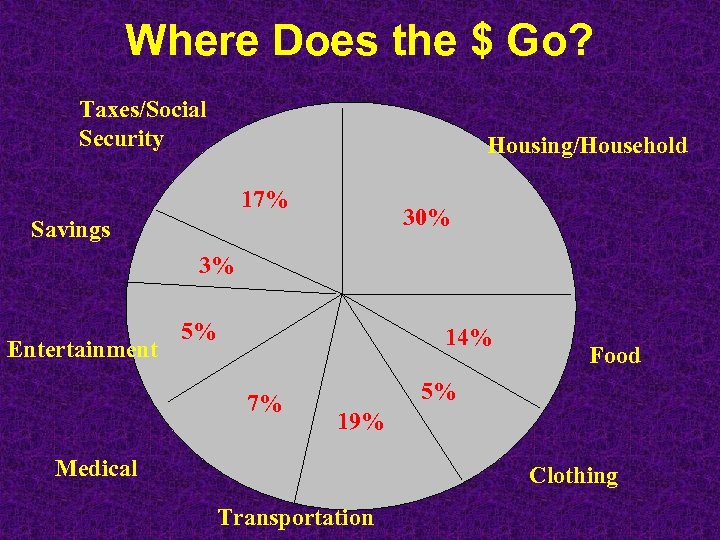
Where Does the $ Go? Taxes/Social Security Housing/Household 17% 30% Savings 3% Entertainment 5% 14% 7% Food 5% 19% Medical Clothing Transportation
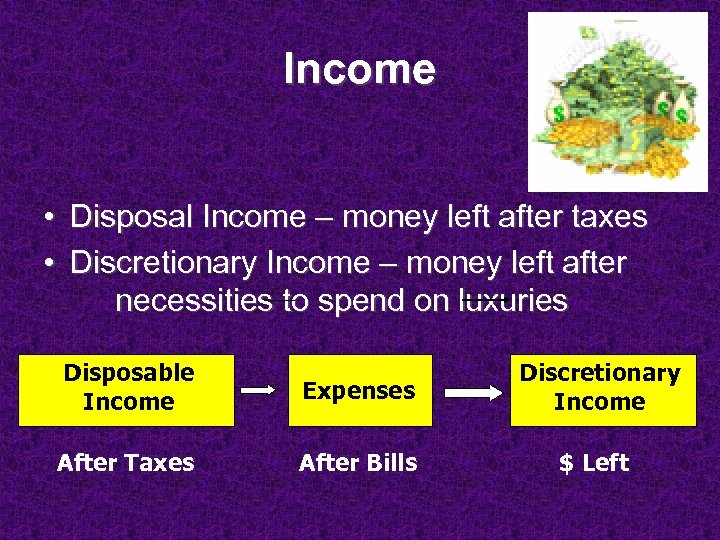
Income • Disposal Income – money left after taxes • Discretionary Income – money left after necessities to spend on luxuries Disposable Income Expenses Discretionary Income After Taxes After Bills $ Left
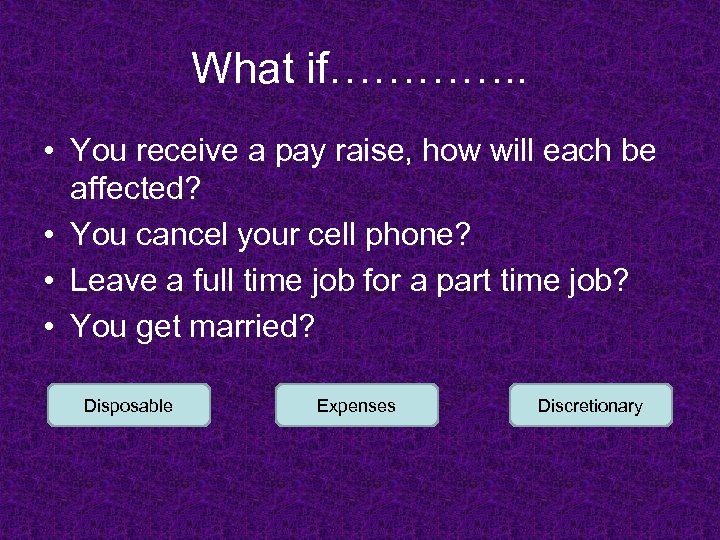
What if…………. . • You receive a pay raise, how will each be affected? • You cancel your cell phone? • Leave a full time job for a part time job? • You get married? Disposable Expenses Discretionary
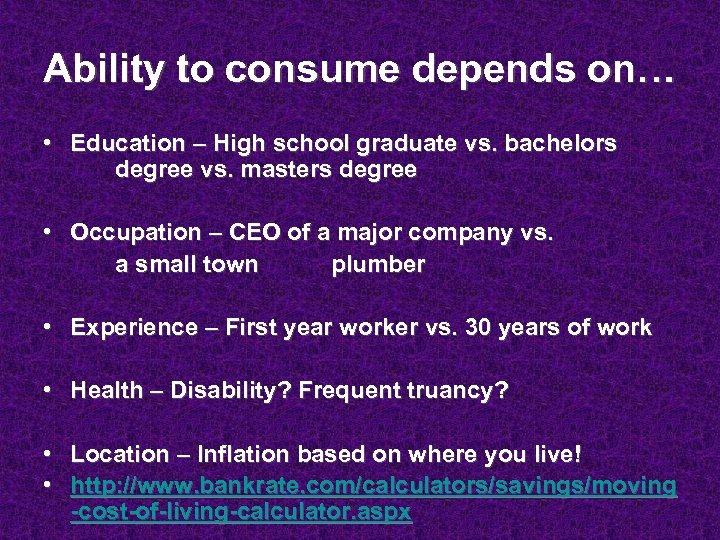
Ability to consume depends on… • Education – High school graduate vs. bachelors degree vs. masters degree • Occupation – CEO of a major company vs. a small town plumber • Experience – First year worker vs. 30 years of work • Health – Disability? Frequent truancy? • Location – Inflation based on where you live! • http: //www. bankrate. com/calculators/savings/moving -cost-of-living-calculator. aspx
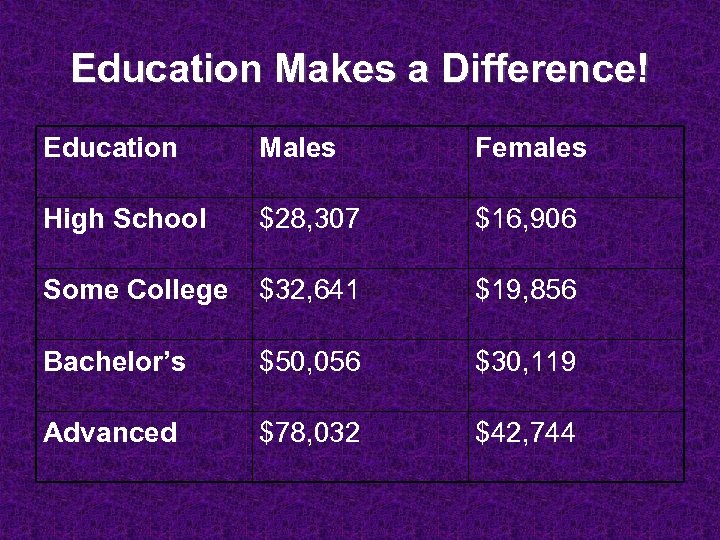
Education Makes a Difference! Education Males Females High School $28, 307 $16, 906 Some College $32, 641 $19, 856 Bachelor’s $50, 056 $30, 119 Advanced $78, 032 $42, 744
Buying is Based Upon 3 Things Consumers Should ask Themselves: • Do I really need this item? • Is the value/worth of this item worth the amount of time and effort I put into raising the necessary funds to pay for it? • Is there a better use of my income elsewhere?
Consumer Decision Making • Do I really NEED this item? Or do I really WANT this item? • Opportunity Cost – the cost, or sacrifice, you made by choosing your item (difference between your item and the highest one below it) • Rational Choice – Making a smart consumer decision based upon opportunity cost; no correct choice, based on perceived value
Buying Principle or Strategies • http: //www. youtube. com/watch? v=vl. DUUFh. Zv. SA • Gathering Information – Analyzing Advertisement • Does the ad appeal to just my emotions? • What are the features of the product? • Are their any hidden cost?
Gathering Information • Comparison Shopping! – Test out products – Discuss brands & models w/ different sellers – How Much Time Should You Spend? • Time gathering information shouldn’t exceed perceived value of the product • Use the Internet!
• Gathering Information – Competitive Advertisement • Ads that try to persuade their product over the competitions. – Ex: Nike vs. Adidas – http: //www. youtube. com/watch? v=IXDSWhobbfc&featur e=related – Informative Advertisement • Ads that are strictly informative. Takes little effort on the part of the consumer.
Use Advertising Wisely • Competitive Advertising – attempts to persuade their product is superior • Informative Advertising – gives information about a product • Deceptive Advertising – false or misleading info about a product – Bait and Switch – Puffing

Bait and Switch Exposed by News Team! http: //www. youtube. com/watch? v=ui. QLD-Xg 1 y. U
Deceptive Sales Practices Uncovered! You. Tube - State Issues Warning To 'Deceptive' Dealership
Comparison Shopping • Where do you buy at? – Newspapers, Phone calls, Internet, Visit stores, etc. – Negotiate!!! – Warranties – promise by seller to repair or replace a product if faulty or damaged w/in a certain period of time
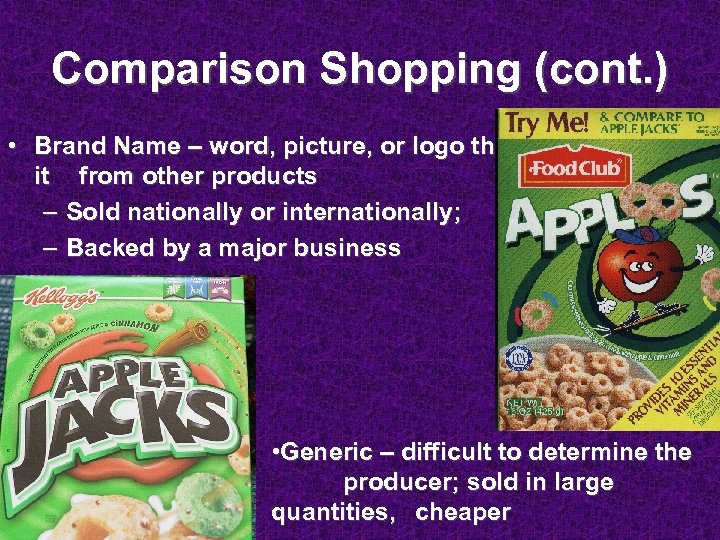
Comparison Shopping (cont. ) • Brand Name – word, picture, or logo that distinguishes it from other products – Sold nationally or internationally; – Backed by a major business • Generic – difficult to determine the producer; sold in large quantities, cheaper
Consumerism • Buyers need to be educated • Consumer Rights – JFK, 1962 – Right to be safe – Right to be informed – Right to choose – Right to be heard – Right to redress (added by Nixon)
Faulty Product? No Problem! 1. 2. 3. 4. 5. 6. 7. 8. Report the problem immediately! State the problem & propose a solution Include all important details on your case Describe action you took to solve the problem Keep accurate records – Make Copies! Give time to solve problem before reporting it Type letter of complaint or E-Mail! Keep Cool! • Ethical Behavior – respect rights of others
Скачать презентацию Consumer Ed Ch 3 Becoming a Smart
61d2464945d2495ce5d367f79dec563f.ppt