


 Скачать презентацию CONSUMER DEMAND FOR ORGANIC PRODUCTS AND TRENDS IN
73775968d1924c445da3bf75c56f5c40.ppt
- Количество слайдов: 31
 CONSUMER DEMAND FOR ORGANIC PRODUCTS AND TRENDS IN THE EUROPEAN UNION Seminar on Marketing and Trade in Fruits & Vegetables Rodrigo A. Valdés S. Adv. MSc. Nina Stockebrand May 2008 SS 2008
 Introduction • The production and markets for organics products in the world had been increase constantly mainly due to level of prices and consumers attitudes • Involves 23 mill. of certificates hectars in 400. 000 farms across 125 countries mostly concentrated in Australia, Argentina, Italy, USA and Germany (Wright, 2005) • The actual consumers behavior are motivated by increased worries about environmental and health problems derived form intensive agriculture managements and the need for healthy products • The diversity that actually presents (more than 1. 500 products) are represented from vegetal and animal fresh products (coffee, tee, sugar, milk, meat, etc. ) to another agro-industry products, as for example, wine, sauces, cookies. Moreover, cosmetics and dress products in some countries
 Overview of the World Organic Market Source; Own elaboration from FAOSTAT database (2008) (*) Based in the exchange rate of 2007. (**) Source: CCI (2007) (***) 1. 500 mill. eur. by “green” products
 The EU market • After USA, Europe is the biggest market for organics products • The access of organics products depends the development rate and its commercialization channels. Source; Own elaboration from CBI (2008)
 Growth dinamic for organic surface, from year 1990 -2006 Source; Sippo (2008)
 European imports of organics products • According to CBI (2008), Germany is the highest importer of organics products, moreover the raw material respect total production reach 38% Source; FAO Eurostat (2008)
 Consumer Behaviour and Patterns • • In Europe the most demanded products are vegetables, fruits, cereals, meat and milk (Wu Huang, 2007) In Denmark 47% of the families buy organics products and 55% as a consistent attitude (Wagner, 2005) In Italy, 70% of the population know the organics products and 40% already buy it (Sippo, 2008) In France, Denmark, Sweden, Switzerland UK the supermarkets are highly dominators respect the buy levels on the other hand in Germany and Holland the specialized stores has the highest sales (CIB, 2008) Source; own elaboration from CBI (2008)
 Main sales channels for OP in 2004 Source; Own elaboration from, Wu Huang (2007), Wright (2005) and Nathan (2006).
 Consumer prices • The overpricing between organic and non-organic product has relation with the proportion of organic sales respect total and size on the respective market. Source; Garcia (2006) and FAO (2008)
 Regional Analysis By Country
 Demografics aspects • Low increment of population (UE 25) – 2005: 460 Mill. – 2025: 470 Mill. – 2050: 450 Mill. • Natural european population decrease and aged at highly rates – Population +65 years old: • 1960: 10% • 2005: 17% • 2050: 30% – Population 0 -14 years inverse situation (decrease) • 1960: 25% • 2004: 16%
 Family and households • Low number of children / households – 2, 7 (1964), 1, 4 (1999), 1, 5 (2004) – Rally in some countries (Spain and Ireland) • Increase of age for marry – 26 years (1980), +30 years (2004) • Increase age for childrens • Decrease number of marriage and increment number of divorces (4/10) • Impact – Reducción in persons / households – Increment of uni-personal households • Spain, Greece and Portugal (20%) • Denmark (50%)
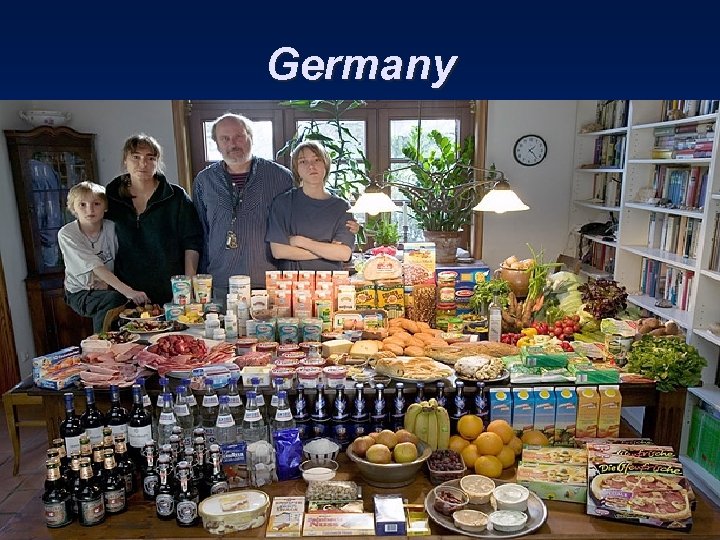 Germany
 • According to CBI (2008), the organic market growth 12% in 2007 reaching 3, 5 bill. eur. • The more increasing demand are represented by fruits, vegetables and dairy products; supplies in 60% by local production • Consumer with age oscillation between 35 -40 years old altough some research indicate a more representative group between 25 -34 years old • The actual demand are predominantly woman considering the organic product more safety and healthy (European Commission, 2008)
 • Germany is the highest importer of EU, with a wide range of products, the main supplier are Italy (cereals), Spain and France (vegetables), Italy and France (wine), Austria, Denmark and Holland (dairy products) (European Comission, 2008) • Main buy-factor for german organic consumer, according to Liu et. cols, 2001. – Price - quality relation – Search for aggregate services, as changes and refunds • Interest by certifications – Product apects: organic, fair trade, GO, free of GMO – Sale aspects: quality and environmental certificates (as ISO 9000 and 14000, Global GAP)
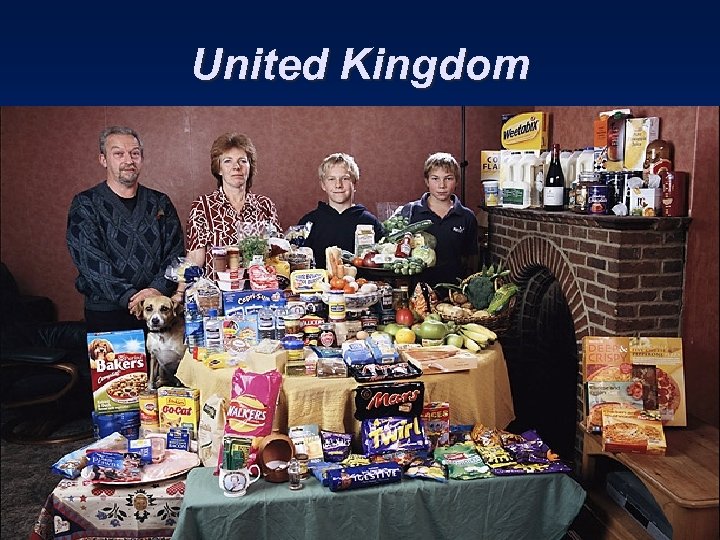 United Kingdom
 • Actually has a dinamic growth, mainly in the last 10 years. In 2000 the minorist values are valuated in 984 mill. euros. For 2008 expect a growth of 11% and consumers from 2, 4 mill. in 2002 to 11, 4 mill. in 2008 (Hu Wuang, 2007). • Sippo (2008), indicate that a organic consumer buy aprox. 13, 6 times the same product during a year (until November 2007). The consumer of UK are adults (50 -70) and with high purchasing power. • Have a high motivation for prepare foods, believe in the positive consequences by organics foods and spend important quotas of time for this activities. Other objective group are the parents with young children, in this sense, the baby foods have a important growth (near 50%). • Bigger foods companies as Unilever, Nestlè, Mars and Heinz are developing organics products, but most of the ingredients are imported. The supermarkets with the widest offers for organics products are Waitrose, Sainsbury`s and Mark & Spencer (Wagner, 2008).
 Sub-sector expend for organics products in UK for 2007 Source; Sippo (2008) Source;
 Italy
Italy
 • The sales of organic products in this country reached for 2007 1, 4 bill. euros. ; expecting a future growth about 5 -15%. More than 50% of organics products sales are fruit and vegetables, followed by cereals, wine, olive oil and dairy products (CIB, 2008). • A 65% of the total demand for this products are localized in the north of Italy, where the income are higher. The consumers belong to medium-high level of income, high educational level between 3045 years old. A high quantity of italian consumers are prepared to pay an overprice by organics products, but not more than 20% above the normal (Wagner, 2005). • The actual sales are in supermarkets reaching 35%, but all other big stores had been released their own organics products (Coopm Esselunga, Conad, Giesse, Pam, etc. ); other 60% of total sales correspond to direct sales (CIB, 2008).
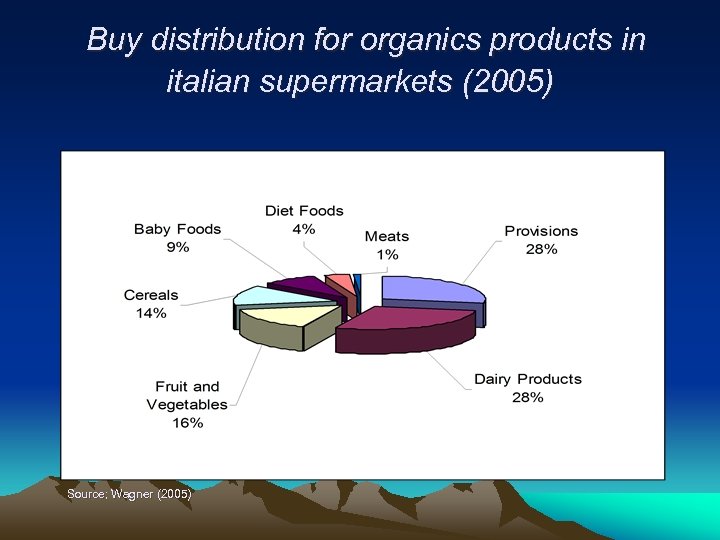 Buy distribution for organics products in italian supermarkets (2005) Source; Wagner (2005)
 France
 • This country is actually a important niche for this products, however, the market growth 1, 2% per year, during 2007 the sales reached 1, 6 bill. euros (Letelier, 2008). • Only a few part of total demand can be covered with domestic products. The main demanded products are fruits, vegetables, cereals and beverages. • According to Garcia (2007), the french consumers can be classificated in 3 categories; the politically or ideologically informed (who are informed about the animal rights), the healthy consumer and the changeable (wich are mostly influenced by the price, availability and marketing campaigns). • Actually the sales are mainly realized in supermarkets, healthy products stores, direct channels and organics markets.
 Sales volume for organic products (%) in France for 2006 Source: Garcia (2007)
 Holland
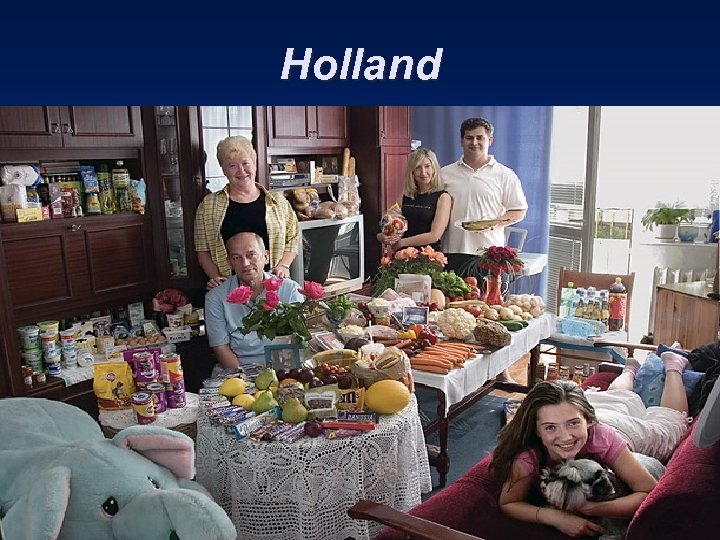
 • The growth for this market are highly influenced by the marketing campaigs of supermarkets. According to Wu Huang (2007) around 39% of total organic sales are potatoes, vegetables and fruits; 26% dairy products; 19% meats; 10% bakery industry and 6% other industrial activities. • The consumer reasons for demand organics products are health (69%), environmental (66%) and taste (35%). The main consumers of organic products in Holland are persons under 35 years old without childrens. The consumers over 55 years are less interesting in this kind of products, mostly by ignorance about it (Wu Huang, 2007). • Holland is a big importer and re-exporter of vegetables and fresh fruits, cereals, dried products, coffee and tea. In 2004, more than 40% of organics products purchased through healthy and organics stores (220 healthy stores, including 27 organics butcher’s shop) (Wright, 2005).
 Projections for organics products in EU • The future for european markets in the middle run are promising, with a supply that not reach the actual demand. The last 10 years, the european production growth by 25 -30% with 28. 000 mill. U$ (Wagner, 2007). • The analysis of consumers respect their motivations and clasifications expect an important potential, wich would be very significative in the next years. The producers and differents stores must develop differents alternatives for contribute to this expansion, for enumerate a few: – Put the products in the bigger supermarkets to easily access for consumers – Reach a constant supply for ecological products – Have competitive prices in the market with relation to conventional products – More information to consumers about advantages and beneficial consequences derived from this products – Get a common identification for this products to avoid confuse by consumers
 Conclusions I • The markets quotas are around 1% in most countries respect total sales of food products. Higher numbers are finded in Austria and Switzerland (1, 8 and 2% respectively). In Denmark, this quota are the highest in the world (3%). • The sales value growth around 20 -30% in the last 10 years, but highly in UK and Italy. On the other hand Austria and Denmark have a deep-rooted market but with lower levels of growth. In this sense, the function of supermarkets have been the most important influence for the growth in this products, for example, in UK more than 70% of total organics sales are in this places but in Germany and Holland reach a 25 -30%. • By differences observed across countries, is possible to conclude that altough exist a special regulation for this producs (2092/91 for EU) not appears a homogeneus market and qualities across Europe.
 Conclusions II • Actually, the demand are higher than the supply and would be high in the next years. However, most of consumers has a evident distrust respect the autenticity of organics imports certificated as organics. • The producer/exporters would be observe directly wich are the probably prices in the future wich are fundamental for the decision respect to converse from conventional to organics production taking as consideration the 3 -4 years of transition period. • The consumers are ready to pay more prices by organics products, reaching 20% in some countries purchasing this products mostly in supermarkets, retailers and specialized stores but in all kind of that, the healthy reasons are more important than environmental reasons for the buy decision and this could be a signal for expect less overprices in the future.
 Bibliografic References (1) (2) (3) (4) (5) (6) (7) (8) (9) (10) (11) (12) (13) (14) (15) Alföldi, T. “Agronomic and ecological performance of organic and conventional farming systems”. Proceedings Sino-Swiss Seminar on Plant Production with sustainable Agriculture - Research and Applications, Zhuhai China, Nº 6, Vol 5, pp. 92 -95, 2001. Augstburger, F. , Agricultura ecológica en Bolivia: ¿Una opción para la economía campesina? , RURALTER, Vol. 13, no. 15. 2006. CIBL, “The fresh fruit and vegetables markets in the EU”. CBI (Center for the promotion of imports from developing countries) documents, obtained from http: //www. cbi. eu/marketinfo/cbi/docs/the_fresh_fruit_and_vegetables_market_in_the_eu, consulted on 08/05/2008. European Commission, “From fark to fork, Safe foods for europeans consumers” European Commission, Directorate-General for Press and Communication Publications B-1049 Brussels, obtained from http: //ec. europa. eu/publications/booklets/move/46/en. pdf, consulted on 9/05/2008. Garcia J. , “ Present situation and perspective for organics agriculture with enphasis in Europe”. The Incorporated Statistician, Vol. 9, N° 4, pp. 100 -106, 2007. FAO, “World statistics of orgánics products and policies”, obteined from http: //www. fao. org/statistics/yearbook/vol_1_1/site_en. asp? page=resources consulted at 02/05/2008 Letelier M. “Agricultura y mercados / Mercado mundial de cereales , una aproximación a la realidad europea” , obtained from http: //www. odepa. gob. cl/odepaweb/servlet/contenidos. Servlet. Detalles. Scr; jsessionid=99 D 20814999 ABA 52 E 51 F 63 9861940012? idcla=2&idcat=2&idn=2026 consulted at 21/04/2008. Liu P. , Boto I. , Vrolijt G. , Pilkauskas. , “ World markets for organics products with emphasis in fruits and vegetables”. Social and Economic Departments Publications, Nº 3, FAO, 2001. Nathan J. , “European markets for organics products”. USAID publications, Vol. 23, N° 31, 2006. Nova A. . “The production and markets for organics product in the world”. Centro de Estudios de la Economía Latinoamericana, Vol 6, Nº 2, RAP Publications. Sippo H. “The sources and nature of statistical information in special fields of statistics: The agricultural organics statistics of EU”. Journal of the Royal Statistical Society, Series A, Vol. 114, N° 1, pp. 59 -98, 2008. Valdès H. “Organic Agriculture and International Trade”. CEDECO Reports, Region Office for Europe, 2007. Wagner F. , Croncher M. , Lety H. “Presentation on organics commodity trade development”. Soil Association Documents, England, 2005. Wright, “The dynamics of organics products supply: retrospect and prospect”. O&F Consulting, Organics and Fairtrade Food and Drink Documents, Vol. 61, Nº 7, 2005. Wu Huang S. “An overview of global trade patterns in fruits and vegetables”. Market and Trade Economics Division Documents, Economics Research Service, USDA, 2007.
 THANKS FOR YOUR ATTENTION !!