


 Скачать презентацию Consequences of War and Militarism Martin Donohoe
ba5ecb661e08139a44a7aceae0a28e6e.ppt
- Количество слайдов: 133
 Consequences of War and Militarism Martin Donohoe
 Outline n The history and epidemiology of war n Nuclear weapons n Chemical weapons n Biological weapons
 Outline n n n Economic and environmental consequences of militarism and war Health consequences of militarism and war Contemporary conflicts n n Iraq, Afghanistan, “War on terror” Solutions
 History of War n Violent conflict ubiquitous in the animal kingdom: Interspecies conflict – food, territory n Intraspecies conflict – food, territory, mates (usually not directly fatal) n n Violence among non-human primates Gorilla infanticide n Chimpanzee killing bands n
 History of war n 10, 000 yrs ago – agriculture n n Stable populations, division of labor, warrior class 3500 yrs ago – bronze weapons and armor 2200 yrs ago – iron 1900 yrs ago - horses
 History of war n n Ninth Century China - bombs developed Thirteenth Century China – rockets n n Forgotten until the 19 th Century 1783 – Balloon Montgolfier brothers n Prussian general JCG Heyne – used for bombing n
 History of War n n 1903 – Wright brothers/Kitty Hawk – airplane 20 th Century – nuclear submarines, predator drones, weaponization of space
 History of War n n Belief that each new invention would eliminate warfare Instead, increased casualties, killing at a distance
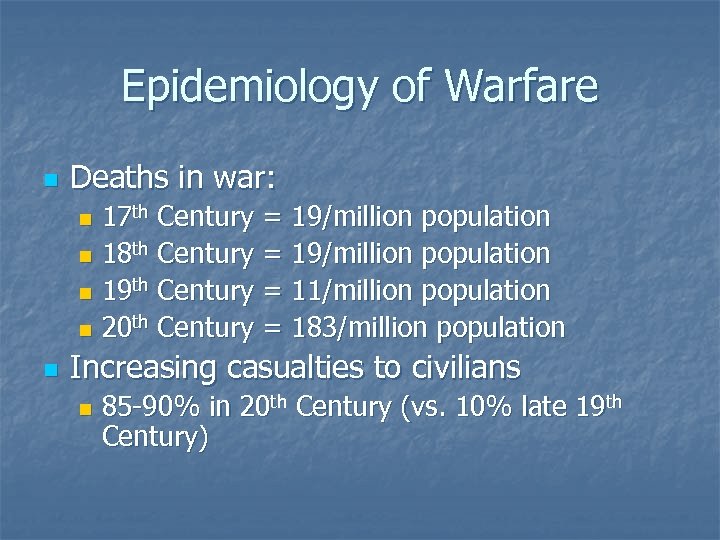 Epidemiology of Warfare n Deaths in war: 17 th Century = 19/million population n 18 th Century = 19/million population n 19 th Century = 11/million population n 20 th Century = 183/million population n n Increasing casualties to civilians n 85 -90% in 20 th Century (vs. 10% late 19 th Century)
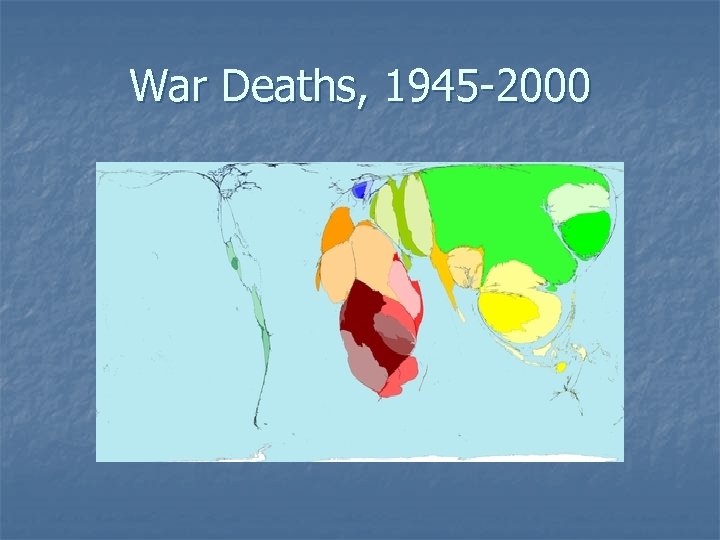 War Deaths, 1945 -2000
 Legacies of Colonial Exploitation n Christopher Columbus’ log entry upon meeting the Arawaks of the Bahamas: “They…brought us…many…things…They willingly traded everything they owned…They do not bear arms…They would make fine servants…With fifty men we could subjugate them all and make them do whatever we want. ”
 Legacies of Colonial Exploitation n Winston Churchill (speaking in favor of RAF’s “experimental” bombing of Iraqis in 1920 s, which killed 9, 000 people with 97 tons of bombs): “I am strongly in favor of using poisoned gas against uncivilized tribes to spread a lively terror…against recalcitrant Arabs as an experiment”
 Legacies of Colonial Exploitation n Cecil Rhodes (Rhodesia, Rhodes Scholarship, De. Beers Mining Company): “We must find new lands from which we can easily obtain raw materials and at the same time exploit the cheap slave labour that is available from the natives of the colonies. The colonies would also provide a dumping ground for the surplus goods produced in our factories. ”
 Contemporary Wars n 250 wars in the 20 th Century n Incidence of war rising since 1950 n Most conflicts within poor states n 27 separate civil wars currently underway n 19 involve U. S. -supplied weapons
 Wars Promoted Through Militarism Military buildups n Exceptionalism n Imperialism n Glorification of war n Unrealistic expectations n
 Contemporary Wars n n 72 million lives lost in 20 th Century wars, another 52 million through genocides WW II: first war with more battle deaths than deaths from other causes, such as accidents, disease, and infections
 Vietnam War n n US dropped the equivalent of one 500 lb. bomb on every person in Vietnam War: 1. 5 to 3 million Vietnamese casualties; 58, 000 American n More US soldiers died of suicide after Vietnam than died in combat during the war
 Consequences of War n n n Deaths, injuries, psychological sequelae Collapse of health care system affecting those with acute and chronic illnesses Famine
 Consequences of War n Environmental degradation n Refugees, migrants, internally-displaced persons n Increasing poverty and debt n All lead to recurrent cycles of violence
![Evil Doctors “When a doctor [goes] wrong, he is the first of criminals. He](https://present5.com/presentation/ba5ecb661e08139a44a7aceae0a28e6e/image-20.jpg "Evil Doctors “When a doctor [goes] wrong, he is the first of criminals. He") Evil Doctors “When a doctor [goes] wrong, he is the first of criminals. He has nerve and he has knowledge. ” - Sherlock Holmes to Dr. Watson, Arthur Conan Doyle
Evil Doctors “When a doctor [goes] wrong, he is the first of criminals. He has nerve and he has knowledge. ” - Sherlock Holmes to Dr. Watson, Arthur Conan Doyle
 Nazi Medicine n n Guiding philosophy = Hegelian (rational utility) Ethics reduced morality to efficiency, economics, and aesthetics Individual worth stated in economic terms Propaganda (books, films) stressed obligations to state
 Nazi Medicine n An arm of state policy n Focus on racial purity n n n from eugenic sterilization (370, 000) to involuntary euthanasia (70, 000) to large-scale genocide (over 6 million)
 Nazi Medicine n n Doctoring the nation more important than doctoring individuals Focus on preventive medicine and public health: anti-tobacco and anti-alcohol campaigns, environmental toxins, organic farming n n To improve Aryan stock Nazi soldiers given anabolic steroids to increase aggresiveness
 Nazi Physicians n n 52, 000 physicians joined National Socialist Party Jews ostracized; replaced by young Aryans n 5% of non-Aryans committed suicide; 25% murdered
 Nazi Physicians n n n Economic hard times, physicians salaries rise, academic perks Blutkitt (“blood cement”) Rare resistance n n n Catholics Marxists Dutch
 Nazi “Physician-Researchers” (Torturers) n n Dr. Sigmund Rascher - coagulation/amputation studies; hypothermia experiments Dr. Karl Gebhart: heteroplastic transplantation experiments n n c. f. Stalin’s attempts to create interspecies (halfmen/half-apes) “super-warriors” Drs. Karl Clausberg and Viktor Brack: Xirradiation/sterilization
 Nazi “Physician-Researchers” n n Drs. Joachim Mrugowsky, Erwin Ding-Schuler, and Waldemar Hoven: IV phenol and gasoline executions Dr. Friedrich Wegener (formerly “Wegener’s Granulomatosis, ” now ANCA-associated granulomatous vasculitis ): German pathologist, Nazi party member, autopsied a prisoner with oxygen injected into his bloodstream in an embolism study; may have participated in experiments on concentration camp inmates
 Nazi “Physician-Researchers” n n n Dr Hans Conrad Reiter (formerly “Reiter’s Syndrome”, now “reactive arthritis”): senior Nazi official Dr. Joseph Mengele: Septicemia/twin vivisection studies Dr. Hans Eppinger - “father of modern hepatology”
 “Indirect Participants” n Prof. J Hallevorden: “Look here now, boys, if you are going to kill all these people at least take the brains out so that the material could be utilized … the more (brains) the better…. I accepted these brains of course. Where they came from and how they came to me was really none of my business. ”
 Doctors and Resistance n n n German invasion of Poland (1939) Drs Eugene Lazowski and Stanislaw Matulewicz created a fake typhus epidemic, using a harmless bacterium to innoculate non-Jews, knowing that infected Jews would be summarily executed Germans fooled, quarantined area, many Jews escaped death
 Nuremberg Doctors’ Trial n n 23 German physicians tried 16 found guilty n n 7 hanged (incl. Gebhardt, Brack, Hoven, and Mrugowsky) Rascher died before trial; Mengele fled for Argentina (remains verified 1985); Hallevorden committed suicide before trial
 Nuremberg Code n n Voluntary consent is absolutely essential Avoidance of unnecessary physical and mental suffering Option to quit/responsibility to terminate Other safeguards
 Declaration of Geneva n n n “I will not permit considerations of religion, nationality, race, party politics or social standing to intervene between my duty and my patient” “I will not use my medical knowledge contrary to the laws of humanity. ” “It is unethical for physicians to employ scientific knowledge to imperil health or destroy life. ”
 Post-WW II n Over 700 Nazi rocket scientists and their families brought to the U. S. (including Werner von Braun) to help build nuclear missile program n n Operation Paperclip Japanese scientists brought to Fort Detrick, MD, to help establish U. S. biological/chemical weapons program
 Doctors as Terrorists n Pediatrician George Habash – founder of Popular Front for the Liberation of Palestine n n Behind aircraft hijackings of Black September Dr. Fathi Shiqaqi – founder of Palestinian Islamic Jihad
 Doctors as Terrorists n n Ayman Al-Zawahiri - #2 in Al Qaeda Ikuo Hayashi – chief of circulatory medicine at a leading Japanese hospital n Pleaded guilty to planting sarin gas on Tokyo subway
 Doctors as Terrorists n n n Radovan Karadzic (psychiatrist) – on trial for war crimes against Bosnian Croats and Muslims Dr Bilal Abdullah convicted in bungled Heathrow Airport car bombing (2007) Psychiatrist Major Nidal Hasan – awaiting trial for Fort Hood shootings (2009)
 War on Terror n n Doctors involved in torture, extraordinary renditions Investigations, outcry, but no real consequences
 Atomic Weapons - History n Hiroshima, August 6, 1945 “The day that humanity started taking its final exam” – Buckminster Fuller n 15 kiloton bomb, 140, 000 deaths n n Nagasaki, August 9, 1945 n 22 kiloton bomb, 70, 000 casualties
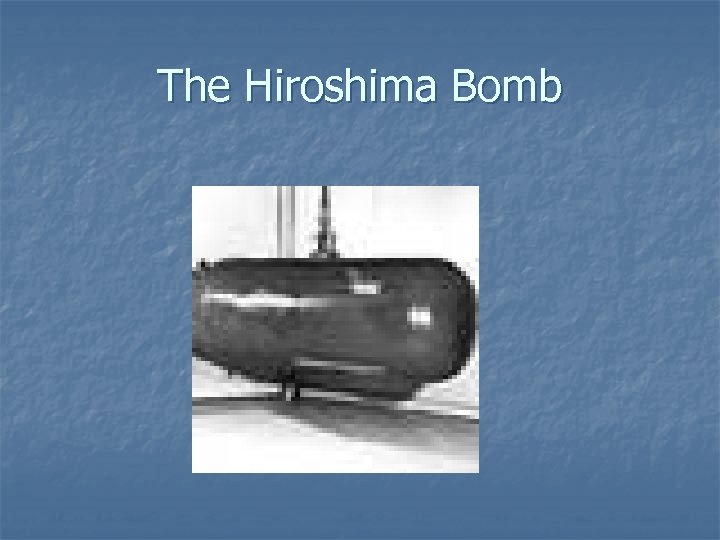 The Hiroshima Bomb
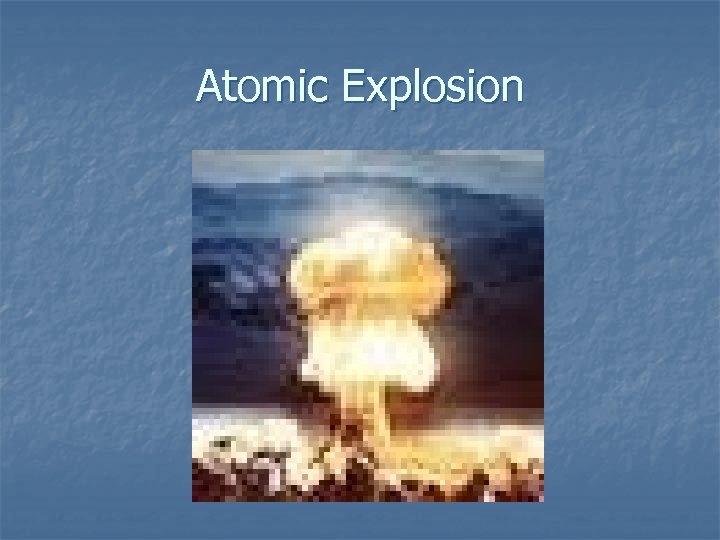 Atomic Explosion
 Atomic Weapons – Other Victims n n Hundreds of thousands of hibakusha – atomic bomb survivors 1054 U. S. nuclear tests since 1940 s, 331 in atmosphere
 Atomic Weapons – Other Victims n n 80, 000 cancers (15, 000 fatal) in US citizens as a result of fallout from atmospheric testing n NCI/CDC Thousands of illnesses and deaths, higher CA risk in 600, 000 former employees - DOE
 Atomic Weapons Today n n Approximately 23, 360 nuclear weapons at 11 sites in 14 countries (1/2 active or operationallydeployed) n Down from over 71, 000 at height of Cold War 5, 200 active U. S. warheads today (more than ½ on hair-trigger alert); 8, 000 in Russia n Several thousand megatons (100, 000 Hiroshimas)
 Atomic Weapons Today n Vastly redundant arsenal n 150 -200 weapons adequate to destroy all major urban centers in Russia
 Atomic Weapons Today Accidental intermediate-sized launch of weapons from a single Russian submarine would immediately kill 6. 8 million Americans in 8 cities
 Nuclear Weapons – Oops! n n n Pentagon: 32 nuclear weapons accidents since 1950 GAO: 233 Since 1950, 10 nuclear weapons lost and never recovered n All laying on seabed, potentially leaking radioactivity
 Effects of a Nuclear Explosion n Immediate: n Vaporized by thermal radiation n Crushed by blast wave n Burned and suffocated by firestorm
 Effects of a Nuclear Explosion n Intermediate: Suffering, painful deaths n Health care personnel/resources overwhelmed n Famine n Refugees n Devastated transportation infrastructure n
 Effects of a Nuclear Explosion n Late effects: Cancer n Psychological trauma (PTSD, anxiety, depression) n nuclear winter (mass starvation due to disruption of agricultural, transportation, industrial and health care systems) n
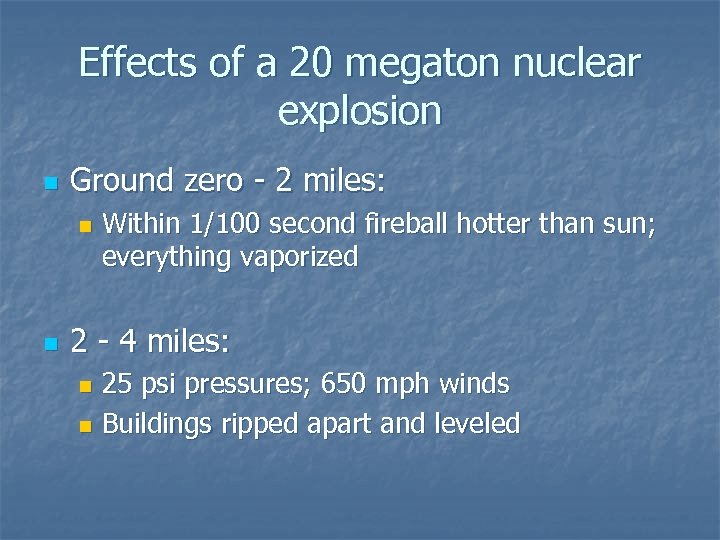 Effects of a 20 megaton nuclear explosion n Ground zero - 2 miles: n n Within 1/100 second fireball hotter than sun; everything vaporized 2 - 4 miles: 25 psi pressures; 650 mph winds n Buildings ripped apart and leveled n
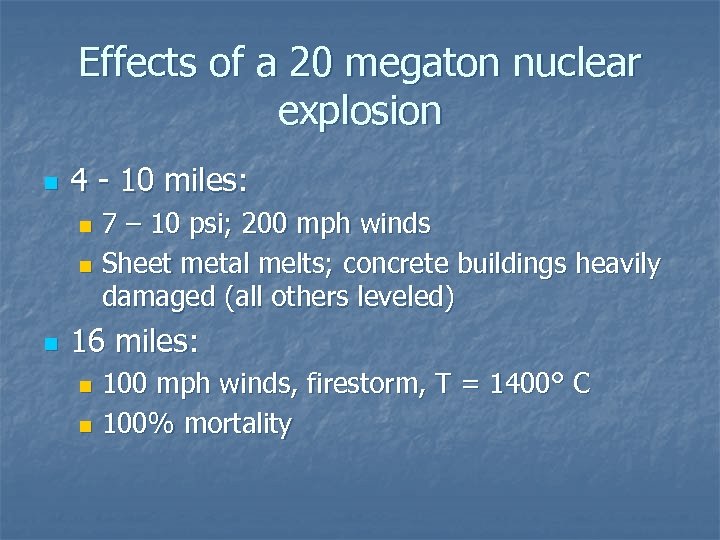 Effects of a 20 megaton nuclear explosion n 4 - 10 miles: 7 – 10 psi; 200 mph winds n Sheet metal melts; concrete buildings heavily damaged (all others leveled) n n 16 miles: 100 mph winds, firestorm, T = 1400° C n 100% mortality n
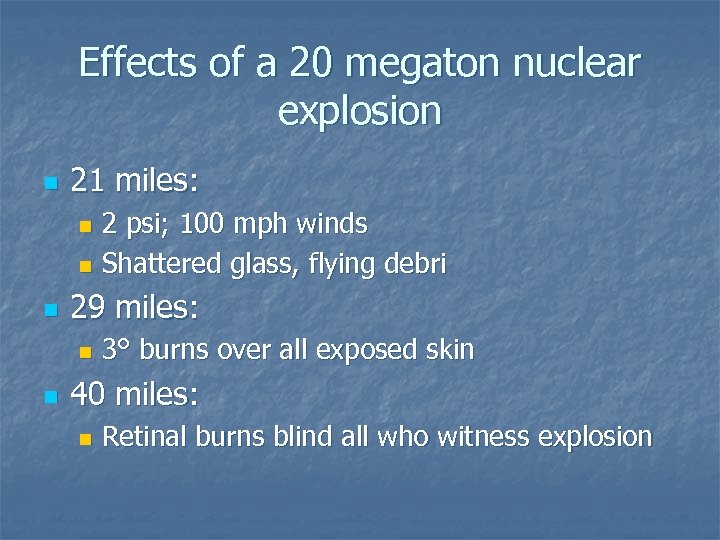 Effects of a 20 megaton nuclear explosion n 21 miles: 2 psi; 100 mph winds n Shattered glass, flying debri n n 29 miles: n n 3° burns over all exposed skin 40 miles: n Retinal burns blind all who witness explosion
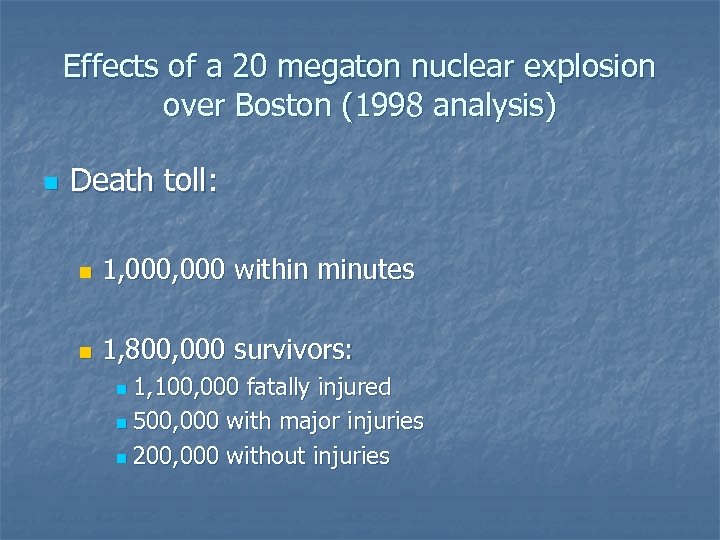 Effects of a 20 megaton nuclear explosion over Boston (1998 analysis) n Death toll: n 1, 000 within minutes n 1, 800, 000 survivors: 1, 100, 000 fatally injured n 500, 000 with major injuries n 200, 000 without injuries n
 Types of Injuries n n n Burns Blindings Deafenings PTX Fxs Shrapnel wounds
 Radiation Sickness n n n Very high dose: cerebral edema, N/V/D, speech and gait difficulties, convulsions, coma, death within 1 -2 days Medium doses: N/V/D → resolves → recurrent hematemesis, bloody D → majority die Low doses: BM failure, infections, bleeding, sores, ± death
 Effects on health professionals n 70% killed or fatally wounded n 15% injured n < 1000 survive
 Effects on health care system n n Most major hospitals destroyed EMS system debilitated No X-ray machines, electricity, water, antibiotics or other meds, blood/plasma, bandages 2000 burn unit beds in US (100 per major city) – essentially destroyed
 Effects on Health Care System n 1500 patients/doctor n 10 min/pt n 4 hours sleep/noc n 2 weeks to see all injured
 Ultimate Outcomes n Boston (pop. 2. 8 million in 1998) n > 2. 5 million dead after one month n More than 6 x as many Americans as died in WW II
 Nuclear Terrorism n n Attack on nuclear power plant or other nuclear installation Dirty bomb n n Potential tens to hundreds of thousands of deaths, billions of dollars of damage, chaos Numerous radiation sources left over from Cold War in post-Soviet countries Security lax Need to secure supplies of radioactive, bomb-making isotopes
 Chemical Weapons n n n 428 BC – Athenians and Spartans burned wax, pitch and sulfur Da. Vinci – arsenic and sulfur shells WW I Italians vs. Ethiopians n Japanese vs. Chinese n Germans vs. Allies n n 91, 000 deaths and 1. 3 million injuries
 Chemical Weapons n n Egypt vs. South Yemen (1963 -7) Iran/Iraq War (1980 s) Gulf War (versus Kurds, ? Others) n Gulf War Syndrome 1995 Tokyo subway attack by Aum Shrinko cult using sarin n 12 dead, 5000 injured or incapacitated
 Types of Chemical Weapons n Nerve gasses / paralytics n n Blistering agents: n n E. g. , sarin, VX E. g. , sulphur mustard Pulmonary toxicants n E. g. , chlorine, phosgene
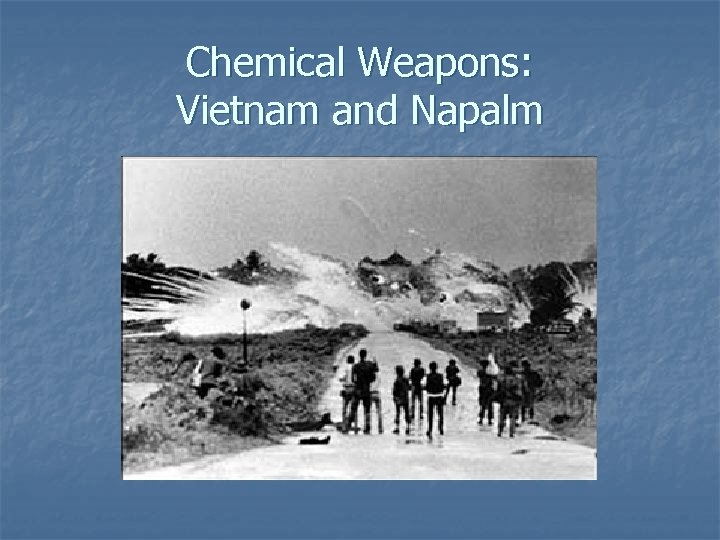 Chemical Weapons: Vietnam and Napalm
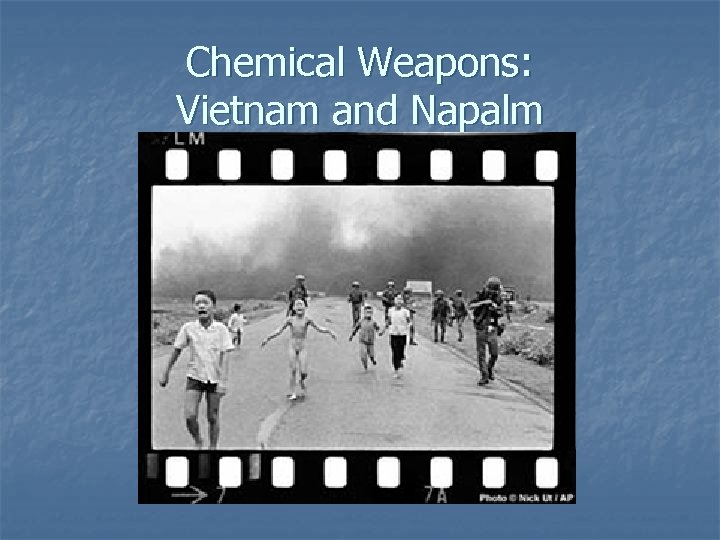 Chemical Weapons: Vietnam and Napalm
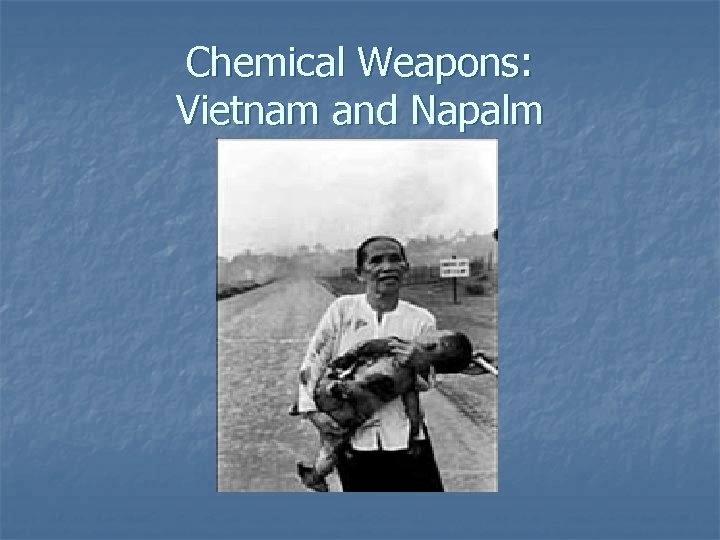 Chemical Weapons: Vietnam and Napalm
 Chemical Weapons n n 1972 Biological and Toxic Weapons Convention prohibits development, production, and stockpiling US and Russian still have significant stockpiles
 Other Chemical Weapons n n n Tear gas Pepper spray Calmatives: mind-altering or sleepinducing weapons (benzo-, SSRI-, and anesthetic derivatives) Cramp-inducing agents Stink bombs
 Biological Weapons - History n n Sixth Century BC: Assyrians poison wells with rye ergot 300 BC: Greeks pollute wells Later: Romans and Persians, Classical, Medieval and Renaissance periods, US Civil War (General Johnson at Vicksburg) 14 th Century: Tatars catapulting plagueinfested corpses
 Biological Weapons - History n n Sir Jeffrey Amherst (French and Indian Wars - smallpox): “You would do well to try to inoculate the Indians, by means of blankets, … to extirpate this execrable race” WW I: Cholera, plague, glanders, anthrax
 Biological Weapons – WW II n n Unit 731, Manchuria, Shiro Ishii British “Operation Vegetarian” (anthrax cakes / Germany)
 Biological Weapons Today n n 17 countries possess (+ Al Qaeda? ) US role in supplying other nations: n e. g. , 1985 -1989: US companies sold to Iraq: n n Bacillus anthracis, Clostridium botulinum, Histoplasma capsulatum, Brucella melitensis, Clostsridium perfringens, Clostridium tetani, and E. coli Despite evidence of use of chemical weapons against Kurds
 Biological Weapons Today n n n 1972 Biological Weapons Protocol: signed by 158 nations Lacks adequate enforcement mechanisms US has rejected enforcement (wary of foreign inspectors discovering military secrets and/or trade secrets of biotechnology and pharmaceutical companies)
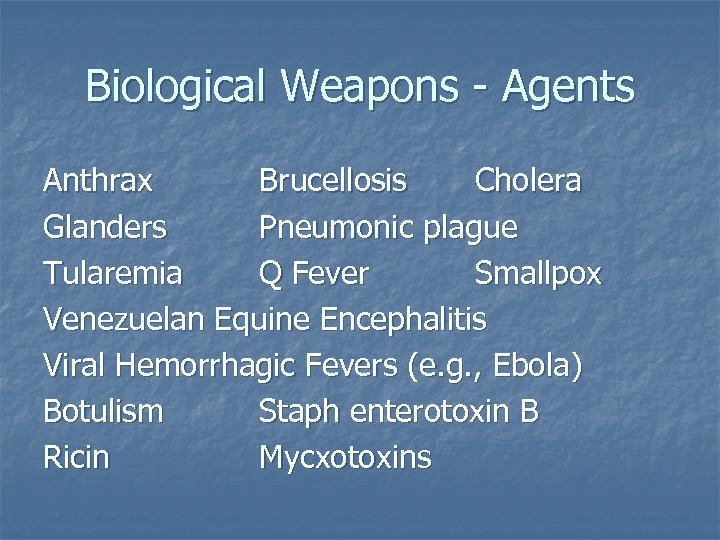 Biological Weapons - Agents Anthrax Brucellosis Cholera Glanders Pneumonic plague Tularemia Q Fever Smallpox Venezuelan Equine Encephalitis Viral Hemorrhagic Fevers (e. g. , Ebola) Botulism Staph enterotoxin B Ricin Mycxotoxins
 Anthrax – The Band
 Other WMDs n n Small arms Land mines Cluster bombs Multiple non-lethal wmds (weapons of mass disruption) proposed and under development
 Health Care System Preparedness for Weapons of Mass Destruction n Congressional panel estimates > 50% chance of terrorist act involving WMDs by 2013 ERs/hospital systems inadequately prepared Funds low
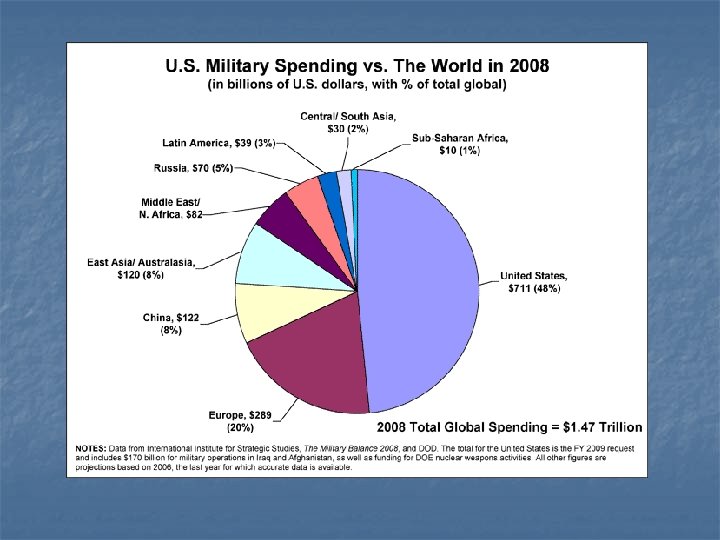
 Costs of Militarization n n US: over ½ of discretionary tax dollars spent on the military US military budget represents 43% of total world military budget ($1. 5 trillion in 2009) Increased spending on nuclear weapons Inadequate spending to prevent the spread of chemical, biological, and nuclear weapons
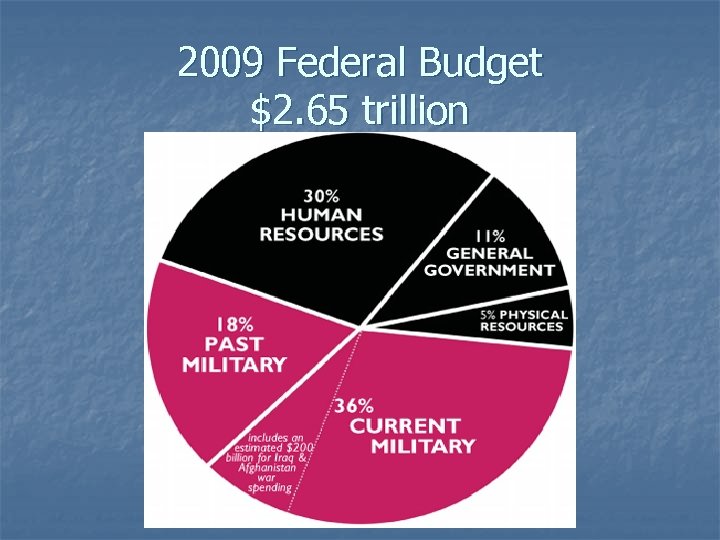 2009 Federal Budget $2. 65 trillion
 Dwight Eisenhower “The problem in defense spending is to figure out how far you should go without destroying from within that which you are trying to protect from without”
 Meanwhile. . . Social Injustices Abound n n n 51 million Americans lack health insurance 25% of US children live in poverty Homelessness, public educational system a shambles, increasing jail populations, AIDS, etc. Mass extinction, global warming 2. 5 billion people worldwide live in abject poverty (earn less than $500 per year, lack access to clean drinking water)
 Environmental Consequences of Militarization n World’s single largest polluter n 8% of global air pollution n 2 -11% of raw material use n Almost all high and low level radioactive waste
 The US Military n n Owns an amount of land equal to North Korea or Kentucky (25 million acres) Much of it polluted n Cleanup cost estimates in the hundreds of billions
 Health Costs of Militarization n 3 hours of world arms spending = annual WHO budget ½ day of world arms spending = immunization for all the world’s children 3 days of US arms spending = amount spent on health, education and welfare programs for US children in one year
 Health Costs of Militarization n n 3 weeks of world arms spending = primary health care for all in poor countries, including safe drinking water and full immunizations Brain drain: 2/3 of US scientists work in military-industrial complex
 Skewed Priorities n n The world spends $1. 6 trillion/year on military goods and services For 25% of this, we could: Eliminate starvation and malnutrition n Provide shelter for all n Eliminate illiteracy n Provide clean and safe water n Prevent soil erosion n
 Skewed Priorities Prevent global warming n Stop deforestation n Aid all refugees n Retire developing nations’ debt n Provide clean, safe energy (through efficiency and renewables) n
 Skewed Priorities Prevent acid rain n Fix the ozone hole n Stabilize world population n Provide basic universal health care and AIDS control n Eliminate nuclear weapons and land mines n
 Dwight Eisenhower “Every gun that is made, every rocket fired, signifies in the final sense a theft from those who hunger and are not fed, those who are cold and not clothed”
 Dwight Eisenhower “This world is not spending money alone. It is spending the sweat of its laborers, the genius of its scientists, the hopes of its children. This is not a way of life at all, in any true sense. Under the cloud of threatening war, it is humanity hanging from a cross of iron. ”
 Martin Luther King “A nation that continues year after year to spend more money on military defense than on programs of social uplift is approaching spiritual death. ”
 Military Spending n US: ½ of discretionary tax dollars spent on the military n US military budget represents 34% of total world military budget ($1. 5 trillion in 2009) n Iraq War costs could reach $2 -3 trillion
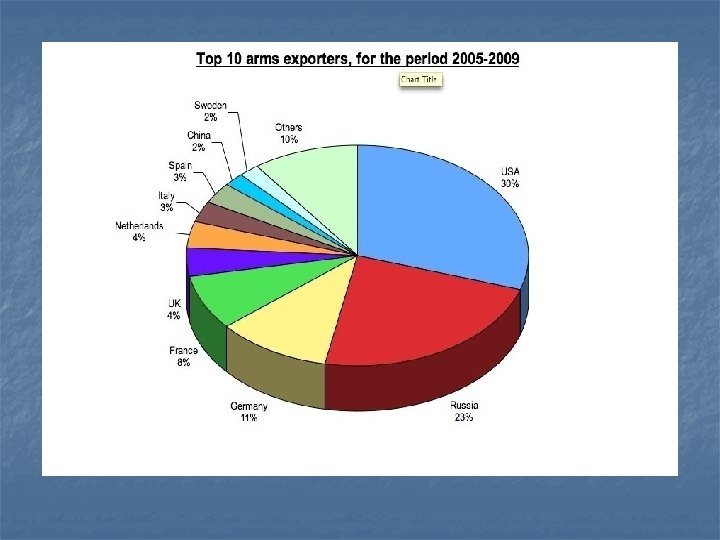
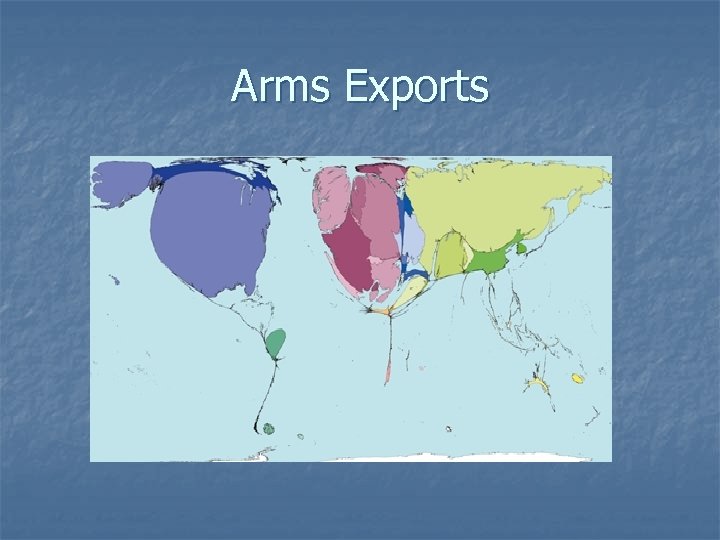 Arms Exports
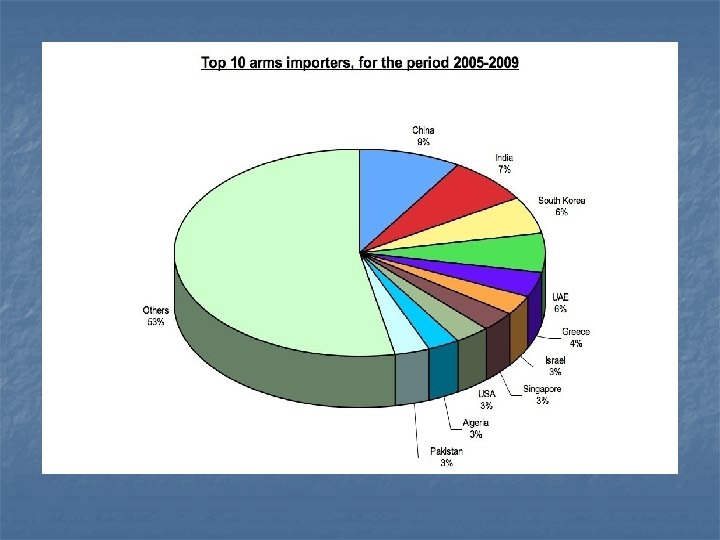
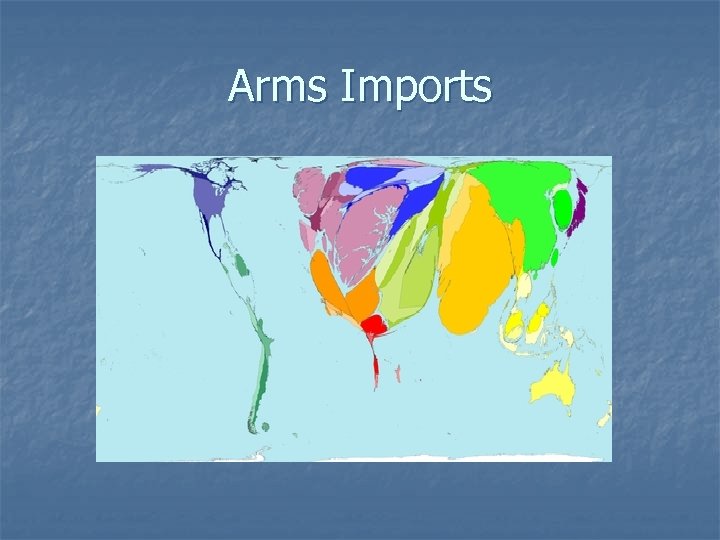 Arms Imports
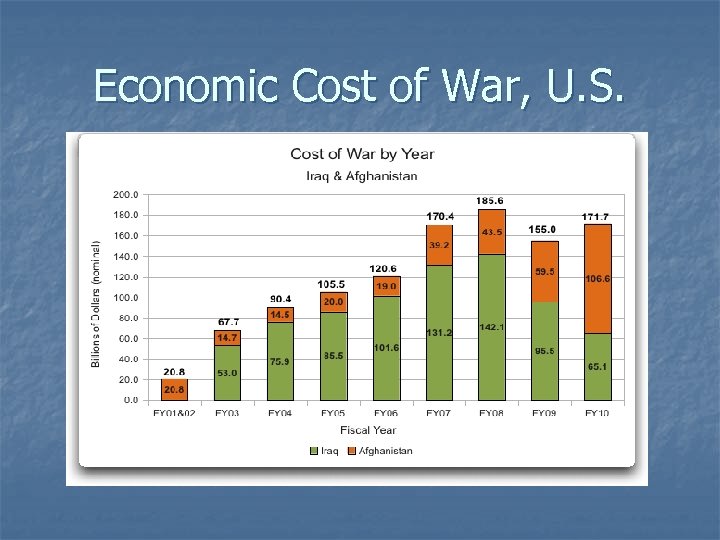 Economic Cost of War, U. S.
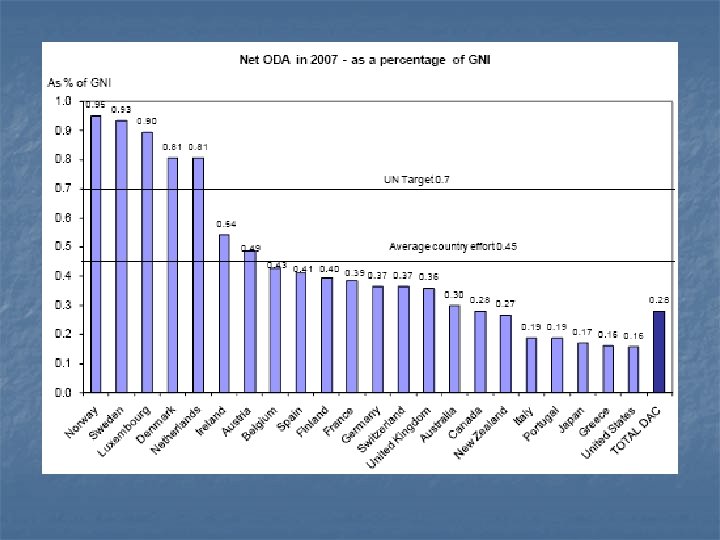
 US Foreign Aid n n US ranks 21 st in the world in foreign aid as a percentage of GDP (0. 7%, versus UN recommended 0. 15%) Foreign Aid: 1/3 military n 1/3 economic n 1/3 food and development n n US world’s largest arms exporter
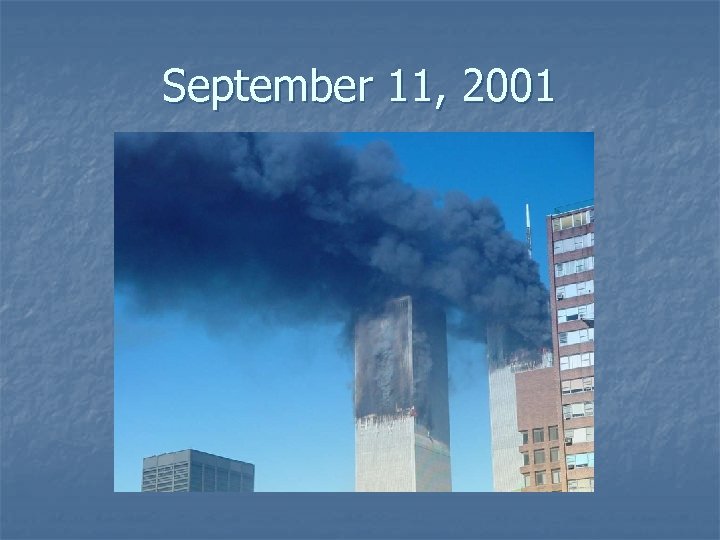 September 11, 2001
 World Trade Center Bombing n n 3300 fatalities - foreign nationals outnumbered Americans Environmental health consequences unknown: n n 300 -400 tons asbestos 130, 000 gallons of transformer oil contaminated with PCBS Lead, sulfuric acid, silicon Fine dust particles
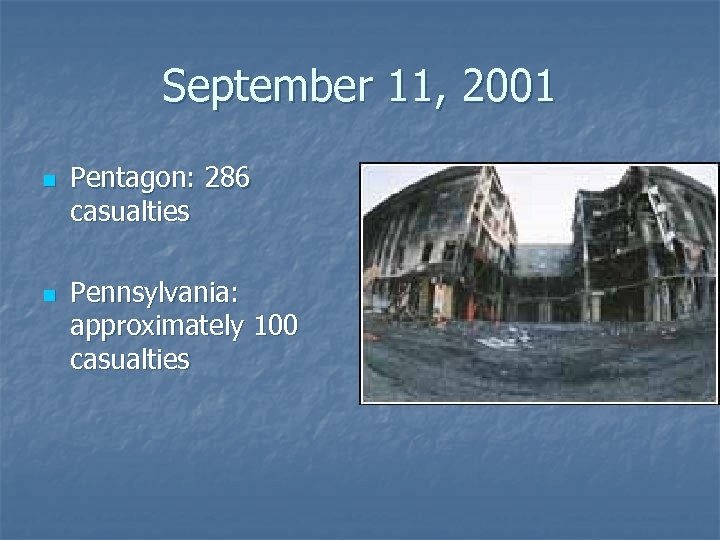 September 11, 2001 n n Pentagon: 286 casualties Pennsylvania: approximately 100 casualties
 The War on Terror (The War on Afghanistan, Iraq, and ? ) “May last 50 or more years” – Dick Cheney
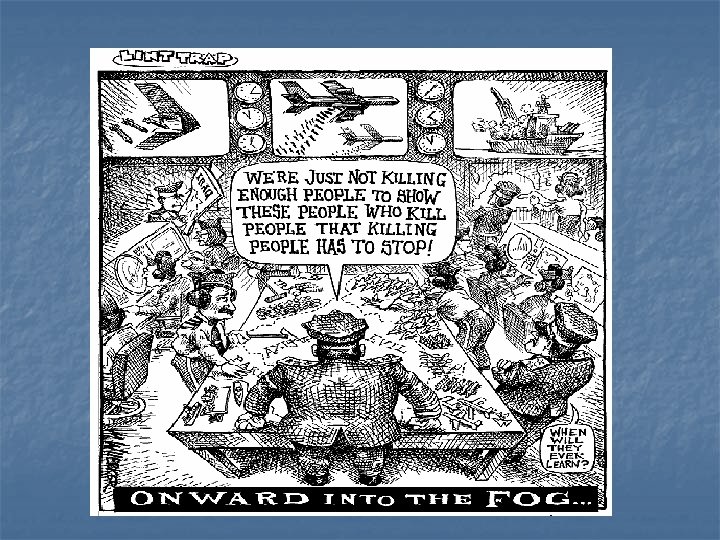
 What goes around comes around n n n 1980 s: CIA arms Afghan rebels with hundreds of Stinger missiles Late 2002: Terrorists using a similar Russianmade version of Stinger almost bring down Israeli passenger airline over Kenya CIA trying to buy back, but most unaccounted for n n Can shoot down a plane at up 6000 -8000 feet 24 diverted to Iran
 Gulf War I n 105, 000 military and 110, 000 civilian deaths (almost all Iraqis) n n n Over 2. 25 million refugees 2/3 of US casualties from “friendly fire” Cost $61 billion US pays only 1/6 of cost (most from Saudi Arabia, Kuwait, Germany and Japan) Environmental devastation n $48 billion in claims to UN
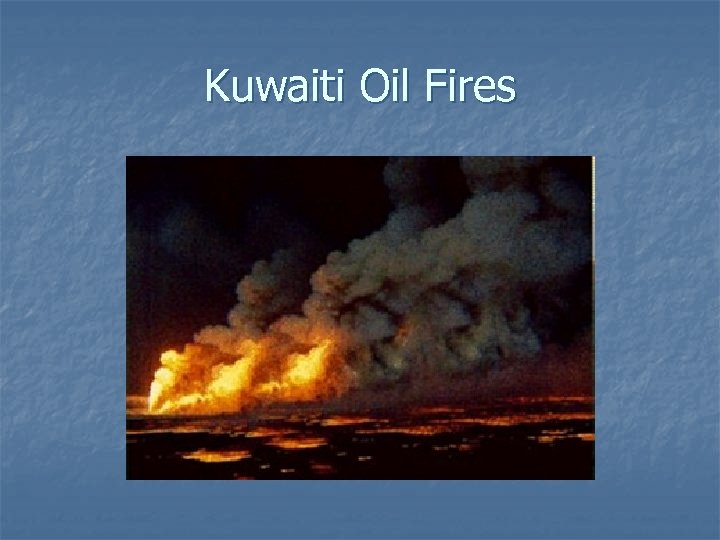 Kuwaiti Oil Fires
 Gulf War II n Approximately 4, 500 U. S. military deaths, over 40, 000 injuries (2010) n n Traumatic brain injuries common Over 100, 000 civilian deaths (Iraq) Over 2, 400 civilian deaths (Afghanistan, in 2009 alone) Massive humanitarian crisis
 Gulf War II n Financial cost of war to U. S. : $2 -3 trillion (est. ) n n n Includes fighting, rebuilding, veterans’ health care, economic losses, etc. In addition, global travel industry expected to lose over $500 billion Costs to Iraq and Afghanistan Distraction from North Korea, other threats Shock and awe battle plan: targeting infrastructure explicitly prohibited by the Geneva Conventions
 Gulf War II - Iraq n 96% of of the $9. 1 billion allocated to the Development Fund for Iraq unaccounted for n n Special Inspector General for Iraq Reconstruction, 2010 Ongoing audit of another $53 billion fund ongoing, but has already uncovered numerous instances of waste, fraud, and abuse
 US Nuclear Weapons Policies Under GW Bush n n n Nuclear Posture Review – expands scope of use of nuclear weapons, including first-strike against non-nuclear states Withdrawal from ABM Treaty Boycotted Comprehensive Nuclear Test Ban Treaty Conference Budgeted money to resume nuclear testing and development Possible use of nuclear-powered predator drones
 U. S. Nuclear Policy Under Obama n New START treaty signed by Obama, Putin n Approved by US Senate n Awaiting ratification by Russian Federation Assembly n Will decrease warheads by 2/3
 Phillip Berrigan “Nuclear weapons are the scourge of the earth; to mine for them, manufacture them, deploy them, use them, is a curse against God, the human family, and the earth itself. ”
 Disturbing Trends: The “Patriot Bill” n n Passed with minimal debate, most Congresspersons acknowledge not reading Increased governmental and corporate secrecy Erosion of civil liberties – deportations, accused held without charge/access to legal counsel 70, 000 individuals on government’s list of suspected terrorists
 Disturbing Trends: The Homeland Security Agency n The HSA absorbs two dozen agencies, 170, 000 employees, $38 billion budget TIPS program (citizen spying program) n Total Information Awareness System (Poindexter) n n Paranoia: color-coded alert levels, duct tape and plastic sheeting
 Special Interest Provisions in the Homeland Security Law n n n Vaccine liability protection (incl. existing thimersol lawsuits) – Eli Lilly US corporations setting up offshore business fronts to avoid paying taxes allowed to contract with HSD US government prohibited from publicly releasing information related to “vulnerabilities” – incl. safety of nuclear reactors, environmental toxins, etc
 Special Interest Provisions in the Homeland Security Law n Immunity from liability for manufacturers of antiterrorism products and technologies n Army investigations show 60 -90% of soldiers’ CBW protective gear malfunctions n Hate crimes, intolerance Media jingoism: n 21 st Century Mc. Carthyism n n Wickileaks
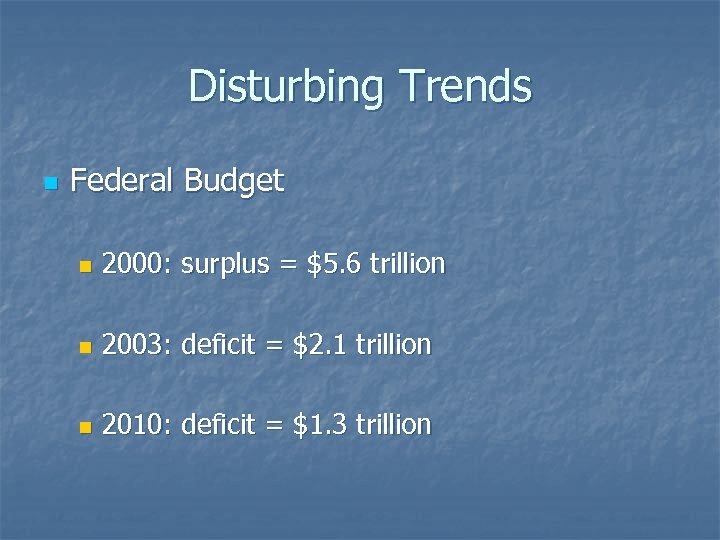 Disturbing Trends n Federal Budget n 2000: surplus = $5. 6 trillion n 2003: deficit = $2. 1 trillion n 2010: deficit = $1. 3 trillion
 The US: Rogue Nation n n History: Native Americans, slavery, current excesses, disparities and injustices Minimum 277 troop deployments by the US in its 225+ year history
 The US: Rogue Nation n Since the end of WWII, the US has bombed: n China, Korea, Indonesia, Cuba, Guatemala, Congo, Peru, Vietnam, Laos, Cambodia, Nicaragua, El Salvador, Grenada, Libya, Panama, Afghanistan, Sudan, Yugoslavia, and Iraq
 The US: Rogue Nation Conservative estimate = 8 million killed n US invasions/bombings often largely at behest of corporate interests n
 The US: Rogue Nation n In 2009, the US spent about $2, 210 per US citizen on defense n n vs. a few dollars per capita on peacekeeping efforts The US maintains military bases in 69 “sovereign” nations around the world
 The US: Rogue Nation n Continued funding of the Western Hemisphere Institute for Security Cooperation Formerly the School of the Americas n Over 60, 000 graduates, including many of the worst human rights abusers in Latin America (e. g. , Manuel Noriega, Omar Torrijos, and the assassins of Archbishop Oscar Romero) n
 International Non. Cooperation/Isolationism n Failure to sign or approve: Kyoto Protocol on Climate Change n Convention on the Prohibition of Anti. Personnel Land Mines n Comprehensive Nuclear Test Ban Treaty n
 International Non. Cooperation/Isolationism n Failure to sign or approve: Convention on the Rights of the Child n Convention on the Elimination of Discrimination Against Women Convention on Economic, Social and Cultural Rights n Convention for the Suppression of Traffic in Persons n
 International Non. Cooperation/Isolationism n Failure to sign or approve: n n Protocol 1, Article 55 of the Geneva Conventions, which bans methods or means of warfare which are intended, or may be expected, to cause widespread, long-term and severe damage to the natural environment The Basel Convention on the Control of Transboundary Movements of Hazardous Wastes (designed to control dumping of hazardous wastes from the industrialized world in developing countries)
 The US: Rogue Nation n Death Penalty: n n n US executes more of its citizens than any other country except China, Iran, and Saudi Arabia Until recently, the US was the only country to execute both juveniles and the mentally ill Failure to follow World Court Decisions Failure to recognize International Criminal Court Largest debtor to the UN (only 40% of dues paid)
 Solutions n n n Physician activism (PSR, IPPNW, etc. ) Increased education: public, medical and public health students Tolerance and appreciation of diversity Conservation measures Assist victims of war (PHR, MSF, etc. )
 Thomas Jefferson “Nothing can keep (government) right but (the people’s) vigilant and distrustful superintendence”
 The role of the doctor in society n World Health Organization: n “The role of the physician … in the preservation and promotion of peace is the most significant factor for the attainment of health for all. ”
 Contact Information Public Health and Social Justice Website http: //www. phsj. org martindonohoe@phsj. org