Скачать презентацию Conquering Space and Domesticating Sam Patch Expansion and
99f00a1061baa6e5d7e7fa5ce83f3a43.ppt
- Количество слайдов: 28
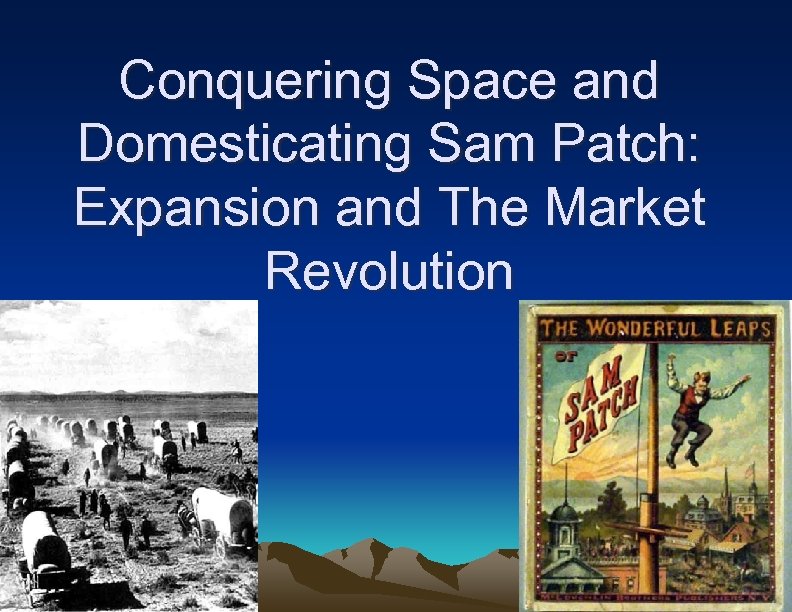 Conquering Space and Domesticating Sam Patch: Expansion and The Market Revolution
 • Discuss the impact of territorial expansion on national unity between 1800 and 1850. (97) • The Jacksonian Period (1824 -1848) has been celebrated as the era of the “common man. ” To what extent did the period live up to its characterization? Consider the following in your response: Economic development, Politics, Reform movements (01) • In what ways did developments in transportation bring about economic and social change in the US in the period 1820 to 1860? (03) • Developments in transportation, rather than in manufacturing and agriculture, sparked American economic growth in the first half of the nineteenth century. Assess the validity of this statement. (89) • In the period 1815 to 1860, improvements in transportation and increased inter-regional trade should have united Americans, but instead produced sectional division and finally disunion. Discuss with reference to the impact of improved transportation and increased inter-regional trade on the Northeast (New England Middle Atlantic states), the South, and the West. (80) • Discuss the impact of the “transportation revolution, ” 1820 – 1860, on the U. S. (73)
 I. Population Growth and Westward Expansion • Am pop. doubled every 23 years – 1790: 4 million 1810: 7 million • Overwhelmingly agrarian: to maintain standard of living, had to improve ag. tech or double acreage – Tech not keeping pace westward movement
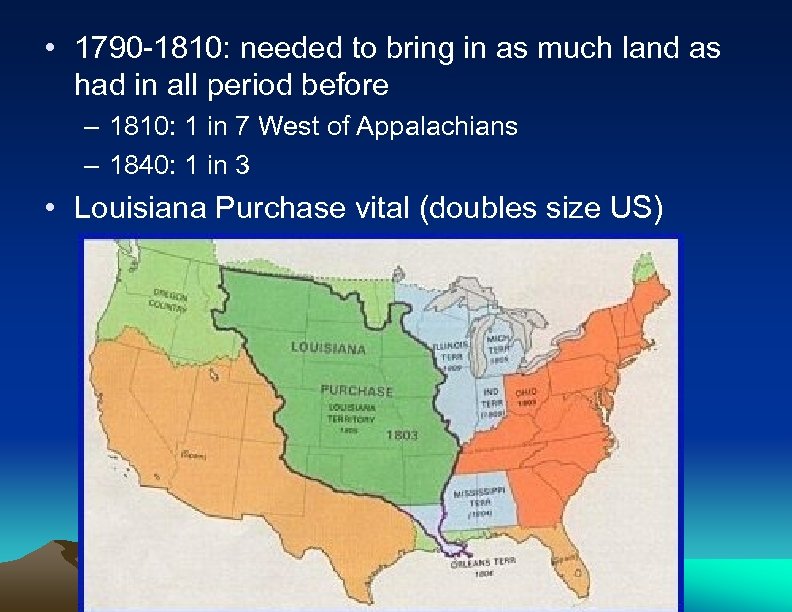 • 1790 -1810: needed to bring in as much land as had in all period before – 1810: 1 in 7 West of Appalachians – 1840: 1 in 3 • Louisiana Purchase vital (doubles size US)
 • Most migrants native born, lower middle class • Tend to move due West (NE to Midwest, S to lower Midwest and SW) • Fed. gov wanted rapid settlement for $: required full payment in cash speculators buy up vast tracts • Squatters doing most of farming pre-emption law (1841): allows squatters to buy at low cost
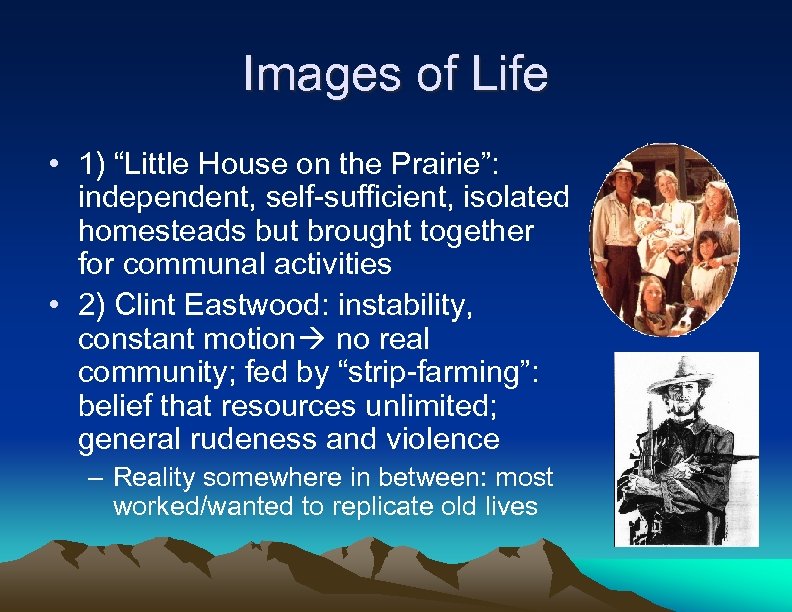 Images of Life • 1) “Little House on the Prairie”: independent, self-sufficient, isolated homesteads but brought together for communal activities • 2) Clint Eastwood: instability, constant motion no real community; fed by “strip-farming”: belief that resources unlimited; general rudeness and violence – Reality somewhere in between: most worked/wanted to replicate old lives
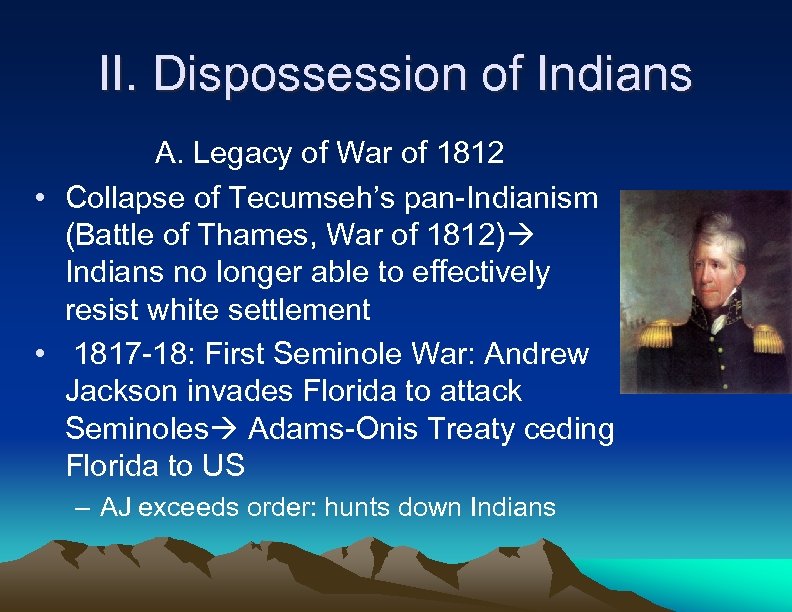 II. Dispossession of Indians A. Legacy of War of 1812 • Collapse of Tecumseh’s pan-Indianism (Battle of Thames, War of 1812) Indians no longer able to effectively resist white settlement • 1817 -18: First Seminole War: Andrew Jackson invades Florida to attack Seminoles Adams-Onis Treaty ceding Florida to US – AJ exceeds order: hunts down Indians
 B. Five Civilized Tribes and the Trail of Tears • Creek, Choctaw, Cherokee, Chickasaw, Seminole: largely assimilated • Farmers, built schools, developed alphabet, published newspapers, conversion, tribal Constitution based on US • Integration into market economy dependence (debt + alcohol) facilitates removal (sell lands, socio-cultural disruption, pop decline) – War, disease, malnutrition 50% decline
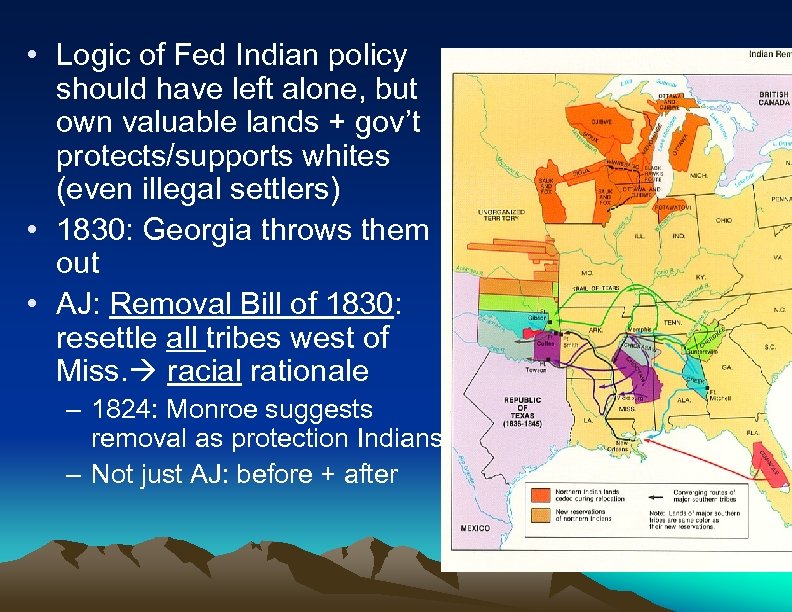 • Logic of Fed Indian policy should have left alone, but own valuable lands + gov’t protects/supports whites (even illegal settlers) • 1830: Georgia throws them out • AJ: Removal Bill of 1830: resettle all tribes west of Miss. racial rationale – 1824: Monroe suggests removal as protection Indians – Not just AJ: before + after
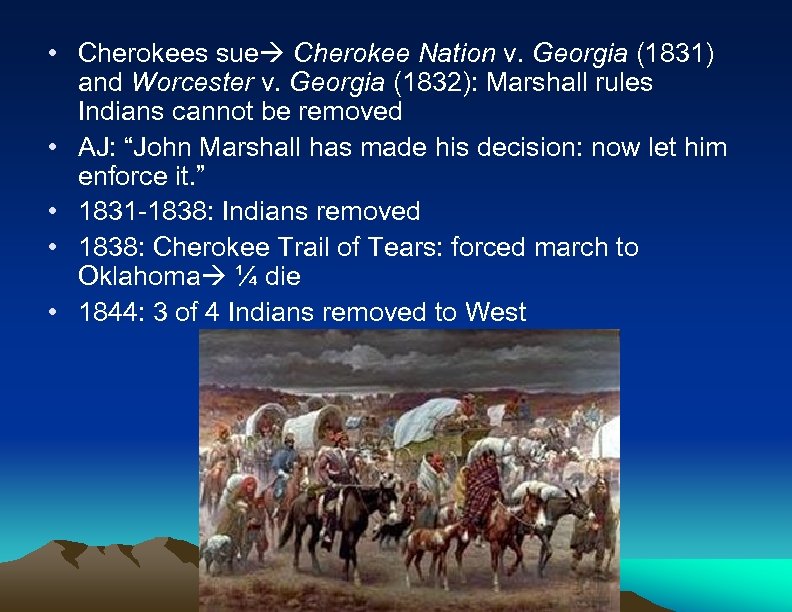 • Cherokees sue Cherokee Nation v. Georgia (1831) and Worcester v. Georgia (1832): Marshall rules Indians cannot be removed • AJ: “John Marshall has made his decision: now let him enforce it. ” • 1831 -1838: Indians removed • 1838: Cherokee Trail of Tears: forced march to Oklahoma ¼ die • 1844: 3 of 4 Indians removed to West
 III. Transportation Revolution • Poor transportation obstacle to migration: cost transport wheat KY to NYC 3 x price of sale – Cheaper ship Phila London than Pittsburgh Phila • 1815: John C. Calhoun (SC): “Let us conquer space” • 4 Major stages
 A. Turnpikes • Paved roads, built by states + private companies • Most connected Eastern cities – But, National Road • Poor quality, expensive
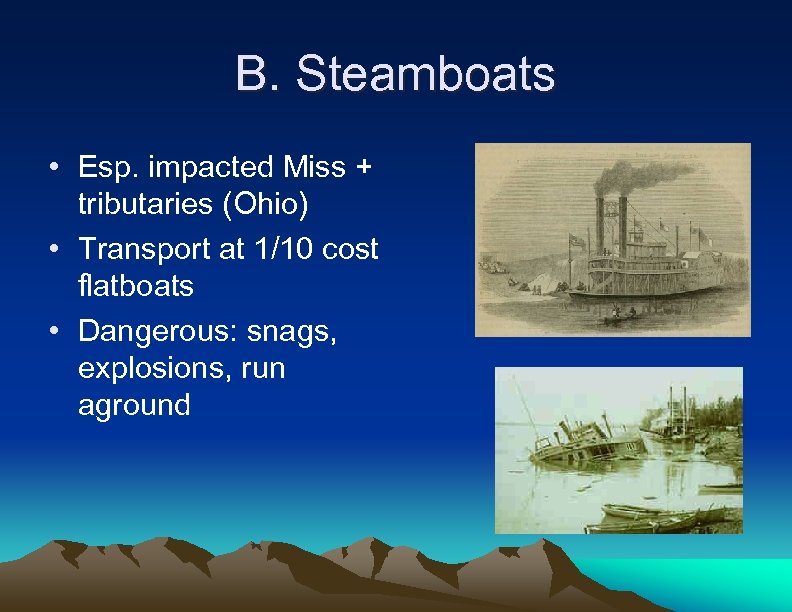 B. Steamboats • Esp. impacted Miss + tributaries (Ohio) • Transport at 1/10 cost flatboats • Dangerous: snags, explosions, run aground
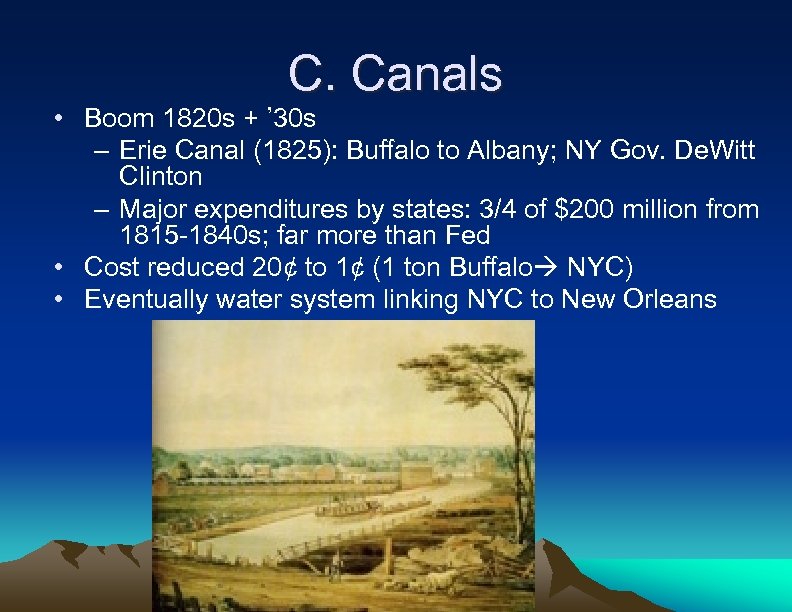 C. Canals • Boom 1820 s + ’ 30 s – Erie Canal (1825): Buffalo to Albany; NY Gov. De. Witt Clinton – Major expenditures by states: 3/4 of $200 million from 1815 -1840 s; far more than Fed • Cost reduced 20¢ to 1¢ (1 ton Buffalo NYC) • Eventually water system linking NYC to New Orleans
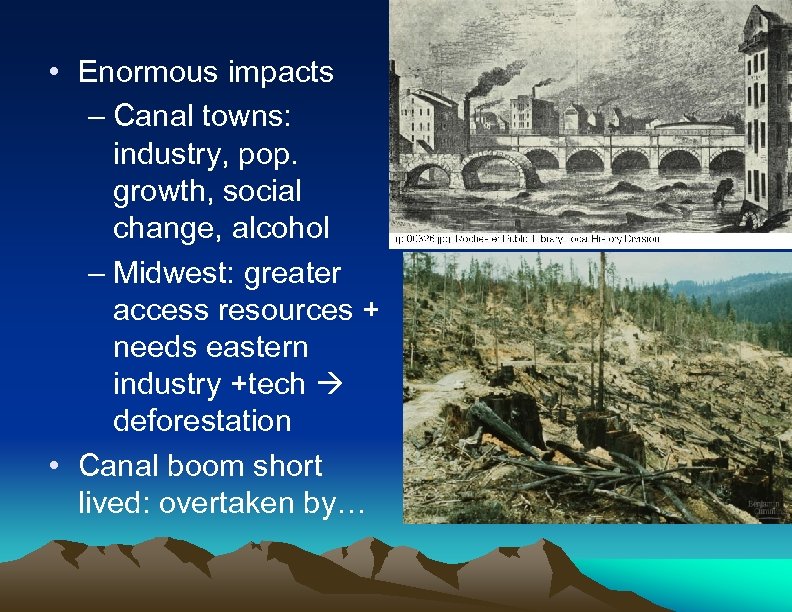 • Enormous impacts – Canal towns: industry, pop. growth, social change, alcohol – Midwest: greater access resources + needs eastern industry +tech deforestation • Canal boom short lived: overtaken by…
 D. Railroads • 1830: National system begun Baltimore and Ohio Rx. R (13 miles) • 1840: 3328 miles (2 x track in Europe) • 1850: 9000 miles (majority in N) • Biggest jump transport exp. (speed) in Am. history: 4 mph to 40/50 • Annihilated space + time (time zones) • Uniquely adapted to size US
 IV. Market Revolution and the Machine in the Garden A. Agrarian Revolution • Transport rev. bound growing nation econ. transformation: western farmers switch subsistence to commercial: specialization, orient to profit, mechanize – NE + Mid Atlantic: terrain unable use machines move West, move cities, or dairy + fruit farmers – 1820: 1/3 all food for market; 1850: 50+%
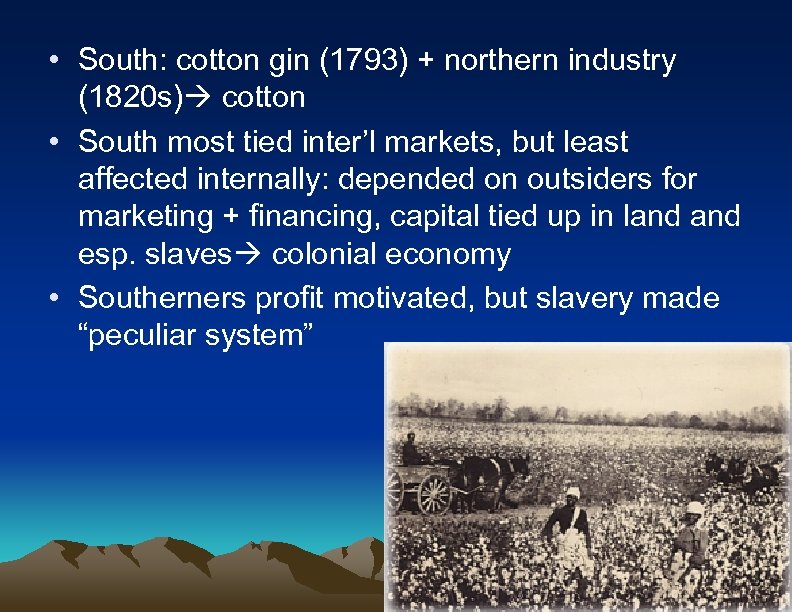 • South: cotton gin (1793) + northern industry (1820 s) cotton • South most tied inter’l markets, but least affected internally: depended on outsiders for marketing + financing, capital tied up in land esp. slaves colonial economy • Southerners profit motivated, but slavery made “peculiar system”
 Ambivalence to Revolution: • Huck Finn: steamboat destroys idyllic life on raft • Escape to Walden Pond: Henry David Thoreau and Transcendentalists • Death knell of Jeffersonian yeoman farmers – 1800: 6 of 7 workers farmers – 1860: 50% farmers – 1990: 1. 6% • But, “machine happy”: boom in “labor saving devices” (mechanical apple peelers)
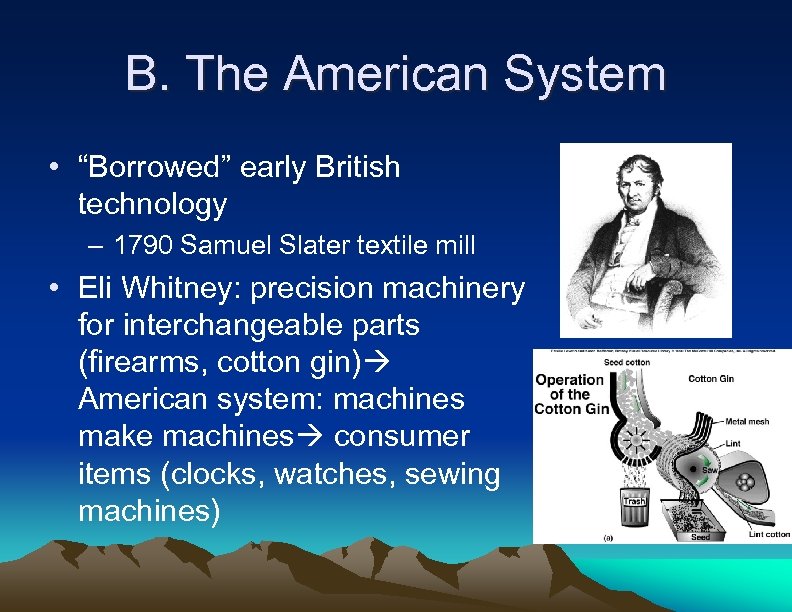 B. The American System • “Borrowed” early British technology – 1790 Samuel Slater textile mill • Eli Whitney: precision machinery for interchangeable parts (firearms, cotton gin) American system: machines make machines consumer items (clocks, watches, sewing machines)
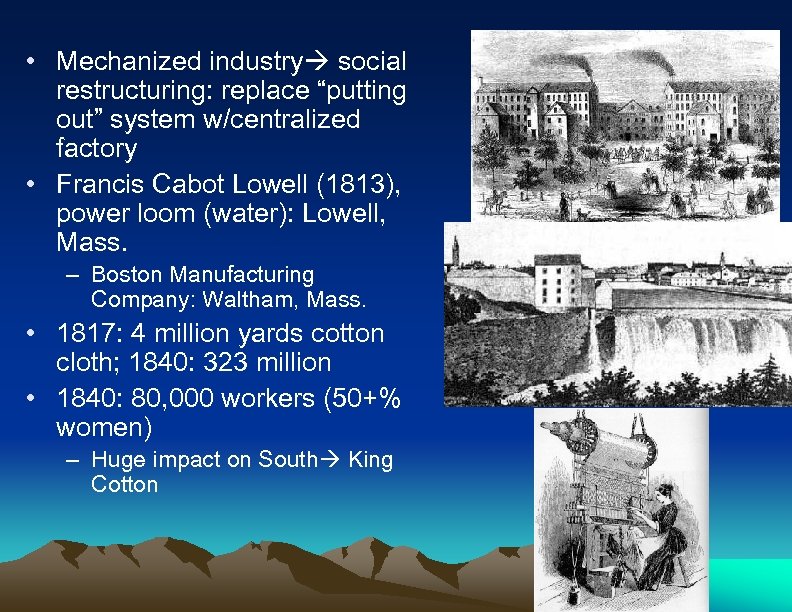 • Mechanized industry social restructuring: replace “putting out” system w/centralized factory • Francis Cabot Lowell (1813), power loom (water): Lowell, Mass. – Boston Manufacturing Company: Waltham, Mass. • 1817: 4 million yards cotton cloth; 1840: 323 million • 1840: 80, 000 workers (50+% women) – Huge impact on South King Cotton
 C. Taming Sam Patch • Difficulty of factory: pre-industrial sense of time – 1 st clocks only had hour hand; 1830 s 1 st massproduced home clocks • Rhythmic, seasonal, nature, task not clock Saint Monday • Rich variety of entertainments (that then affected work): Alcohol, dancing, athletics, horse races, circuses, magic, balloons, Sam Patch – Left work when these options available



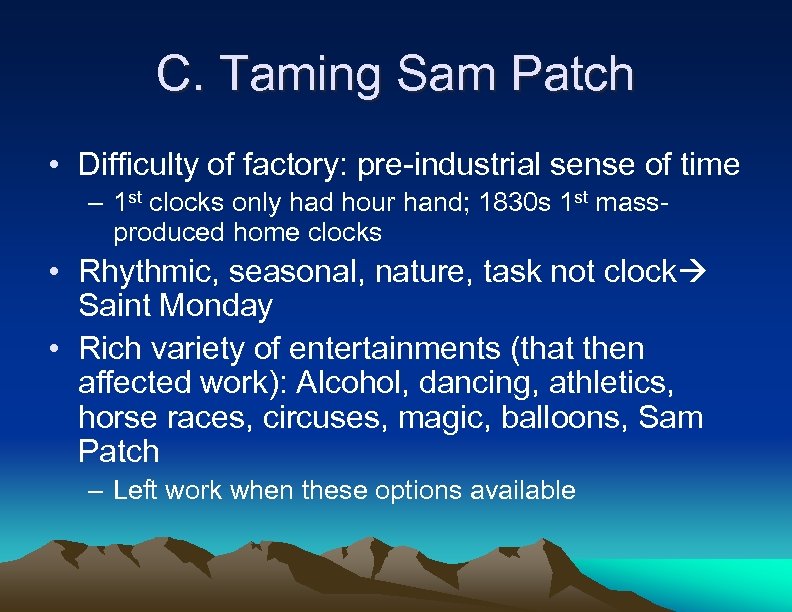
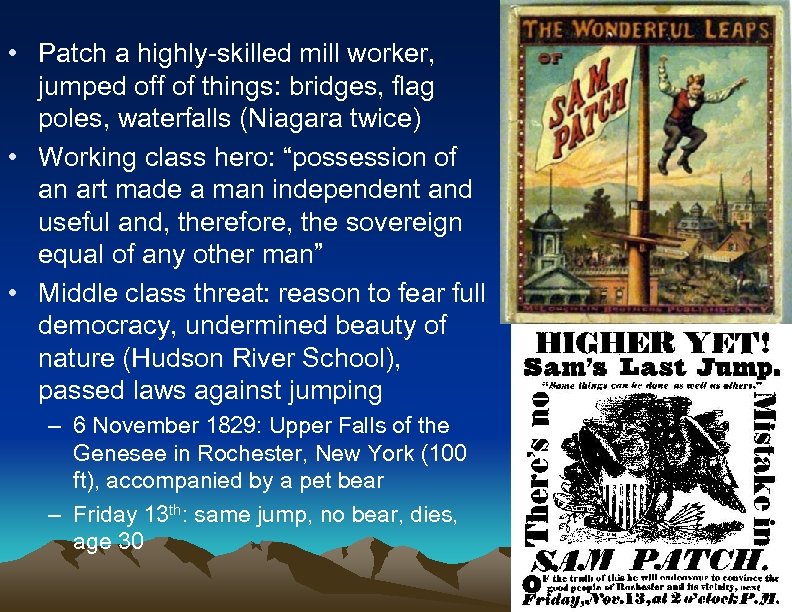 • Patch a highly-skilled mill worker, jumped off of things: bridges, flag poles, waterfalls (Niagara twice) • Working class hero: “possession of an art made a man independent and useful and, therefore, the sovereign equal of any other man” • Middle class threat: reason to fear full democracy, undermined beauty of nature (Hudson River School), passed laws against jumping – 6 November 1829: Upper Falls of the Genesee in Rochester, New York (100 ft), accompanied by a pet bear – Friday 13 th: same jump, no bear, dies, age 30
 • Changed through: incentives + institutions: church (2 nd Great Awakening: temperance, hard work, perseverance), schools (tech. , time discipline), local gov’t (police) • 1827, Lynn, MA: Society for the Promotion of Industry, Frugality, and Temperance: hiring pact, boycotts, by-laws, truant officers, ministers alter personality entire class to further capitalist goals • Successful? 2 measures: 1) liquor and 2) babies – 1800 -1860: avg. # kids 7 5. 2 – Less sex (no new birth control), less alcohol, kids econ drain in industrial society, some honestly converted