


 Скачать презентацию Congressional Evolution Congress vs Parliament Centralization
db46c3476064da9cb0b81c1c0228d275.ppt
- Количество слайдов: 11
 Congressional Evolution
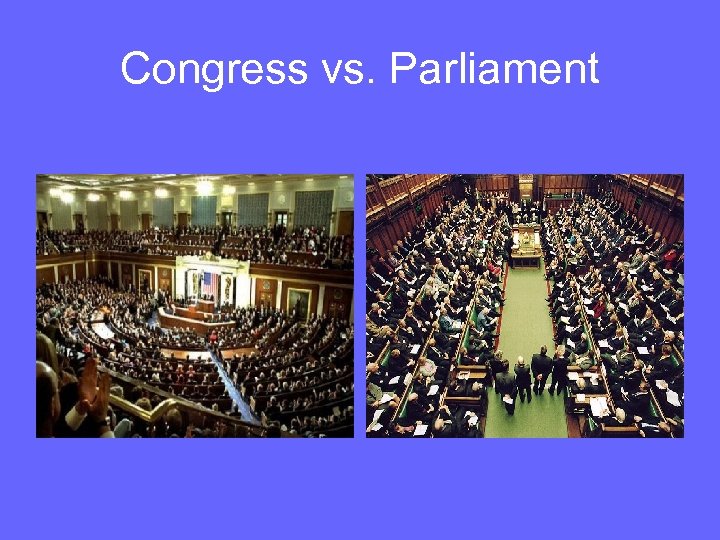 Congress vs. Parliament
 Centralization vs. Decentralization • Speedy and Decisive • Periods in History • Enhances the power of congressional leadership • More power to the political parties • Delay and Discussion • Overall trend • Enhances power of individual members • Less power to political parties Periods of centralization usually focus around strong central leaders
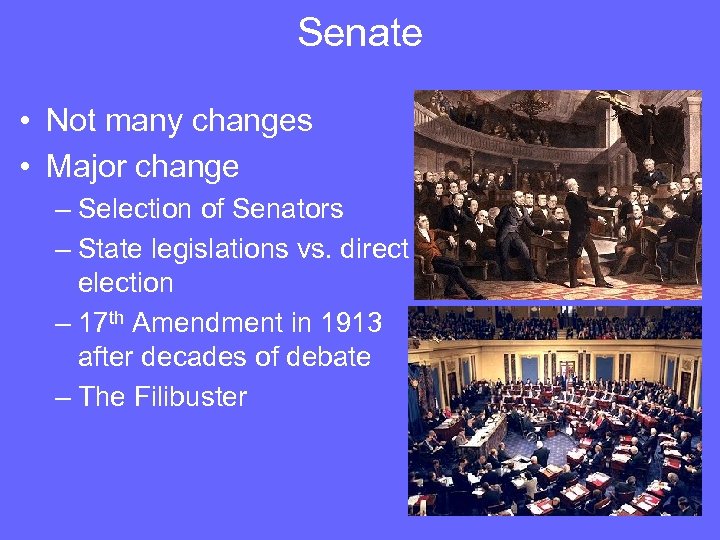 Senate • Not many changes • Major change – Selection of Senators – State legislations vs. direct election – 17 th Amendment in 1913 after decades of debate – The Filibuster
 The House Gone through numerous changes in leadership and organization
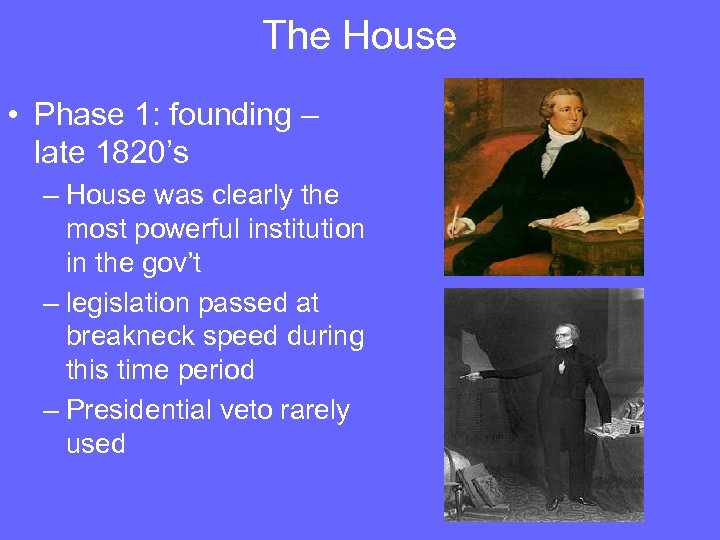 The House • Phase 1: founding – late 1820’s – House was clearly the most powerful institution in the gov’t – legislation passed at breakneck speed during this time period – Presidential veto rarely used
 The House • Phase 2: late 1820’s – late 1800’s • Powerful executive in Jackson • Issue of slavery • Civil War and Reconstruction – In times of crisis the executive branch tends to dominate
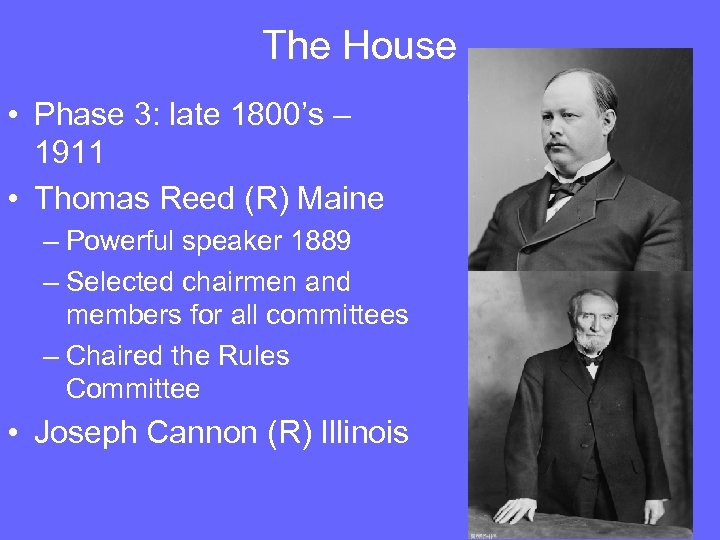 The House • Phase 3: late 1800’s – 1911 • Thomas Reed (R) Maine – Powerful speaker 1889 – Selected chairmen and members for all committees – Chaired the Rules Committee • Joseph Cannon (R) Illinois
 The House • Phase 4: 1911 – 1960’s • Cannon stripped of certain powers • These powers went to the party caucuses, the Rules Committee, and other committee chairmen
 The House • Phase 5: mid-1960’s – mid-1990’s • Committee Reform • Power taken away from committee chairmen • Committee chairmen needed to be elected not appointed based on seniority • Power spread around
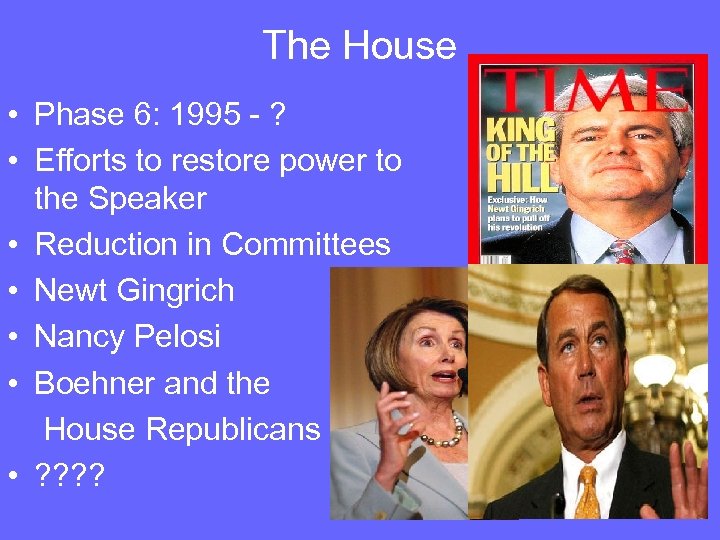 The House • Phase 6: 1995 - ? • Efforts to restore power to the Speaker • Reduction in Committees • Newt Gingrich • Nancy Pelosi • Boehner and the House Republicans • ? ?