


 Скачать презентацию Congressional Elections Constitution Senators 6
843ab044bb7d7cb3cd4f48e278b03685.ppt
- Количество слайдов: 27
 Congressional Elections
 Constitution • Senators – 6 years – Selected by state legislatures – 17 th Amendment, 1913: Direct election • Members of House of Representatives – 2 years – Directly elected by people
 Rules governing election to Congress • The Constitution
 Constitution: election to the House of Representatives • • • Election every 2 years Must be 25 years old Citizenship for 7 years Live in the state Selected same way as largest house of state legislature (popular vote) • Apportioned among states based on population
 Constitution: election to the Senate • Election every 6 years – Three Classes • • • Must be at least 30 years old Citizen for 9 years Live in the state Selected by state legislatures 2 per state
 Rules governing election to Congress • The Constitution • Single-member, winner-take all districts • Reapportionment and redistricting
 Reapportionment • When the federal government reallocates seats among the states after the decennial census
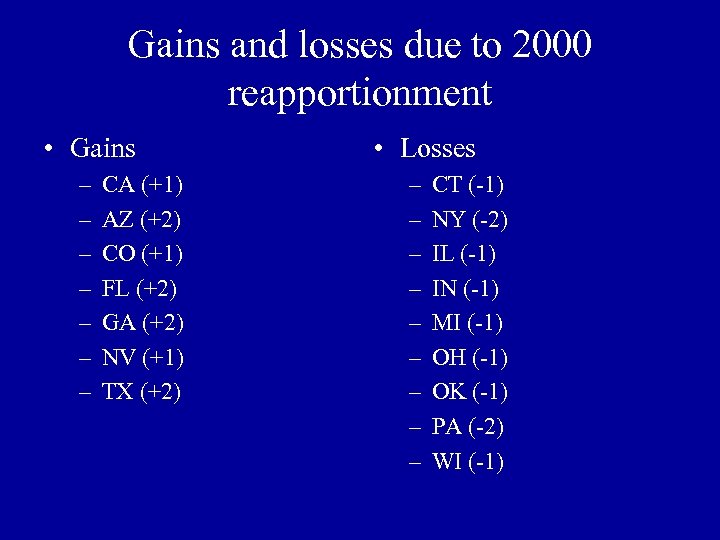 Gains and losses due to 2000 reapportionment • Gains – – – – CA (+1) AZ (+2) CO (+1) FL (+2) GA (+2) NV (+1) TX (+2) • Losses – – – – – CT (-1) NY (-2) IL (-1) IN (-1) MI (-1) OH (-1) OK (-1) PA (-2) WI (-1)
 Redistricting • When states redraw congressional district boundaries after decennial census • Wesberry v. Sanders (1964) – Each district must have equal population
 What criteria should states use in deciding where to draw district lines?
 Conflicting Values • • • Contiguity of boundaries (requirement) Equal population (requirement) Compactness Keeping together communities of interest Protecting interests of racial minorities – Meeting requirements of Voting Rights Act • Partisan gerrymandering • Incumbent protection • Maximizing competition
 Rules governing election to Congress • • The Constitution Single-member, winner-take all districts Reapportionment and redistricting Primary election laws – Open vs. Closed • FECA
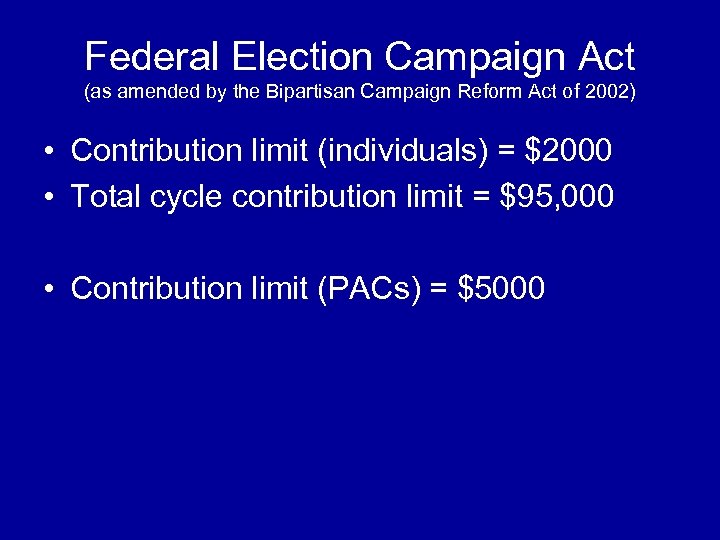 Federal Election Campaign Act (as amended by the Bipartisan Campaign Reform Act of 2002) • Contribution limit (individuals) = $2000 • Total cycle contribution limit = $95, 000 • Contribution limit (PACs) = $5000
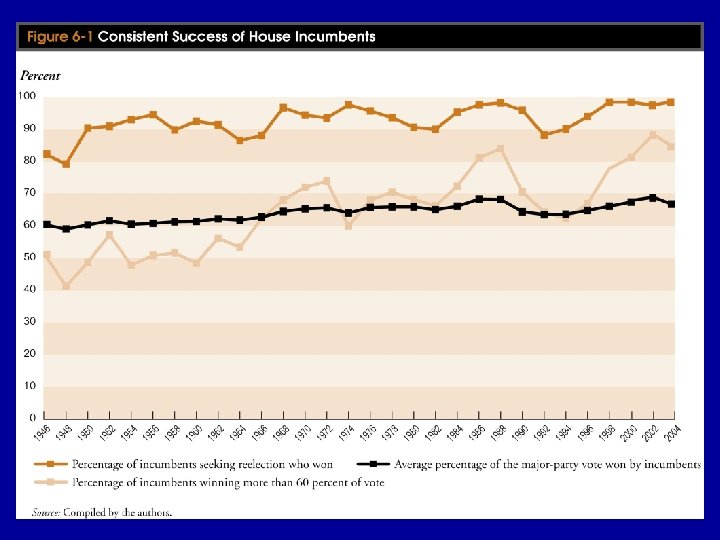
 How do voters decide? Heuristics: • Party ID • Name recognition • Incumbency!
 Sources of incumbent advantage • • Voters recognize their name Gerrymandering Privileges of office Ease of raising money
 How do voters decide? • Heuristics • Campaigns
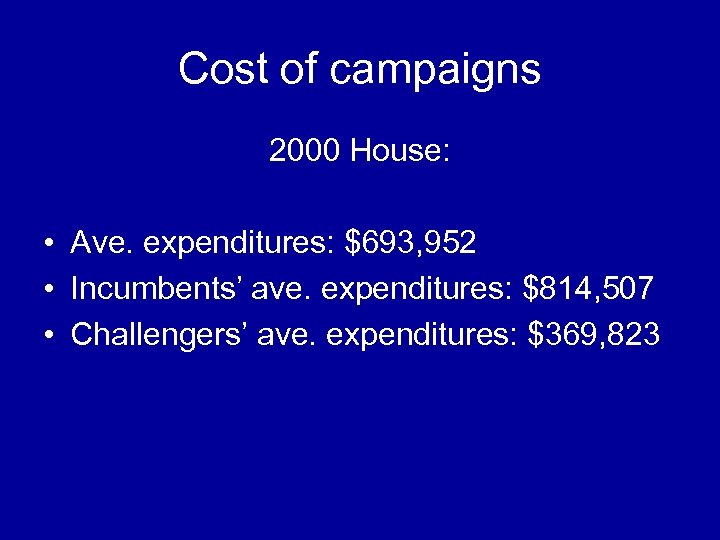 Cost of campaigns 2000 House: • Ave. expenditures: $693, 952 • Incumbents’ ave. expenditures: $814, 507 • Challengers’ ave. expenditures: $369, 823
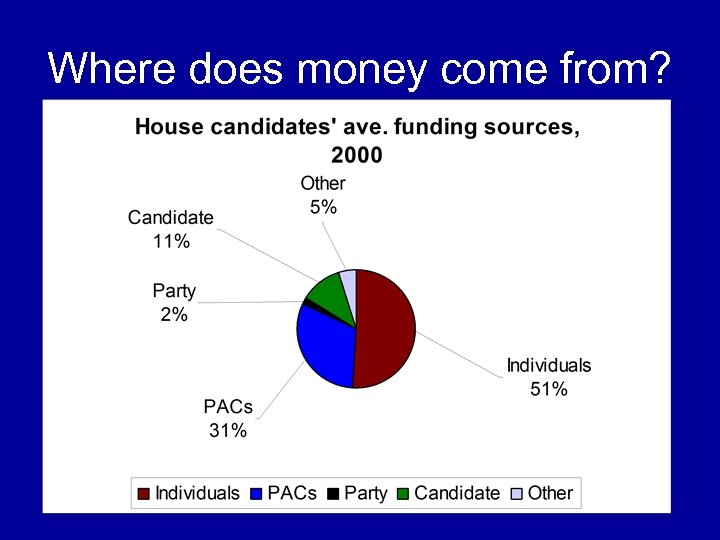 Where does money come from?
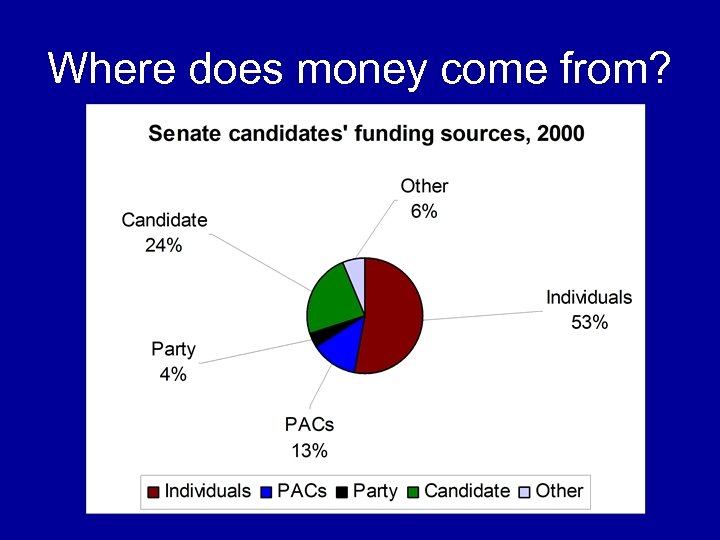 Where does money come from?
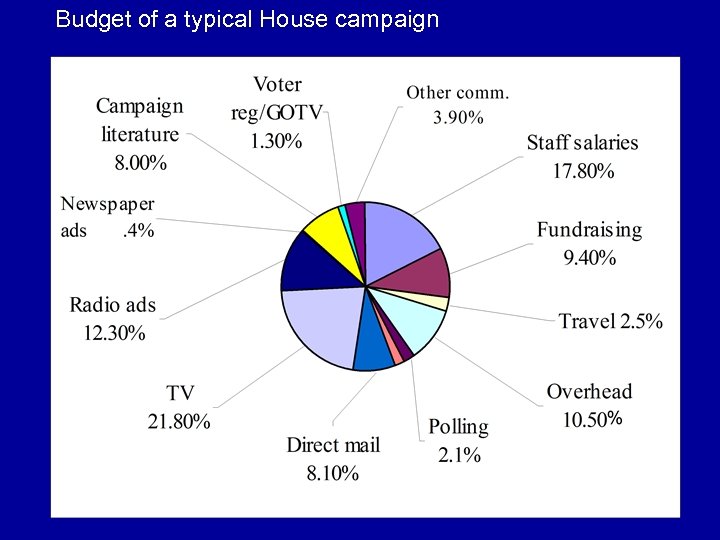 Budget of a typical House campaign
 Who gets elected? • White men
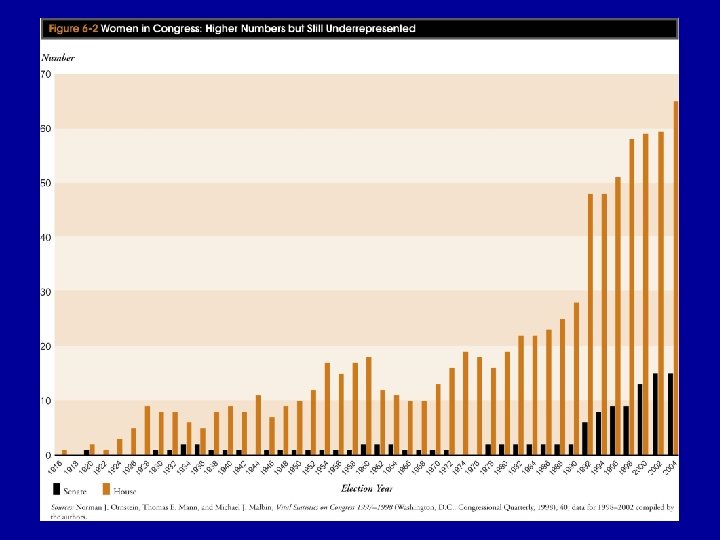
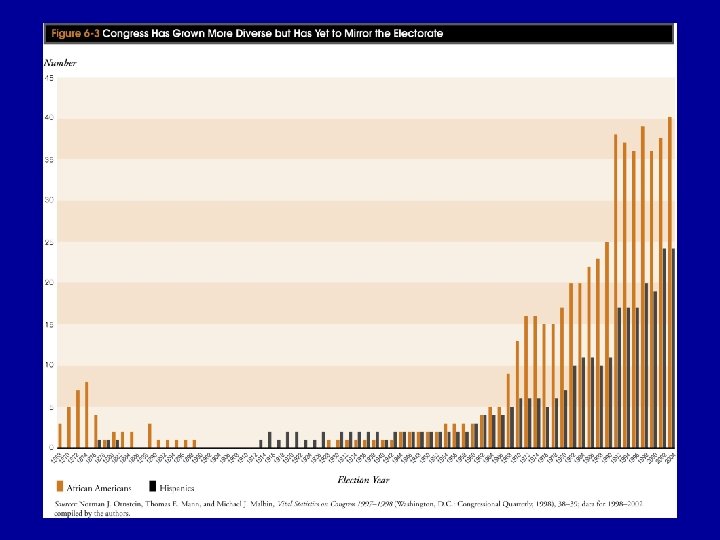
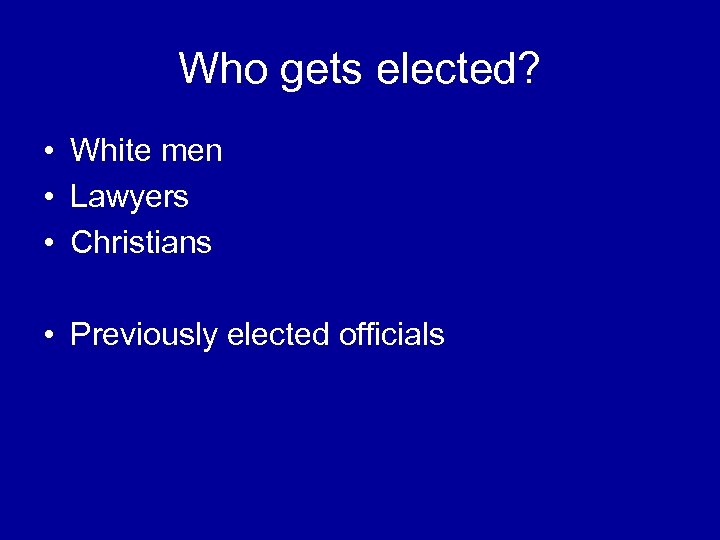 Who gets elected? • White men • Lawyers • Christians • Previously elected officials
 Small group discussion What constitutes good representation? What characteristics of a representative would make you feel like he or she should do a good job representing you and your interests? What behavior should a good representative engage in? When, if ever, should a representative put his constituents’ interests aside and think of the greater good? You will turn your notes in for participation credit.
 Values associated with representation • Looking like me, having my background – “Symbolic representation” • Rep. uses own judgment to act on my behalf – “Representative-as-delegate” • Doing exactly what I would do – “Representative as agent” • Communication with me