 Скачать презентацию Congress Electoral Reform What problem Low
691f331eba7589e4b2ffa1c300c91822.ppt
- Количество слайдов: 28



Congress: Electoral Reform • What problem? – Low public approval (15% today) • public thinks Congress works for special interests – Low participation in elections (35% avg. ) – Little turnover resulting from elections – Vote-to-seats “swing” effect limited • Can new election rules “fix” these
Congress: Electoral Reform • Reforms – Term limits – Redistricting – Proportional representation – Increase size of House – Public financing of campaigns
Congress: Electoral Reform • Term limits – Prevent professional politicians from running the legislatures? • 21 states adopted between 1990 and 2000 – Many applied TL to Congressional elections • 4 state courts rejected; leg changed in 3 • Limit number of terms (2 or 3) • May or may not apply to lifetime
Congress: Electoral Reform • Term limits – USSC ruled unconstitutional – States can’t change rules about how US Congress is elected • ‘Congress shall regulate time, place, manner of election’ – Would require Const. Amendment
Congress: Electoral Reform • Term limits – Arguments for • More open seats, new mix of candidates • More “citizen” legislators • Idealized by Anti-federalists • Increase voter interest, turnout – more electoral competition
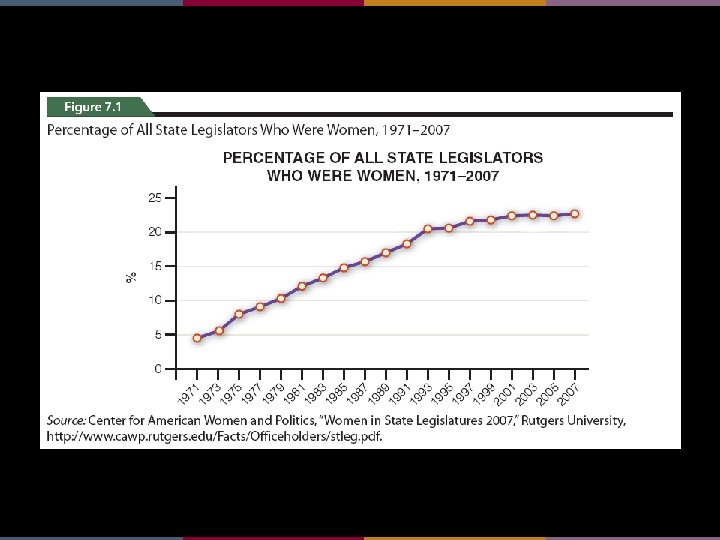
Congress: Electoral Reform • Term limits – Arguments for • More diversity, new mix of candidates • More opportunities for members of groups under-represented in current crop of incumbents – Women – Racial, ethnic minorities
Congress: Electoral Reform • Term limits – Arguments for • Less special interest influence • “Termed out” legislators not as worried about re-election – vote in “public interest”
Congress: Electoral Reform • Term limits – Arguments for • Restore faith in Congress – Cynicism about Congress due to special interests, gridlock – vote in “public interest”
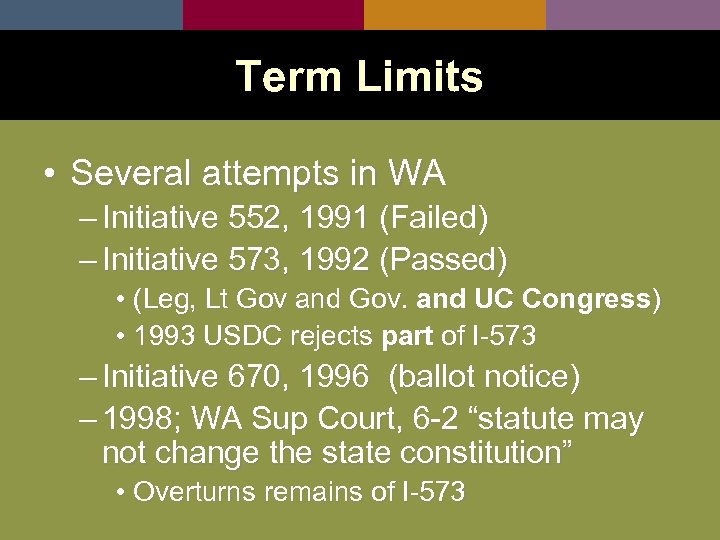
Term Limits • Several attempts in WA – Initiative 552, 1991 (Failed) – Initiative 573, 1992 (Passed) • (Leg, Lt Gov and Gov. and UC Congress) • 1993 USDC rejects part of I-573 – Initiative 670, 1996 (ballot notice) – 1998; WA Sup Court, 6 -2 “statute may not change the state constitution” • Overturns remains of I-573
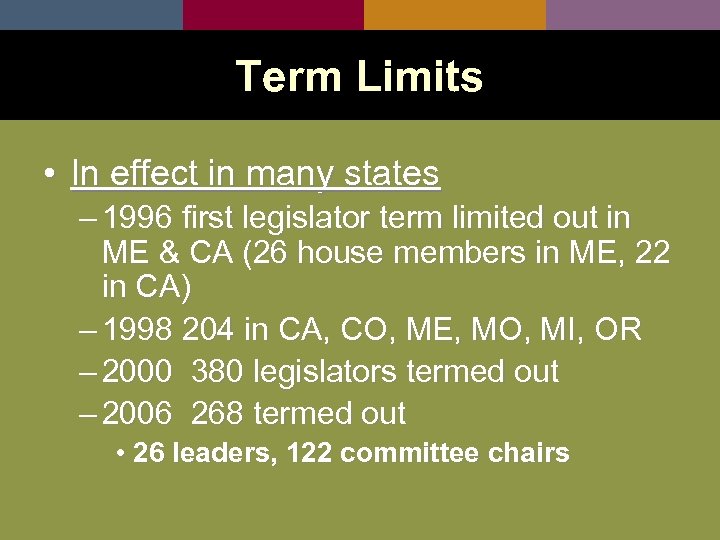
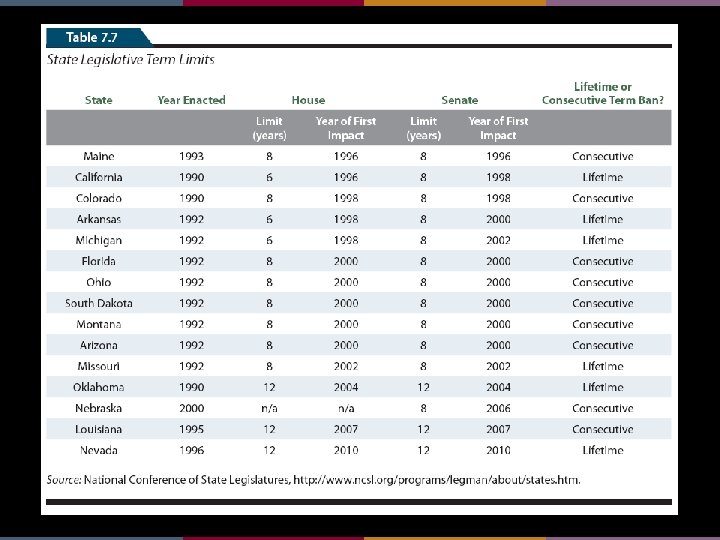
Term Limits • In effect in many states – 1996 first legislator term limited out in ME & CA (26 house members in ME, 22 in CA) – 1998 204 in CA, CO, ME, MO, MI, OR – 2000 380 legislators termed out – 2006 268 termed out • 26 leaders, 122 committee chairs
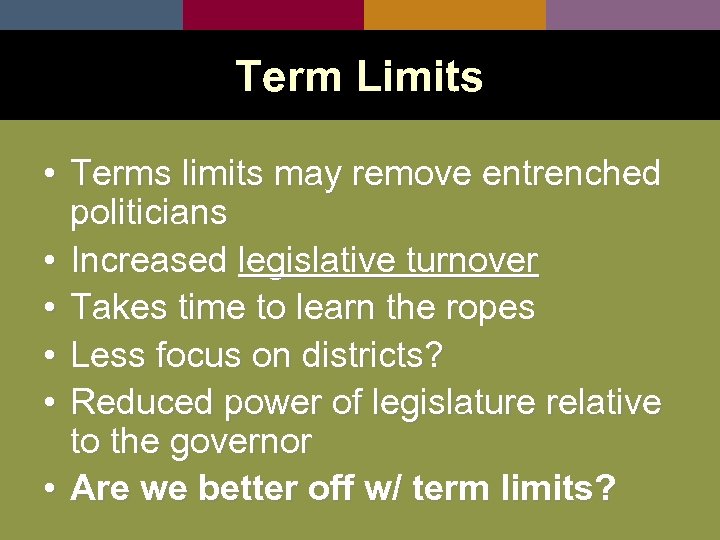
Term Limits • Terms limits may remove entrenched politicians • Increased legislative turnover • Takes time to learn the ropes • Less focus on districts? • Reduced power of legislature relative to the governor • Are we better off w/ term limits?
Term Limits • What effects? – Relations with other branches • Might strengthen had of exec (and staff) • Stronger role for lobbyists? – Turnout • no change – Institutional memory • Leg leaders lost
Term Limits • What effects? – Increased competition? • No, safe seats are still safe – Fewer career politicians? • In CA, pols shuffle to new offices – Diversity • mixed results
Term Limits • Congressional Elections as “filters” – Even w/ little threat of defeat, “bad” candidates lose – Association w/ scandal = defeat – Study of “quality” incumbents shows worst most likely to lose
Congress: Electoral Reform • Reapportionment and re-districting – Change how the process of districting is done – Congressional districts drawn by state legislatures • Non-partisan commissions? – Make districts more competitive – Dont use GIS info, party-reg info • Courts?
Redistricting • Before the 1960 s, states rarely redrew district boundaries • Populations shifted however • Malapportionment—unequal representation • In 1962, the Supreme Court established “one person, one vote”
Redistricting • Baker v Carr; Reynolds v Sims; VRA 1965 • Re-apportionment revolution – no longer a “political question” but justicable – State plans now subject to litigation – rural areas no longer over-represented – major effect on state legislatures
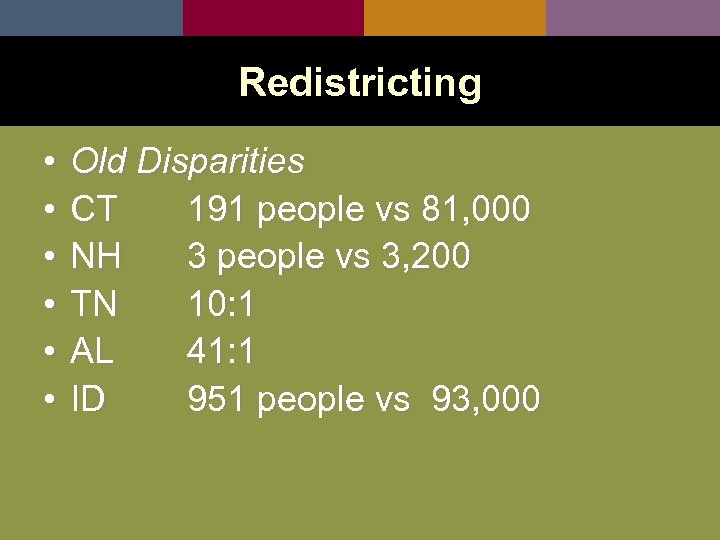
Redistricting • • • Old Disparities CT 191 people vs 81, 000 NH 3 people vs 3, 200 TN 10: 1 AL 41: 1 ID 951 people vs 93, 000
Redistricting • What criteria? – Now justicable, but on what grounds? • Same size population. . – contiguous – compact – communities of interest – protect incumbents – protect two party system – minority representation
Redistricting • Incumbent-protection districts—many districts are drawn to protect incumbents • Cracking and packing are often used when one party controls the process • Gerrymandering—drawing districts for political purposes
Redistricting • What criteria? • “Partisan Gerrymanders” – can gross “packing” and “cracking” be litigated
Redistricting • How often? – States may redraw districts as often as they like following League of United Latin American Citizens v. Perry (2006) – Challenge to TX plan. . . • At least once every decade
Redistricting • Who should draw districts? • Legislature – majority party controls process – require Governors signature • “Independent Commission” – WA, CA, IA. . . who appoints it? • Courts
Redistricting • Redistricting reform for Congress can be done at state level – No constitutional amendment – Not likely all / most states would do this

Congress: Electoral Reform • Increase size of House • Arguments for: – hard to represent 700 K – Costs of campaigns too high – Large districts very heterogeneous • Small groups never a geographic majority
Congress: Electoral Reform • Again, what problem? – Low public approval (15% today) • public thinks Congress works for special interests – Low participation in elections (35% avg. ) – Little turnover resulting from elections – Vote-to-seats “swing” effect limited • Can new election rules “fix” these
Скачать презентацию Congress Electoral Reform What problem Low
691f331eba7589e4b2ffa1c300c91822.ppt