 Скачать презентацию Congestion The Solution Growing Congestion Between
d20c1e65240ed7dfc500a085cf598a82.ppt
- Количество слайдов: 18



Congestion: The Solution
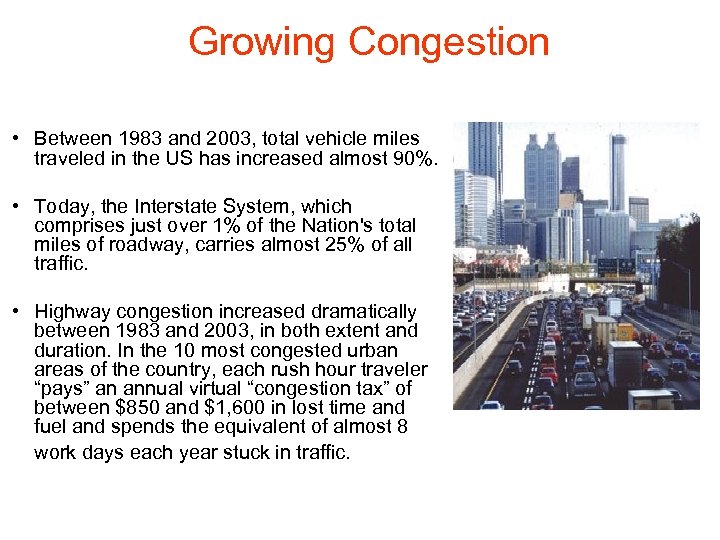
Growing Congestion • Between 1983 and 2003, total vehicle miles traveled in the US has increased almost 90%. • Today, the Interstate System, which comprises just over 1% of the Nation's total miles of roadway, carries almost 25% of all traffic. • Highway congestion increased dramatically between 1983 and 2003, in both extent and duration. In the 10 most congested urban areas of the country, each rush hour traveler “pays” an annual virtual “congestion tax” of between $850 and $1, 600 in lost time and fuel and spends the equivalent of almost 8 work days each year stuck in traffic. Congestion in Atlanta
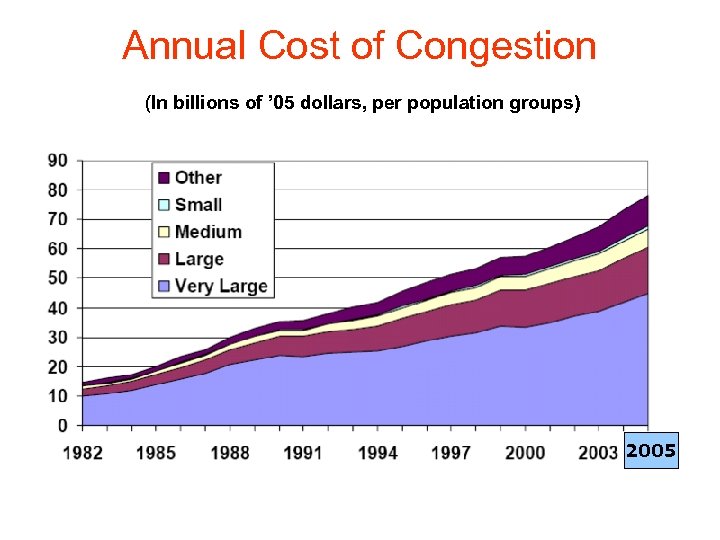
Annual Cost of Congestion (In billions of ’ 05 dollars, per population groups) 2005
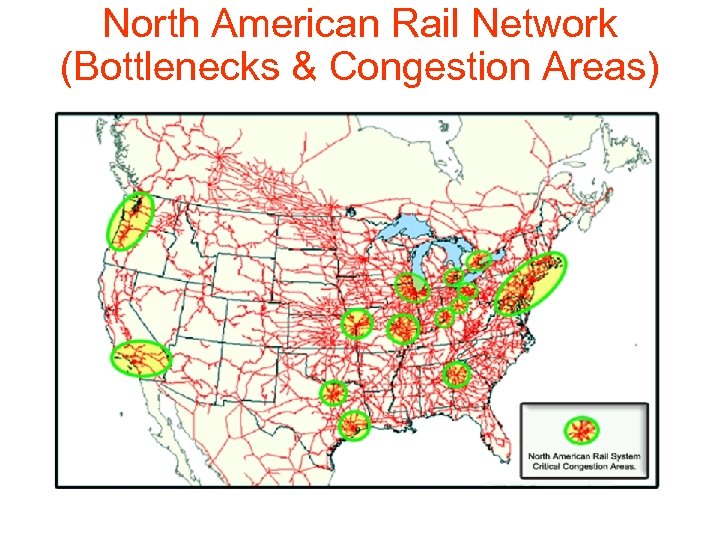
North American Rail Network (Bottlenecks & Congestion Areas)
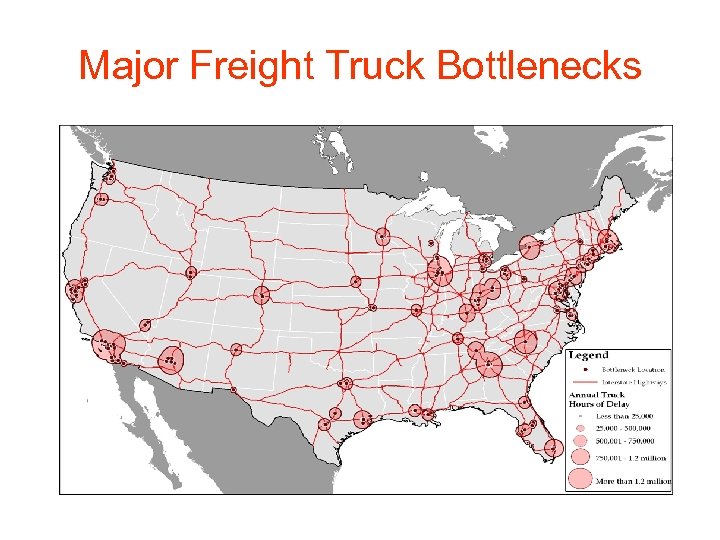
Major Freight Truck Bottlenecks
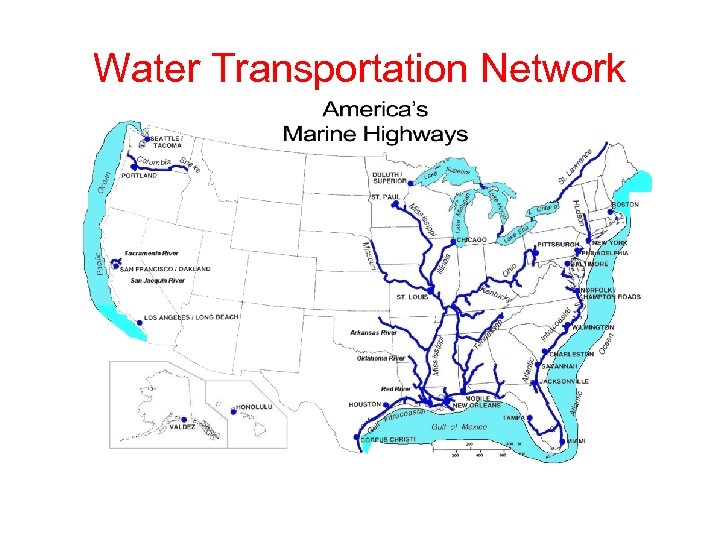
Water Transportation Network
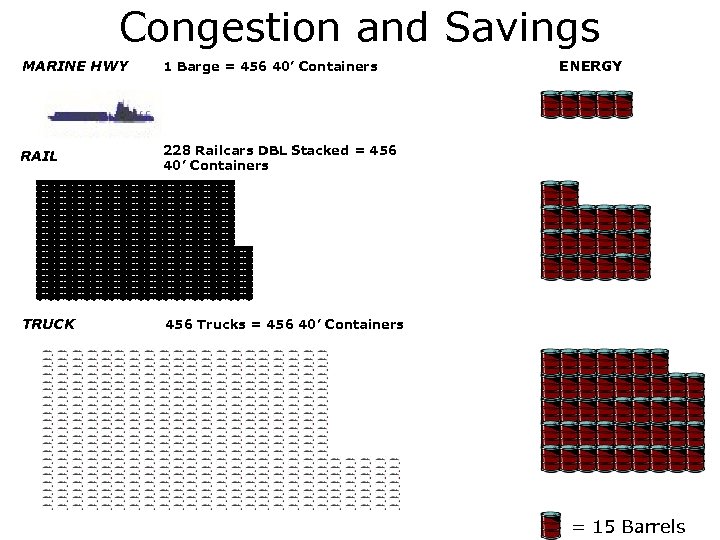
Congestion and Savings MARINE HWY 1 Barge = 456 40’ Containers RAIL 228 Railcars DBL Stacked = 456 40’ Containers TRUCK ENERGY 456 Trucks = 456 40’ Containers = 15 Barrels
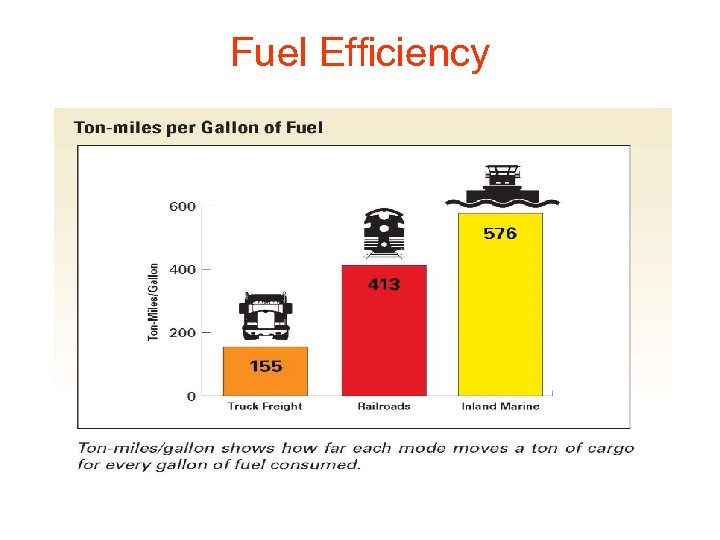
Fuel Efficiency
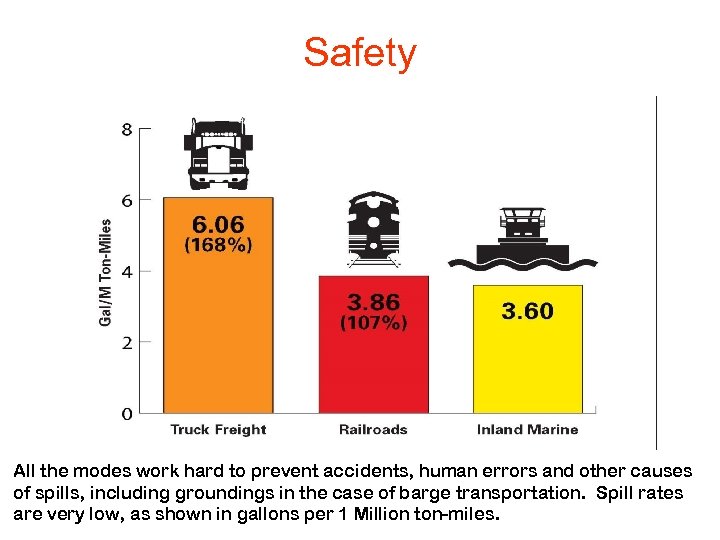
Safety All the modes work hard to prevent accidents, human errors and other causes of spills, including groundings in the case of barge transportation. Spill rates are very low, as shown in gallons per 1 Million ton-miles.
The Capacity Solution § International trade will at least double by the year 2030, further stressing our already congested landside transportation system. § Existing landside infrastructure can not support growth projections. Landside expansion is costly, protracted, and can be controversial. § The Nation’s Marine Highway system offers unlimited growth potential. § The U. S. moves approximately 2% of our domestic freight by water: • Europe - 44% • China - 61% § The Maritime Administration is developing initiatives to increase the marine domestic freight market share.
Energy Independence and Security Act of 2007 • Congress established a Short Sea Transportation (America’s Marine Highway) Program to be managed by the Maritime Administration* • To encourage the expansion of America’s Marine Highway through development of – – – U. S. Merchant Fleet Shipper utilization Port and landside infrastructure Marine transportation strategies by state and local governments *By delegation from the Secretary of Transportation
Interim Final Rule • • • Published October 9, 2008 Solicits comments on program structure Solicits recommendations for MH corridors Comments due by February 6, 2009 Project applications will be accepted after Final Rule is published in 2009
2008 Marine Highways Program § Designate Marine Highway Corridors * Focus efforts and resources of multiple state, Transportation planners, local entities § Designate Marine Highway Projects * Identify projects that would offer best public benefit (congestion, emissions, energy and infrastructure savings) * Provide support to expand or start new operations (promote, coordinate, research, and identify federal cargos. Remove impediments) § Identify Incentives, Impediments and Solutions – Report to Congress December • Establish Marine Highway Advisory Board • Identify & propose short term incentives § Conduct Research * Identify environmental and transportation benefits * Vessel design, technology, emissions, fuel economy & increase efficiency * Studies to identify and implement solutions for specific projects § Capital Construction Funds are available for vessels in Marine Highway trade.
Barriers to Success 1. Competitive disadvantage posed by: Ø Harbor Maintenance Tax (HMT) Ø 24 -Hour Advance Notice Rule Ø Multiple Lift Fees for Marine Transport 2. Lack of Awareness of Marine Highway benefits Ø Availability of Financing and Investment Ø State/Local Authorities and Shippers 3. Inadequate Port Infrastructure 4. Shortage of Assets (i. e. , cranes, chassis, barges, etc. )
Harbor Maintenance Tax Relief § HR 981 – Harbor Maintenance Tax exemption for U. S. and Canadian Great Lakes non-bulk cargo and trade. § HR 1499 – House Harbor Maintenance Waiver for all Domestic Intermodal Cargo and international cargo on the Great Lakes § Similar version in the Senate
Initial Program Progress • Port of Virginia to Port of Richmond Service – The Richmond MPO has approved $2. 25 M in seed money to open an operation beginning October 2008. • Department of Defense to utilize the Marine Highways – US TRANSCOM and its subordinate commands are developing policies and procedures to use water in the shipment of military cargoes where it is feasible. – DOD used the Marine Highway for a troop exercise, saving $1. 5 -2 million. • Maritime Administration is working with stakeholders on other proposed projects to include: – – New York to Bridgeport Stockton to Sacramento Oregon to Seattle Washington Western Gulf of Mexico to NE U. S.
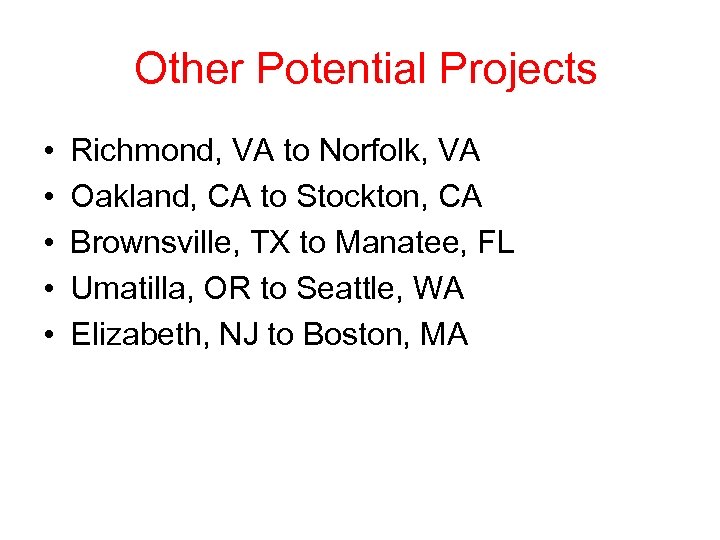
Other Potential Projects • • • Richmond, VA to Norfolk, VA Oakland, CA to Stockton, CA Brownsville, TX to Manatee, FL Umatilla, OR to Seattle, WA Elizabeth, NJ to Boston, MA
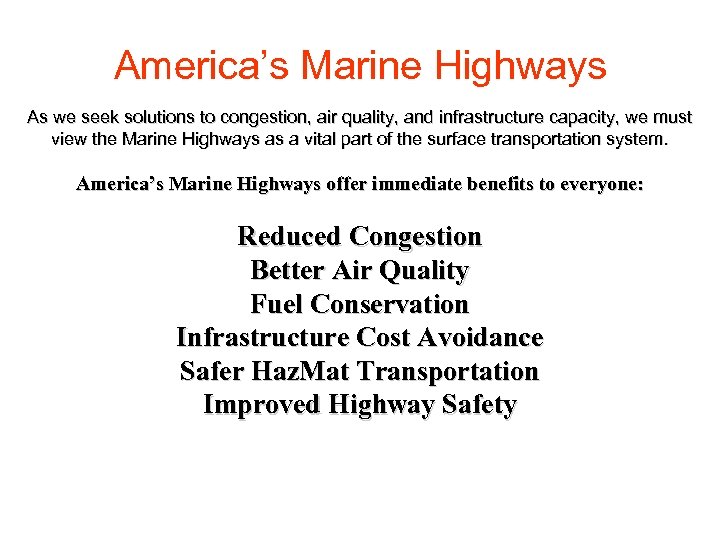
America’s Marine Highways As we seek solutions to congestion, air quality, and infrastructure capacity, we must view the Marine Highways as a vital part of the surface transportation system. America’s Marine Highways offer immediate benefits to everyone: Reduced Congestion Better Air Quality Fuel Conservation Infrastructure Cost Avoidance Safer Haz. Mat Transportation Improved Highway Safety
Скачать презентацию Congestion The Solution Growing Congestion Between
d20c1e65240ed7dfc500a085cf598a82.ppt