


 Скачать презентацию Confucius Who was Confucius Confucius 551
5 - Virtue ethics - Confucius.ppt
- Количество слайдов: 24
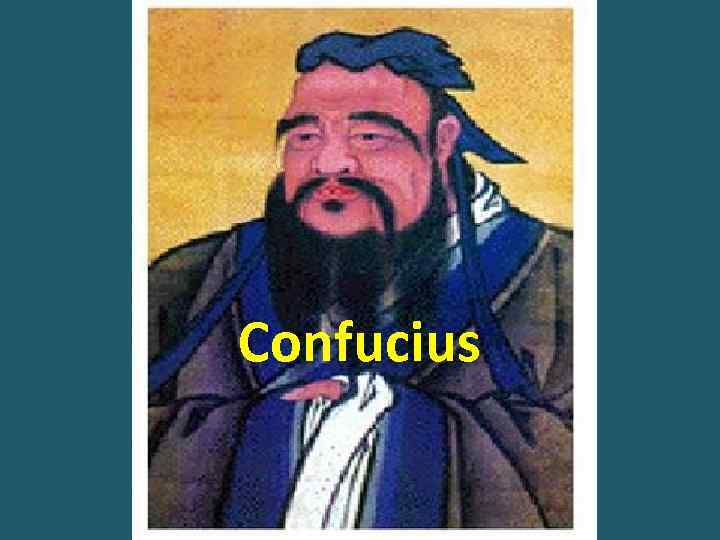 Confucius
 Who was Confucius? • Confucius (551— 479 BCE) • Better known in China as Kongzi, "Master Kong" • Extremely influential philosopher and educator. Deeply influenced Chinese, Korean, Japanese, Vietnamese, Singaporean (at least) cultures and mentalities. • Has become a mythical figure, 2500 years of elaborations and re-interpretations, all we know about him comes from much posterior sources. • Mainly interested in ethics. 2
 Context (1) • Born in the small state of Lu on the Shandong peninsula in northeastern China • We know him mostly from texts that date to the "Warring States Period" (403 -221 BCE) • Continuous wars among several small states for more than 300 years after Confucius’ birth • He belonged to the shi ("retainer" or "knight") class (feudal nobility) • The kings of the warring states began to rely on appointed administrators rather than vassals to govern their territories… 3
 Context (2) • … The shi were impoverished and many lived as itinerant intellectuals • They were still useful to the warring kings who wanted to learn from the old aristocratic traditions of the unitary Zhou kingdom • Confucius was employed for a short time then retired to study and teach • Often these masters had small numbers of students following them -> they and their successors collected and edited our main source, the Analects (“digested conversations”) 4
 5
5
 Confucius’ goal • Confucius presents himself not as innovator but as restorer or guardian of the old traditions • Most pressing issue reacting to anarchy and social chaos (educational, civilizational) • Numerous other philosophical schools emerged in this period of crisis • Confucius’ solution: go back to old Chinese customs before social turmoil broke out 6
 The way • C. researched China’s old cultural traditions and edited several books of ancient Chinese history and literature • He wrote nothing himself • His ethical thought mostly focuses on: – – ritual conduct humanity the superior person filial obedience, and good government 7
 Ritual Conduct • Much of his teaching directed toward maintenance of three interlocking kinds of order: 1. Aesthetic 2. Moral 3. Social • The instrument to attain all three is li (ritual propriety or ritual conduct) 8
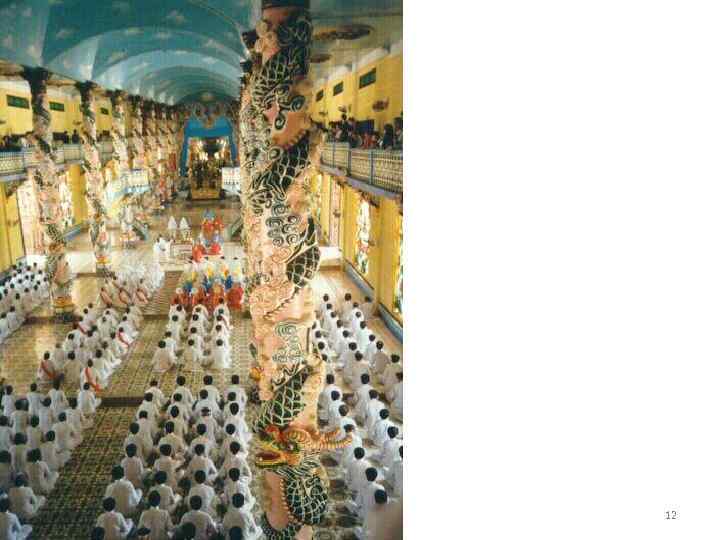
 Ritual Conduct (2) • Li is is the effortless adherence to social norms and the performance of customs • It includes ceremonies, religious practices, holidays, simple greetings • Rituals and traditions are the visible glue that binds society together • For every activity there is a proper way of behaving. 9
 Ritual Conduct (3) • Learning ritual conduct involves active social participation (not mere study or contemplation) • Ritual conduct grouped together with skills of learning poetry and music. • They all involve cultivating a special aesthetic sense of appreciation. • They refine us, elevate the quality of our lives, and serve as a tool for moral instruction. 10
 Ritual Conduct (4) • This "aesthetic" order is both intrinsically moral and profoundly harmonious, at all levels • When persons and things are in their proper places – as mandated by tradition – relations are smooth, operations are effortless, and the good is sought and done voluntarily • Social and political harmony is hierarchical • What is below takes its cues from what is above: A moral ruler will diffuse morality to subjects; a moral parent will raise a moral child 11
 12
12
 13
13
 Humanity and the Superior Person • To acquire humanity, one must develop virtues of dignity and patience, which will help be at peace regardless of difficulties in life • In the Analects, two types of persons: – junzi, chun-tzu ("gentleman"; also "profound person") – xiaoren ("small person") • "The profound person understands what is moral. The small person understands what is profitable" (4. 16) 14
 The Superior Person • The junzi is the person who always manifests the quality of ren (jen) in his person and the displays the quality of yi (rightness) in his actions (4. 5) • Central to concept of humanity: Confucian principle of reciprocity (shu): "Do not do to others what you would not have them do to you“ • This includes positive as well as negative duties • This is the model to follow 15
 Desirable qualities • The superior person possesses humility, respectfulness, kindness, justice, impartiality, honesty, consistency, caution, and studiousness • The superior person is not a by-the-book rule follower, whose beliefs are rigidly fixed. • On the contrary, "The superior person in the world does not set his mind either for anything, or against anything. What is right he will follow" (4. 10) • That is, the superior person’s attitudes and conduct will be guided by an overall sense of justice, and not by a nitpicky set of regulations. 16
 Mark of the superior person • "The superior person is satisfied and composed; the inferior person is always full of distress" (ibid, 7. 36) • (This reminds of Aristotle, btw) 17
 Filial Obedience and Good Government • Five relationships (wulun) underlie the order of society: 1. 2. 3. 4. 5. father and son elder brother and younger brother husband wife elder friend and junior friend ruler and subject • Each of these involves a superior and a subordinate, and special duties are required of both parties 18
 Filial Obedience • The subordinate person must show obedience, the superior person must show kindness • The two that Confucius discusses the most are the father-son and the ruler-subject • Filial obedience (hsiao, xiao) sets a standard for the others: • Respect for all superiors is ultimately an extension of respect for one’s parents, and we should treat all elders with respect almost as if they were surrogate parents (An. 1. 6) 19
 Proper attitude • By respecting parents we will respect elders in general • So social order is preserved and chaos is avoided • But in doing this one must have the proper attitude, not simply abiding by the letter of the law, otherwise acts of respect have no value: "Filial obedience nowadays means to support one’s parents. But dogs and horses also are able to do something in the way of support. Without reverence, what is there to distinguish the one support given from the other? " (An. 2. 7) 20
 Limits of obedience • Respect for parents is not blind obedience • If our father asks us to do something that is obviously wrong, we remind him of his moral duty and prevent him from committing some wrong 21
 The ruler • Confucius saw himself as a political reformer, and he held that good governing consists of the ruler setting the moral example for the whole country. • His goodness will trickle down through the various layers of social hierarchy, and the whole country will prosper when he is benevolent: "He who exercises government by means of his virtue may be compared to the north polar star, which keeps its place and all the stars turn towards it" (An. 2. 1) 22
 Good government • Five kinds of actions lead to good government: – "When the person in authority is beneficent without great expense; when he lays tasks on the people without their grieving; when he pursues what he desires without being selfish; when he maintains a dignified ease without being proud; when he is majestic without being cruel. " (An. 20. 2) 23
 24
24