


 Скачать презентацию Conference Highlights David Williams TERENA Networking Conference Thursday
094b3137811b48ed73a6ccdeb7302ed3.ppt
- Количество слайдов: 51
 Conference Highlights David Williams TERENA Networking Conference Thursday 8 October 1998 David. O. Williams@cern. ch Slides: http: //nicewww. cern. ch/~davidw/public/TERENA. ppt
 Top level outline n n n Report on ICFA-NTF Personal view of future Summary
 Acknowledgements n n n The ICFA-NTF report describes the work of 31 people from 21 different institutions (of which 8 universities) in 11 countries spread over three continents The people who provide the networks which we use (inside institutions, regionally, nationally, internationally etc. ) The “real users” who took time to answer our questions and provide comments
 Monitoring
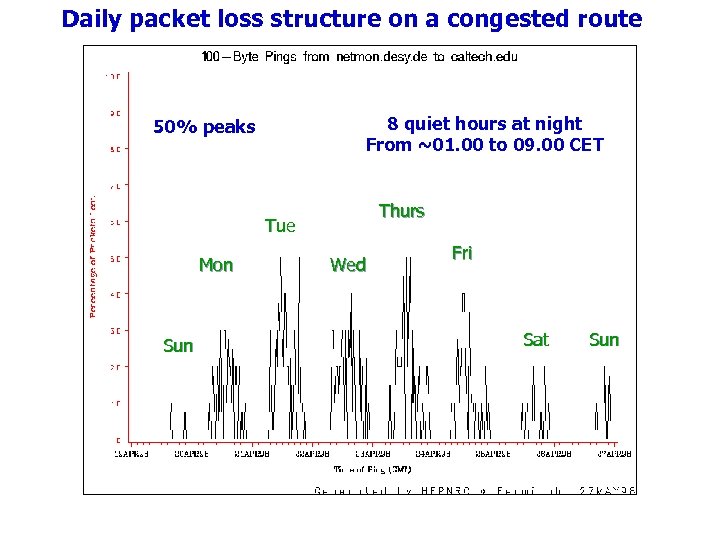
 Packet Loss (1/2) n n n Packets are discarded when the router buffers fill up and overflow When packet flow from input link(s) exceeds the capacity of the output link(s) Especially at ends of (expensive) transoceanic links Packet loss rates (PLRs) are about the best approximation to what the end-user feels is the overall “quality” being provided by a link But note that PLR measurements don’t tell the network engineer much about the nature and the location of any congestion that is present on a link (so not widely used by them).
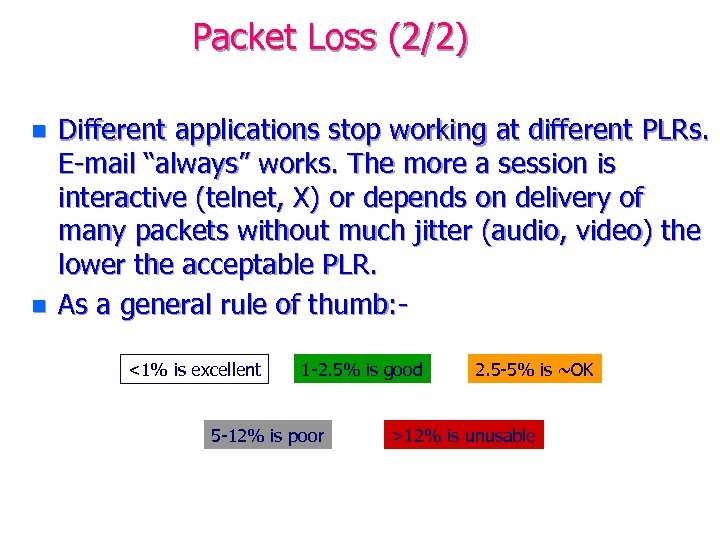 Packet Loss (2/2) n n Different applications stop working at different PLRs. E-mail “always” works. The more a session is interactive (telnet, X) or depends on delivery of many packets without much jitter (audio, video) the lower the acceptable PLR. As a general rule of thumb: <1% is excellent 1 -2. 5% is good 5 -12% is poor 2. 5 -5% is ~OK >12% is unusable
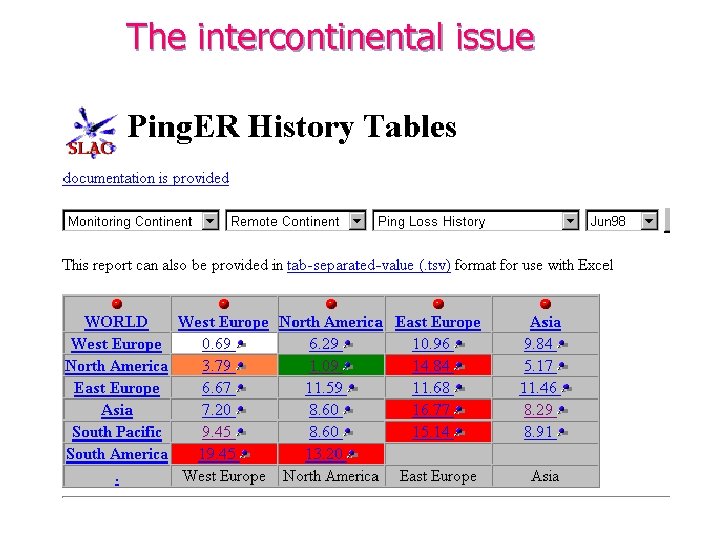 The intercontinental issue
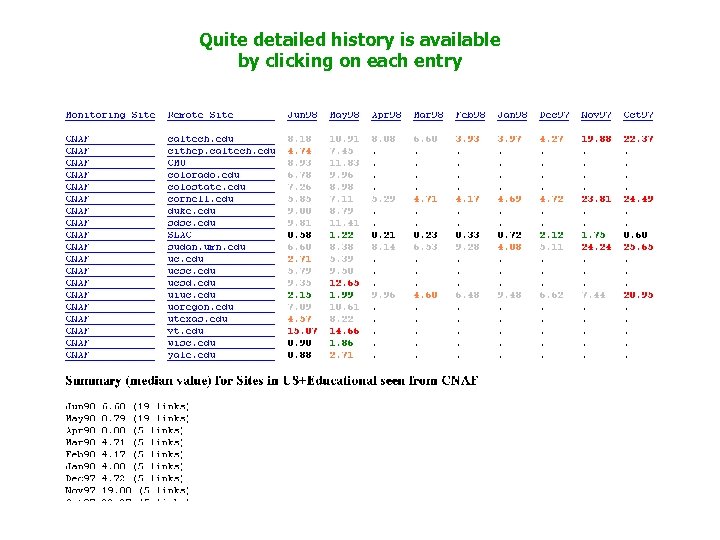 Quite detailed history is available by clicking on each entry
 Daily packet loss structure on a congested route 8 quiet hours at night From ~01. 00 to 09. 00 CET 50% peaks Thurs Tue Mon Sun Wed Fri Sat Sun
 Close to (national) perfection Most of the following data is for the seven day period 13 -19 August 1998 Because most students are on holiday and there have been some recent capacity upgrades, there is less “daily” congestion than “normal” at the moment, especially on the transatlantic links. Things will probably start to get worse in September.
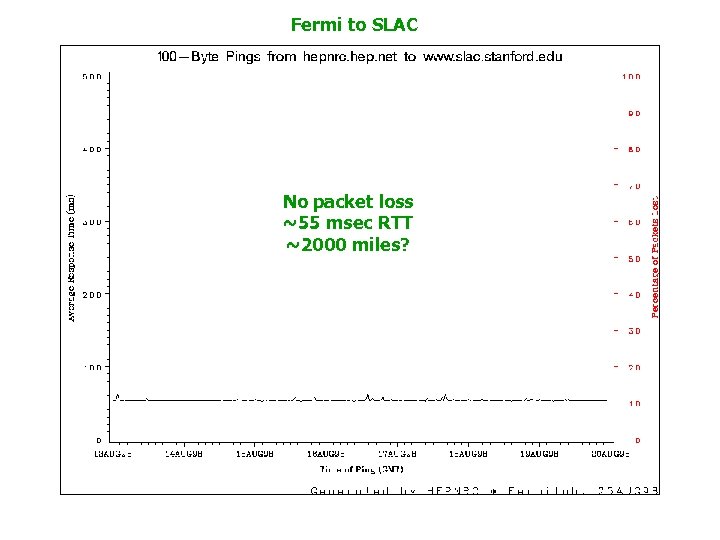 Fermi to SLAC No packet loss ~55 msec RTT ~2000 miles?
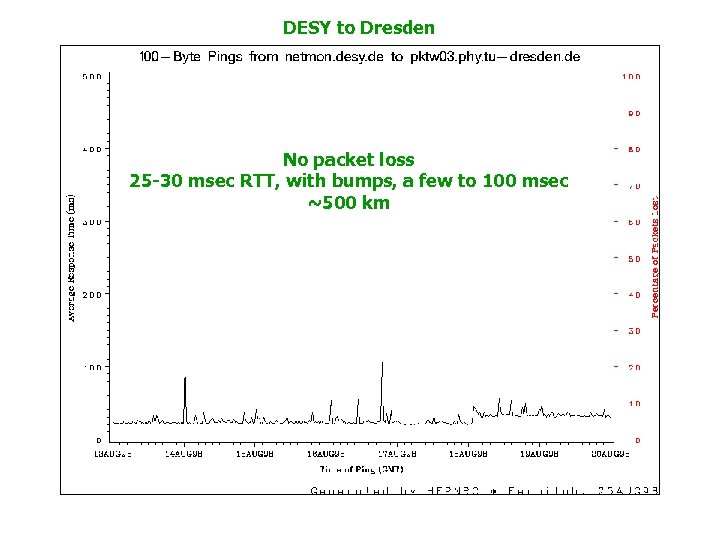 DESY to Dresden No packet loss 25 -30 msec RTT, with bumps, a few to 100 msec ~500 km
 Close to (international) perfection
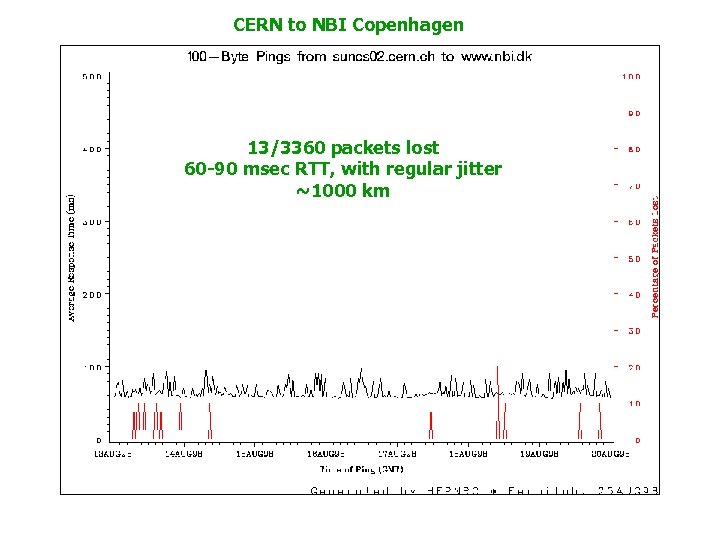 CERN to NBI Copenhagen 13/3360 packets lost 60 -90 msec RTT, with regular jitter ~1000 km
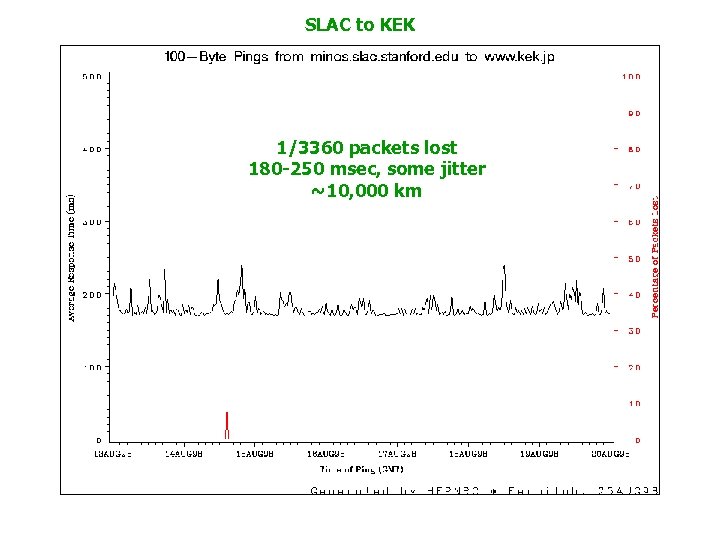 SLAC to KEK 1/3360 packets lost 180 -250 msec, some jitter ~10, 000 km
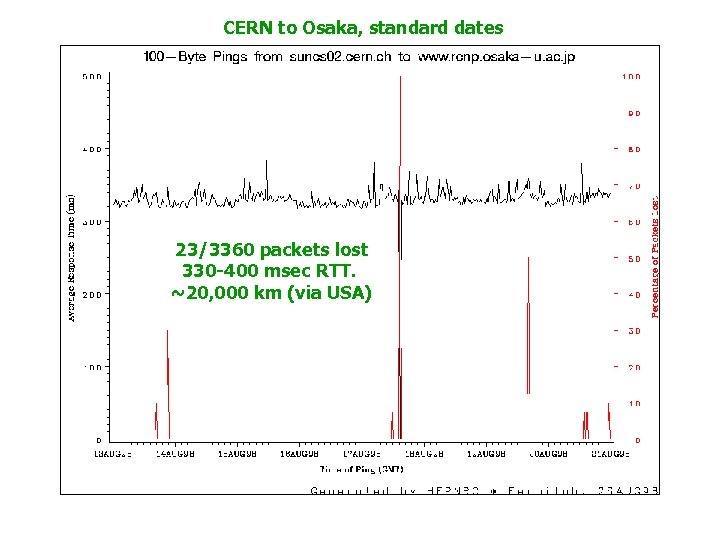 CERN to Osaka, standard dates 23/3360 packets lost 330 -400 msec RTT. ~20, 000 km (via USA)
 Some problem cases National
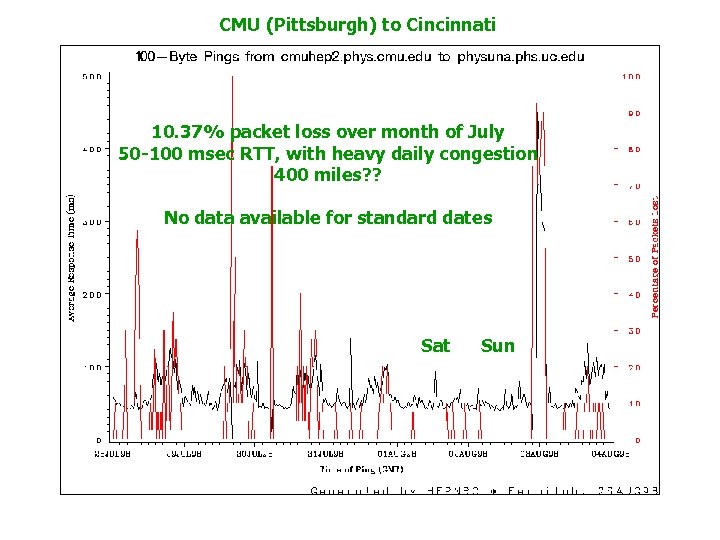 CMU (Pittsburgh) to Cincinnati 10. 37% packet loss over month of July 50 -100 msec RTT, with heavy daily congestion 400 miles? ? No data available for standard dates Sat Sun
 More problem cases International
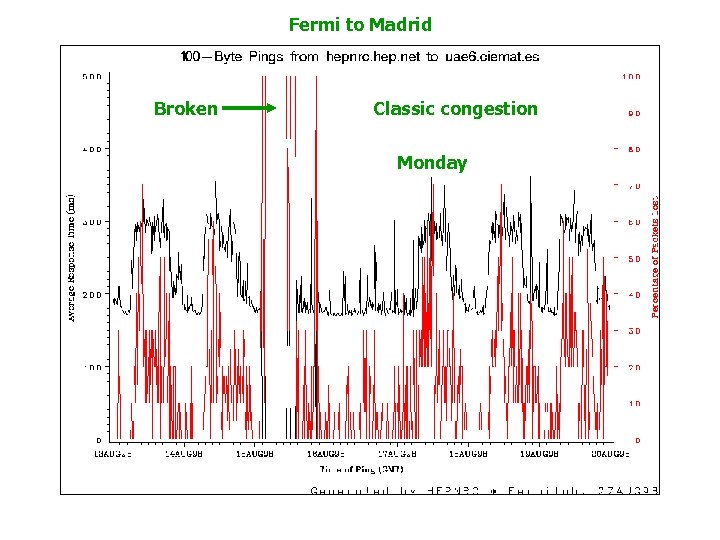 Fermi to Madrid Broken Classic congestion Monday
 Longer term plots
 Some longer term plots of difficult cases Period is normally 3 months up to 20 August National
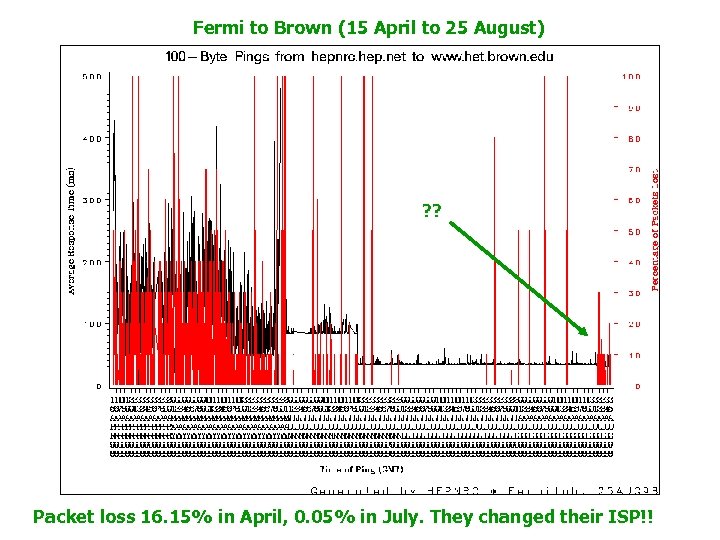 Fermi to Brown (15 April to 25 August) ? ? Packet loss 16. 15% in April, 0. 05% in July. They changed their ISP!!
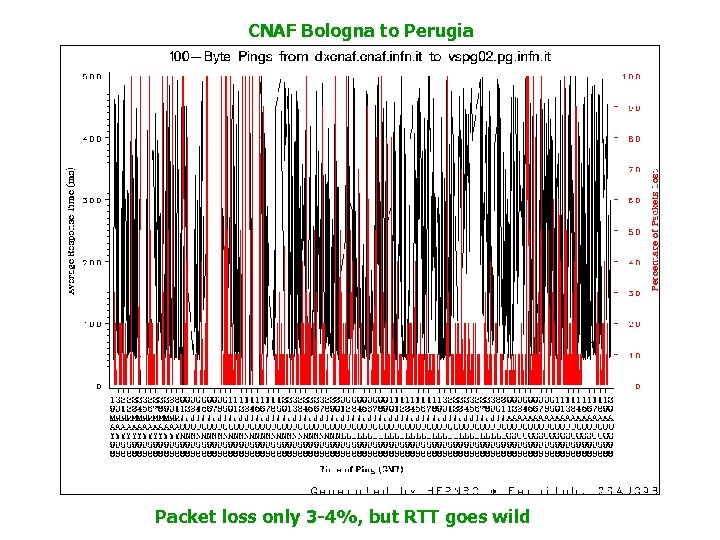 CNAF Bologna to Perugia Packet loss only 3 -4%, but RTT goes wild
 Some longer term plots of difficult cases International
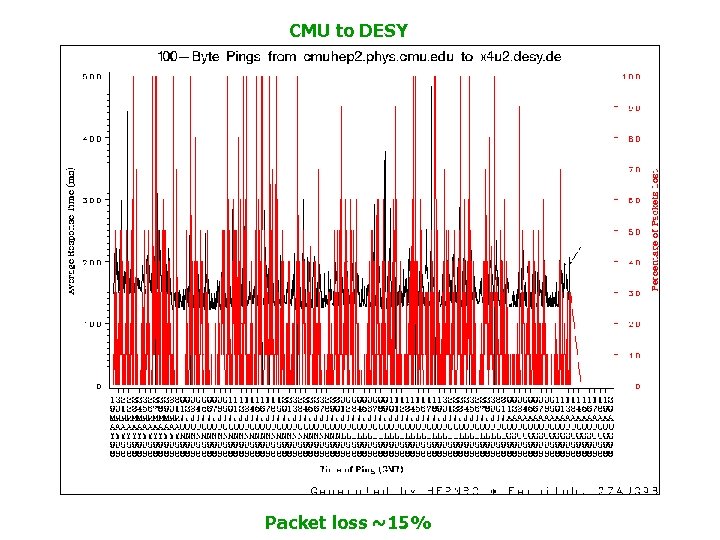 CMU to DESY Packet loss ~15%
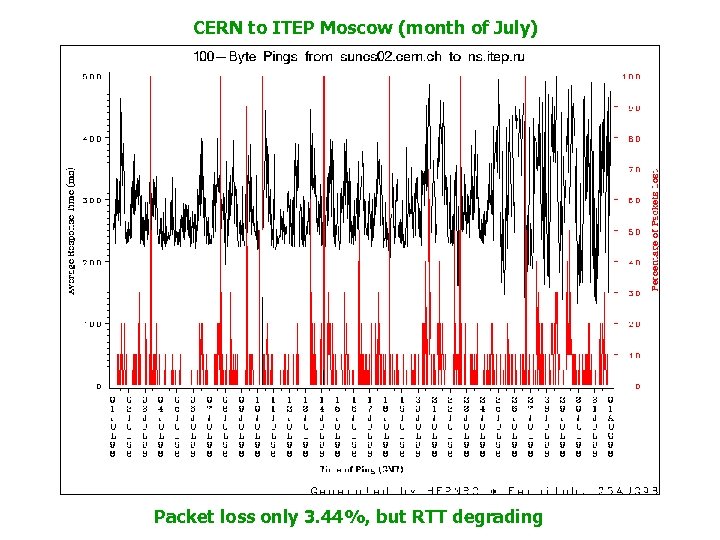 CERN to ITEP Moscow (month of July) Packet loss only 3. 44%, but RTT degrading
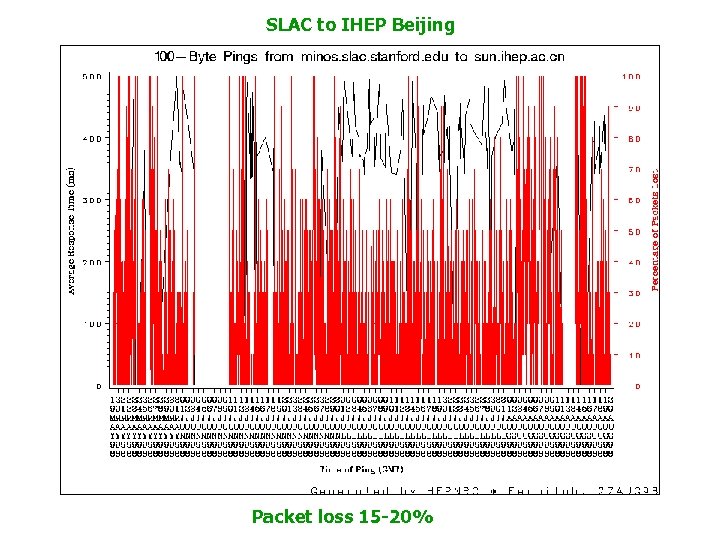 SLAC to IHEP Beijing Packet loss 15 -20%
 Monitoring - conclusions?
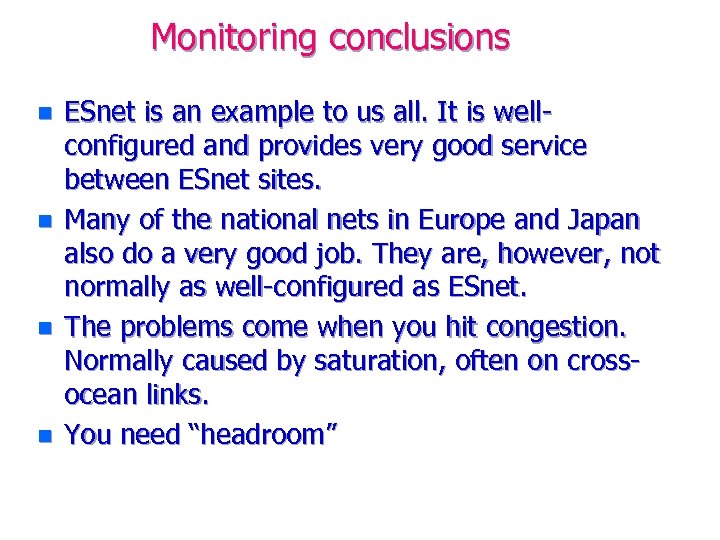 Monitoring conclusions n n ESnet is an example to us all. It is wellconfigured and provides very good service between ESnet sites. Many of the national nets in Europe and Japan also do a very good job. They are, however, not normally as well-configured as ESnet. The problems come when you hit congestion. Normally caused by saturation, often on crossocean links. You need “headroom”
 Recommendations
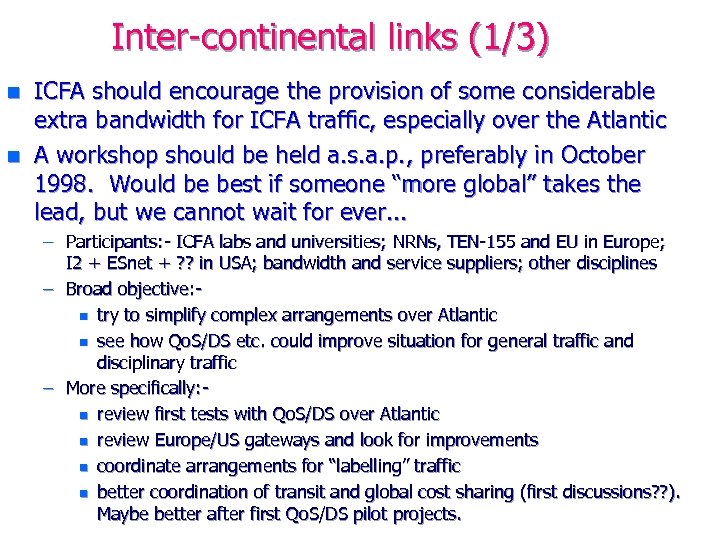 Inter-continental links (1/3) n n ICFA should encourage the provision of some considerable extra bandwidth for ICFA traffic, especially over the Atlantic A workshop should be held a. s. a. p. , preferably in October 1998. Would be best if someone “more global” takes the lead, but we cannot wait for ever. . . – Participants: - ICFA labs and universities; NRNs, TEN-155 and EU in Europe; I 2 + ESnet + ? ? in USA; bandwidth and service suppliers; other disciplines – Broad objective: n try to simplify complex arrangements over Atlantic n see how Qo. S/DS etc. could improve situation for general traffic and disciplinary traffic – More specifically: n review first tests with Qo. S/DS over Atlantic n review Europe/US gateways and look for improvements n coordinate arrangements for “labelling” traffic n better coordination of transit and global cost sharing (first discussions? ? ). Maybe better after first Qo. S/DS pilot projects.
 Submarine cables
 The next set of slides are selected from presentations by the Project Oxygen management at a recent Data Gathering Meeting They are publicly available on the Web. TM
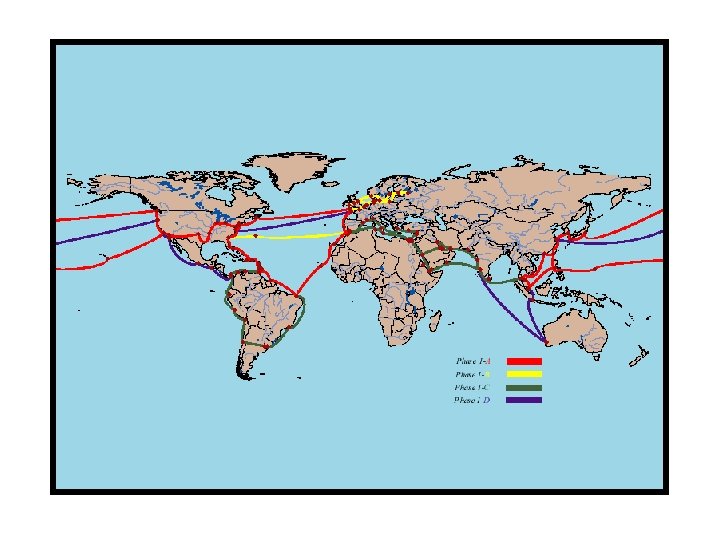
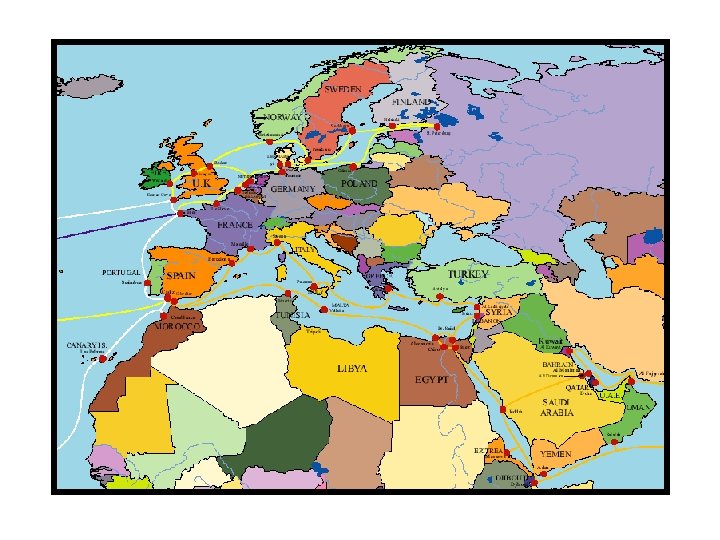
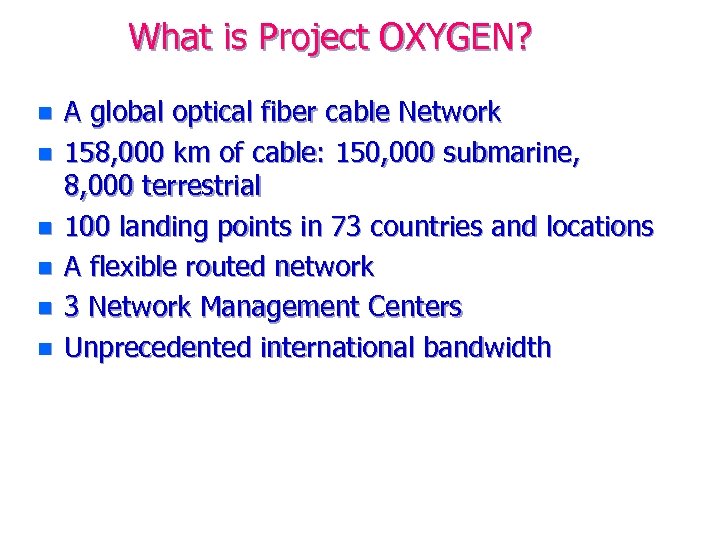 What is Project OXYGEN? n n n A global optical fiber cable Network 158, 000 km of cable: 150, 000 submarine, 8, 000 terrestrial 100 landing points in 73 countries and locations A flexible routed network 3 Network Management Centers Unprecedented international bandwidth
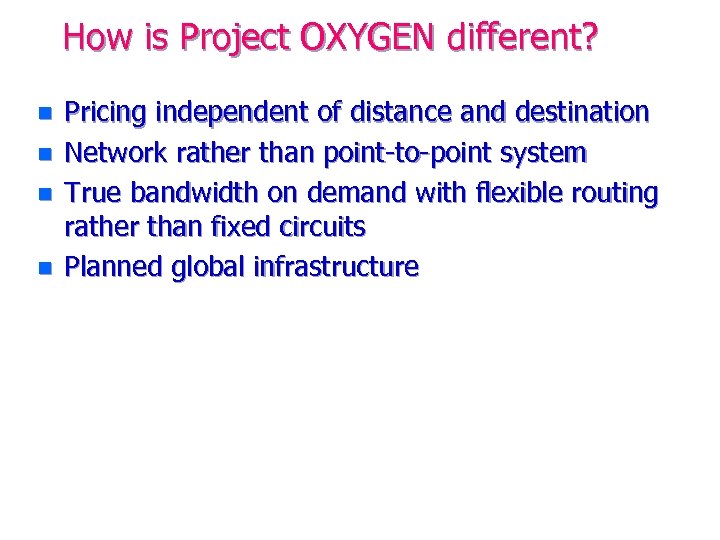 How is Project OXYGEN different? n n Pricing independent of distance and destination Network rather than point-to-point system True bandwidth on demand with flexible routing rather than fixed circuits Planned global infrastructure
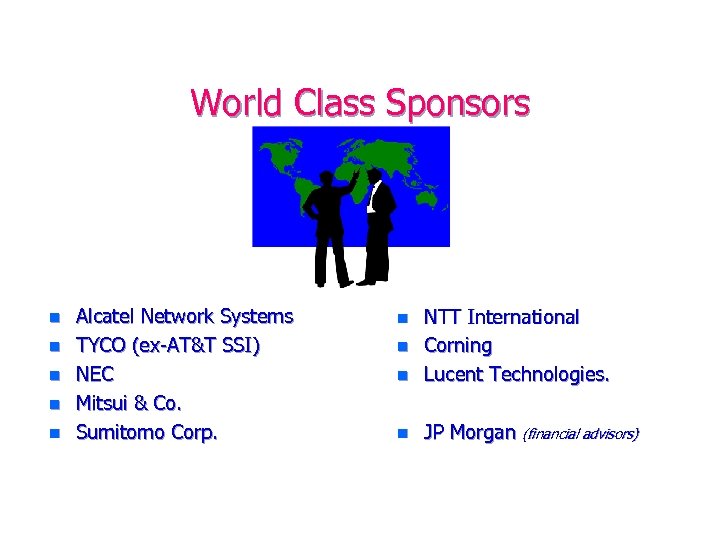 World Class Sponsors n n n Alcatel Network Systems TYCO (ex-AT&T SSI) NEC Mitsui & Co. Sumitomo Corp. n NTT International Corning Lucent Technologies. n JP Morgan (financial advisors) n n
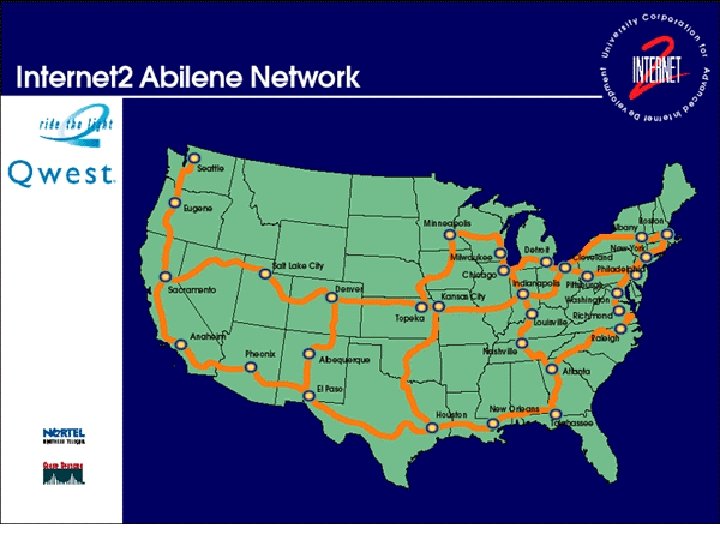
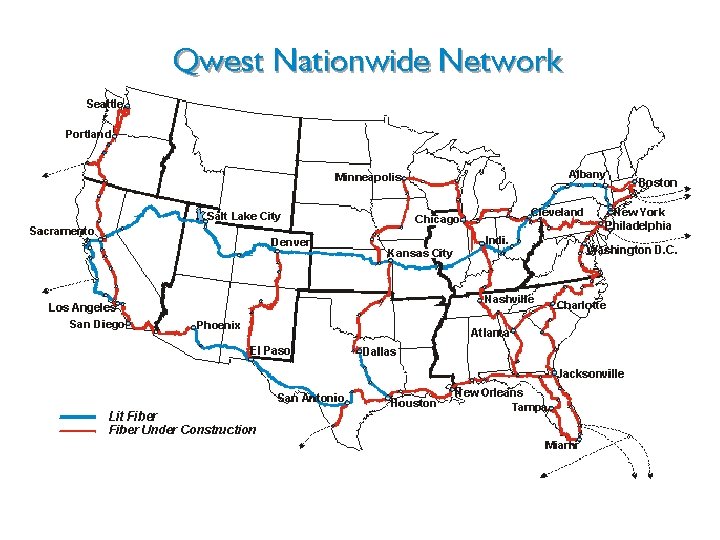
 Costs
Costs


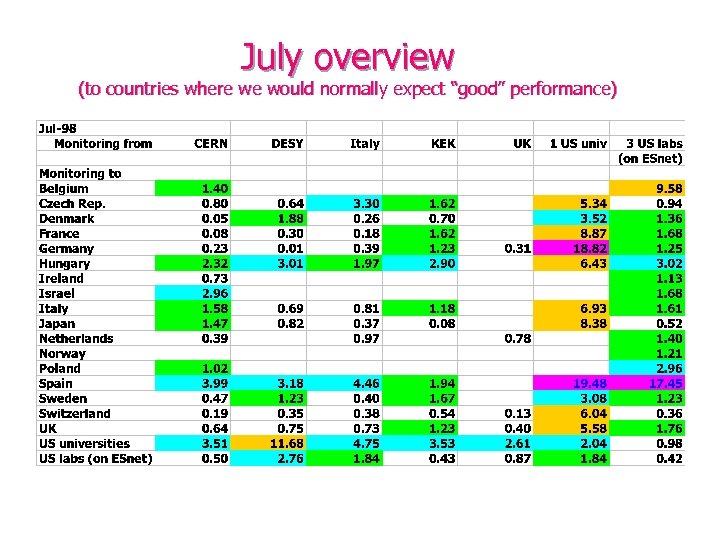 July overview (to countries where we would normally expect “good” performance)
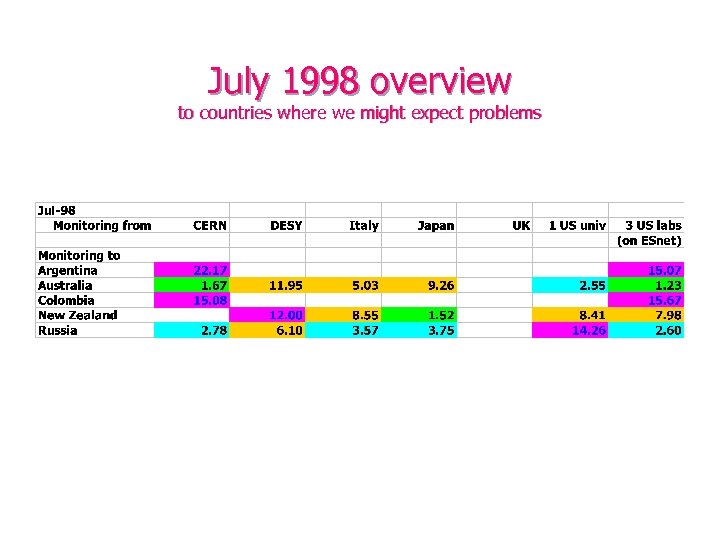 July 1998 overview to countries where we might expect problems
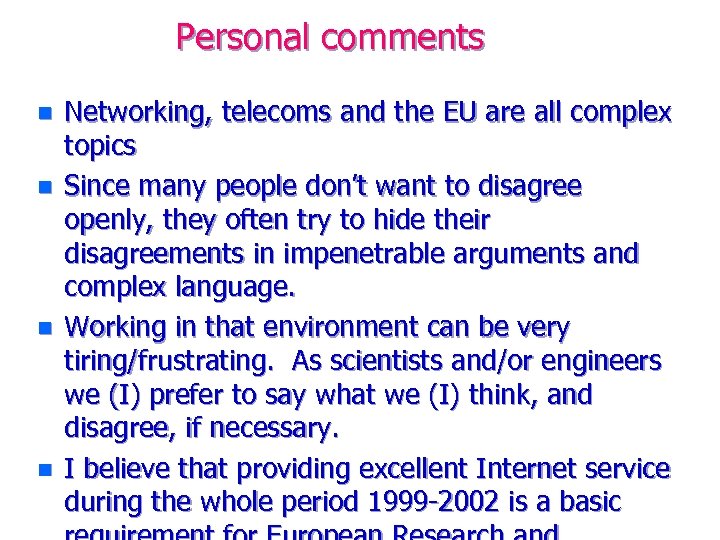 Personal comments n n Networking, telecoms and the EU are all complex topics Since many people don’t want to disagree openly, they often try to hide their disagreements in impenetrable arguments and complex language. Working in that environment can be very tiring/frustrating. As scientists and/or engineers we (I) prefer to say what we (I) think, and disagree, if necessary. I believe that providing excellent Internet service during the whole period 1999 -2002 is a basic
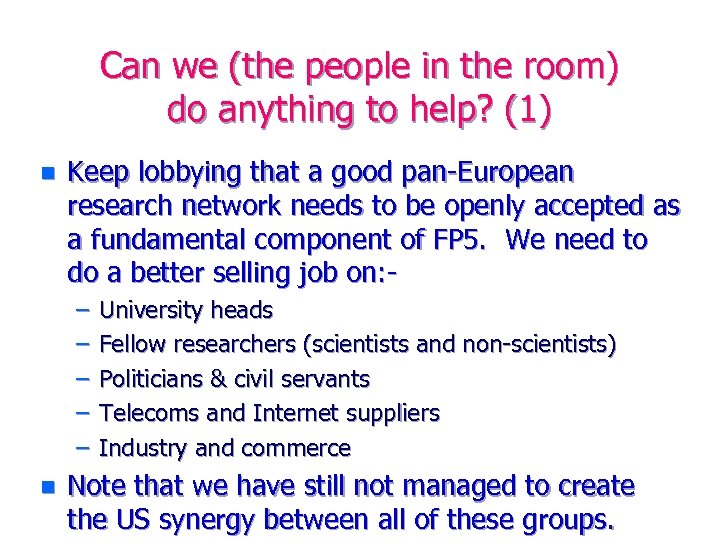 Can we (the people in the room) do anything to help? (1) n Keep lobbying that a good pan-European research network needs to be openly accepted as a fundamental component of FP 5. We need to do a better selling job on: – – – n University heads Fellow researchers (scientists and non-scientists) Politicians & civil servants Telecoms and Internet suppliers Industry and commerce Note that we have still not managed to create the US synergy between all of these groups.
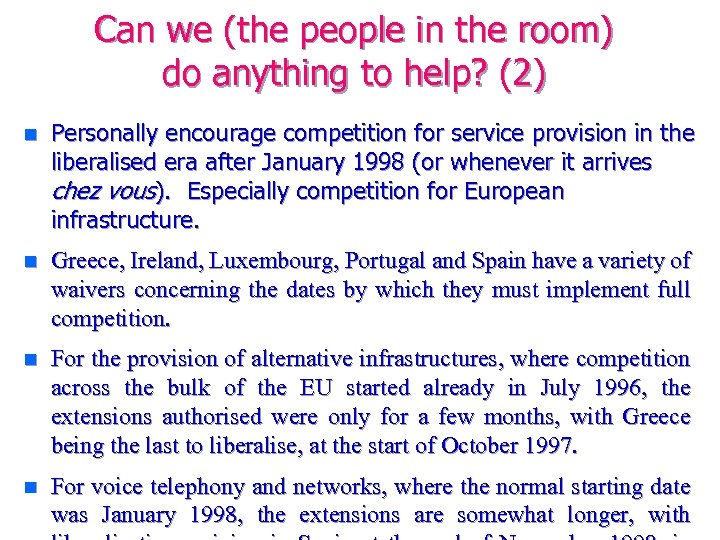 Can we (the people in the room) do anything to help? (2) n Personally encourage competition for service provision in the liberalised era after January 1998 (or whenever it arrives chez vous). Especially competition for European infrastructure. n Greece, Ireland, Luxembourg, Portugal and Spain have a variety of waivers concerning the dates by which they must implement full competition. n For the provision of alternative infrastructures, where competition across the bulk of the EU started already in July 1996, the extensions authorised were only for a few months, with Greece being the last to liberalise, at the start of October 1997. n For voice telephony and networks, where the normal starting date was January 1998, the extensions are somewhat longer, with
 Can we (the people in the room) do anything to help? (3) n n Lobby for a pan-European telecoms (and Internet) regulator. In the future this will be the only way for Europe to act quickly enough to protect its economy in the Internet era. Start to think about the whole European A&R community buying in greater bulk. For national and international lines. For services? ? This will be very difficult, but could have a huge influence on prices.