


 Скачать презентацию Conditioning I Learning A Any relatively permanent change
6a562534da617912a7993fce0c86228e.ppt
- Количество слайдов: 23
 Conditioning /I. Learning /A. Any relatively permanent change in behavior as a result of practice or experience. Changes due to growth or maturation are not learning.
 B. How do we learn?
 C. How do we stimulate learning? /1. Rewards (operant conditioning) /2. Punishments /3. Classical conditioning
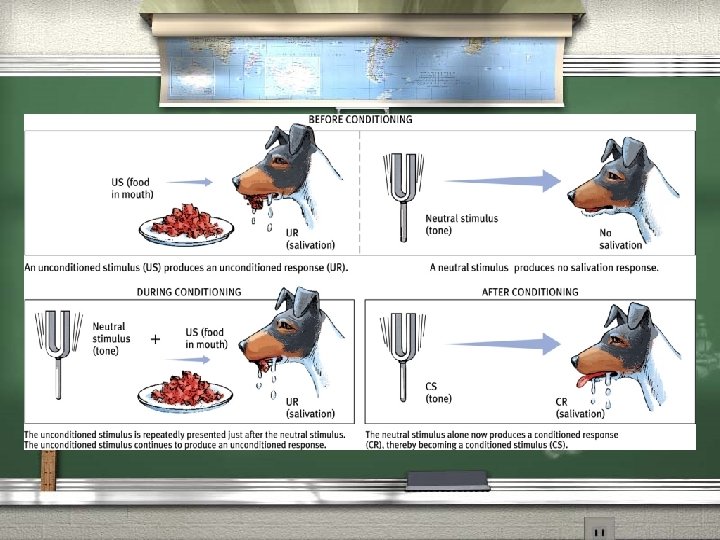
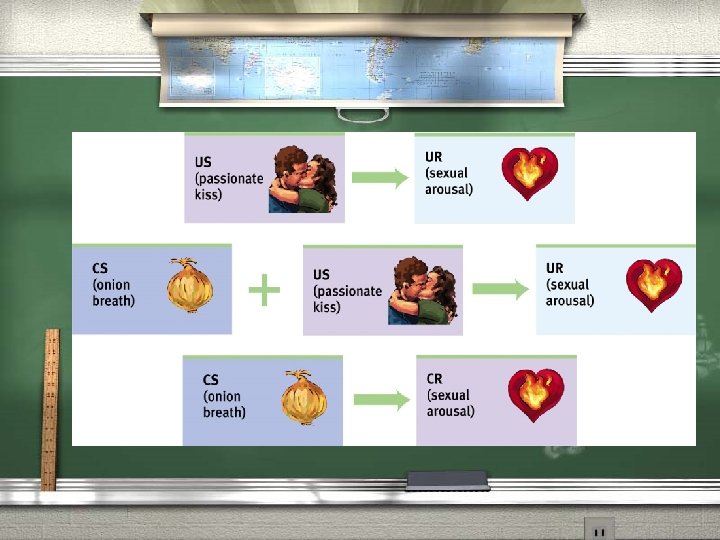
 II. CLASSICAL CONDITIONING /People (and animals) acquire certain behaviors through classical conditioning /Learning process in which associations are made between an unconditioned stimulus and a neutral stimulus.
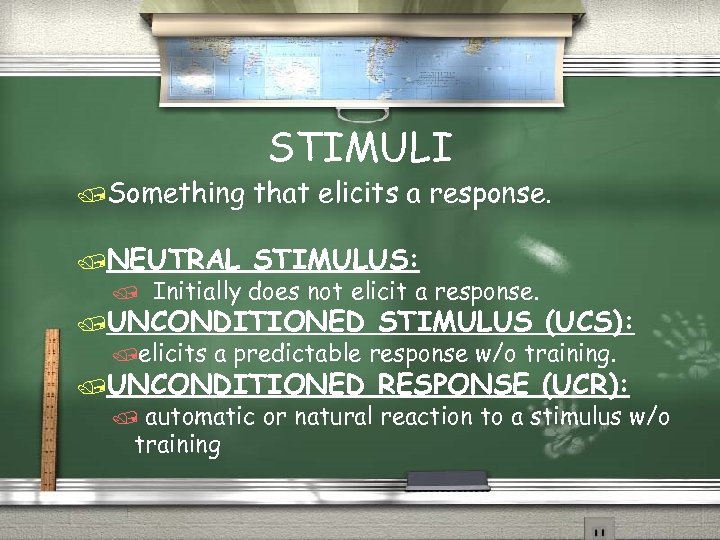 STIMULI /Something that elicits a response. /NEUTRAL STIMULUS: / Initially does not elicit a response. /UNCONDITIONED STIMULUS (UCS): /UNCONDITIONED RESPONSE (UCR): /elicits a predictable response w/o training. automatic or natural reaction to a stimulus w/o training /
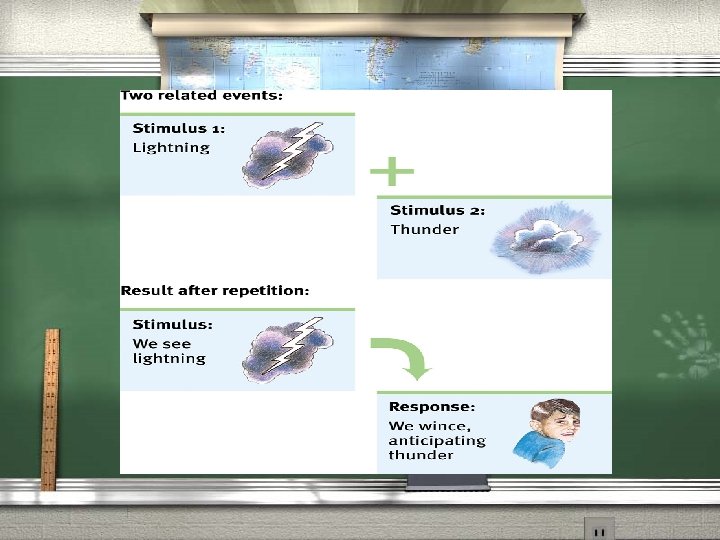
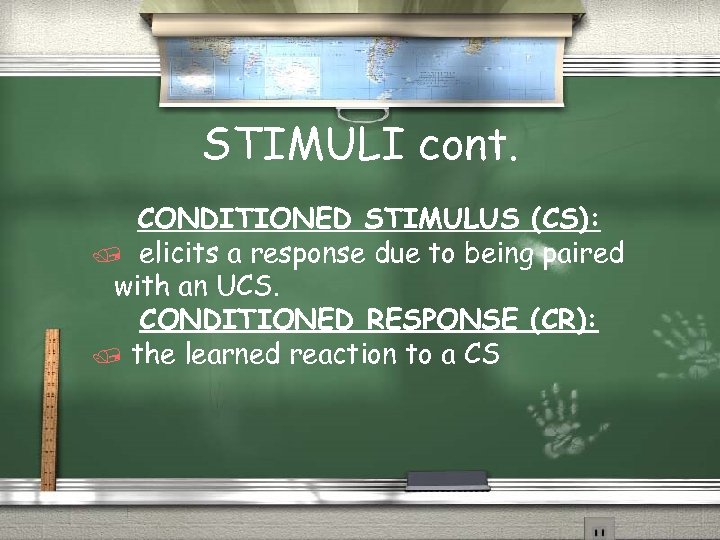 STIMULI cont. CONDITIONED STIMULUS (CS): / elicits a response due to being paired with an UCS. CONDITIONED RESPONSE (CR): / the learned reaction to a CS
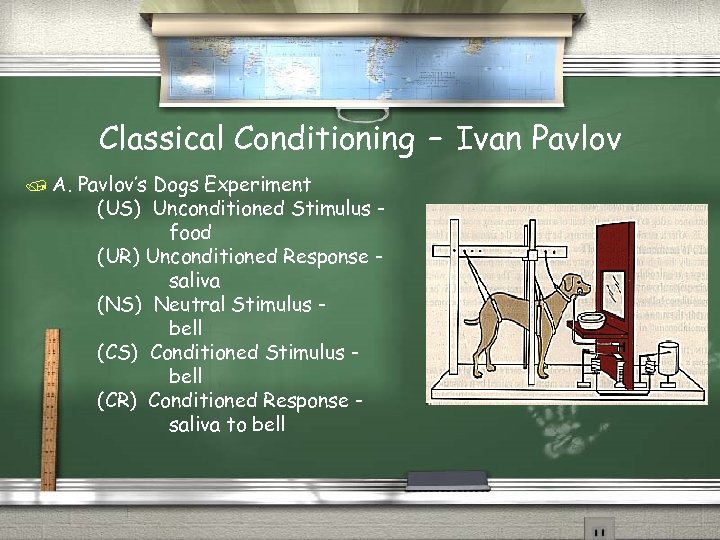 Classical Conditioning / A. Pavlov’s Dogs Experiment (US) Unconditioned Stimulus food (UR) Unconditioned Response saliva (NS) Neutral Stimulus bell (CS) Conditioned Stimulus bell (CR) Conditioned Response saliva to bell - Ivan Pavlov
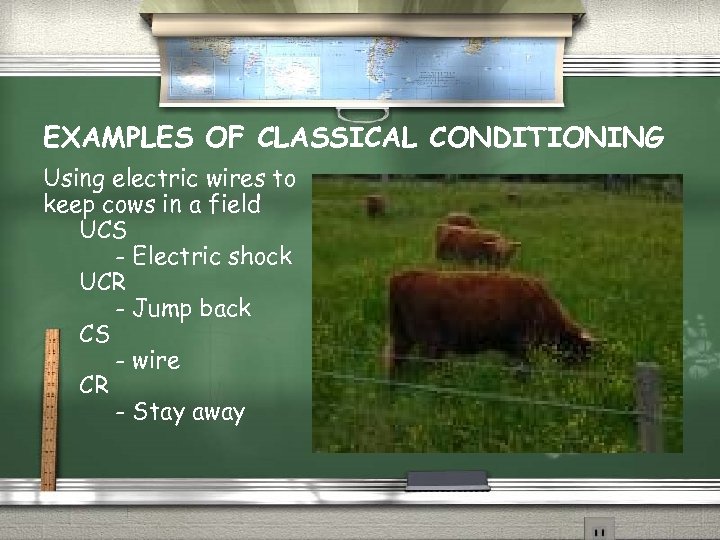 EXAMPLES OF CLASSICAL CONDITIONING Using electric wires to keep cows in a field UCS - Electric shock UCR - Jump back CS - wire CR - Stay away
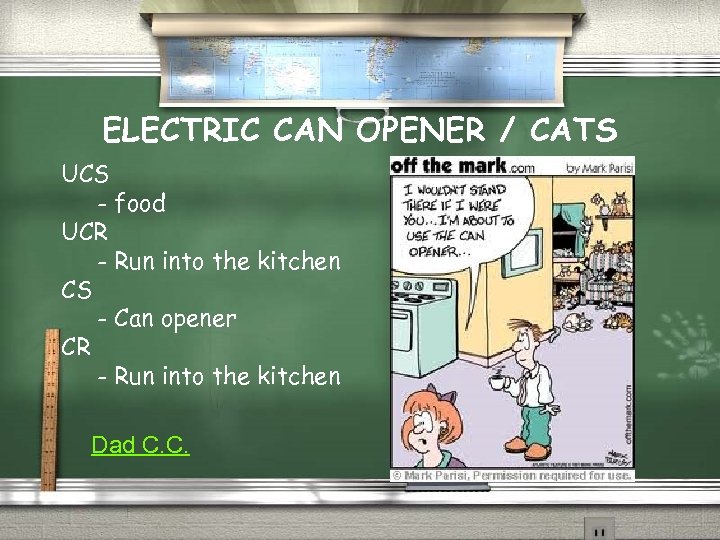 ELECTRIC CAN OPENER / CATS UCS - food UCR - Run into the kitchen CS - Can opener CR - Run into the kitchen Dad C. C.
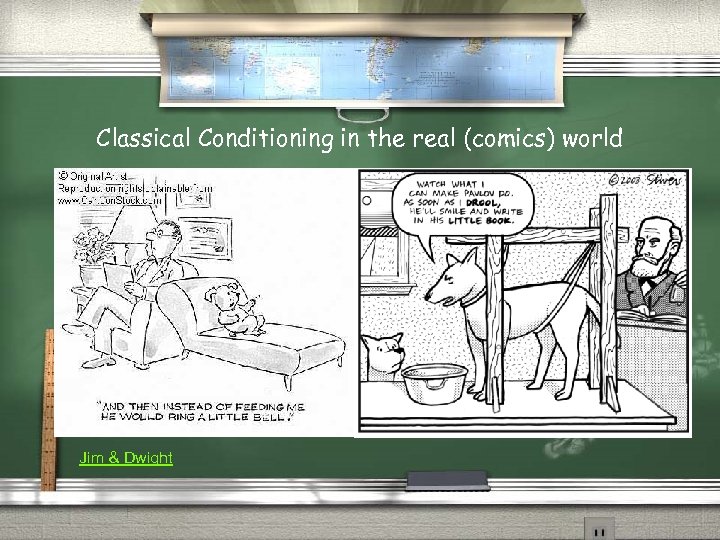 Classical Conditioning in the real (comics) world Jim & Dwight
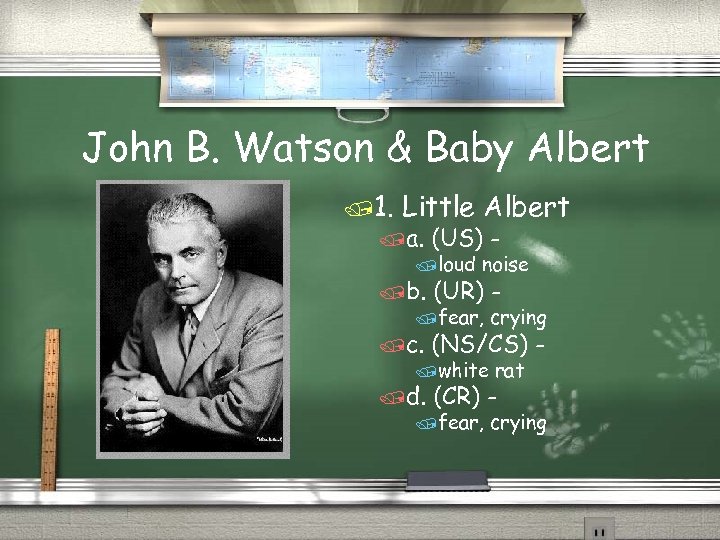 John B. Watson & Baby Albert /1. Little Albert /a. (US) - /b. (UR) - /c. (NS/CS) - /d. (CR) - /loud noise /fear, /white /fear, crying rat crying
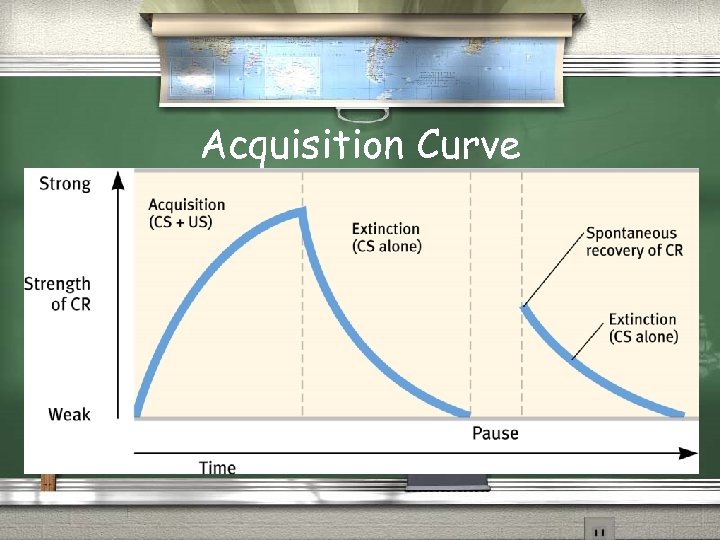
 Taking classical conditioning a step further GENERALIZATION: Responding to a second stimulus similar to the original CS / DISCRIMINATION: the ability to respond differently to different stimuli ✏ EXTINCTION: When the CR gradually dies out after the CS is repeatedly presented w/o the UCS /SPONTANEOUS RECOVERY: When the CR reappears after a rest period following extinction. ✏
 What did Watson do after leaving academia? /He got involved with advertising, using the principles of classical conditioning and applying them to getting consumers to buy certain products.
 Classical Conditioning and Phobias / B. Applications /1. Generalizations /A. Phobias /2. Discrimination / C. Behavior Modification /1. Immersion Therapy /2. Systematic Desensitization /a. anxiety hierarchy /b. biofeedback/relaxation
 Acquisition Curve
 Cognitive Processes Early behaviorists believed that learned behaviors of various organisms could be reduced to mindless mechanisms. (cognition in rats and dogs does not play a role) Rescorla and Wagner (1972) disagreed /Experimented with rats using tone, light (sometimes), and electric shock /Rats feared the tone, but not the light, even though the light was always followed by a shock.
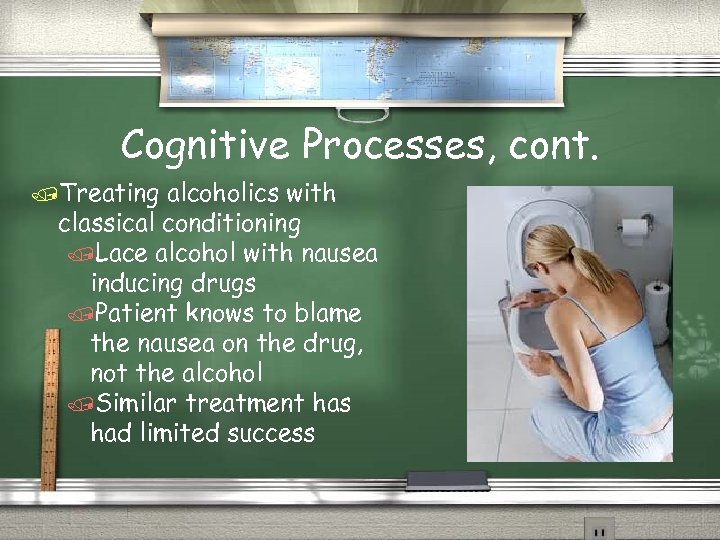 Cognitive Processes, cont. /Treating alcoholics with classical conditioning /Lace alcohol with nausea inducing drugs /Patient knows to blame the nausea on the drug, not the alcohol /Similar treatment has had limited success
 Biological Predispositions Early researchers believed that the laws of learning were basically the same in all species. (any natural response could be conditioned to any neutral stimulus) Each species has predispositions that prepare it to learn the associations that enhance its survival. /Rats develop taste aversions to poisoned bait /Birds (that hunt by sight) develop aversions to the sight of tainted food /Humans develop taste aversions to novel foods after getting sick. (not the restaurant, plates, people, or music)
 Think, Write, Pair, & Share Three big ideas (at least one visual) Two connections (to me or prior learning) One question (or thing I am confused about)