


 Скачать презентацию Conditionals Zero Conditional If present tense
Conditionals.pptx
- Количество слайдов: 19
 Conditionals
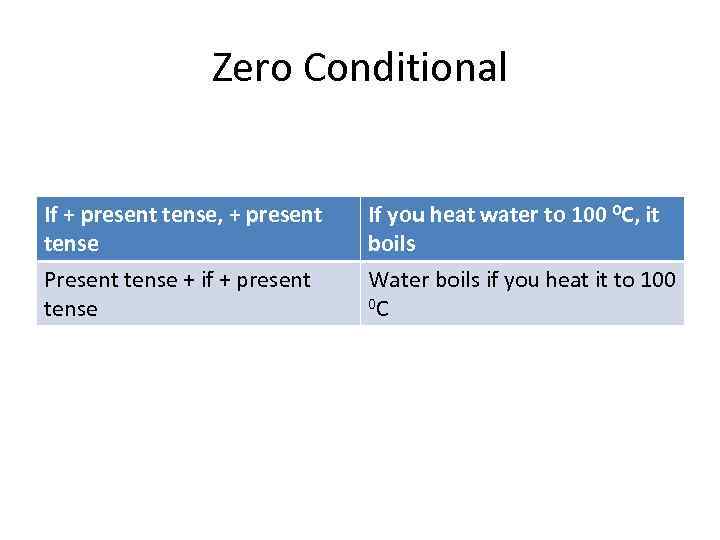 Zero Conditional If + present tense, + present tense If you heat water to 100 0 C, it boils Present tense + if + present tense Water boils if you heat it to 100 0 C
 Zero Conditional • We use the z. c. to talk about something that is a general truth of fact (if has a similar meaning to every time) If you own a car, you also have to pay for insurance and registration every year If it is no longer a fact we use the past tense When I was a child, if I helped my mother, she gave me extra pocket money
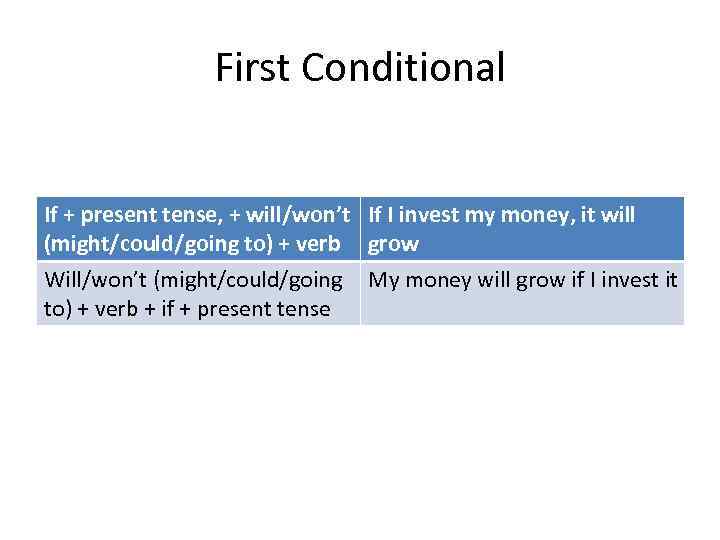 First Conditional If + present tense, + will/won’t If I invest my money, it will (might/could/going to) + verb grow Will/won’t (might/could/going to) + verb + if + present tense My money will grow if I invest it
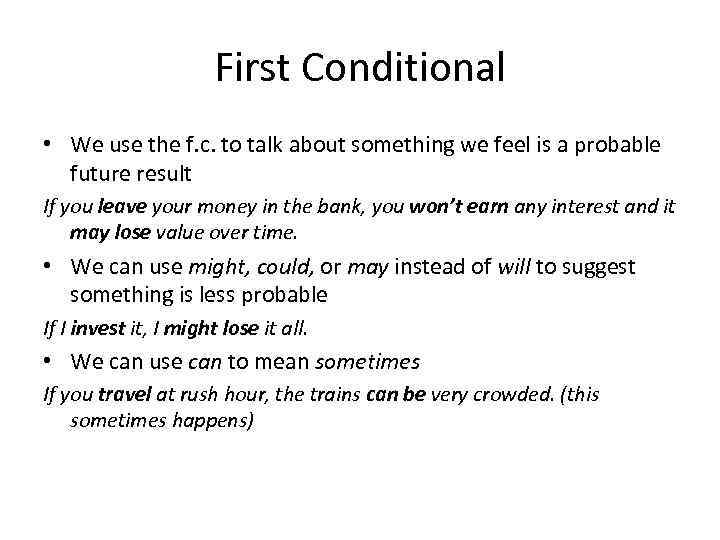 First Conditional • We use the f. c. to talk about something we feel is a probable future result If you leave your money in the bank, you won’t earn any interest and it may lose value over time. • We can use might, could, or may instead of will to suggest something is less probable If I invest it, I might lose it all. • We can use can to mean sometimes If you travel at rush hour, the trains can be very crowded. (this sometimes happens)
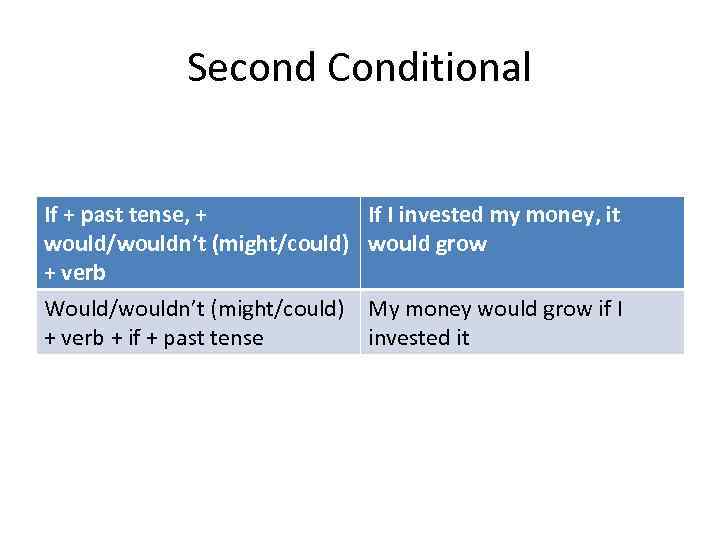 Second Conditional If + past tense, + would/wouldn’t (might/could) + verb Would/wouldn’t (might/could) + verb + if + past tense If I invested my money, it would grow My money would grow if I invested it
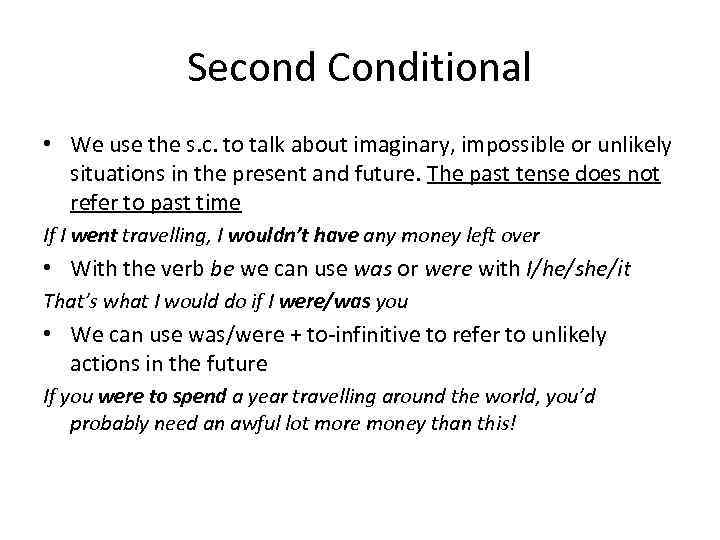 Second Conditional • We use the s. c. to talk about imaginary, impossible or unlikely situations in the present and future. The past tense does not refer to past time If I went travelling, I wouldn’t have any money left over • With the verb be we can use was or were with I/he/she/it That’s what I would do if I were/was you • We can use was/were + to-infinitive to refer to unlikely actions in the future If you were to spend a year travelling around the world, you’d probably need an awful lot more money than this!
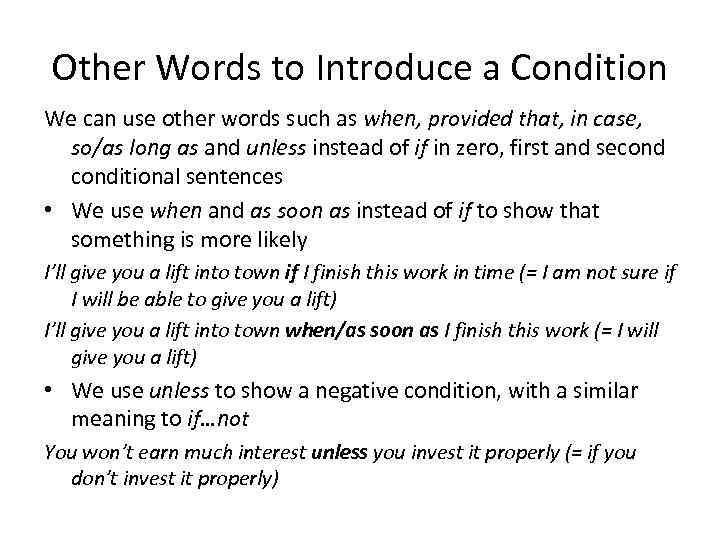 Other Words to Introduce a Condition We can use other words such as when, provided that, in case, so/as long as and unless instead of if in zero, first and seconditional sentences • We use when and as soon as instead of if to show that something is more likely I’ll give you a lift into town if I finish this work in time (= I am not sure if I will be able to give you a lift) I’ll give you a lift into town when/as soon as I finish this work (= I will give you a lift) • We use unless to show a negative condition, with a similar meaning to if…not You won’t earn much interest unless you invest it properly (= if you don’t invest it properly)
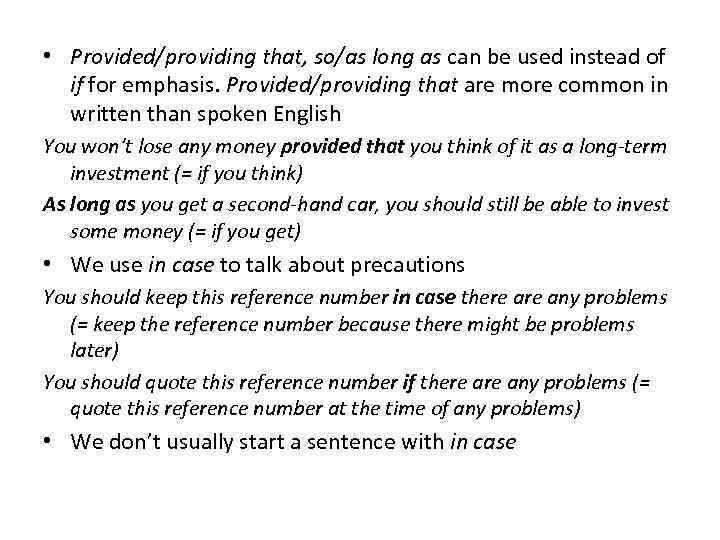 • Provided/providing that, so/as long as can be used instead of if for emphasis. Provided/providing that are more common in written than spoken English You won’t lose any money provided that you think of it as a long-term investment (= if you think) As long as you get a second-hand car, you should still be able to invest some money (= if you get) • We use in case to talk about precautions You should keep this reference number in case there any problems (= keep the reference number because there might be problems later) You should quote this reference number if there any problems (= quote this reference number at the time of any problems) • We don’t usually start a sentence with in case
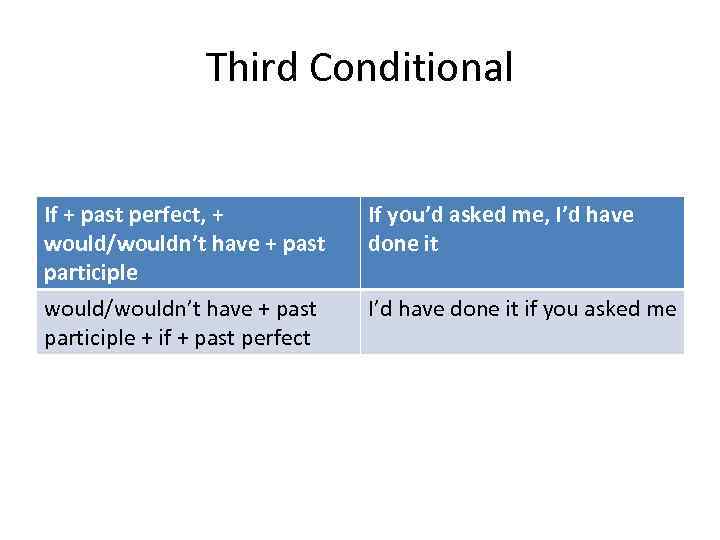 Third Conditional If + past perfect, + would/wouldn’t have + past participle + if + past perfect If you’d asked me, I’d have done it if you asked me
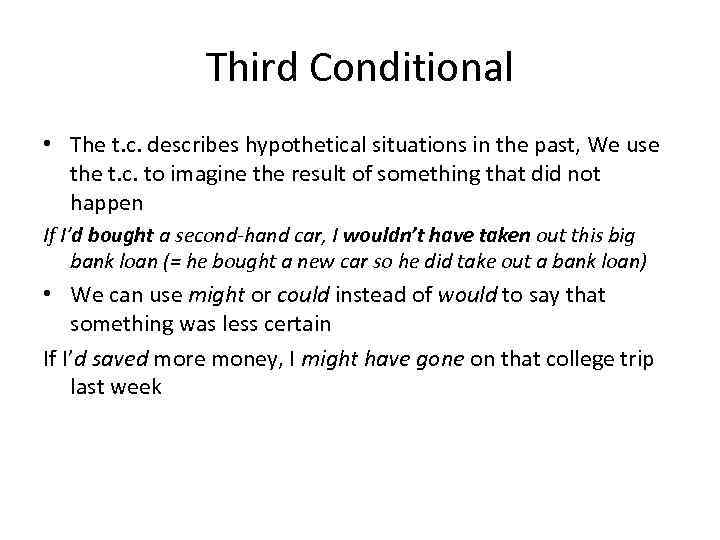 Third Conditional • The t. c. describes hypothetical situations in the past, We use the t. c. to imagine the result of something that did not happen If I’d bought a second-hand car, I wouldn’t have taken out this big bank loan (= he bought a new car so he did take out a bank loan) • We can use might or could instead of would to say that something was less certain If I’d saved more money, I might have gone on that college trip last week
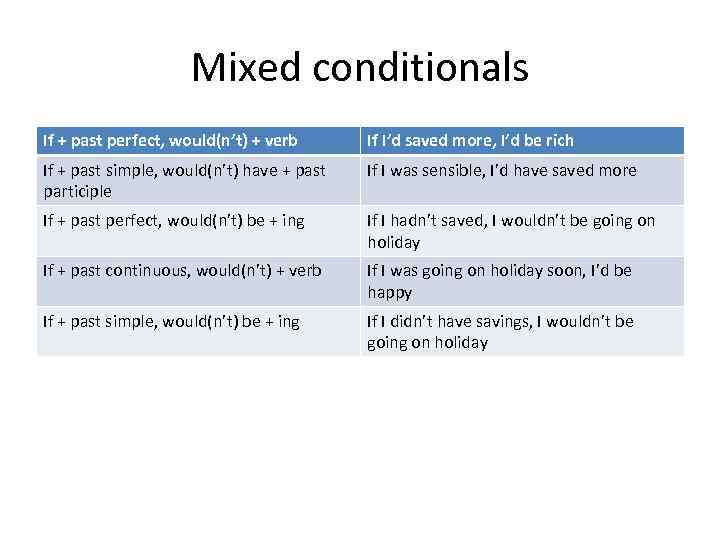 Mixed conditionals If + past perfect, would(n’t) + verb If I’d saved more, I’d be rich If + past simple, would(n’t) have + past participle If I was sensible, I’d have saved more If + past perfect, would(n’t) be + ing If I hadn’t saved, I wouldn’t be going on holiday If + past continuous, would(n’t) + verb If I was going on holiday soon, I’d be happy If + past simple, would(n’t) be + ing If I didn’t have savings, I wouldn’t be going on holiday
 Past Time + Present Time We can mix past time and present time to imagine • The present result of a hypothetical past situation or action If I’d taken his advice, I’d own a small fortune now instead of a big debt (= I didn’t take his advice so now I don’t own a small fortune) It wouldn’t be so bad if the price of petrol hadn’t almost doubled last month • The past result of a hypothetical situation in the present If you got on better with him, you might have listened to his suggestions (= you don’t get on with your father so you didn’t listen to his suggestions) If he had more qualifications, he would have got the job
 Past Time + Future Time We can mix past time and future time to imagine • The future result of a hypothetical past situation or action If I hadn’t broken my wrist, I’d be playing tennis later (= I did break my wrist so I am not playing tennis later) If I’d bothered to get tickets, I’d be going to the concert tonight (I didn’t bother to get tickets so I am not going to the concert)
 Future Time and Present Time We can mix the future time and present time to imagine • The present result of a hypothetical future situation or action If I wasn’t meeting my manager later, I’d be at the conference now (= I am meeting my manager later, so I’m not at the conference now) • The future result of a hypothetical situation in the present If I was at home in America, I’d be seeing my mother tomorrow because it’s her birthday (= I am not at home in America, so I won’t be seeing my mother tomorrow)
 Wishes and Regrets • We use wish + past verb to talk about situations that we would like to be different I wish I could help you (= I can’t help you and I’m sorry about that) I wish my father wasn’t always right! (= he is always right and I find that annoying) • We use wish + something/someone + would + infinitive without to to show that we want something to happen or someone to change their behaviour. We do not use this with state verbs I wish they would stop talking so loudly! (= they are talking loudly and I want them to stop) I wish this holiday would go on forever
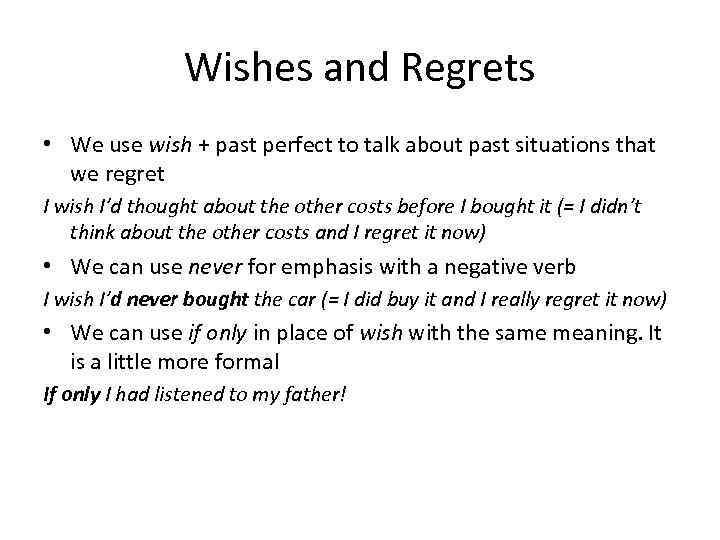 Wishes and Regrets • We use wish + past perfect to talk about past situations that we regret I wish I’d thought about the other costs before I bought it (= I didn’t think about the other costs and I regret it now) • We can use never for emphasis with a negative verb I wish I’d never bought the car (= I did buy it and I really regret it now) • We can use if only in place of wish with the same meaning. It is a little more formal If only I had listened to my father!
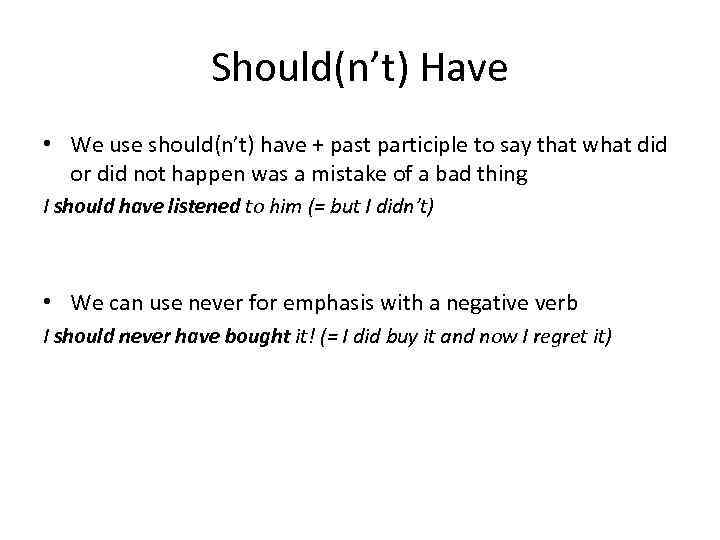 Should(n’t) Have • We use should(n’t) have + past participle to say that what did or did not happen was a mistake of a bad thing I should have listened to him (= but I didn’t) • We can use never for emphasis with a negative verb I should never have bought it! (= I did buy it and now I regret it)
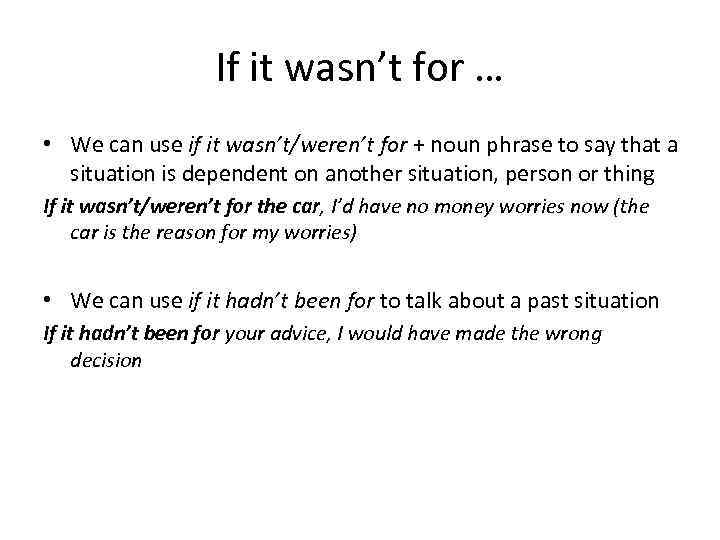 If it wasn’t for … • We can use if it wasn’t/weren’t for + noun phrase to say that a situation is dependent on another situation, person or thing If it wasn’t/weren’t for the car, I’d have no money worries now (the car is the reason for my worries) • We can use if it hadn’t been for to talk about a past situation If it hadn’t been for your advice, I would have made the wrong decision