


 Скачать презентацию Conditional Sentences Type I II and III
bec7623a8f50cda7359a1abd60a3167e.ppt
- Количество слайдов: 14
 Conditional Sentences (Type I, II and III )
 Conditional Sentence Type I We use conditional sentences Type I to talk about something that is likely to happen in the present or in the future.
 Conditional Sentences Type I E. g. If it is sunny, I will go for a picnic. E. g. If you cook the dinner, I will wash the dishes. E. g. If Susan leaves Hong Kong, Peter will be sad.
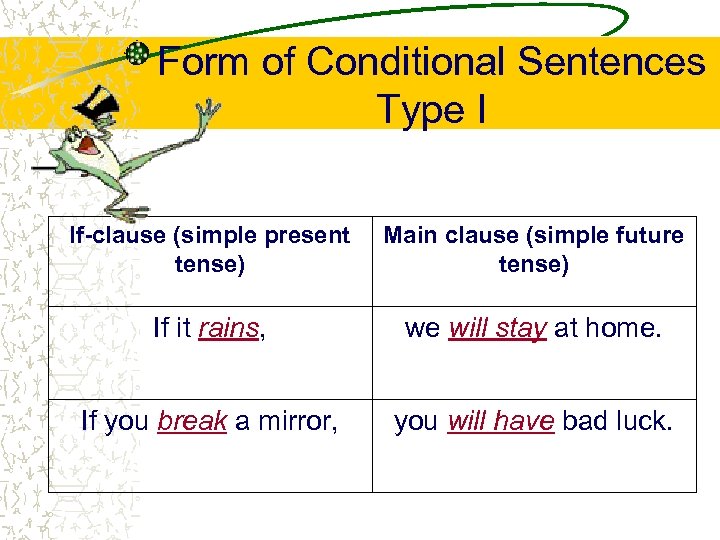 Form of Conditional Sentences Type I If-clause (simple present tense) Main clause (simple future tense) If it rains, we will stay at home. If you break a mirror, you will have bad luck.
 Conditional Sentences Type II We use conditional sentences Type II to talk about something that is untrue, unreal or unlikely to happen in the present or the future.
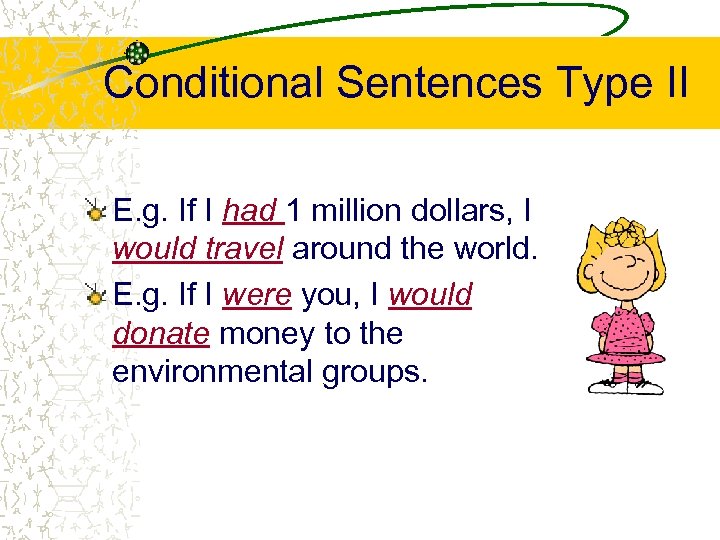 Conditional Sentences Type II E. g. If I had 1 million dollars, I would travel around the world. E. g. If I were you, I would donate money to the environmental groups.
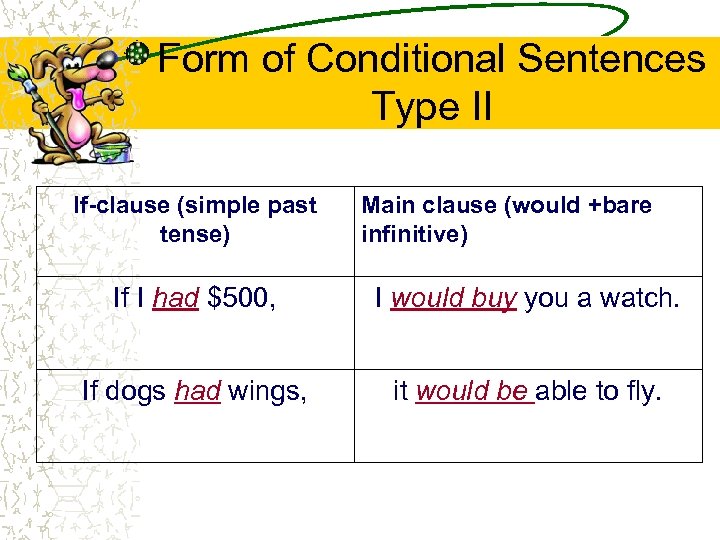 Form of Conditional Sentences Type II If-clause (simple past tense) Main clause (would +bare infinitive) If I had $500, I would buy you a watch. If dogs had wings, it would be able to fly.
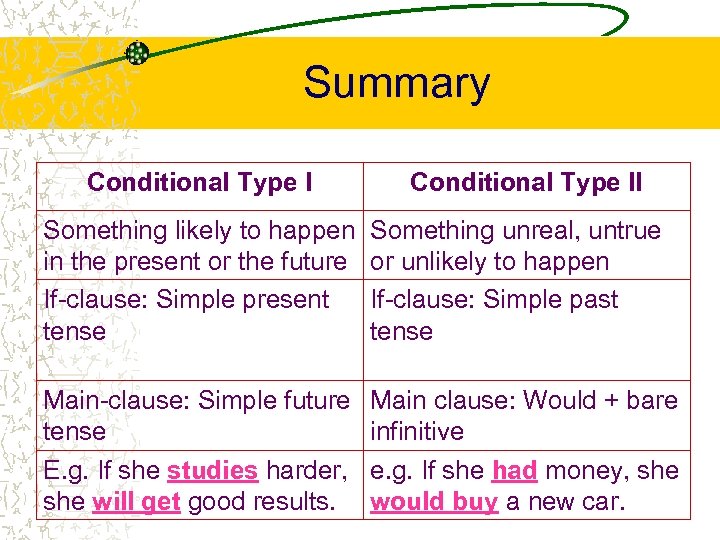 Summary Conditional Type II Something likely to happen in the present or the future If-clause: Simple present tense Something unreal, untrue or unlikely to happen If-clause: Simple past tense Main-clause: Simple future tense E. g. If she studies harder, she will get good results. Main clause: Would + bare infinitive e. g. If she had money, she would buy a new car.
 - END -
 Conditional Sentences (Type III)
 Conditional Sentence Type III We use the conditional sentence type III to describe something which could have happened in the past but didn’t. Usually it is used to express regret.
 Conditional Sentences Type III E. g. If I had done my homework, I would have left school earlier. E. g. If I had studied hard, I would have passed the examination. E. g. If Susan had listened to my advice, she would not have punished.
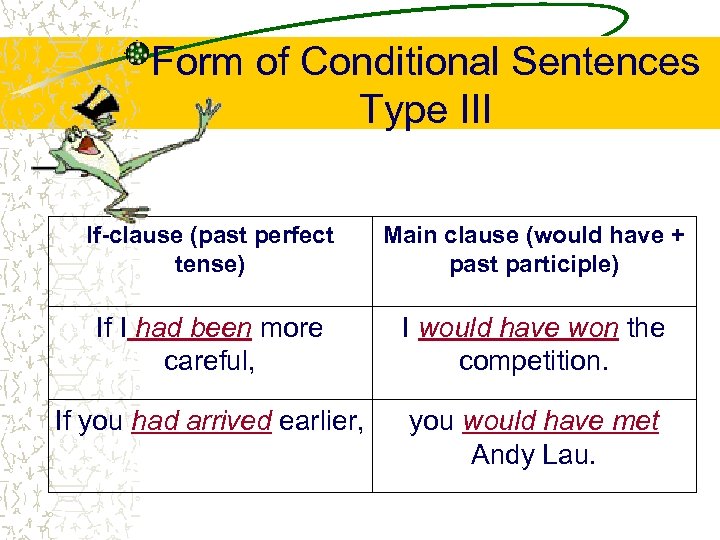 Form of Conditional Sentences Type III If-clause (past perfect tense) Main clause (would have + past participle) If I had been more careful, I would have won the competition. If you had arrived earlier, you would have met Andy Lau.
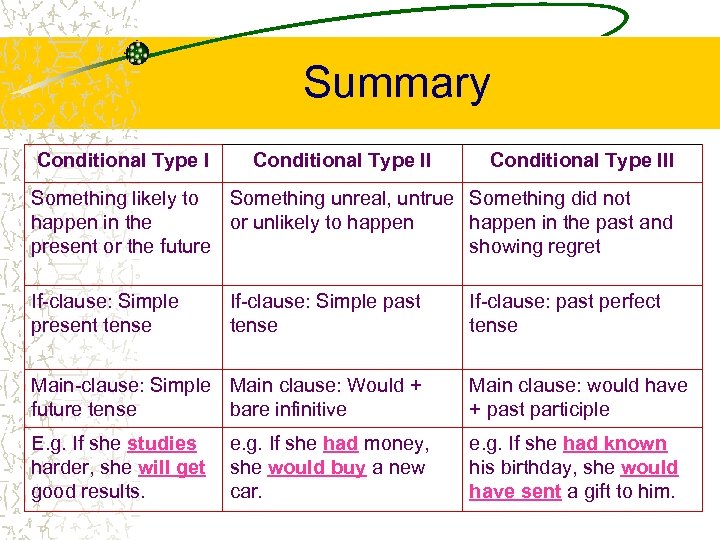 Summary Conditional Type III Something likely to Something unreal, untrue Something did not happen in the or unlikely to happen in the past and present or the future showing regret If-clause: Simple present tense If-clause: Simple past tense If-clause: past perfect tense Main-clause: Simple Main clause: Would + future tense bare infinitive Main clause: would have + past participle E. g. If she studies harder, she will get good results. e. g. If she had known his birthday, she would have sent a gift to him. e. g. If she had money, she would buy a new car.