


 Скачать презентацию Condition Assessment Marine Services 2003 Lloyd s Register
8a2a24d878b828a89d8f99c53c8ae06b.ppt
- Количество слайдов: 22
 Condition Assessment Marine Services © 2003 Lloyd’s Register of Shipping
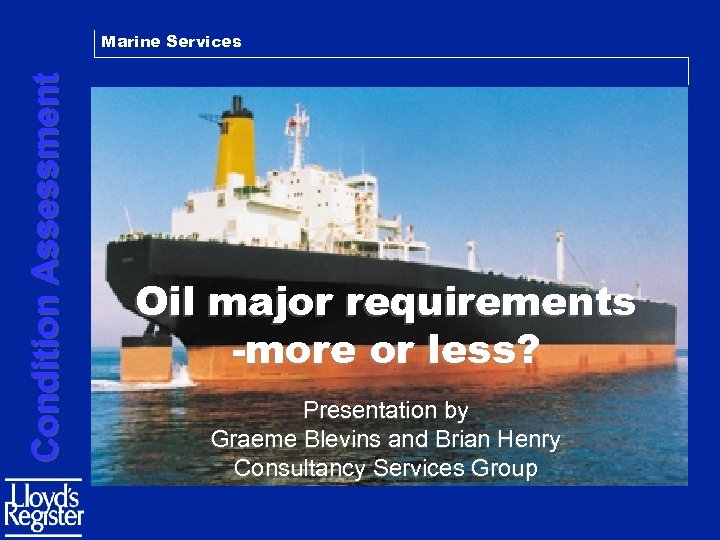 Condition Assessment Marine Services Oil major requirements -more or less? Presentation by Graeme Blevins and Brian Henry Consultancy Services Group
 Condition Assessment Marine Services Objectives • Illustrate relationship between standards: Class>ESP>CAS>CAP • Cover LR’s view of oil major vetting requirements • CAP Open discussion of class, statutory and standards
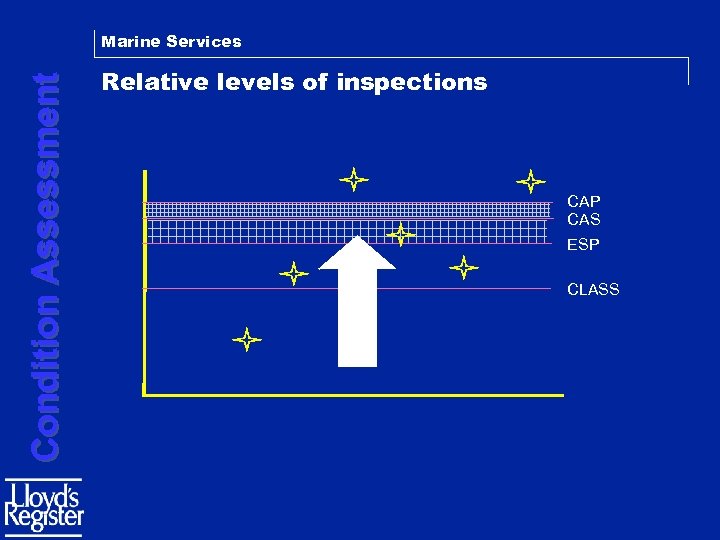 Condition Assessment Marine Services Relative levels of inspections CAP CAS ESP CLASS
 Condition Assessment Marine Services Actual benefits of CAP to tanker owners • Objective evidence of quality tonnage • Opportunity to attract major charterers • Wider selection of charters • Combining class/ESP, CAS & CAP surveys
 Condition Assessment Marine Services Intangible benefits to tanker owners • Opportunity to assess repair needs • Facilitated contact between owner/charterer • 3 rd party assesses Oil Major requirements
 Condition Assessment Marine Services Overview of CAP-LR • An independent rating scheme of ship’s structure, machinery and cargo systems • Allows owners, charterers, shippers and terminal operators to make objective judgements about a ship’s condition • CAP-LR is not a classification requirement • CAP-LR is not an endorsement nor a negation of classification
 Condition Assessment Marine Services Overview of CAP-LR • CAP-LR is part of the vetting programmes of: BP >20, 000 Tonnes >15 Years + FATIGUE Valid to next DD Petronas All ships >15 Years + FATIGUE Valid 30 months Preem >5, 000 Tonnes >20 Years Repsol >5, 000 Tonnes >20 Years Statoil > 3, 000 Tonnes >15 Years < 3, 000 Tonnes have reduced scheme Vela >20, 000 Tonnes >15 Years Valid: 3 Years CAP 2 4 Years CAP 1 BP & Repsol require CAP on hull structure only
 Condition Assessment Marine Services Oil companies requirements Confidence in the structure to survive 3 years to the end of service without reaching the stage that would need renewal under class requirements. The risks of failure from corrosion and from poor design through fatigue are to be specifically addressed.
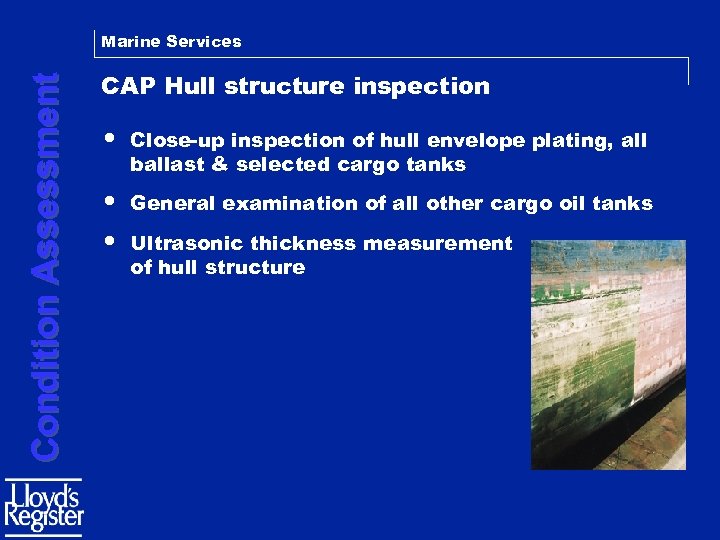 Condition Assessment Marine Services CAP Hull structure inspection • Close-up inspection of hull envelope plating, all ballast & selected cargo tanks • • General examination of all other cargo oil tanks Ultrasonic thickness measurement of hull structure
 Condition Assessment Marine Services ESP Hull structure Inspection • Close up of all ballast tanks • Close up of 1 complete wing cargo tank • Close up of all transverse bulkheads • Close up of 1 transverse web in remaining wing cargo tank • Close up of 1 transverse web in each centre cargo tank
 Condition Assessment Marine Services IMO CAS Hull structure inspection • • • All web frame rings, in all ballast tanks • All transverse bulkheads, in all cargo and ballast tanks • A minimum of 30% of deck and bottom transverses including adjacent structural members, in each cargo centre tank • Additional complete transverse web frame rings or deck and bottom transverse including adjacent structural members as considered necessary by the attending surveyor All web frame rings, in a cargo wing tank A minimum of 30% of all web frame rings, in each remaining cargo wing tank
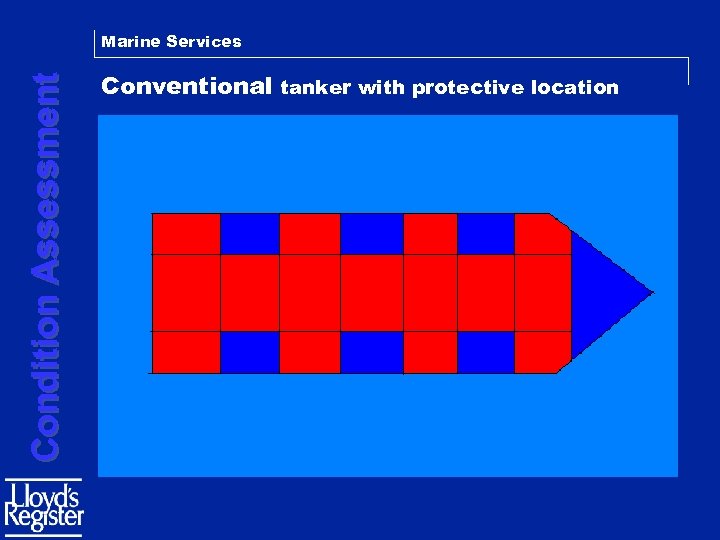 Condition Assessment Marine Services Conventional tanker with protective location
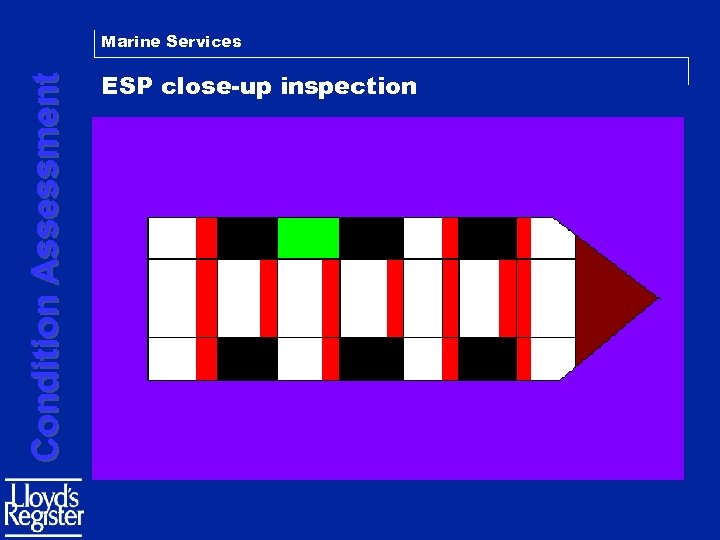 Condition Assessment Marine Services ESP close-up inspection
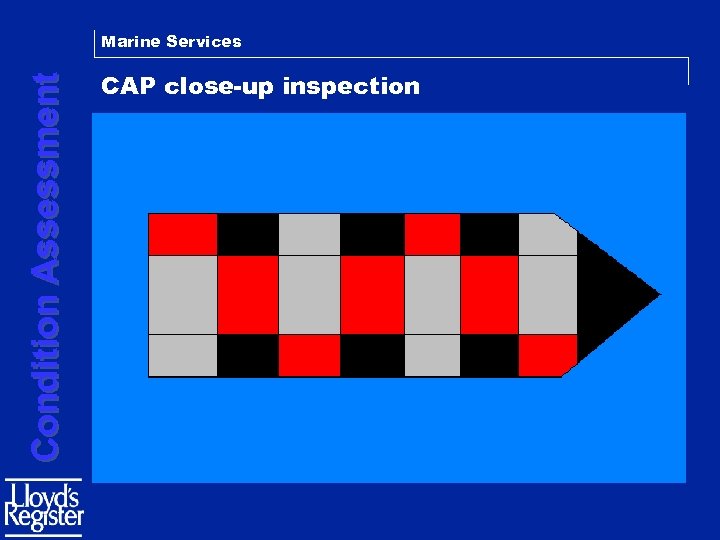 Condition Assessment Marine Services CAP close-up inspection
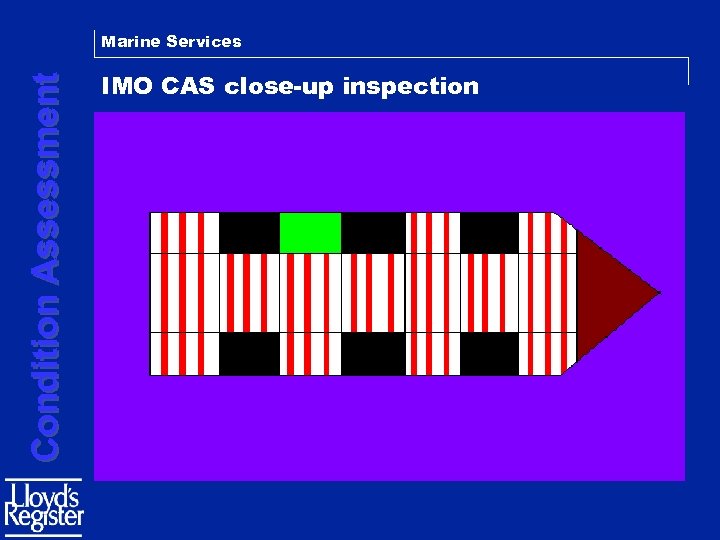 Condition Assessment Marine Services IMO CAS close-up inspection
 Condition Assessment Marine Services Thickness measurement analysis • Submitted in LR TM software • Migrated to CAP-LR to obtain ratings for individual members judged against “as-built rule” scantlings • Structural members assessed are: shell plating deck plating oil tight bulkheads web framing longitudinal stiffening fore and after peaks
 Condition Assessment Marine Services Fatigue (optional) • • • Screening assessment Based upon LR Ship. Right FDA 2 Typical loading patterns Assumed corrosion rate Identification of potential hot spots Used to target inspection
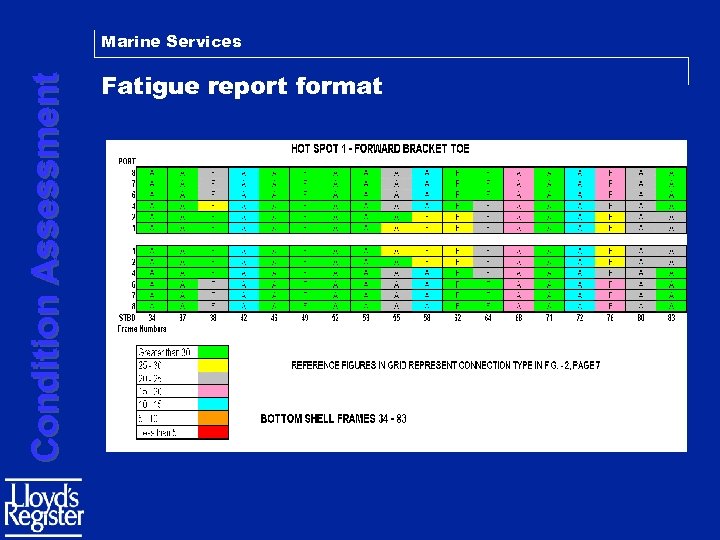 Condition Assessment Marine Services Fatigue report format
 Condition Assessment Marine Services Other aspects of CAP-LR • Machinery and Cargo – General examination of machinery and cargo equipment – Operational effectiveness of safety protection systems – Maintenance practices audit – Rating is calculated by weighting of relative criticality
 Condition Assessment Marine Services Report • The CAP-LR report is a comprehensive statement of condition found • The CAP-LR certificate contains individual ratings from 1 (high) to 4 (low) for: hull structure machinery cargo systems
 Condition Assessment Marine Services Building better business Working together to improve business performance