


 Скачать презентацию Concurrency — II Recitation 3 24 Nisarg Raval
c6bdd609b5b521fbe9e05dbc155da82d.ppt
- Количество слайдов: 40
 Concurrency - II Recitation – 3/24 Nisarg Raval Slides by Prof. Landon Cox and Vamsi Thummala
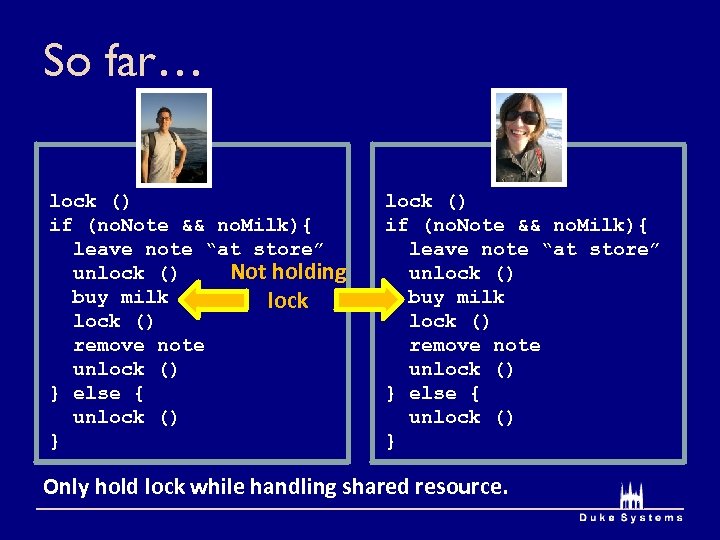 So far… lock () if (no. Note && no. Milk){ leave note “at store” Not holding unlock () buy milk lock () remove note unlock () } else { unlock () } lock () if (no. Note && no. Milk){ leave note “at store” unlock () buy milk lock () remove note unlock () } else { unlock () } Only hold lock while handling shared resource.
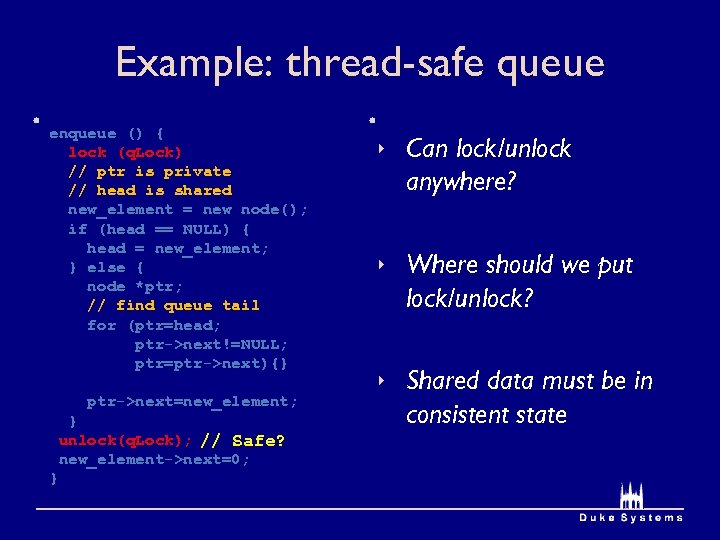 Example: thread-safe queue enqueue () { lock (q. Lock) // ptr is private // head is shared new_element = new node(); if (head == NULL) { head = new_element; } else { node *ptr; // find queue tail for (ptr=head; ptr->next!=NULL; ptr=ptr->next){} ptr->next=new_element; } unlock(q. Lock); // Safe? new_element->next=0; } Can lock/unlock anywhere? Where should we put lock/unlock? Shared data must be in consistent state
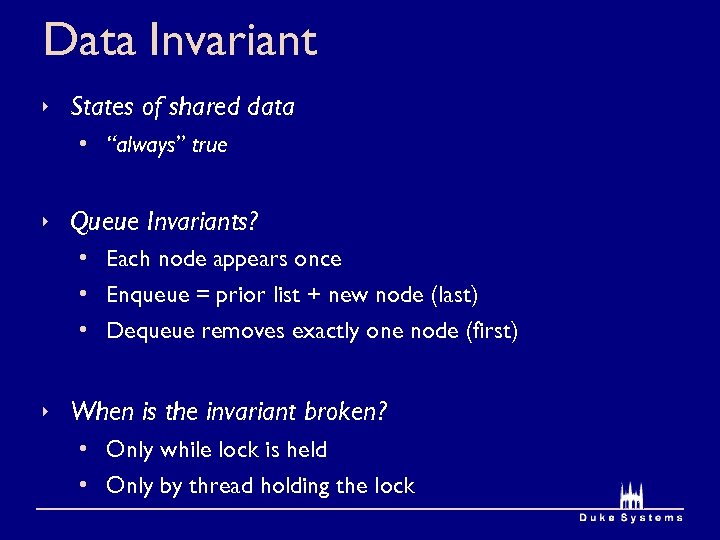 Data Invariant States of shared data • “always” true Queue Invariants? • Each node appears once • Enqueue = prior list + new node (last) • Dequeue removes exactly one node (first) When is the invariant broken? • Only while lock is held • Only by thread holding the lock
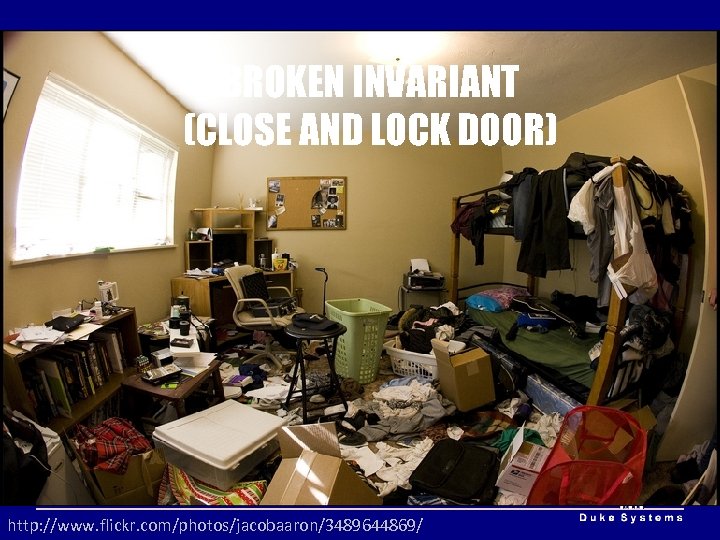 BROKEN INVARIANT (CLOSE AND LOCK DOOR) http: //www. flickr. com/photos/jacobaaron/3489644869/
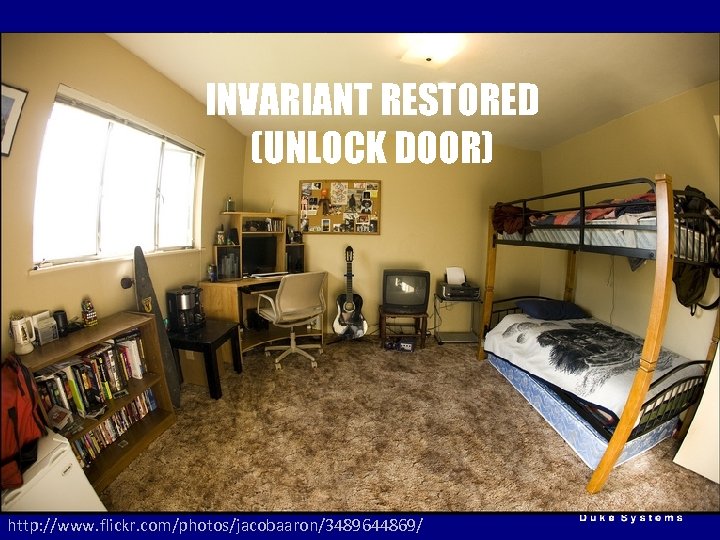 INVARIANT RESTORED (UNLOCK DOOR) http: //www. flickr. com/photos/jacobaaron/3489644869/
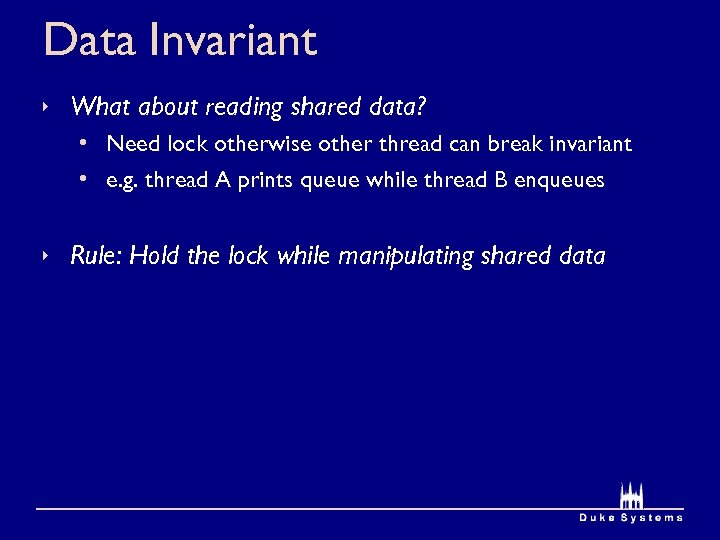 Data Invariant What about reading shared data? • Need lock otherwise other thread can break invariant • e. g. thread A prints queue while thread B enqueues Rule: Hold the lock while manipulating shared data
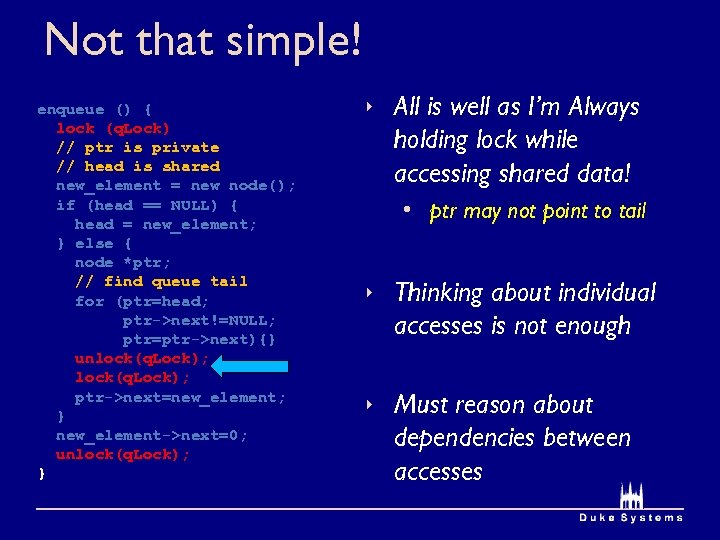 Not that simple! enqueue () { lock (q. Lock) // ptr is private // head is shared new_element = new node(); if (head == NULL) { head = new_element; } else { node *ptr; // find queue tail for (ptr=head; ptr->next!=NULL; ptr=ptr->next){} unlock(q. Lock); ptr->next=new_element; } new_element->next=0; unlock(q. Lock); } All is well as I’m Always holding lock while accessing shared data! • ptr may not point to tail Thinking about individual accesses is not enough Must reason about dependencies between accesses
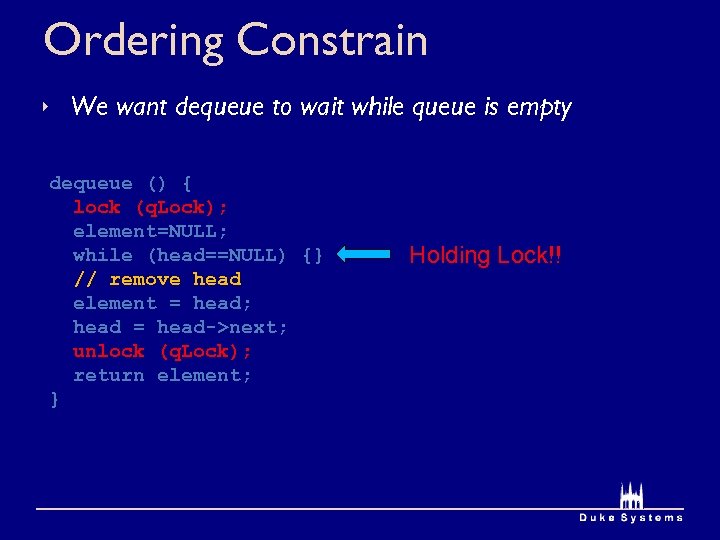 Ordering Constrain We want dequeue to wait while queue is empty dequeue () { lock (q. Lock); element=NULL; while (head==NULL) {} // remove head element = head; head = head->next; unlock (q. Lock); return element; } Holding Lock!!
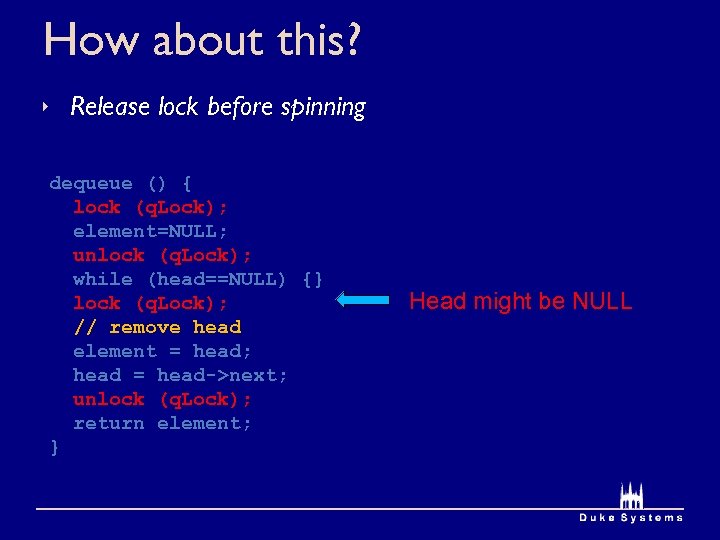 How about this? Release lock before spinning dequeue () { lock (q. Lock); element=NULL; unlock (q. Lock); while (head==NULL) {} lock (q. Lock); // remove head element = head; head = head->next; unlock (q. Lock); return element; } Head might be NULL
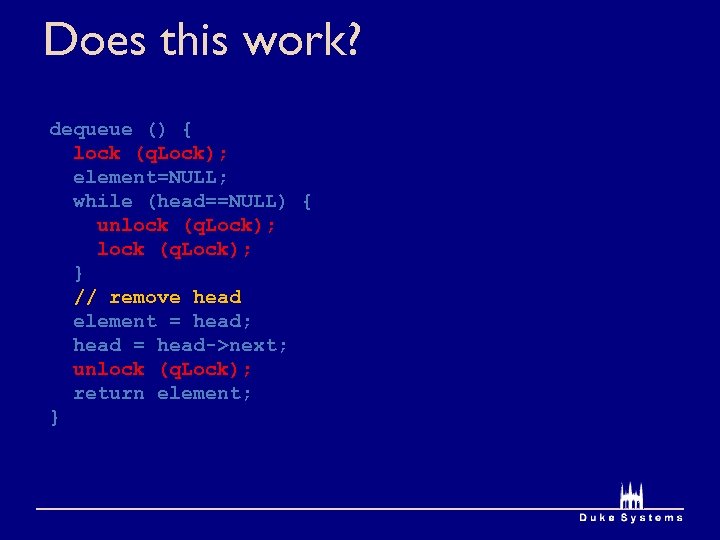 Does this work? dequeue () { lock (q. Lock); element=NULL; while (head==NULL) { unlock (q. Lock); } // remove head element = head; head = head->next; unlock (q. Lock); return element; }
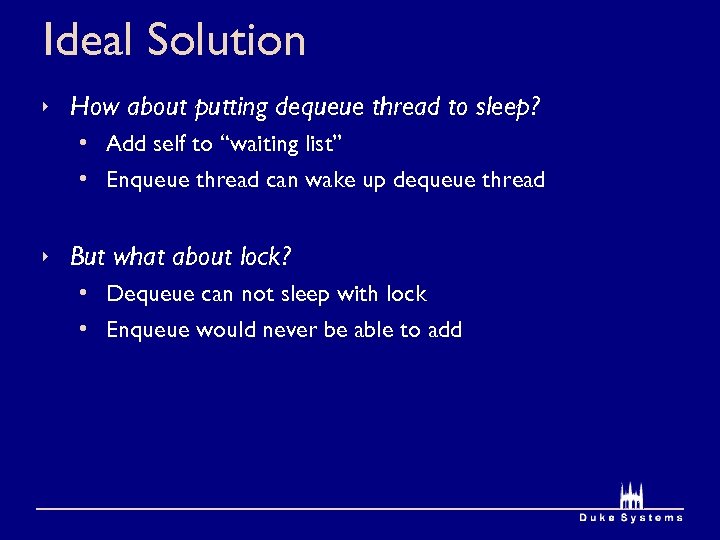 Ideal Solution How about putting dequeue thread to sleep? • Add self to “waiting list” • Enqueue thread can wake up dequeue thread But what about lock? • Dequeue can not sleep with lock • Enqueue would never be able to add
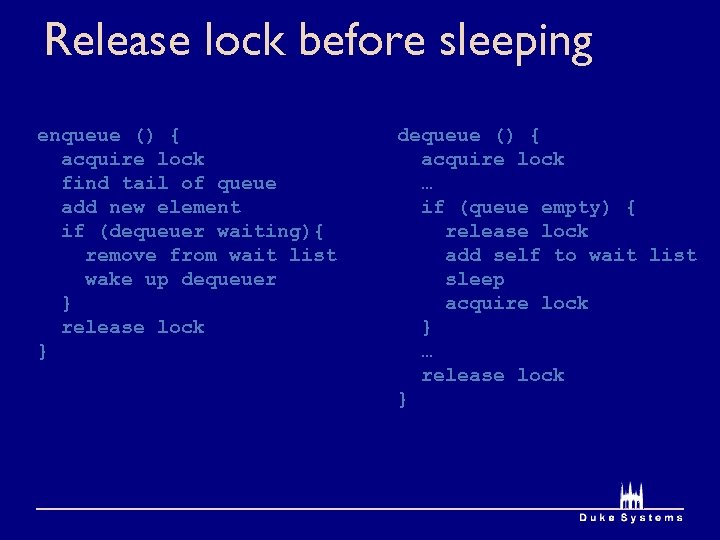 Release lock before sleeping enqueue () { acquire lock find tail of queue add new element if (dequeuer waiting){ remove from wait list wake up dequeuer } release lock } dequeue () { acquire lock … if (queue empty) { release lock add self to wait list sleep acquire lock } … release lock }
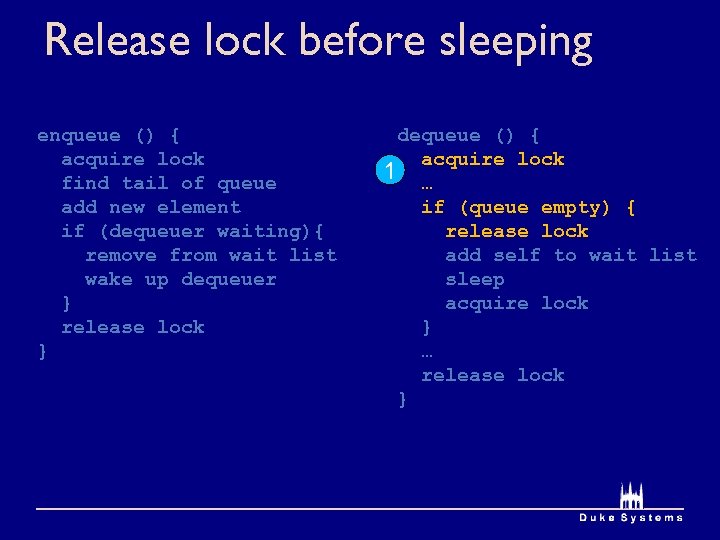 Release lock before sleeping enqueue () { acquire lock find tail of queue add new element if (dequeuer waiting){ remove from wait list wake up dequeuer } release lock } dequeue () { acquire lock 1 … if (queue empty) { release lock add self to wait list sleep acquire lock } … release lock }
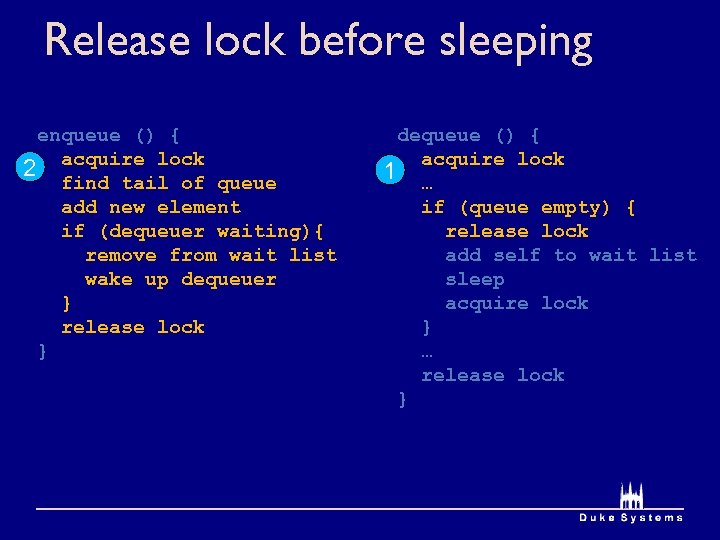 Release lock before sleeping enqueue () { 2 acquire lock find tail of queue add new element if (dequeuer waiting){ remove from wait list wake up dequeuer } release lock } dequeue () { acquire lock 1 … if (queue empty) { release lock add self to wait list sleep acquire lock } … release lock }
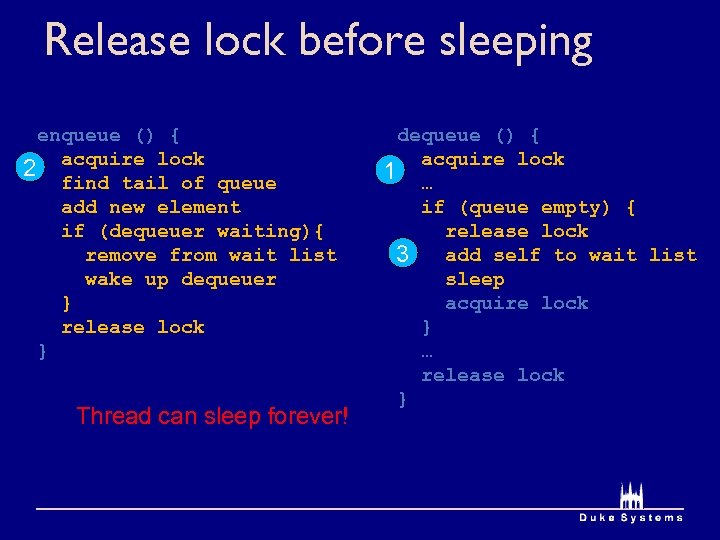 Release lock before sleeping enqueue () { 2 acquire lock find tail of queue add new element if (dequeuer waiting){ remove from wait list wake up dequeuer } release lock } Thread can sleep forever! dequeue () { acquire lock 1 … if (queue empty) { release lock 3 add self to wait list sleep acquire lock } … release lock }
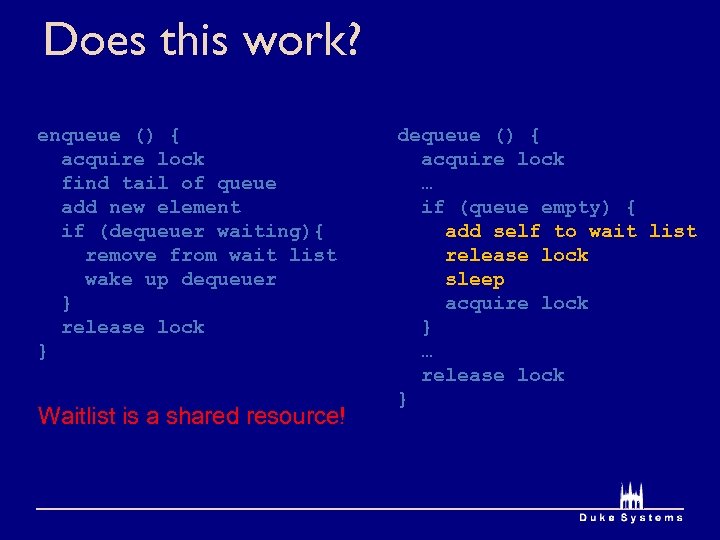 Does this work? enqueue () { acquire lock find tail of queue add new element if (dequeuer waiting){ remove from wait list wake up dequeuer } release lock } Waitlist is a shared resource! dequeue () { acquire lock … if (queue empty) { add self to wait list release lock sleep acquire lock } … release lock }
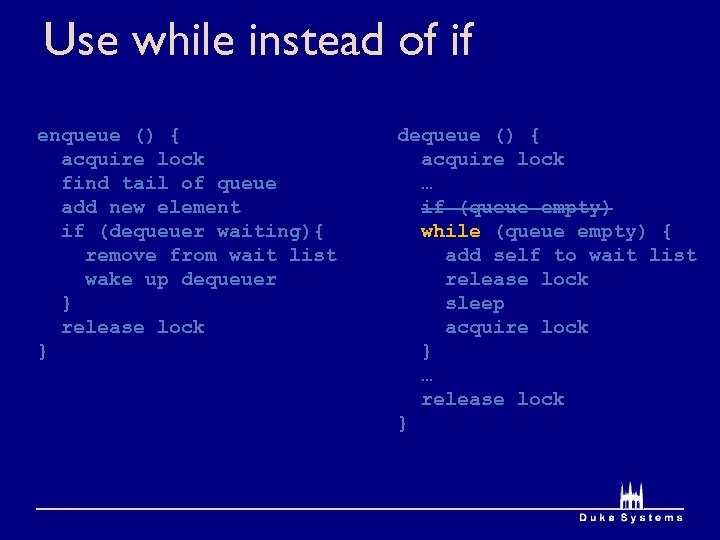 Use while instead of if enqueue () { acquire lock find tail of queue add new element if (dequeuer waiting){ remove from wait list wake up dequeuer } release lock } dequeue () { acquire lock … if (queue empty) while (queue empty) { add self to wait list release lock sleep acquire lock } … release lock }
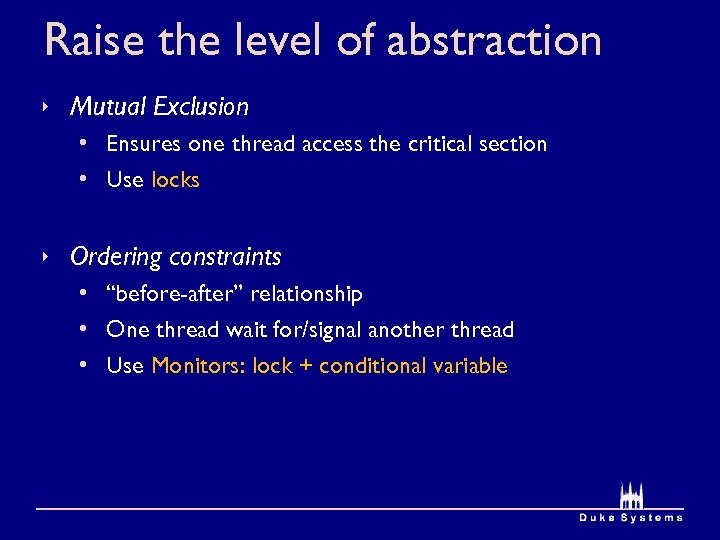 Raise the level of abstraction Mutual Exclusion • Ensures one thread access the critical section • Use locks Ordering constraints • “before-after” relationship • One thread wait for/signal another thread • Use Monitors: lock + conditional variable
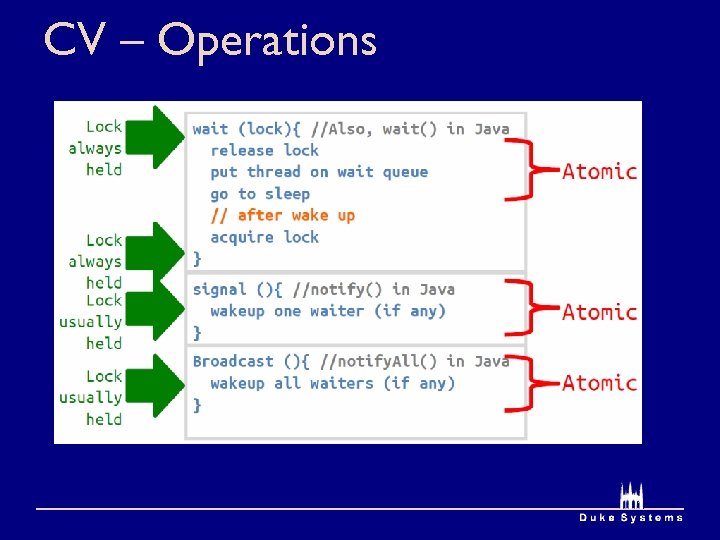
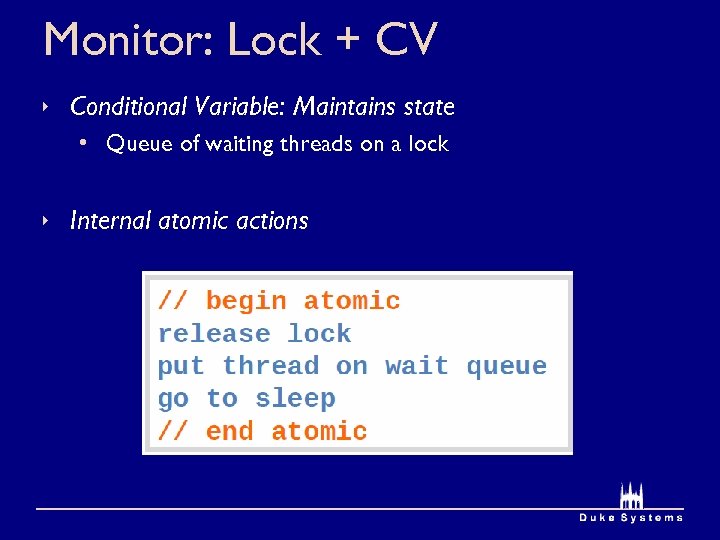 Monitor: Lock + CV Conditional Variable: Maintains state • Queue of waiting threads on a lock Internal atomic actions
 CV – Operations
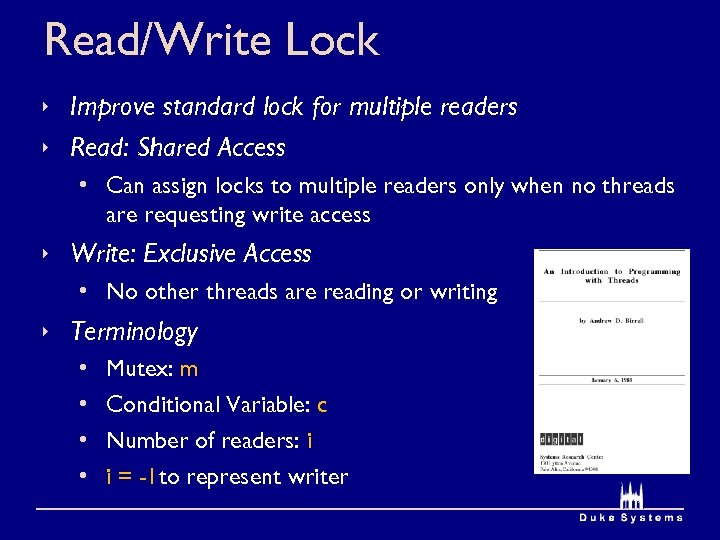 Read/Write Lock Improve standard lock for multiple readers Read: Shared Access • Can assign locks to multiple readers only when no threads are requesting write access Write: Exclusive Access • No other threads are reading or writing Terminology • • Mutex: m Conditional Variable: c Number of readers: i i = -1 to represent writer
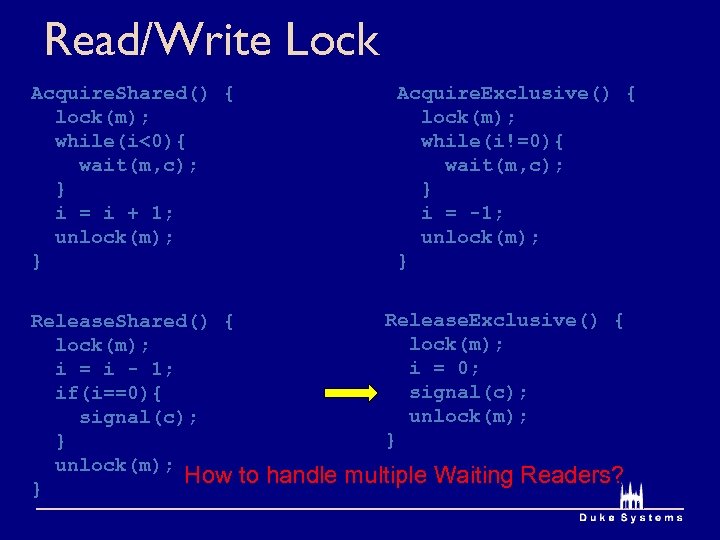 Read/Write Lock Acquire. Shared() { lock(m); while(i<0){ wait(m, c); } i = i + 1; unlock(m); } Release. Shared() { lock(m); i = i - 1; if(i==0){ signal(c); } unlock(m); How to } Acquire. Exclusive() { lock(m); while(i!=0){ wait(m, c); } i = -1; unlock(m); } Release. Exclusive() { lock(m); i = 0; signal(c); unlock(m); } handle multiple Waiting Readers?
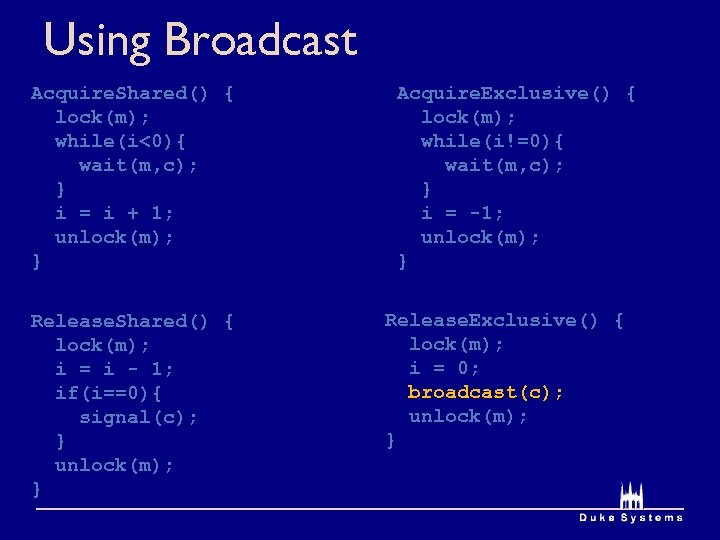 Using Broadcast Acquire. Shared() { lock(m); while(i<0){ wait(m, c); } i = i + 1; unlock(m); } Release. Shared() { lock(m); i = i - 1; if(i==0){ signal(c); } unlock(m); } Acquire. Exclusive() { lock(m); while(i!=0){ wait(m, c); } i = -1; unlock(m); } Release. Exclusive() { lock(m); i = 0; broadcast(c); unlock(m); }
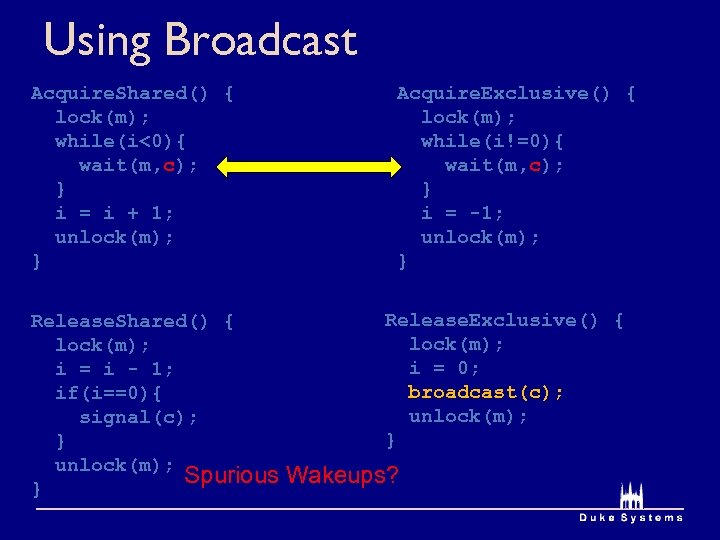 Using Broadcast Acquire. Shared() { lock(m); while(i<0){ wait(m, c); } i = i + 1; unlock(m); } Release. Shared() { lock(m); i = i - 1; if(i==0){ signal(c); } unlock(m); Spurious } Acquire. Exclusive() { lock(m); while(i!=0){ wait(m, c); } i = -1; unlock(m); } Release. Exclusive() { lock(m); i = 0; broadcast(c); unlock(m); } Wakeups?
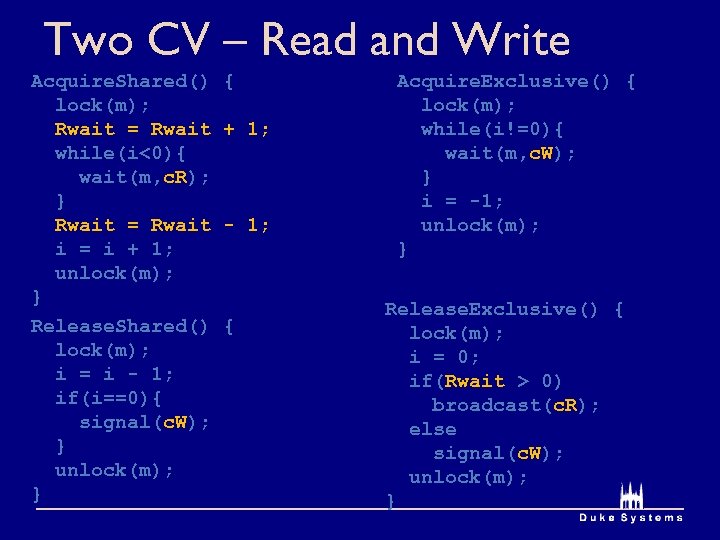 Two CV – Read and Write Acquire. Shared() lock(m); Rwait = Rwait while(i<0){ wait(m, c. R); } Rwait = Rwait i = i + 1; unlock(m); } Release. Shared() lock(m); i = i - 1; if(i==0){ signal(c. W); } unlock(m); } { + 1; - 1; { Acquire. Exclusive() { lock(m); while(i!=0){ wait(m, c. W); } i = -1; unlock(m); } Release. Exclusive() { lock(m); i = 0; if(Rwait > 0) broadcast(c. R); else signal(c. W); unlock(m); }
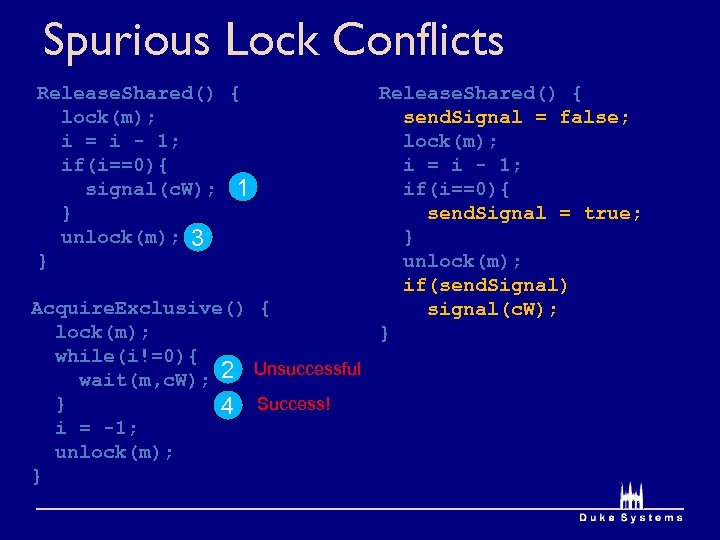 Spurious Lock Conflicts Release. Shared() { lock(m); i = i - 1; if(i==0){ signal(c. W); 1 } unlock(m); 3 } Acquire. Exclusive() { lock(m); while(i!=0){ Unsuccessful wait(m, c. W); 2 } 4 Success! i = -1; unlock(m); } Release. Shared() { send. Signal = false; lock(m); i = i - 1; if(i==0){ send. Signal = true; } unlock(m); if(send. Signal) signal(c. W); }
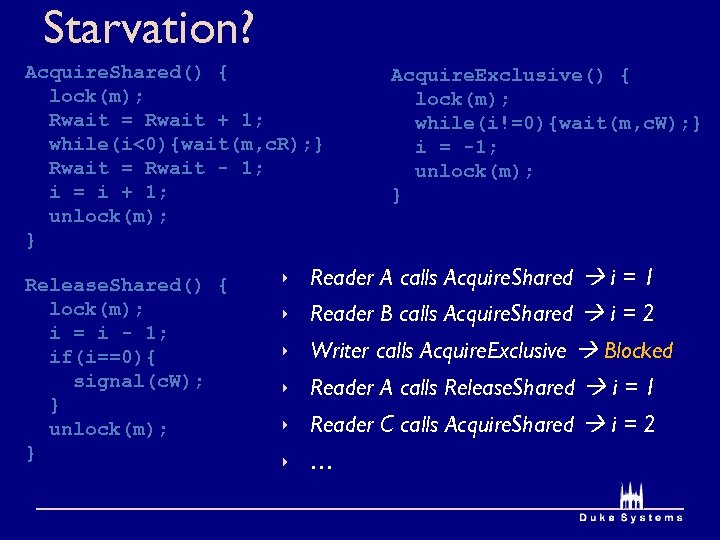 Starvation? Acquire. Shared() { lock(m); Rwait = Rwait + 1; while(i<0){wait(m, c. R); } Rwait = Rwait - 1; i = i + 1; unlock(m); } Release. Shared() { lock(m); i = i - 1; if(i==0){ signal(c. W); } unlock(m); } Acquire. Exclusive() { lock(m); while(i!=0){wait(m, c. W); } i = -1; unlock(m); } Reader A calls Acquire. Shared i = 1 Reader B calls Acquire. Shared i = 2 Writer calls Acquire. Exclusive Blocked Reader A calls Release. Shared i = 1 Reader C calls Acquire. Shared i = 2 …
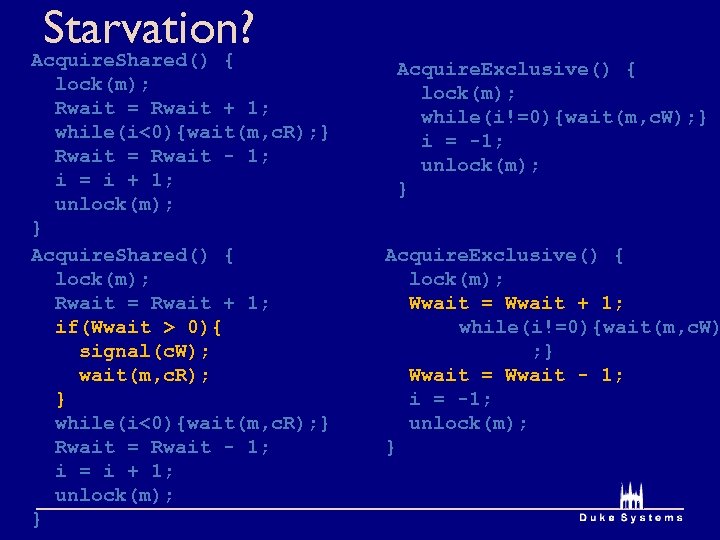 Starvation? Acquire. Shared() { lock(m); Rwait = Rwait + 1; while(i<0){wait(m, c. R); } Rwait = Rwait - 1; i = i + 1; unlock(m); } Acquire. Shared() { lock(m); Rwait = Rwait + 1; if(Wwait > 0){ signal(c. W); wait(m, c. R); } while(i<0){wait(m, c. R); } Rwait = Rwait - 1; i = i + 1; unlock(m); } Acquire. Exclusive() { lock(m); while(i!=0){wait(m, c. W); } i = -1; unlock(m); } Acquire. Exclusive() { lock(m); Wwait = Wwait + 1; while(i!=0){wait(m, c. W) ; } Wwait = Wwait - 1; i = -1; unlock(m); }
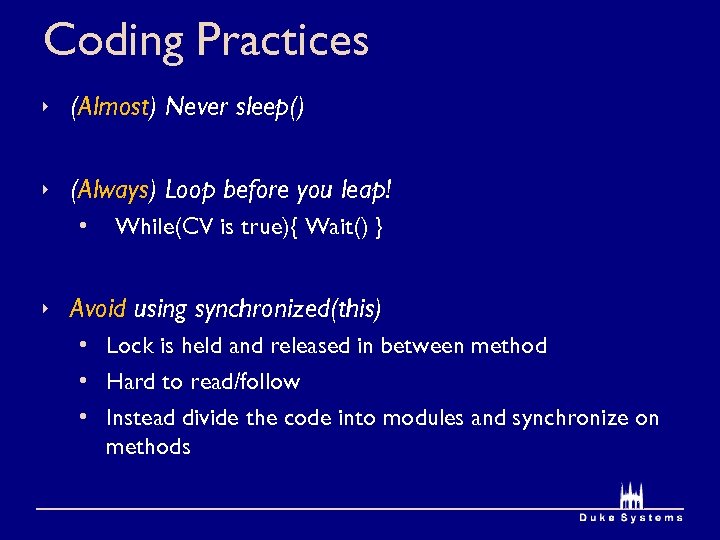 Coding Practices (Almost) Never sleep() (Always) Loop before you leap! • While(CV is true){ Wait() } Avoid using synchronized(this) • Lock is held and released in between method • Hard to read/follow • Instead divide the code into modules and synchronize on methods
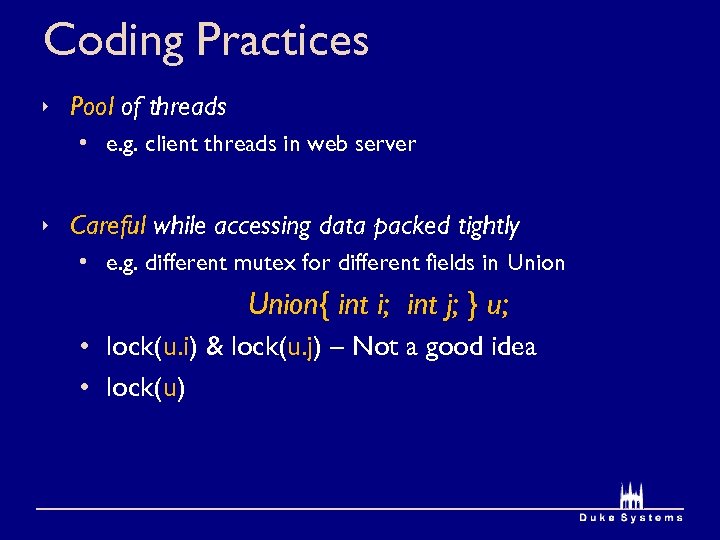 Coding Practices Pool of threads • e. g. client threads in web server Careful while accessing data packed tightly • e. g. different mutex for different fields in Union{ int i; int j; } u; • lock(u. i) & lock(u. j) – Not a good idea • lock(u)
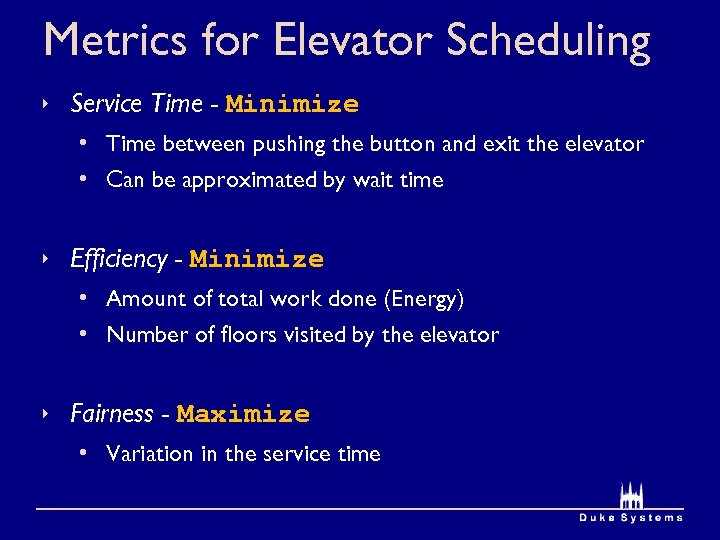
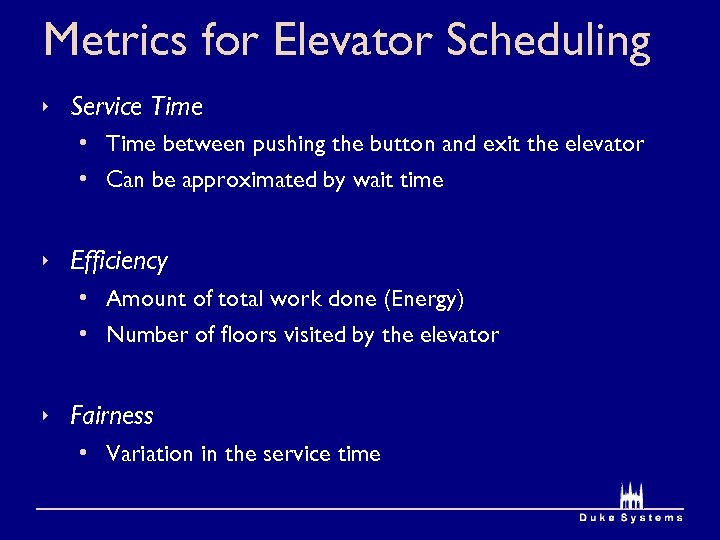 Metrics for Elevator Scheduling Service Time • Time between pushing the button and exit the elevator • Can be approximated by wait time Efficiency • Amount of total work done (Energy) • Number of floors visited by the elevator Fairness • Variation in the service time
 Metrics for Elevator Scheduling Service Time - Minimize • Time between pushing the button and exit the elevator • Can be approximated by wait time Efficiency - Minimize • Amount of total work done (Energy) • Number of floors visited by the elevator Fairness - Maximize • Variation in the service time
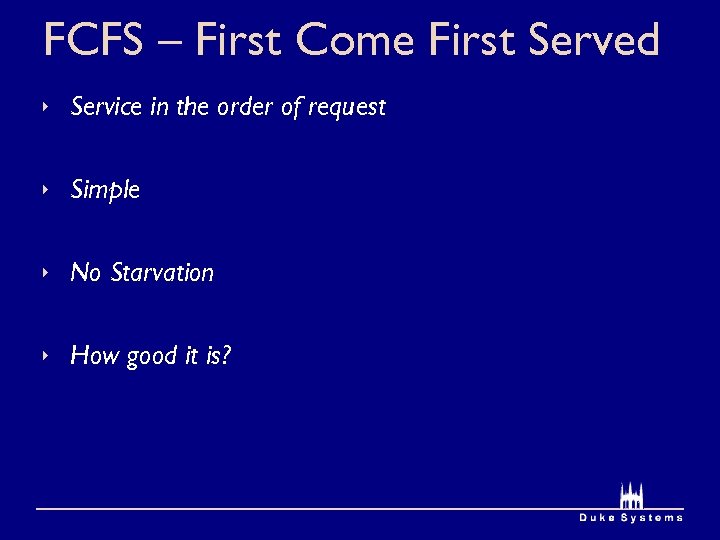 FCFS – First Come First Served Service in the order of request Simple No Starvation How good it is?
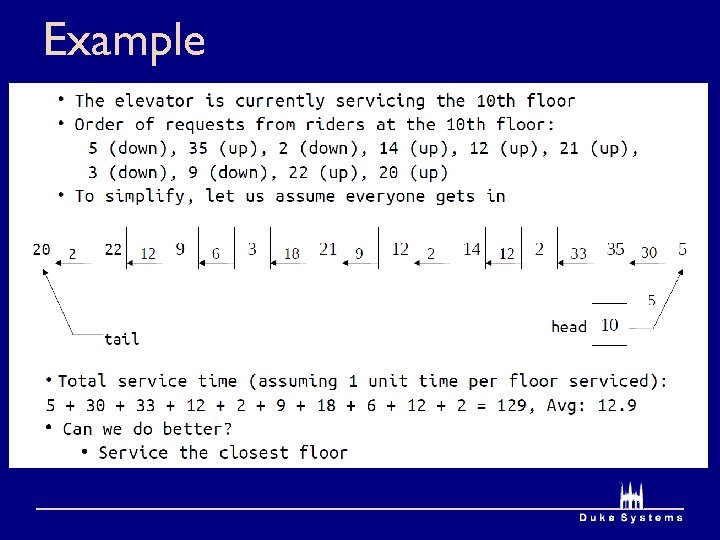 Example
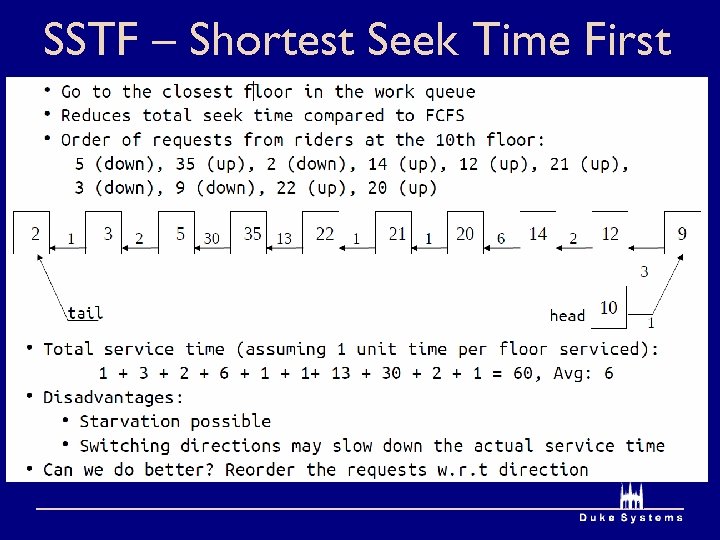 SSTF – Shortest Seek Time First
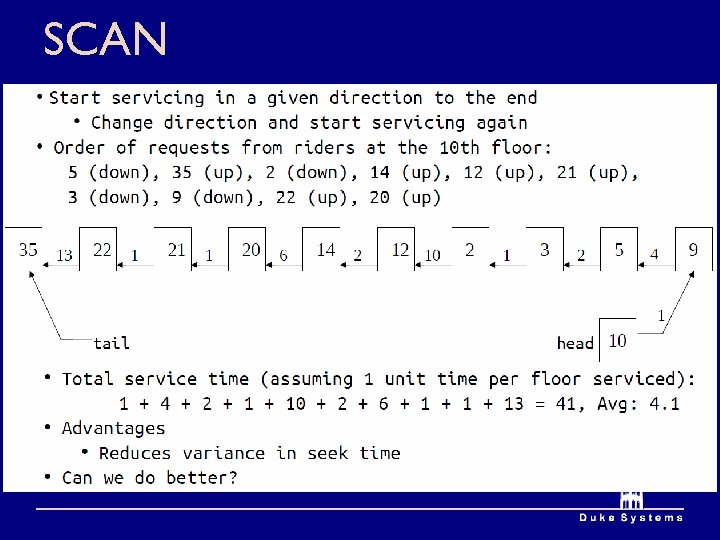 SCAN
SCAN
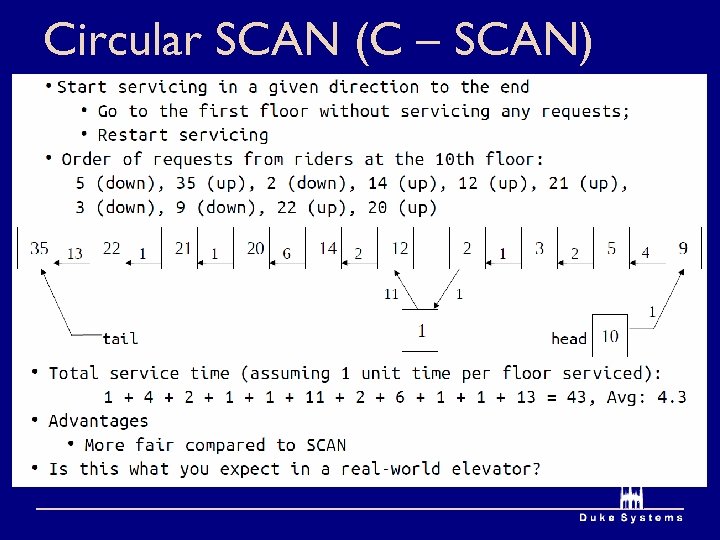 Circular SCAN (C – SCAN)
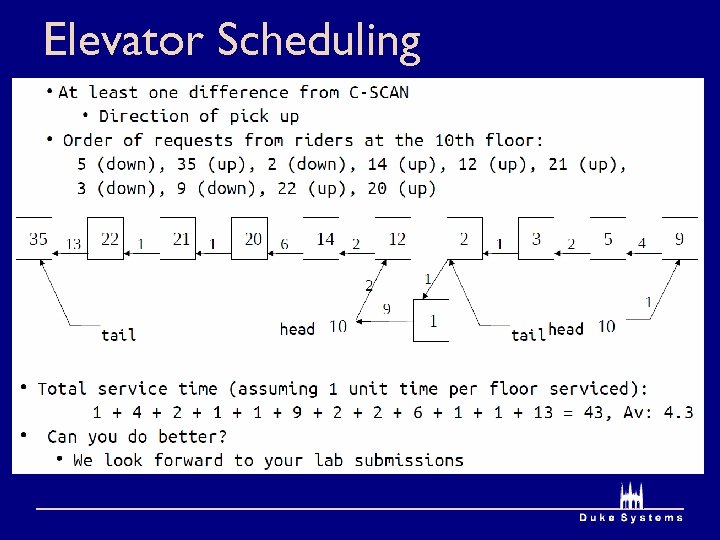 Elevator Scheduling
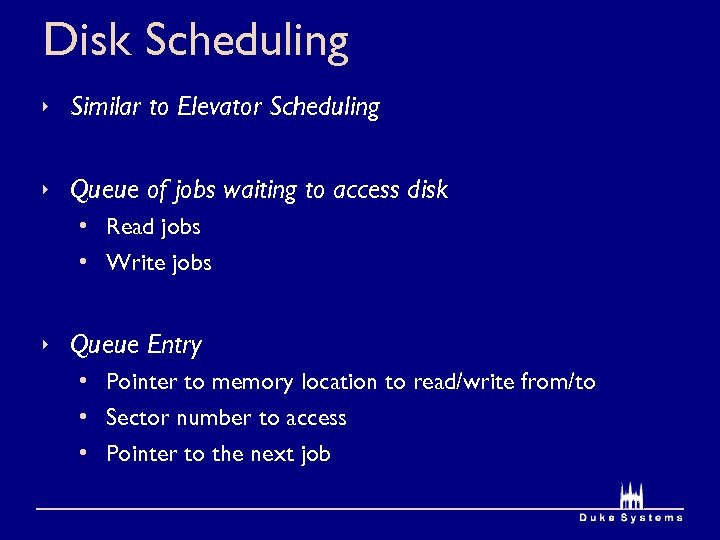 Disk Scheduling Similar to Elevator Scheduling Queue of jobs waiting to access disk • Read jobs • Write jobs Queue Entry • Pointer to memory location to read/write from/to • Sector number to access • Pointer to the next job