


 Скачать презентацию Computer Science Technology School of Shandong University Guide to
5a4a48bbc3cd6e9252adf484c26ec7f8.ppt
- Количество слайдов: 46
 Computer Science&Technology School of Shandong University Guide to Information Security Chapter 14 – Authentication Applications Instructor: Hou Mengbo Email: houmb AT sdu. edu. cn Office: Information Security Research Group
 Authentication Applications • will consider authentication functions • developed to support application-level authentication & digital signatures – will consider Kerberos – a private-key authentication service – then X. 509 directory authentication service
 Kerberos Authentication Protocol
 Kerberos Authentication Protocol • Kerberos Overview • Kerberos Protocol Description • Kerberos Analysis and related Resources
 What’s Kerberos ? • 1988由MIT开发,在一个分布式环境中,用于服务 器与用户之间的相互认证的协议。 • 名称来源于希腊神话,Kerberos是地狱入口的守 护者,通常有三个头。 • 设计者的设计初衷是要用Kerberos的三个头来守 卫网络之门。三个头包括:认证、帐目清算以及 审计。 • 到目前共有5个版本。1、2、3版为实验室版。第 4、 5版得到广泛应用。第 5版和第 4版基本原理一致, 只对第 4版做了部分改进。
 Kerberos 要解决的问题 • 在一个开放的分布式网络环境中,用户通过 作 站访问服务器提供的服务。存在很多问题: – 作站上的用户可以冒充另一用户操作。 –用户可以改变 作站地址冒充另一台 作站。 –用户可以窃听并回放他人的信息交换,获得 对于某种服务的访问权或中断服务的运行。 –使用假冒服务器从而骗得用户的机密信息。
 Kerberos 的解决方案 • 在一个分布式的Client/Server体系机构中,引入 一个可信任的第三方(Kerberos服务器),让其 提供认证服务。 • 采用共享密钥加密技术。
 Kerberos 基本性质 • 安全:使网络窃听者不能获得必要的信息 来伪装成另一客户。 • 可靠:对所有以Kerberos进行访问控制的 服务来说,客户无法通过Kerberos服务器 的认证就意味着无法获得所需要的服务。 • 透明:用户除了需要输入一个口令外,不 必知道认证过程的存在以及细节。 • 可伸缩:可支持大量用户和服务器。(采 用模块化、C/S结构)
 Kerberos 应用 • Kerberos 第 5版 是Windows 2000 中最基本的安 全协议,是默认的用户和服务器验证提供者。 • Linux 、Unix 类系统也都支持Kerberos协议。 • 作为网络环境的双向认证协议。
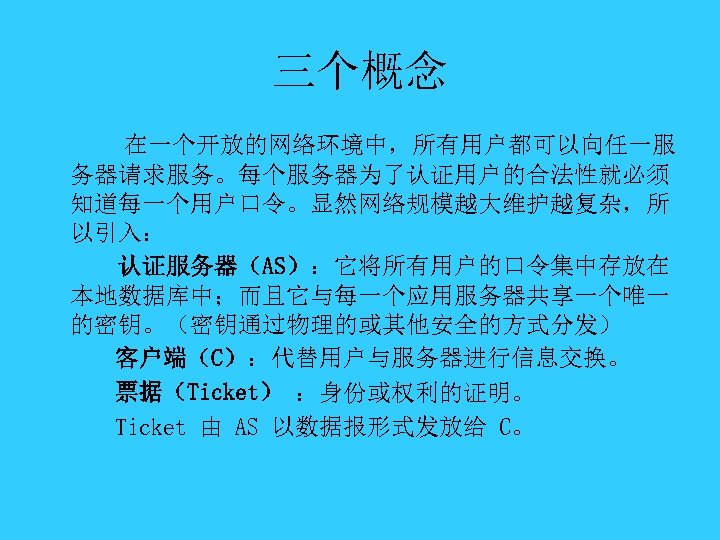 三个概念 在一个开放的网络环境中,所有用户都可以向任一服 务器请求服务。每个服务器为了认证用户的合法性就必须 知道每一个用户口令。显然网络规模越大维护越复杂,所 以引入: 认证服务器(AS):它将所有用户的口令集中存放在 本地数据库中;而且它与每一个应用服务器共享一个唯一 的密钥。(密钥通过物理的或其他安全的方式分发) 客户端(C):代替用户与服务器进行信息交换。 票据(Ticket) :身份或权利的证明。 Ticket 由 AS 以数据报形式发放给 C。
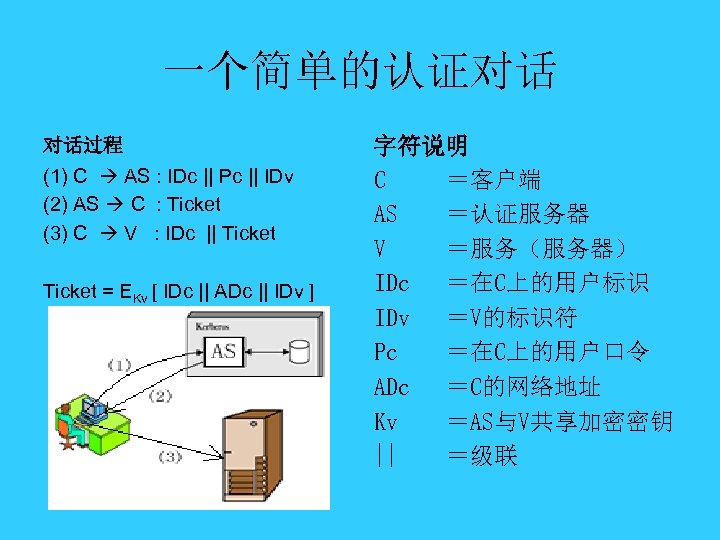 一个简单的认证对话 对话过程 (1) C AS : IDc || Pc || IDv (2) AS C : Ticket (3) C V : IDc || Ticket = EKv [ IDc || ADc || IDv ] 字符说明 C =客户端 AS =认证服务器 V =服务(服务器) IDc =在C上的用户标识 IDv =V的标识符 Pc =在C上的用户口令 ADc =C的网络地址 Kv =AS与V共享加密密钥 || =级联
 两个最突出问题: • 用户每次访问一种新服务就需要一个新的 票据,导致用户多次输入口令。 • 用明文传递的用户口令会被窃听。
 解决方案 • 票据许可服务器 (TGS)向已经通过TGS认证的用 户发放服务Ticket。用户首先向AS请求一张票据 许可票 Tickettgs ,并将它保存在 C 中。每当用 户要求一种新的服务时,客户便用这张能认证自 己的 Tickettgs 向TGS发出申请。TGS给用户发回 一张针对某种特定服务的服务许可票据 Ticket. V, 客户将保留每一个Ticket. V,在每次请求相同服务 时提供给服务器 V 来认证。 • Ticket 重用,设置生命期。
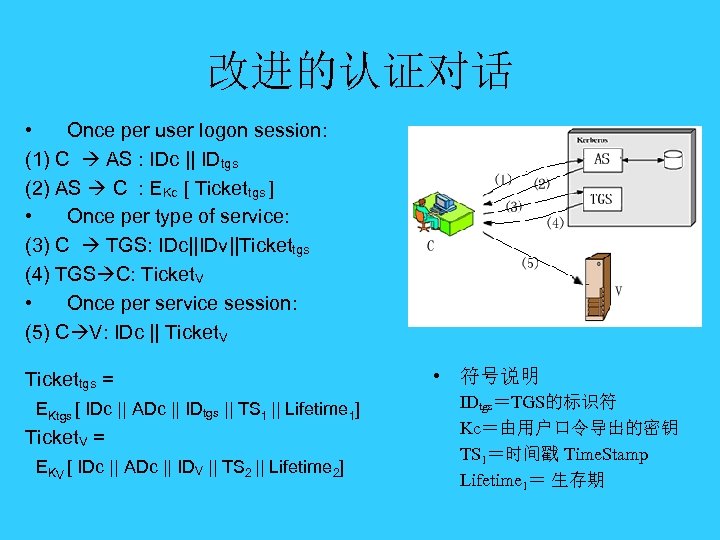 改进的认证对话 • Once per user logon session: (1) C AS : IDc || IDtgs (2) AS C : EKc [ Tickettgs ] • Once per type of service: (3) C TGS: IDc||IDv||Tickettgs (4) TGS C: Ticket. V • Once per service session: (5) C V: IDc || Ticket. V Tickettgs = EKtgs [ IDc || ADc || IDtgs || TS 1 || Lifetime 1] Ticket. V = EKV [ IDc || ADc || IDV || TS 2 || Lifetime 2] • 符号说明 IDtgs=TGS的标识符 Kc=由用户口令导出的密钥 TS 1=时间戳 Time. Stamp Lifetime 1= 生存期
 改进版过程说明 (1) 客户通过向AS发送用户ID、TGS ID来请求一张代表该用户的票据许 可票据。 (2) As发回一张加密过的票据作为响应,加密密钥是由用户口令导出的 散列码。响应到达客户端后,客户端提示用户输入口令,产生密钥, 解密报文。口令正确,票据正确恢复。 (3)客户端代表用户请求一张服务许可票据。 (4)TGS 对收到的 Tickettgs 进行解密,通过检查TGS ID来验证解密是否 成功。并检查票据的生存期,确保没有过期。比较用户ID和网络地址 与通过 AS 认证用户的信息是否一致。若允许用户访问V,TGS 发回 一张该Ticket. V。两种票据的结构完全相同。 (5)客户端 C 代表用户请求某项服务。向 V 发送用户ID和 Ticket. V 服务 许可票据的报文。应用服务器解密票据。通过检查 IDV来验证解密是 否成功。并检查票据的生存期,确保没有过期。比较用户ID和网络地 址与通过 TGS 认证用户的信息是否一致。一致则向用户提供服务。
 仍然存在的两个问题 • 很难选择Ticket的生存期长短。短:用户 多次重复输入口令;长:对手窃听网络得 到Ticket后,可在生存期结束前获得合法 用户的资源。 (一般为 8小时) • 服务器不能向用户认证自己。
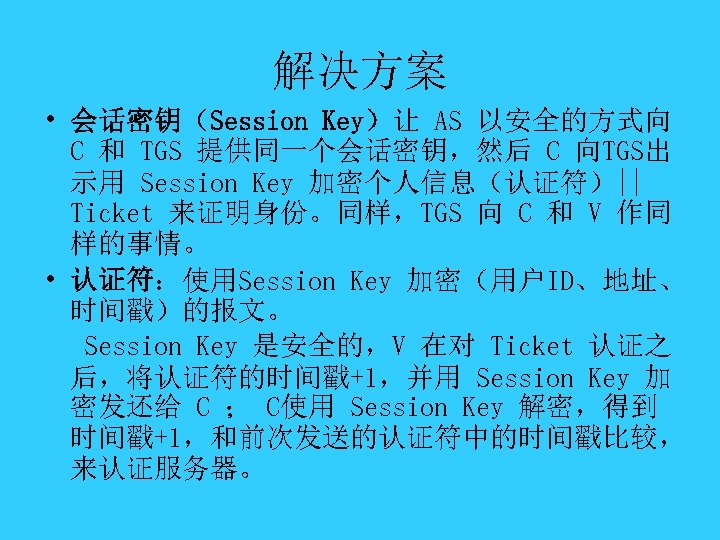 解决方案 • 会话密钥(Session Key)让 AS 以安全的方式向 C 和 TGS 提供同一个会话密钥,然后 C 向TGS出 示用 Session Key 加密个人信息(认证符)|| Ticket 来证明身份。同样,TGS 向 C 和 V 作同 样的事情。 • 认证符:使用Session Key 加密(用户ID、地址、 时间戳)的报文。 Session Key 是安全的,V 在对 Ticket 认证之 后,将认证符的时间戳+1,并用 Session Key 加 密发还给 C ; C使用 Session Key 解密,得到 时间戳+1,和前次发送的认证符中的时间戳比较, 来认证服务器。
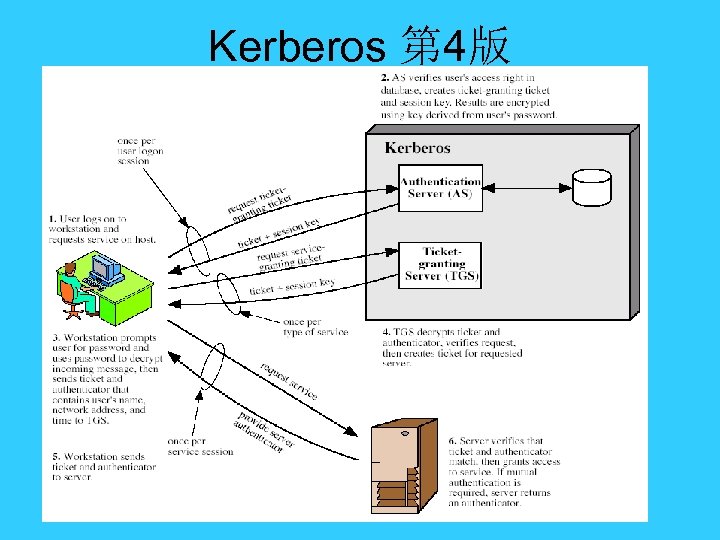 Kerberos 第 4版
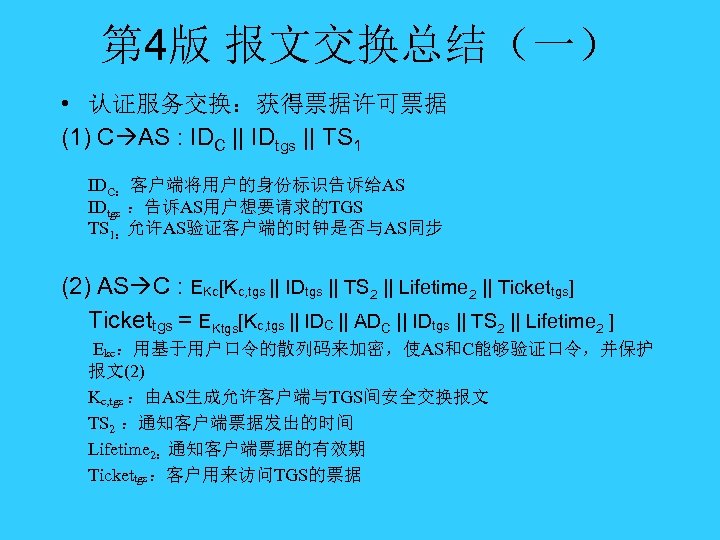 第 4版 报文交换总结(一) • 认证服务交换:获得票据许可票据 (1) C AS : IDC || IDtgs || TS 1 IDC: 客户端将用户的身份标识告诉给AS IDtgs :告诉AS用户想要请求的TGS TS 1:允许AS验证客户端的时钟是否与AS同步 (2) AS C : EKc[Kc, tgs || IDtgs || TS 2 || Lifetime 2 || Tickettgs] Tickettgs = EKtgs[Kc, tgs || IDC || ADC || IDtgs || TS 2 || Lifetime 2 ] Ekc:用基于用户口令的散列码来加密,使AS和C能够验证口令,并保护 报文(2) Kc, tgs :由AS生成允许客户端与TGS间安全交换报文 TS 2 :通知客户端票据发出的时间 Lifetime 2:通知客户端票据的有效期 Tickettgs:客户用来访问TGS的票据
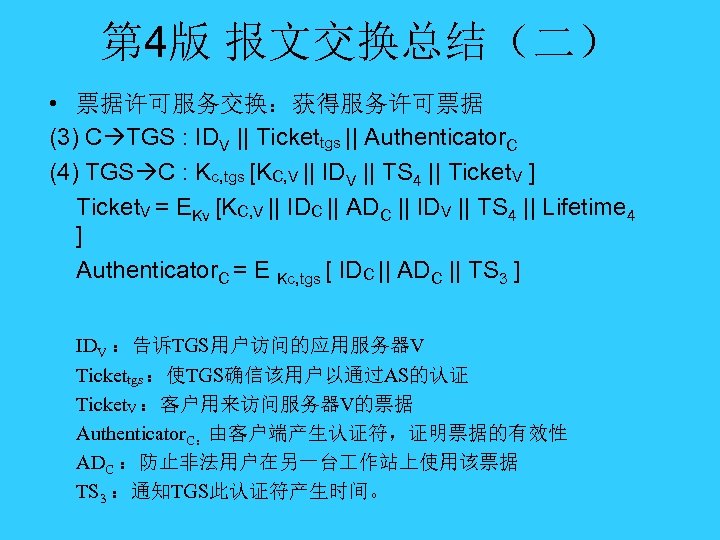 第 4版 报文交换总结(二) • 票据许可服务交换:获得服务许可票据 (3) C TGS : IDV || Tickettgs || Authenticator. C (4) TGS C : Kc, tgs [KC, V || IDV || TS 4 || Ticket. V ] Ticket. V = EKv [KC, V || IDC || ADC || IDV || TS 4 || Lifetime 4 ] Authenticator. C = E Kc, tgs [ IDC || ADC || TS 3 ] IDV :告诉TGS用户访问的应用服务器V Tickettgs :使TGS确信该用户以通过AS的认证 Ticket. V :客户用来访问服务器V的票据 Authenticator. C:由客户端产生认证符,证明票据的有效性 ADC :防止非法用户在另一台 作站上使用该票据 TS 3 :通知TGS此认证符产生时间。
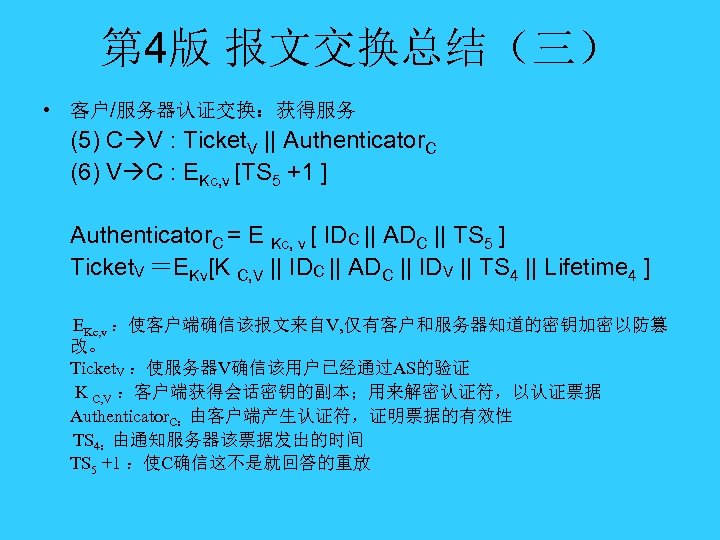 第 4版 报文交换总结(三) • 客户/服务器认证交换:获得服务 (5) C V : Ticket. V || Authenticator. C (6) V C : EKc, v [TS 5 +1 ] Authenticator. C = E Kc, v [ IDC || ADC || TS 5 ] Ticket. V =EKv[K C, V || IDC || ADC || IDV || TS 4 || Lifetime 4 ] EKc, v :使客户端确信该报文来自V, 仅有客户和服务器知道的密钥加密以防篡 改。 Ticket. V :使服务器V确信该用户已经通过AS的验证 K C, V :客户端获得会话密钥的副本;用来解密认证符,以认证票据 Authenticator. C:由客户端产生认证符,证明票据的有效性 TS 4:由通知服务器该票据发出的时间 TS 5 +1 :使C确信这不是就回答的重放
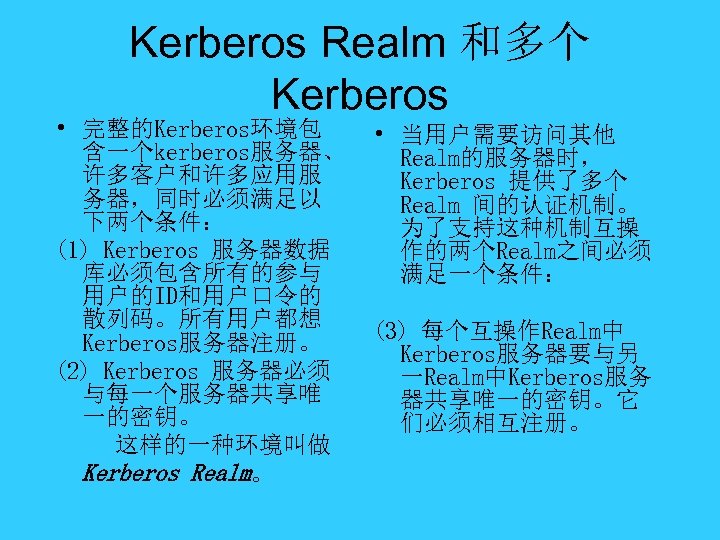 Kerberos Realm 和多个 Kerberos • 完整的Kerberos环境包 含一个kerberos服务器、 许多客户和许多应用服 务器,同时必须满足以 下两个条件: (1) Kerberos 服务器数据 库必须包含所有的参与 用户的ID和用户口令的 散列码。所有用户都想 Kerberos服务器注册。 (2) Kerberos 服务器必须 与每一个服务器共享唯 一的密钥。 这样的一种环境叫做 Kerberos Realm。 • 当用户需要访问其他 Realm的服务器时, Kerberos 提供了多个 Realm 间的认证机制。 为了支持这种机制互操 作的两个Realm之间必须 满足一个条件: (3) 每个互操作Realm中 Kerberos服务器要与另 一Realm中Kerberos服务 器共享唯一的密钥。它 们必须相互注册。
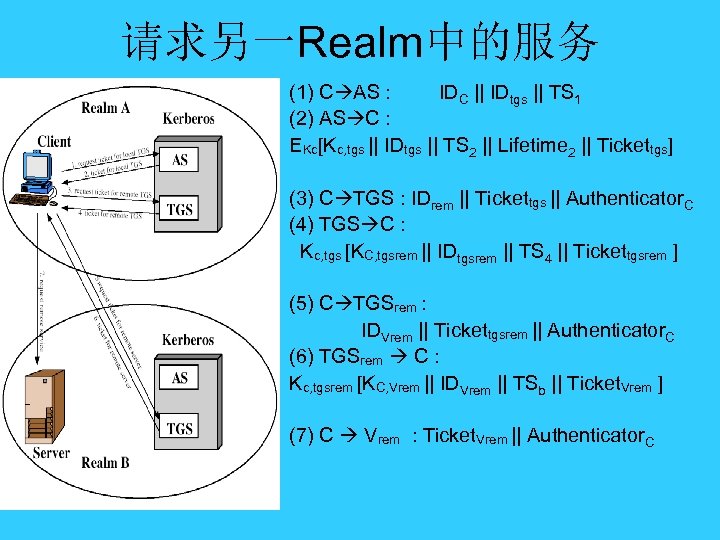 请求另一Realm中的服务 (1) C AS : IDC || IDtgs || TS 1 (2) AS C : EKc[Kc, tgs || IDtgs || TS 2 || Lifetime 2 || Tickettgs] (3) C TGS : IDrem || Tickettgs || Authenticator. C (4) TGS C : Kc, tgs [KC, tgsrem || IDtgsrem || TS 4 || Tickettgsrem ] (5) C TGSrem : IDVrem || Tickettgsrem || Authenticator. C (6) TGSrem C : Kc, tgsrem [KC, Vrem || IDVrem || TSb || Ticket. Vrem ] (7) C Vrem : Ticket. Vrem || Authenticator. C
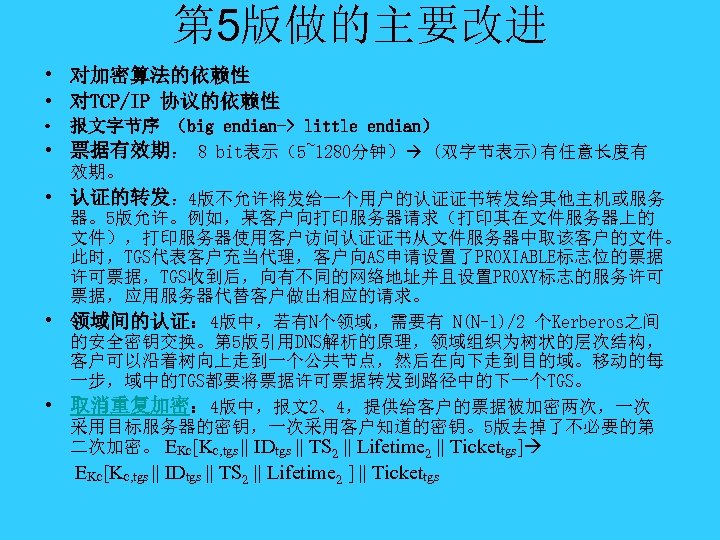 第 5版做的主要改进 • 对加密算法的依赖性 • 对TCP/IP 协议的依赖性 • 报文字节序 (big endian-> little endian) • 票据有效期: 8 bit表示(5~1280分钟) (双字节表示)有任意长度有 效期。 • 认证的转发: 4版不允许将发给一个用户的认证证书转发给其他主机或服务 器。5版允许。例如,某客户向打印服务器请求(打印其在文件服务器上的 文件),打印服务器使用客户访问认证证书从文件服务器中取该客户的文件。 此时,TGS代表客户充当代理,客户向AS申请设置了PROXIABLE标志位的票据 许可票据,TGS收到后,向有不同的网络地址并且设置PROXY标志的服务许可 票据,应用服务器代替客户做出相应的请求。 • 领域间的认证: 4版中,若有N个领域,需要有 N(N-1)/2 个Kerberos之间 的安全密钥交换。第 5版引用DNS解析的原理,领域组织为树状的层次结构, 客户可以沿着树向上走到一个公共节点,然后在向下走到目的域。移动的每 一步,域中的TGS都要将票据许可票据转发到路径中的下一个TGS。 • 取消重复加密: 4版中,报文2、4,提供给客户的票据被加密两次,一次 采用目标服务器的密钥,一次采用客户知道的密钥。5版去掉了不必要的第 二次加密。 EKc[Kc, tgs || IDtgs || TS 2 || Lifetime 2 || Tickettgs] EKc[Kc, tgs || IDtgs || TS 2 || Lifetime 2 ] || Tickettgs
 功能特性分析 • 可信的第三方Kerberos服务器 –所需的密钥分配和管理变简单 –AS负担认证 作,减轻应用服务器负担 –安全相关数据集中管理和保护,使攻击者入侵难以 成功 • Ticket –使AS(TGS)的认证结果和会话密钥安全传给C和TGS (应用服务器) –生存期内可重用,减少认证开销,提高方便性 • 共享密钥 –为认证提供安全依据
 功能特性分析 • TGS –降低用户口令的使用频度,提供更好的口令保 护 –减轻AS负担,提高系统效率 • Session Key –防止非法用户窃得Ticket进行重放攻击 –提供了对服务器得认证 • 时间戳 –防止对Ticket和认证符的重放攻击
 局限性分析 • Kerberos服务器易受攻击 –它的安全性决定了整个系统得安全性,若此关键环节 发生问题,危害是灾难性的。 • 口令攻击 –对手截获基于口令的密钥加密的内容,采用暴力破解 成功后,得到口令也就到该用户的全部资源 • 域间认证复杂
 资源 • 掌握Kerberos概念的简单方法请参考: http: //web. mit. edu/kerberos/www/dialogue. html • MIT Kerberos 站点 http: //web. mit. edu/kerberos/ • USC/ISI Kerberos 站点 http: //www. isi. edu/gost/info/kerberos/
 X. 509 Authentication Service • part of CCITT X. 500 directory service standards – distributed servers maintaining some info database • defines framework for authentication services – directory may store public-key certificates – with public key of user – signed by certification authority • also defines authentication protocols • uses public-key crypto & digital signatures – algorithms not standardised, but RSA recommended • X. 509 certificates are widely used
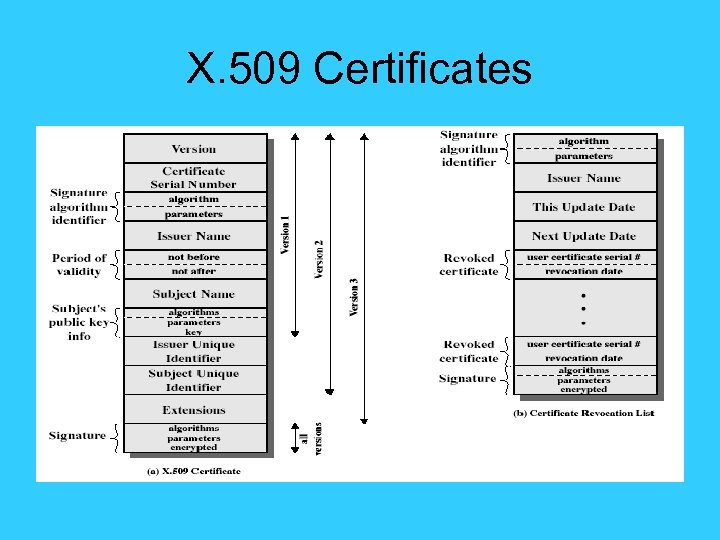
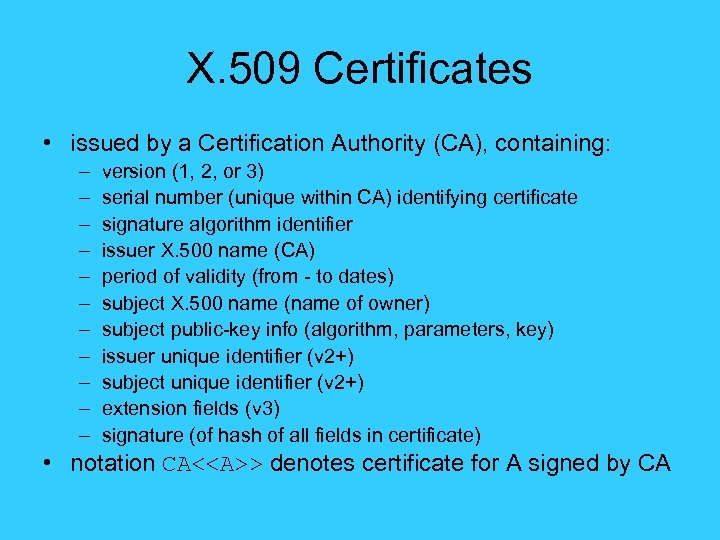 X. 509 Certificates • issued by a Certification Authority (CA), containing: – – – version (1, 2, or 3) serial number (unique within CA) identifying certificate signature algorithm identifier issuer X. 500 name (CA) period of validity (from - to dates) subject X. 500 name (name of owner) subject public-key info (algorithm, parameters, key) issuer unique identifier (v 2+) subject unique identifier (v 2+) extension fields (v 3) signature (of hash of all fields in certificate) • notation CA<> denotes certificate for A signed by CA
 X. 509 Certificates
 Obtaining a Certificate • any user with access to CA can get any certificate from it • only the CA can modify a certificate • because cannot be forged, certificates can be placed in a public directory
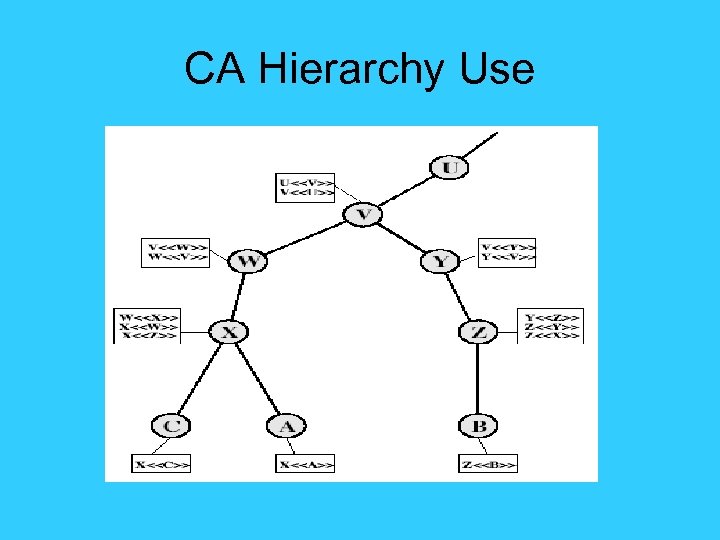
 CA Hierarchy • if both users share a common CA then they are assumed to know its public key • otherwise CA's must form a hierarchy • use certificates linking members of hierarchy to validate other CA's – each CA has certificates for clients (forward) and parent (backward) • each client trusts parents certificates • enable verification of any certificate from one CA by users of all other CAs in hierarchy
 CA Hierarchy Use
 Certificate Revocation • • certificates have a period of validity may need to revoke before expiry, eg: 1. user's private key is compromised 2. user is no longer certified by this CA 3. CA's certificate is compromised • CA’s maintain list of revoked certificates – the Certificate Revocation List (CRL) • users should check certs with CA’s CRL
 Authentication Procedures • X. 509 includes three alternative authentication procedures: • One-Way Authentication • Two-Way Authentication • Three-Way Authentication • all use public-key signatures
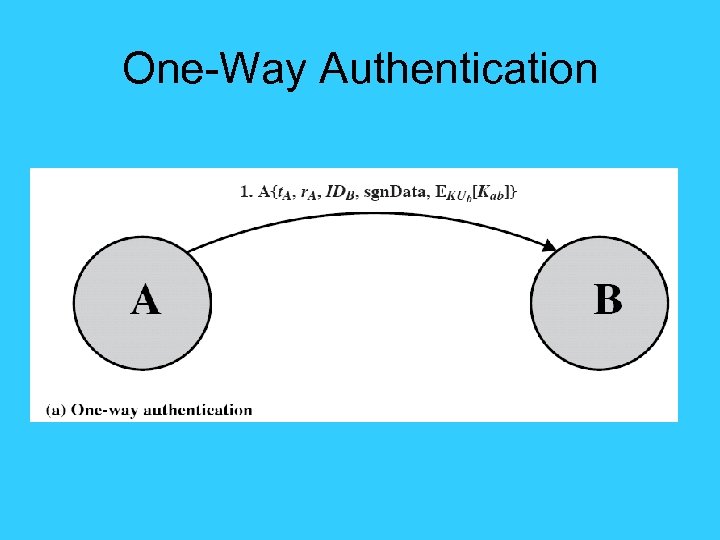
 One-Way Authentication • 1 message ( A->B) used to establish – the identity of A and that message is from A – message was intended for B – integrity & originality of message • message must include timestamp, nonce, B's identity and is signed by A
 One-Way Authentication
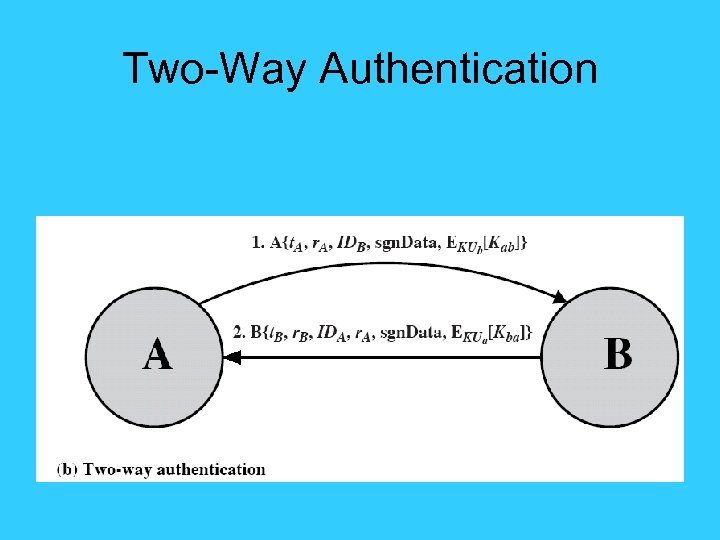
 Two-Way Authentication • 2 messages (A->B, B->A) which also establishes in addition: – the identity of B and that reply is from B – that reply is intended for A – integrity & originality of reply • reply includes original nonce from A, also timestamp and nonce from B
 Two-Way Authentication
 Three-Way Authentication • 3 messages (A->B, B->A, A->B) which enables above authentication without synchronized clocks • has reply from A back to B containing signed copy of nonce from B • means that timestamps need not be checked or relied upon
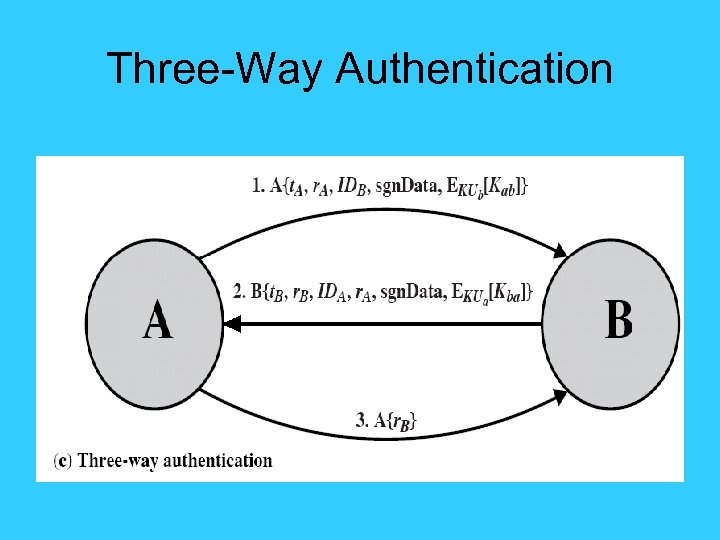 Three-Way Authentication
 X. 509 Version 3 • has been recognised that additional information is needed in a certificate – email/URL, policy details, usage constraints • rather than explicitly naming new fields defined a general extension method • extensions consist of: – extension identifier – criticality indicator – extension value
 Certificate Extensions • key and policy information – convey info about subject & issuer keys, plus indicators of certificate policy • certificate subject and issuer attributes – support alternative names, in alternative formats for certificate subject and/or issuer • certificate path constraints – allow constraints on use of certificates by other CA’s
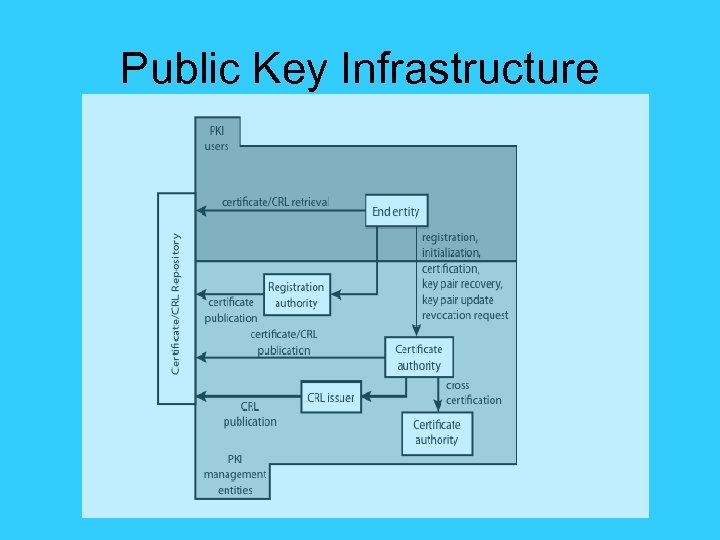 Public Key Infrastructure
 Summary • have considered: – Kerberos trusted key server system – X. 509 authentication and certificates