


 Скачать презентацию Computer Science Department Technion-Israel Institute of Technology Introduction
c351883a0bd518cac705ed681f6a0142.ppt
- Количество слайдов: 25
 Computer Science Department Technion-Israel Institute of Technology Introduction to Differential Geometry Ron Kimmel www. cs. technion. ac. il/~ron Geometric Image Processing Lab
![Planar Curves q C(p)={x(p), y(p)}, C(0. 1) p [0, 1] C(0. 2) C(0. 7)](https://present5.com/presentation/c351883a0bd518cac705ed681f6a0142/image-2.jpg "Planar Curves q C(p)={x(p), y(p)}, C(0. 1) p [0, 1] C(0. 2) C(0. 7)") Planar Curves q C(p)={x(p), y(p)}, C(0. 1) p [0, 1] C(0. 2) C(0. 7) C(0) y C(0. 4) C(0. 95) C(0. 8) C(0. 9) x C p =tangent
Planar Curves q C(p)={x(p), y(p)}, C(0. 1) p [0, 1] C(0. 2) C(0. 7) C(0) y C(0. 4) C(0. 95) C(0. 8) C(0. 9) x C p =tangent
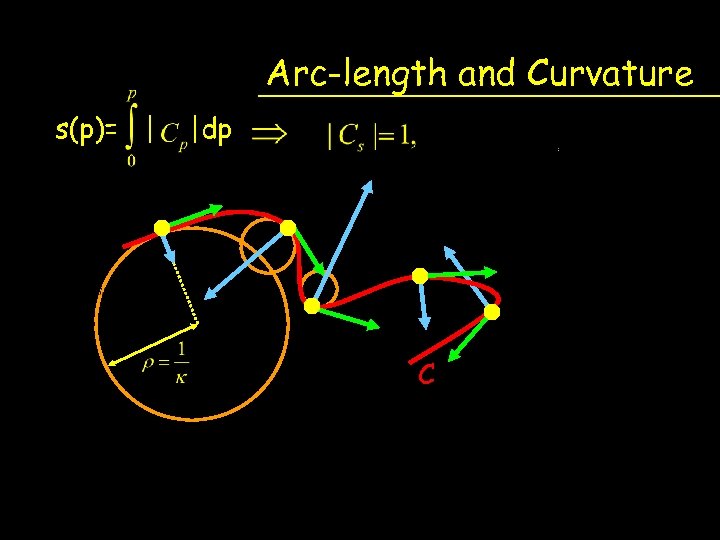 Arc-length and Curvature s(p)= | |dp C
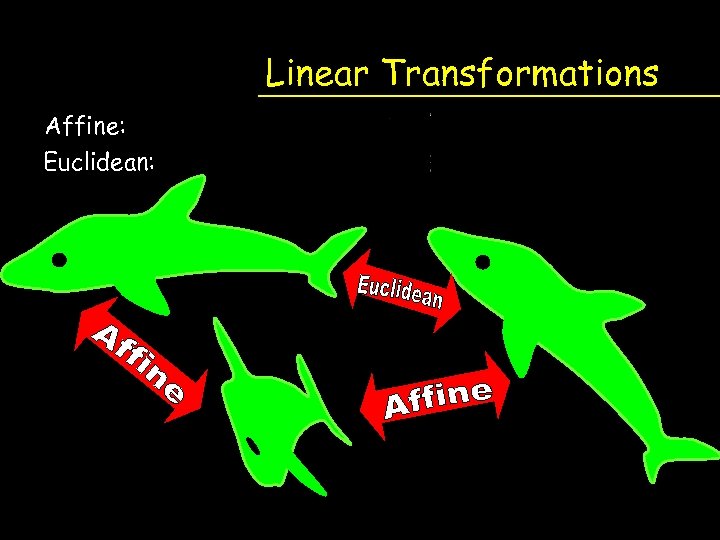 Linear Transformations Affine: Euclidean:
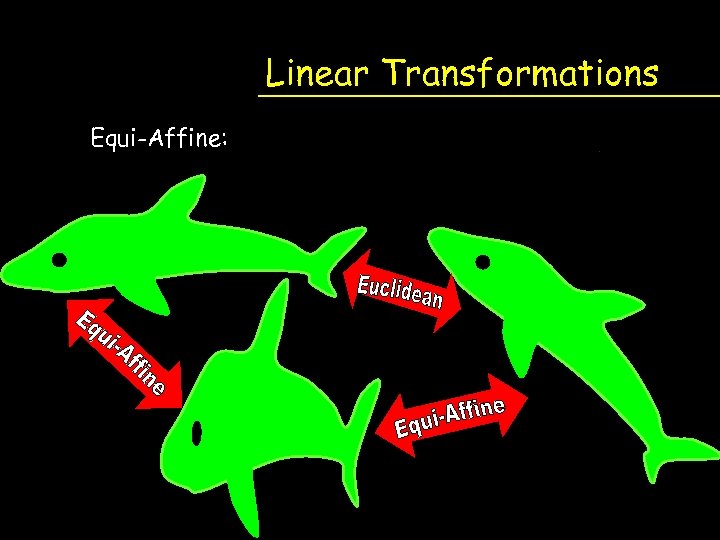 Linear Transformations Equi-Affine:
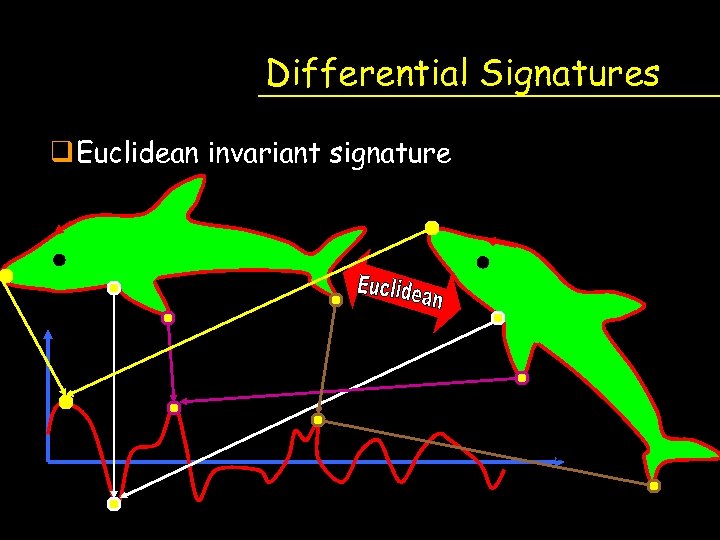 Differential Signatures q Euclidean invariant signature
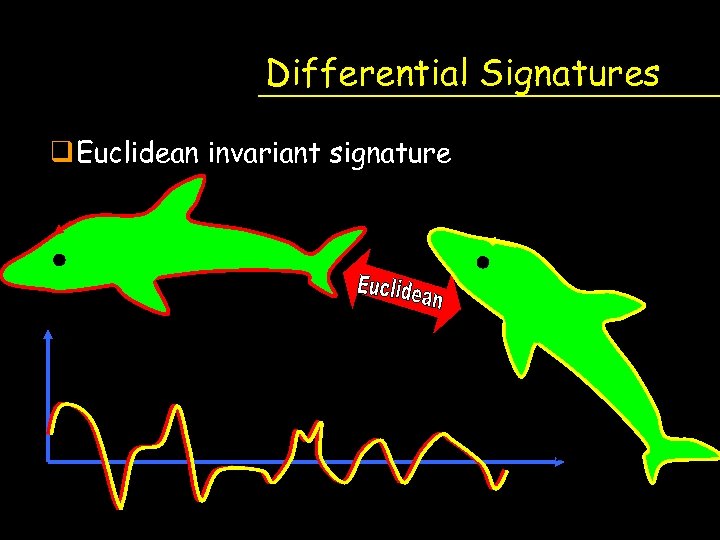 Differential Signatures q Euclidean invariant signature
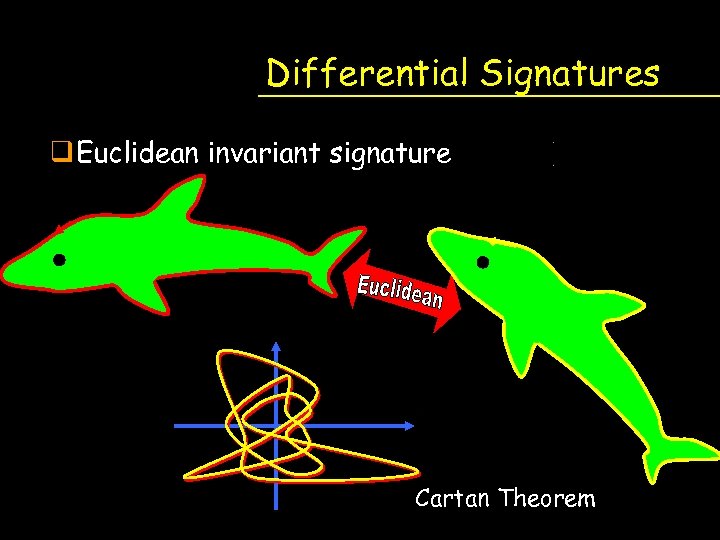 Differential Signatures q Euclidean invariant signature Cartan Theorem
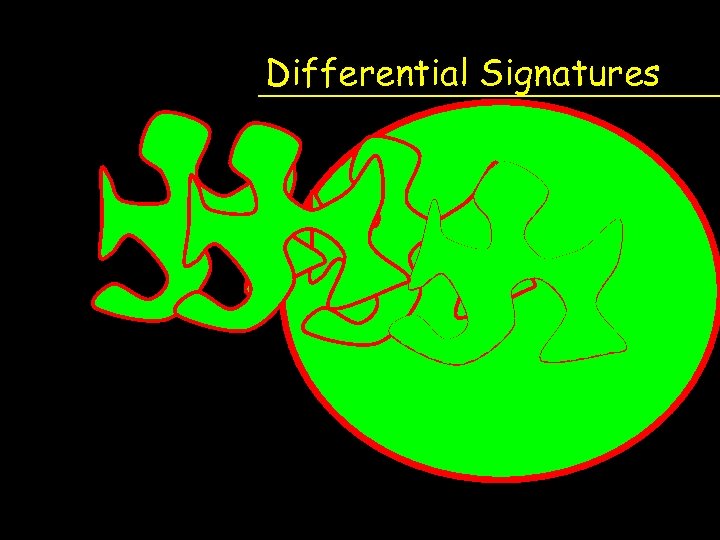 Differential Signatures
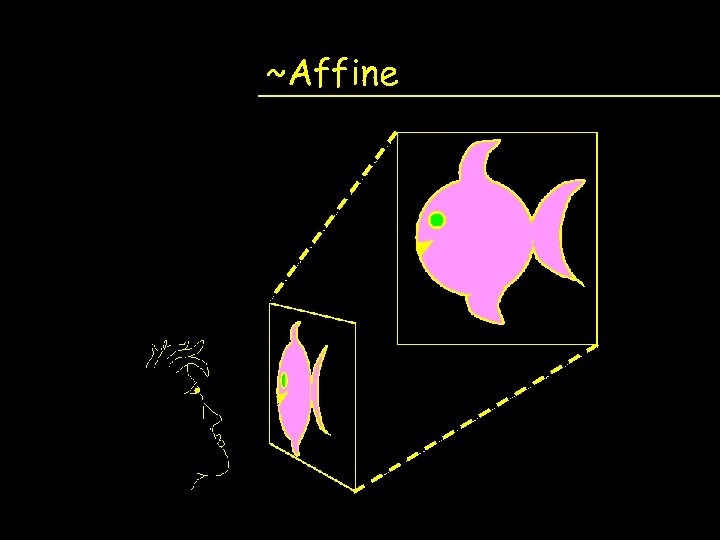 ~Affine
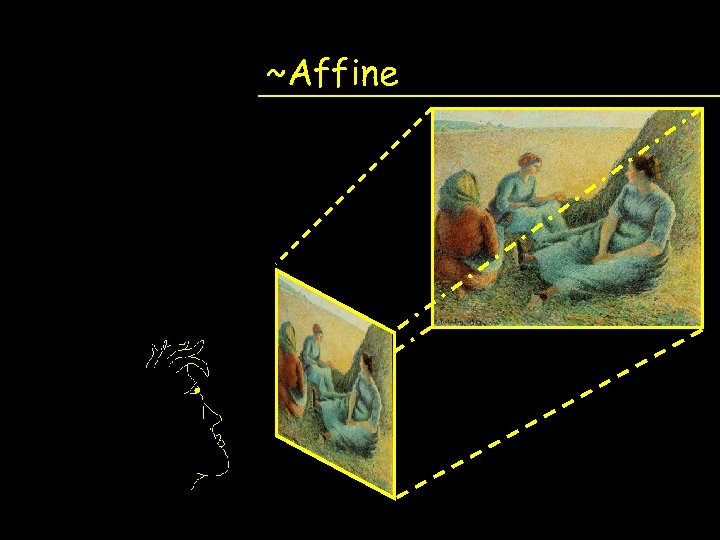 ~Affine
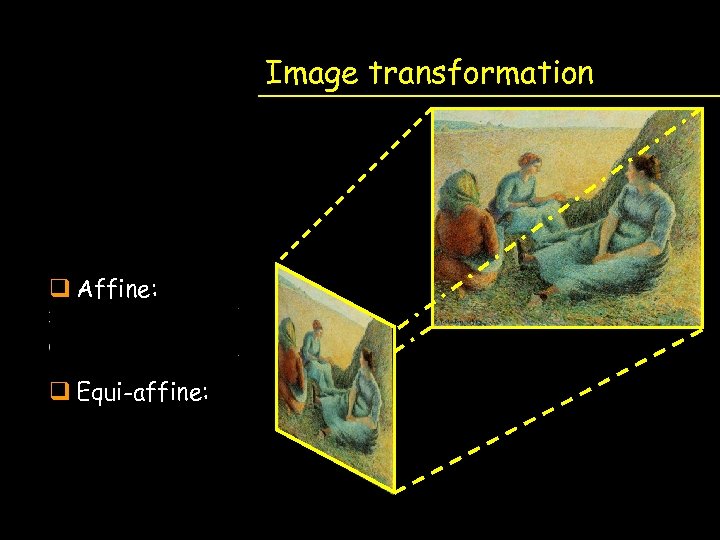 Image transformation q Affine: q Equi-affine:
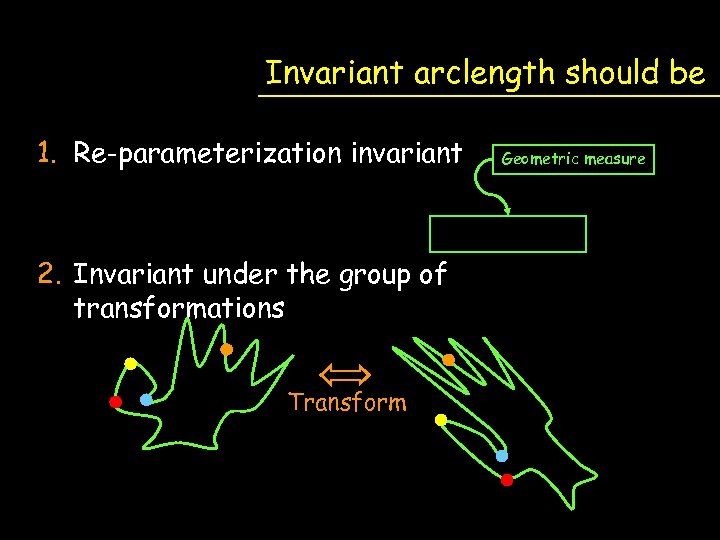 Invariant arclength should be 1. Re-parameterization invariant 2. Invariant under the group of transformations Transform Geometric measure
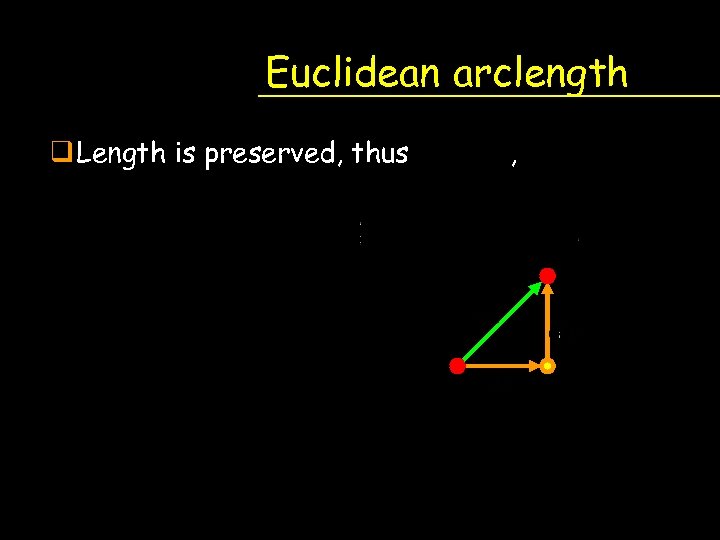 Euclidean arclength q Length is preserved, thus ,
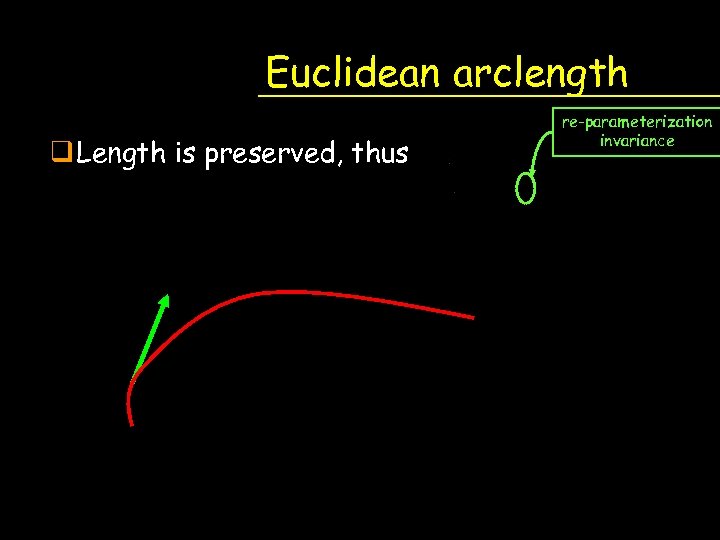 Euclidean arclength q Length is preserved, thus re-parameterization invariance
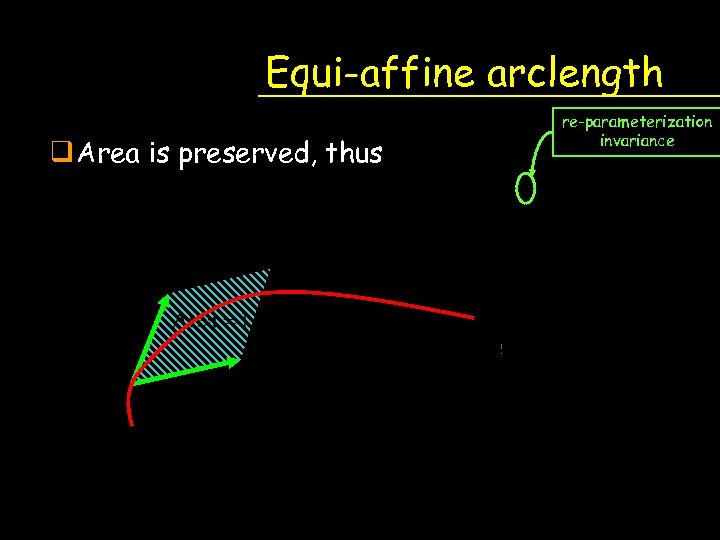 Equi-affine arclength q Area is preserved, thus re-parameterization invariance
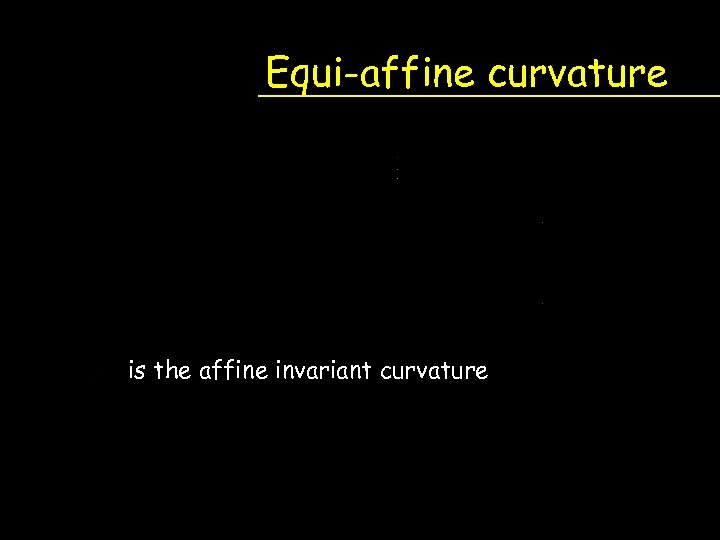 Equi-affine curvature is the affine invariant curvature
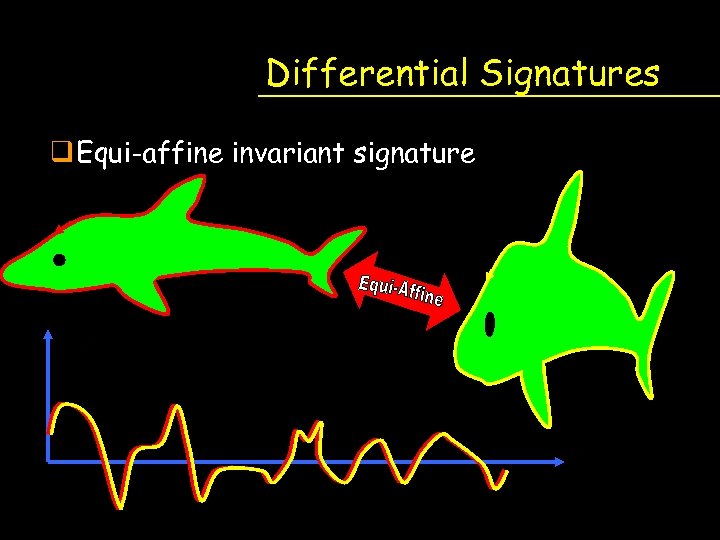 Differential Signatures q Equi-affine invariant signature
 From curves to surfaces q Its all about invariant measures…
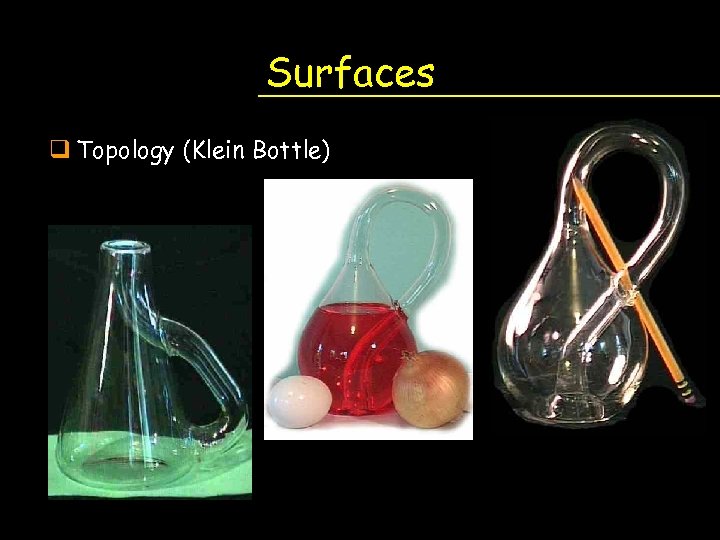 Surfaces q Topology (Klein Bottle)
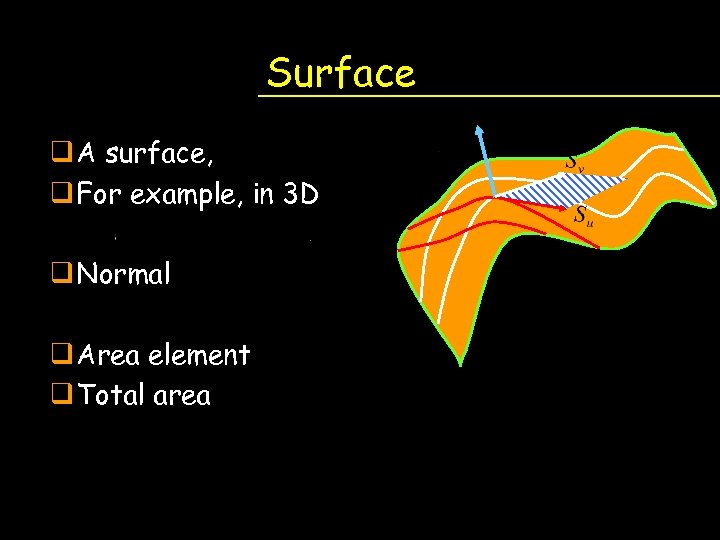 Surface q A surface, q For example, in 3 D q Normal q Area element q Total area
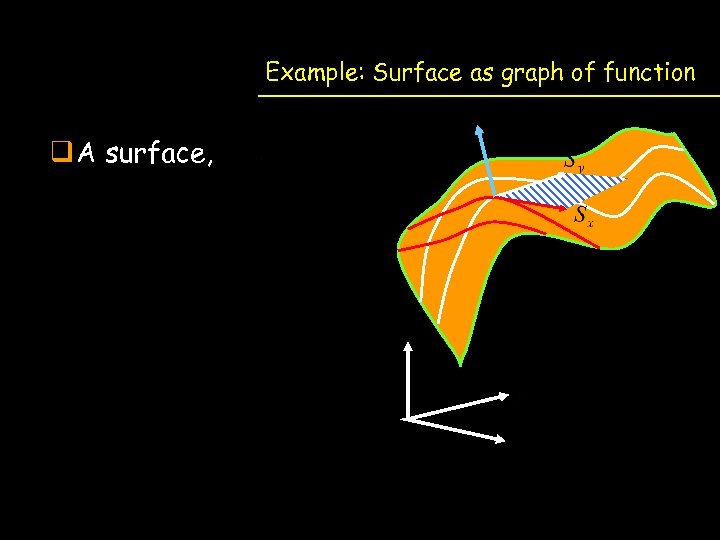 Example: Surface as graph of function q A surface,
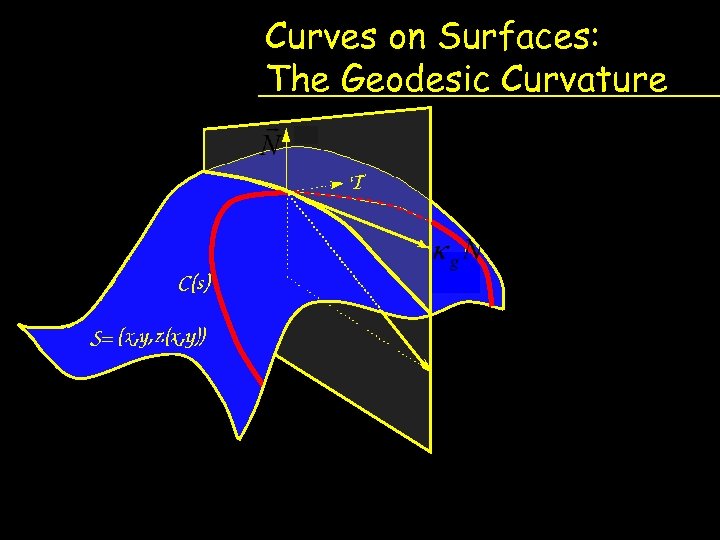 Curves on Surfaces: The Geodesic Curvature
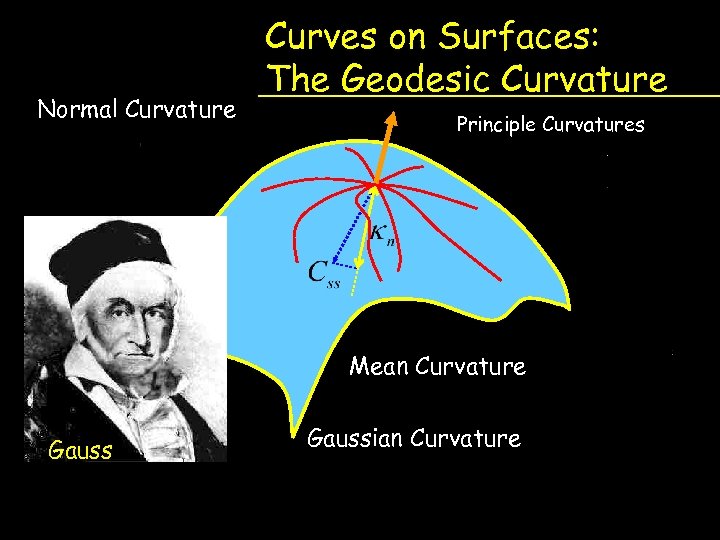 Normal Curvature Curves on Surfaces: The Geodesic Curvature Principle Curvatures Mean Curvature Gaussian Curvature
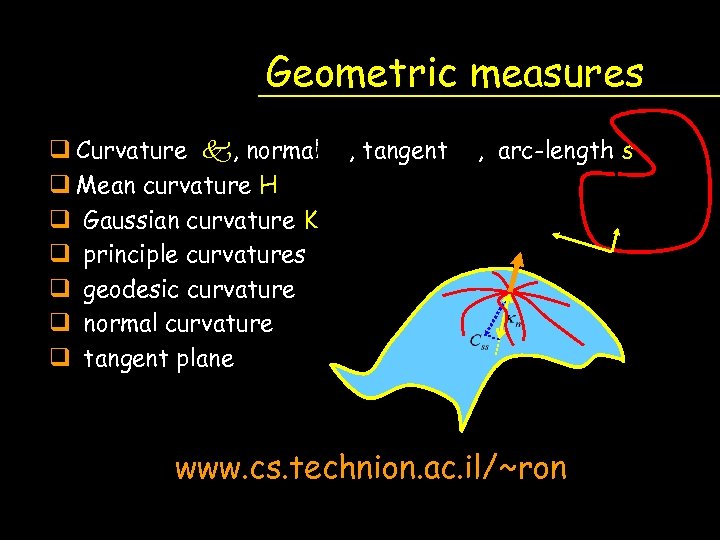 Geometric measures q Curvature k, normal q Mean curvature H q Gaussian curvature K q principle curvatures q geodesic curvature q normal curvature q tangent plane , tangent , arc-length s www. cs. technion. ac. il/~ron