


 Скачать презентацию Computer-Aided Surgery The emergence of medical CAD CAM Dr
2b6f9823752772cf20421b477e79f565.ppt
- Количество слайдов: 47
 Computer-Aided Surgery The emergence of medical CAD/CAM Dr. Leo Joskowicz School of Computer Science and Engineering The Hebrew University of Jerusalem Invited lecture, Tel-Aviv University, 23. 3. 2000 Leo Joskowicz© 2000 1
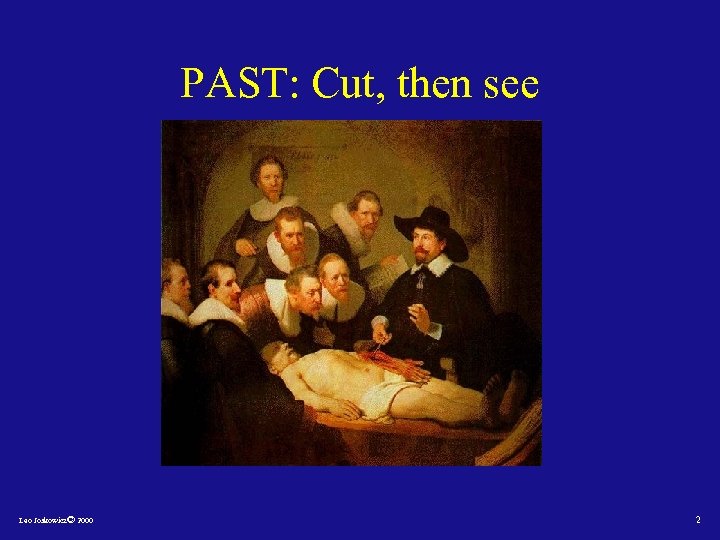 PAST: Cut, then see Leo Joskowicz© 2000 2
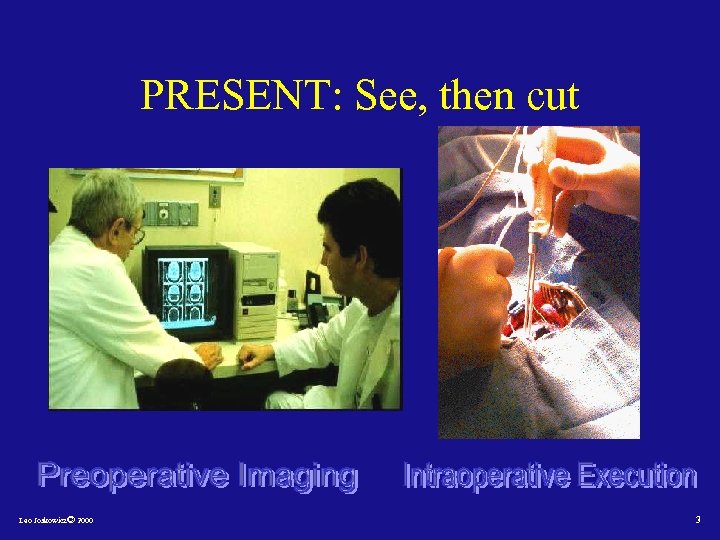 PRESENT: See, then cut Leo Joskowicz© 2000 3
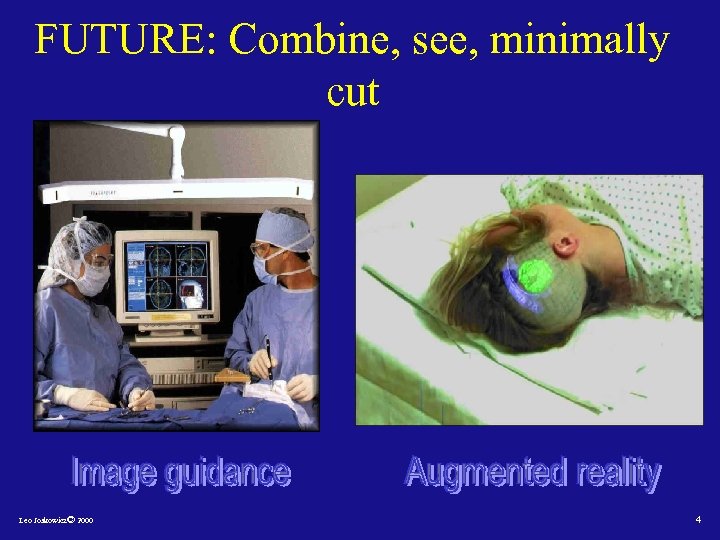 FUTURE: Combine, see, minimally cut Leo Joskowicz© 2000 4
 Computer Aided Surgery (CAS) Computer-based systems to enhance the surgeon’s dexterity, visual feedback, and information integration • Trend towards minimally invasive surgery: – laparoscopy, endoscopy, minimal incisions • Computer plays a key role in: – 3 D visualization, model construction – quantitative integration of information – preoperative planning and intraoperative execution • Medical CAD/CAM -- a paradigm shift! Leo Joskowicz© 2000 5
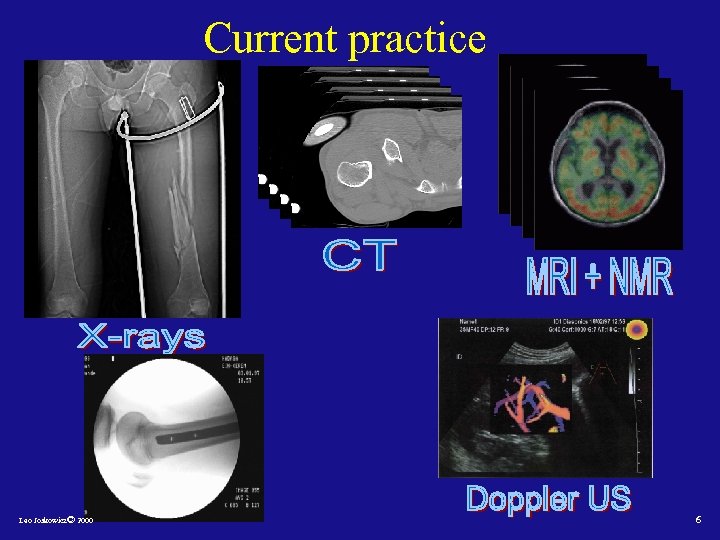 Current practice Leo Joskowicz© 2000 6
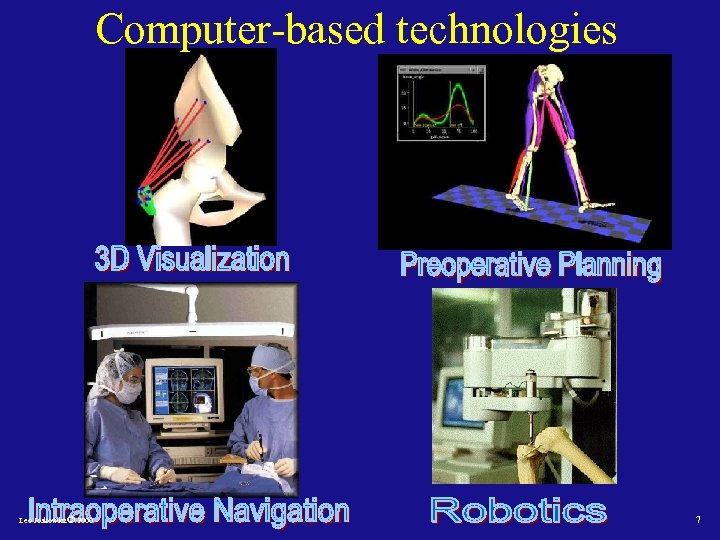 Computer-based technologies Leo Joskowicz© 2000 7
 Talk outline • Elements of CAS systems • Three examples of CAS systems: 1. Navigation: FRACAS 2. Robotics: ROBODOC 3. Virtual colonoscopy and endoscopy • Conclusion, state of the art, and perspectives Leo Joskowicz© 2000 8
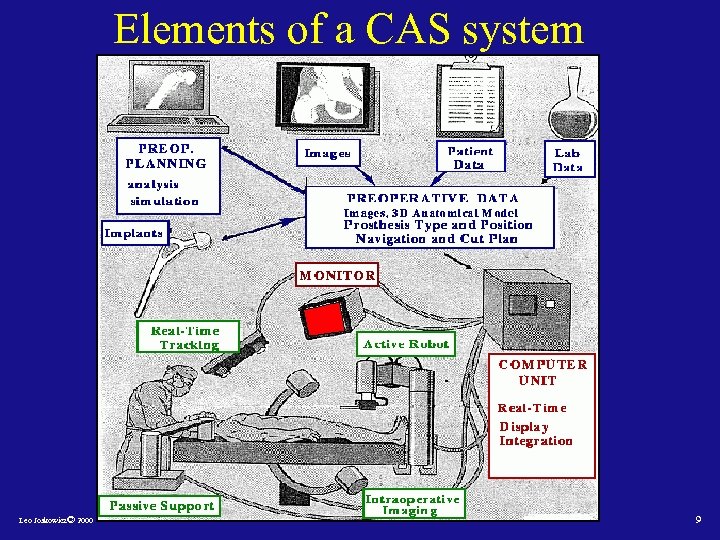 Elements of a CAS system Leo Joskowicz© 2000 9
 Medical CAD/CAM: a new paradigm (R. H. Taylor) • CAD/CAM has revolutionized the way consumer goods are designed and produced. • The key: 3 D visualization, simulation, design tools, precise CNC and robotic execution, and most importantly INTEGRATION • By analogy, apply paradigm to medicine: design is preoperative planning, production is intraoperative execution, postoperative evaluation is quality assurance Leo Joskowicz© 2000 10
 Medical CAD/CAM • Differences: individualized data, custom planning and execution, safety • Medical CAD/CAM will change the ways in which are some conditions are diagnosed and treated • New computer-based technologies are more that “just another, fancier tool” because they provide unprecedented integration and potentially higher accuracy and repeatability Leo Joskowicz© 2000 11
 CAS systems: clinical specialties • Neurosurgery: biopsies, tumor removal, epilepsy. • Orthopaedics: total hip and knee replacement trauma. • Laparoscopy and endoscopy: camera holders, simulators. • Craniofacial and maxillofacial surgery: fragment and cut planning, precise positioning • Emerging: radiology, dentristry, ophtalmology. Leo Joskowicz© 2000 12
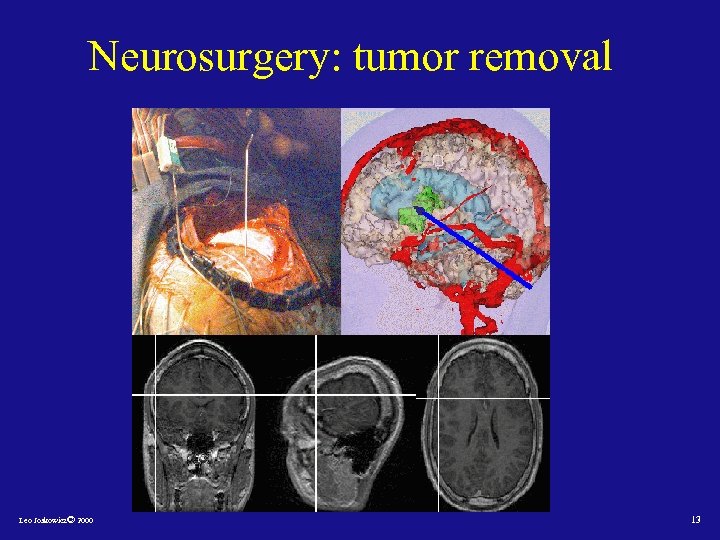 Neurosurgery: tumor removal Leo Joskowicz© 2000 13
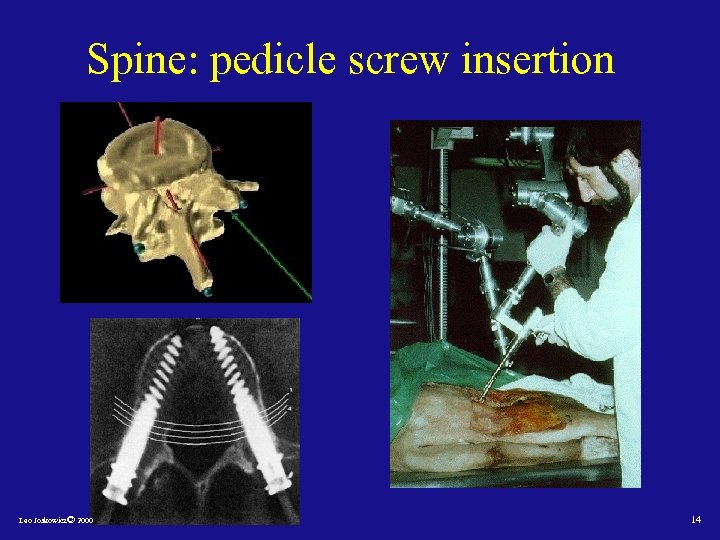 Spine: pedicle screw insertion Leo Joskowicz© 2000 14
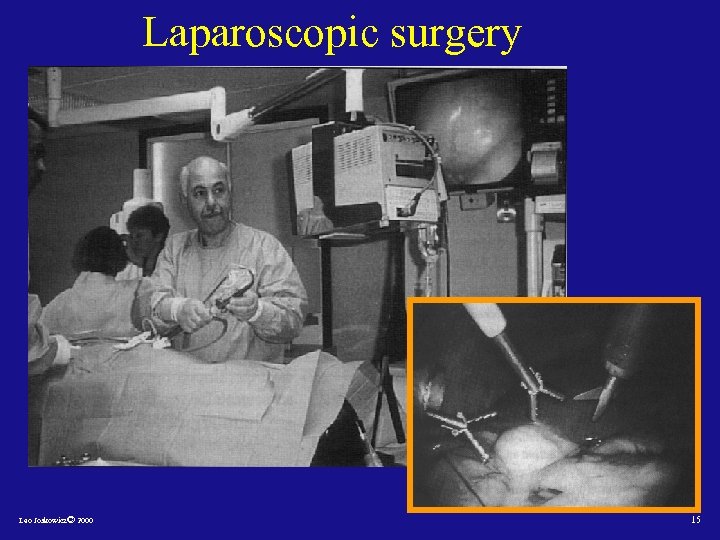 Laparoscopic surgery Leo Joskowicz© 2000 15
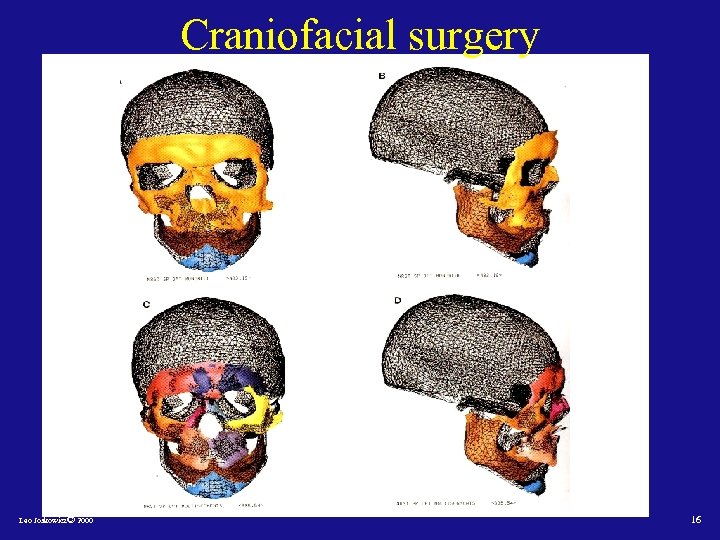 Craniofacial surgery Leo Joskowicz© 2000 16
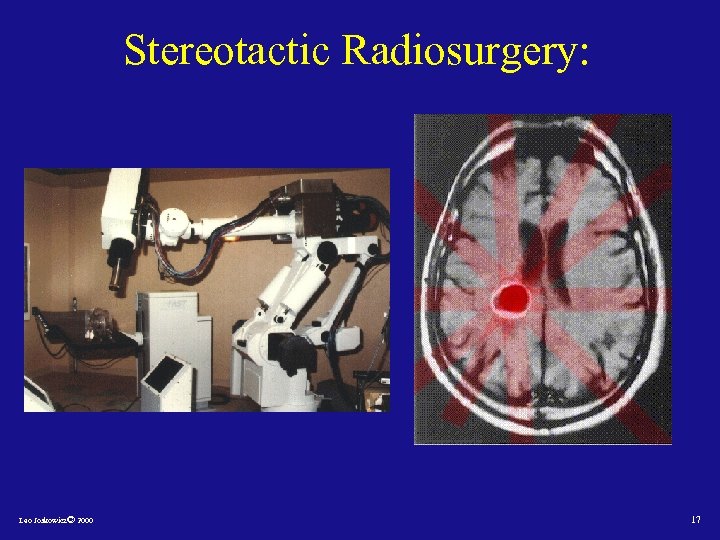 Stereotactic Radiosurgery: Leo Joskowicz© 2000 17
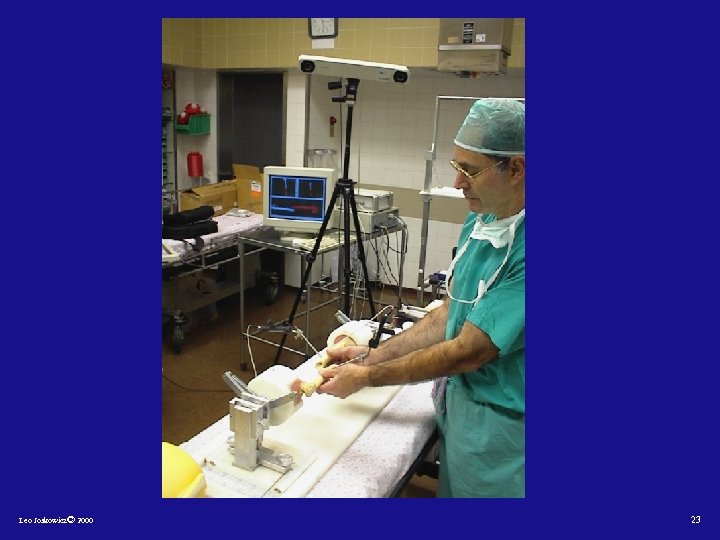
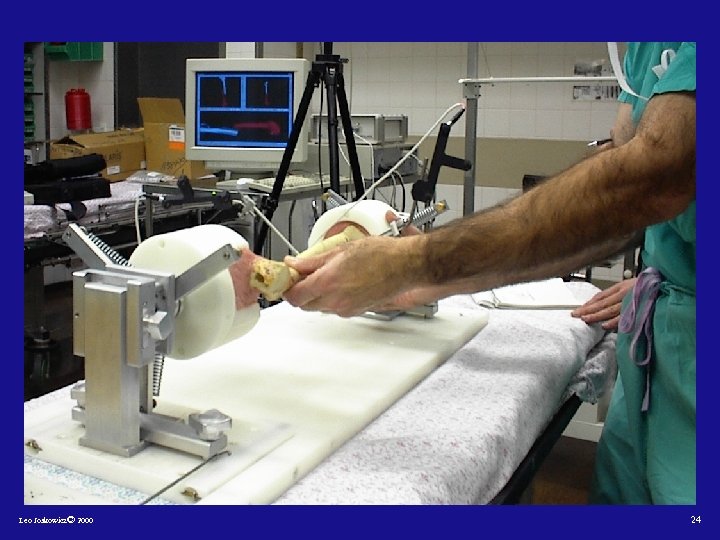
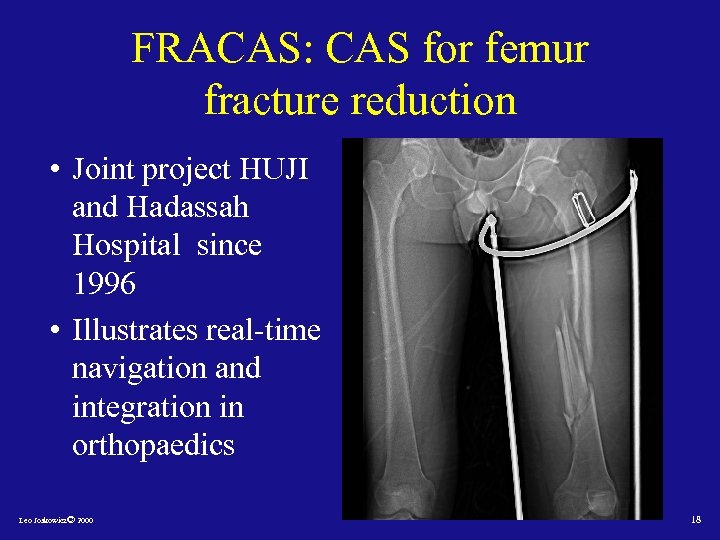 FRACAS: CAS for femur fracture reduction • Joint project HUJI and Hadassah Hospital since 1996 • Illustrates real-time navigation and integration in orthopaedics Leo Joskowicz© 2000 18
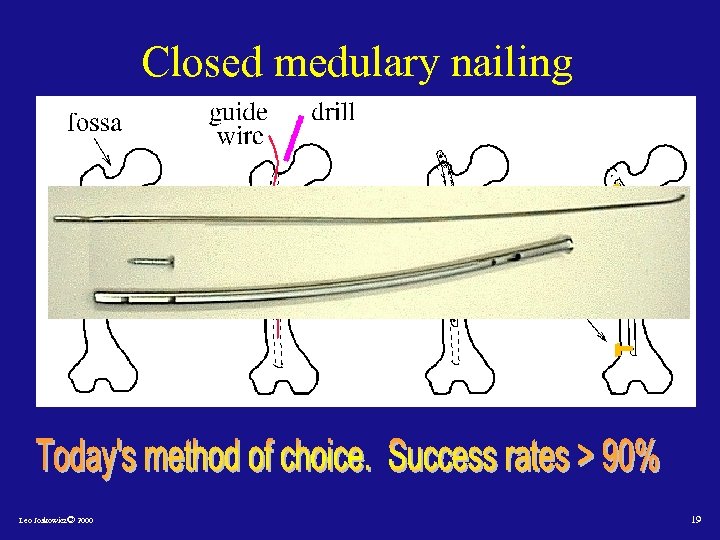 Closed medulary nailing Leo Joskowicz© 2000 19
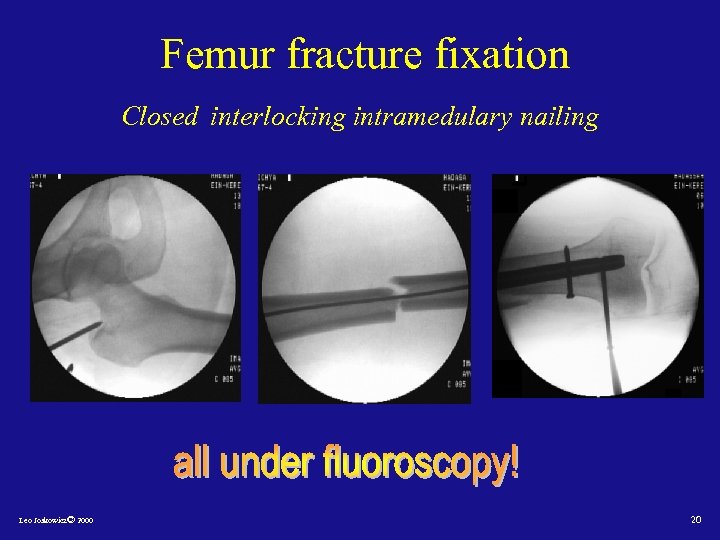 Femur fracture fixation Closed interlocking intramedulary nailing Leo Joskowicz© 2000 20
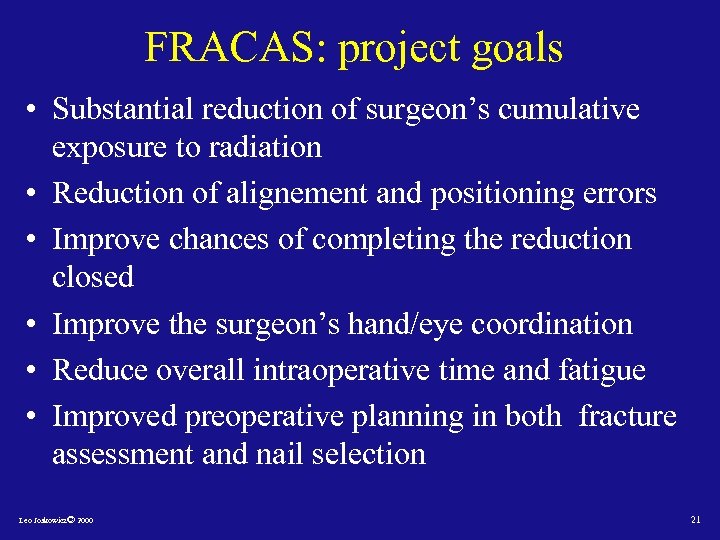 FRACAS: project goals • Substantial reduction of surgeon’s cumulative exposure to radiation • Reduction of alignement and positioning errors • Improve chances of completing the reduction closed • Improve the surgeon’s hand/eye coordination • Reduce overall intraoperative time and fatigue • Improved preoperative planning in both fracture assessment and nail selection Leo Joskowicz© 2000 21
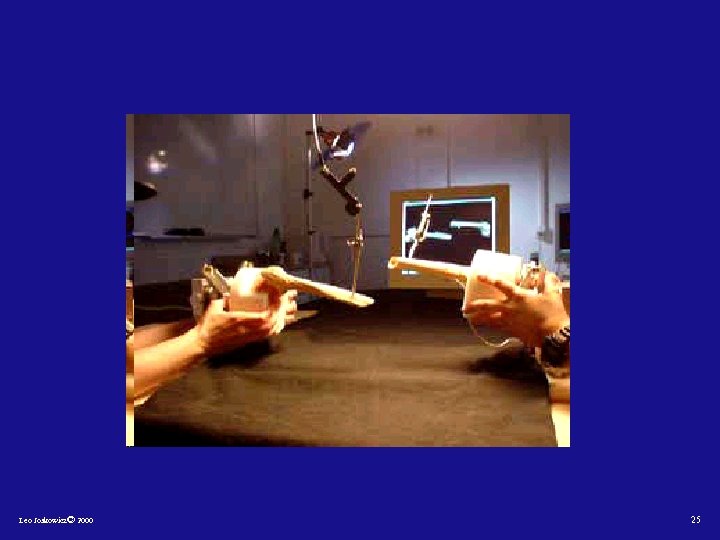
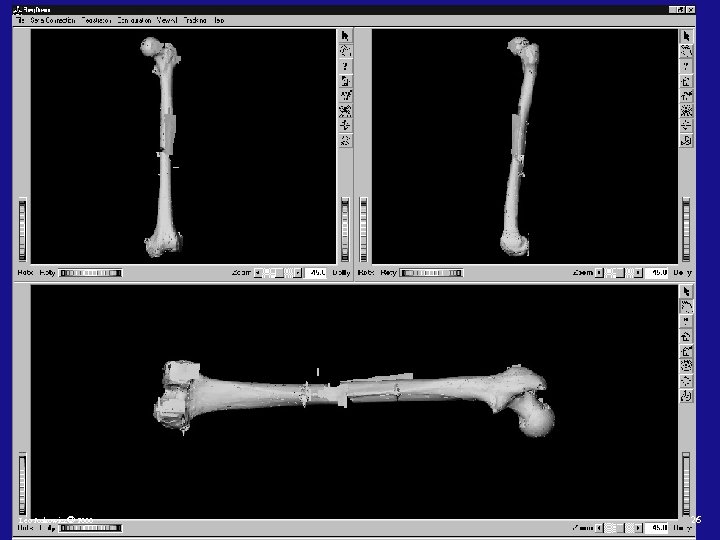
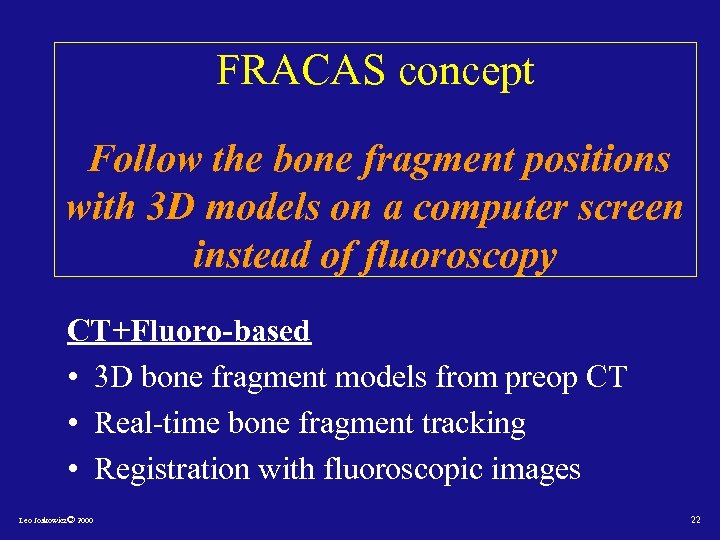 FRACAS concept Follow the bone fragment positions with 3 D models on a computer screen instead of fluoroscopy CT+Fluoro-based • 3 D bone fragment models from preop CT • Real-time bone fragment tracking • Registration with fluoroscopic images Leo Joskowicz© 2000 22
 Leo Joskowicz© 2000 23
 Leo Joskowicz© 2000 24
 Leo Joskowicz© 2000 25
 Leo Joskowicz© 2000 26
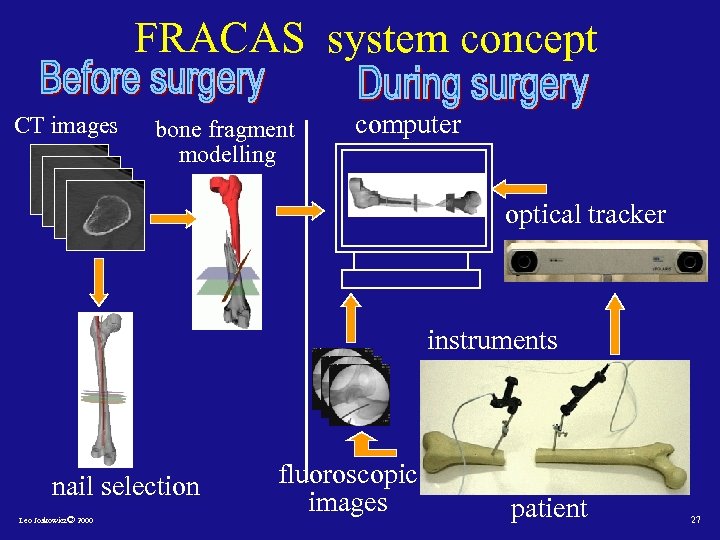 FRACAS system concept CT images bone fragment modelling computer optical tracker instruments nail selection Leo Joskowicz© 2000 fluoroscopic images patient 27
 In-vitro feasibility study Leo Joskowicz© 2000 28
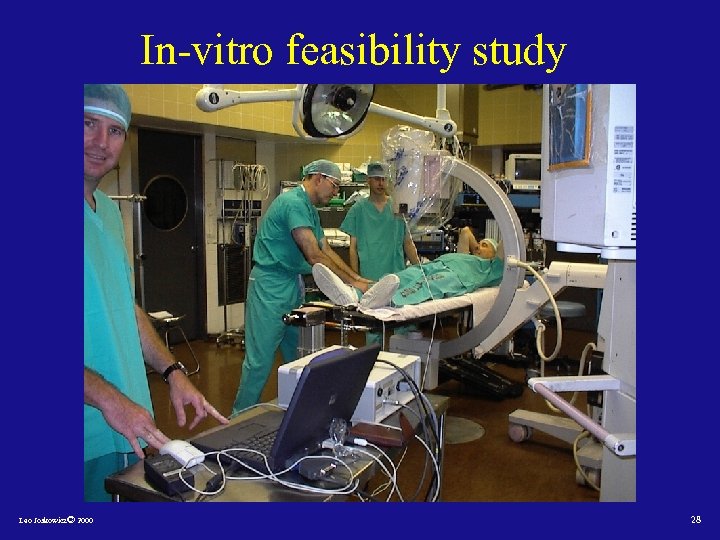
 FRACAS current status • Prototype system integrated with tracker • Fluoroscopic image processing completed: in-vitro tests show submilimetric accuracy • 2 D/3 D registration experiments in progress • In-vitro experimentation with bone holder • Key ideas: entire procedure support, fluoroscopy-based registration Leo Joskowicz© 2000 29
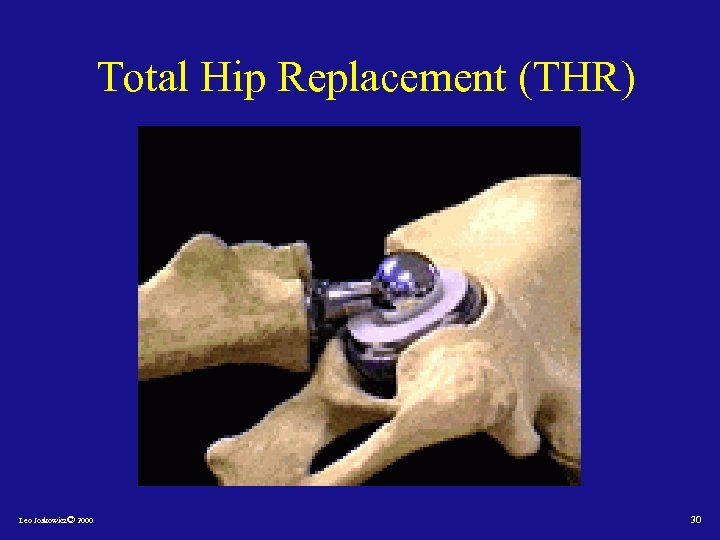 Total Hip Replacement (THR) Leo Joskowicz© 2000 30
 ROBODOC THR • Developed by Integrated Surgical Systems, IBM Research, Johns Hopkins (1986, 1994, 1997) • Precise implant positioning planning and machining of cementless hip implant canal • Reduces complications in canal preparation and implant fixation • Improves positioning and surface finish • Preoperative planning • Robotic intraoperative execution Leo Joskowicz© 2000 31
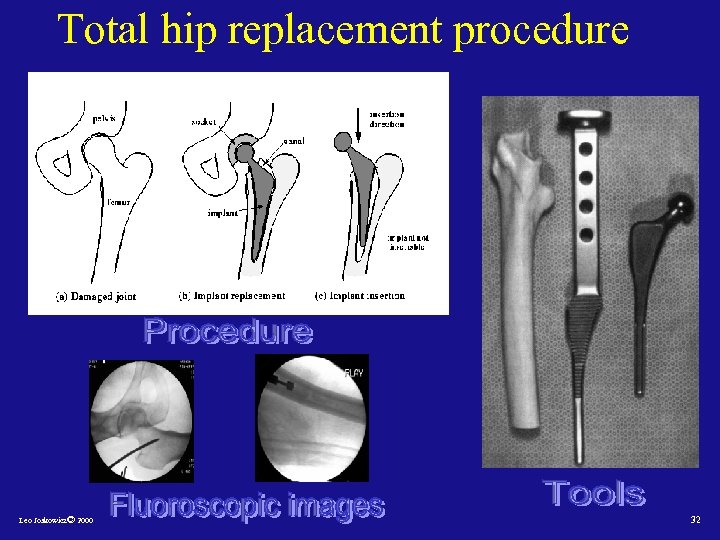 Total hip replacement procedure Leo Joskowicz© 2000 32
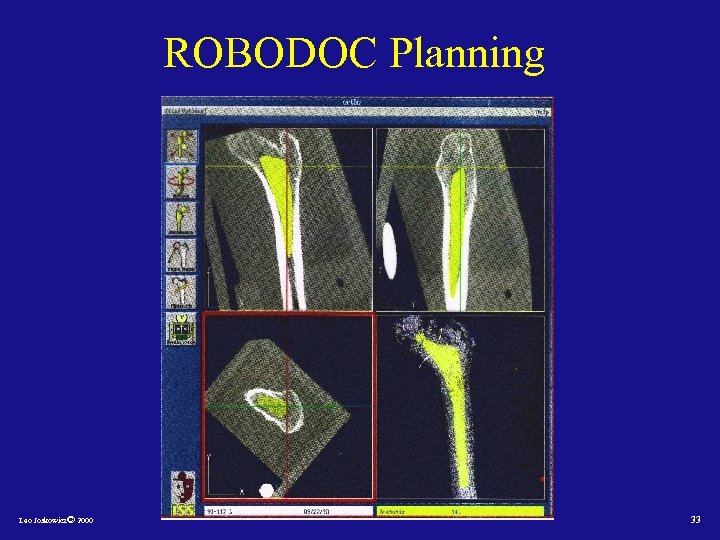 ROBODOC Planning Leo Joskowicz© 2000 33
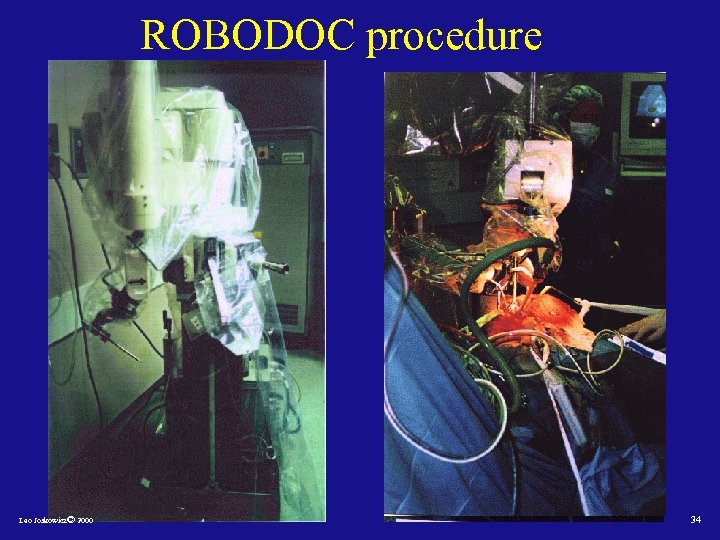 ROBODOC procedure Leo Joskowicz© 2000 34
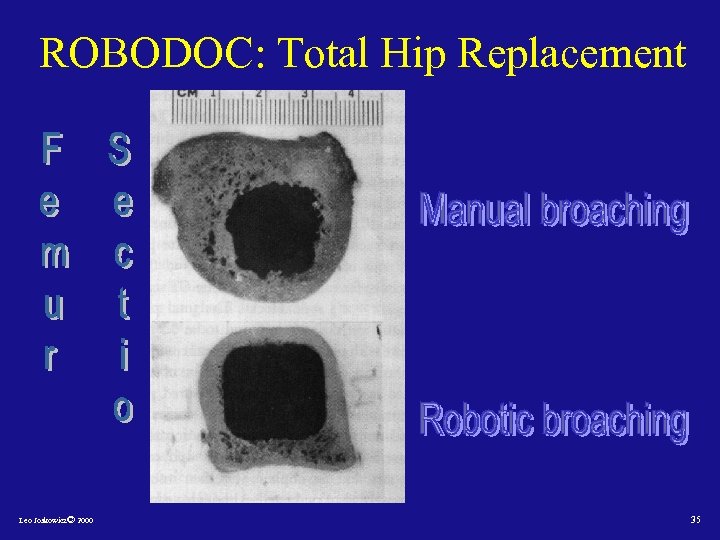 ROBODOC: Total Hip Replacement Leo Joskowicz© 2000 35
 ROBODOC THR: current status • Over 4, 000 surgeries in 20 centers since 1994 • Very satisfactory short and mid-term results • Recent work on Revision THR – Interactive cement cut volume definition – Pin-based registration, work on fluoroscopic registration Leo Joskowicz© 2000 36
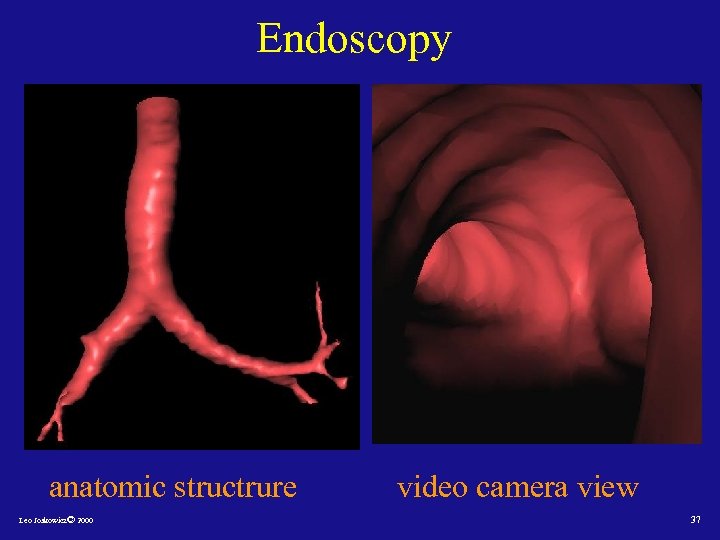 Endoscopy anatomic structrure Leo Joskowicz© 2000 video camera view 37
 Virtual endoscopy • Purposes: – training simulator for surgeons – diagnosis of polypes and other tumors without actually inserting a video camera • Method: build a “fly-though” of the anatomy from CT and MRI data so that the surgeon can examine the anatomy or move the camera • Projects: Stony Brook, USA, Karlhuse, Germany Leo Joskowicz© 2000 38
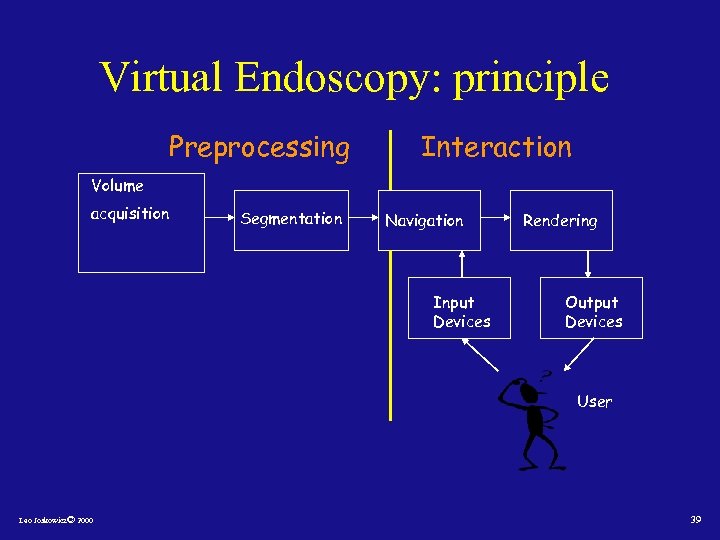 Virtual Endoscopy: principle Preprocessing Interaction Volume acquisition Segmentation Navigation Input Devices Rendering Output Devices User Leo Joskowicz© 2000 39
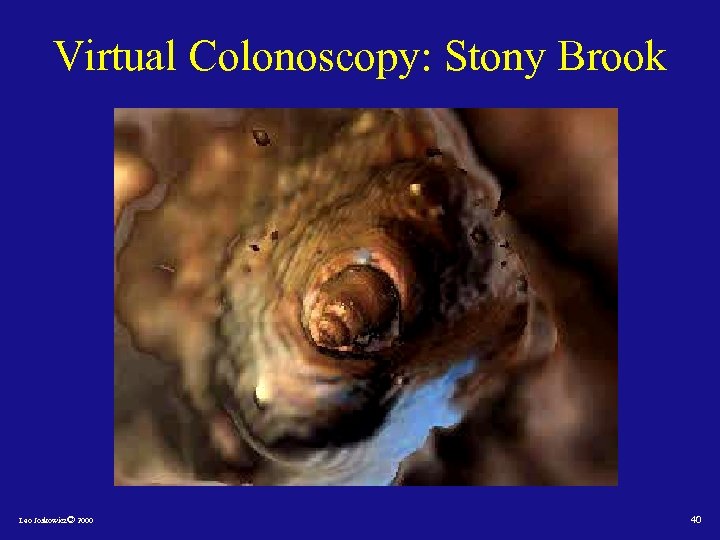 Virtual Colonoscopy: Stony Brook Leo Joskowicz© 2000 40
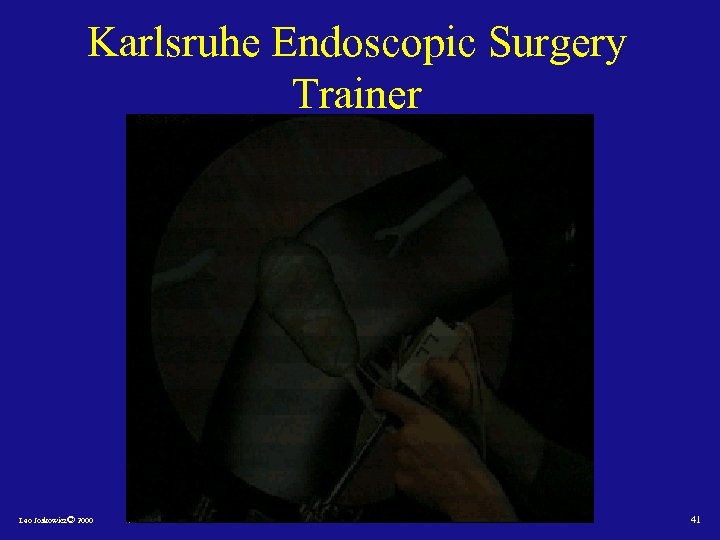 Karlsruhe Endoscopic Surgery Trainer Leo Joskowicz© 2000 41
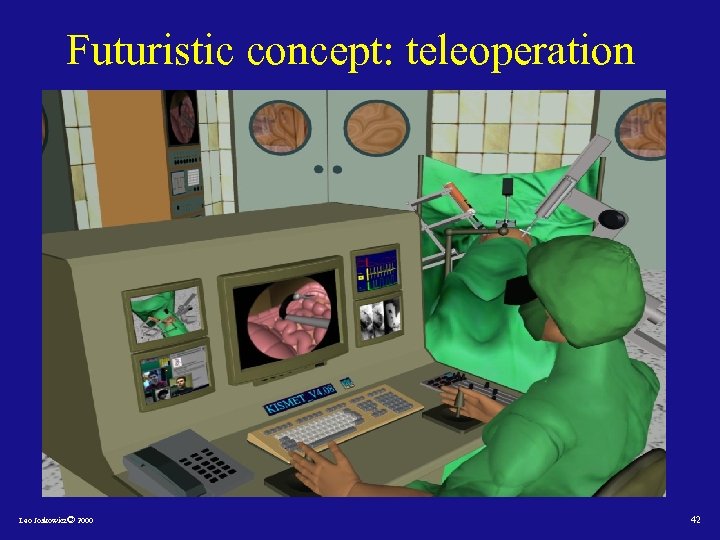 Futuristic concept: teleoperation Leo Joskowicz© 2000 42
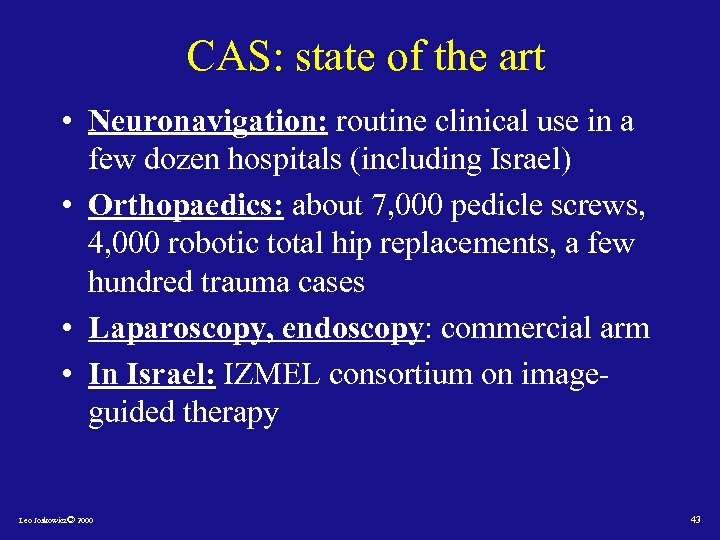 CAS: state of the art • Neuronavigation: routine clinical use in a few dozen hospitals (including Israel) • Orthopaedics: about 7, 000 pedicle screws, 4, 000 robotic total hip replacements, a few hundred trauma cases • Laparoscopy, endoscopy: commercial arm • In Israel: IZMEL consortium on imageguided therapy Leo Joskowicz© 2000 43
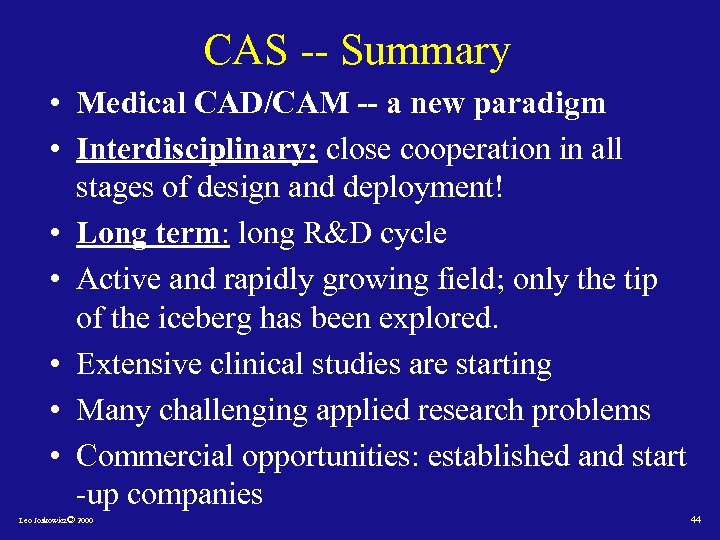 CAS -- Summary • Medical CAD/CAM -- a new paradigm • Interdisciplinary: close cooperation in all stages of design and deployment! • Long term: long R&D cycle • Active and rapidly growing field; only the tip of the iceberg has been explored. • Extensive clinical studies are starting • Many challenging applied research problems • Commercial opportunities: established and start -up companies Leo Joskowicz© 2000 44
 Grand challenges • More percutaneous procedures • Soft tissue procedures: grafts, ligament releases, tendon transfer • Computational challenges: – deformable tissue shape and behavior modeling – image-based tracking (fluoroscopy, ultrasound) – accurate deformable registration – realistic surgical simulators – systems integration Leo Joskowicz© 2000 45
 ISRACAS’ 2000 May 18, Technion Third Israeli Symposium on Computer-Aided Surgery, Medical Robotics, and Medical Imaging • G. Barnett, USA CAS Neurosurgery • J. Bowersocks, USA Telesurgery • P. Dario, Italy Medical Robotics • F. Jolesz, USA OR of the future • P. Merloz, France CAS Spine Surgery • 15 refereed papers + industrial exhibit session Leo Joskowicz© 2000 46
 Contact information Leo Joskowicz© 2000 47