


 Скачать презентацию Computational Modeling of Pandemic Influenza Control Strategies N
2b0a54101d6e8b864ed57908b8e2b985.ppt
- Количество слайдов: 41
 Computational Modeling of Pandemic Influenza Control Strategies N. M. Ferguson, D. A. Cummings, C. Fraser, S. Cauchemez, S. Riley, A. Meeyai, S. Iamsirithaworn, W. D. Wheaton, P. C. Cooley, D. S. Burke Presented by Donald S. Burke, M. D. Workshop on Pandemic Influenza Vaccines: Building a Platform For Global Collaboration, Beijing, China, January 28 -30, 2007
 National Institutes of Health National Institute of General Medical Sciences Models of Infectious Disease Agent Studies University Of Washington & Los Alamos National Lab University of Pittsburgh & Imperial College Virginia Tech University
 Containment – what does it take (in theory)? • The spread of an infectious pathogen is characterised the basic reproduction number, R 0 – the average number of secondary cases generated by a single case in an entirely susceptible population. • Control policies optimally reduce transmission so that R 0 <1 – since at that level an epidemic cannot sustain itself. • Hence control policies need to eliminate a fraction 1 -1/ R 0 of transmission – i. e. 33% for R 0 =1. 5, 50% for R 0 =2, 75% for R 0 =4. • This can be achieved by: Ø Reducing contact (quarantine, increasing social distance). Ø Reducing susceptibility (vaccination, antiviral prophylaxis). ØReducing infectiousness (antiviral treatment). • Key issues are who is targeted, how much effort is needed, and how fast do we need to act.
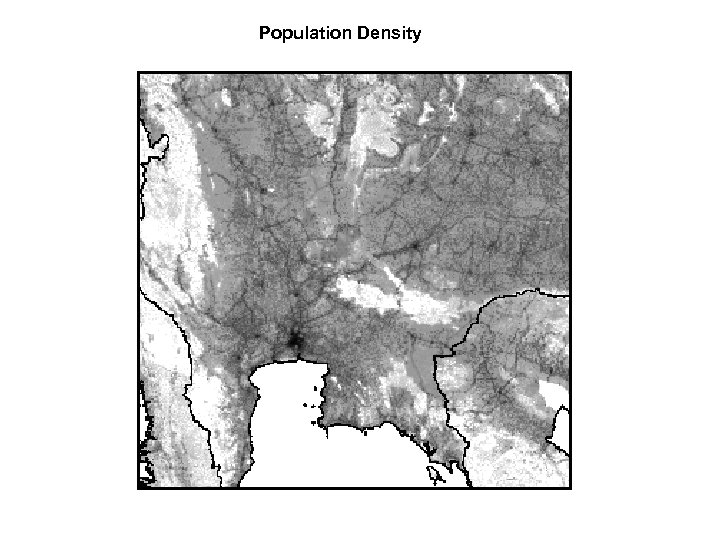
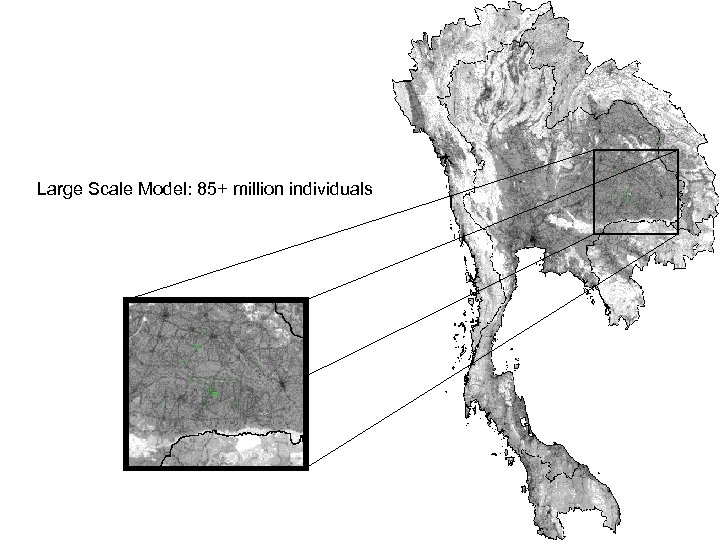 Large Scale Model: 85+ million individuals
 Key Modeling Research Partner: Thailand Dr. Kumnuan and colleagues of the Thai Bureau of Epidemiology and the Field Epidemiology Training Program
 Population Density
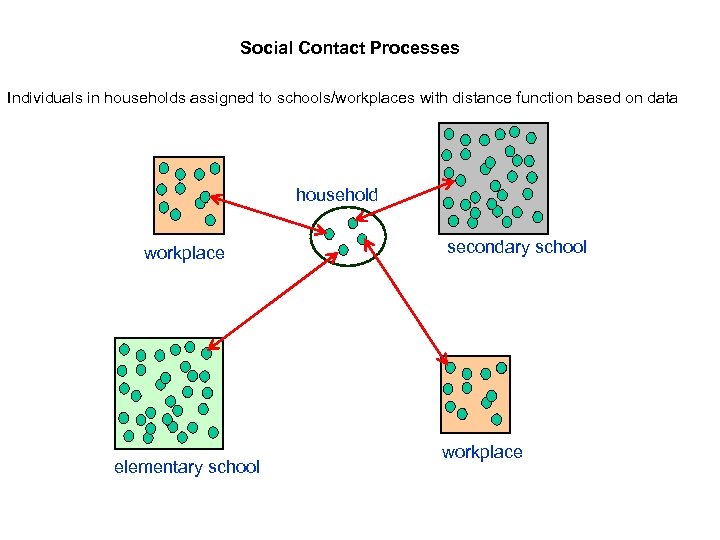 Social Contact Processes Individuals in households assigned to schools/workplaces with distance function based on data household workplace elementary school secondary school workplace
 SE Asia Movies
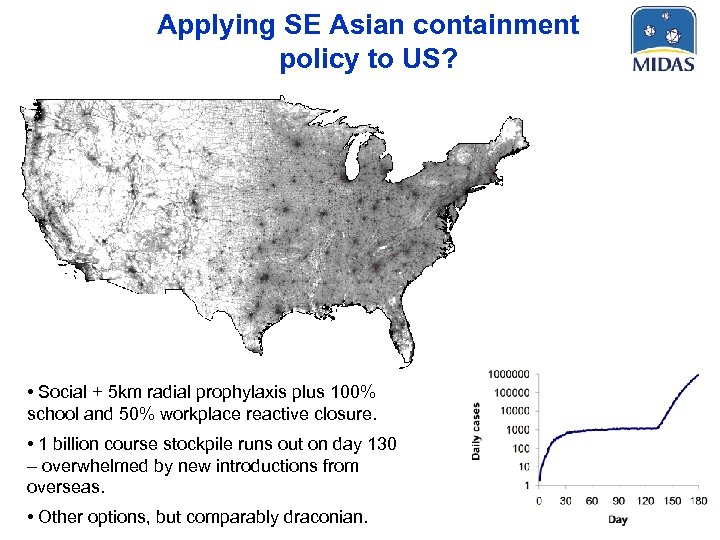 Applying SE Asian containment policy to US? • Social + 5 km radial prophylaxis plus 100% school and 50% workplace reactive closure. • 1 billion course stockpile runs out on day 130 – overwhelmed by new introductions from overseas. • Other options, but comparably draconian.
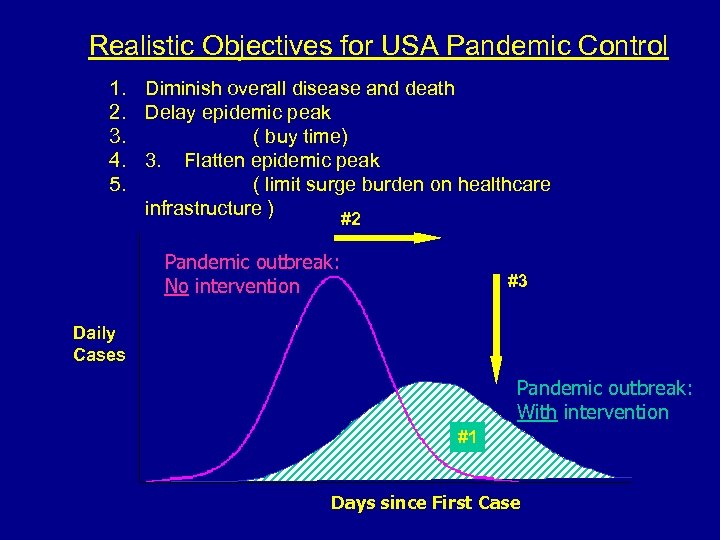 Realistic Objectives for USA Pandemic Control 1. Diminish overall disease and death 2. Delay epidemic peak 3. ( buy time) 4. 3. Flatten epidemic peak 5. ( limit surge burden on healthcare infrastructure ) #2 Pandemic outbreak: No intervention #3 Daily Cases Pandemic outbreak: With intervention #1 Days since First Case
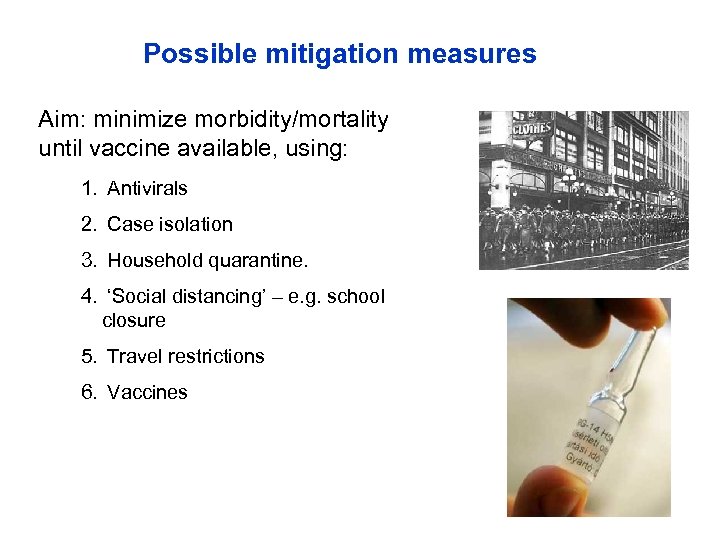 Possible mitigation measures Aim: minimize morbidity/mortality until vaccine available, using: 1. Antivirals 2. Case isolation 3. Household quarantine. 4. ‘Social distancing’ – e. g. school closure 5. Travel restrictions 6. Vaccines
 Pre-vaccination: A poorly matched vaccine • Assume availability of a low-efficacy pre-pandemic vaccine, given as soon as pandemic recognized. • Assume 30% reduction in susceptibility. If infected, 50% reduced chance of being a clinical ‘case’ and 30% additional reduction in infectiousness (matched vaccine would be expected to be 70 -90% protective in healthy adults) • A 10% stockpile of pre-pandemic vaccine would reduce attack rates from 29% to 25% for next day treatment + school closure policy [R 0=2]. • A 20% stockpile of pre-pandemic vaccine would reduce attack rates to 20%. • Targeting children <16 is best way of reducing transmission, given limited stocks of limited efficacy vaccine. Targeting >60 s has worst impact.
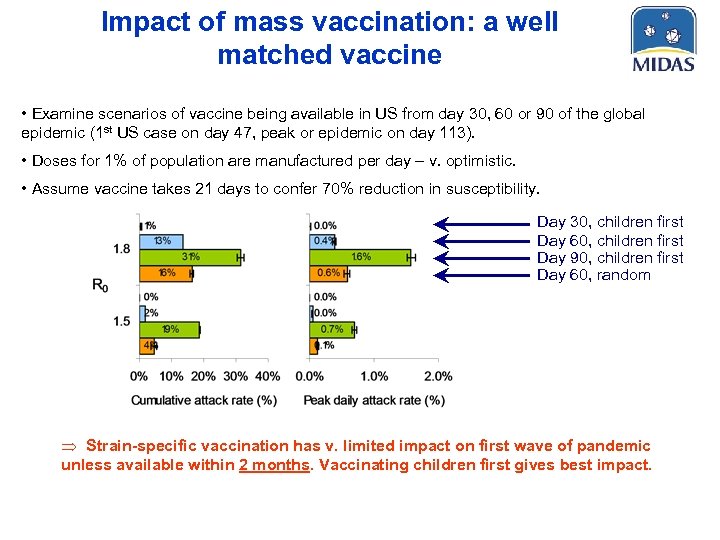 Impact of mass vaccination: a well matched vaccine • Examine scenarios of vaccine being available in US from day 30, 60 or 90 of the global epidemic (1 st US case on day 47, peak or epidemic on day 113). • Doses for 1% of population are manufactured per day – v. optimistic. • Assume vaccine takes 21 days to confer 70% reduction in susceptibility. Day 30, children first Day 60, children first Day 90, children first Day 60, random Þ Strain-specific vaccination has v. limited impact on first wave of pandemic unless available within 2 months. Vaccinating children first gives best impact.
 Conclusions Computational modelling and simulation can be a useful tool to evaluate complex policy issues, such as timing and impact of vaccines Initial modelling results suggest that well matched vaccines must be available within two months to have an appreciable effect on the pandemic course
 Key sensitivities Many unknowns (transmissibility, natural history of infection, severity of disease, compliance with treatment/controls…) ! We will need to rapidly collect data and refine model projections of spread and effect of controls during the first few weeks of a pandemic
 END
END
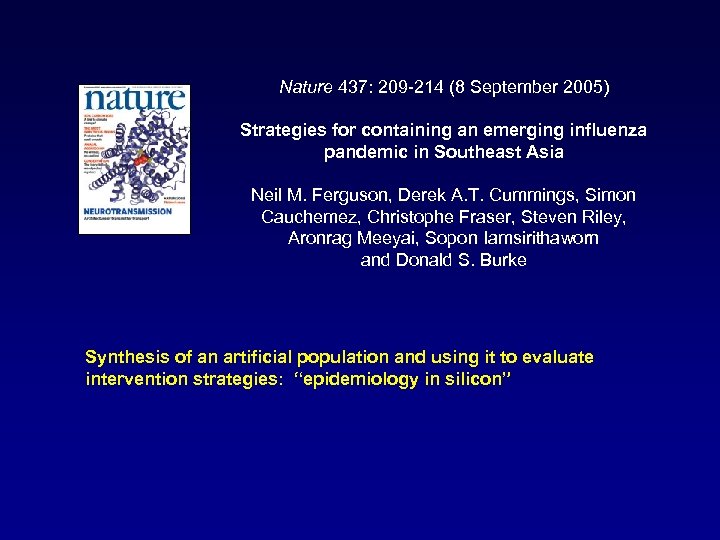 Nature 437: 209 -214 (8 September 2005) Strategies for containing an emerging influenza pandemic in Southeast Asia Neil M. Ferguson, Derek A. T. Cummings, Simon Cauchemez, Christophe Fraser, Steven Riley, Aronrag Meeyai, Sopon Iamsirithaworn and Donald S. Burke Synthesis of an artificial population and using it to evaluate intervention strategies: “epidemiology in silicon”
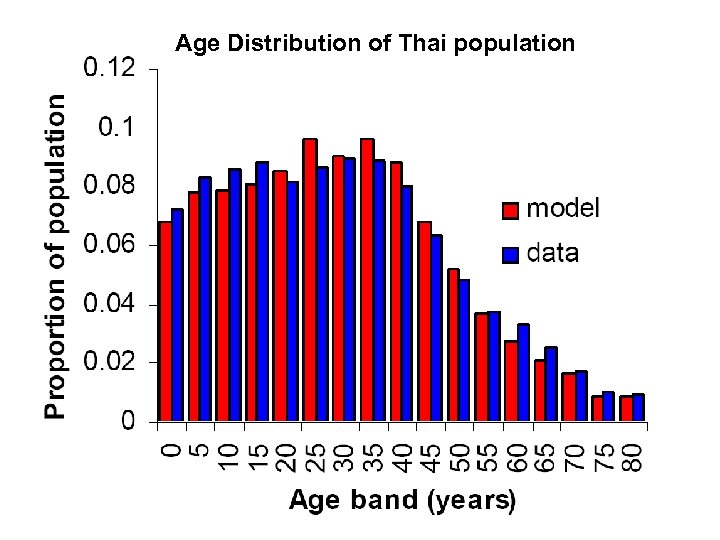 Age Distribution of Thai population
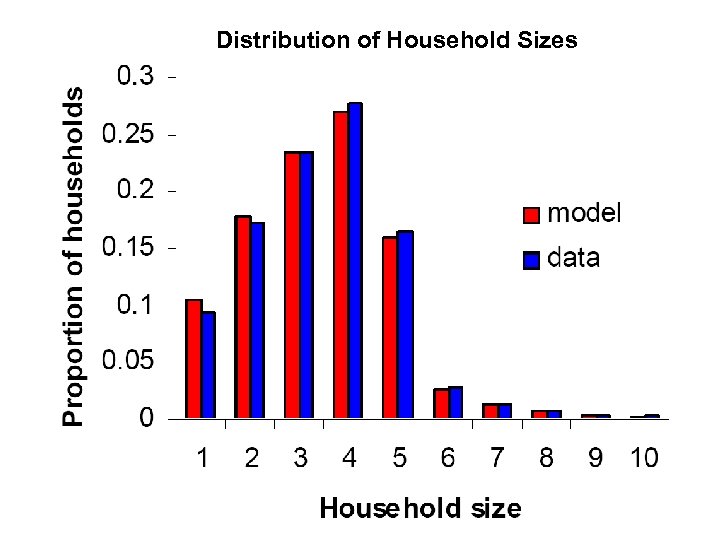 Distribution of Household Sizes
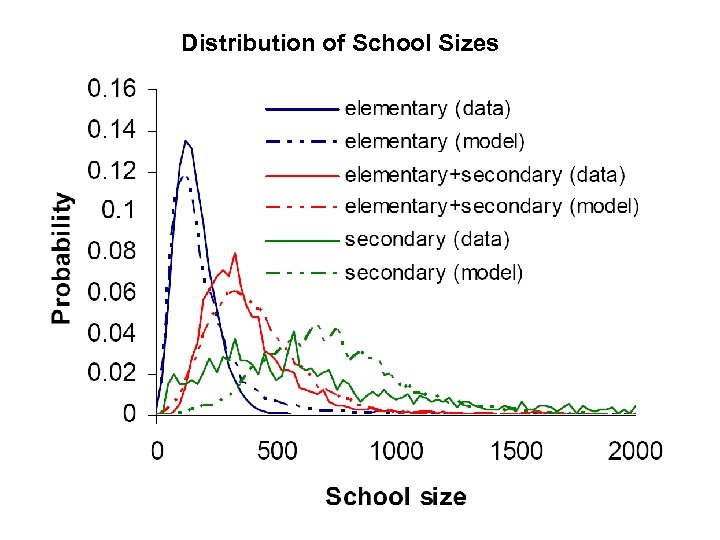 Distribution of School Sizes
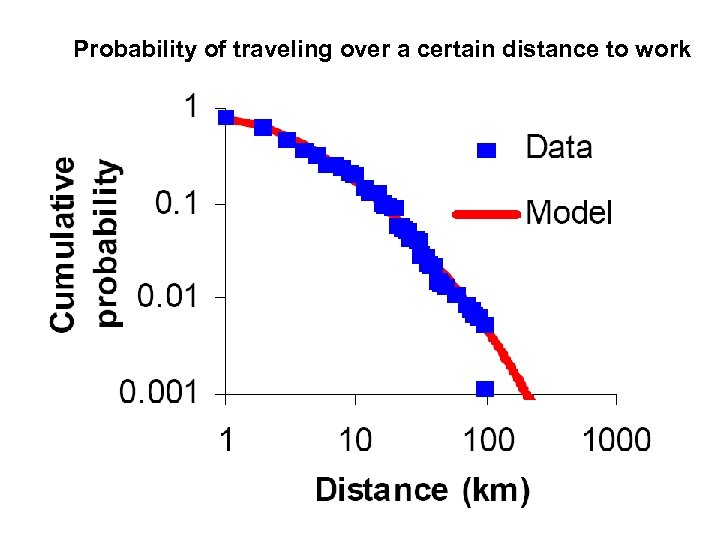 Probability of traveling over a certain distance to work
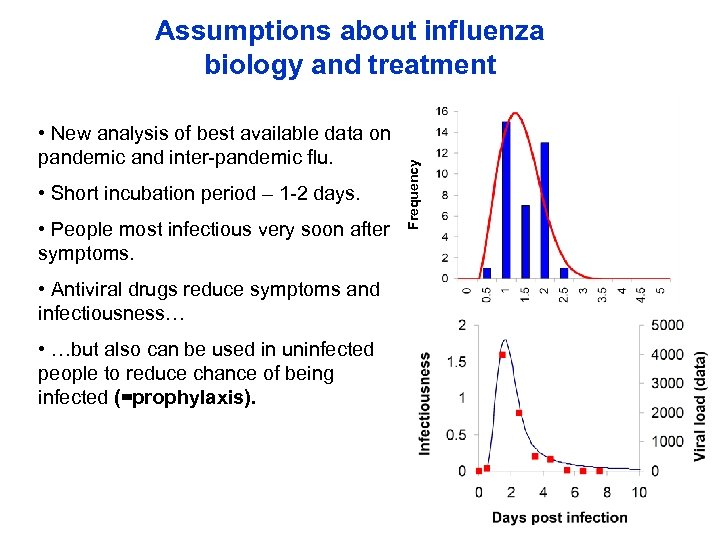 • New analysis of best available data on pandemic and inter-pandemic flu. • Short incubation period – 1 -2 days. • People most infectious very soon after symptoms. Frequency Assumptions about influenza biology and treatment • Antiviral drugs reduce symptoms and infectiousness… • …but also can be used in uninfected people to reduce chance of being infected (=prophylaxis). Days
 Mitigating the effects of a pandemic on the USA
 Can we contain a pandemic? • Contain = eliminate virus before spread is extensive. • So long as stockpile is 3 m courses or larger, - can contain R 0~1. 8. • Need to detect outbreak at <50 cases, react to new cases in 2 days. • Needs work to make feasible – but far more effective than anything else
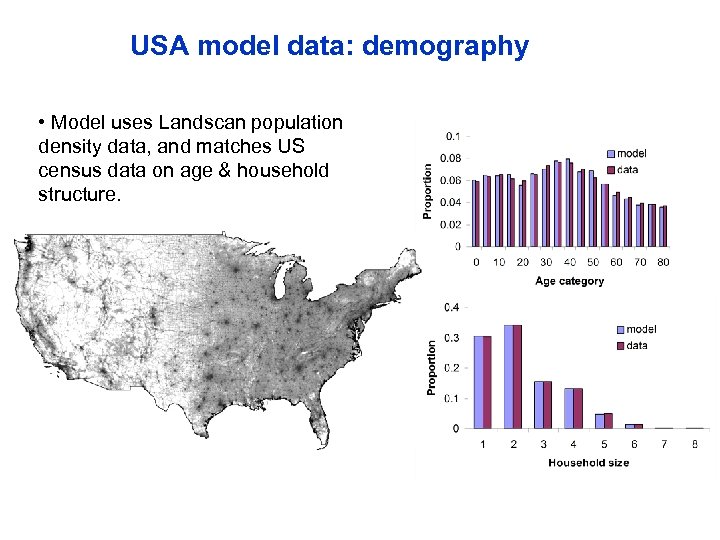 USA model data: demography • Model uses Landscan population density data, and matches US census data on age & household structure.
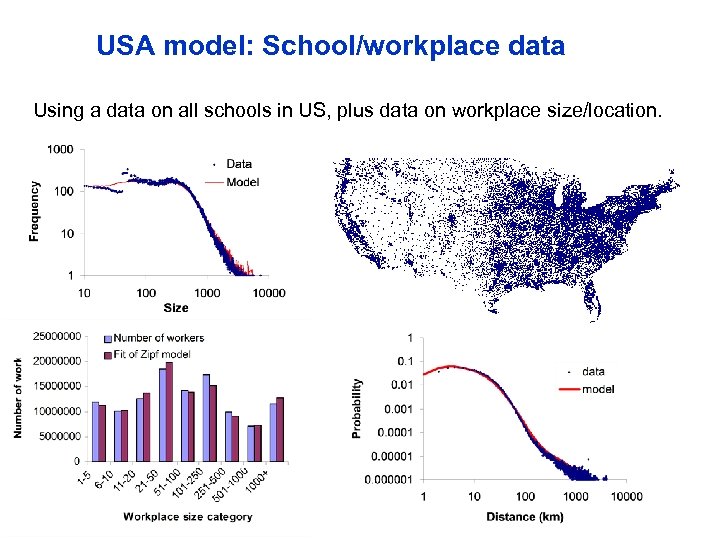 USA model: School/workplace data Using a data on all schools in US, plus data on workplace size/location.
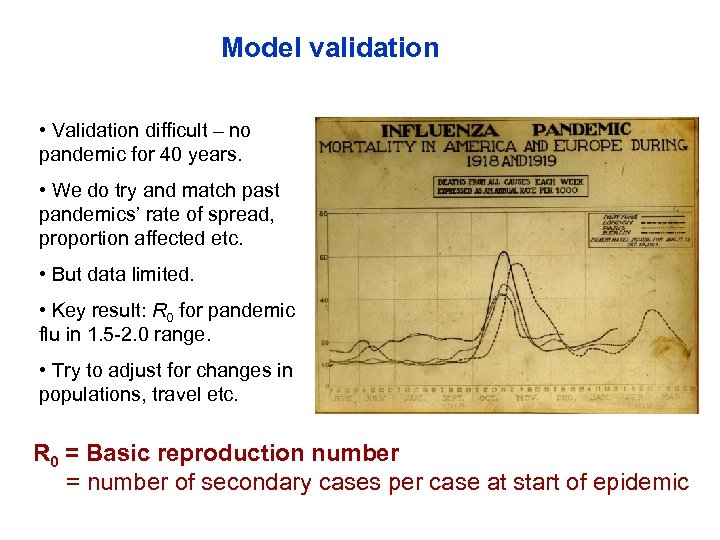 Model validation • Validation difficult – no pandemic for 40 years. • We do try and match past pandemics’ rate of spread, proportion affected etc. • But data limited. • Key result: R 0 for pandemic flu in 1. 5 -2. 0 range. • Try to adjust for changes in populations, travel etc. R 0 = Basic reproduction number = number of secondary cases per case at start of epidemic
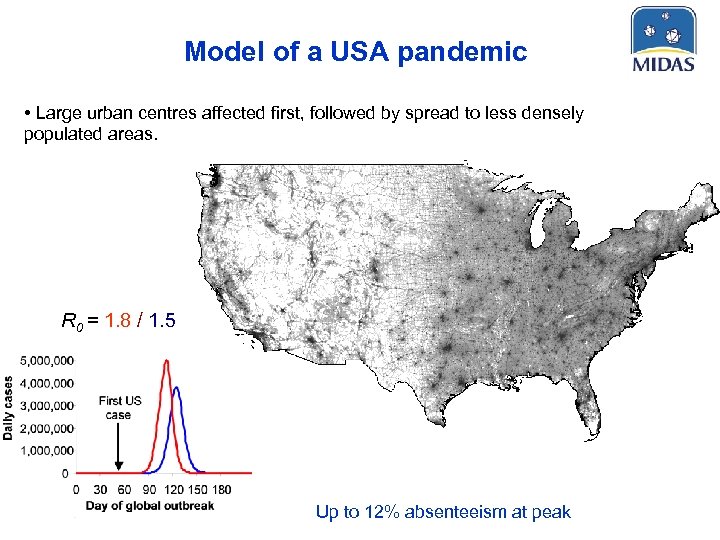 Model of a USA pandemic • Large urban centres affected first, followed by spread to less densely populated areas. R 0 = 1. 8 / 1. 5 Up to 12% absenteeism at peak
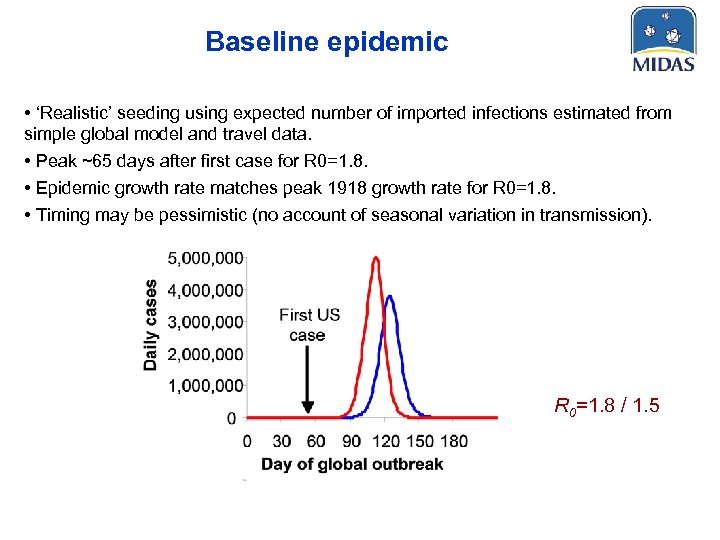 Baseline epidemic • ‘Realistic’ seeding using expected number of imported infections estimated from simple global model and travel data. • Peak ~65 days after first case for R 0=1. 8. • Epidemic growth rate matches peak 1918 growth rate for R 0=1. 8. • Timing may be pessimistic (no account of seasonal variation in transmission). R 0=1. 8 / 1. 5
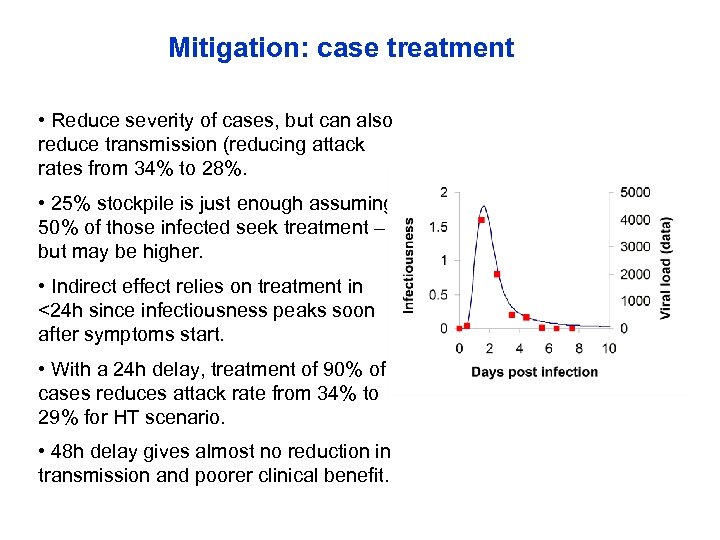 Mitigation: case treatment • Reduce severity of cases, but can also reduce transmission (reducing attack rates from 34% to 28%. • 25% stockpile is just enough assuming 50% of those infected seek treatment – but may be higher. • Indirect effect relies on treatment in <24 h since infectiousness peaks soon after symptoms start. • With a 24 h delay, treatment of 90% of cases reduces attack rate from 34% to 29% for HT scenario. • 48 h delay gives almost no reduction in transmission and poorer clinical benefit.
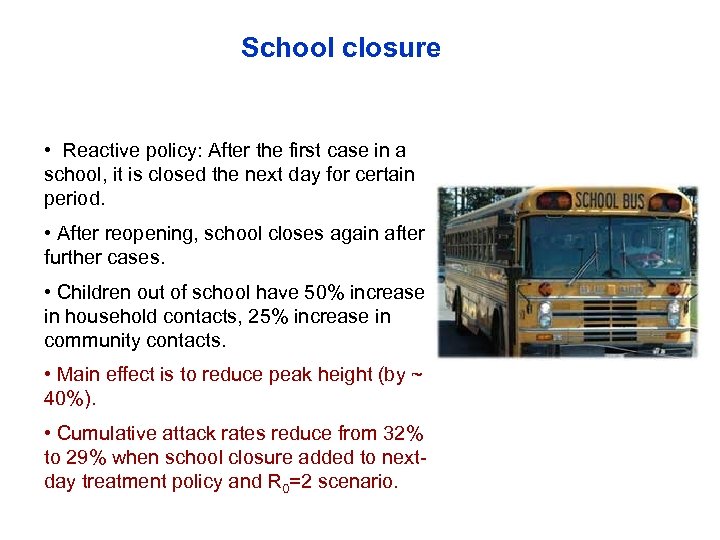 School closure • Reactive policy: After the first case in a school, it is closed the next day for certain period. • After reopening, school closes again after further cases. • Children out of school have 50% increase in household contacts, 25% increase in community contacts. • Main effect is to reduce peak height (by ~ 40%). • Cumulative attack rates reduce from 32% to 29% when school closure added to nextday treatment policy and R 0=2 scenario.
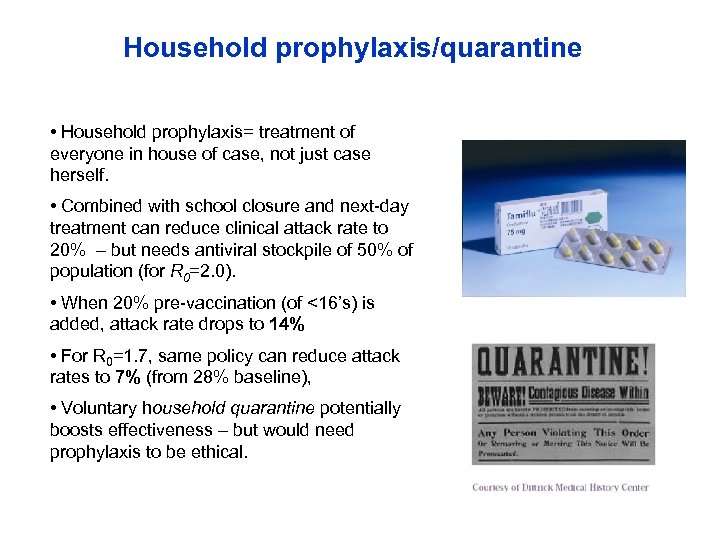 Household prophylaxis/quarantine • Household prophylaxis= treatment of everyone in house of case, not just case herself. • Combined with school closure and next-day treatment can reduce clinical attack rate to 20% – but needs antiviral stockpile of 50% of population (for R 0=2. 0). • When 20% pre-vaccination (of <16’s) is added, attack rate drops to 14% • For R 0=1. 7, same policy can reduce attack rates to 7% (from 28% baseline), • Voluntary household quarantine potentially boosts effectiveness – but would need prophylaxis to be ethical.
 Impact of matched mass vaccination • Imagine vaccine available in US from day 0, 30, 60 or 90 of the global epidemic, and assume 1% of population vaccinated per day. Þ Vaccination has very limited impact unless available within 2 months. Þ So need to stockpile in advance, even if efficacy is limited because vaccine not perfectly matched.
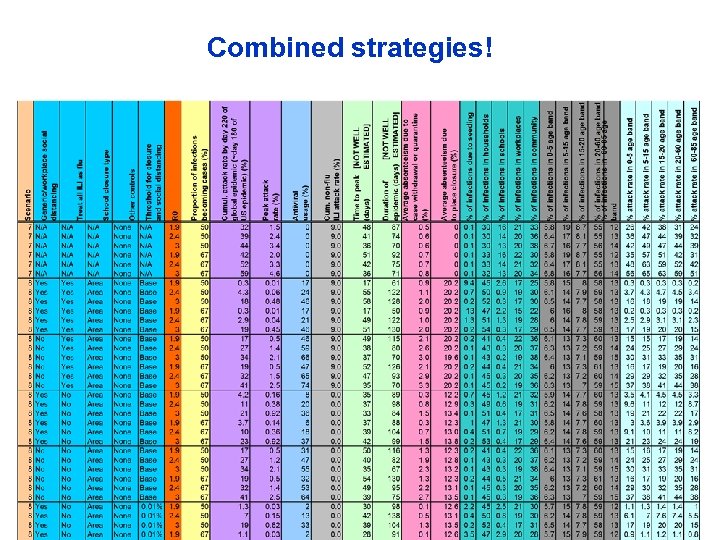 Combined strategies!
 Working Conclusions • Vaccine needed at start of pandemic to have significant impact. • Treatment-only’ policy needs to be delivered very rapidly for optimal effect. • School closure potentially effective at reducing peak of epidemic. • Household prophylaxis can reduce attack rates by 1/3. • Adding pre-pandemic vaccine with 30% efficacy to these policies substantially increases impact – possible to reduce attack rate by 67 -75%. • Social distancing (namely reductions in non-household contact rates) can (of course) be highly effective at controlling disease transmission, if high degree of contact rate reduction assumed.
 TALK OUTLINE 1. 2. 3. 4. The “MIDAS” group Prevention of Avian Influenza Emergence in SE Asia Mitigation of a Pandemic Impact in the USA Discussion
 Modeling and Simulation to Guide Policy Decisions in the USA “MIDAS” Models of Infectious Disease Agents Studies A collaborative network of scientists who conduct research on the use of computational and mathematical models to prepare the United States and the World to respond to outbreaks of infectious diseases.
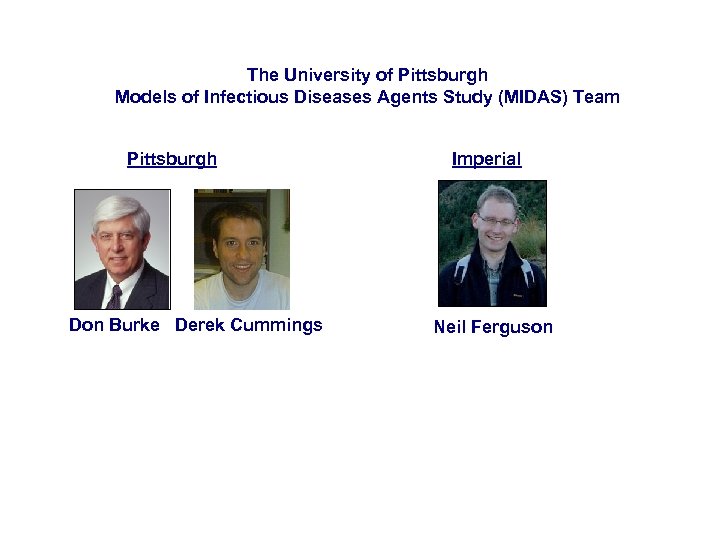 The University of Pittsburgh Models of Infectious Diseases Agents Study (MIDAS) Team Pittsburgh Imperial Don Burke Derek Cummings Neil Ferguson
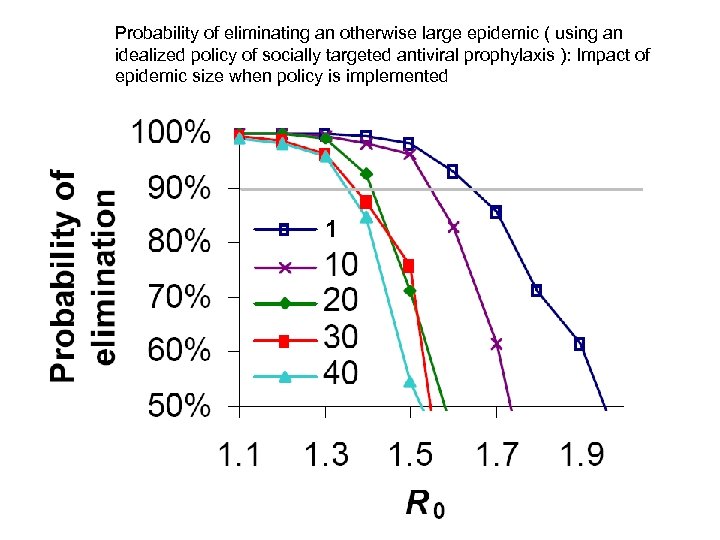 Probability of eliminating an otherwise large epidemic ( using an idealized policy of socially targeted antiviral prophylaxis ): Impact of epidemic size when policy is implemented 1
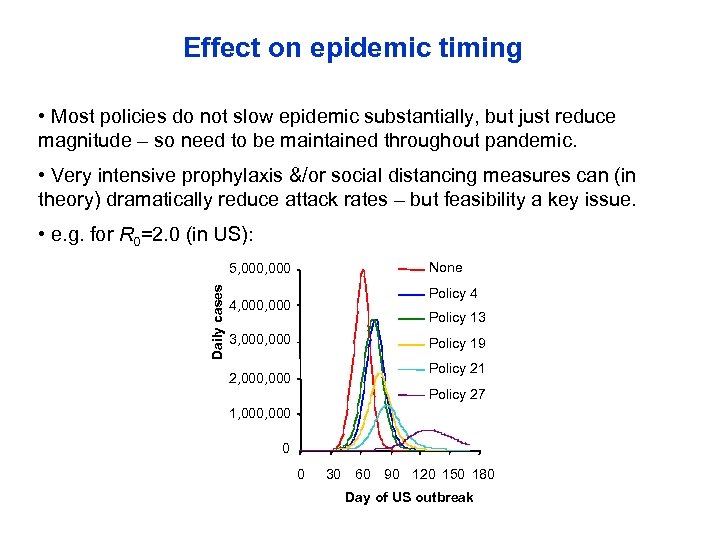 Effect on epidemic timing • Most policies do not slow epidemic substantially, but just reduce magnitude – so need to be maintained throughout pandemic. • Very intensive prophylaxis &/or social distancing measures can (in theory) dramatically reduce attack rates – but feasibility a key issue. • e. g. for R 0=2. 0 (in US): None Daily cases 5, 000 Policy 4 4, 000 Policy 13 3, 000 Policy 19 Policy 21 2, 000 Policy 27 1, 000 0 0 30 60 90 120 150 180 Day of US outbreak
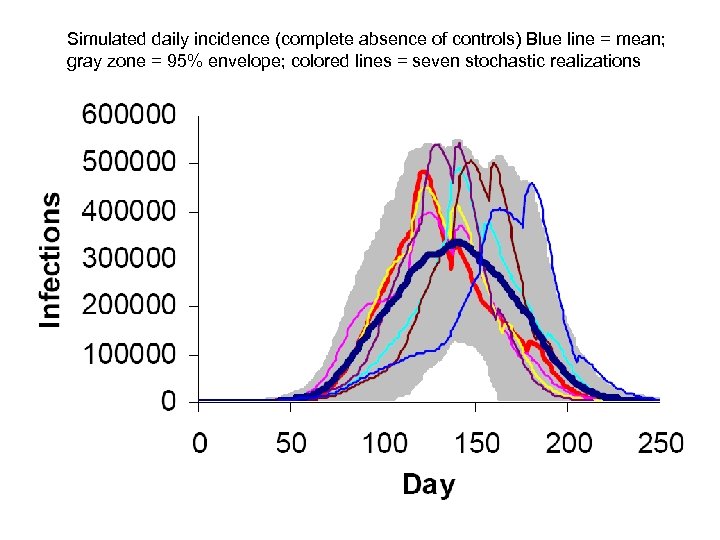 Simulated daily incidence (complete absence of controls) Blue line = mean; gray zone = 95% envelope; colored lines = seven stochastic realizations