


 Скачать презентацию Composting New from Old What is
8b39b03fc3599a06c0ec8660b717f2b4.ppt
- Количество слайдов: 14
 Composting New from Old
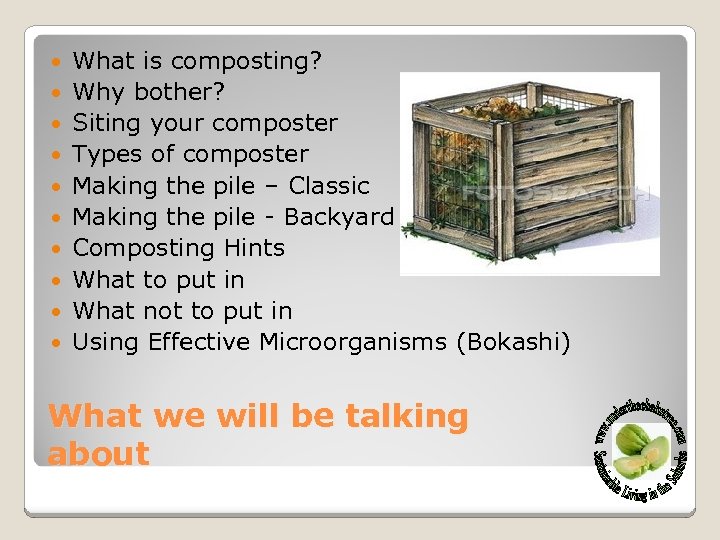 What is composting? Why bother? Siting your composter Types of composter Making the pile – Classic Making the pile - Backyard Composting Hints What to put in What not to put in Using Effective Microorganisms (Bokashi) What we will be talking about
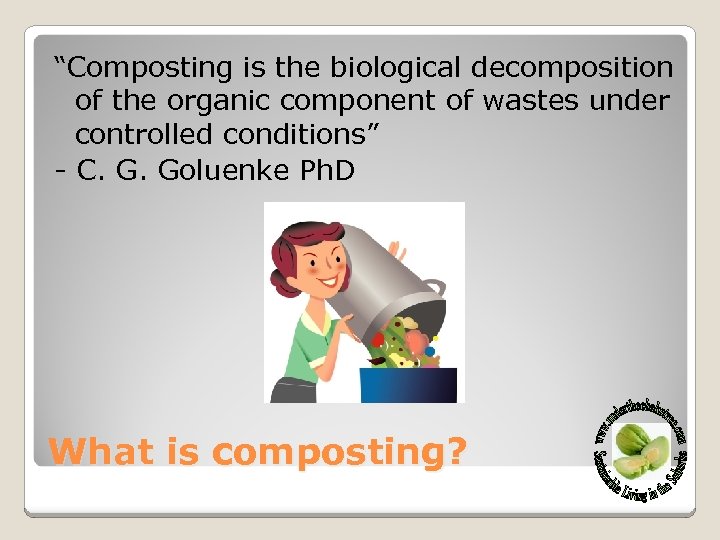 “Composting is the biological decomposition of the organic component of wastes under controlled conditions” - C. G. Goluenke Ph. D What is composting?
 Reduce the amount of waste going to landfill Has many benefits when added to the soil ◦ Reduces runoff and soil erosion ◦ Increases soil moisture holding capacity ◦ Buffers soil p. H ◦ Provides slow release of macro and micro nutrients ◦ Improves soil structure ◦ Encourages beneficial soil organisms Why bother?
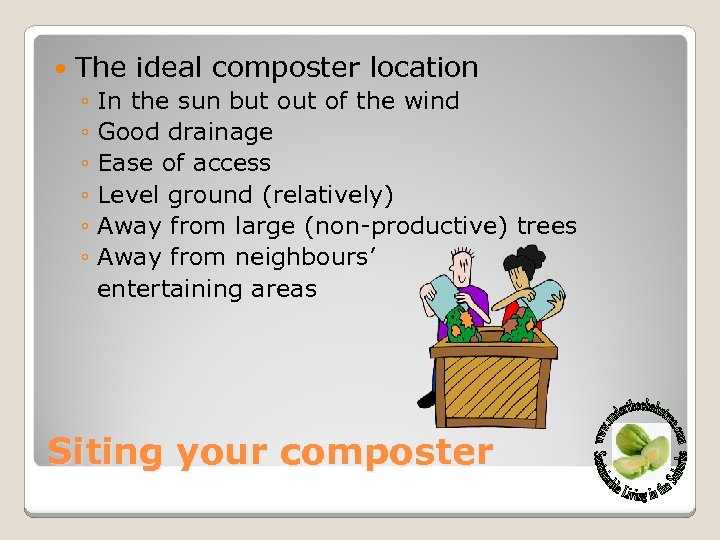 The ideal composter location ◦ In the sun but of the wind ◦ Good drainage ◦ Ease of access ◦ Level ground (relatively) ◦ Away from large (non-productive) trees ◦ Away from neighbours’ entertaining areas Siting your composter
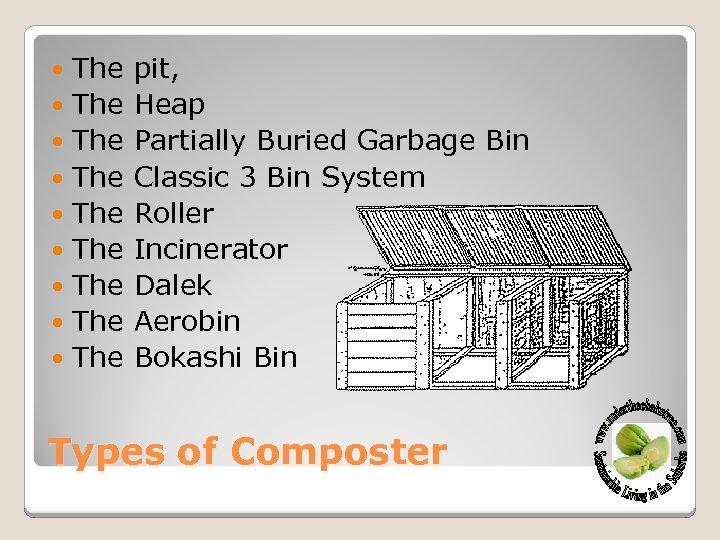 The The The pit, Heap Partially Buried Garbage Bin Classic 3 Bin System Roller Incinerator Dalek Aerobin Bokashi Bin Types of Composter
 Classic ◦ Start with coarse sticks etc for drainage ◦ Add material from an existing pile ◦ Add a layer of wet, high nitrogen “greens” – lawn clippings, veggie peelings, fruit waste ◦ Add a layer of , high carbon “browns” – dead leaves, shredded newspaper, straw ◦ Alternate until full – keep it moist! ◦ Allow to heat up and cool down ◦ Turn, and allow to heat up and cool down ◦ Ready for use! Making the pile
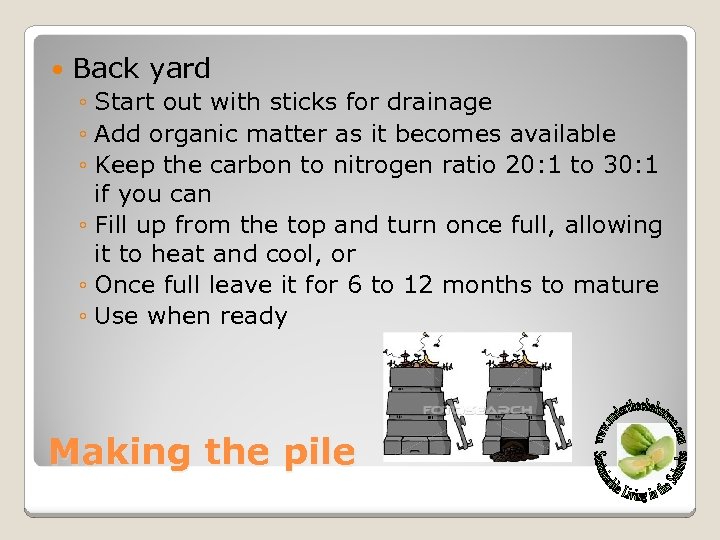 Back yard ◦ Start out with sticks for drainage ◦ Add organic matter as it becomes available ◦ Keep the carbon to nitrogen ratio 20: 1 to 30: 1 if you can ◦ Fill up from the top and turn once full, allowing it to heat and cool, or ◦ Once full leave it for 6 to 12 months to mature ◦ Use when ready Making the pile
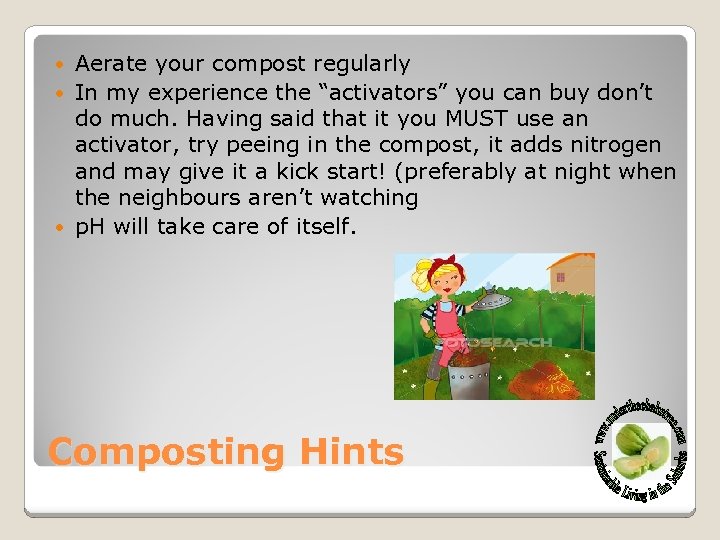 Aerate your compost regularly In my experience the “activators” you can buy don’t do much. Having said that it you MUST use an activator, try peeing in the compost, it adds nitrogen and may give it a kick start! (preferably at night when the neighbours aren’t watching p. H will take care of itself. Composting Hints
 Algae Coffee grounds Citrus rinds Corn cobs Dust from vacuum cleaner Egg shells Feathers Flowers What to put in Hair Manure Nut husks Sawdust Seaweed Tea bags/leaves Weeds Wood ash
 Meat bones Fat and animal products generally Fish Oily, fatty foods Pet wastes Weed seeds Diseased plants What not to put in
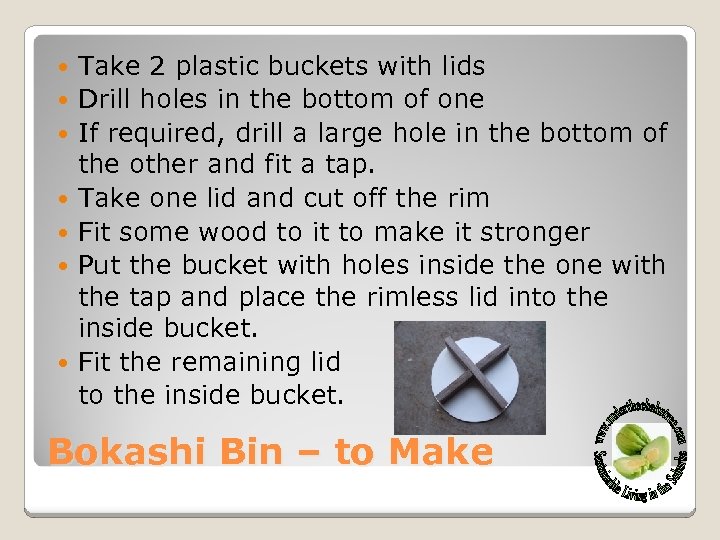 Take 2 plastic buckets with lids Drill holes in the bottom of one If required, drill a large hole in the bottom of the other and fit a tap. Take one lid and cut off the rim Fit some wood to it to make it stronger Put the bucket with holes inside the one with the tap and place the rimless lid into the inside bucket. Fit the remaining lid to the inside bucket. Bokashi Bin – to Make
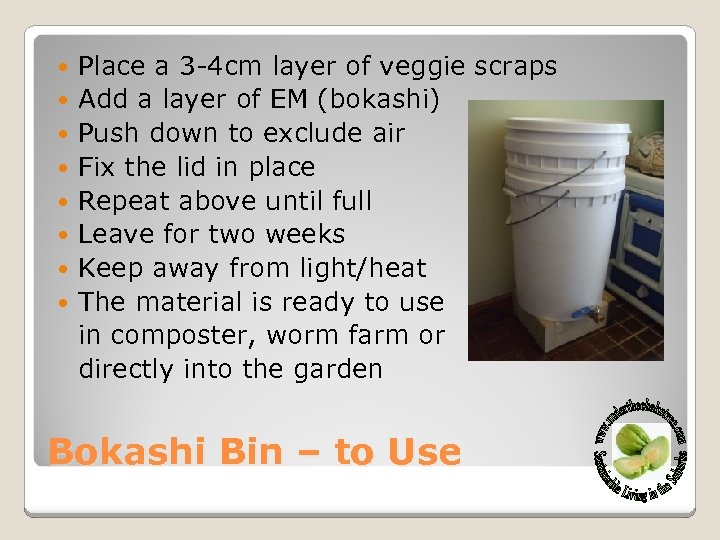 Place a 3 -4 cm layer of veggie scraps Add a layer of EM (bokashi) Push down to exclude air Fix the lid in place Repeat above until full Leave for two weeks Keep away from light/heat The material is ready to use in composter, worm farm or directly into the garden Bokashi Bin – to Use
 For more details check our website