


 Скачать презентацию COMPOSTING EFFORT AT LYLES-CROUCH TRADITIONAL ACADEMY Alexandria VA
c1b1b0332e950437a4ccdfc442c498a6.ppt
- Количество слайдов: 13
 COMPOSTING EFFORT AT LYLES-CROUCH TRADITIONAL ACADEMY Alexandria, VA
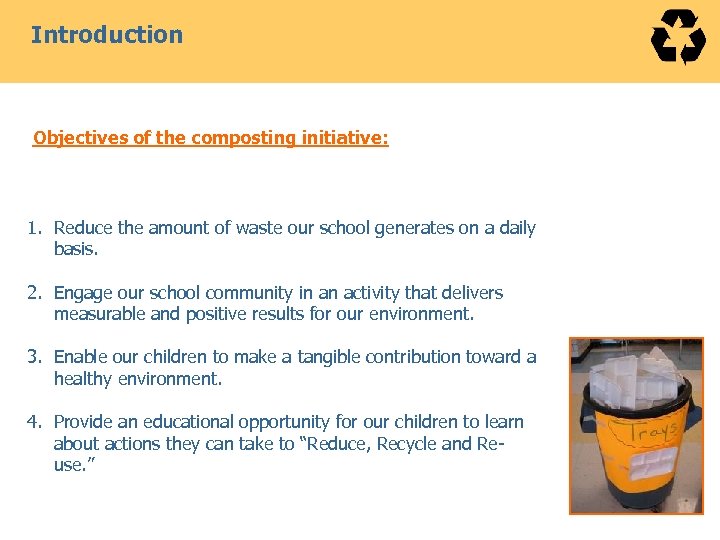 Introduction Objectives of the composting initiative: 1. Reduce the amount of waste our school generates on a daily basis. 2. Engage our school community in an activity that delivers measurable and positive results for our environment. 3. Enable our children to make a tangible contribution toward a healthy environment. 4. Provide an educational opportunity for our children to learn about actions they can take to “Reduce, Recycle and Reuse. ”
 I – The Process: Discuss & Convince Goal: Assess project acceptance and build strong support around the initiative Convince and get the following stakeholders on board: • Principal and PTA • School Staff • Custodians and Cafeteria Staff • Community: parents (Mane), Alexandria solid waste, City officials • ACPS • Waste Hauler • Head of food and Nutrition
 I – The Process: Communicate, Communicate Goal: Share information about the project to create buy-in and ownership Use existing communication means 1. Students and teachers: Assemblies / Morning show 2. Custodians & cafeteria staff: meet with them early on and often to get them on board and to enable them to express their concerns. This is particularly important as they will be in the cafeteria with the students every day. 3. Parents: Newsletter (if there is one) / Website/Email
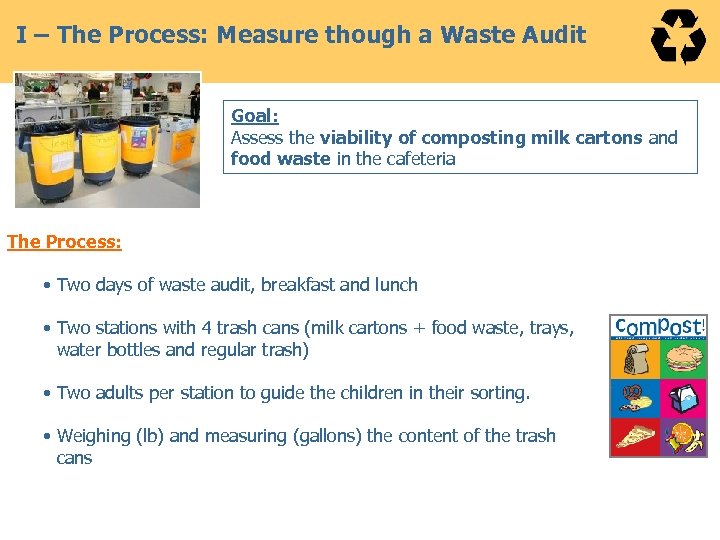 I – The Process: Measure though a Waste Audit Goal: Assess the viability of composting milk cartons and food waste in the cafeteria The Process: • Two days of waste audit, breakfast and lunch • Two stations with 4 trash cans (milk cartons + food waste, trays, water bottles and regular trash) • Two adults per station to guide the children in their sorting. • Weighing (lb) and measuring (gallons) the content of the trash cans
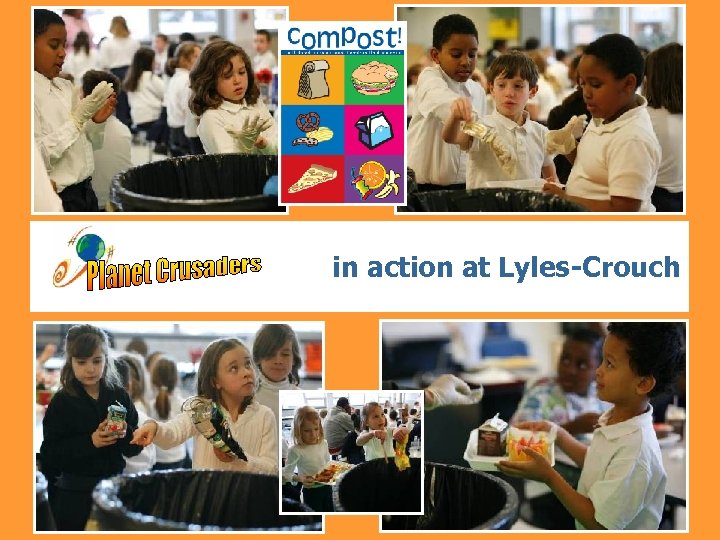 in action at Lyles-Crouch
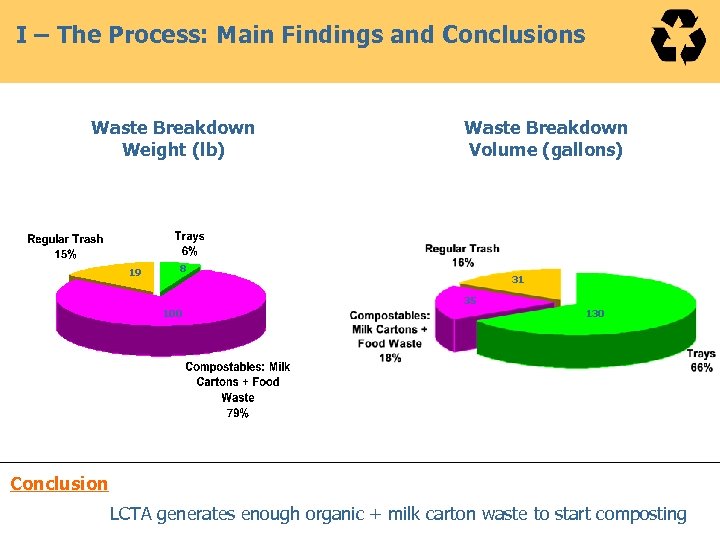 I – The Process: Main Findings and Conclusions Waste Breakdown Weight (lb) 19 Waste Breakdown Volume (gallons) 8 31 35 100 130 Conclusion LCTA generates enough organic + milk carton waste to start composting
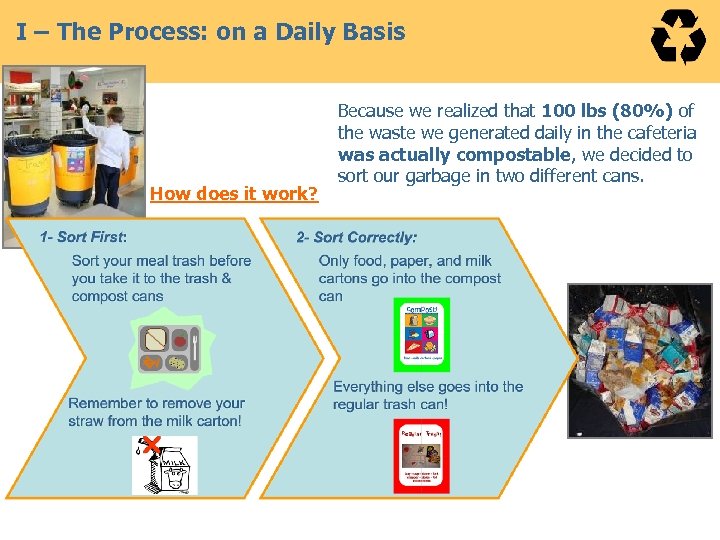 I – The Process: on a Daily Basis How does it work? Because we realized that 100 lbs (80%) of the waste we generated daily in the cafeteria was actually compostable, we decided to sort our garbage in two different cans.
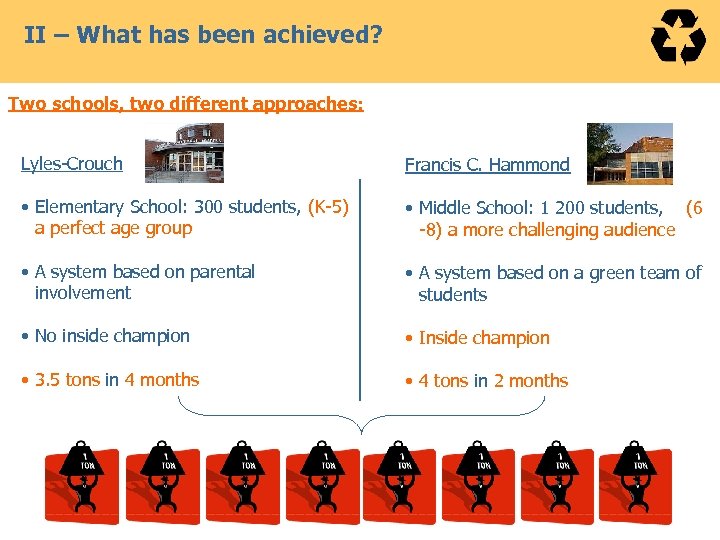 II – What has been achieved? Two schools, two different approaches: Lyles-Crouch Francis C. Hammond • Elementary School: 300 students, (K-5) a perfect age group • Middle School: 1 200 students, (6 -8) a more challenging audience • A system based on parental involvement • A system based on a green team of students • No inside champion • Inside champion • 3. 5 tons in 4 months • 4 tons in 2 months
 III – Lessons Learned Key factors of success: • An internal champion is essential for program sustainability • An internal (or, consistent external) point/s-ofcontact for waste hauler is a necessity
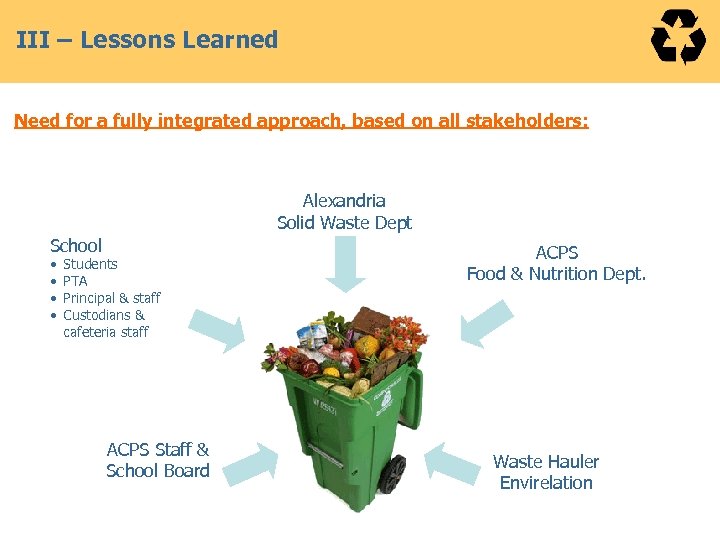 III – Lessons Learned Need for a fully integrated approach, based on all stakeholders: Alexandria Solid Waste Dept School • • Students PTA Principal & staff Custodians & cafeteria staff ACPS Staff & School Board ACPS Food & Nutrition Dept. Waste Hauler Envirelation
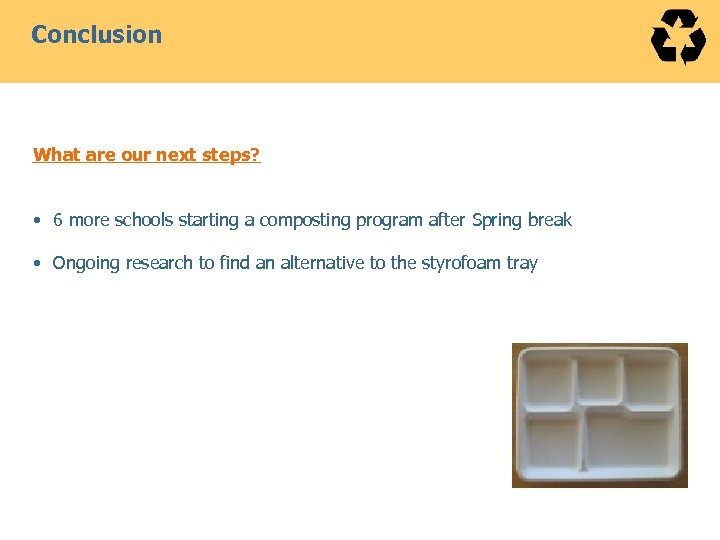 Conclusion What are our next steps? • 6 more schools starting a composting program after Spring break • Ongoing research to find an alternative to the styrofoam tray
 THANK YOU