 Скачать презентацию Composites basics and terminology John Summerscales CAN-LHR 27
4e8b8c6fc4464d10689ef24c3512ae6d.ppt
- Количество слайдов: 23




Composites: basics and terminology John Summerscales CAN-LHR 27 Sep 15 https: //m. planespotters. net/photo/623175/ LGW-HKG 19 Aug 17 https: //www. planespotters. net/photo/781126/

Reading for a degree Each lecture has: • Power. Point slides on extranet o these need JS “soundtrack” (i. e. lectures) • individual lecture webpages on extranet o also read these to reinforce your learning … and to really understand the topic follow up the references and/or review papers
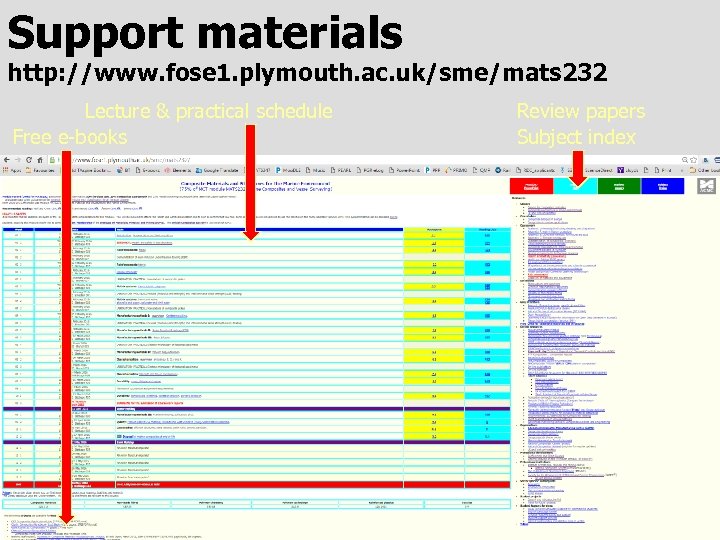
Support materials http: //www. fose 1. plymouth. ac. uk/sme/mats 232 Lecture & practical schedule Free e-books Review papers Subject index
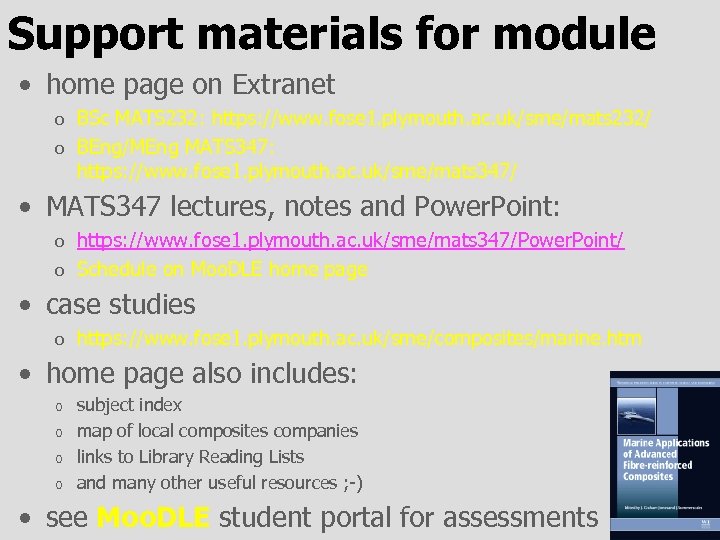
Support materials for module • home page on Extranet BSc MATS 232: https: //www. fose 1. plymouth. ac. uk/sme/mats 232/ o BEng/MEng MATS 347: https: //www. fose 1. plymouth. ac. uk/sme/mats 347/ o • MATS 347 lectures, notes and Power. Point: https: //www. fose 1. plymouth. ac. uk/sme/mats 347/Power. Point/ o Schedule on Moo. DLE home page o • case studies o https: //www. fose 1. plymouth. ac. uk/sme/composites/marine. htm • home page also includes: subject index o map of local composites companies o links to Library Reading Lists o and many other useful resources ; -) o • see Moo. DLE student portal for assessments

Linked. In • professional networking site o composites graduates from PU v connections for placement & employment British Composites Society o other composites groups o

Practical • manufacture and test of a composite plate • attendance at Health and Safety lecture is an essential prerequisite for coursework list of attendees circulated for signature o if your name is not on the list, you will not be allowed to do the practical o if you do not do the practical you will fail the coursework element and hence the module. o
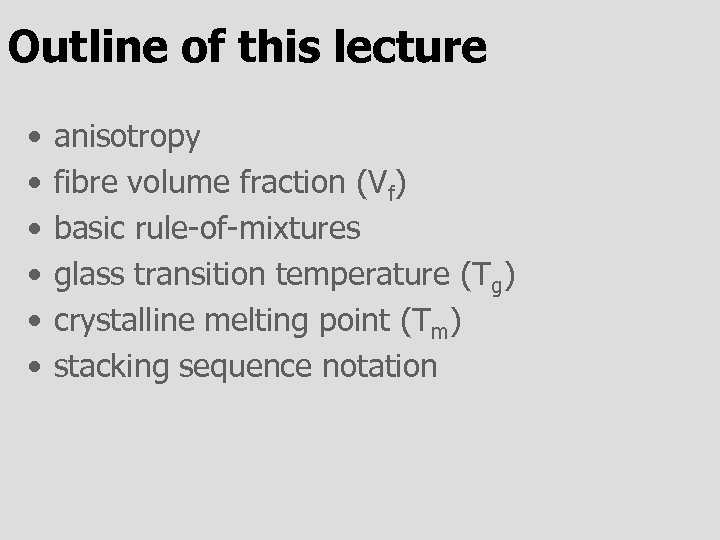
Outline of this lecture • • • anisotropy fibre volume fraction (Vf) basic rule-of-mixtures glass transition temperature (Tg) crystalline melting point (Tm) stacking sequence notation
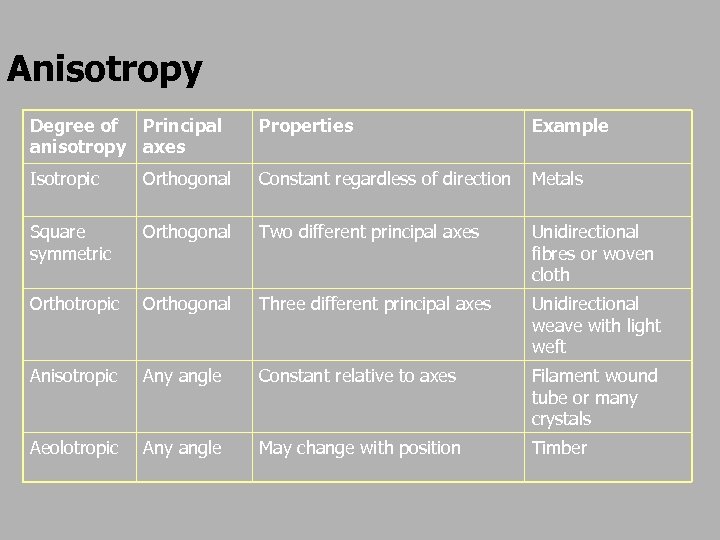
Anisotropy Degree of Principal anisotropy axes Properties Example Isotropic Orthogonal Constant regardless of direction Metals Square symmetric Orthogonal Two different principal axes Unidirectional fibres or woven cloth Orthotropic Orthogonal Three different principal axes Unidirectional weave with light weft Anisotropic Any angle Constant relative to axes Filament wound tube or many crystals Aeolotropic Any angle May change with position Timber
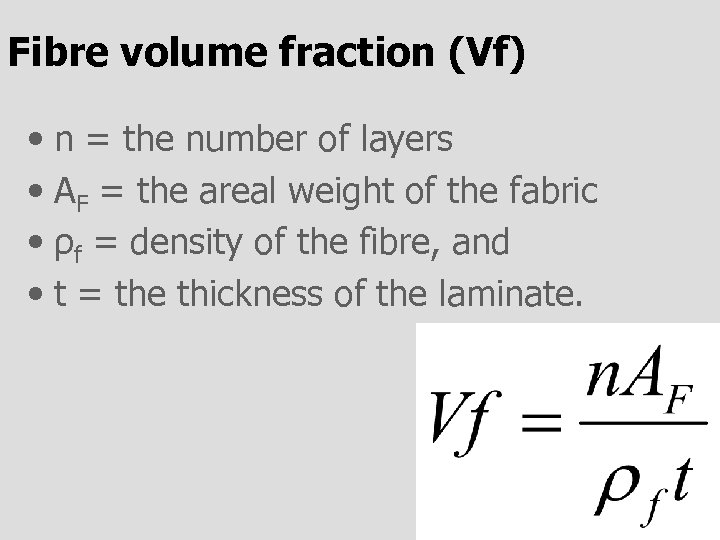
Fibre volume fraction (Vf) • n = the number of layers • AF = the areal weight of the fabric • ρf = density of the fibre, and • t = the thickness of the laminate.
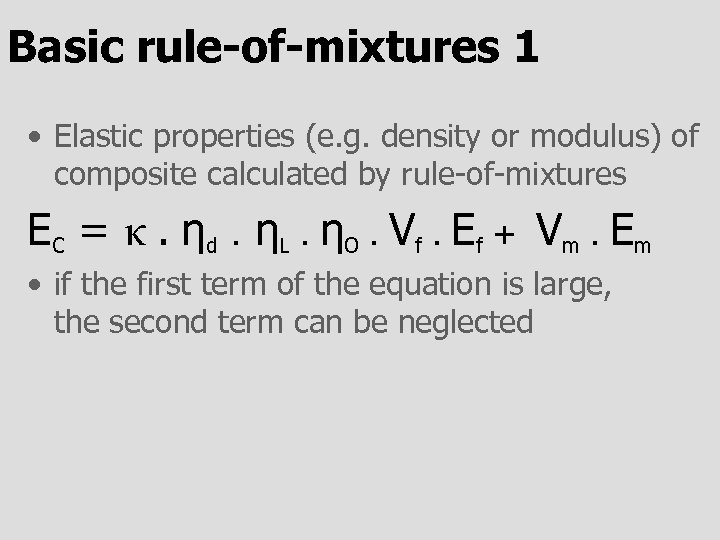
Basic rule-of-mixtures 1 • Elastic properties (e. g. density or modulus) of composite calculated by rule-of-mixtures EC = κ. η d. η L. η O. V f. Ef + V m. Em • if the first term of the equation is large, the second term can be neglected
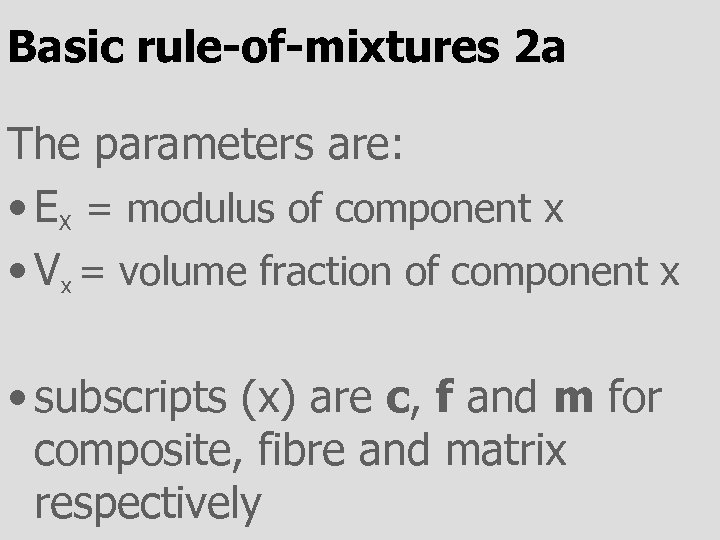
Basic rule-of-mixtures 2 a The parameters are: • EX = modulus of component x • Vx = volume fraction of component x • subscripts (x) are c, f and m for composite, fibre and matrix respectively
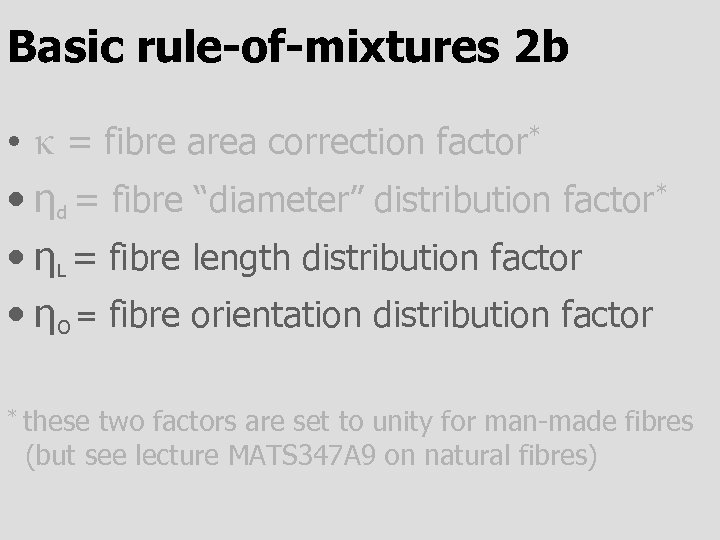
Basic rule-of-mixtures 2 b • κ = fibre area correction factor* • ηd = fibre “diameter” distribution factor* • ηL = fibre length distribution factor • ηO = fibre orientation distribution factor * these two factors are set to unity for man-made fibres (but see lecture MATS 347 A 9 on natural fibres)
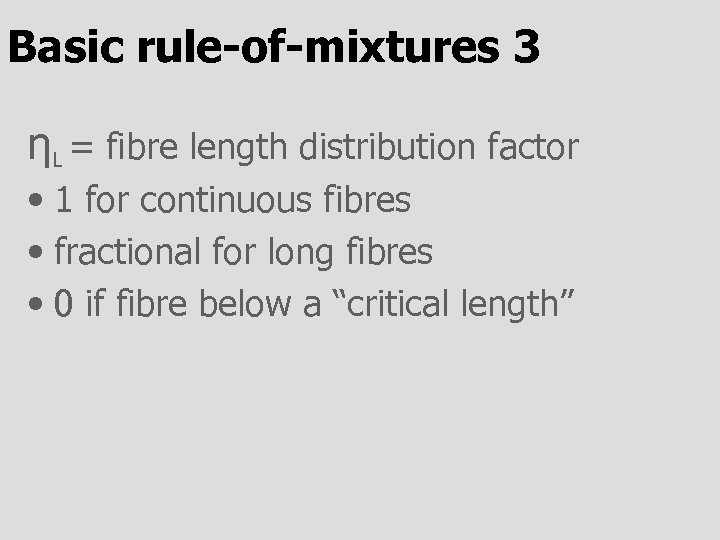
Basic rule-of-mixtures 3 ηL = fibre length distribution factor • 1 for continuous fibres • fractional for long fibres • 0 if fibre below a “critical length”
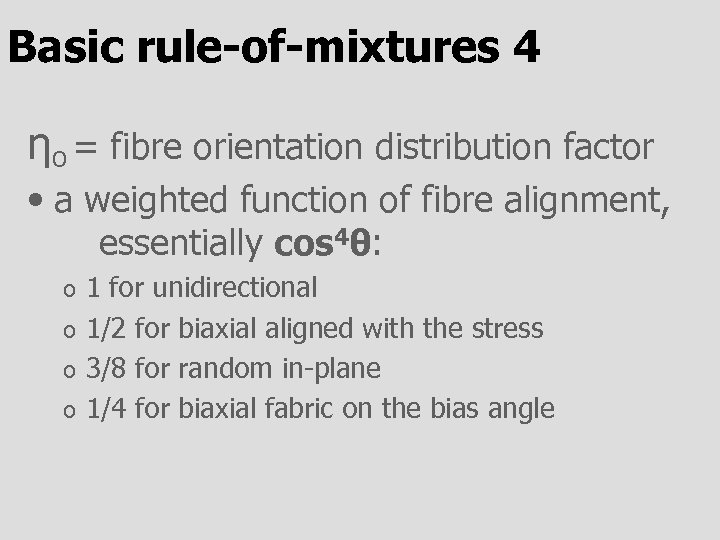
Basic rule-of-mixtures 4 ηO = fibre orientation distribution factor • a weighted function of fibre alignment, essentially cos 4θ: 1 for unidirectional o 1/2 for biaxial aligned with the stress o 3/8 for random in-plane o 1/4 for biaxial fabric on the bias angle o
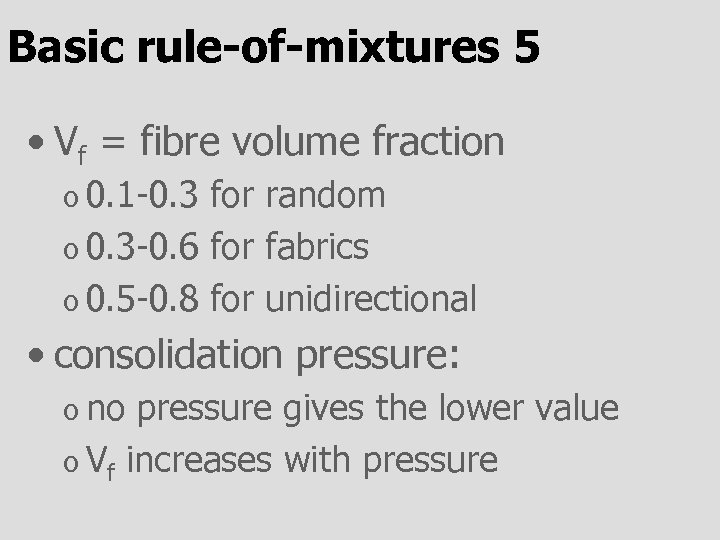
Basic rule-of-mixtures 5 • Vf = fibre volume fraction o 0. 1 -0. 3 for random o 0. 3 -0. 6 for fabrics o 0. 5 -0. 8 for unidirectional • consolidation pressure: o no pressure gives the lower value o Vf increases with pressure
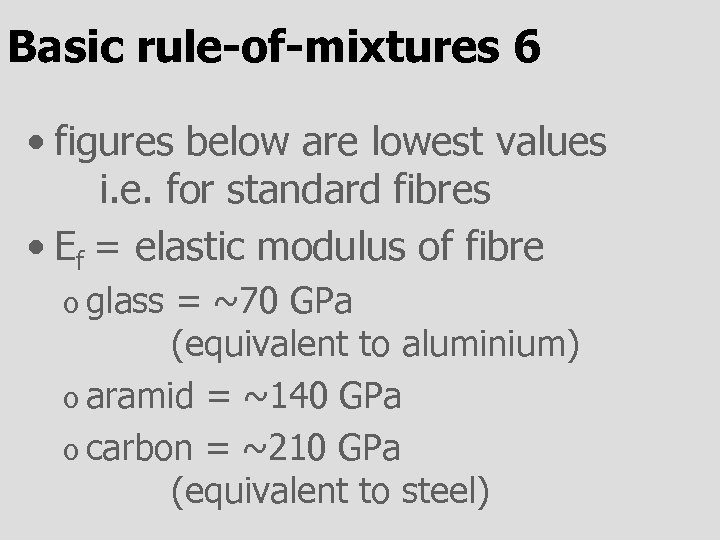
Basic rule-of-mixtures 6 • figures below are lowest values i. e. for standard fibres • Ef = elastic modulus of fibre o glass = ~70 GPa (equivalent to aluminium) o aramid = ~140 GPa o carbon = ~210 GPa (equivalent to steel)
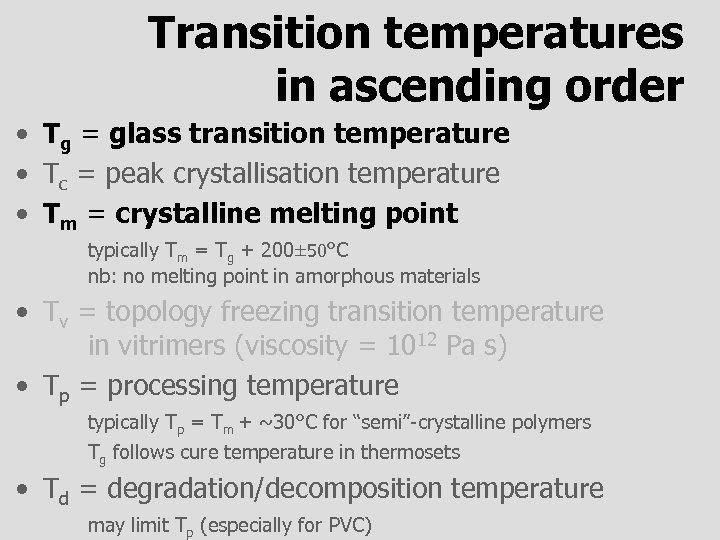
Transition temperatures in ascending order • Tg = glass transition temperature • Tc = peak crystallisation temperature • Tm = crystalline melting point typically Tm = Tg + 200± 50°C nb: no melting point in amorphous materials • Tv = topology freezing transition temperature in vitrimers (viscosity = 1012 Pa s) • Tp = processing temperature typically Tp = Tm + ~30°C for “semi”-crystalline polymers Tg follows cure temperature in thermosets • Td = degradation/decomposition temperature may limit Tp (especially for PVC)
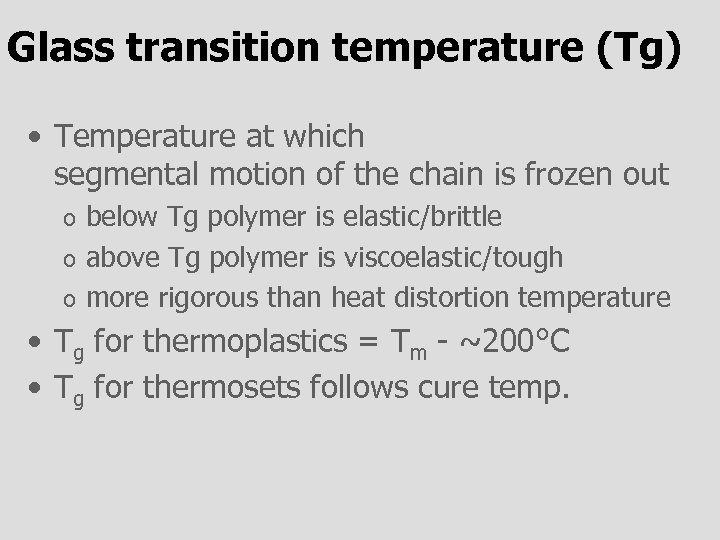
Glass transition temperature (Tg) • Temperature at which segmental motion of the chain is frozen out below Tg polymer is elastic/brittle o above Tg polymer is viscoelastic/tough o more rigorous than heat distortion temperature o • Tg for thermoplastics = Tm - ~200°C • Tg for thermosets follows cure temp.
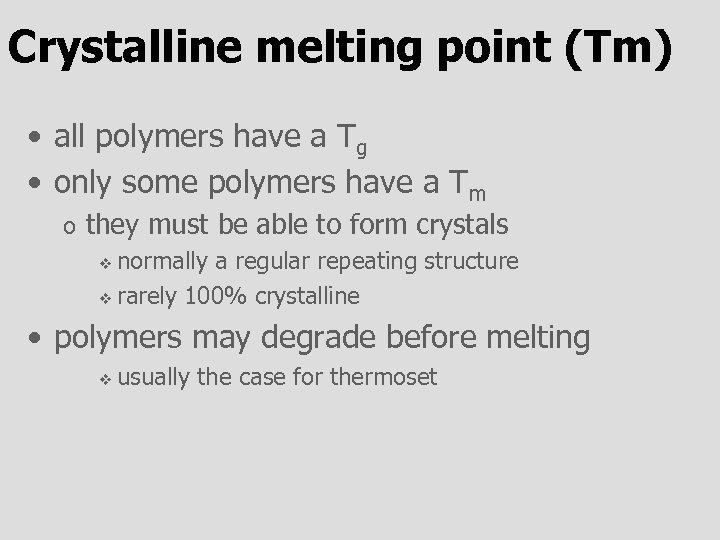
Crystalline melting point (Tm) • all polymers have a Tg • only some polymers have a Tm o they must be able to form crystals normally a regular repeating structure v rarely 100% crystalline v • polymers may degrade before melting v usually the case for thermoset
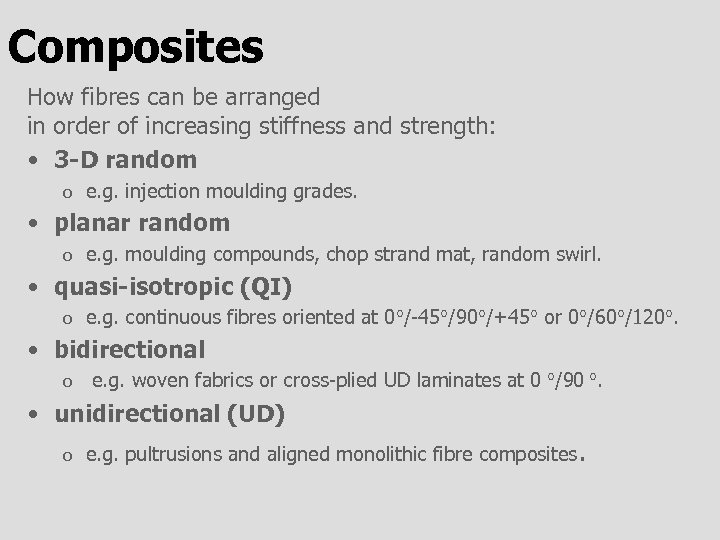
Composites How fibres can be arranged in order of increasing stiffness and strength: • 3 -D random o e. g. injection moulding grades. • planar random o e. g. moulding compounds, chop strand mat, random swirl. • quasi-isotropic (QI) o e. g. continuous fibres oriented at 0°/-45°/90°/+45° or 0°/60°/120°. • bidirectional o e. g. woven fabrics or cross-plied UD laminates at 0 °/90 °. • unidirectional (UD) o e. g. pultrusions and aligned monolithic fibre composites.
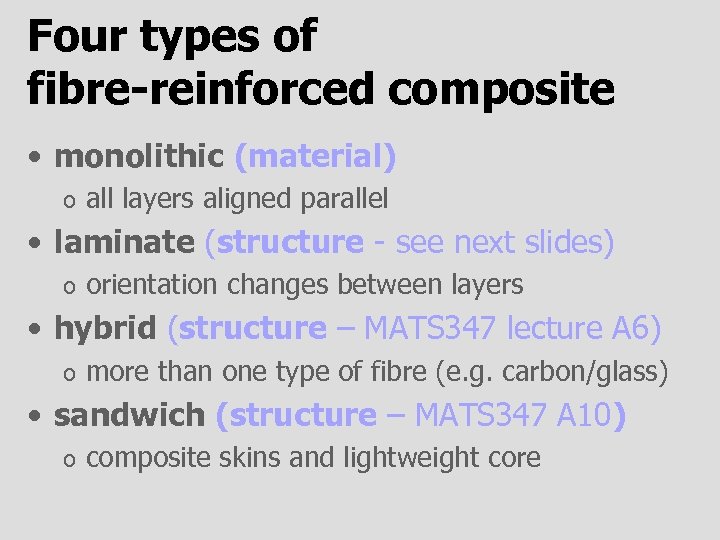
Four types of fibre-reinforced composite • monolithic (material) o all layers aligned parallel • laminate (structure - see next slides) o orientation changes between layers • hybrid (structure – MATS 347 lecture A 6) o more than one type of fibre (e. g. carbon/glass) • sandwich (structure – MATS 347 A 10) o composite skins and lightweight core
![Laminate stacking sequence notation • typical laminate stacking sequence is: o [0º/+45º/-45º/90º]ns • where](https://present5.com/presentation/4e8b8c6fc4464d10689ef24c3512ae6d/image-22.jpg "Laminate stacking sequence notation • typical laminate stacking sequence is: o [0º/+45º/-45º/90º]ns • where")
Laminate stacking sequence notation • typical laminate stacking sequence is: o [0º/+45º/-45º/90º]ns • where the subscripts are: o o o n is the number of repeats of the sequence Q indicates antisymmetric laminate s means the laminate is symmetric T is the total number of plies overbar denotes that the laminate is symmetric about the mid-plane of the ply • Thus for n = 2 above, the sequence will be: o 0º/+45º/-45º/90º/0º/+45º/-45º/90º*90º/-45º/+45º/0º/90º/-45º/+45º/0º o with * denoting the line of symmetry.
Key points of this lecture • • resources on Student Portal and Extranet anisotropy fibre volume fraction (Vf) basic rule-of-mixtures glass transition temperature (Tg) crystalline melting point (Tm) stacking sequence notation
Скачать презентацию Composites basics and terminology John Summerscales CAN-LHR 27
4e8b8c6fc4464d10689ef24c3512ae6d.ppt