 Скачать презентацию Components of Global Network Organizations Emergent internal
d13b825b5129dc21a3e7d7fa8987a96f.ppt
- Количество слайдов: 15



Components of Global Network Organizations • Emergent internal networks • Connections to flexible, dynamic external networks • Network linkages governed by mutual trust and shared collective outcomes • Sophisticated communication and information technology infrastructure
Strategic Commitment • International • few countries • international operations are neither specialized by country nor standardized across all • Multinational • facilities and sales in many countries • specialized by country • Global • facilities and sales in many countries • standardized approach across countries
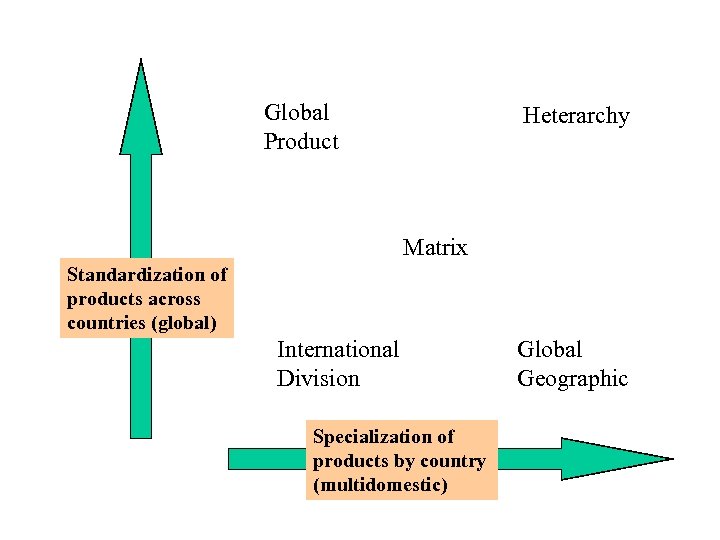
Global Product Heterarchy Matrix Standardization of products across countries (global) International Division Specialization of products by country (multidomestic) Global Geographic
Internal Network Designs • International Division • “product” structure with separate international division • Global Product • product divisions handle their own international operations (e. g. , Eaton Corporation) • product standardization with low country autonomy • economies of scale • Global Geographic • geographic divisions handle all functions and products for a country (e. g. , Dow Chemical) • product customization by country and high country autonomy
• Global Matrix • balances standardization with some country specialization (e. g. , ABB) • local country managers have two bosses: country boss and product boss • some economies of scale but less than for global product structure • “Heterarchy” • multiple centers of influence and decision-making rather than central headquarters • coordination by shared values and culture • many labels: network, adhocracy, technocracy, T-form, cellular, postbureaucratic, spherical, spoder’s web, “blueberry pancake”, etc.
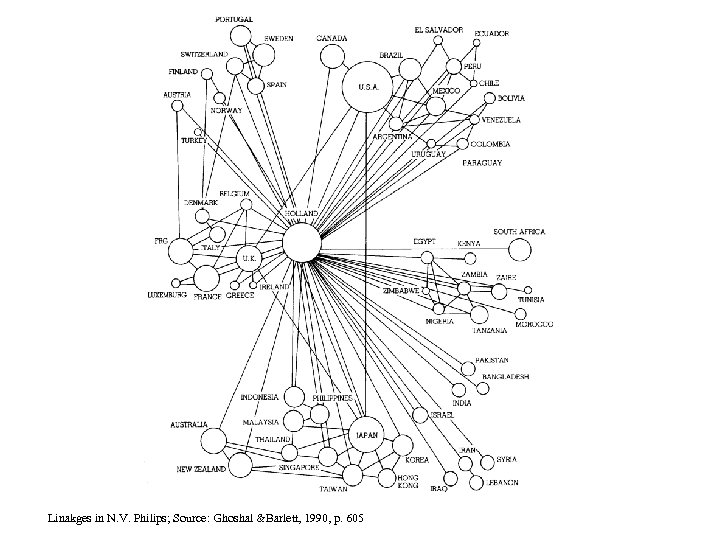
Linakges in N. V. Philips; Source: Ghoshal &Barlett, 1990, p. 605
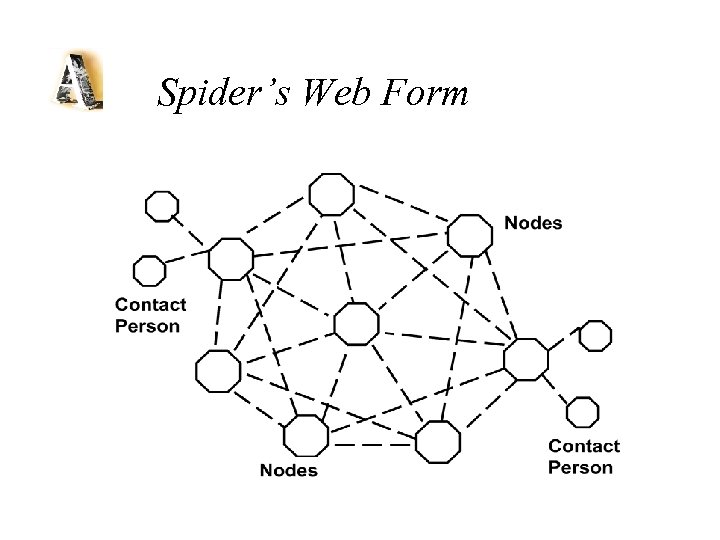
Spider’s Web Form
Communication Technology and Internal Networks • Connectivity: ability of each member of a defined public to communicate with each other • Communality: ability of each member of a defined public to contribute to, access and use a jointly held database, e. g. , company library
Communication Technology and Internal Networks • • Emergent, interest-based networks New communication partners More “weak ties” Substitution for hierarchy Community building Dispersion of information/expertise Coordination mechanisms for teams
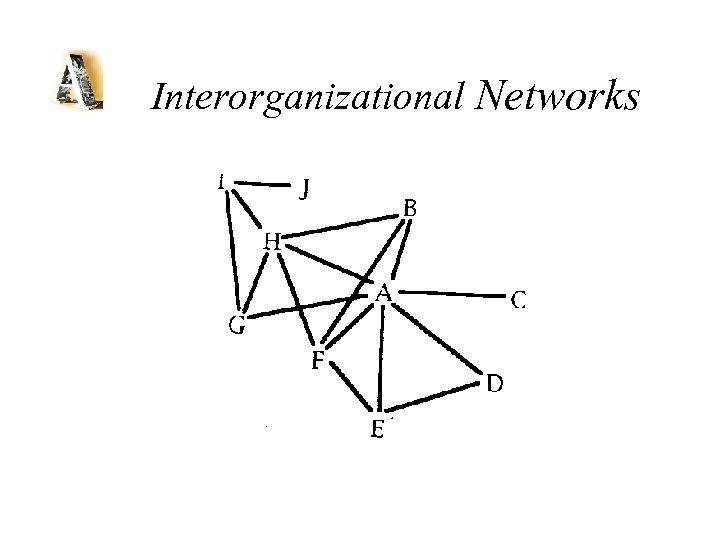
Interorganizational Networks
External Network Forms • Market vs. hierarchy • “Mixed mode” network organization • National networks, e. g. , – – keiretsu chaebol Taiwanese family business Regional network: Emilian model • Global networks transcend national form
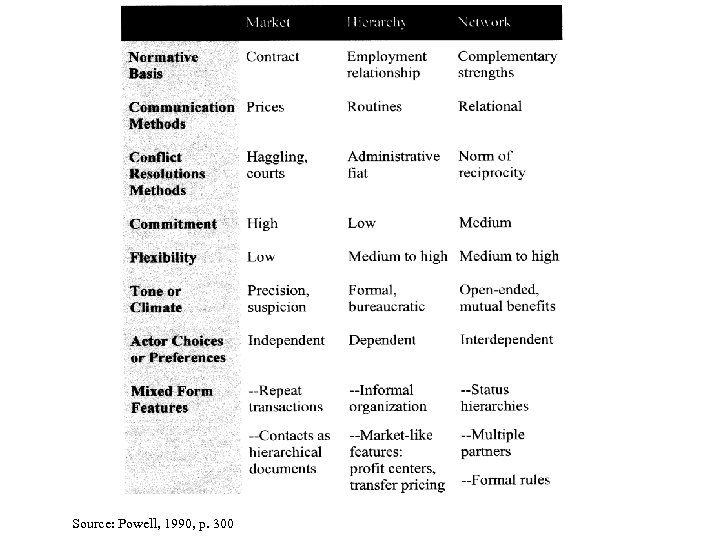
Source: Powell, 1990, p. 300
Communication Technology and External Networks Interorganizational exchange: • Value chain linkages • Alliances across unrelated industries • Jointly valued databases • Internet-based exchange Networks to develop infrastructure: • Organizations with complementary markets • Precompetitive alliances
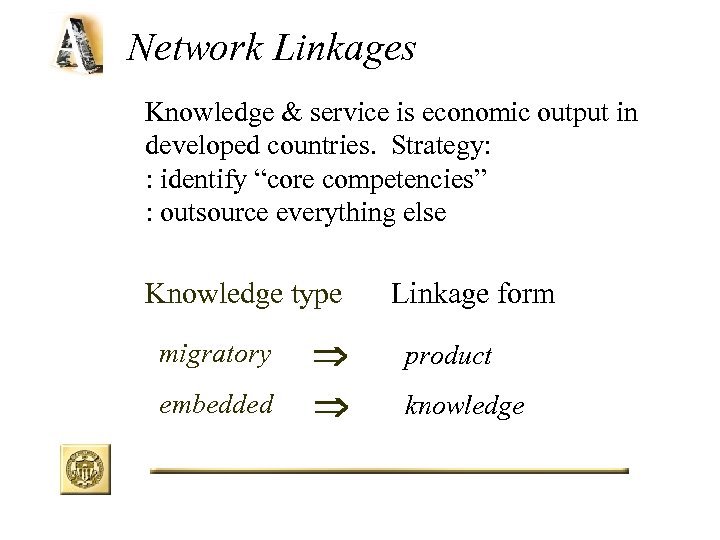
Network Linkages Knowledge & service is economic output in developed countries. Strategy: : identify “core competencies” : outsource everything else Knowledge type migratory embedded Linkage form product knowledge
Communication Technology and Network Linkages • Information products support coordination across more dispersed nodes • Personal linkages are required for transferring embedded knowledge • Technical advances in core knowledge support industry convergence
Скачать презентацию Components of Global Network Organizations Emergent internal
d13b825b5129dc21a3e7d7fa8987a96f.ppt