


 Скачать презентацию COMPETITION vs COORDINATION THE ANALYTICS OF OPEN ACCESS
94aa47f07a6fe2e6808c9b9272b2398e.ppt
- Количество слайдов: 30
 COMPETITION vs. COORDINATION: THE ANALYTICS OF OPEN ACCESS WITH ILLUSTRATIONS FROM RAILROADS José A. Gomez-Ibañez Annual Regulatory Conference of the Australian Competition and Consumer Commission, Surfers’ Paradise, Queensland July 29, 2010
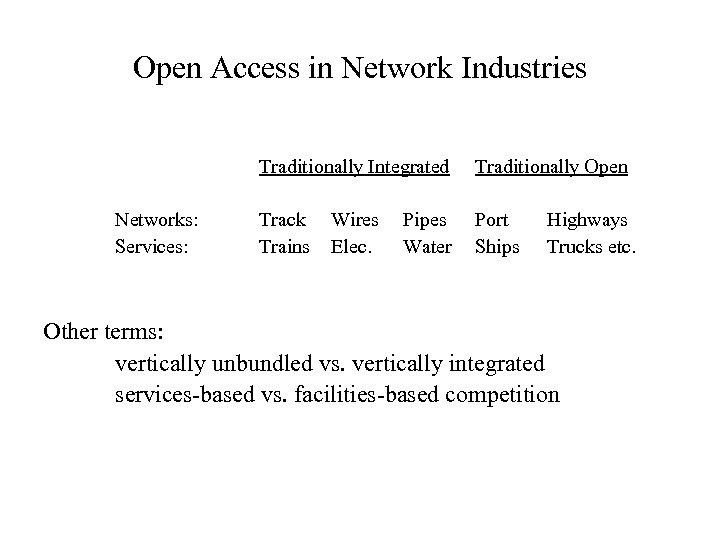 Open Access in Network Industries Traditionally Integrated Networks: Services: Traditionally Open Track Trains Port Ships Wires Elec. Pipes Water Highways Trucks etc. Other terms: vertically unbundled vs. vertically integrated services-based vs. facilities-based competition
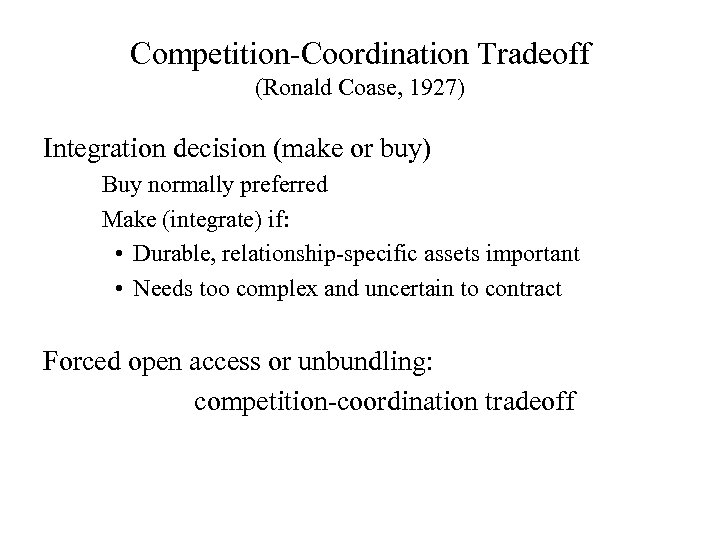 Competition-Coordination Tradeoff (Ronald Coase, 1927) Integration decision (make or buy) Buy normally preferred Make (integrate) if: • Durable, relationship-specific assets important • Needs too complex and uncertain to contract Forced open access or unbundling: competition-coordination tradeoff
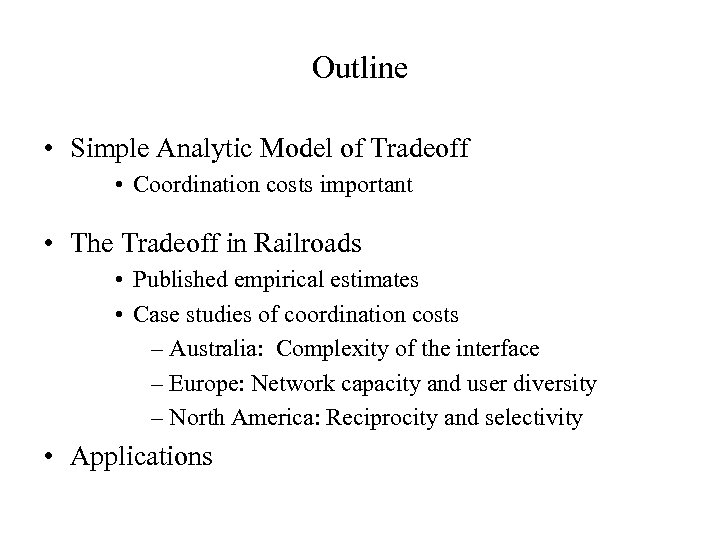 Outline • Simple Analytic Model of Tradeoff • Coordination costs important • The Tradeoff in Railroads • Published empirical estimates • Case studies of coordination costs – Australia: Complexity of the interface – Europe: Network capacity and user diversity – North America: Reciprocity and selectivity • Applications
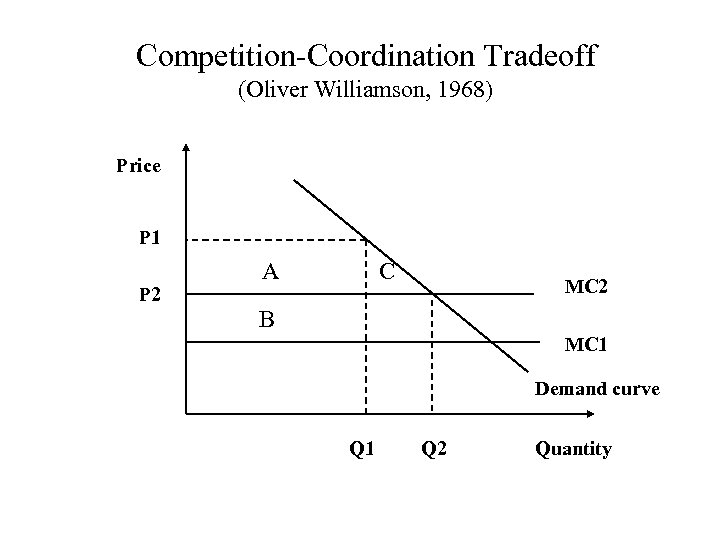 Competition-Coordination Tradeoff (Oliver Williamson, 1968) Price P 1 P 2 A C MC 2 B MC 1 Demand curve Q 1 Q 2 Quantity
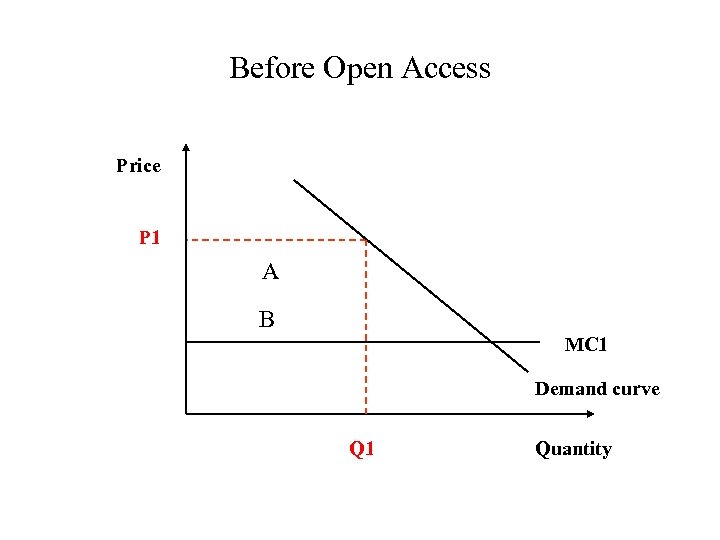 Before Open Access Price P 1 A B MC 1 Demand curve Q 1 Quantity
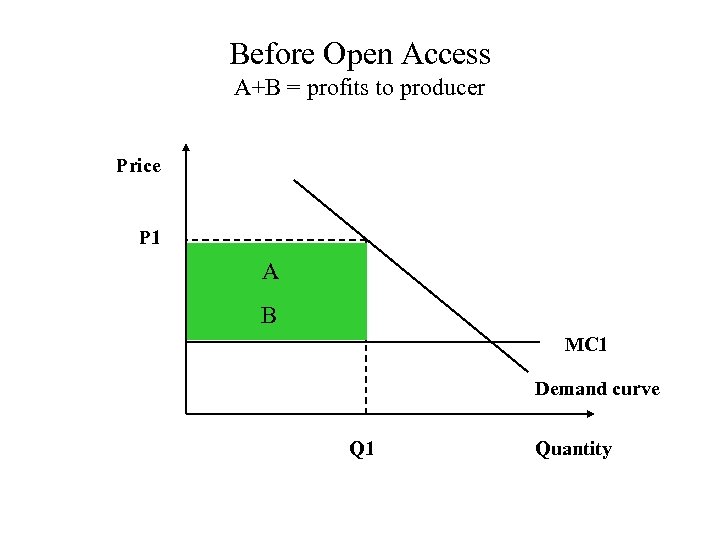 Before Open Access A+B = profits to producer Price P 1 A B MC 1 Demand curve Q 1 Quantity
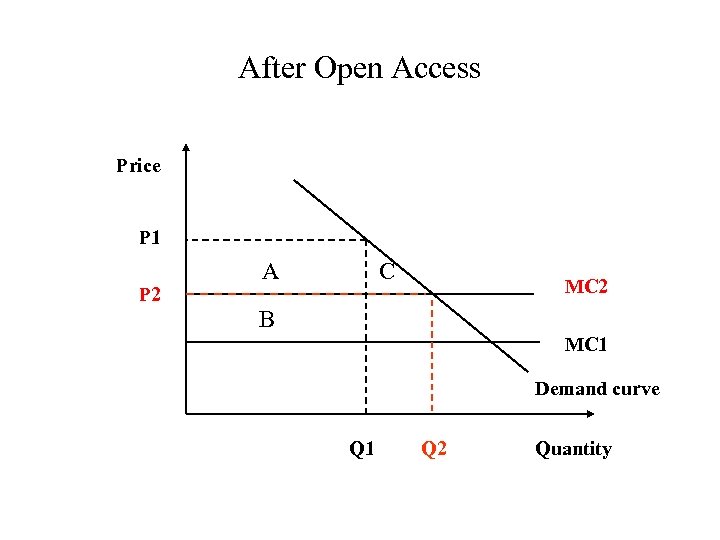 After Open Access Price P 1 P 2 A C MC 2 B MC 1 Demand curve Q 1 Q 2 Quantity
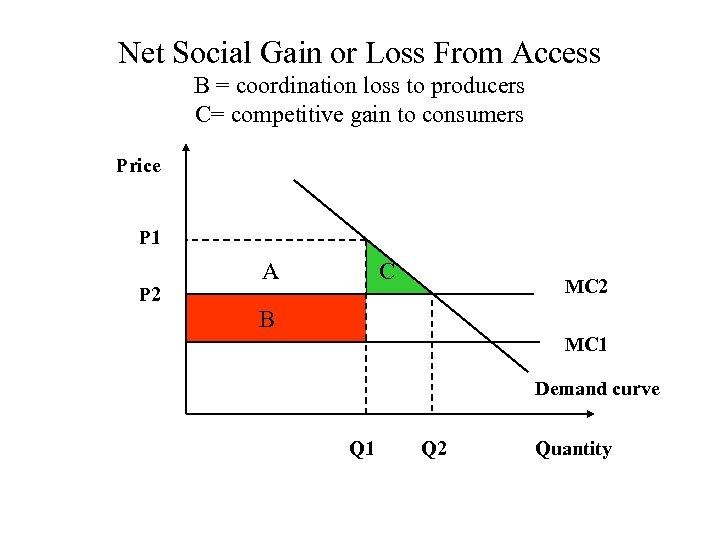 Net Social Gain or Loss From Access B = coordination loss to producers C= competitive gain to consumers Price P 1 P 2 A C MC 2 B MC 1 Demand curve Q 1 Q 2 Quantity
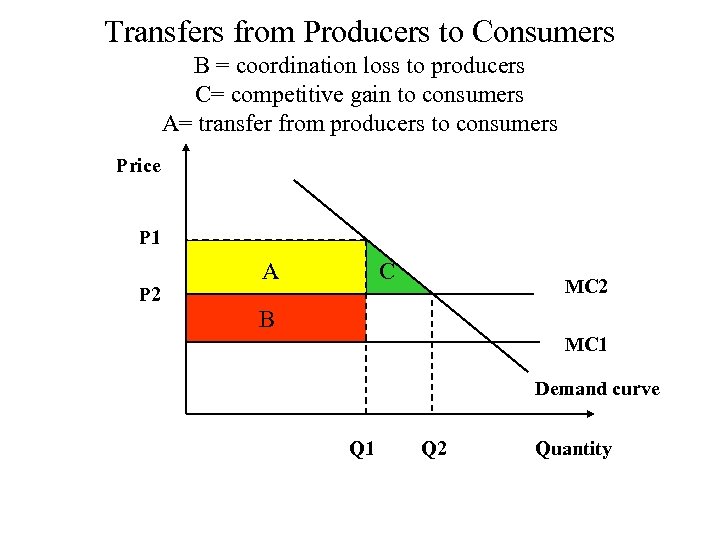 Transfers from Producers to Consumers B = coordination loss to producers C= competitive gain to consumers A= transfer from producers to consumers Price P 1 P 2 A C MC 2 B MC 1 Demand curve Q 1 Q 2 Quantity
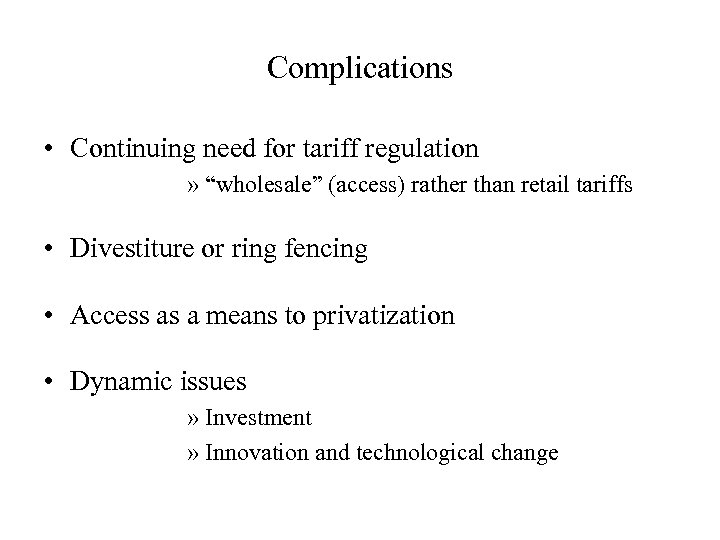 Complications • Continuing need for tariff regulation » “wholesale” (access) rather than retail tariffs • Divestiture or ring fencing • Access as a means to privatization • Dynamic issues » Investment » Innovation and technological change
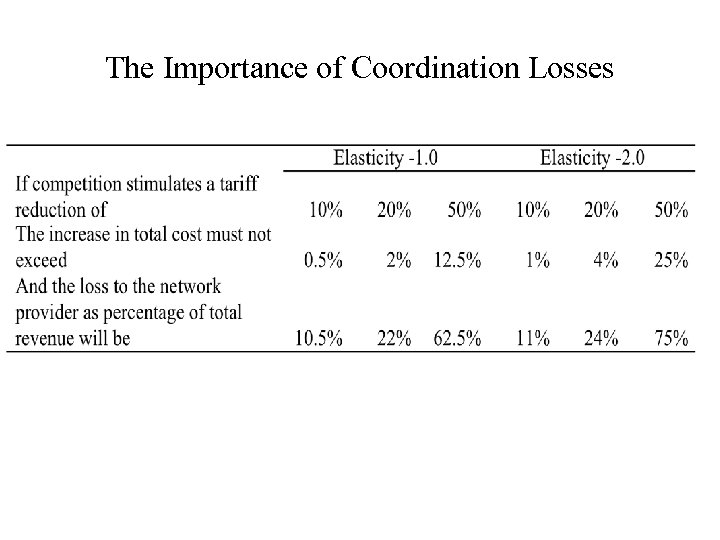 The Importance of Coordination Losses
 Railroads: Published Estimates • Competitive gains • US freight railroads: 10% to 20% tariff reduction if second carrier • Passenger railroads: no estimates because subsidies • Coordination losses • US freight railroads: 5% to 40% increase in costs • European railroads: mixed results
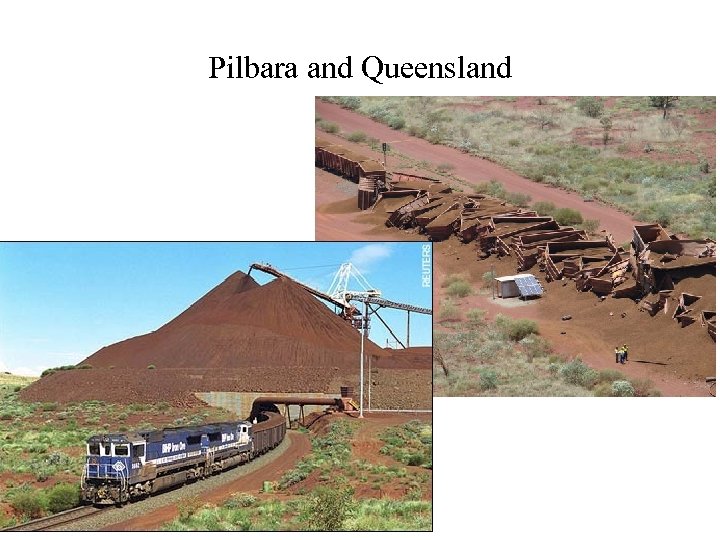
 Australia: Interface Complexity • Access the norm beginning 1995 • Most track infrastructure still government owned • Most train operators now private • Pilbara iron ore railroads (integrated & private) • BHP and Rio Tinto • Smaller miners want access • Queensland coal railroads (integrated & government) • Miners oppose privatization as vertically integrated railroad
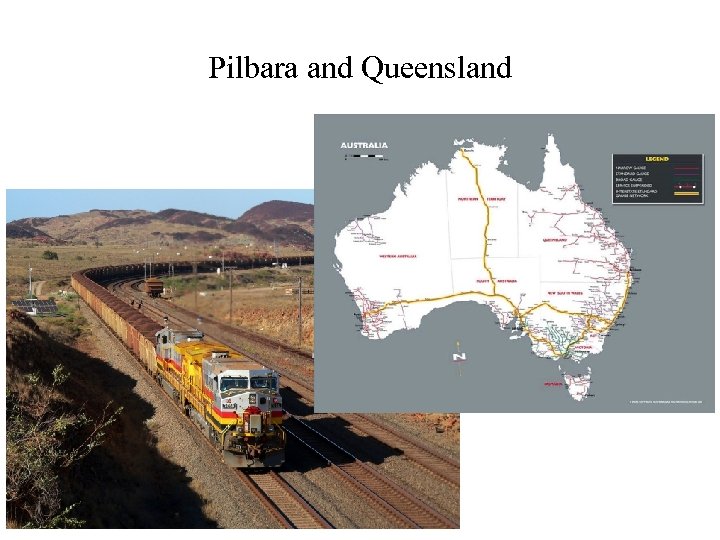 Pilbara and Queensland
 Pilbara and Queensland Heavy haul railroads • Heavy axle weights • 30 to 40 tons vs. 20 to 25 tons • Wheel-rail interface • Part of complex supply chain • Mines, stockpiles, ports, ships in addition to trains and track • Dispatching and capacity investment
 Pilbara and Queensland
 Europe: Network Capacity and User Diversity • EC requirements • Open access for many train services beginning 1991 • Separation of infrastructure from train operations • Continental Europe: few lessons • Relatively few added services • Infrastructure companies government owned and many heavily subsidized
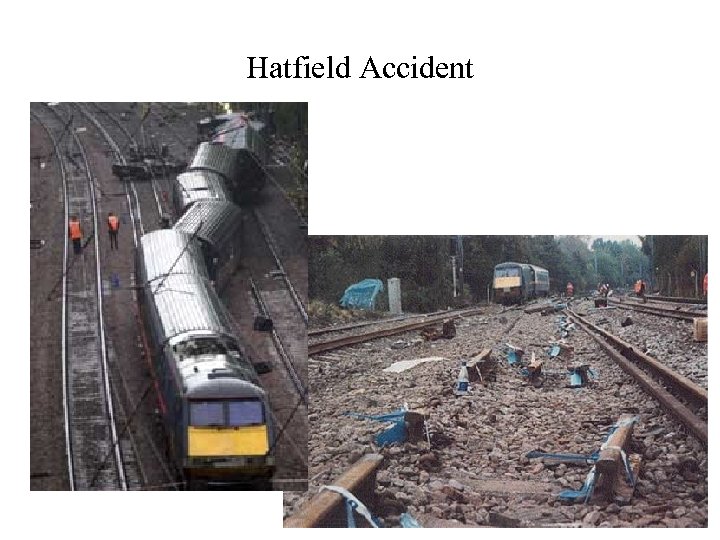
 Britain • British Rail restructuring and privatization (1994 -97) • One infrastructure company (Railtrack), 25 passenger train companies, etc. • System of access charges and penalties • Low fee per added train encourages more trains • Industry regulator orders Railtrack and train operating companies to negotiate over capacity improvements • Railtrack bankruptcy (2000) • Hatfield accident • West Coast Main Line upgrade
 Hatfield Accident
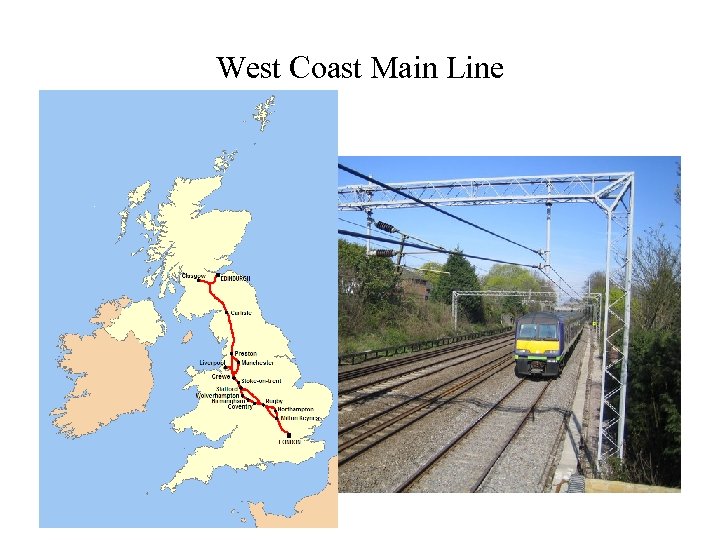 West Coast Main Line
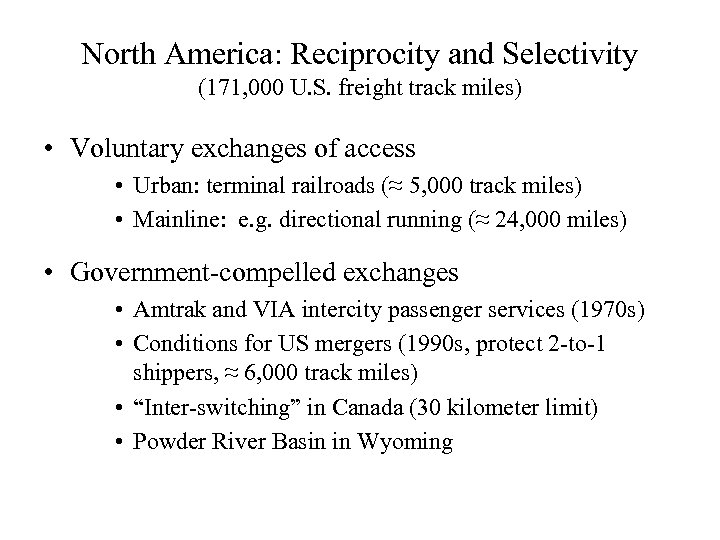 North America: Reciprocity and Selectivity (171, 000 U. S. freight track miles) • Voluntary exchanges of access • Urban: terminal railroads (≈ 5, 000 track miles) • Mainline: e. g. directional running (≈ 24, 000 miles) • Government-compelled exchanges • Amtrak and VIA intercity passenger services (1970 s) • Conditions for US mergers (1990 s, protect 2 -to-1 shippers, ≈ 6, 000 track miles) • “Inter-switching” in Canada (30 kilometer limit) • Powder River Basin in Wyoming
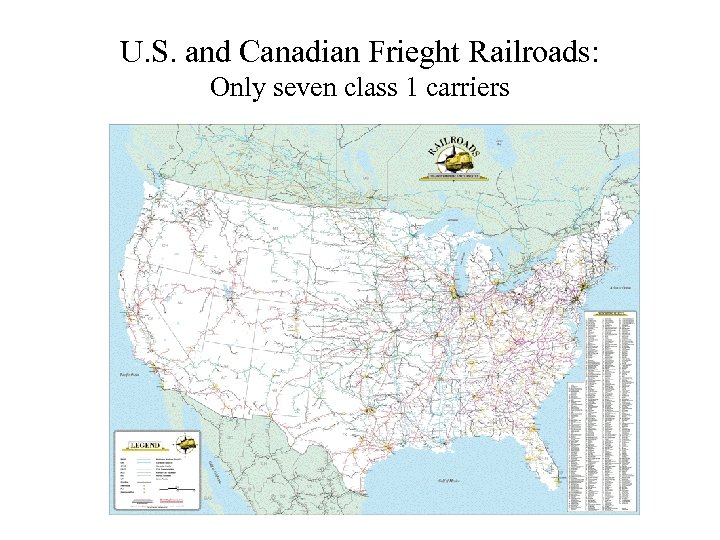 U. S. and Canadian Frieght Railroads: Only seven class 1 carriers
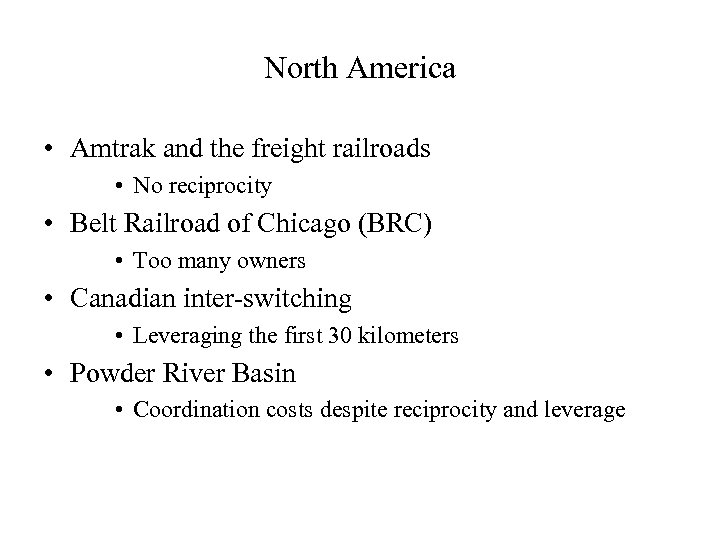 North America • Amtrak and the freight railroads • No reciprocity • Belt Railroad of Chicago (BRC) • Too many owners • Canadian inter-switching • Leveraging the first 30 kilometers • Powder River Basin • Coordination costs despite reciprocity and leverage
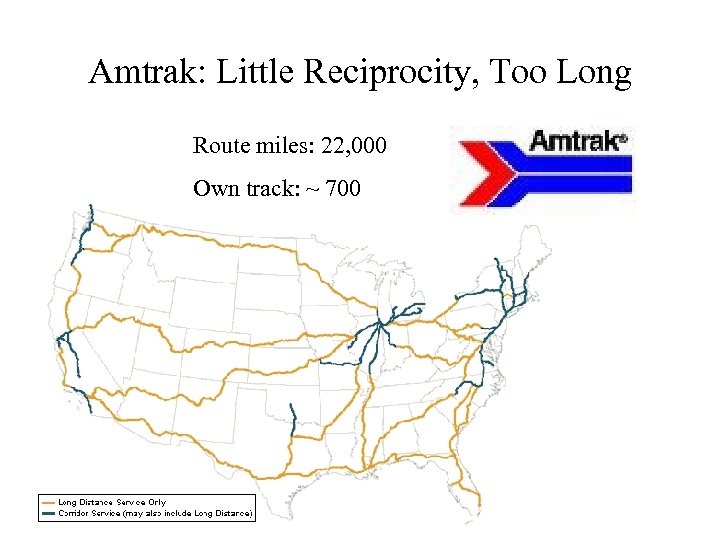 Amtrak: Little Reciprocity, Too Long Route miles: 22, 000 Own track: ~ 700
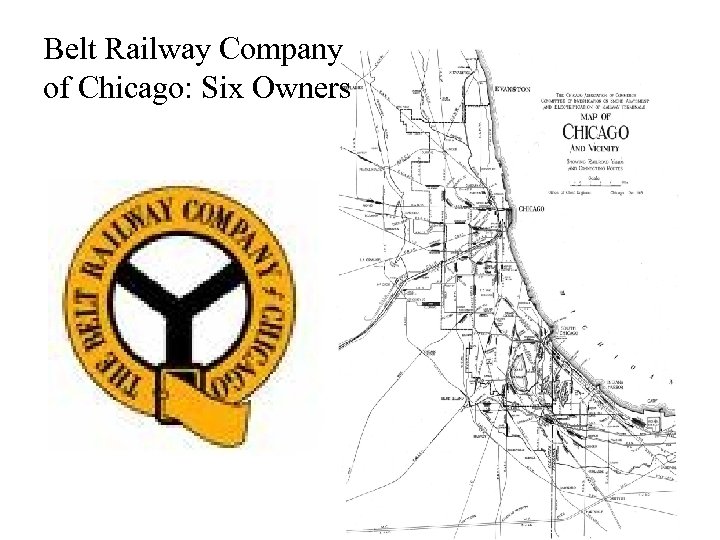 Belt Railway Company of Chicago: Six Owners
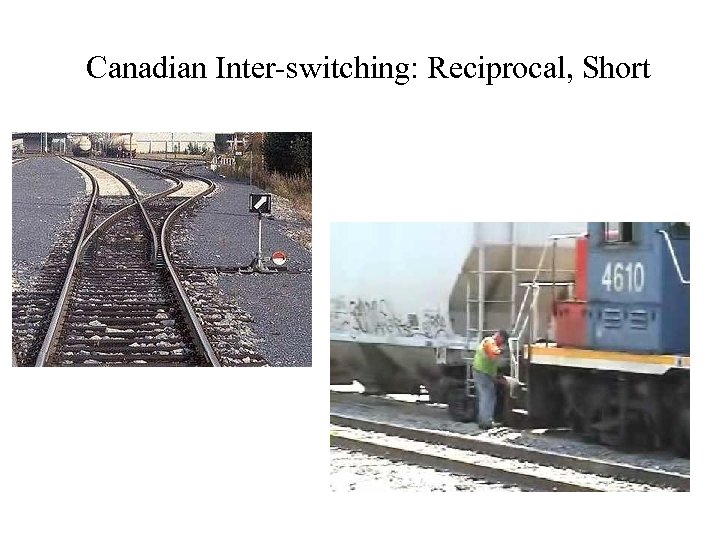 Canadian Inter-switching: Reciprocal, Short
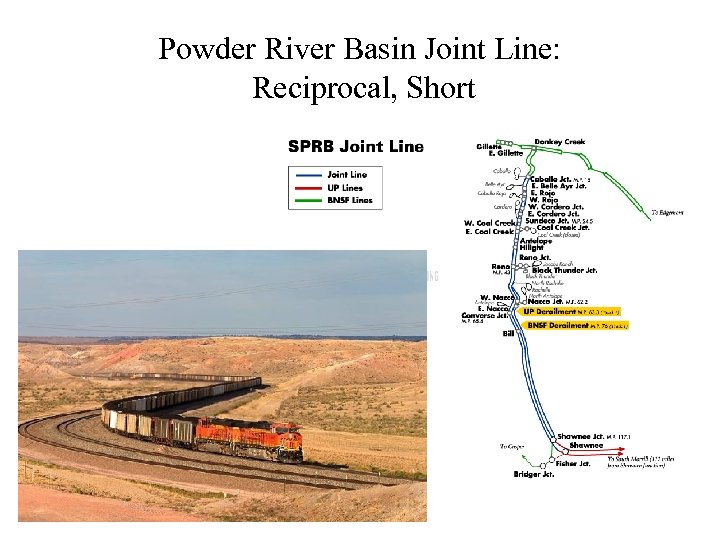 Powder River Basin Joint Line: Reciprocal, Short
 Conclusions • Access a competition-coordination tradeoff • Often significant competition already • A little lost coordination offsets a fair amount of increased competition • Coordination losses higher • • • More complex and sensitive the provider-user interface Network is close to capacity Access seekers have diverse needs Little reciprocity in access rights Rights are broad rather than selective
 Applications to Other Industries • Road vs. rail • Vehicle-highway interface more forgiving • Competitive benefits of highway access greater • Telecommunications • “Short” access often important (poles and towers) • Voice telephony vs. broadband – Competitive benefit has declined significantly with both – Broadband greater pressure for capacity – Broadband interface more complex and changing