


 Скачать презентацию Comparison of Transparent and Opaque Optical Transport Network
57715310048aeddda2c50e6732a2aa07.ppt
- Количество слайдов: 17
 Comparison of Transparent and Opaque Optical Transport Network Designs P Tomlinson, G Hill and A Tzanakaki Altamar Networks UK, Blake House, Schooner Court, Crossways, Dartford, Kent, DA 22 6 QQ, UK
 Introduction – – – Rationale for the study Transparent and opaque architectures Network model and assumptions Results & conclusions New results Overall conclusions 2
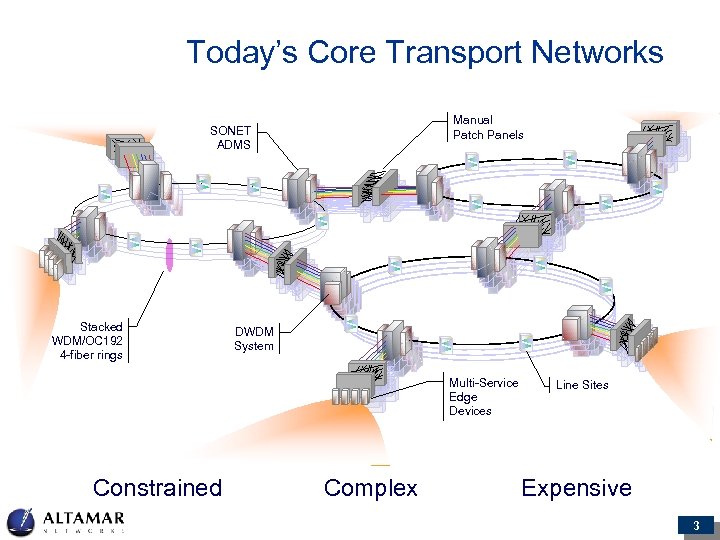 Today’s Core Transport Networks Manual Patch Panels SONET ADMS Stacked WDM/OC 192 4 -fiber rings DWDM System Multi-Service Edge Devices Constrained Complex Line Sites Expensive 3
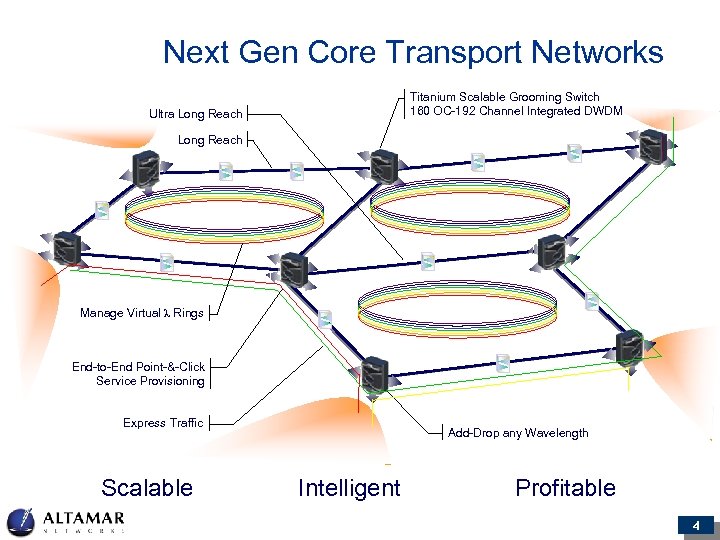 Next Gen Core Transport Networks Titanium Scalable Grooming Switch 160 OC-192 Channel Integrated DWDM Ultra Long Reach Manage Virtual λ Rings End-to-End Point-&-Click Service Provisioning Express Traffic Scalable Add-Drop any Wavelength Intelligent Profitable 4
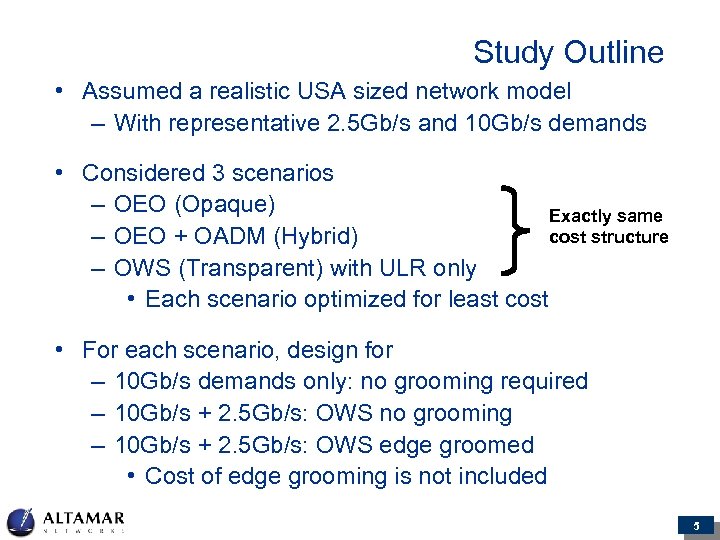 Study Outline • Assumed a realistic USA sized network model – With representative 2. 5 Gb/s and 10 Gb/s demands • Considered 3 scenarios – OEO (Opaque) Exactly same cost structure – OEO + OADM (Hybrid) – OWS (Transparent) with ULR only • Each scenario optimized for least cost • For each scenario, design for – 10 Gb/s demands only: no grooming required – 10 Gb/s + 2. 5 Gb/s: OWS no grooming – 10 Gb/s + 2. 5 Gb/s: OWS edge groomed • Cost of edge grooming is not included 5
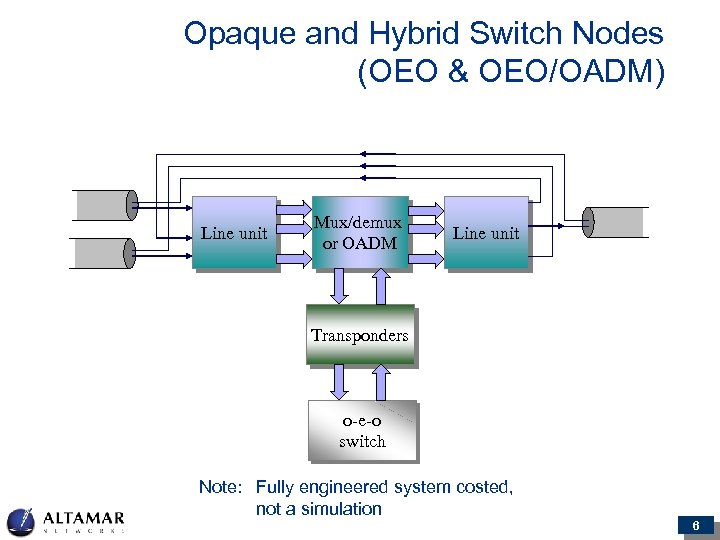 Opaque and Hybrid Switch Nodes (OEO & OEO/OADM) Line unit Mux/demux or OADM Line unit Transponders o-e-o switch Note: Fully engineered system costed, not a simulation 6
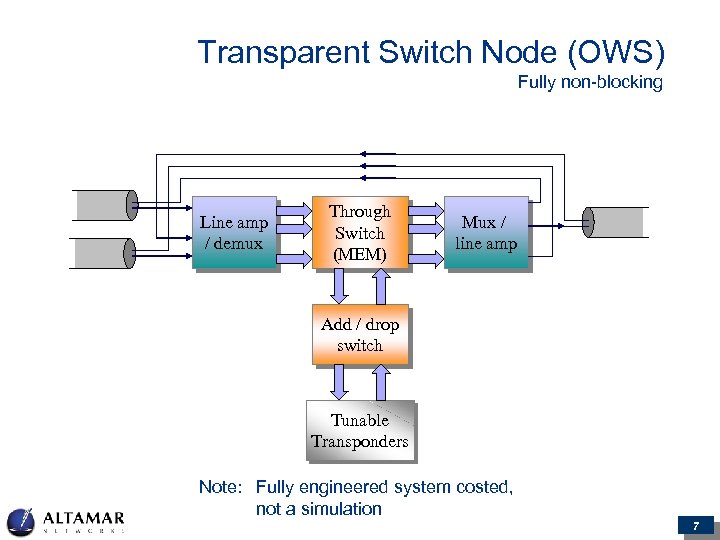 Transparent Switch Node (OWS) Fully non-blocking Line amp / demux Through Switch (MEM) Mux / line amp Add / drop switch Tunable Transponders Note: Fully engineered system costed, not a simulation 7
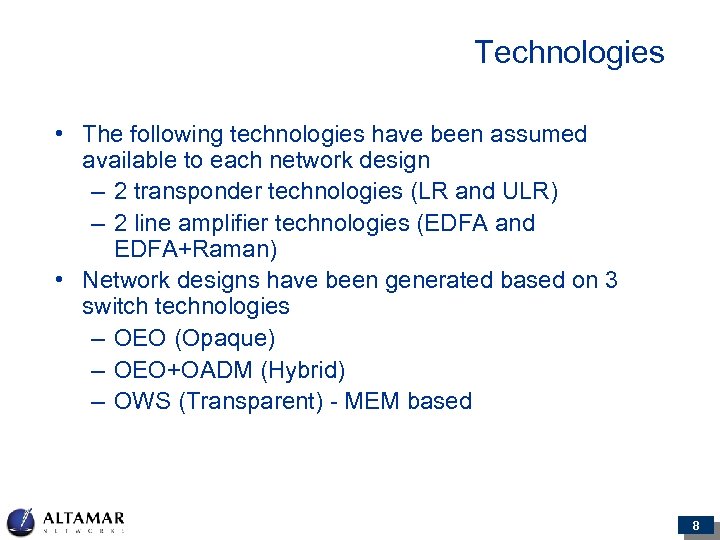 Technologies • The following technologies have been assumed available to each network design – 2 transponder technologies (LR and ULR) – 2 line amplifier technologies (EDFA and EDFA+Raman) • Network designs have been generated based on 3 switch technologies – OEO (Opaque) – OEO+OADM (Hybrid) – OWS (Transparent) - MEM based 8
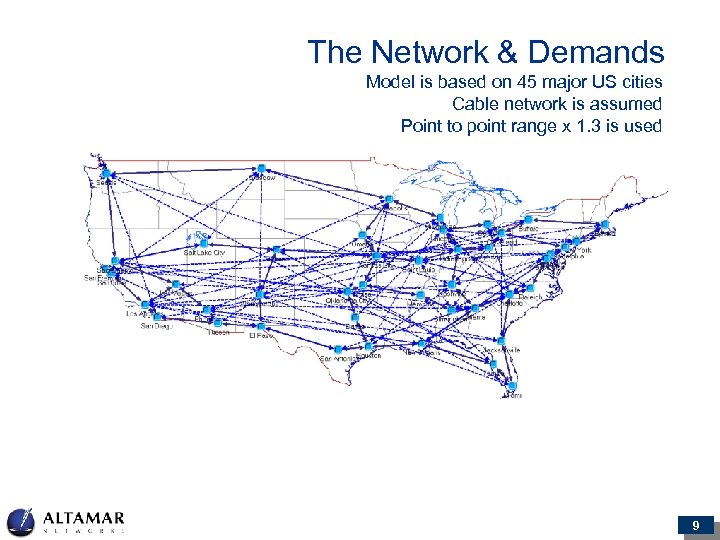 The Network & Demands Model is based on 45 major US cities Cable network is assumed Point to point range x 1. 3 is used 9
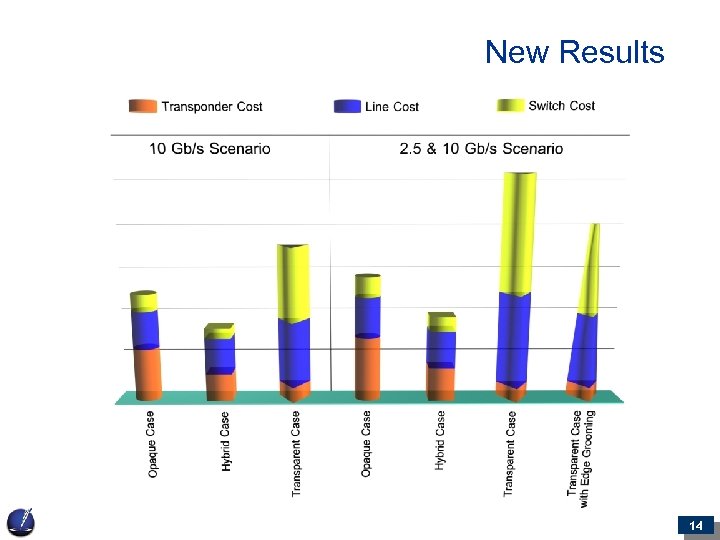
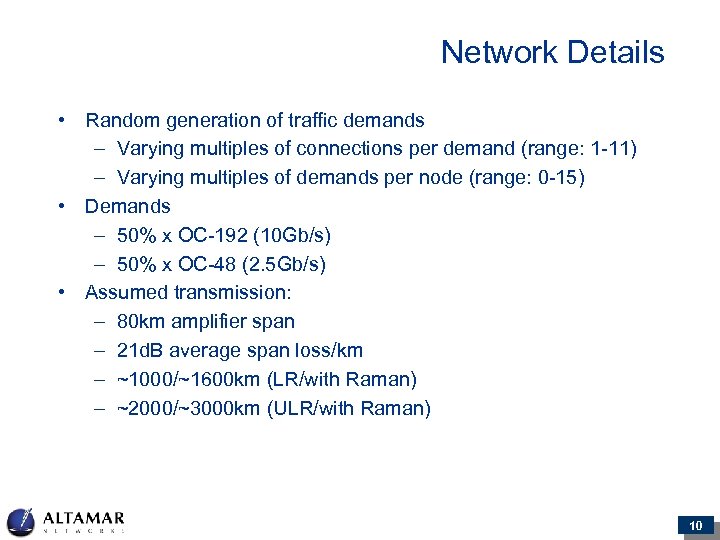 Network Details • Random generation of traffic demands – Varying multiples of connections per demand (range: 1 -11) – Varying multiples of demands per node (range: 0 -15) • Demands – 50% x OC-192 (10 Gb/s) – 50% x OC-48 (2. 5 Gb/s) • Assumed transmission: – 80 km amplifier span – 21 d. B average span loss/km – ~1000/~1600 km (LR/with Raman) – ~2000/~3000 km (ULR/with Raman) 10
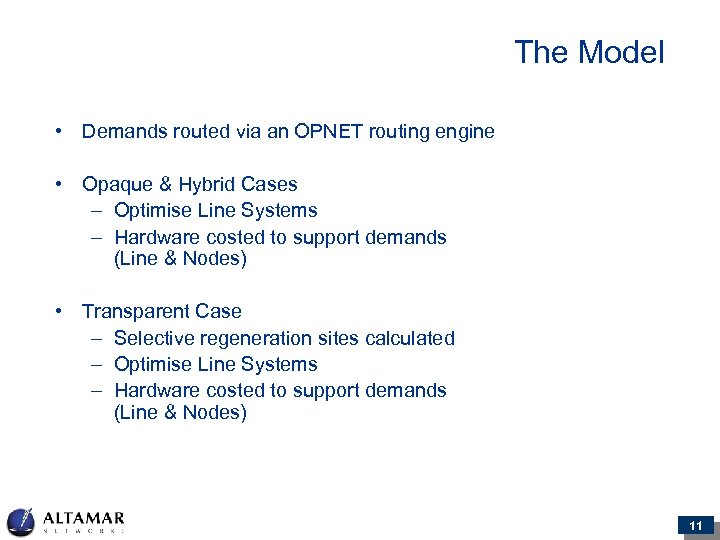 The Model • Demands routed via an OPNET routing engine • Opaque & Hybrid Cases – Optimise Line Systems – Hardware costed to support demands (Line & Nodes) • Transparent Case – Selective regeneration sites calculated – Optimise Line Systems – Hardware costed to support demands (Line & Nodes) 11
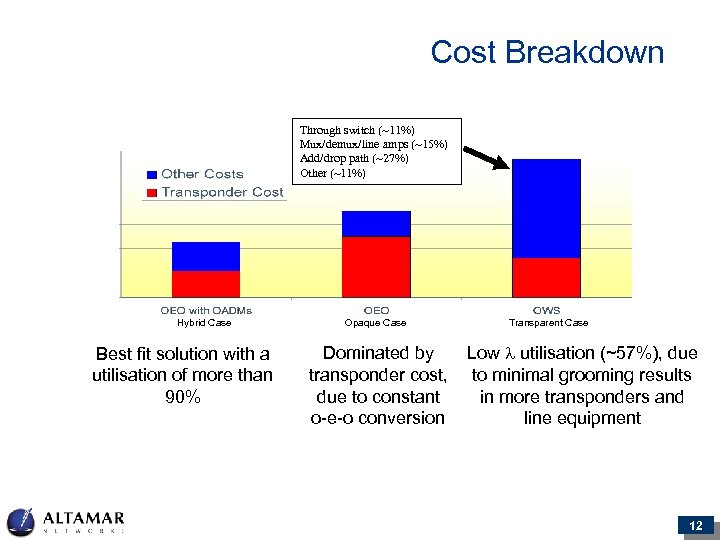 Cost Breakdown Through switch (~11%) Mux/demux/line amps (~15%) Add/drop path (~27%) Other (~11%) Hybrid Case Best fit solution with a utilisation of more than 90% Opaque Case Dominated by transponder cost, due to constant o-e-o conversion Transparent Case Low l utilisation (~57%), due to minimal grooming results in more transponders and line equipment 12
 Transponder Count Transponders per Node § OWS (Transparent) case uses a minimal # of high cost ULR transponders § OEO with OADMs (Hybrid) case uses the optimum # of best suited LR or ULR transponders §Note: Impact of grooming § OEO without OADMs (Opaque) case uses best suited LR or ULR transponders throughout the network 13
 New Results 14
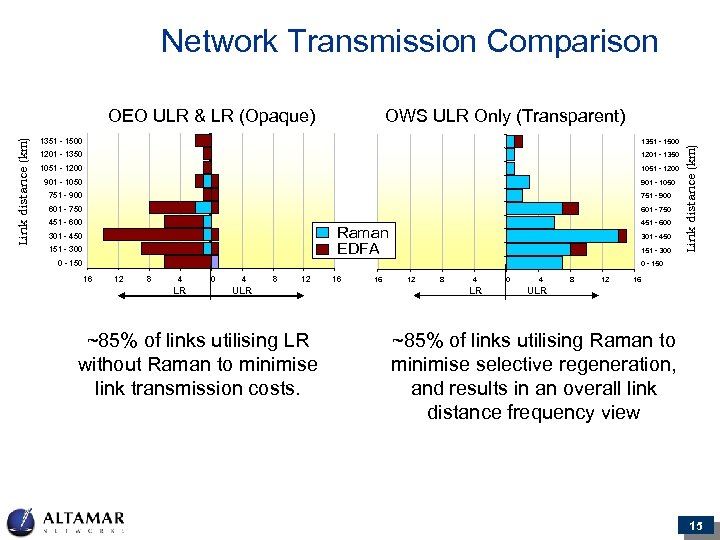 Network Transmission Comparison OWS ULR Only (Transparent) 1351 - 1500 1201 - 1350 1051 - 1200 901 - 1050 751 - 900 601 - 750 451 - 600 Raman EDFA 301 - 450 151 - 300 0 - 150 Link distance (km) OEO ULR & LR (Opaque) 0 - 150 16 12 8 4 LR 0 4 8 12 ULR ~85% of links utilising LR without Raman to minimise link transmission costs. 16 16 12 8 4 LR 0 4 8 12 16 ULR ~85% of links utilising Raman to minimise selective regeneration, and results in an overall link distance frequency view 15
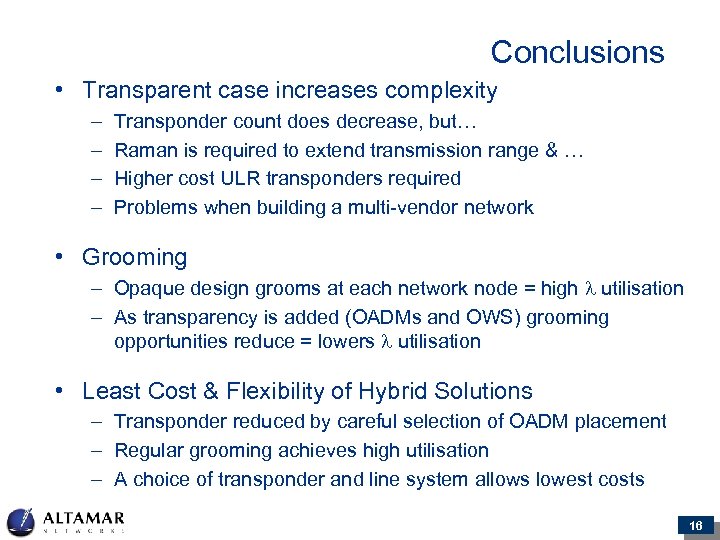 Conclusions • Transparent case increases complexity – – Transponder count does decrease, but… Raman is required to extend transmission range & … Higher cost ULR transponders required Problems when building a multi-vendor network • Grooming – Opaque design grooms at each network node = high l utilisation – As transparency is added (OADMs and OWS) grooming opportunities reduce = lowers l utilisation • Least Cost & Flexibility of Hybrid Solutions – Transponder reduced by careful selection of OADM placement – Regular grooming achieves high utilisation – A choice of transponder and line system allows lowest costs 16
 End of Presentation