 Скачать презентацию Comparing 3 D Flow Visualization Techniques Andy Forsberg
c9c1ce0809fa0e9c566d27f6109f8e61.ppt
- Количество слайдов: 75



Comparing 3 D Flow Visualization Techniques Andy Forsberg March 3, 2008
Roadmap Motivation n Study Design n Preliminary Results n
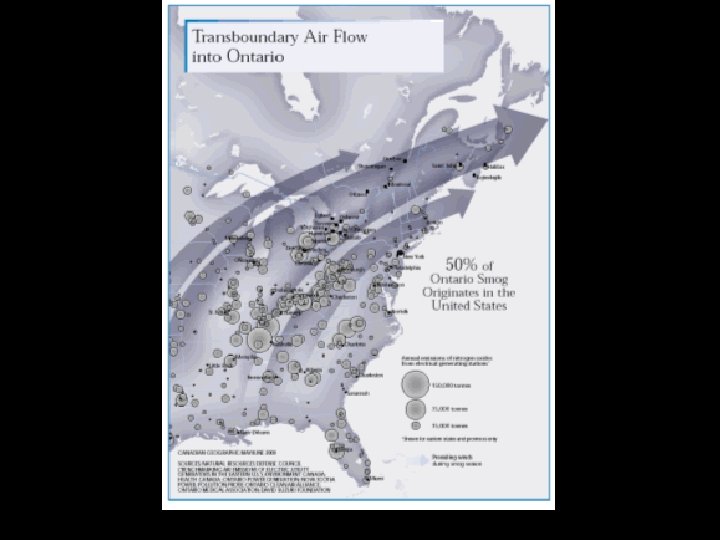
3 D Flow overview Weather map = 2 D (mostly) n We’re looking at 3 D flows… n n When is 3 D important?
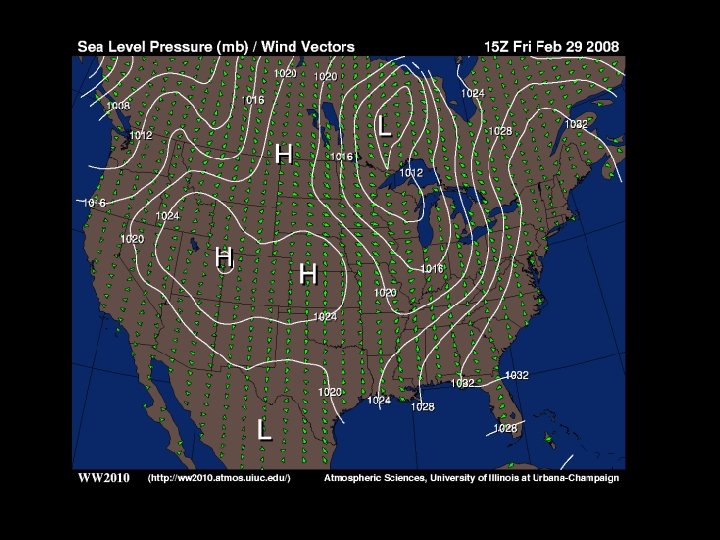
Of course all this is 3 D… n how do the available techniques compare for understanding the flow data?
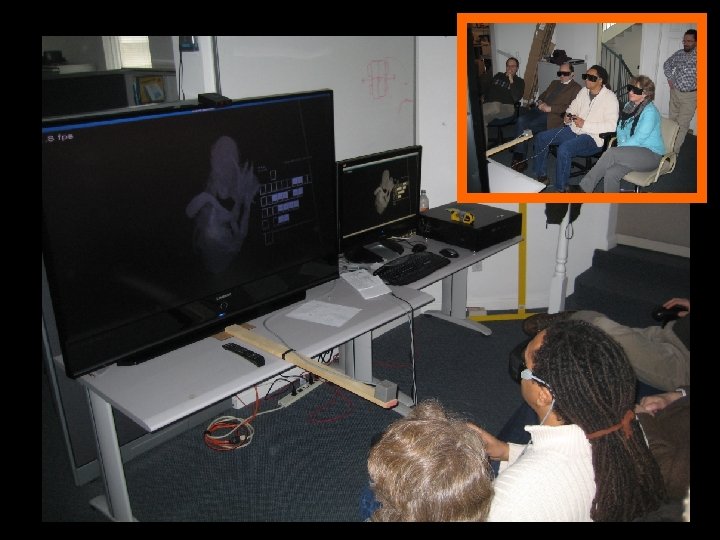
Working Environment n User study room. .

Fill in…

Fill in…

Fill in…

Fill in…

Fill in…

Fill in…
Motivation n How do various visualization methods compare?
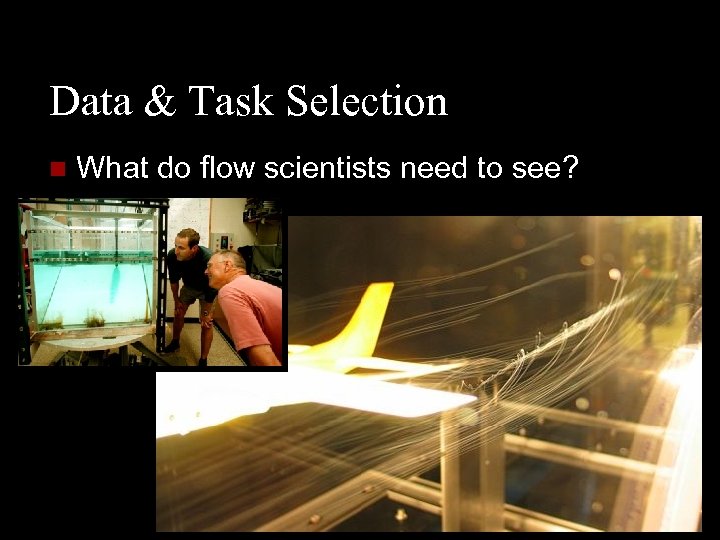
Data & Task Selection n What do flow scientists need to see?
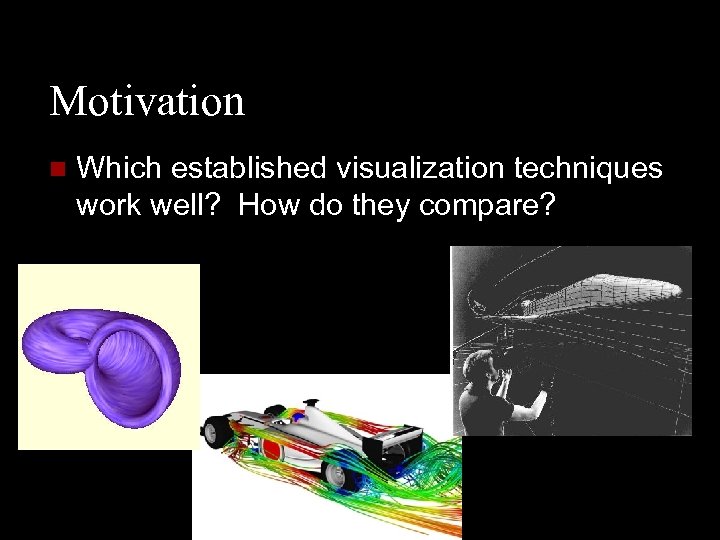
Motivation n Which established visualization techniques work well? How do they compare?
![[[List of tasks, list of techniques]]](https://present5.com/presentation/c9c1ce0809fa0e9c566d27f6109f8e61/image-18.jpg "[[List of tasks, list of techniques]]")
[[List of tasks, list of techniques]]
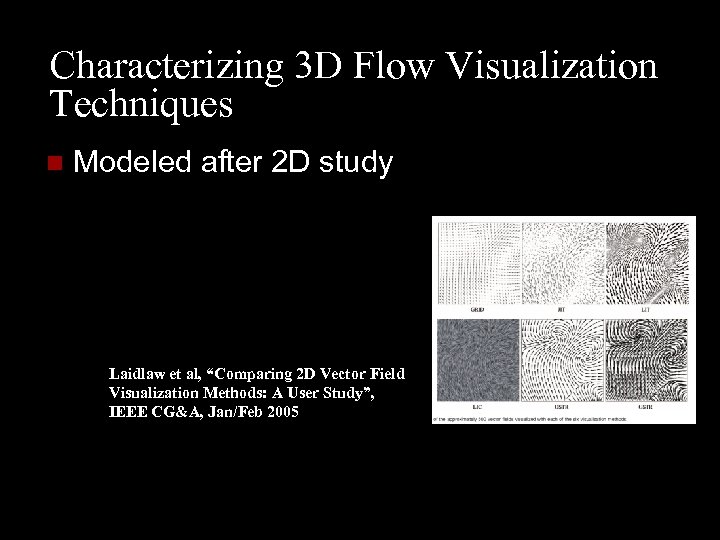
Characterizing 3 D Flow Visualization Techniques n Modeled after 2 D study Laidlaw et al, “Comparing 2 D Vector Field Visualization Methods: A User Study”, IEEE CG&A, Jan/Feb 2005
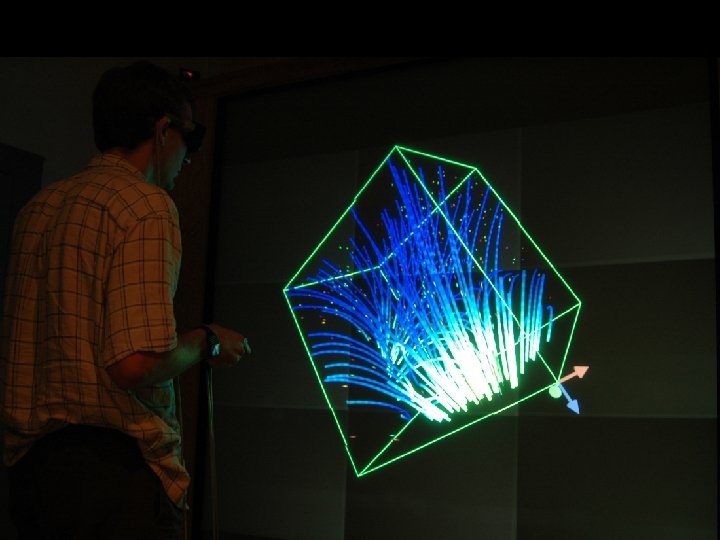
Characterizing 3 D Flow Vis. Techs. n We want to characterize the relative value n n potentially a huge number of techniques working initially with some traditional, some contemporary techniques
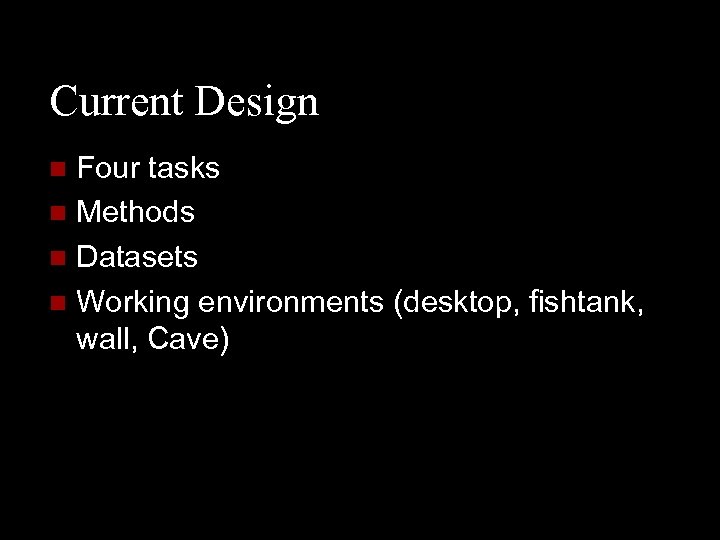
Current Design Four tasks n Methods n Datasets n Working environments (desktop, fishtank, wall, Cave) n
![Definition: Critical Point [talk to it. . No slide] n Why is it significant?](https://present5.com/presentation/c9c1ce0809fa0e9c566d27f6109f8e61/image-23.jpg "Definition: Critical Point [talk to it. . No slide] n Why is it significant?")
Definition: Critical Point [talk to it. . No slide] n Why is it significant? n Something is happening there. . E. g. , hands coming together What is it? n Show 9 types of critical points (illustrations…) n Sometimes CPs are indirectly what fluids people are studying. . n
![Four tasks [separate to 4 slides, pictures will help] n Modeled after Laidlaw et](https://present5.com/presentation/c9c1ce0809fa0e9c566d27f6109f8e61/image-24.jpg "Four tasks [separate to 4 slides, pictures will help] n Modeled after Laidlaw et")
Four tasks [separate to 4 slides, pictures will help] n Modeled after Laidlaw et al. 2 D study n “Is this a critical point? ”
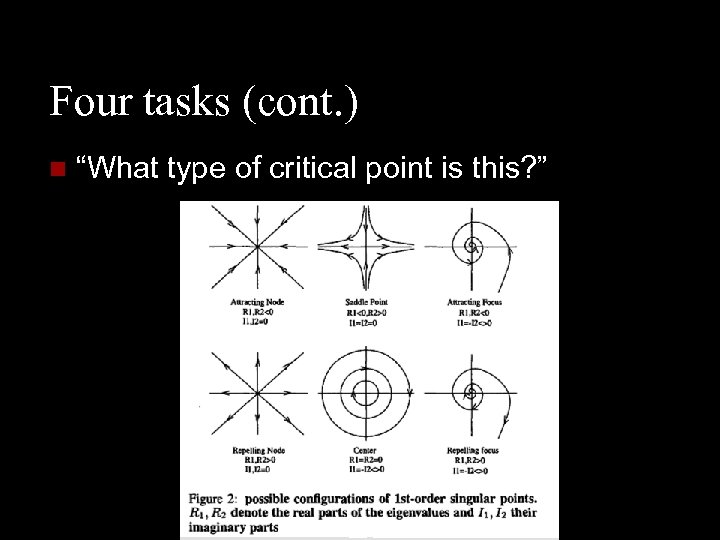
Four tasks (cont. ) n “What type of critical point is this? ”
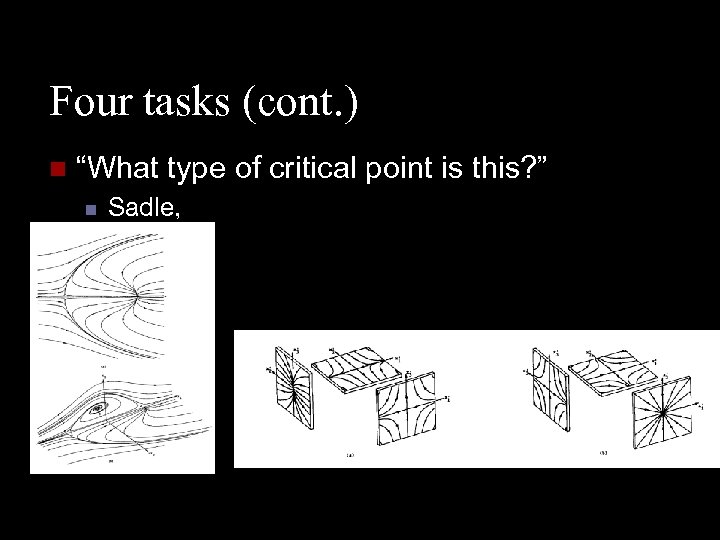
Four tasks (cont. ) n “What type of critical point is this? ” n Sadle,
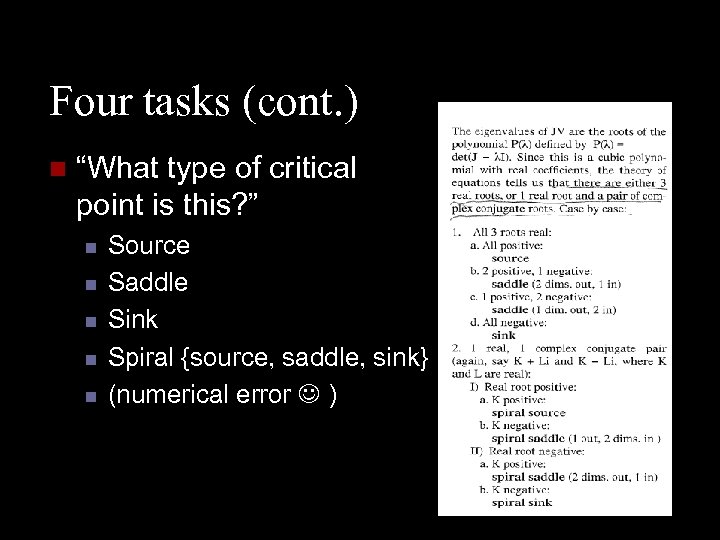
Four tasks (cont. ) n “What type of critical point is this? ” n n n Source Saddle Sink Spiral {source, saddle, sink} (numerical error )
Four tasks (cont. ) “Does point A integrate to point B? ” n “Is this point in swirling flow? ” n
Visualization methods Streamtubes n Illuminated streamlines n Isosurfaces of pressure n Particle Flurries n
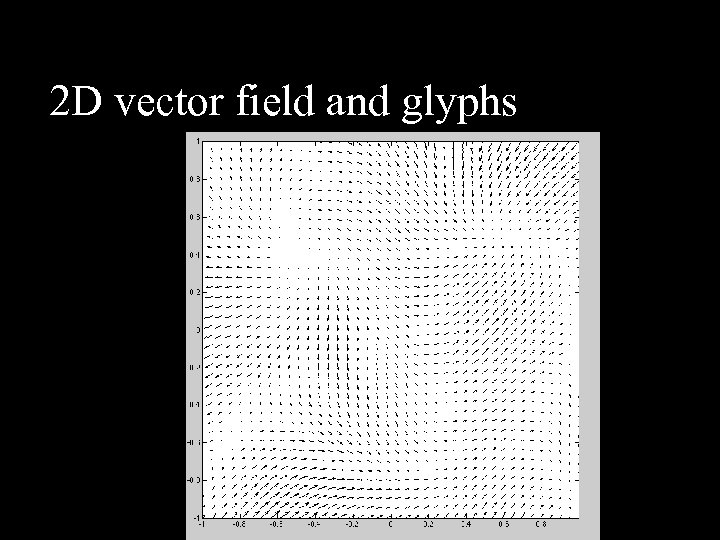
2 D vector field and glyphs
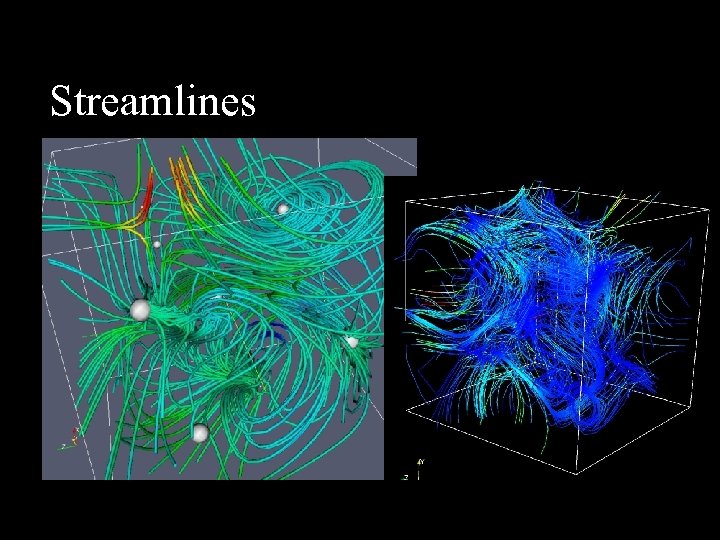
Streamlines
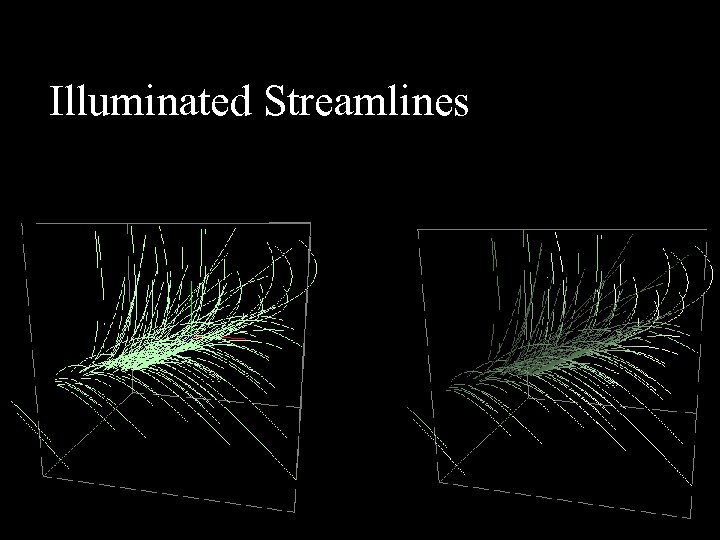
Illuminated Streamlines
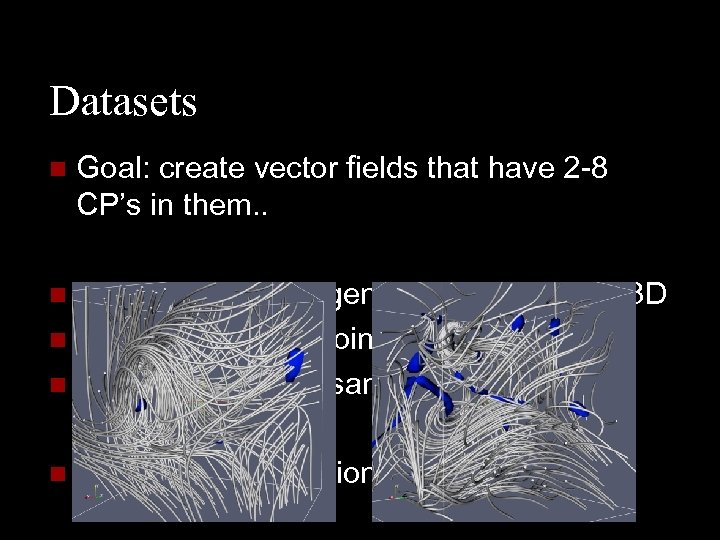
Datasets n Goal: create vector fields that have 2 -8 CP’s in them. . Jian extended 2 D generation method to 3 D n Can get n critical points per dataset n Have hundreds of samples we can use n n No surface interaction
Working environments Desktop initially n Desktop vs Tiled Wall vs Cave n
Next-generation Cave n Do we need a Cave with pixel qualities like a conventional desktop? Is that too much? Not enough? n How good is the bright, 30 dpi tiled-wall? n Add Cave, tiledwall, desktop to user study
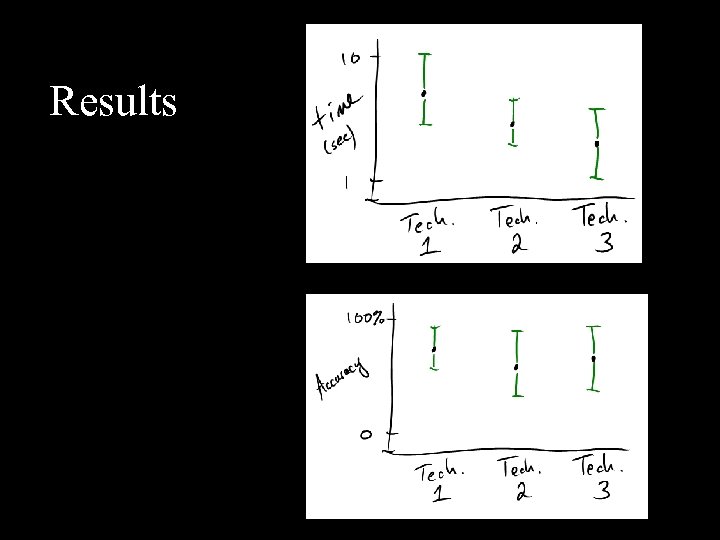
Preliminary Results Ran ‘n’ subjects n Graph of performance, % correct answers, subjective responses n
Results
The End
Questions for audience Critique/comments? n What would make it stronger as a research project (later paper)? n What other vis methods should we be using? n




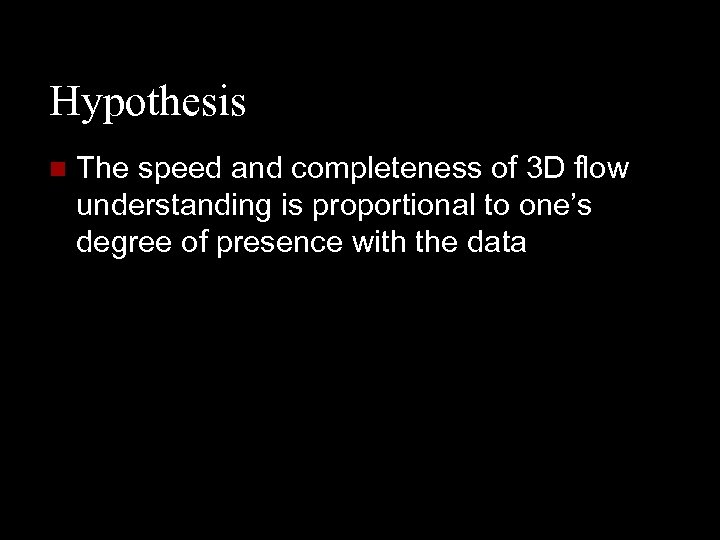
Hypothesis n The speed and completeness of 3 D flow understanding is proportional to one’s degree of presence with the data
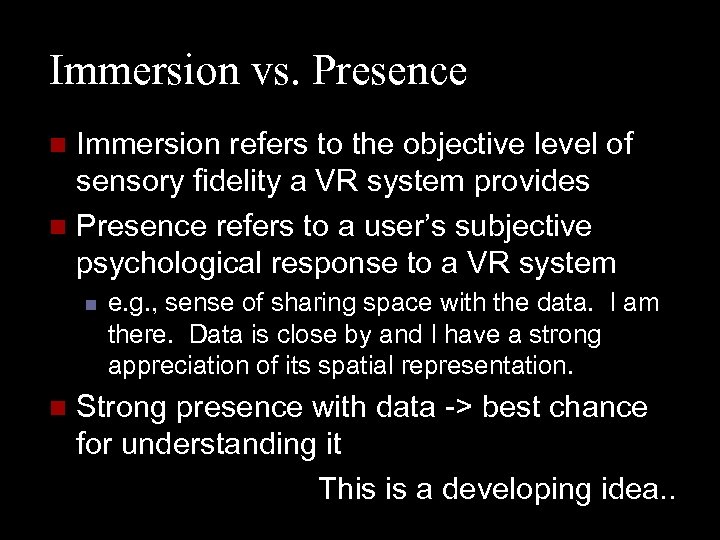
Immersion vs. Presence Immersion refers to the objective level of sensory fidelity a VR system provides n Presence refers to a user’s subjective psychological response to a VR system n n n e. g. , sense of sharing space with the data. I am there. Data is close by and I have a strong appreciation of its spatial representation. Strong presence with data -> best chance for understanding it This is a developing idea. .
Immersion vs. Presence (cont. ) n Mel Slater n “whole body engagement with something lifesized is critical aspect”
Hypothesis (cont. ) n More informally. . as complexity increases, the more you feel like you actively share space with the data, the better you will understand it– i. e. , the better you can handle the complexity. n n n “the data” is numbers. . visualization is intermediary (data ► vis ► perception) “infinite” number of visualizations, which work best?
What kinds of data should be tested? What tasks? blood flow n birds and bats n cars and planes n more? n
Finding good data and tasks Q: Who needs to better understand 3 D flow? n Q: Who regularly looks at 3 D flow? n Q: Would more immersion/presence help better understand it? n n Fred Brooks, “Production Applications”
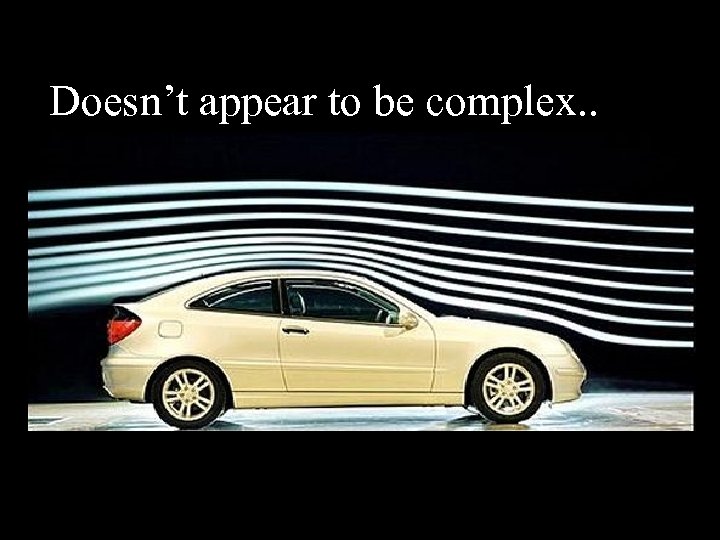
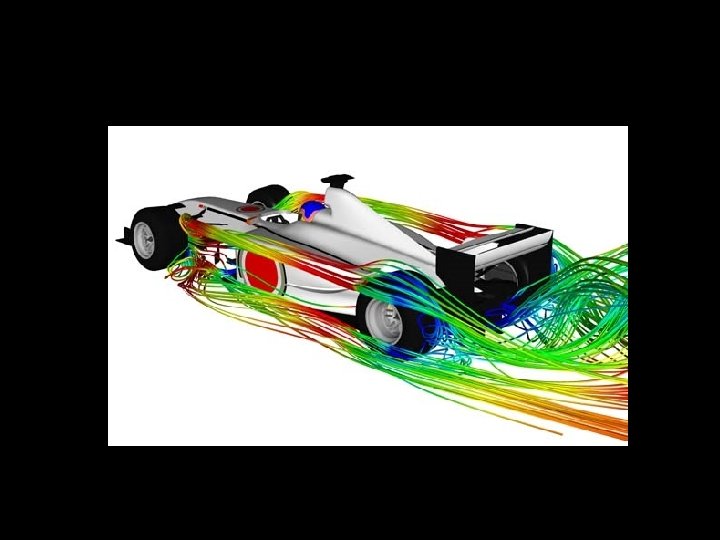
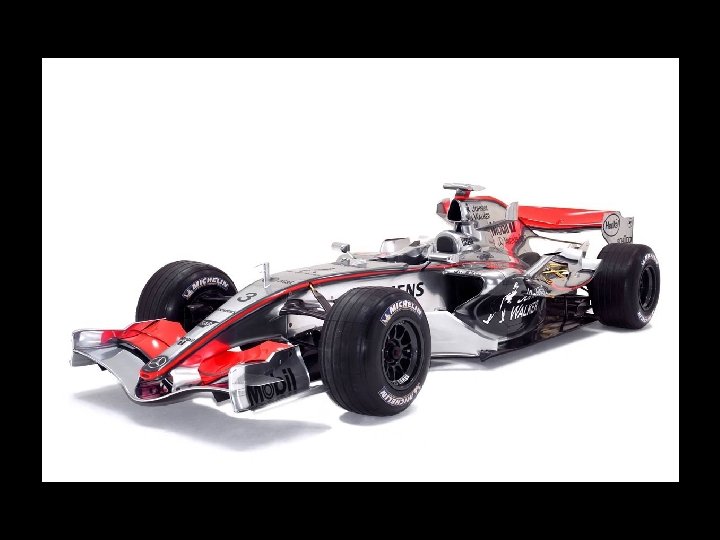
Doesn’t appear to be complex. .
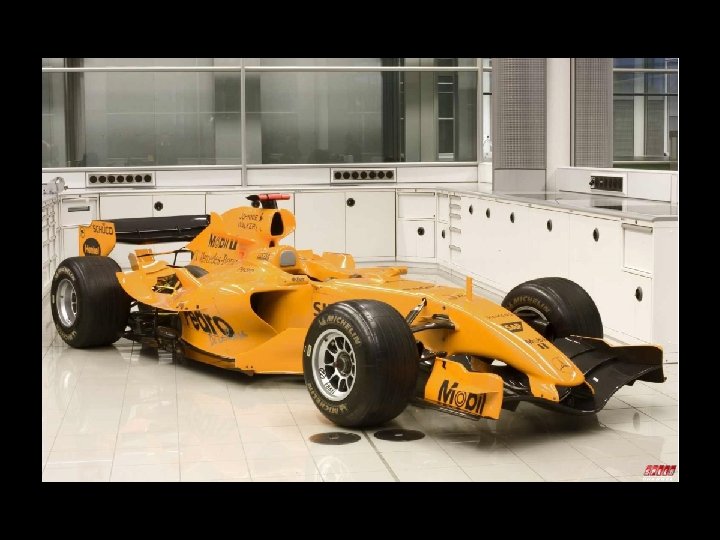
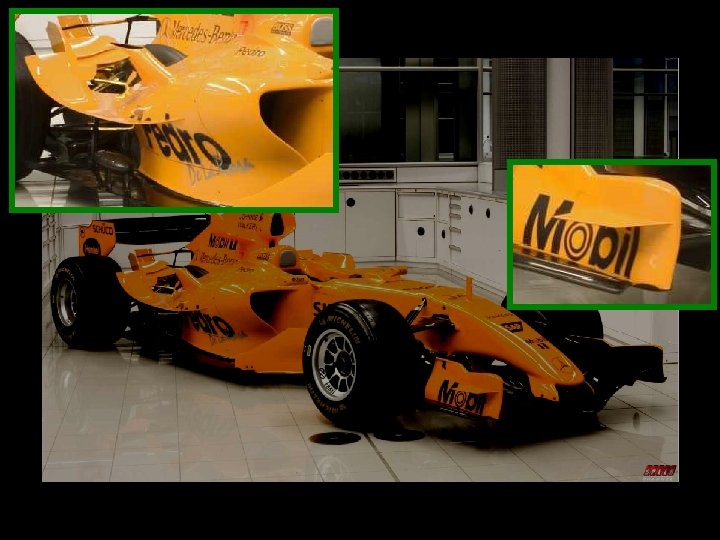
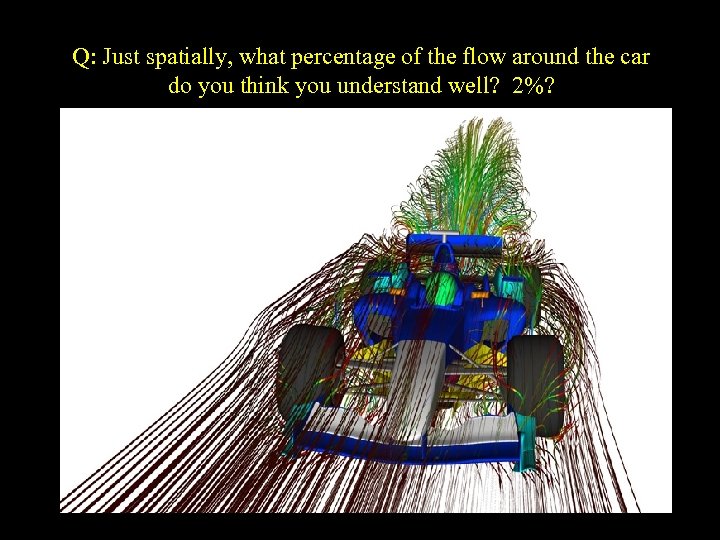
Q: Just spatially, what percentage of the flow around the car do you think you understand well? 2%?
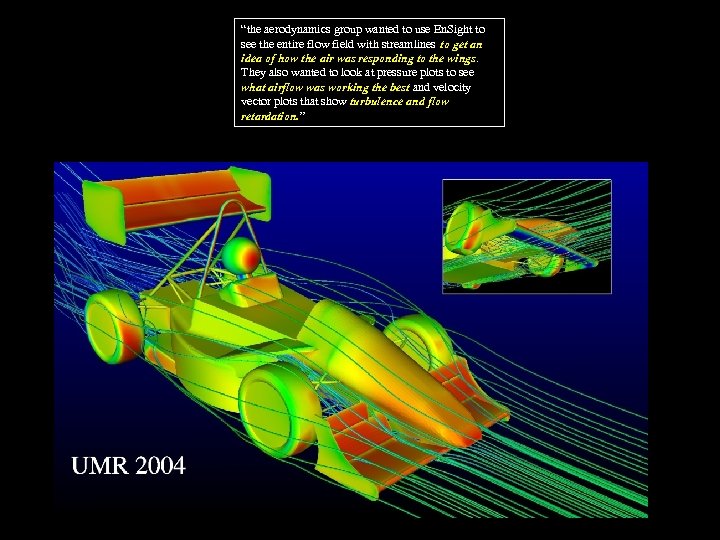
“the aerodynamics group wanted to use En. Sight to see the entire flow field with streamlines to get an idea of how the air was responding to the wings. They also wanted to look at pressure plots to see what airflow was working the best and velocity vector plots that show turbulence and flow retardation. ”
Roadmap Approach n Tasks n Flow Sources n
Approach n Variables n n n Measure speed, grade completeness n n level of immersion (desktop, fishtank, wall, Cave) visualization techniques ask general and specific questions and record responses Apply each visualization technique to comparable dataset (maybe the same one)
Approach (cont. ) General exploration alone, or n General exploration followed by parameter tweak and subsequent visual analysis n
Tasks n General exploration tasks n n n Is there a primary flow direction? Are there areas of flow separation? Can you describe them? Are there areas of slow or no flow? Is there swirling flow? Is the flow 3 D or 2 D? Do you see interesting features we haven’t talked about?
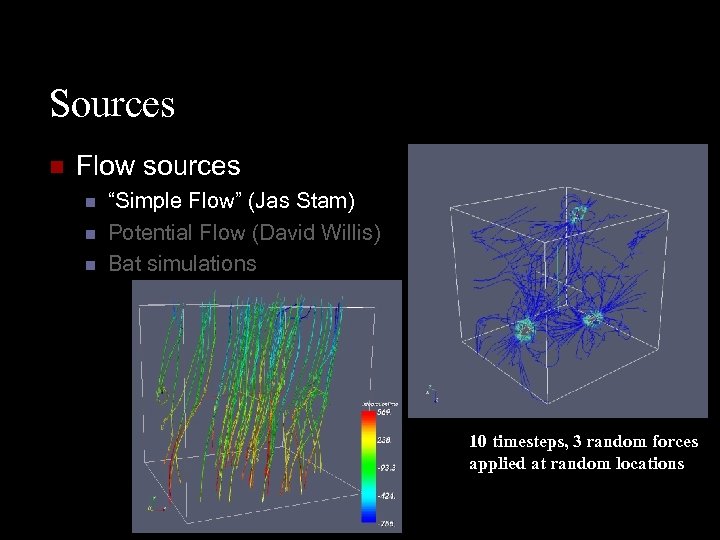
Sources n Flow sources n n n “Simple Flow” (Jas Stam) Potential Flow (David Willis) Bat simulations 10 timesteps, 3 random forces applied at random locations
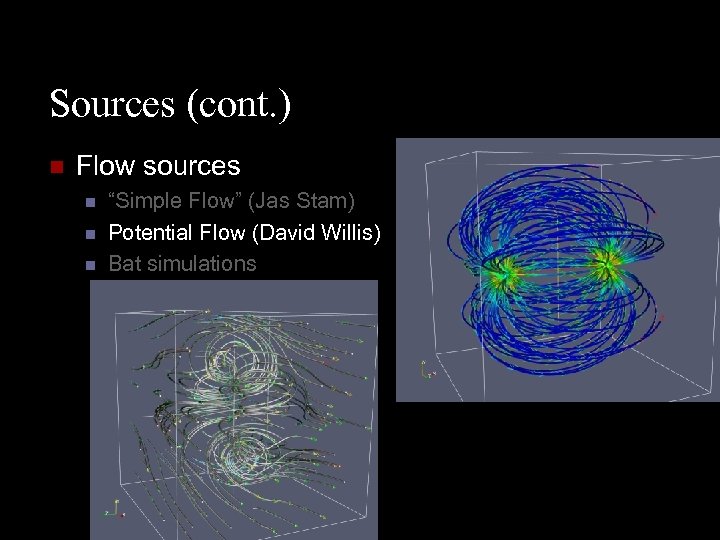
Sources (cont. ) n Flow sources n n n “Simple Flow” (Jas Stam) Potential Flow (David Willis) Bat simulations
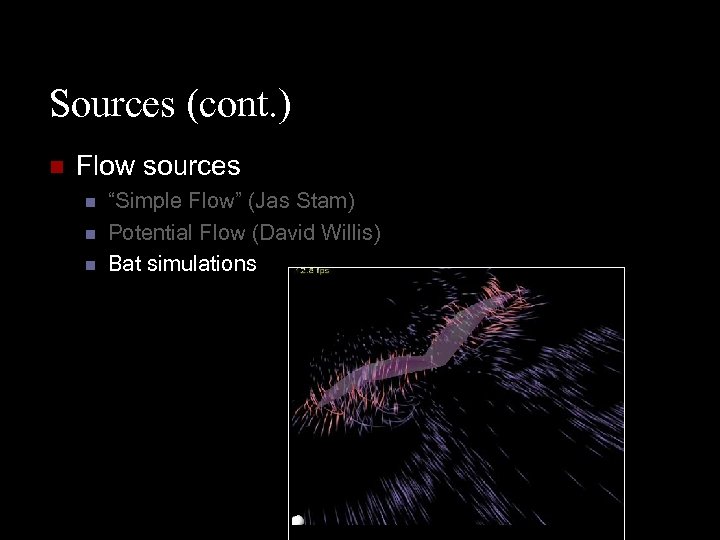
Sources (cont. ) n Flow sources n n n “Simple Flow” (Jas Stam) Potential Flow (David Willis) Bat simulations
Piloting Roadmap Experience with Tiled-wall n Particle Flurries n Streamtubes n Interaction n
Piloting n Beware of DAF!
Piloting n Tiled wall n n stereo displays can be “too bright” (finally!)– e. g. , reference axes sit > stand position dataset just behind display so far, want to fill 6’ display
Piloting (cont. ) n Tiled wall (cont. ) n emerging pattern n n pull data close to examine small feature (e. g. , vortex), but stereo fails push data back and scale it up, but lost context
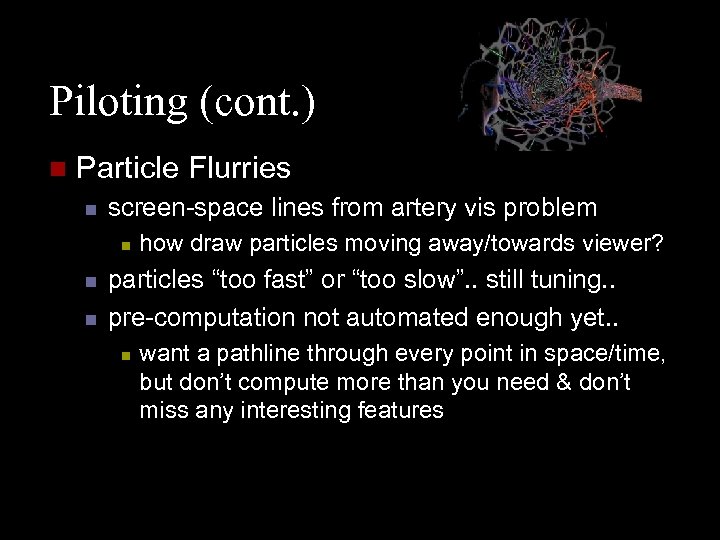
Piloting (cont. ) n Particle Flurries n screen-space lines from artery vis problem n n n how draw particles moving away/towards viewer? particles “too fast” or “too slow”. . still tuning. . pre-computation not automated enough yet. . n want a pathline through every point in space/time, but don’t compute more than you need & don’t miss any interesting features
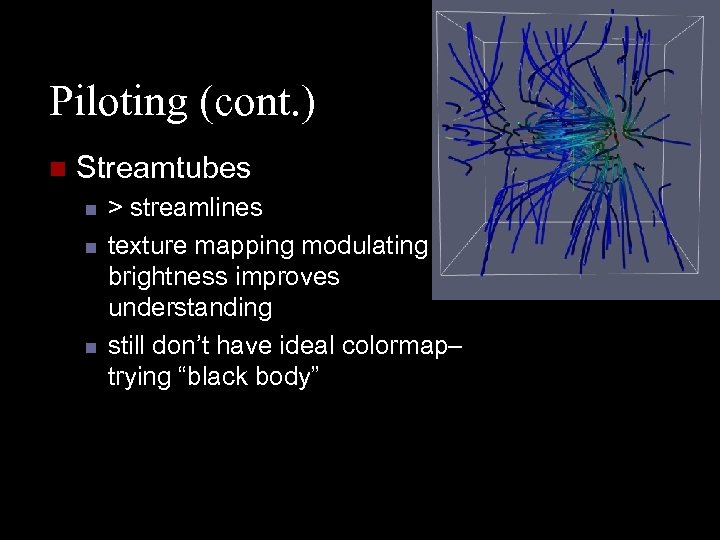
Piloting (cont. ) n Streamtubes n n n > streamlines texture mapping modulating brightness improves understanding still don’t have ideal colormap– trying “black body”
Piloting (cont. ) n Interaction n n introduces complex variable describing flow feature specifics verbally is hard
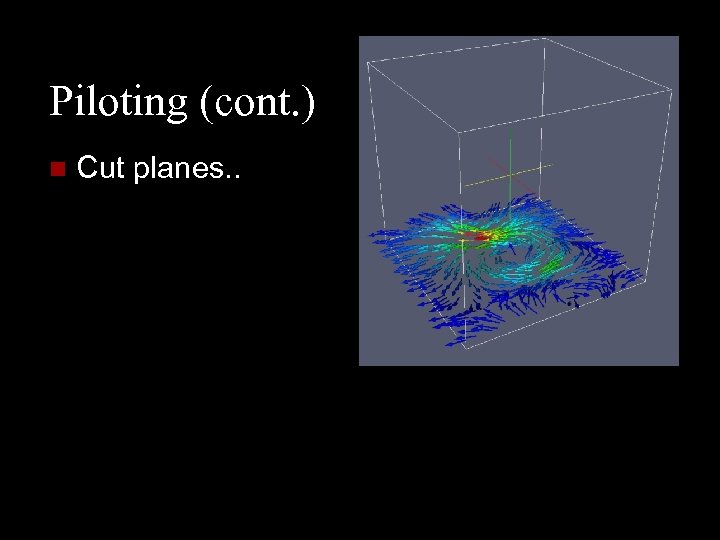
Piloting (cont. ) n Cut planes. .
3 D Flow Vis Characterization (cont. ) n Results n Quantitative n in progress…
Non-immersive vis n Paraview visualizations. .
Closing Hypothesis okay? n Hope to reduce interaction required to ensure subjects had same view(s) n Task: general exploration, or “diff” n
The End
 Скачать презентацию Comparing 3 D Flow Visualization Techniques Andy Forsberg
c9c1ce0809fa0e9c566d27f6109f8e61.ppt