


 Скачать презентацию Comparative Emergency Management Damon Coppola June 3 2009
237e4f458e9ba656055e3019cea07bea.ppt
- Количество слайдов: 18
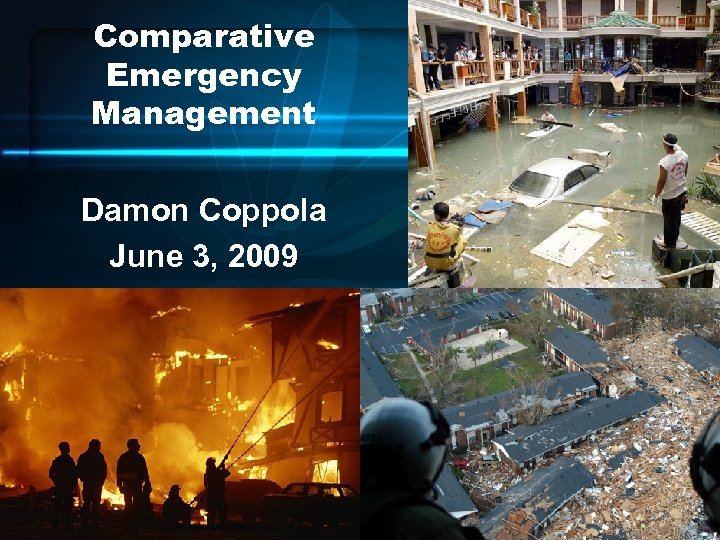 Comparative Emergency Management Damon Coppola June 3, 2009
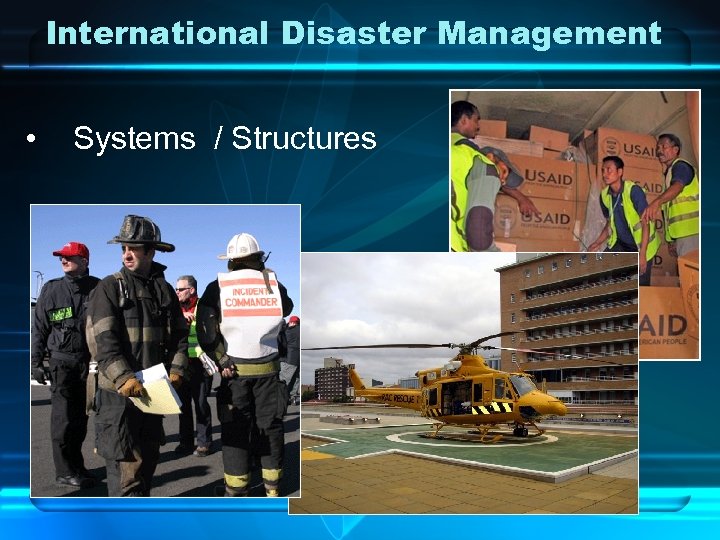 International Disaster Management • Systems / Structures
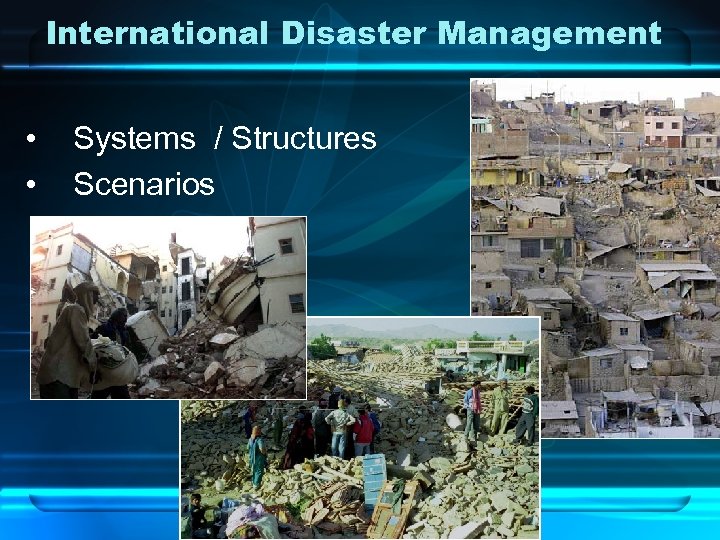 International Disaster Management • • Systems / Structures Scenarios
 2007 EMI Conference • International Disaster Management not featured on the EMI agenda for the first time in 3 years • Conference Paper: “The Importance of International Disaster Management Studies in the Field of Emergency Management”
 Five Arguments 1. The United States’ emergency management system is imperfect 2. The United States is moving towards a ‘Third World’ system 3. Climate change equals bigger, stronger, and more numerous disasters 4. Climate change means global instability 5. The expanding discipline demands the inclusion of international disaster management studies
 US EM system is imperfect • US EM system the most advanced and well funded in the world (Equipment/Training/Capabilities) • Yet failures occur with regularity, proving we do not yet possess all of the answers • Lessons: – – – Netherlands Japan Israel Australia/New Zealand India
 US Moving Towards ‘ 3 rd World System’ • EM in developing world = recognition that central governments unable to manage all consequences of ‘mega-disasters’ • Compensate through cooperative agreements and other arrangements with NGOs, nonprofit, and private organizations and businesses • US shift is a ‘correction’ to assumptions that may have been the basis of flawed emergency management practices - as were evidenced in the response to Hurricane Katrina in the Gulf Coast • We need to learn from experience / best practices
 Climate Change = Hazard Change • USAID OFDA has recognized and documented disasters are growing steadily in number, size and reach – More regional, multi-national disaster events will involve the United States – Considerable cross-border cooperation will be required to manage these events • Climate change also changing the nature of the nation’s hazard profile – Changing disaster characteristics – New hazards
 Climate Change = Global Instability • Global disaster impact primarily managed by OFDA because: – It is a diplomatic gesture – It is a humanitarian responsibility • However, climate change is becoming a national security issue – Disasters and environmental degradation will create conditions that contribute to a loss of stability affecting the US both directly and indirectly – Link between disasters and development translates to a need for an expansion in emergency management training more suitable for these different climates, regions, and economies.
 EM Discipline Expanding • Emergency managers taking on a much more important role in municipal government • EM programs throughout the country are recognizing the links between emergency management and other careers and disciplines: – – Business public health Education international development • More and more EM students will be looking to work in the international community, and US experience cannot adequately prepare them
 Course Purpose • Present the fundamentals of the emergency discipline as they exist in other countries of the world, and on a global scale • Expand upon domestic lessons • Examining the same topics seen in other emergency management courses through the perspective of the greater international emergency management community • Explore hazard, risk, vulnerability, and disaster trends, as they differ throughout the world • Consider the international EM participants and players
 Course Structure • • Standard EMI Higher-Ed Course Format Individual 1 -, 2 -, or 3 -hour sessions Session length – 10 -15 pages per course hour Sections include: – – – – Session Header Objectives Scope Readings Requirements Remarks Supplemental Considerations Course Development References
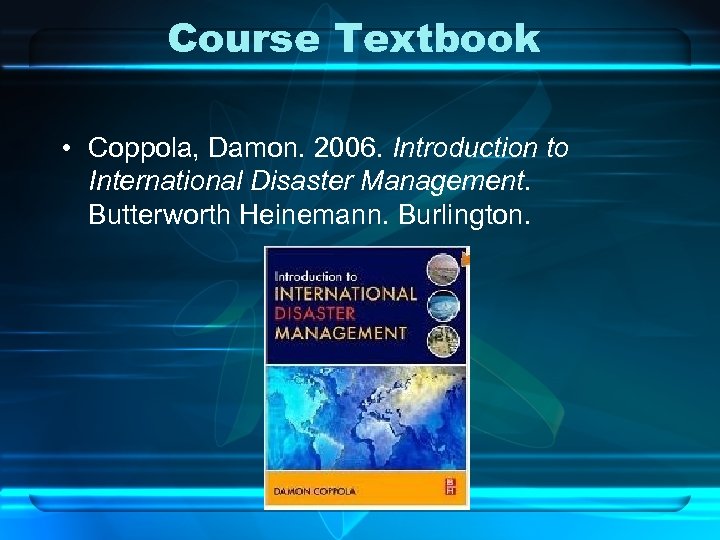 Course Textbook • Coppola, Damon. 2006. Introduction to International Disaster Management. Butterworth Heinemann. Burlington.
 Workgroup • December 2008 • Participants included: Former FEMA executive, former OFDA executive, Directors from 3 emergency management programs, former State department official, IAEM VP, NEMA representative, EM practitioner from Turkey • Outline meets the course needs • Will contribute to the profession • Many comments incorporated
 Course Outline • • Sessions 1/2: Introduction and importance Session 3: Global historical context of EM Session 4: International efforts to improve EM Session 5: Disasters and development Session 6: International disaster trends Sessions 7/8: Hazards and hazard identification Sessions 9/10: Risk and Risk Analysis Session 11: Vulnerability
 Course Outline • • Session 12: Risk Perception Session 13: The EM Cycle Sessions 14 -18: Mitigation Sessions 19 -21: Preparedness Session 22: Public Education Sessions 23 -25: Response Sessions 26 -29: Recovery Session 30: Mid-term exam
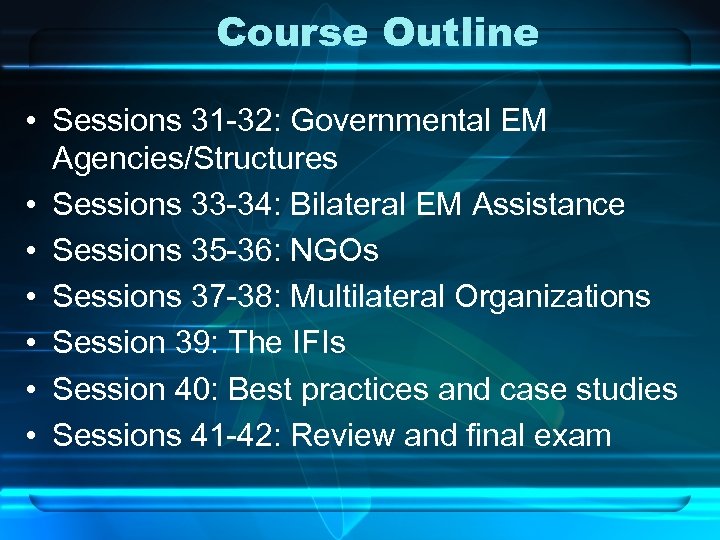 Course Outline • Sessions 31 -32: Governmental EM Agencies/Structures • Sessions 33 -34: Bilateral EM Assistance • Sessions 35 -36: NGOs • Sessions 37 -38: Multilateral Organizations • Session 39: The IFIs • Session 40: Best practices and case studies • Sessions 41 -42: Review and final exam
 Course Development Update Questions?