


 Скачать презентацию Community Healthcare Survey 2006 Grace Family Medicine
623215f3ab519a4fd73ce4b294027c51.ppt
- Количество слайдов: 40
 Community Healthcare Survey, 2006 Grace Family Medicine & His Branches Supervisor: Dr. Bill Morehouse, M. D. Student Intern: Jessica Speares Roberts Wesleyan College August 21, 2006
 Goals of the Study • To conduct an original assessment of healthcare in the 19 th Ward using three tools: demographic analysis, community leader interviews, and door-to door surveying of residents. • To identify issues in healthcare which most directly effect this community and its residents. • To identify programs and services which may be helpful to integrate into the community for the positive wellbeing of its residents. • To initiate positive dialog between residents, leaders, and healthcare professionals about healthcare.
 The Research Plan 1. Conduct on-line and in-person demographic research about the 19 th Ward- know its people, places and programs. 2. Contact community leaders (anyone in the community in a position of social leadership) and interview them about what they believe are the most paramount issues in healthcare and general well-being in the 19 th Ward.
 The Research Plan 3. Synthesize the leaders’ comments into a coherent outline, which will aid in the formation of a healthcare survey for residents. 4. Author an original survey which will be used as an instrument to measure resident’s overall feelings about healthcare, and identify areas of strength, as well as areas of needed improvement.
 The Research Plan 5. Go door-to-door with a group of community volunteers and give the survey to residents verbally. 6. Analyze the data, and create a formal report which will outline the findings. 7. Present the data to community members and residents.
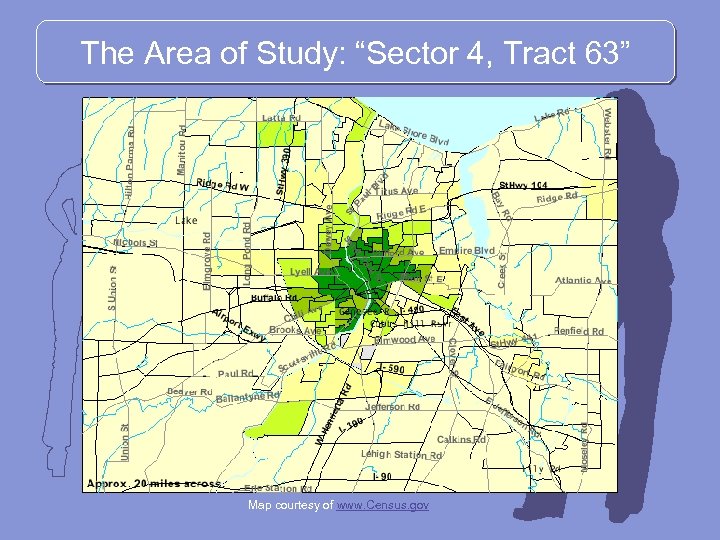 The Area of Study: “Sector 4, Tract 63” Map courtesy of www. Census. gov
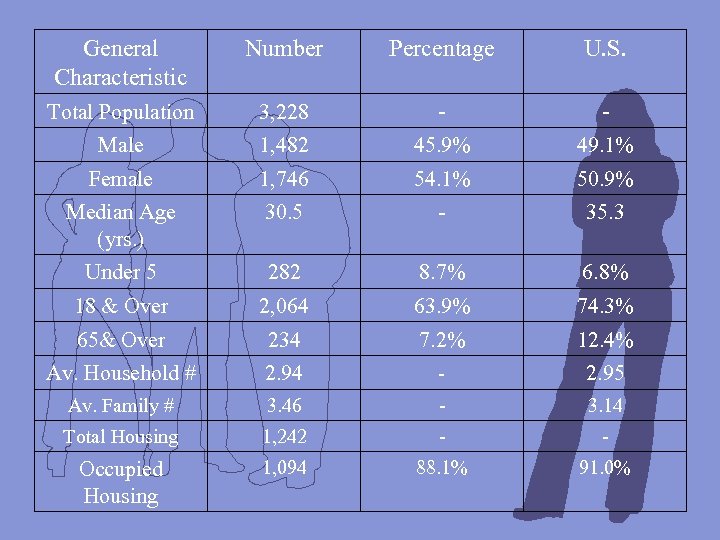 General Characteristic Number Percentage U. S. Total Population 3, 228 - - Male 1, 482 45. 9% 49. 1% Female 1, 746 54. 1% 50. 9% Median Age (yrs. ) 30. 5 - 35. 3 Under 5 282 8. 7% 6. 8% 18 & Over 2, 064 63. 9% 74. 3% 65& Over 234 7. 2% 12. 4% Av. Household # 2. 94 - 2. 95 Av. Family # 3. 46 - 3. 14 Total Housing 1, 242 - - Occupied Housing 1, 094 88. 1% 91. 0%
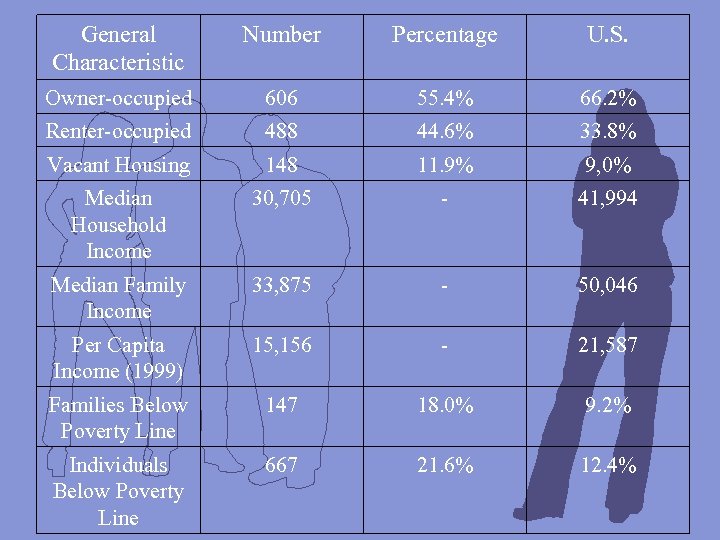 General Characteristic Number Percentage U. S. Owner-occupied 606 55. 4% 66. 2% Renter-occupied 488 44. 6% 33. 8% Vacant Housing 148 11. 9% 9, 0% Median Household Income 30, 705 - 41, 994 Median Family Income 33, 875 - 50, 046 Per Capita Income (1999) 15, 156 - 21, 587 Families Below Poverty Line 147 18. 0% 9. 2% Individuals Below Poverty Line 667 21. 6% 12. 4%
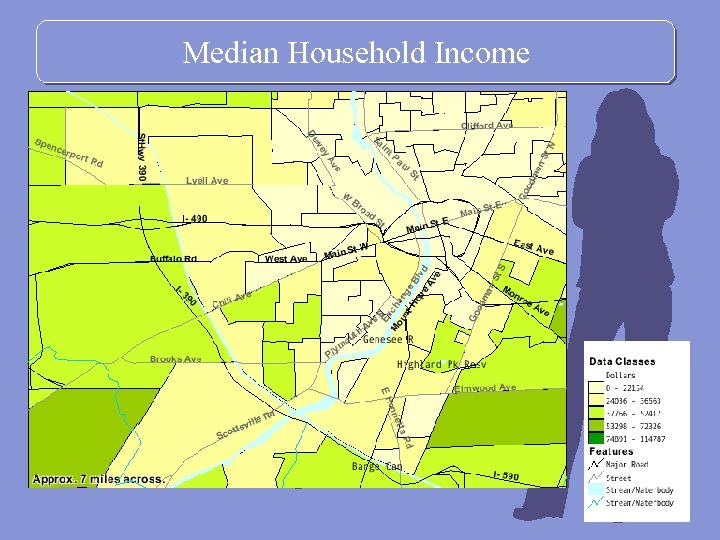 Median Household Income
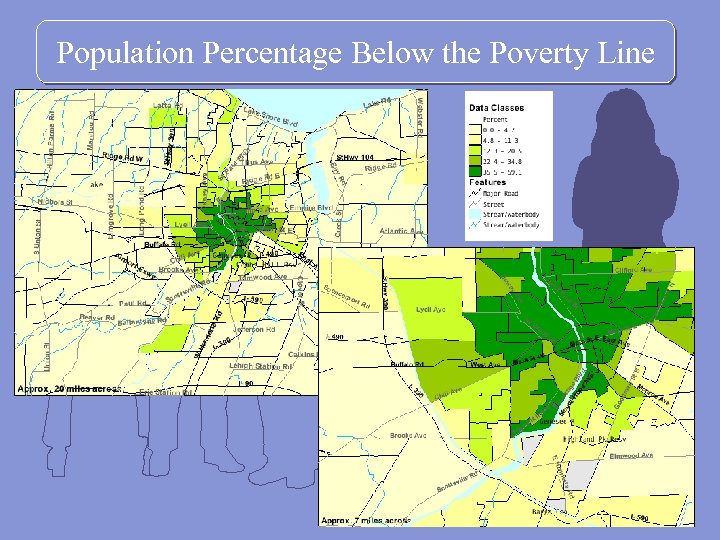 Population Percentage Below the Poverty Line
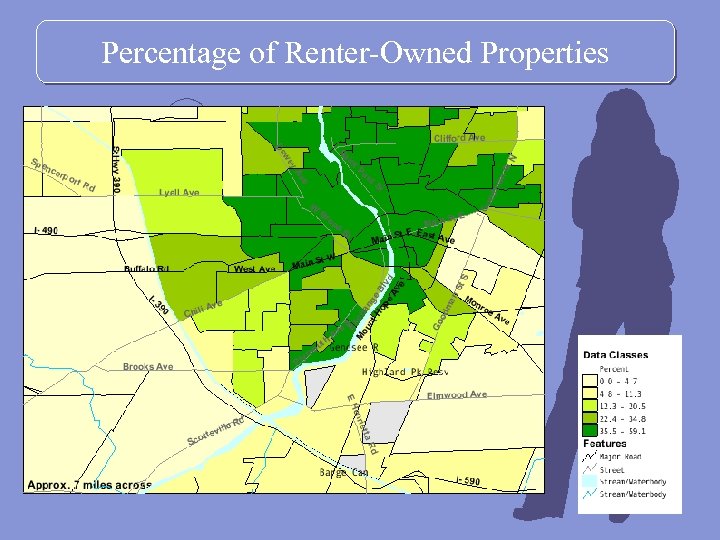 Percentage of Renter-Owned Properties
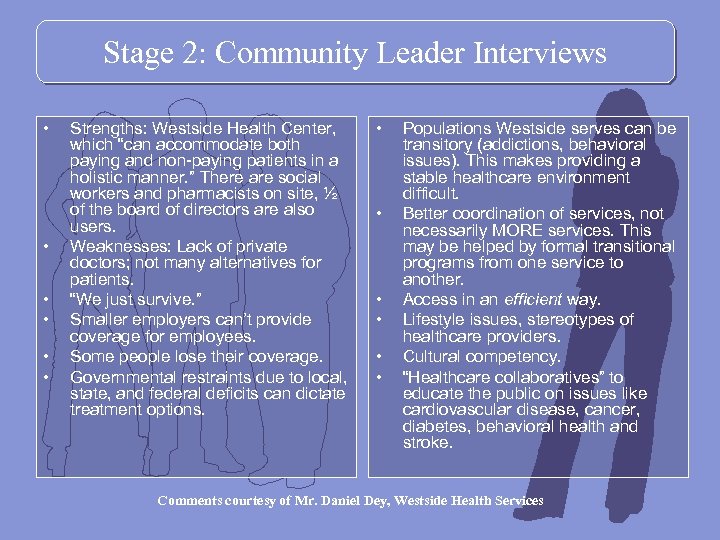 Stage 2: Community Leader Interviews • • • Strengths: Westside Health Center, which “can accommodate both paying and non-paying patients in a holistic manner. ” There are social workers and pharmacists on site, ½ of the board of directors are also users. Weaknesses: Lack of private doctors; not many alternatives for patients. “We just survive. ” Smaller employers can’t provide coverage for employees. Some people lose their coverage. Governmental restraints due to local, state, and federal deficits can dictate treatment options. • • • Populations Westside serves can be transitory (addictions, behavioral issues). This makes providing a stable healthcare environment difficult. Better coordination of services, not necessarily MORE services. This may be helped by formal transitional programs from one service to another. Access in an efficient way. Lifestyle issues, stereotypes of healthcare providers. Cultural competency. “Healthcare collaboratives” to educate the public on issues like cardiovascular disease, cancer, diabetes, behavioral health and stroke. Comments courtesy of Mr. Daniel Dey, Westside Health Services
 Stage 2: Community Leader Interviews • • • Strengths: An engaged and active community association, population of people who cooperate with each other. Community organizations, and people that are interested in their own neighborhood. The presence of Unity Health with its many services, GFM, and Westside. Weaknesses: Crime, Homicide, etc. Adequate primary care? Infant mortality, STDs, violence. Some aspects (family dynamics) are outside the influence of healthcare providers. • • • Asthma care expensive and complicated. Problems with Transportation. There may be disparities among race in diabetes and heart attack care. Performance improvement must be utilized if disparities are found (OB Services, Jordan Health Center). Choices are sometimes limited for Medicaid recipients. Primary care is the KEY. Problems with Maternal Childcare result in a decrease in quality of life & an increase in cost. “A lot goes on across Genesee Street. ” Comments by Stewart Putnam, COO and Vice President of Park Ridge Hospital (St. Mary’s, 23 years).
 Stage 2: Community Leader Interviews • • • “This is a working neighborhood. ” Many people work seasonal or part time. Full-time work with no full-time benefits. People fall between the cracks when they make too much money to qualify for Medicaid, but not enough to pay for private healthcare coverage. The emergency room is used as primary care because of a lack of healthcare coverage/ primary care providers. Things like glasses and dentist visits are not covered. • • • Teen pregnancy is a large concern in this community. Educational programs may combat this. Basic hygiene is also a concern. Things like toothbrushes etc. are needed, esp. for kids. Problems getting medication (Transportation and financial), it is taken incorrectly to make it last. Solutions: Better access, and lower cost or free coverage. Fill the gap of the uninsured! Individuals also have to know their options. Comments provided by Caitlyn Brice, Assistant Youth Services Coordinator, Arnett Branch Library
 Stage 2: Community Leader Interviews • • • Perceptions of care (Nurses). Everyone is taken care of. There are summer camps for younger kids, but after 12 or 13, there are no programs during the summer or after school. Jefferson; poor conditions, vandalism. There are no sports teams at school. If there were, more kids would go out for them. “I’d rather be at school, the library and summer camp [than at home]. ” • • • “It gets worse every year. ” (Gangs, drugs, shootings). Very high rate of teen pregnancy. “A lot of my friends have babies. ” – Peer pressure. – “Older boys”. – Strict parents and determined girls are the reason rates aren’t even higher. Comments provided by 14 & 15 yr. old females in a summer youth program at Arnett Library
 Stage 2: Community Leader Interviews • Weaknesses of Healthcare: Insurance dictates what can be done. • People have to advocate for their own healthcare and they don’t know how. • “The system is a maze. ” If you don’t know the ins and outs, how will you navigate? • This area is becoming more rental, and lead poisoning is a problem. • Lack of insurance/ high cost of insurance. • The health problems in this area are the same as those issues with a typical mostly African American population: – High Incidences of Diabetes – Heart Disease – Sickle cell anemia • Children’s health – ADD/ ADHD Comments provided by Interfaith Action Associate, Charlene
 Stage 2: Community Leader Interviews • • • There has been a positive difference since 1990. NYS should be a national model for children’s healthcare coverage because of Child Health Plus. Some of the most frequently seen problems include: – A disproportionate number of children with Diabetes – Asthma – Sickle cell anemia – Accidents – Kids needing TLC. – Parents don’t follow thru. • • • Access to healthcare is good, and the resources are available. Immunization clinic provides free shots on Wednesdays, SMILES provides some dental care, Asthma Intervention provides help with Asthma care, Rochester Primary Care Network provides refurals to specialties, housing, legal, food and clothes. Kids are sent to school sick because mom works. Comments provided by Janet Spillane, School Nurse’s Aid School # 16, 54
 Stage 2: Community Leader Interviews • “Unity Is very community service oriented. ” • There needs to be sense of working together. • All acute care has been moved to Park Ridge. • St. Mary’s provides the less cost effective services. – – – Hospice Brain and spinal recovery Mental health/ in-service Assisted living Community oriented walkin care downstairs. • The 19 th Ward has programs to recruit employees of Unity health to buy houses in the area. • “Increased costs are driving consolidation of resources among healthcare professionals. That’s why Dr. Morehouse is unique. ” • Unity Health System provides free Health Fairs for the community annually. • 211 • SWAN- Southwest Area Neighborhood Association. Comments courtesy of John De. Mott, Sector 4 Community Development Corp.
 Stage 2: Community Leader Interviews • • Mental health is a prominent healthcare issue in this community. “Levels of violence spring from inadequacy in dealing with things. ” Pre and para-natal care. The 19 th Ward has the highest teen pregnancy rates in Rochester. African Americans have lower birth weights. Denial, fear, lack of insurance may deter young women from seeking care (Healthy Moms). STDs. The highest rates of gonorrhea in Rochester, and in the COUNTRY are here. Health concerns typical to African America populations. • • • Lack of education and information; barriers to access. Pre and post-natal depression. HIV/AIDS. New cases are largely African American women (Denial, fear, stigma). Drug Abuse/Addiction. Causes overall deterioration. ACCESS! Cultural Competencies “Say it in a way that they can see it. ” Trust b/n healthcare providers and patients is HUGE. Treat the whole person; issues they don’t ask about to show you care. Comments Courtesy of Sandra Stevens, Unity Health & Family Restoration Project
 Stage 2: Community Leader Interviews • • If you don’t have insurance you will not be treated the same. “If you do not have insurance, suddenly there is a fear. Fear that you will be treated differently. So you wait until it gets so bad that you HAVE to go to the Emergency Department. ” For seniors, as well as the homeless, surviving takes precedence over healthcare. Family Instability • • Lead and lead poisoning are issues in this community. The new law stipulates that landlords must fix the problem but gives them not help in doing so. Strategies to Reach People: – Do things in a coordinated fashion. – Create more avenues for the information to get out there. – Treat the whole person, NEVER just the disease. – Go over and above what needs to be done. Never just address the issue- that’s how you build trust. Comments Courtesy of Sandra Stevens, Unity Health & Family Restoration Project
 Stage 2: Community Leader Interviews • • More holistic alternative intervention. Urban people tend to be sicker, is it genetics, lifestyle, diet? Many individuals do not have insurance, resulting in huge bills. Access is marginal, possibly questionable. Mental health is an issue- “the stress of living in poverty makes people dysfunctional. ” “The way she yelled at her child hurt me…” Lead and smoking. Children are directly affected. • • Drugs and drug abuse- it hurts the whole community. Shootings, stabbings and fighting… 90% are drug related. Physical needs of the population, like more exercise. Busing children to school is a BAD idea. – They’re not walking. – Doing unhealthy things on the bus. – They learn to congregate. – All the schools are marginal anyway, what’s the difference? Comments courtesy of Victoria Simmons, 19 th Ward Community Assoc. President
 Stage 2: Community Leader Interviews • • Healthy Homes Exhibit Asthma-safe bedroom Healthy Housekeeping Stop-smoking help • New Lead Poisoning Law goes into effect July 1. • Information on how to solve the lead problem. • Child-safe kitchen. Information provided by:
 Stage 2: Community Leader Interviews • • • Mental Health- life coping skills; counseling. No health care, although the 25 th district is much worse. Health concerns of a typical African American population. The 25 th district is more needy in general (higher rental rates, more poverty). “Crime is the # 1 concern around here. ” People want a better way of life. – Give people alternatives to violence thru sounds & images. They must be as consistent as the negatives. Build each other up, have people rally around that. • • Strengths include dentists in the area (Thurston Rd. ), pharmacies; most services right in the area. Wilson is one of the best schools in the nation (#24). Pac Tac Community associations A lot of schools in the area. Health fairs. The community needs more needs-based assessment. “Cut the violence” utilize natural resources. Comments courtesy of Willie Lightfoot, County Legislator, 27 th District
 Stage 3: Community Healthcare Survey • 1. 2. 3. Sample size: 108 Households, 386 People. How long have you and your family lived here? How many people are in your household and what are their ages? Do you have a primary care physician? If Yes, when was you last appointment? If No, where do you get medical care? 4. The last time you were sick or injured, did you seek medical care? If Yes, how satisfied were you (1 -10)? If No, what prevented you from doing so? 5. In your experience, what is missing in healthcare? 6. Are there any programs or services you’d like to see the community offer? 7. Is there anything else you would like to ask for our research team?
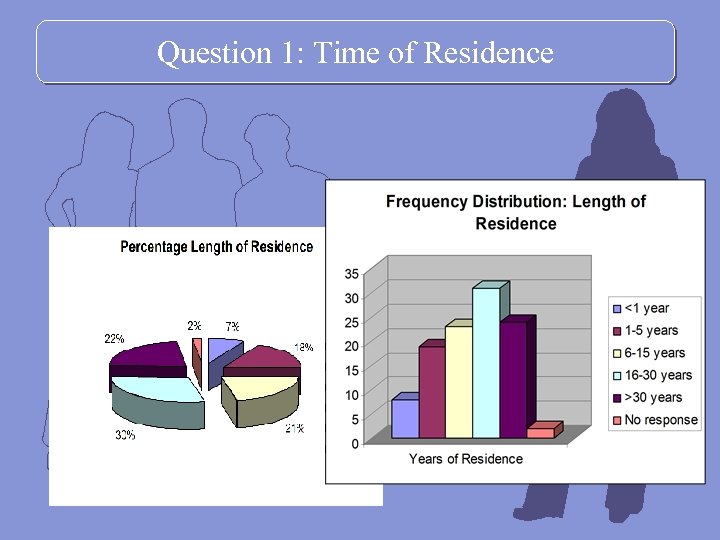 Question 1: Time of Residence
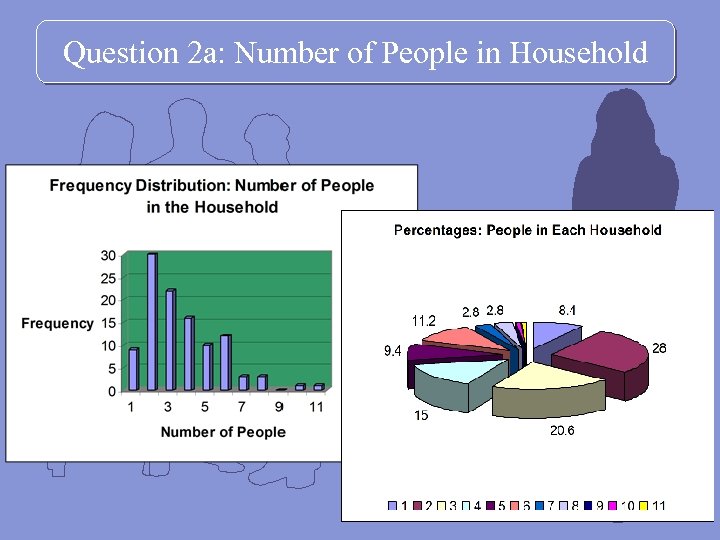 Question 2 a: Number of People in Household 0. 9
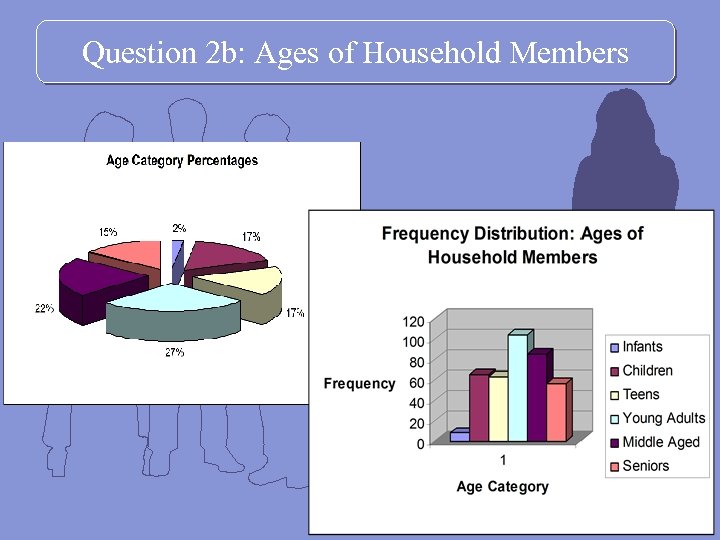 Question 2 b: Ages of Household Members
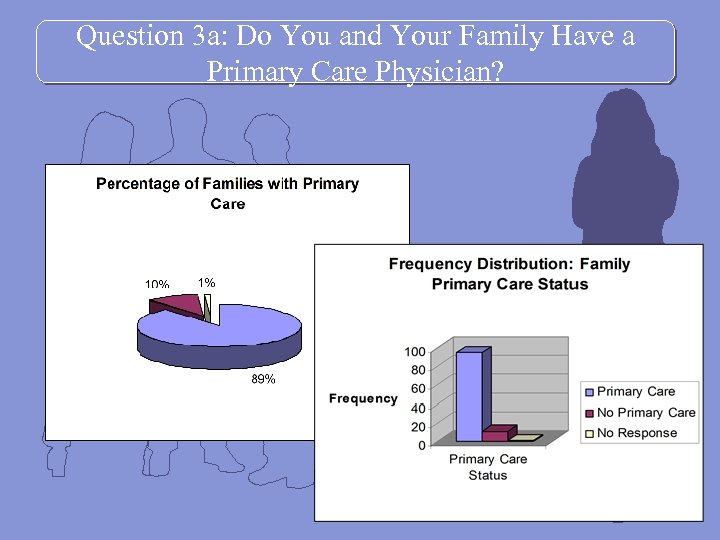 Question 3 a: Do You and Your Family Have a Primary Care Physician?
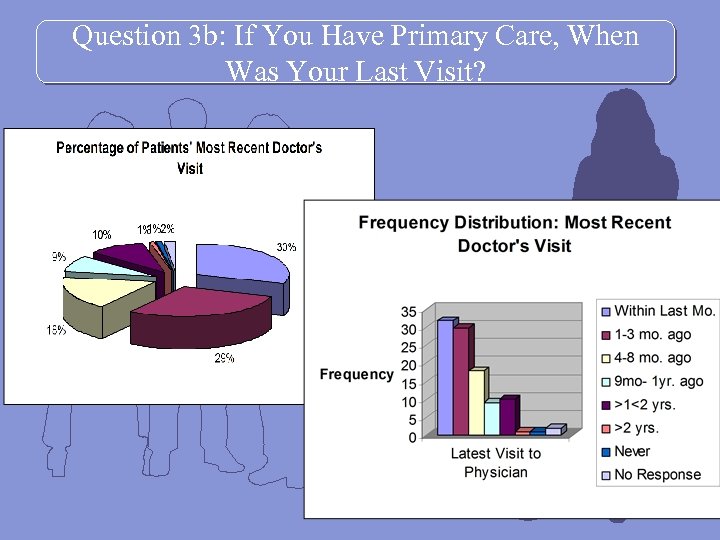 Question 3 b: If You Have Primary Care, When Was Your Last Visit?
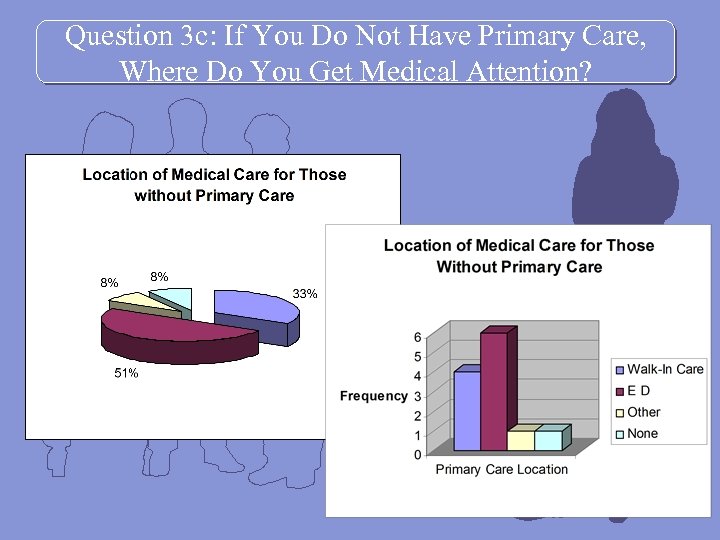 Question 3 c: If You Do Not Have Primary Care, Where Do You Get Medical Attention?
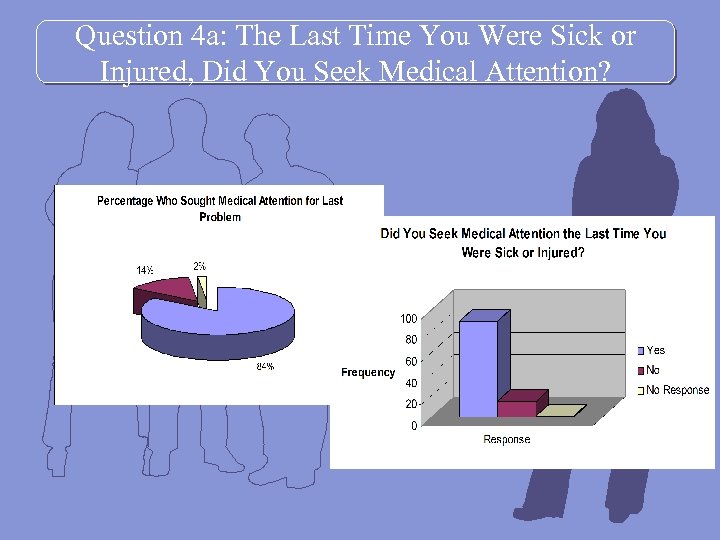 Question 4 a: The Last Time You Were Sick or Injured, Did You Seek Medical Attention?
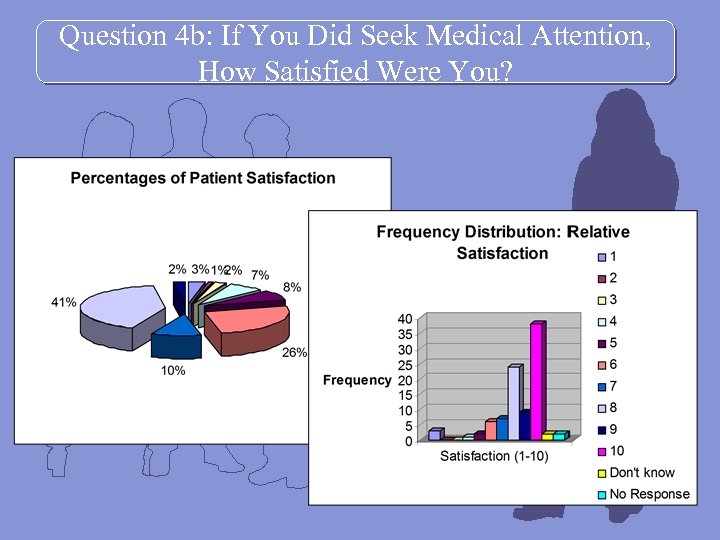 Question 4 b: If You Did Seek Medical Attention, How Satisfied Were You?
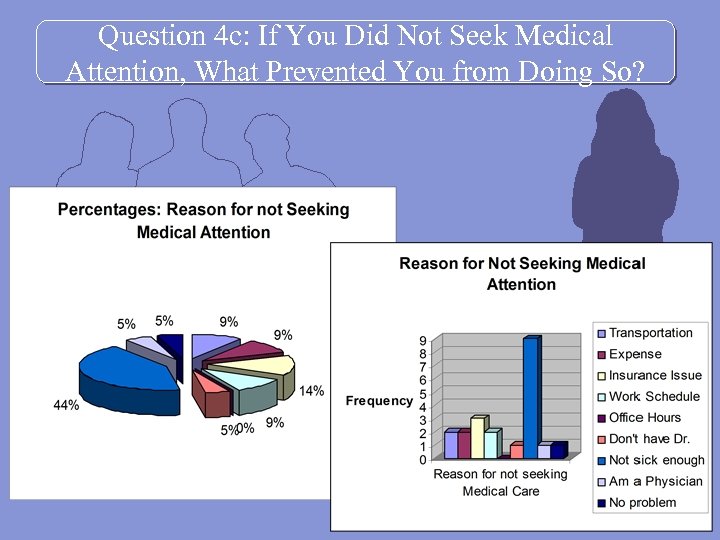 Question 4 c: If You Did Not Seek Medical Attention, What Prevented You from Doing So?
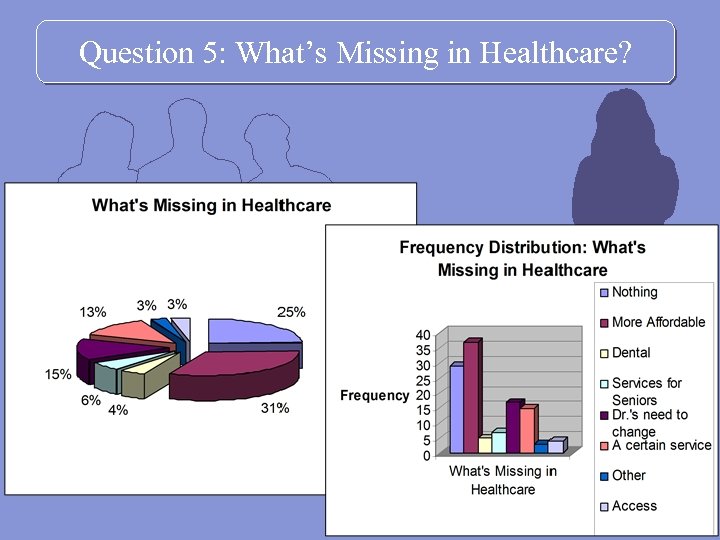 Question 5: What’s Missing in Healthcare?
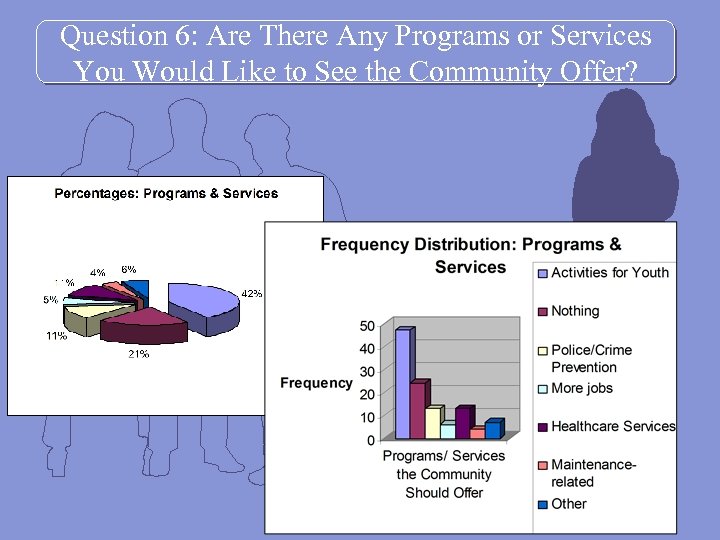 Question 6: Are There Any Programs or Services You Would Like to See the Community Offer?
 Question # 7: Anything Else You’d Like to Add? • “Its great to have Dr. Morehouse and associates in the neighborhood, but we need more providers, especially with his dedication. ” • Playgrounds and rec centers • Speedbumps • Community center • More places adults can go for ideas and more police. • More summer and after school jobs [for youth]. • “We need to slow down the crime! More police patrols; they respond to calls but disappear after the shooting. Stop young thugs from loitering, clear ‘em off the corners!. . . More business owners need to enforce a no loitering policy. Some of the PAC TAC people are older. They need someone who can really handle somebody. ”
 Question # 7: Anything Else You’d Like to Add? • Stop the violence, more education. • Regain morals, lower school tax. • EDs are always code Red. People without coverage don’t have a lot of options. People with minor problems need to be kept out of the ED. • “We need more people to come forward and show people that your life isn’t over if you have a virus or STDs. People are scared they will be looked at funny because of the situation. In reality you are being strong to let that be known. ” • “We need a hospital around here. ” • “SOMETHING TO CURB THE VIOLENCE!” • More activities for kids.
 Question # 7: Anything Else You’d Like to Add? • “More values in the young. ” • Places with healthy food in restaurants and corner stores with juice and vegetables. • Stop the Violence. • A place with computers available for kids, speed bumps on Wellington, after school and summer programs for kids, and bring back block clean-up parties. • More volunteers (to help with yard work, etc. ). • Curfew, kids need people to advise them. Mothers and fathers need to visit their kids in school and see how they act. Kids wouldn’t sell drugs if they had jobs.
 Special Thanks to… • All of the generous community leaders who donated their thoughts and ideas to this study. • The staff of Grace Family Medicine. • Natalie and Marianne for their support and willingness to volunteer to survey. • Susan Morehouse for her ceaseless encouragement of this project. • Dr. Morehouse for…. just about everything.
 Any Questions?