 Скачать презентацию Communities Group Primary Headteacher Briefing Spring 2016
223a6948de39c31cf48701ebb85af51f.ppt
- Количество слайдов: 83



Communities Group Primary Headteacher Briefing Spring 2016
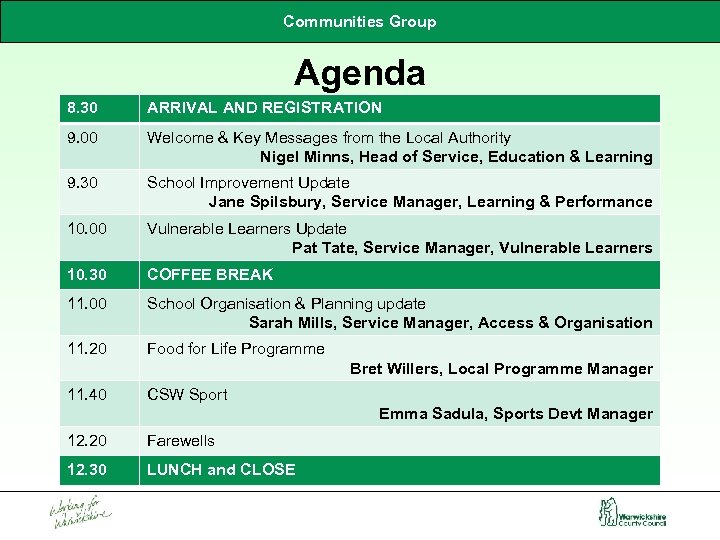
Communities Group Agenda 8. 30 ARRIVAL AND REGISTRATION 9. 00 Welcome & Key Messages from the Local Authority Nigel Minns, Head of Service, Education & Learning 9. 30 School Improvement Update Jane Spilsbury, Service Manager, Learning & Performance 10. 00 Vulnerable Learners Update Pat Tate, Service Manager, Vulnerable Learners 10. 30 COFFEE BREAK 11. 00 School Organisation & Planning update Sarah Mills, Service Manager, Access & Organisation 11. 20 Food for Life Programme Bret Willers, Local Programme Manager 11. 40 CSW Sport Emma Sadula, Sports Devt Manager 12. 20 Farewells 12. 30 LUNCH and CLOSE
Communities Group Local Authority update Nigel Minns Head of Service, Education & Learning
Communities Group Education Business Unit Priorities • Develop and promote a school-led improvement system • Closing the gap in relation to performance of disadvantaged pupils and vulnerable learners • Provide sufficient and appropriate learning places to include local specialist provision • Ensuring consistent inclusive practice across the education system • Ensuring all services are outcomes driven, efficient, effective and adaptive to change
Communities Group Changing Context • Education and Adoption Bill – Government’s intention for all schools to become academies by 2020 • Reduction in number of LA schools • Possible White Paper consultation re LA statutory responsibilities • Reduction in Education Support Grant • Significant reduction in Local Government Settlement 2017/18 - £ 10 m • There will need to be further savings in following years
Communities Group 1 st March – Tony Foot, Director of the Education Funding Group at the Df. E will discuss: • An overview of the government’s plans for a national funding formula April – Sir David Carter, National Schools Commissioner will discuss: • • Plans to reduce the Local Authority role in running schools Overview of plans for the LA role in the school system What is changing and where responsibilities may lie Impact on schools and academies
Communities Group Education Services Grant • • School Improvement Education Welfare Services Central Support Asset Management Redundancy costs Therapies and health related services Monitoring national curriculum assessment Statutory and regulatory functions (HR, finance, audit, H&S, Child Performance) • SACRE • Outdoor Education
Communities Group Education and Adoption Bill Main Points: • It makes a new group of maintained schools eligible for intervention – coasting schools. The Bill also ensures the same coasting definition applies to academies. • It puts a duty on the Secretary of State to make an academy order for all inadequate schools. • It means RSCs will have consistent powers to take action in inadequate academies, including moving them to a new sponsor where necessary. • It gives RSCs the same power local authorities already have to give warning notices to maintained schools • Introduces flexibility around warning notices so there is no time limit for compliance and removes the appeal mechanism to Ofsted. • It puts the governing body and local authority under a duty to progress conversion where an academy order is made using the powers in the Bill. It also gives the Secretary of State the power to give directions to do with conversion in these circumstances.
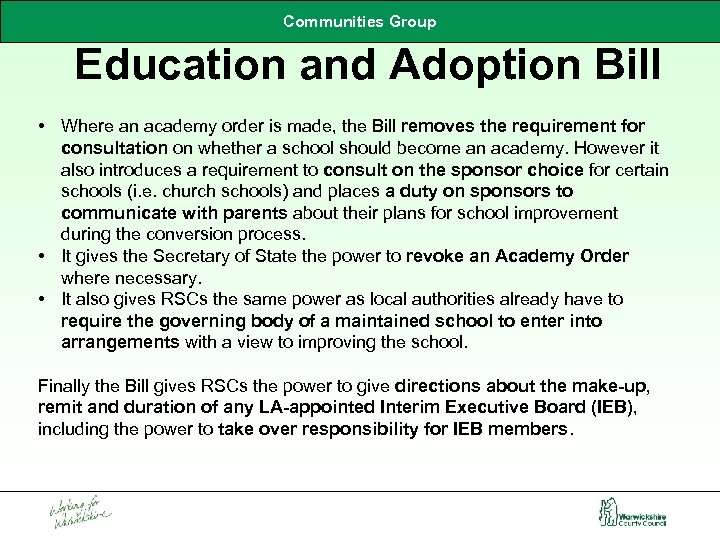
Communities Group Education and Adoption Bill • Where an academy order is made, the Bill removes the requirement for consultation on whether a school should become an academy. However it also introduces a requirement to consult on the sponsor choice for certain schools (i. e. church schools) and places a duty on sponsors to communicate with parents about their plans for school improvement during the conversion process. • It gives the Secretary of State the power to revoke an Academy Order where necessary. • It also gives RSCs the same power as local authorities already have to require the governing body of a maintained school to enter into arrangements with a view to improving the school. Finally the Bill gives RSCs the power to give directions about the make up, remit and duration of any LA appointed Interim Executive Board (IEB), including the power to take over responsibility for IEB members.
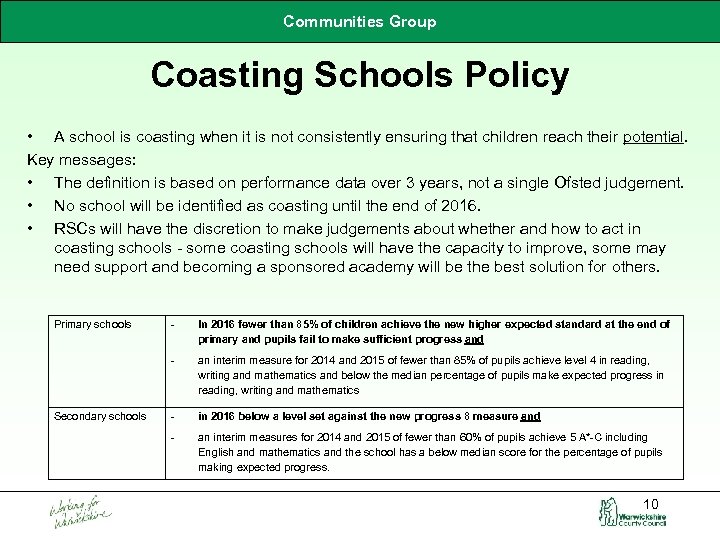
Communities Group Coasting Schools Policy • A school is coasting when it is not consistently ensuring that children reach their potential. Key messages: • The definition is based on performance data over 3 years, not a single Ofsted judgement. • No school will be identified as coasting until the end of 2016. • RSCs will have the discretion to make judgements about whether and how to act in coasting schools - some coasting schools will have the capacity to improve, some may need support and becoming a sponsored academy will be the best solution for others. Secondary schools - In 2016 fewer than 85% of children achieve the new higher expected standard at the end of primary and pupils fail to make sufficient progress and - Primary schools an interim measure for 2014 and 2015 of fewer than 85% of pupils achieve level 4 in reading, writing and mathematics and below the median percentage of pupils make expected progress in reading, writing and mathematics - in 2016 below a level set against the new progress 8 measure and - an interim measures for 2014 and 2015 of fewer than 60% of pupils achieve 5 A*-C including English and mathematics and the school has a below median score for the percentage of pupils making expected progress. 10
Communities Group Df. E Vision for academies system ü School-to-school support and collaboration ü Self-managing, self-improving system ü Ultimate goal: More children, more quickly, achieving much more.
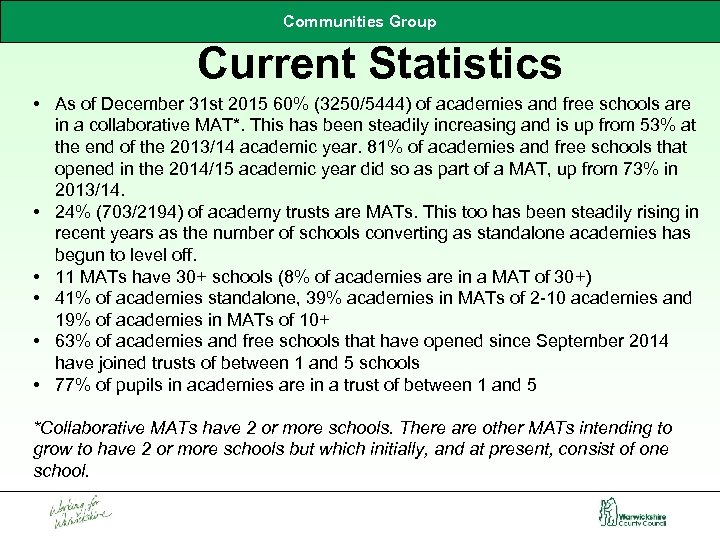
Communities Group Current Statistics • As of December 31 st 2015 60% (3250/5444) of academies and free schools are in a collaborative MAT*. This has been steadily increasing and is up from 53% at the end of the 2013/14 academic year. 81% of academies and free schools that opened in the 2014/15 academic year did so as part of a MAT, up from 73% in 2013/14. • 24% (703/2194) of academy trusts are MATs. This too has been steadily rising in recent years as the number of schools converting as standalone academies has begun to level off. • 11 MATs have 30+ schools (8% of academies are in a MAT of 30+) • 41% of academies standalone, 39% academies in MATs of 2 -10 academies and 19% of academies in MATs of 10+ • 63% of academies and free schools that have opened since September 2014 have joined trusts of between 1 and 5 schools • 77% of pupils in academies are in a trust of between 1 and 5 *Collaborative MATs have 2 or more schools. There are other MATs intending to grow to have 2 or more schools but which initially, and at present, consist of one school.
Communities Group Progress to date and Next steps Progress so far: • The Bill has completed its passage through parliament and is in its final form. Next steps: • Royal Assent is expected by April. • The provisions for failing schools will come into effect as soon as possible after Royal Assent - the coasting schools provisions once final 2016 performance data is published. • The coasting schools provisions will come into effect once final 2016 performance data is published. 13
Communities Group Children Missing Education • Inform LA in every circumstance before deleting a pupil from the admissions register; • Inform LA of destination school and home address; • Provide information to LA when registering any new pupils, including home address and previous school; • LA can request this information for transition points.
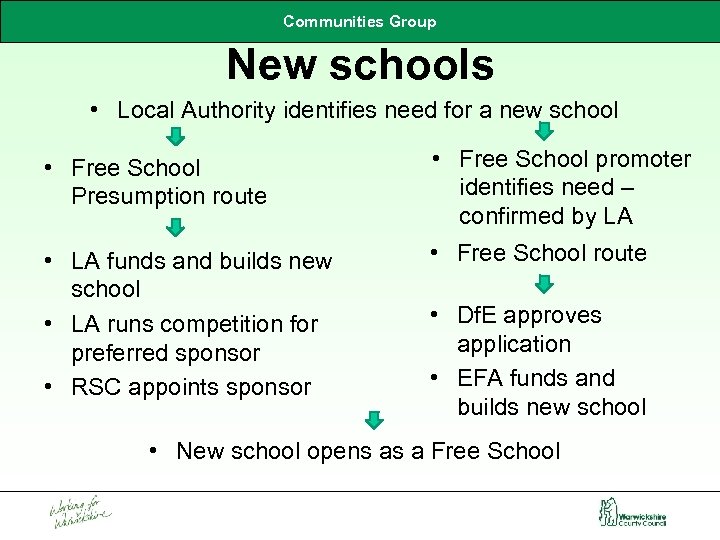
Communities Group New schools • Local Authority identifies need for a new school • Free School Presumption route • LA funds and builds new school • LA runs competition for preferred sponsor • RSC appoints sponsor • Free School promoter identifies need – confirmed by LA • Free School route • Df. E approves application • EFA funds and builds new school • New school opens as a Free School
Communities Group Warwickshire Education Challenge Board The Key Questions • ‘The north’ or all schools? • School membership or wider partnership? • School improvement, education or children and young people? • Secondary only or cross-phase? • Headteachers or Sponsors / Trusts / Directors? • Independent chair?
Communities Group Warwickshire Education Challenge Board The Key Questions Challenge Board • All schools • School membership • School improvement • Cross-phase • Headteachers • Headteacher Chair Partnership? • ‘The north’ • Wider partnership – range of agencies • Children and young people • Cross-phase • Academy Trusts
Communities Group Safeguarding Update • We will be sending out a comprehensive audit tool for governors to complete • Keeping Children Safe Consultation – requirement for all staff to understand section 1, not just to have read it • Responsibility for all education professionals to report suspicions – WCC guidance will be produced • Recently issued guidance for inspectors from Ofsted re action to take following a disclosure
School Improvement Strategy Update Jane Spilsbury Service Manager, Learning and Performance
Communities Group Revised School Improvement Strategy What’s new? Warwickshire Education Challenge Board • Membership includes primary, secondary, special and nursery headteachers and representatives from the Office of the Regional Schools Commissioner and Ofsted • Confirm vulnerable schools and school to school support • Emphasis on system leadership • Monitor progress • Greater accountability for improving quality of provision
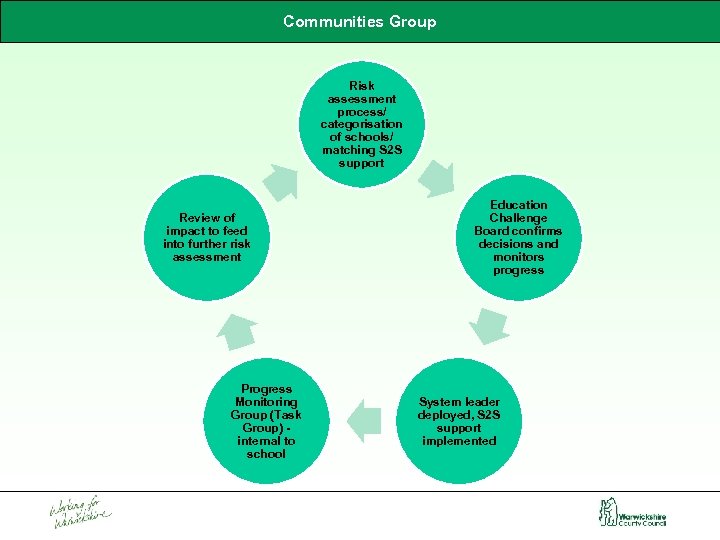
Communities Group Risk assessment process/ categorisation of schools/ matching S 2 S support Review of impact to feed into further risk assessment Progress Monitoring Group (Task Group) internal to school Education Challenge Board confirms decisions and monitors progress System leader deployed, S 2 S support implemented
Communities Group Revised School Improvement Strategy What’s new? Categorisation of Schools • A, B, C or D • ‘A’ Schools will be expected to provide support • ‘C’ and ‘D’ Schools will have formal school to school support partnership in place • Monitored through the Challenge Board
Communities Group Revised School Improvement Strategy What’s new? Allocation of Advisers • Proposed reduction of adviser visits to good and outstanding schools/category A schools to one visit per year • In priority order according to date of last inspection • Focus of visit to be similar to short inspection – testing the school’s SEF judgements and evidence base
Communities Group Revised School Improvement Strategy What’s new? Role of Consortia • • • Greater involvement in school improvement support Changing role of chair Brokering partnerships Monitoring progress in-school Developmental activities to build capacity including WLLE and School to School support toolkit
Communities Group What do you think the implications will be for you and your school?
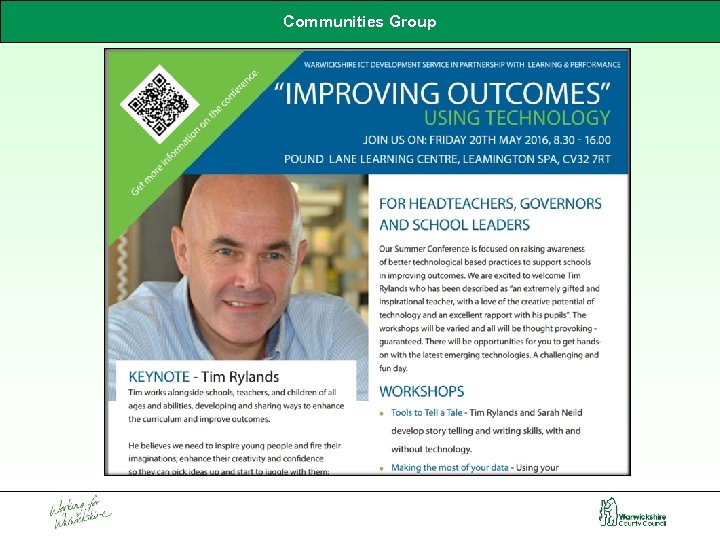
Communities Group Developments • 14 March 2016 Session re system leadership for category A schools • New website http: //www. warwickshire. gov. uk/schoolimprovement • Quality Assurance Framework Timeline of implementation • ICT Conference 20 May 2016, Pound Lane
Communities Group
Communities Group ASSESSMENT UPDATES • Please ensure you are receiving DFE updates directly • As soon as any ‘points for clarification’ are sent to us, we will pass them on to you via edassessmentteam@warwickshire. gov. uk • Please make sure that emails from this address are not going to your spam box
Communities Group Moderation: KS 1 and KS 2 • We will be notifying schools as soon as we can if they are to be moderated on or after 20 th May. This depends on when STA notify us of which schools they want us to moderate • KS 1 moderation: between 14 th – 30 th June • KS 2 moderation: between 7 th – 24 th June • There is no requirement for the teacher to be present this year, but this is new for everyone, and we recommend that it might be in everyone’s interests if the teachers are present. However, it is the head’s choice.
Communities Group Vulnerable Learners update Pat Tate Service Manager, Vulnerable Learners
Communities Group What have we done? • Needs Analysis and Business Case on SEND in Warwickshire • Vulnerable Learners Strategy i. iii. Implement the SEND Reforms Embed consistent inclusive practice Develop local flexible SEND Specialist provision • DSG Recovery Plan • SEND sufficiency and capital investment
Communities Group Priorities i. Implement the SEND Reforms • Education, Health, Care and Parent SEND Board and 11 work streams • Co production developing • Personalisation and planning for outcomes training across all frontline services, schools and parents on going rolling programme. • Joint commissioning • Preparing for SEND inspection
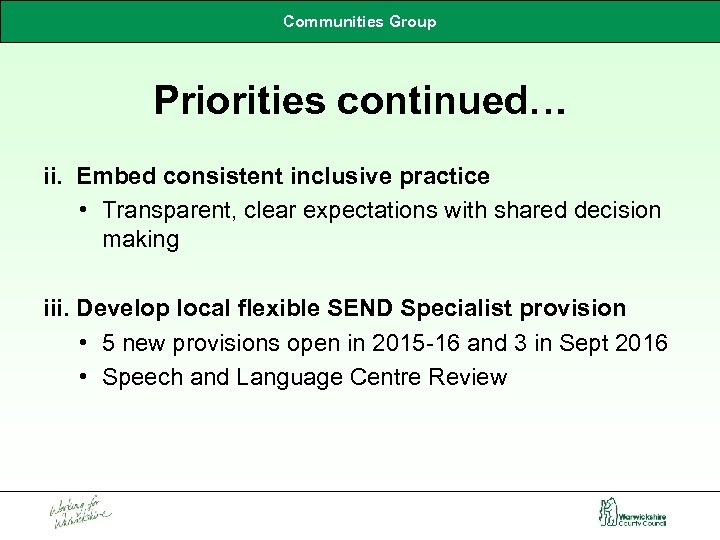
Communities Group Priorities continued… ii. Embed consistent inclusive practice • Transparent, clear expectations with shared decision making iii. Develop local flexible SEND Specialist provision • 5 new provisions open in 2015 -16 and 3 in Sept 2016 • Speech and Language Centre Review
Communities Group Vulnerable Learners Improving outcomes for vulnerable learners 2016/17 • Admissions Guidance • Further SEND developments
Communities Group Thank you for listening Q and A Comments
Communities Group Access and Organisation update Incorporating School Planning, Admissions, Early Years Sufficiency, IYFAP Sarah Mills Service Manager, Access & Organisation
Communities Group Expansions Primary • Long Lawford Primary School expansion to 3 FE from September 2016 • Hillmorton Primary expansion to 2 FE from September 2017 • Oakfield Primary School expansion to 2 FE from September 2017 • Nathaniel Newton Infant to accept bulge class increasing to 2 FE from September 2017 • The Ferncumbe Primary to increase to 1 FE from September 2016 • St John’s Primary accepting 1 bulge class September 2016 with a view to permanent expansion following planned housing in the local area • Relocation and expansion of Shottery St Andrew’s Cof. E Primary
Communities Group Expansions Secondary Extensions planned to meet future housing impact: • Kineton • Shipston • Etone • Campion
Communities Group New Schools Primary • 1 FE primary school on the ‘Gateway’ site in the north of the town September 2017 • 1 FE primary school in Warwick to open September 2017 • 2 FE primary school on the ‘Mast’ site in the East of the town September 2017 Secondary • Rugby Free Secondary School opens September 2016
Communities Group Proposed New Schools Primary • New primary to open at Meon Vale in September 2018/19 • Additional Primary ‘Mast’ site • Further primary schools Europa Way/Harbury Lane (Leamington/Warwick) Proposed – Secondary/All through sites • Rugby ‘Mast’ site • Warwick ‘Europa’ Way • Top Farm, Nuneaton
Communities Group SEND • Special Free School, Rokeby site opening September 2017 • Proposed SEND Provision at the following schools – – – – Boughton Leigh Junior Exhall Grange - Former Youth Wing at Coleshill Rokeby Primary School Harris C of E Academy Lillington Primary Water Orton Primary Trinity Catholic School • Proposed 19 -25 Learners with SEND; Stratford-upon. Avon College, Warwickshire College, North Warwickshire and Hinckley College
Communities Group Update on Housing by area North Warwickshire • In comparison to rest of County, relatively small amount of development permitted in the last couple of years. Majority of currently approved small to medium size developments concentrated in northern and eastern parts of the Borough
Communities Group Update on Housing by area Nuneaton & Bedworth • N&B Borough Plan has recently been out for consultation. Identified the need for over 10, 000 dwellings and identified six strategic sites • Over 1000 dwellings approved in recent years in the North of Nuneaton/Longshoot/Weddington area – Pressure on existing schools as development builds out and is occupied.
Communities Group Update on Housing by area Rugby • A total of 9, 700 dwellings already. Anticipated that 1, 700 of this total figure could be delivered in the next three years, across the town and the urban edge of Rugby • The Borough Council currently consulting on the ‘Preferred Option’ to accommodate Coventry’s unmet need which could see further allocations to the South West urban edge, North of the Town, in several main rural settlements, and a new rural settlement on the Coventry border
Communities Group Update on Housing by area Stratford on Avon • • Considerable amount of housing approved in recent years and pending a decision, the impact will be seen on both town and rural settlements Southam Area: Over 1000 dwellings approved. Over 2000 awaiting a decision. Kineton Area: Over 700 dwellings approved. 3500 awaiting a decision (including GLH site) Shipston Area: Just under 2000 dwellings approved. A further 400 awaiting approval. Stratford upon Avon Area: Over 2000 dwellings approved. Over 1000 awaiting a decision Alcester Area: Over 800 dwellings approved. Over 300 awaiting approval Henley/Studley Area: Relatively small amount of housing proposed
Communities Group Update on Housing by area Warwick District • Currently considering increasing housing requirements to over 16, 700 dwellings over the plan period. Further sites allocated in areas such as Kenilworth, South and North Leamington • Approx 4500 dwellings approved Europa Way/Harbury Lane area • Further developments permitted and awaiting decision in Sydenham, Bishops Tachbrook and Radford Semele
Communities Group IYFAP • Second consultation underway – following changes made from previous feedback. • Cabinet decision – April • Implement fully September 2016 • Trial period from summer term • 1 direction made this year
Communities Group Early Years Sufficiency • 30 hours free childcare for 3 and 4 year olds being introduced from September 2017 • ONLY for families where all parents work • 390, 000 families nationally will qualify
Communities Group Early Years Sufficiency • Detailed work already underway to map supply/demand in Warwickshire • All schools with EY provision are being contacted for details of current offer and any expansion/remodelling plans • Schools will know their own families and be able to estimate how many are likely to be eligible for the new offer
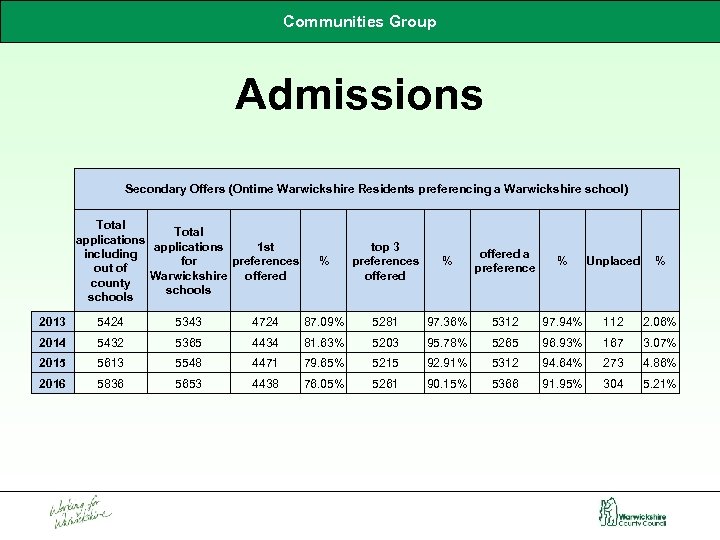
Communities Group Admissions Secondary Offers (Ontime Warwickshire Residents preferencing a Warwickshire school) Total applications 1 st including for preferences out of Warwickshire offered county schools % top 3 preferences offered % offered a preference % Unplaced % 2013 5424 5343 4724 87. 09% 5281 97. 36% 5312 97. 94% 112 2. 06% 2014 5432 5365 4434 81. 63% 5203 95. 78% 5265 96. 93% 167 3. 07% 2015 5613 5548 4471 79. 65% 5215 92. 91% 5312 94. 64% 273 4. 86% 2016 5836 5653 4438 76. 05% 5261 90. 15% 5366 91. 95% 304 5. 21%
Communities Group In Year Admissions • 861 Secondary and 1775 Primary in year applications received so far for this academic year
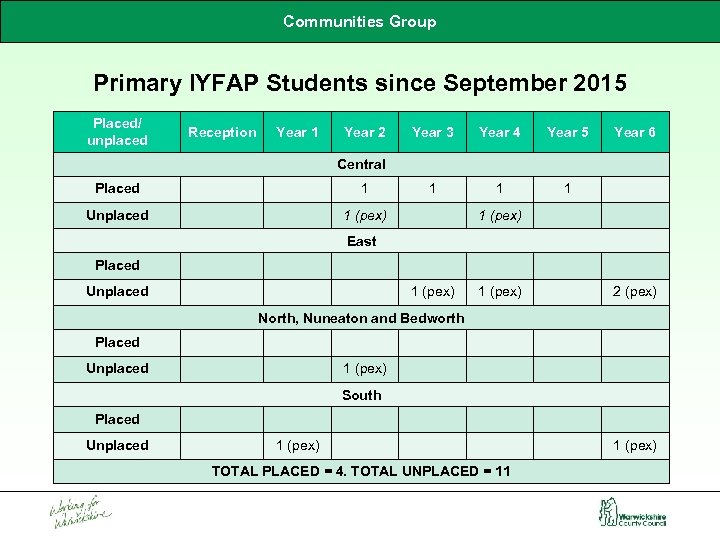
Communities Group Primary IYFAP Students since September 2015 Placed/ unplaced Reception Year 1 Year 2 Year 3 Year 4 Year 5 1 1 Year 6 1 Central Placed 1 Unplaced 1 (pex) East Placed Unplaced 1 (pex) 2 (pex) North, Nuneaton and Bedworth Placed Unplaced 1 (pex) South Placed Unplaced 1 (pex) TOTAL PLACED = 4. TOTAL UNPLACED = 11 1 (pex)
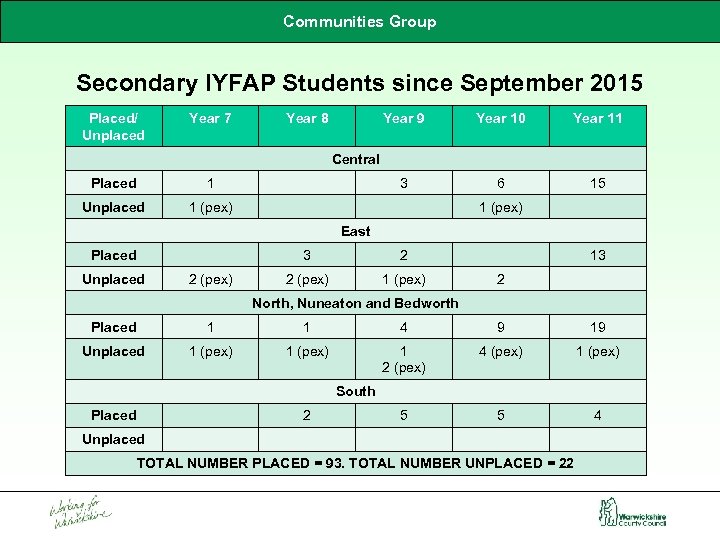
Communities Group Secondary IYFAP Students since September 2015 Placed/ Unplaced Year 7 Year 8 Year 9 Year 10 Year 11 3 6 15 Central Placed 1 Unplaced 1 (pex) East Placed 3 Unplaced 2 (pex) 2 2 (pex) 13 2 North, Nuneaton and Bedworth Placed 1 1 4 9 19 Unplaced 1 (pex) 1 2 (pex) 4 (pex) 1 (pex) 5 5 4 South Placed 2 Unplaced TOTAL NUMBER PLACED = 93. TOTAL NUMBER UNPLACED = 22

Food for Life what is it all about and why your school should be involved Bret Willers
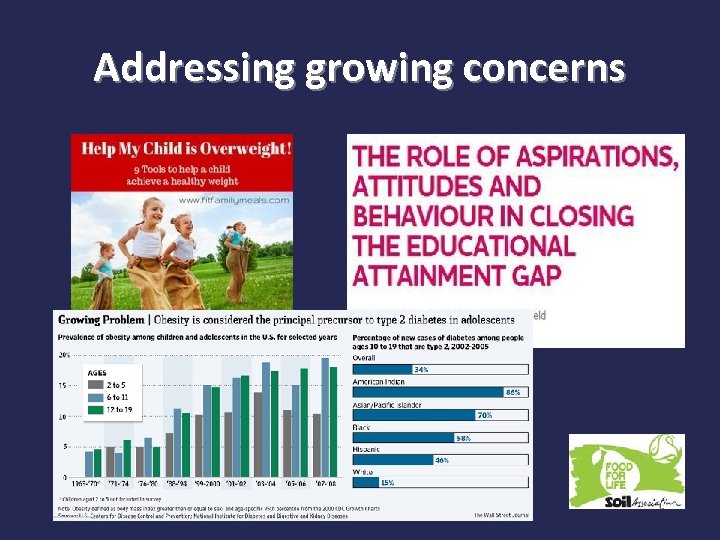
Addressing growing concerns
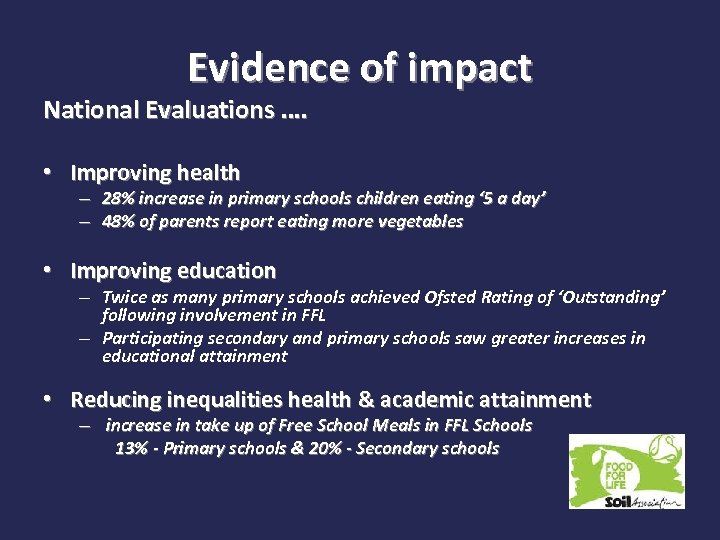
Evidence of impact National Evaluations …. • Improving health – – 28% increase in primary schools children eating ‘ 5 a day’ 48% of parents report eating more vegetables • Improving education – Twice as many primary schools achieved Ofsted Rating of ‘Outstanding’ following involvement in FFL – Participating secondary and primary schools saw greater increases in educational attainment • Reducing inequalities health & academic attainment – increase in take up of Free School Meals in FFL Schools 13% - Primary schools & 20% - Secondary schools
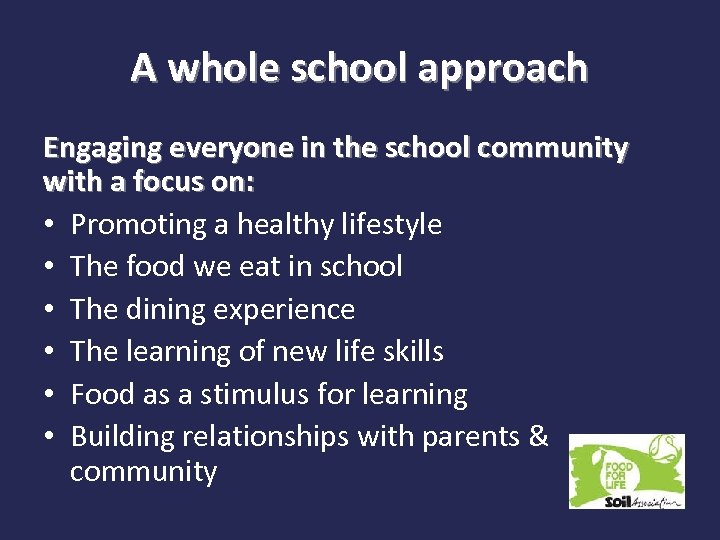
A whole school approach Engaging everyone in the school community with a focus on: • Promoting a healthy lifestyle • The food we eat in school • The dining experience • The learning of new life skills • Food as a stimulus for learning • Building relationships with parents & community

School Food Standards & the School Food Plan
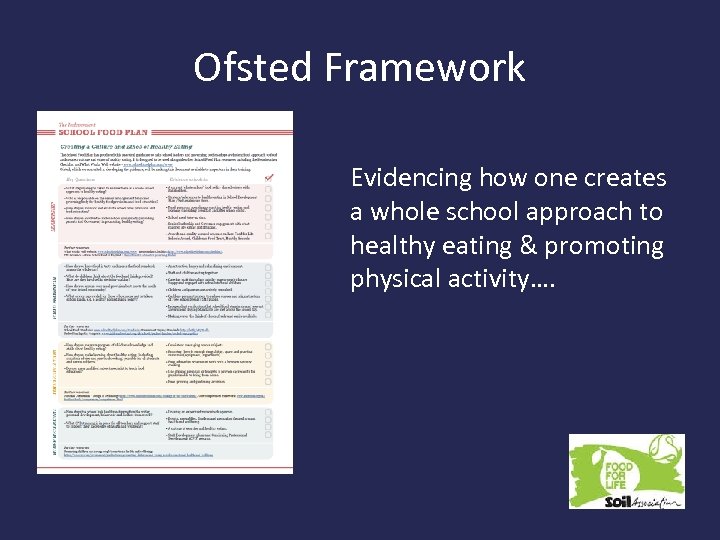
Ofsted Framework Evidencing how one creates a whole school approach to healthy eating & promoting physical activity….
A Team with years of experience • • • Soil Association - catering mark, awards, farm visits Health Education Trust - cultural change Focus on Food - cooking skills & wider learning Garden Organic - growing skills & wider learning Royal Society for Public Health – health expertise
Some of the key elements • • Local Programme Manager School Nutrition Action Group School Food Plan Development of growing spaces Facilities for cooking, growing & dining Specialist training - all involved Experiential learning opportunities Celebrating success – national awards
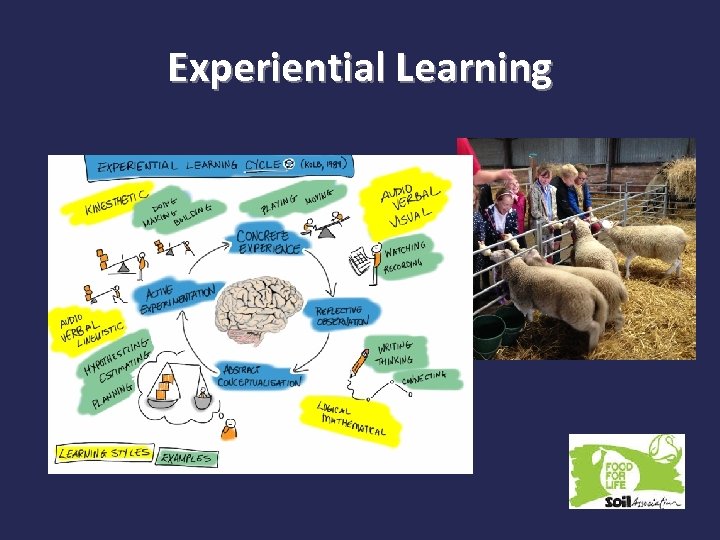
Experiential Learning
Benefits from Food for Life • • • Improves health & wellbeing Supports learning & academic attainment Routes to vocational learning Helps to improve behaviour Helps with Team building across all staff Increase school meal uptake increasing income Helps strengthen relationships in community Mobilising volunteers & parental engagement Helps to promote school & national recognition Ofsted rating
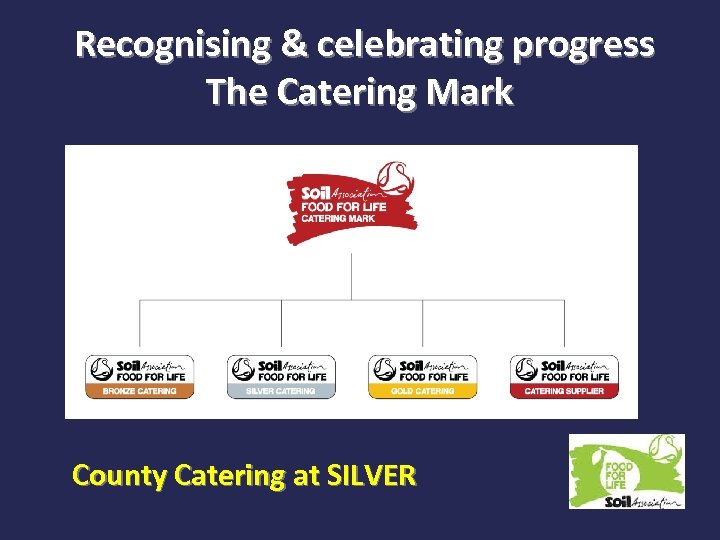
Recognising & celebrating progress The Catering Mark County Catering at SILVER
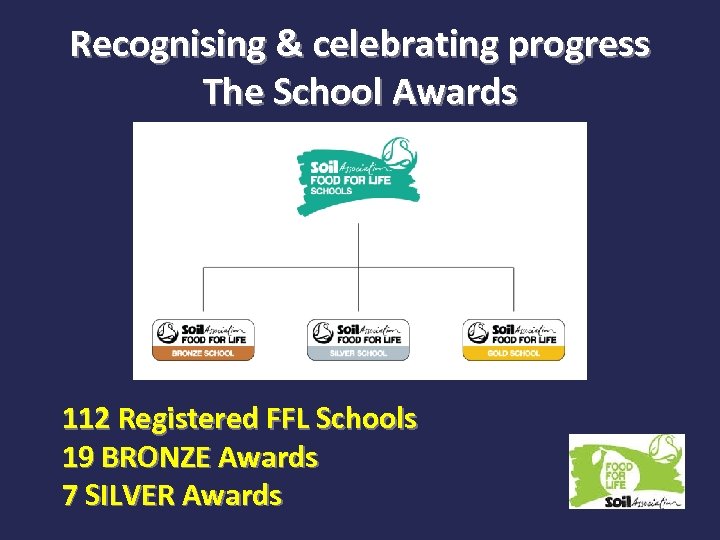
Recognising & celebrating progress The School Awards 112 Registered FFL Schools 19 BRONZE Awards 7 SILVER Awards
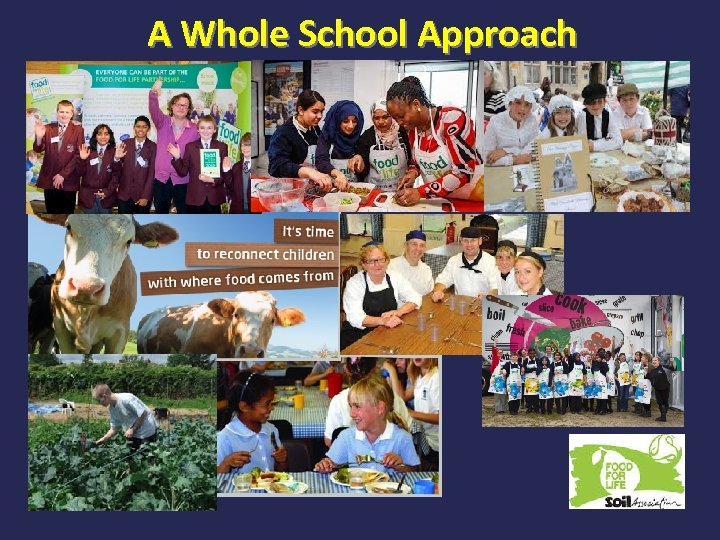
A Whole School Approach
The Warwickshire Service • Free support & advice • Free training for teachers, cooks, other staff & volunteers • Printed materials & resources – curriculum • Organising events & activities for schools • The School Awards & Catering Mark Awards • Assisting fundraising for special projects • On line resources & a blog
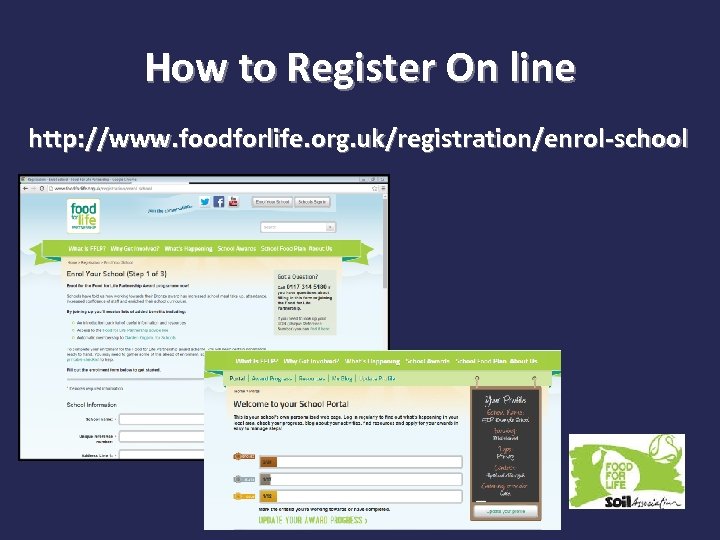
How to Register On line http: //www. foodforlife. org. uk/registration/enrol-school

Feel free to contact Food for Life Warwickshire Bret Willers Local Programme Manager Tel: 07786 994442 or 07425 881882 bwillers@soilassociation. org Valerie Meehan Local Programme Officer Tel: 07736888462 vmeehan@soilassociation. org

Warwickshire Education Briefing Emma Sadula
CSW Sport – who are we? Government funded organisation to increase participation in physical activity and sport: Key areas of work are: • • Primary PE and School Sport Community activity Coaching and workforce Focus on young people
PE and School Sport Premium This year the grant conditions and accompanying guidance have been revised to emphasise that: • the funding must be used to enhance, rather than maintain, existing provision • that improvements must be sustainable in the long term Df. E September 2016

PE and Sport premium funding requirements You must publish details of how you spend this funding by 4 th April 2016 You must include: 1. How much PE and sport premium funding you received for this academic year 2. A full breakdown of how you’ve spent or will spend the funding this year 3. The effect of the premium on pupils’ PE and sport participation and attainment 4. How you will make sure these improvements are sustainable We would also encourage you to publish any supplementary information / case study material that highlights enhancements and sustainability and how the improvements now will benefit pupils joining the school in future years.

How to use the PE and sport premium Schools must use the funding to make additional and sustainable improvements to the quality of PE and sport they offer. This means that you should use the premium to: • develop or add to the PE and sport activities that your school already offers • make improvements now that will benefit pupils joining the school in future years For example, you can use your funding to: • hire qualified sports coaches to work with teachers • provide existing staff with training or resources to help them teach PE and sport more effectively • introduce new sports or activities and encourage more pupils to take up sport • support and involve the least active children by running or extending school sports clubs, holiday clubs and Change 4 Life clubs • run sport competitions • increase pupils’ participation in the School Games • run sports activities with other schools
You should not use your funding to: • employ coaches or specialist teachers to cover planning preparation and assessment (PPA) arrangements - these should come out of your core staffing budgets • teach the minimum requirements of the national curriculum - including those specified for swimming (or, in the case of academies and free schools, to teach your existing PE curriculum). Df. E September

Resources available
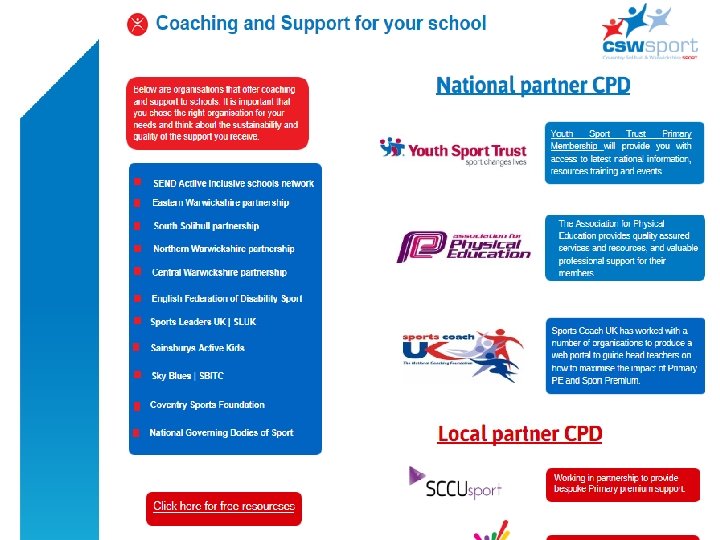
Support available • CSW Sport Local PE advisor to help schools • Provide CPD opportunities • Link with your SGO who also may have CPD opportunities e. g. in Rugby • National Partners such as Youth Sport Trust and Af. PE

Website: www. peschoolsportcsw. org. uk Email: PE@cswsport. org. uk

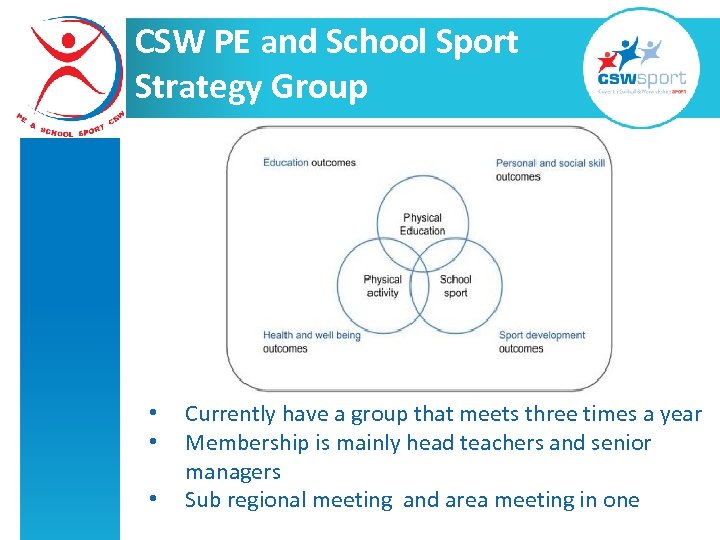
CSW PE and School Sport Strategy Group • • • Currently have a group that meets three times a year Membership is mainly head teachers and senior managers Sub regional meeting and area meeting in one
CSW PE and School Sport Strategy Group Next meeting is Wednesday 25 th May , 9. 30 – 11. 30 Key areas from the last meeting were: • Transition • National update from Youth Sport Trust • School Games update • Transition project

Questions? emmasadula@cswsport. org. uk 07885 200473
Скачать презентацию Communities Group Primary Headteacher Briefing Spring 2016
223a6948de39c31cf48701ebb85af51f.ppt